
Approved field-guide plates
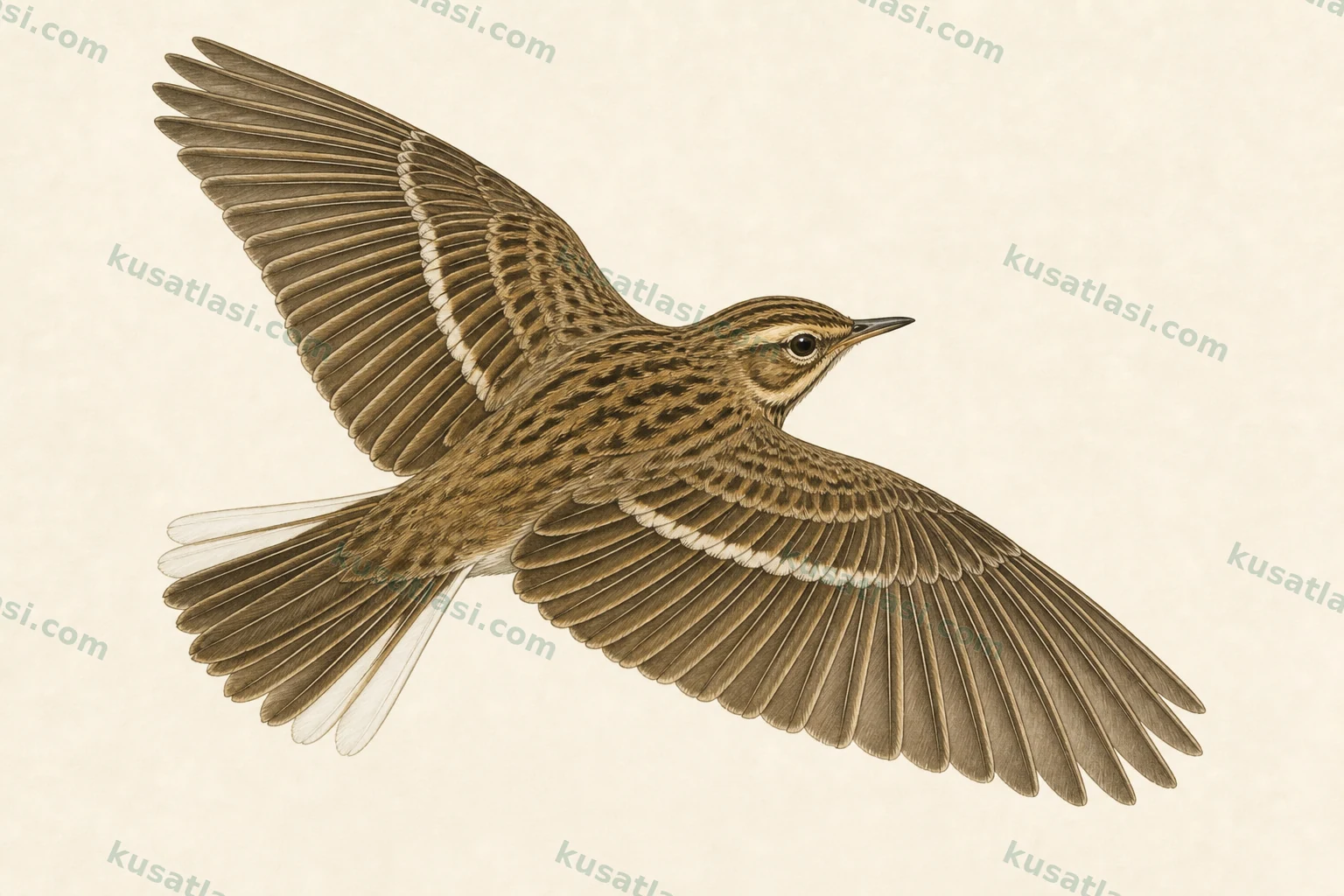
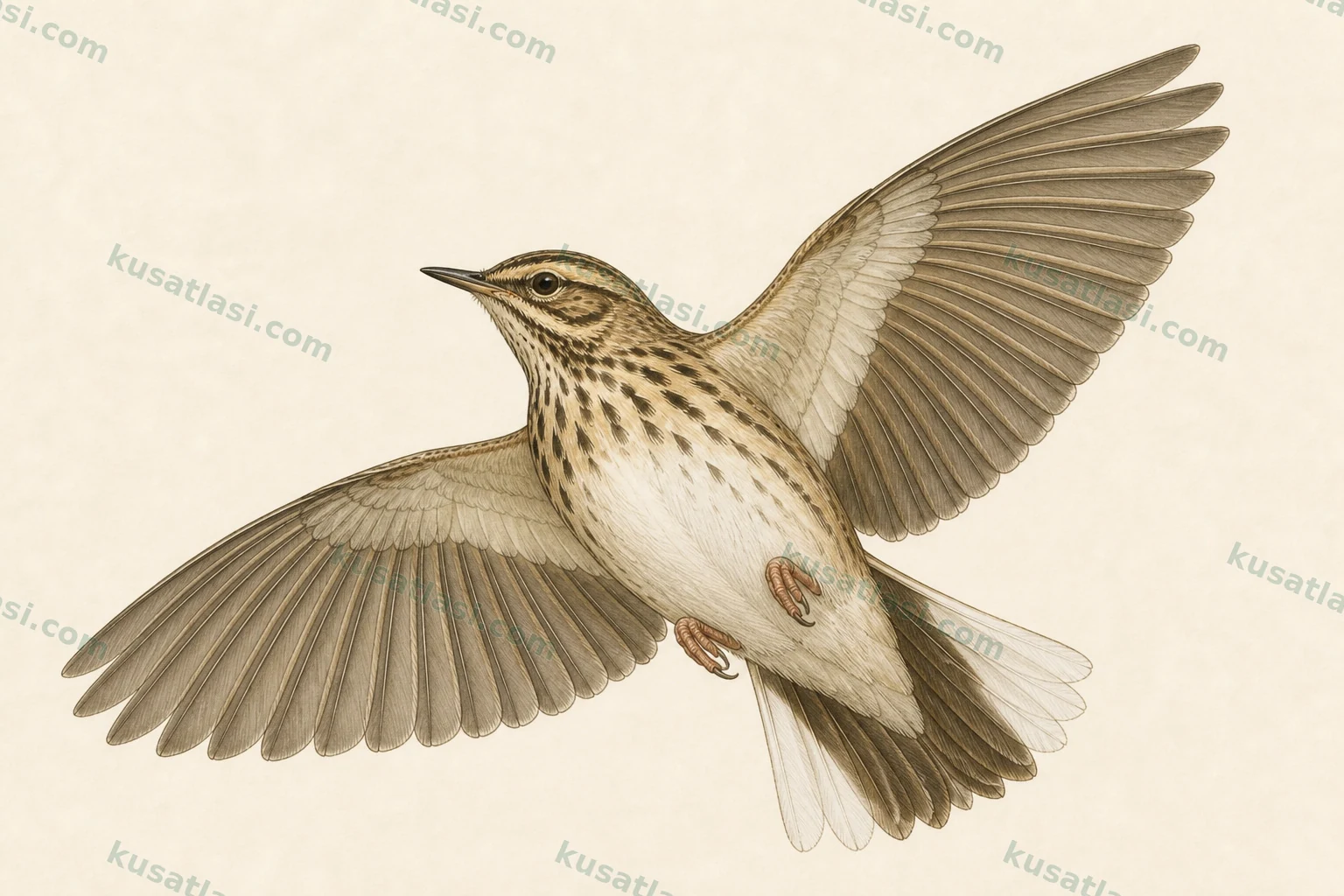
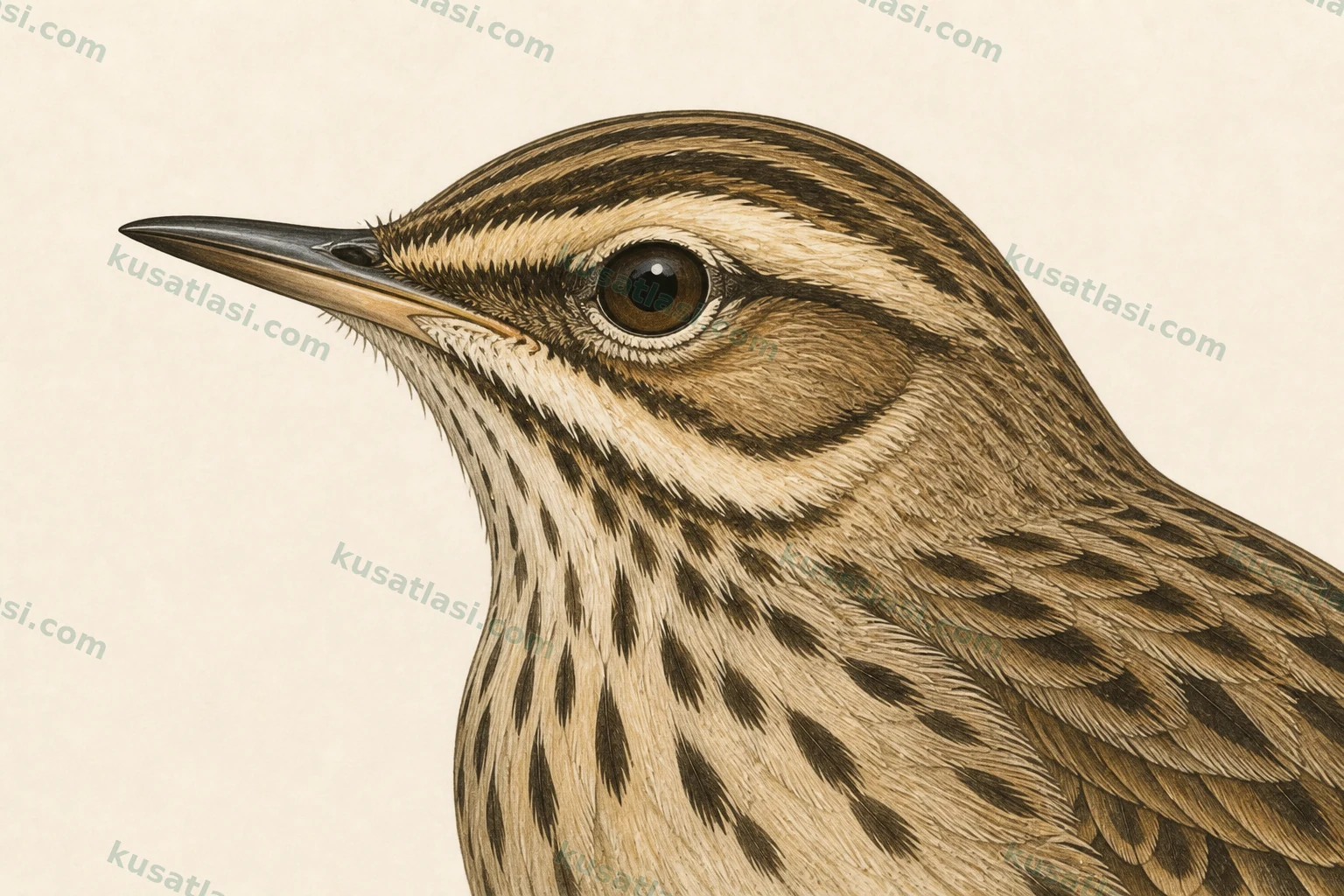
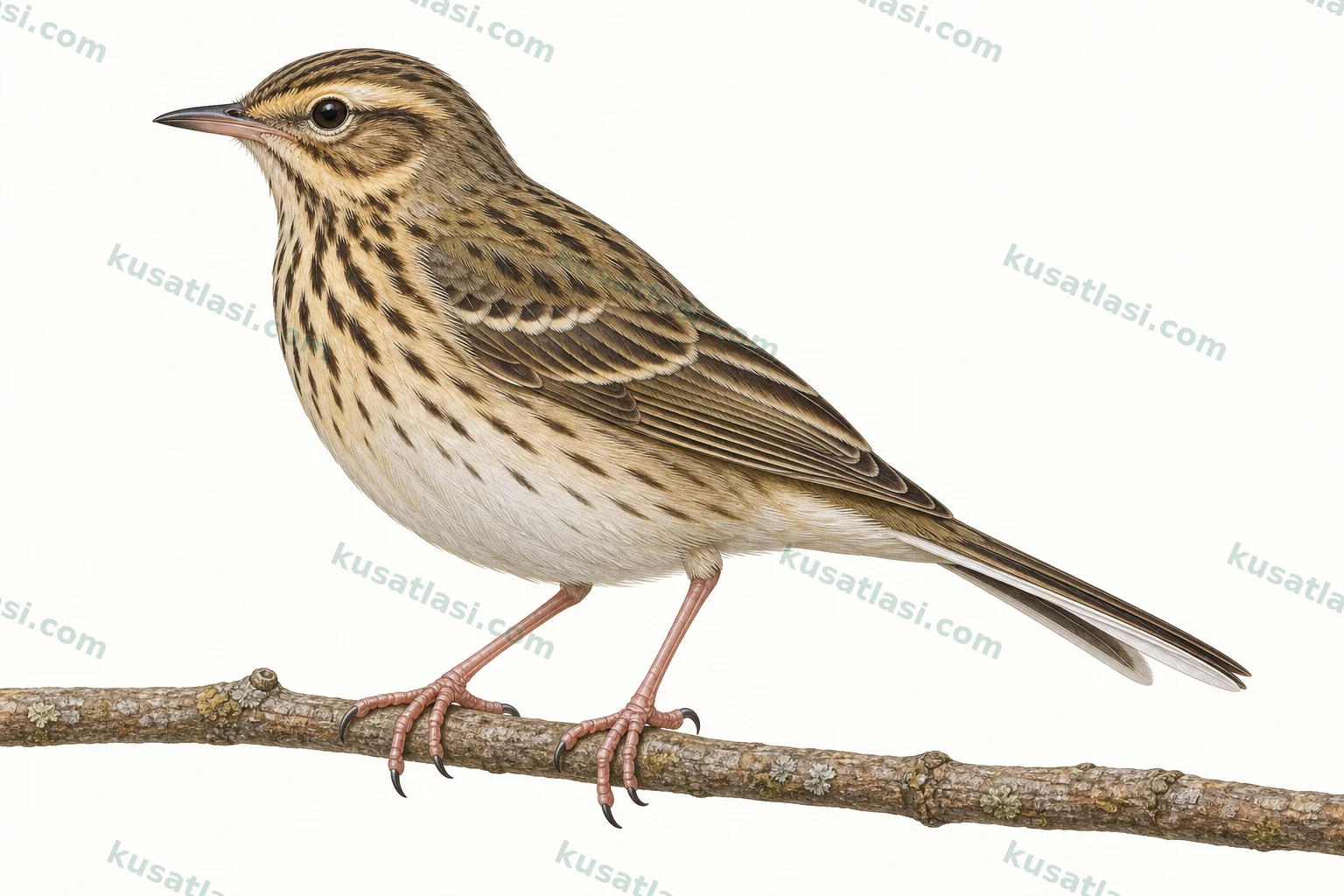
Tree Pipit identification views
Swipe left or right through all five plates.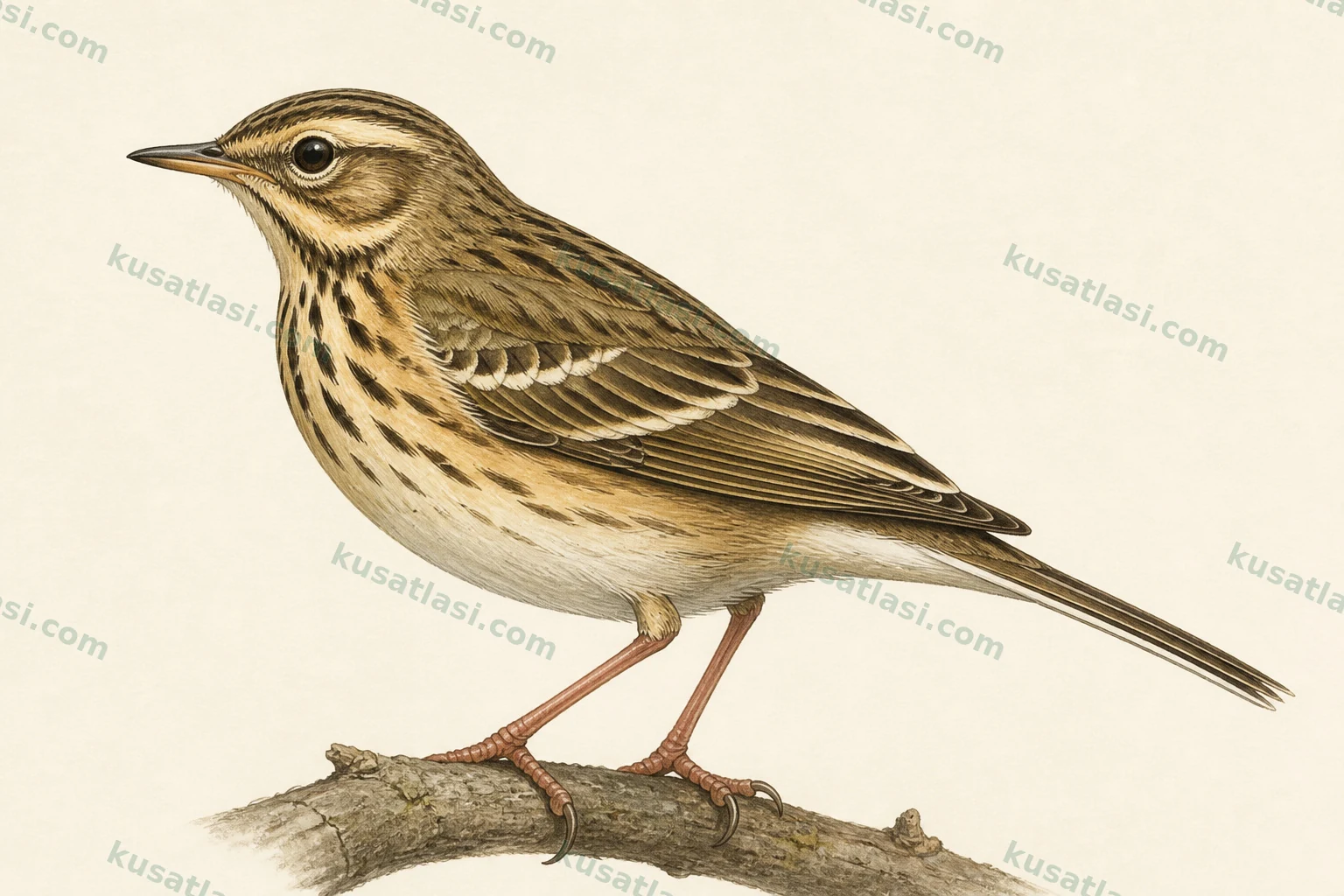
Pipits and wagtails (Motacillidae)
Tree Pipit
Anthus trivialis
Ağaç İncirkuşu
Combine bold breast and fine flank streaks with bill, hind claw and song-flight; it sings from trees but nests on the ground.
- Order
- Passeriformes
- Conservation status
- LC Least Concern
First look in the field
Quick identification
- Breast and flanks
Bold breast streaks become markedly finer on the flanks.
- Bill
Relatively sturdy compared with Meadow Pipit.
- Hind claw
Short and curved, but not sufficient alone for identification.
- Song flight
Sings while rising from a perch and descending in a parachuting display.
Biometrics
Length
- Male
- 15 cm
- Female
- 15 cm
Wingspan
- Male
- 26 cm
- Female
- 26 cm
Weight
- Male
- 21.6 g
- Female
- 21.6 g
Detailed explanations of these measurements are available on our website, on the same species page.
World distribution
Tree Pipit
Customize map layers
Observation Sites
Bird Atlas recordsLoading observations…
Monthly record intensity
12 monthsRecord intensity is affected by observation effort.
Rotate the globe and compare the supported layers. Colours show broad range areas, not exact sightings or nests.
- Jan
- Apr
- Jul
- Oct
- Dec
Generalised data and method
Basemap: Natural Earth (public domain).
Bibliography ↗Authentic bird sound and ethical use
Voice and listening
Accompanies a rising and parachuting display flight.
Useful on migration, but tie a recording to the actual calling bird.
Avoid repeated playback that provokes territorial responses.
Spoken guide
Narration has not been recorded; no audio file has been created.
Observe without approaching the nest
Breeding
A grass cup concealed on the ground, not in a tree.
Typically 4–5 according to BTO.
The female incubates for about 13 days.
Never rely on one mark
Similar species
Meadow Pipit
Anthus pratensisThinner bill and usually a longer hind claw.
Olive-backed Pipit
Anthus hodgsoniGreener back and stronger facial pattern.
Scientific species guide
Detailed account
General Appearance
A small streaked pipit whose identity depends on a combination of characters. Compare the stronger breast streaks with finer flank lines, the relatively substantial bill and the face pattern. Brown or yellowish colour alone is unreliable, especially under different lighting or in worn plumage.
Male and Female
The male's conspicuous breeding song-flight can provide useful behavioural evidence. The female is similar in general plumage; a single perched photograph often does not establish sex. Illustration tones should not be treated as sex characters. Both measurement pills use species-wide values rather than separate male and female samples.
Song-Flight
A bird may rise from a tree or prominent perch and descend slowly while continuing its song. Watch the complete sequence and listen to the ending, rather than equating any flight from a tree with display. Not every pipit perched in a tree is a Tree Pipit.
Plumage and Age
Freshness, wear and lighting affect colour. Do not turn a brighter bird into another species based on hue alone. Detailed ageing may require feather characters unavailable at normal observation distances. Record age as uncertain when the evidence is insufficient; a young bird should not be rejected for failing to perform an adult male's display.
Streaks, Bill and Hind Claw
Seek the contrast between bold breast and fine flank streaks on the same bird. A frontal photograph may hide the flank. Compared with Meadow Pipit the bill is stronger and hind claw shorter and more curved. A concealed claw cannot be measured by guesswork: use independent visible characters instead of approaching to expose it.
Viewing Angle in Flight
From above, inspect the streaked brown back, wings and pale outer tail feathers. The latter are not unique to this species. Breast and flank markings belong to the underside and should not be sought in a dorsal plate. A recording of a naturally calling bird can support a distant flight observation; an automatic identification result alone is not confirmation.
Similar Species
1. Meadow Pipit: compare bill strength, hind claw and the contrast between breast and flank streaks. Voice is important; simply standing in grass or in a tree is not decisive.
2. Olive-backed Pipit: assess the greener back together with the stronger facial pattern and dark ear patch. Green light reflected from vegetation is not an identification character.
3. Water Pipit: breeding adults have greyer upperparts and largely unstreaked pinkish underparts. Winter plumage and passage birds require closer comparison.
Nest, Eggs and Incubation
1. Site: on the ground, concealed by a grass tuft or other low vegetation, not in a tree.
2. Structure: a cup of dry grass, with moss and finer lining materials possible.
3. Clutch: typically 4–5 eggs.
4. Incubation: about 13 days, by the female. British laying dates cannot simply be assigned to every Turkish breeding area.
Biometrics
| Measure | Value | |---|---| | Length | Male: about 15 cm; Female: about 15 cm | | Wingspan | Male: 25–27 cm; Female: 25–27 cm | | Weight | Male: 20–25 g; Female: 20–25 g |
Species-wide RSPB values, not separately sampled sex ranges.
Wider Range
Tree Pipit breeds across a large part of Europe and Asia and is a long-distance migrant. European ringing connections document journeys toward Africa, but a single line on a map cannot represent every population or individual.
Turkey
It is a summer breeding visitor in suitable northern woodland-edge habitats and a passage migrant over a wider area. The OSME regional list records breeding in northern Turkey. A spring or autumn garden observation does not establish nesting there; season, repeated presence and behaviour must be considered together.
Seasonal Interpretation
Spring birds may be settling or continuing north. Regular song and territorial activity in suitable early-summer habitat provide stronger breeding context. Late-summer and autumn birds can stop briefly and remain inconspicuous. Winter is not the normal expectation in Turkey, so unusual records deserve multi-angle photographs and sound.
Limits of the Evidence
British arrival weeks and Swiss breeding dates cannot describe all Turkish elevations and coasts. The calendar expresses broad biological expectations, whereas submitted-record bars also reflect observer effort, visit duration and reporting habits.
Trees Beside Open Ground
Woodland clearings, young plantations and open land with scattered trees can supply the combination required. Trees provide song perches; the ground provides food and nesting cover. Counting trees alone does not describe habitat quality.
Ground Structure
Concealing grass tufts and accessible feeding gaps should occur together. Uniform mowing or heavy grazing can remove that variety. Swiss habitat guidance emphasises sparse vegetation, retained nesting patches and individual trees, but its management dates are not a ready-made Turkish schedule.
On Passage
Look around wooded open areas and suitable green-space edges, examining the ground beneath trees as well as the canopy. Let a bird walk and call naturally rather than flushing it to identify it.
Protecting Hidden Nests
An adult carrying food into grass is a reason to stay back, not to investigate. Do not part vegetation or repeatedly cross a suspected nesting patch. Remaining on a path preserves both the nest's cover and the opportunity to observe undisturbed behaviour.
Main Foods
Small invertebrates, particularly insects, form the main food; some seeds are also taken. Singing from trees does not mean that food is obtained only from the canopy. Naturalis describes feeding chiefly on the ground.
Searching for Prey
Watch the bird walking through low vegetation and across small gaps. A peck does not reveal which prey item was caught. If the object is not visible, record feeding behaviour without inventing a precise food identification.
Habitat Connection
Accessible open patches beside sheltering vegetation link food access with nesting needs. Assess ground structure and insects together when considering mowing, grazing or chemical use; an area is not suitable merely because trees are present.
Chick Provisioning
Food-carrying adults can be watched remotely. Note visible prey and return frequency without following the bird to the nest. Retreat if it waits or diverts because of the observer. One photographed meal is not a complete description of the chicks' diet.
Tree Singer, Ground Nester
The name describes only part of the bird's life. Trees or high perches can launch the display, while eggs are hidden on the ground. Protecting the surrounding vegetation matters as much as preserving the song perch.
Listen to the Ending
Song and movement form a combined display. The drawn-out final notes during descent can be especially helpful. Wait for a natural performance instead of repeatedly provoking territorial responses with playback, and label the stage of flight in a recording.
A Small Claw with Diagnostic Value
Hind-claw length helps compare similar pipits, but many field photographs do not show it. Combine bill, streaking and voice when that detail is hidden. Missing evidence should remain missing, not be filled by expectation.
Migration by Day and Night
Tree Pipits migrate during both periods. A daytime flight call captures only one moment, while nocturnal birds may evade visual surveys. Lists represent what a particular observation method detects, not every movement through a place.
Regional Versus Global Risk
The British Red List is not the same as a global IUCN category. BTO lists the global category as Least Concern. Regional declines remain important even in a widespread species; broad distribution does not cancel local habitat loss.
Study Boundaries
An average laying date calculated in one country is not a universal date at all latitudes and elevations. A busy migration stop also need not hold the same numbers every year. Useful notes include effort, habitat, behaviour and uncertainty alongside the date and count.
Existing species account; references are in the central bibliography.
Open bibliography