
Existing atlas plates
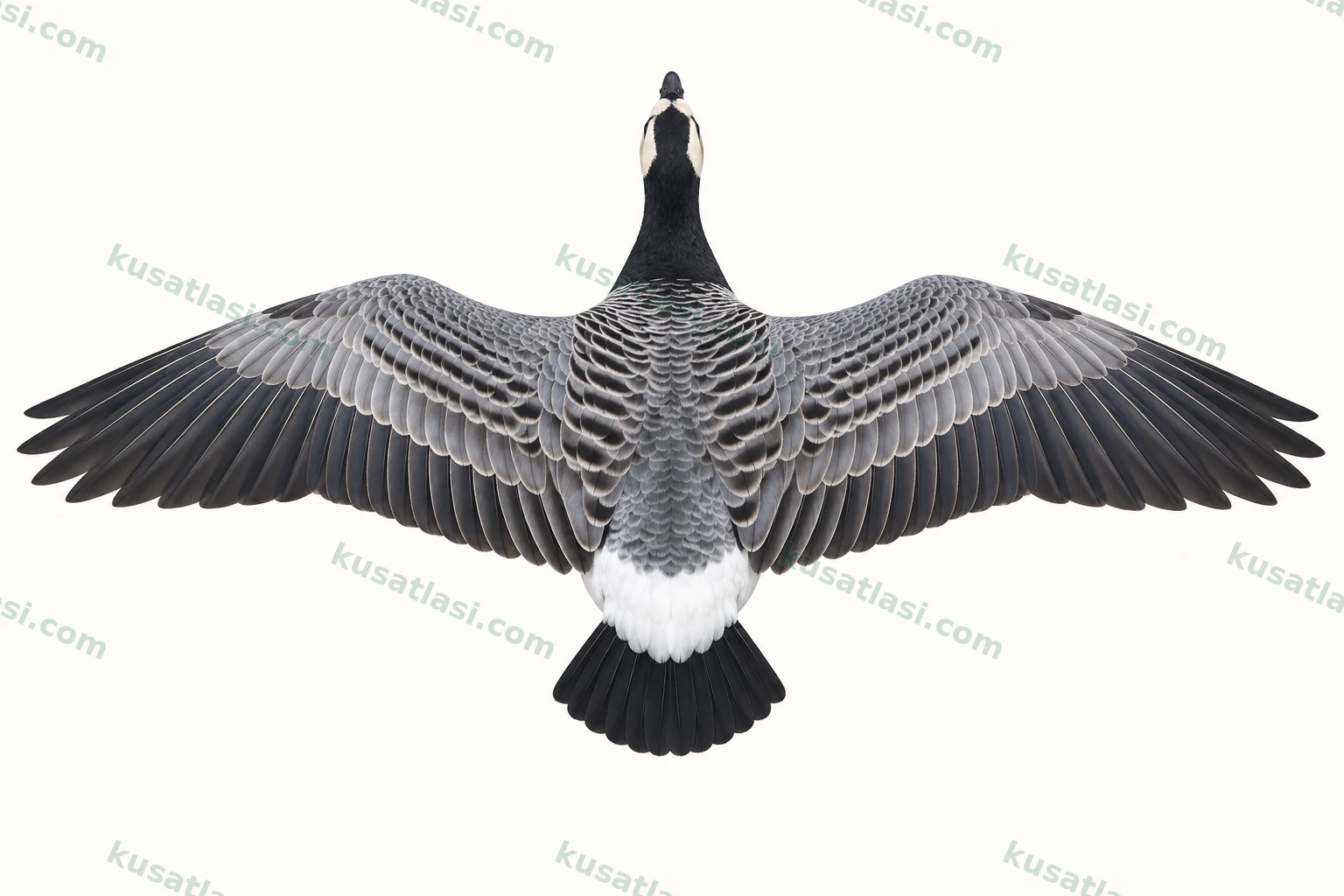
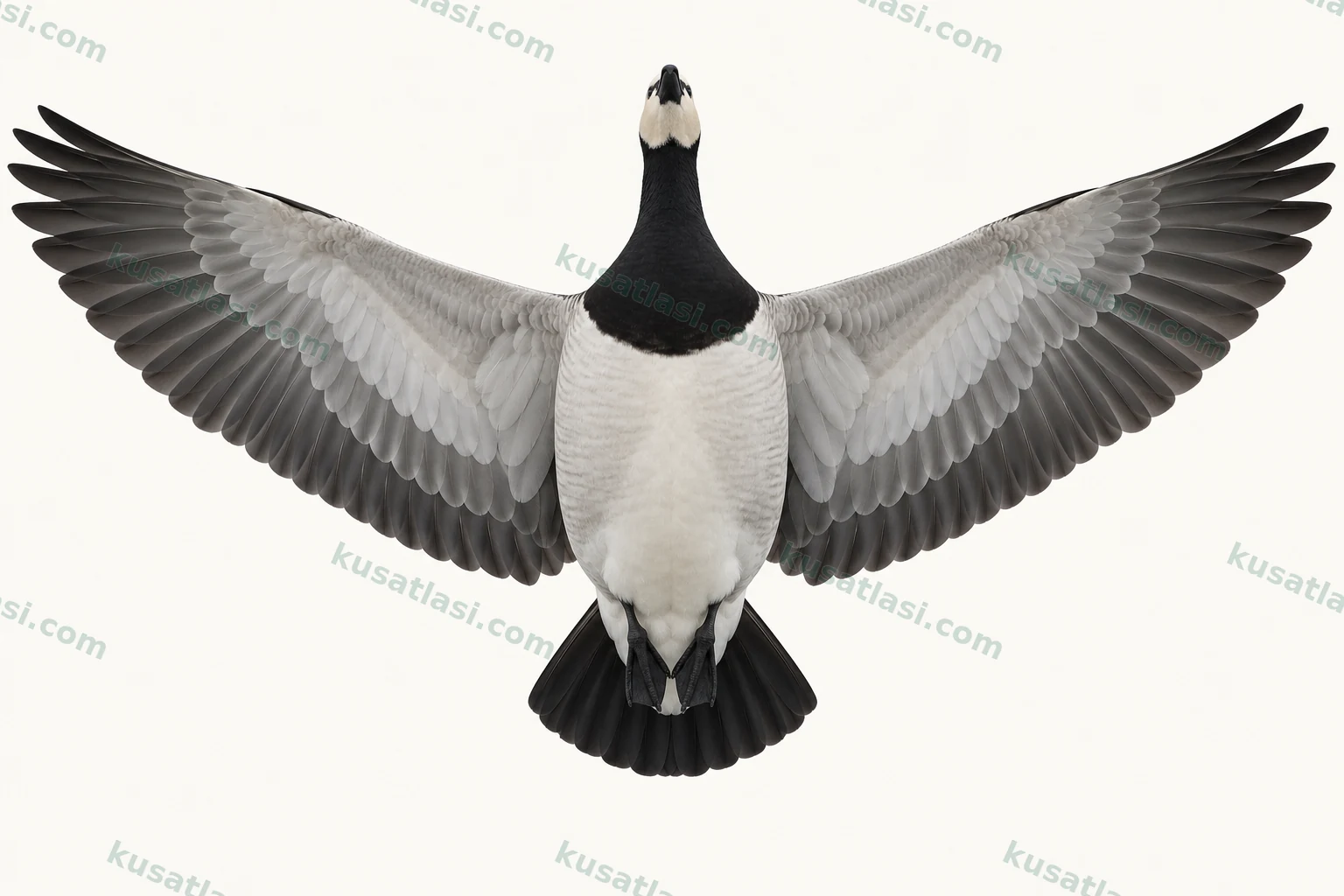
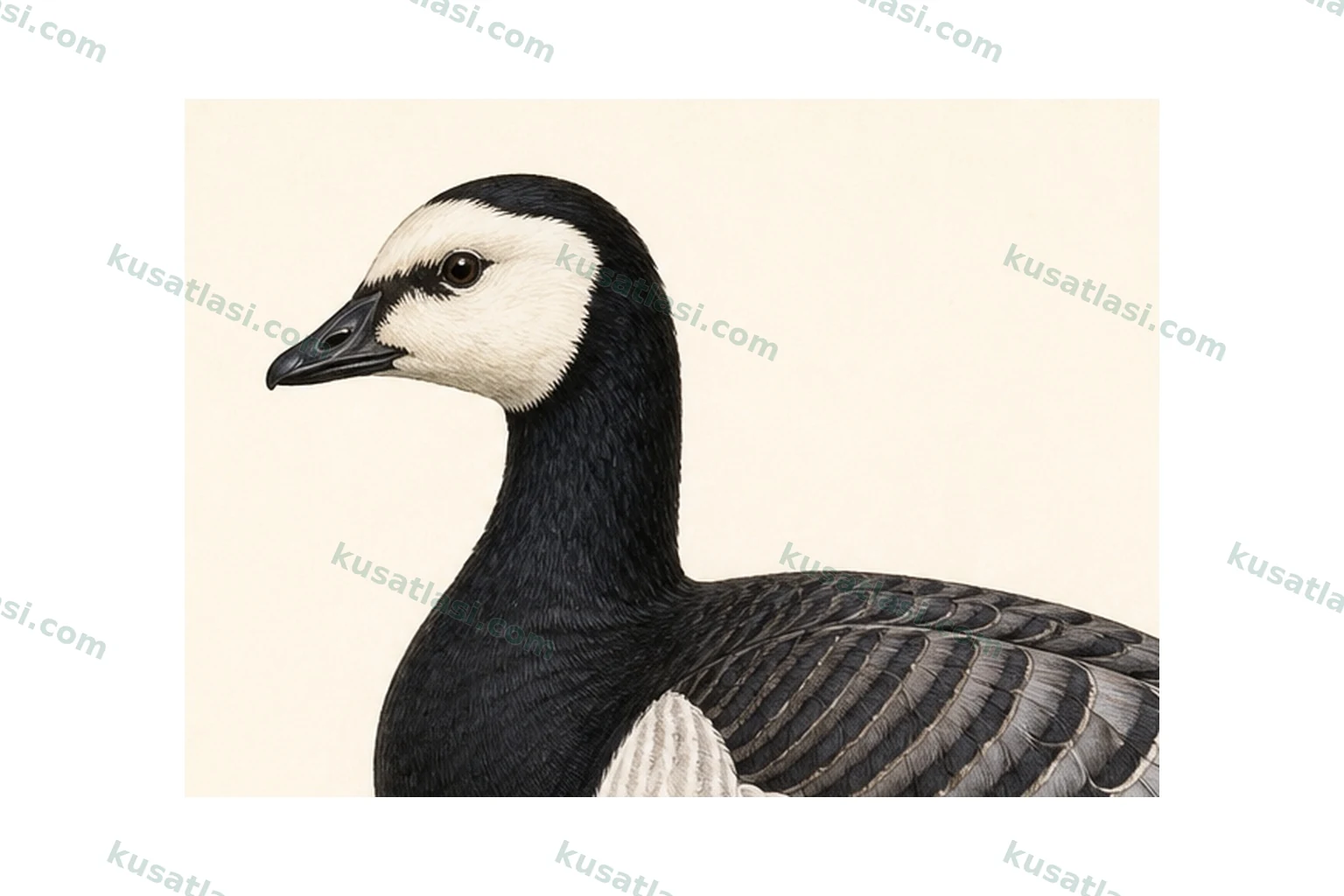
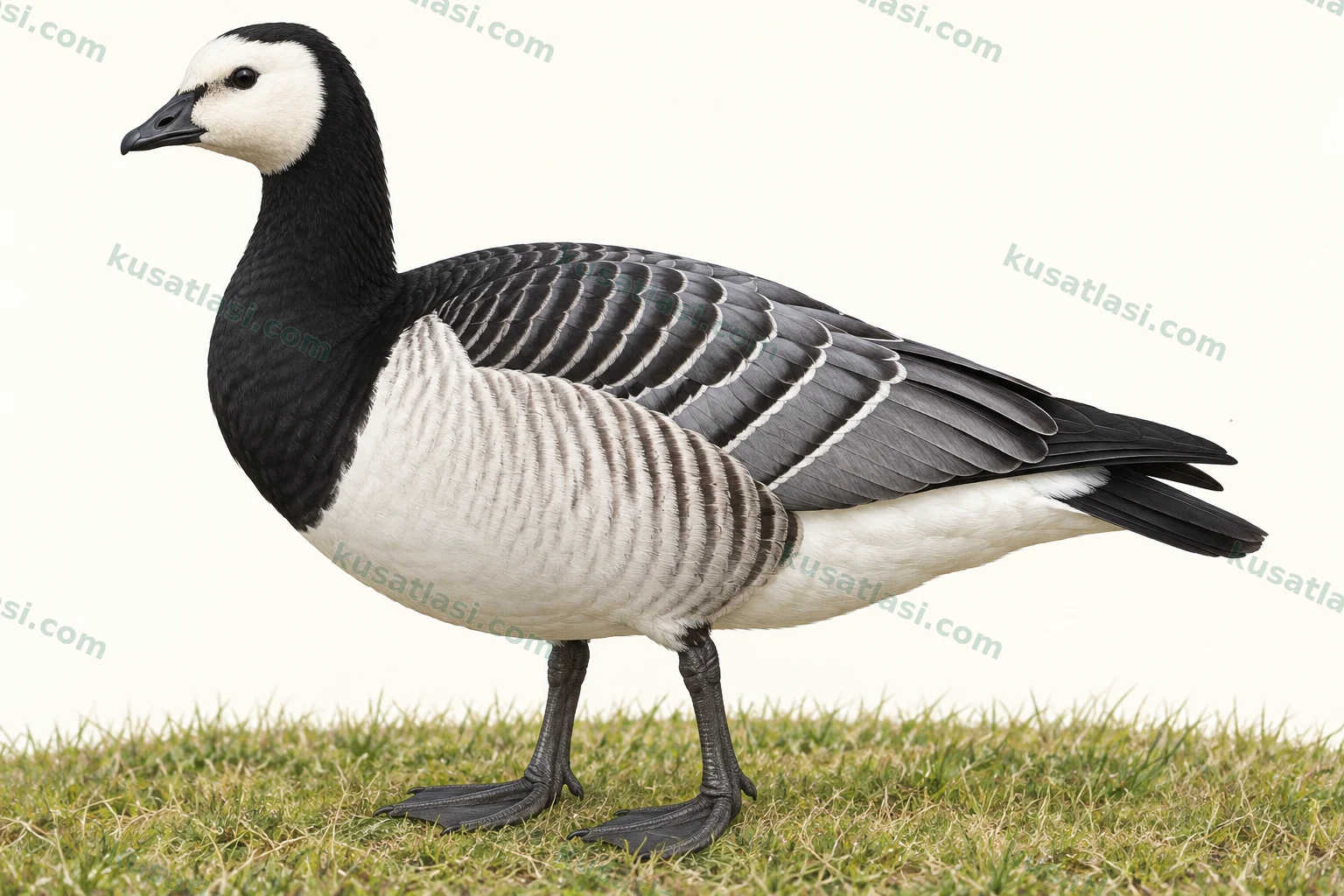
Barnacle Goose identification views
Swipe left or right through all five plates.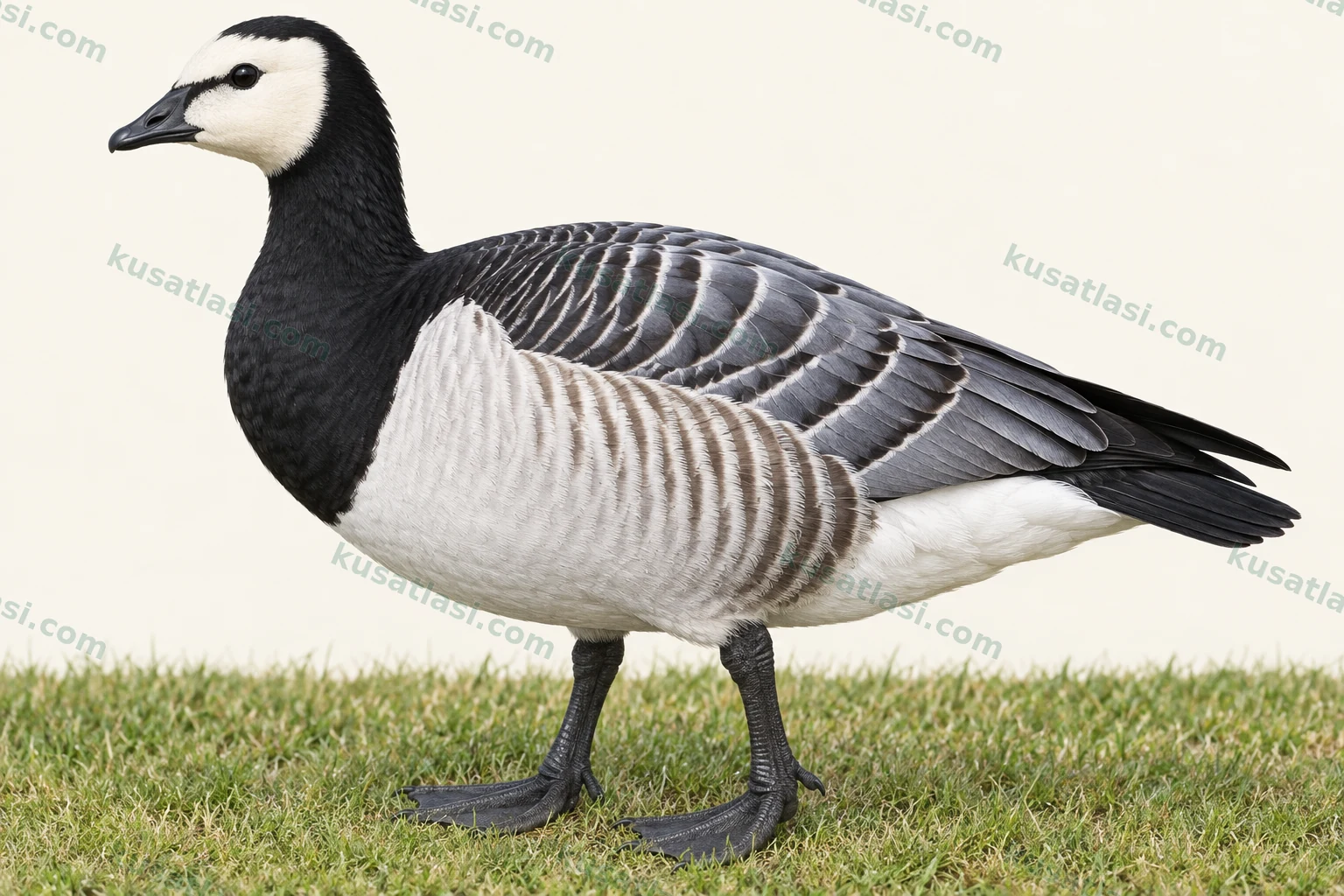
Ducks, Geese, and Waterfowl
Barnacle Goose
Branta leucopsis
Ak Yanaklı Kaz
Combine broad white face, black neck and breast, and grey patterned back; very rare in Turkey.
- Order
- Anseriformes
- Conservation status
- LC Least Concern
First look in the field
Quick identification
- A Black, White and Grey Goose
Barnacle Goose combines a broad pale face with a black neck and upper breast, grey patterned back and white belly.
- Sex, Age and Measurements
Adults share the same basic plumage.
- Nesting Biology
Nests on islands, grassy elevations or rock ledges contain vegetation and down.
Biometrics
Length
- Male
- 58–70 cm
- Female
- 58–70 cm
Wingspan
- Male
- 120–142 cm
- Female
- 120–142 cm
Weight
- Male
- 1.64–2.20 kg
- Female
- 1.48–1.98 kg
Detailed explanations of these measurements are available on our website, on the same species page.
World distribution
Barnacle Goose
Customize map layers
Observation Sites
Bird Atlas recordsLoading observations…
Monthly record intensity
12 monthsRecord intensity is affected by observation effort.
Rotate the globe and compare the supported layers. Colours show broad range areas, not exact sightings or nests.
- Jan
- Apr
- Jul
- Oct
- Dec
Generalised data and method
Basemap: Natural Earth (public domain).
Bibliography ↗Authentic bird sound and ethical use
Voice and listening
See the detailed species account below.
Spoken guide
Narration has not been recorded; no audio file has been created.
Observe without approaching the nest
Breeding
Nests on islands, grassy elevations or rock ledges contain vegetation and down. Usually 4–5 eggs are incubated by the female for about 24–25 days while the male guards nearby. Young leave early, feed themselves and fly at roughly 40–45 days.
Scientific species guide
Detailed account
A Black, White and Grey Goose
Barnacle Goose combines a broad pale face with a black neck and upper breast, grey patterned back and white belly. The bill is short and black; legs are black. Check the extent of the face and the dark breast boundary together, rather than identifying any white-cheeked goose from one patch. Its black tail should not be confused with the pattern on its back.
Sex, Age and Measurements
Adults share the same basic plumage. Male average mass is higher, but ranges overlap; posture and distance make photographic size unreliable. Juveniles can look duller and browner. Shared guide dimensions are 58–70 cm length and 120–142 cm wingspan. BTO masses, 1.64–2.20 kg male and 1.48–1.98 kg female, are sample 5th–95th percentiles, not absolute limits or Turkish measurements.
Nesting Biology
Nests on islands, grassy elevations or rock ledges contain vegetation and down. Usually 4–5 eggs are incubated by the female for about 24–25 days while the male guards nearby. Young leave early, feed themselves and fly at roughly 40–45 days. These are breeding-range facts, not a claim of regular nesting in Turkey.
Very Rare in Turkey
The Turkish records committee's 2000–2024 rarity list includes Büyükçekmece, Istanbul on 5 January 2003 and Yedikır, Amasya on 8 January 2023, the latter last seen on 3 February. These dated examples are not an all-time total or proof of annual wintering. Do not turn a few observations into a precise national arrival calendar.
Populations and Provenance
Northern breeding populations and European wintering areas differ; some European populations are established outside the original range. A route described for Svalbard birds cannot be assigned to an untracked Turkish visitor. Possible captive origin needs evidence, but neither should every unusual bird automatically be called an escapee.
Document the Observation
Save date, location, count, observation time and views of head, body and natural flight. Read any ring from a distance. Repeated sightings may concern one individual, not additional arrivals. Map dots describe records, not necessarily a movement track; observation effort also affects monthly totals.
Water Beside Grazing Ground
Look beyond open water: short vegetation near a safe resting area offers a practical search pattern. Scan lake margins, open pasture and nearby shore flats together. This is field-search guidance, not a claim that every Turkish lake holds this rare goose.
Watch Without Flushing
Scan a flock systematically and wait for feeding birds to raise their heads. A partly hidden face or shaded back alone is insufficient. Use existing paths and distant viewpoints. If birds repeatedly stop feeding, walk away or move onto water as you approach, increase your distance rather than seeking a closer photograph.
Nest Sites Are Variable
Northern breeding sites include low islands and grassy ground as well as ledges. Famous cliff-jumping footage does not describe every nest. Equally, a bird resting beside Turkish water does not establish breeding there. Keep dogs away, do not bait or play calls, and record which part of a site was actually surveyed before interpreting an absence.
Predominantly a Grazer
Grass and other plant material form the main diet. Available foods vary with place and season; do not name the plant eaten by a Turkish visitor unless it was identifiable. Seeing a bill pull at vegetation is not enough to determine the plant species.
Observe the Feeding Sequence
Watch cropping, head-raising and renewed grazing over time. Do not transfer a neighbouring bird's food choice to this individual. Standing beside water does not by itself demonstrate feeding on fish or invertebrates. Note visible actions rather than inferred prey.
Protect Feeding Time
Grazing can occupy much of daily activity. Repeated approach interrupts this, so leave routes between feeding and resting areas clear. Young collect food themselves under parental protection, rather than receiving beakfuls like songbird nestlings. Avoid offering human food: it changes the behaviour you are trying to observe and is unnecessary for obtaining an identification.
Leaving Before Flight
Chicks from some cliff nests must jump down to feeding ground before they can fly. This remarkable behaviour does not mean all pairs nest high on cliffs. Do not generalise a filmed nest's height or survival rate to the whole species.
Myths and Movement
Historical stories linked the goose to marine barnacles or trees; these are myths, not its reproductive biology. Modern work follows real birds. A study publicised by WWT in 2019 reported changed Norwegian staging use and social learning in the Svalbard migration system, not a measured route through Turkey.
Global Status Versus Local Rarity
BTO lists global IUCN Least Concern. That does not make this goose common in Turkey or justify disturbing a visitor. A carefully documented observation can be valuable: show the broad pale face, black neck and breast, and grey back together. Keep species identity, geographic rarity and individual provenance as separate questions.
Text and plates come from existing atlas records; references are in the central bibliography.
Open bibliography