
Existing atlas plates
Red-footed Falcon identification views
Swipe left or right through all five plates.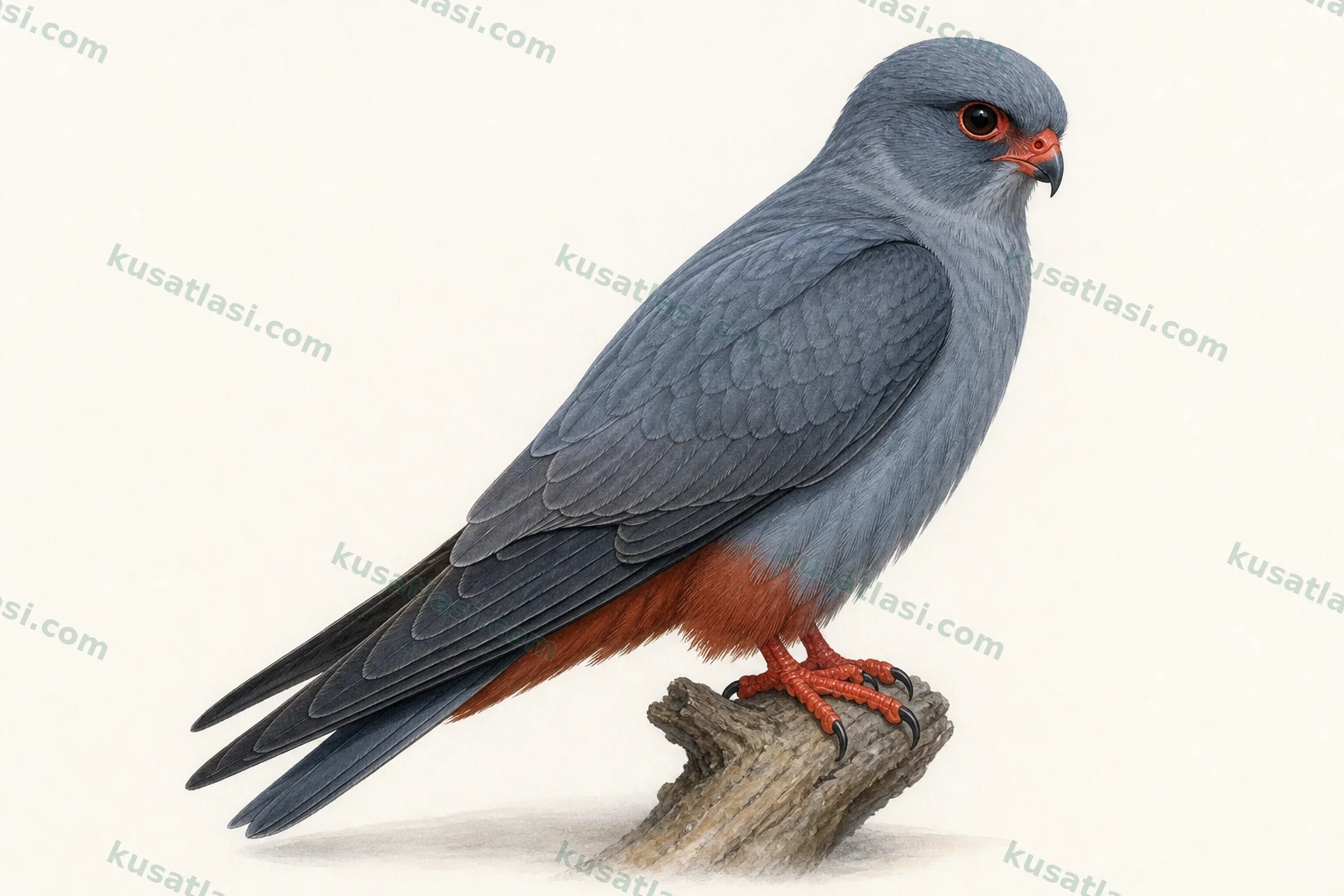
Falcons and Caracaras
Red-footed Falcon
Falco vespertinus
Aladoğan
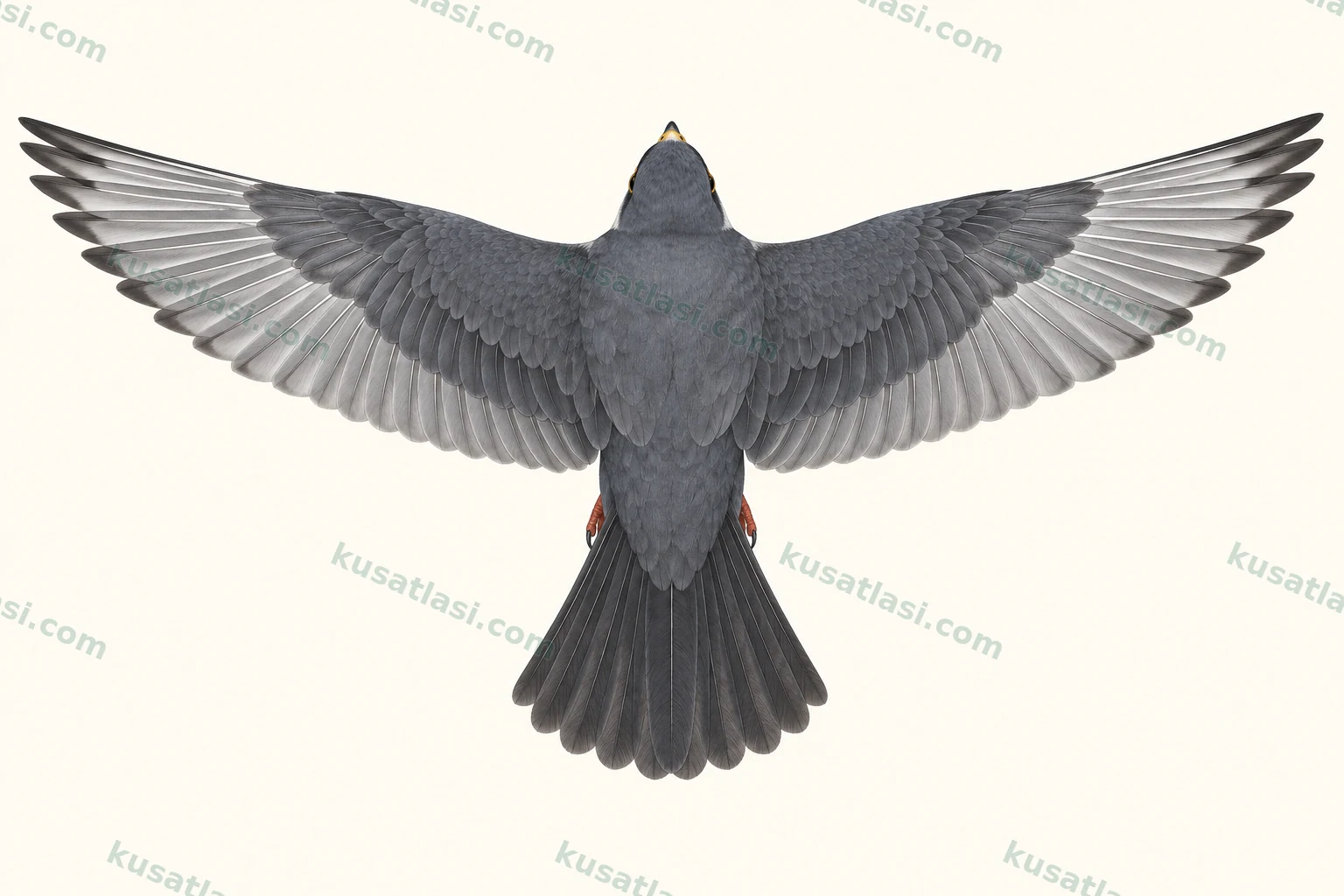
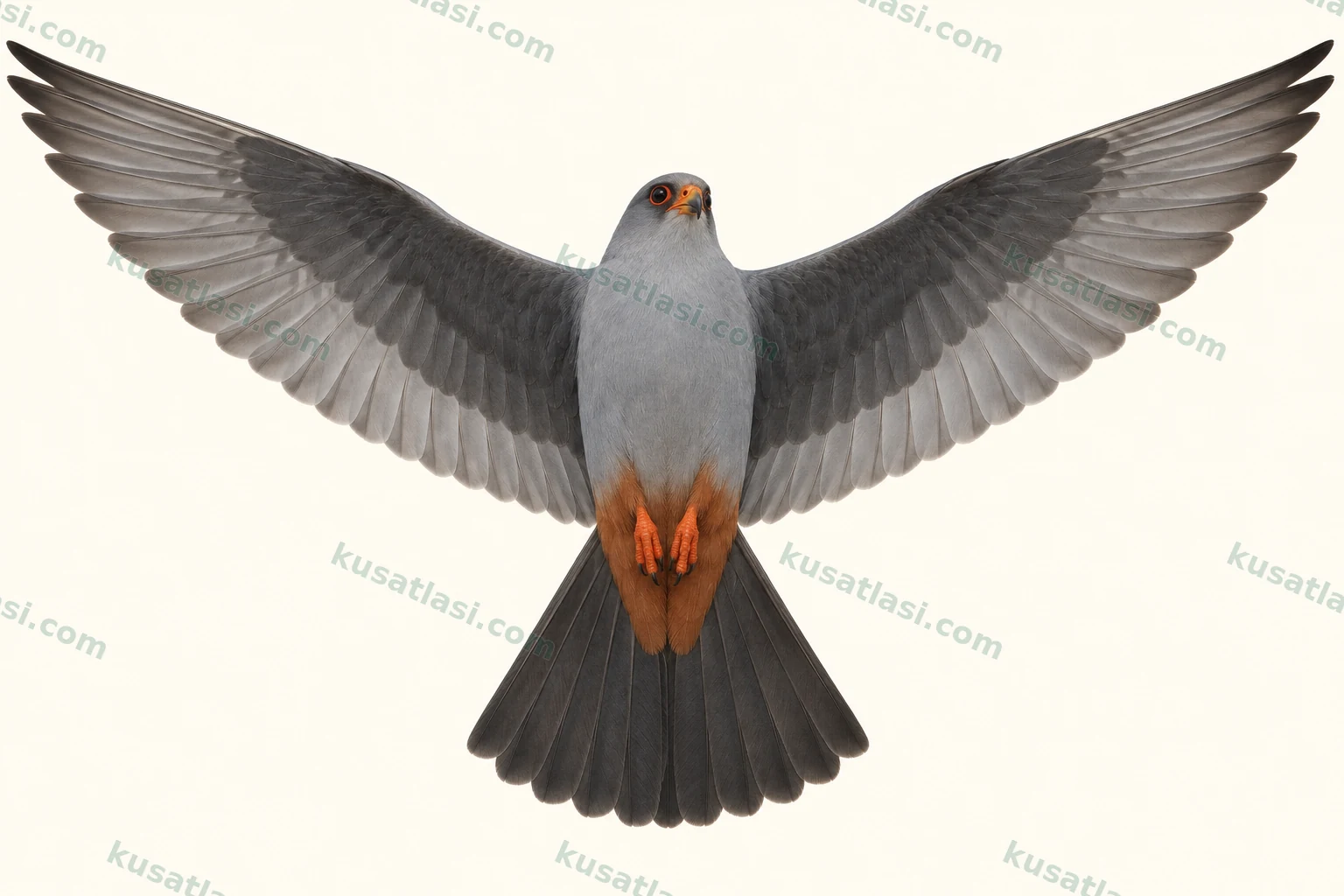
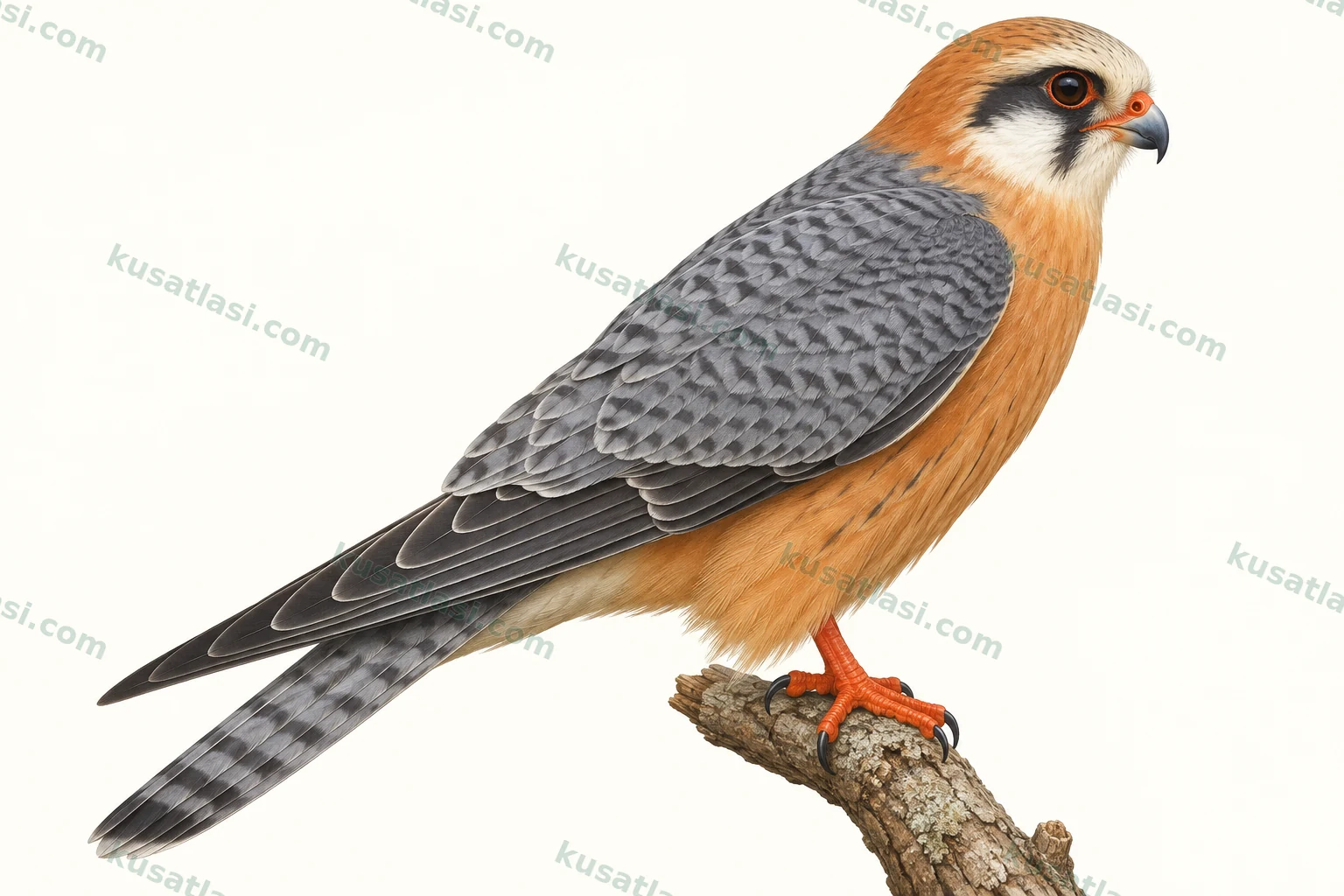
Adult male slate-grey with chestnut lower rear underparts; female buff-rufous head/underparts and patterned grey back. Separate age and view.
- Order
- Falconiformes
- Conservation status
- VU Vulnerable
First look in the field
Quick identification
- Identify Age and Sex First
Red-footed Falcon is a small, long-winged falcon with distinctly different adults.
- Measurements
MME guide values are 29–31 cm length and 66–78 cm wingspan, shared between sexes; mass is 130–164 g male and 130–197 g female.
- Nesting
Old corvid nests and suitable nestboxes are used, colonially or by single pairs.
Biometrics
Length
- Male
- 29–31 cm
- Female
- 29–31 cm
Wingspan
- Male
- 66–78 cm
- Female
- 66–78 cm
Weight
- Male
- 130–164 g
- Female
- 130–197 g
Detailed explanations of these measurements are available on our website, on the same species page.
World distribution
Red-footed Falcon
Customize map layers
Observation Sites
Bird Atlas recordsLoading observations…
Monthly record intensity
12 monthsRecord intensity is affected by observation effort.
Rotate the globe and compare the supported layers. Colours show broad range areas, not exact sightings or nests.
- Jan
- Apr
- Jul
- Oct
- Dec
Generalised data and method
Basemap: Natural Earth (public domain).
Bibliography ↗Authentic bird sound and ethical use
Voice and listening
See the detailed species account below.
Spoken guide
Narration has not been recorded; no audio file has been created.
Observe without approaching the nest
Breeding
Old corvid nests and suitable nestboxes are used, colonially or by single pairs. SOR gives usually 3–4 eggs, incubation by both sexes for about 22–28 days and nest departure at 26–30 days. A passage sighting does not demonstrate a nearby nest.
Scientific species guide
Detailed account
Identify Age and Sex First
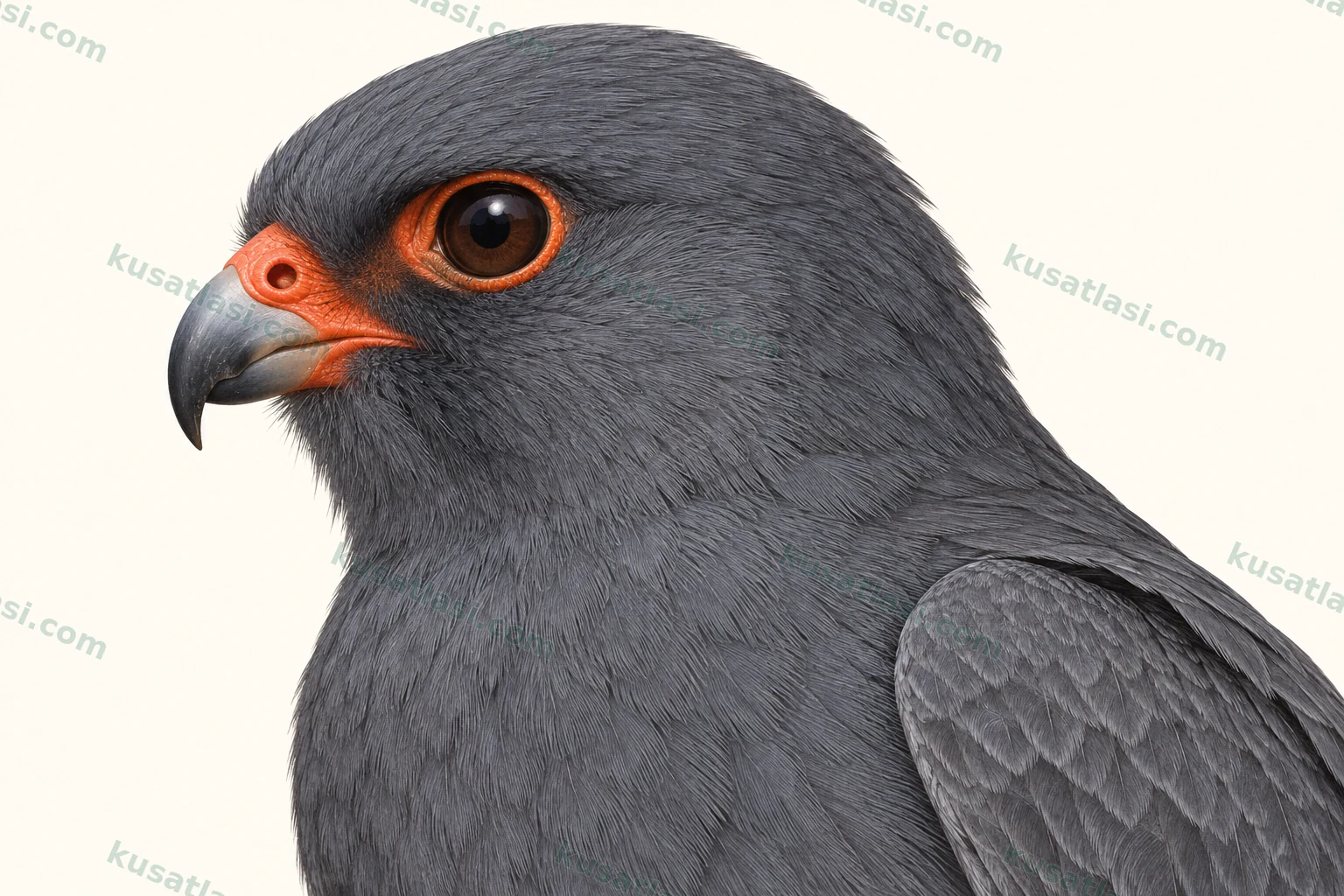
Red-footed Falcon is a small, long-winged falcon with distinctly different adults. The male is mainly slate-grey; chestnut belongs on lower belly, thighs and undertail, not chest or rump. Reddish feet, eyering and cere help at close range. The female has a buff-rufous head and underparts with a patterned grey back. Juveniles are browner above and streaked below; immature males may mix plumages.
Measurements
MME guide values are 29–31 cm length and 66–78 cm wingspan, shared between sexes; mass is 130–164 g male and 130–197 g female. Overlap prevents reliable sexing by apparent size alone. These are not a Turkish measurement series.
Nesting
Old corvid nests and suitable nestboxes are used, colonially or by single pairs. SOR gives usually 3–4 eggs, incubation by both sexes for about 22–28 days and nest departure at 26–30 days. A passage sighting does not demonstrate a nearby nest.
Passage and Very Scarce Breeding
In Turkey, consider spring and autumn passage separately from scarce breeding. A summer bird alone does not establish nesting. The published 2006 Bosphorus count recorded the species between 30 April and 23 May, concentrated in early May. Those dates describe one site and year, not a guaranteed national schedule.
A Dated Breeding Estimate
BirdLife's 2021 European supplementary table reports 1–3 Turkish pairs for 2016, citing the breeding atlas. It is neither a 2026 census nor support for saying the species never breeds in Turkey. Contemporary breeding evidence should be documented at distance without publicising sensitive nest locations.
Migration Context
The breeding range extends from eastern Europe into Asia and wintering is in southern Africa. Eastern Mediterranean autumn movement is associated with September–October. A series of map observations is not an individual tracking route, and changing flock counts cannot directly estimate the country's population.
Open Ground with Trees
Look for grassland, pasture and farmland adjoining tree lines or small groves. Open ground supports hunting while trees offer perches and potential old nests. One grove does not prove a breeding colony. Scan open areas near water and birds resting on wires, checking each individual rather than assuming every falcon in a group is the same species.
Retain Nesting Resources
Existing corvid nests can be useful to Red-footed Falcons, but not every nest is occupied by them. Protecting nest trees works together with maintaining feeding ground. Nestbox work requires informed planning and monitoring, not unplanned disturbance of a tree colony.
Field Practice
Stay on established routes and do not flush perched birds for flight photographs. Step back when attention, alarm or displacement increases. Record land cover and movement as well as numbers. A wire is a perch, not an identification character: verify head, body and wing pattern independently.
Insects Are Important
Large insects, including grasshoppers, beetles and dragonflies, form important foods. Sudden turns may suggest aerial hunting, but do not name prey that was not visible. Keep the observed action separate from the inferred food. Birds may also drop from a perch or hover briefly; hovering alone does not distinguish this falcon from a kestrel.
Breeding-Season Variation
Small vertebrates can become important when feeding young, so an exclusively insect diet would be misleading. A prey-carrying bird should not be followed closely to its nest. Note the behaviour from a distance and handle sensitive locations cautiously.
Feeding Habitat Matters
Insect reduction, agricultural change and nest-tree loss can act together. Useful field notes describe the habitat actually used: pasture, field margin or open ground near water. They do not by themselves prove that a specific chemical or farm operation caused a decline. Wait for natural flight views rather than disrupting feeding.
A User of Existing Nests
This falcon often takes over old corvid nests instead of building a large stick nest. Some pairs nest singly, so colonial behaviour is not universal. Nest-tree protection may therefore benefit several species at once.
Location of Colour Matters
Male chestnut plumage belongs on thighs, lower belly and undertail. A chestnut chest or dorsal rump is not an equivalent mark. Separate dorsal and ventral flight views. Existing plate inconsistencies have been logged without altering the protected images. Females and juveniles must not be judged solely against a male illustration.
Updated Conservation Status
BirdLife reported a global change from Near Threatened to Vulnerable; older accounts may still display NT. A large local migrating group is not evidence of global security. Breeding resources, feeding areas and stopovers all matter, and their condition cannot be inferred from one day's count.
Text and plates come from existing atlas records; references are in the central bibliography.
Open bibliography