
Existing atlas plates
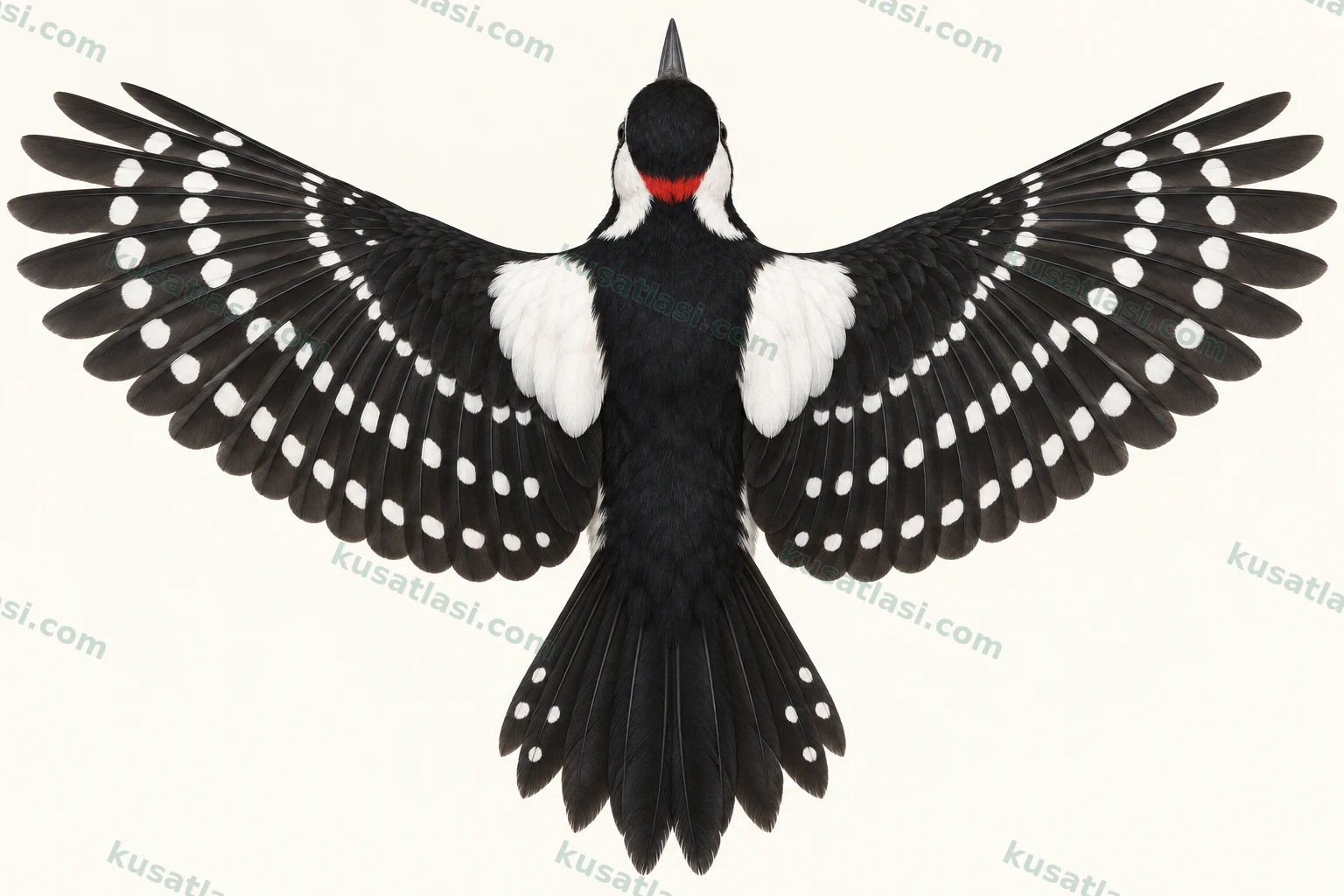
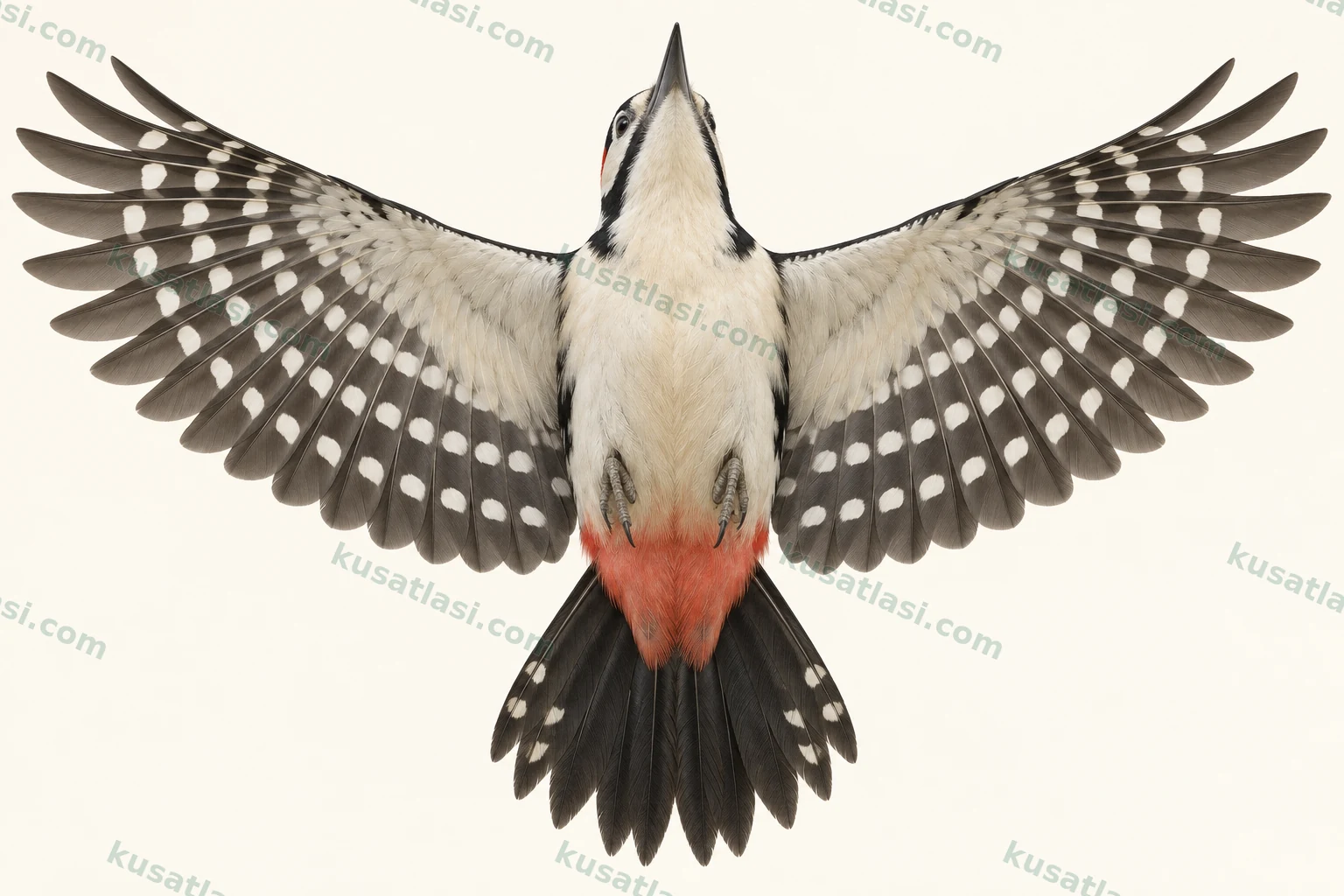
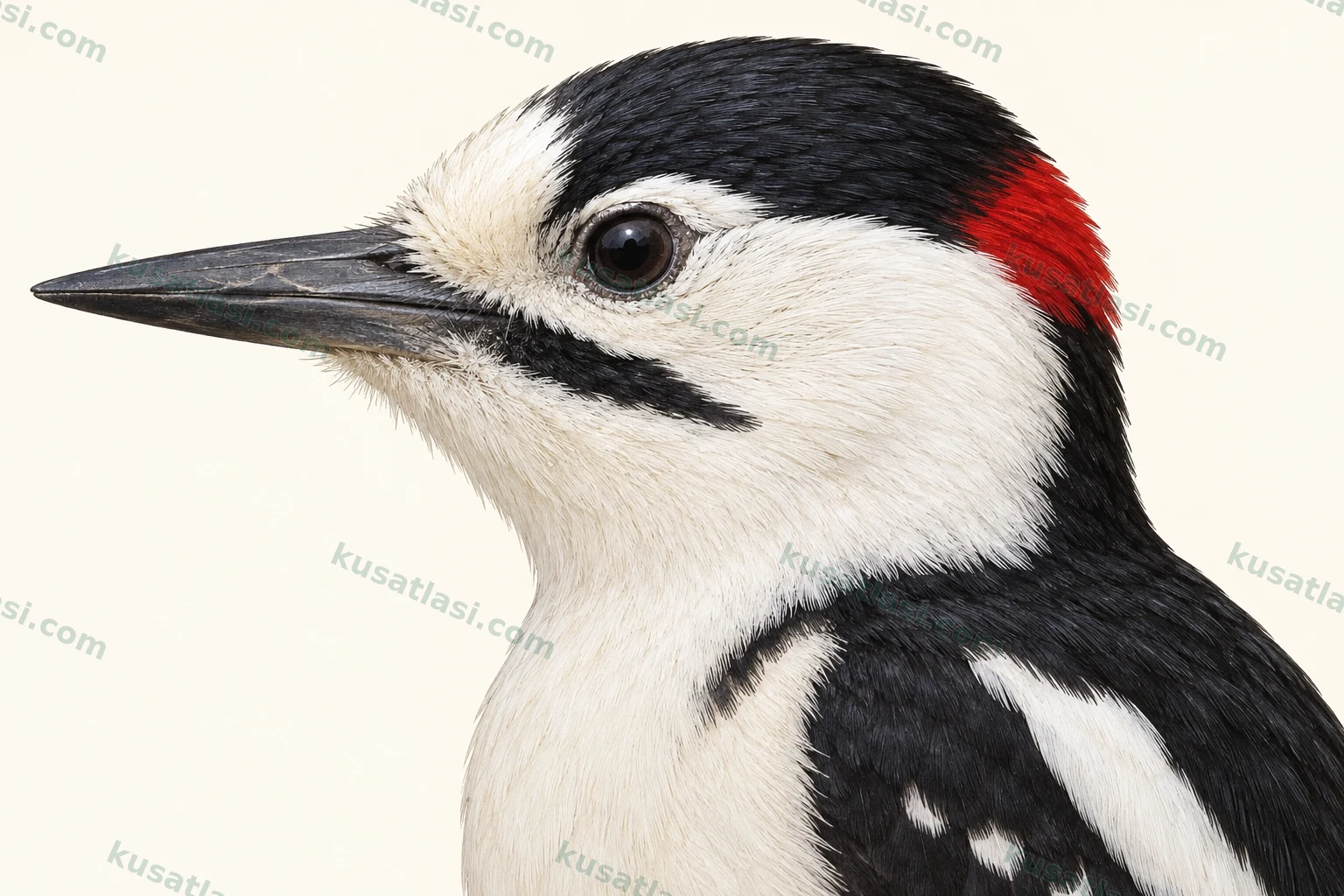
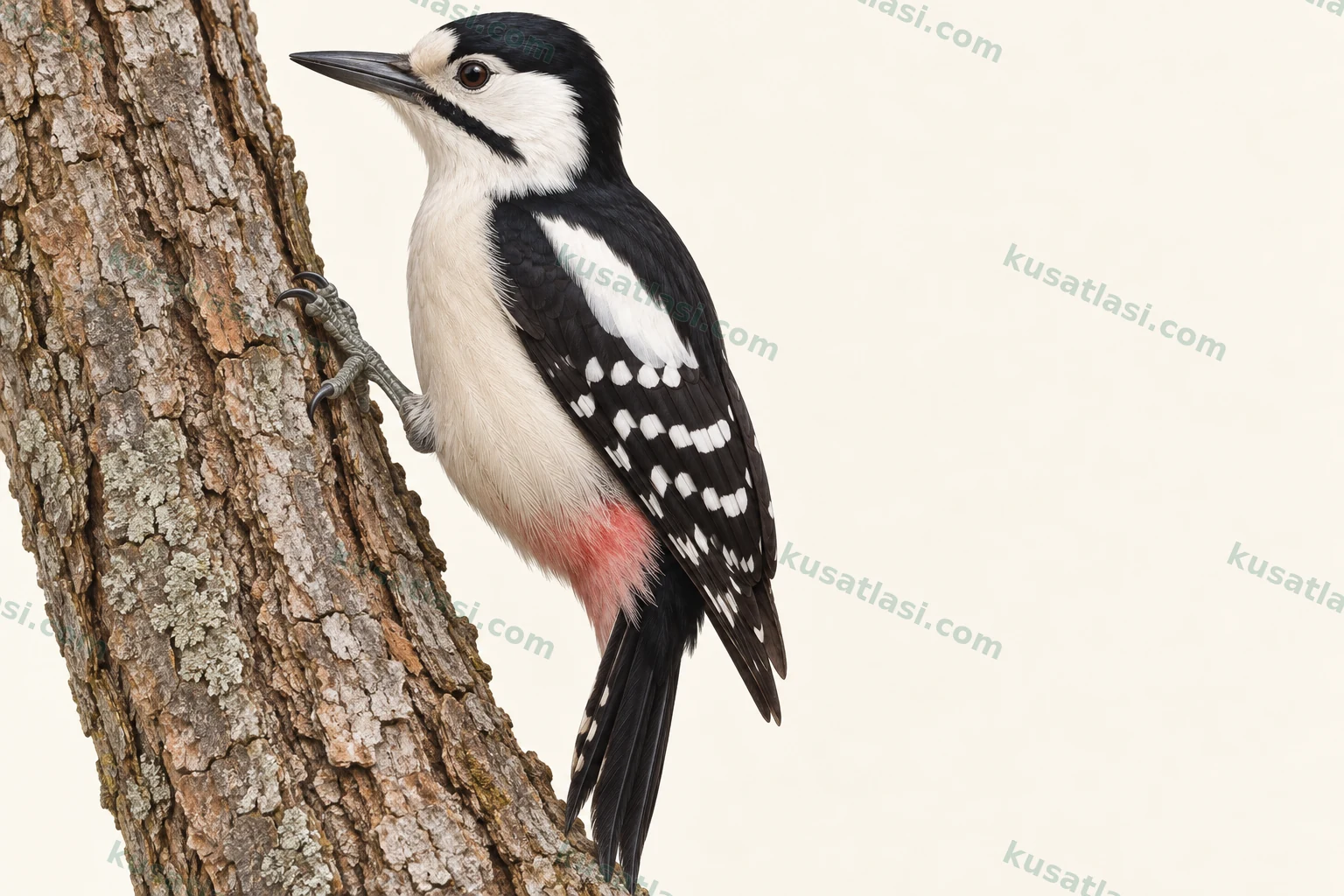
Syrian Woodpecker identification views
Swipe left or right through all five plates.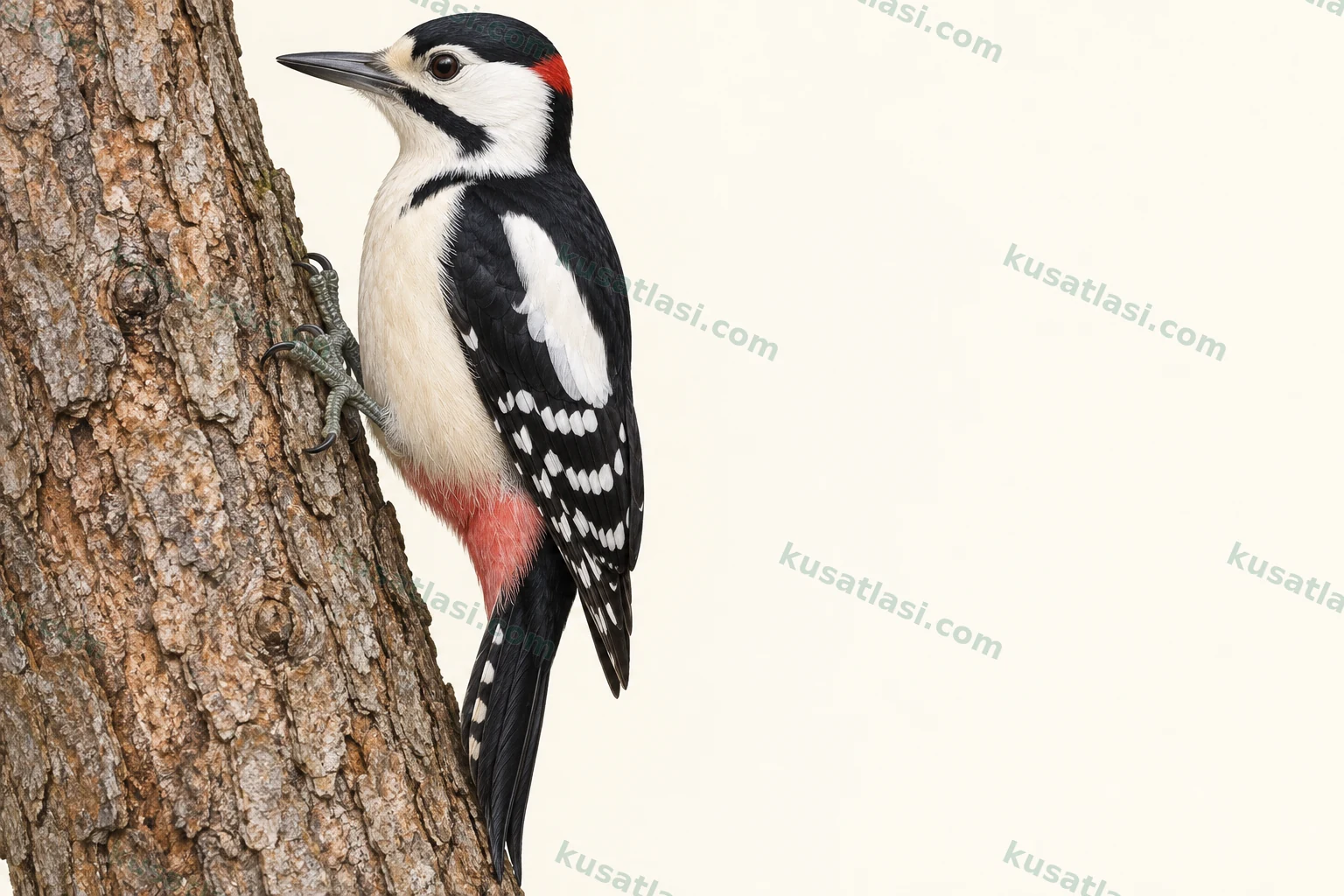
Woodpeckers
Syrian Woodpecker
Dendrocopos syriacus
Alaca Ağaçkakan
Pale cheek connects openly with neck side; adult male red nape, female black nape; very little white in black tail.
- Order
- Piciformes
- Conservation status
- LC Least Concern
First look in the field
Quick identification
- An Open Cheek Connection
Syrian Woodpecker is black and white with conspicuous white shoulder patches.
- Sex and Age
Adult males have a red nape; adult females lack it.
- Nesting
A cavity is excavated in a trunk or substantial branch.
Biometrics
Length
- Male
- 23–25 cm
- Female
- 23–25 cm
Wingspan
- Male
- 34–40 cm
- Female
- 34–40 cm
Weight
- Male
- 70–83 g
- Female
- 70–83 g
Detailed explanations of these measurements are available on our website, on the same species page.
World distribution
Syrian Woodpecker
Customize map layers
Observation Sites
Bird Atlas recordsLoading observations…
Monthly record intensity
12 monthsRecord intensity is affected by observation effort.
Rotate the globe and compare the supported layers. Colours show broad range areas, not exact sightings or nests.
- Jan
- Apr
- Jul
- Oct
- Dec
Generalised data and method
Basemap: Natural Earth (public domain).
Bibliography ↗Authentic bird sound and ethical use
Voice and listening
See the detailed species account below.
Spoken guide
Narration has not been recorded; no audio file has been created.
Observe without approaching the nest
Breeding
A cavity is excavated in a trunk or substantial branch. Usually 3–7 white eggs are incubated by both sexes for about 9–11 days. Young remain in the nest roughly three to four weeks; published figures vary around 20–28 days. Leaving the hole does not mean immediate independence.
Scientific species guide
Detailed account
An Open Cheek Connection
Syrian Woodpecker is black and white with conspicuous white shoulder patches. The dark moustachial pattern does not join the nape, leaving a pale connection between cheek and neck. A turned head or branch shadow can hide this, so check several views rather than one photograph. The black tail carries very little white and the lower rear underparts are pinkish-red.
Sex and Age
Adult males have a red nape; adult females lack it. Juveniles can have red crowns, so red on the head alone does not establish an adult male. Guide measurements used here are 23–25 cm length, 34–40 cm wingspan and 70–83 g mass. They are shared reference ranges, not separate Turkish samples or invented sex-specific limits.
Nesting
A cavity is excavated in a trunk or substantial branch. Usually 3–7 white eggs are incubated by both sexes for about 9–11 days. Young remain in the nest roughly three to four weeks; published figures vary around 20–28 days. Leaving the hole does not mean immediate independence. Do not open a cavity to inspect it.
Resident in Turkey
Syrian Woodpecker breeds in Turkey and may be found year-round in suitable areas. Its calendar should not be presented as spring arrival followed by autumn departure. Failure to see one in winter can reflect effort, cover or local movement rather than migration out of the country. Its wider range includes the Near East and parts of southeastern and central Europe.
A Dated Estimate
BirdLife's 2021 supplementary table gives 150,000–400,000 Turkish pairs for 2013–2019, with deficient data quality. This is a broad historical estimate, not an exact 2026 census. Map record totals are not comparable population estimates, and an empty map cell may simply lack observer coverage.
Seasonal Behaviour
Territorial activity and excavation are associated with spring, followed by care of young. Local weather and elevation affect timing. Juvenile dispersal and nearby feeding movements are not equivalent to regular long-distance migration. Monthly panels describe approximate field expectations, not an individual nest's laying date.
Beyond Extensive Forest
Mature parks, gardens, orchards, tree lines and small groves can provide habitat. A bird in an urban park need not be captive or released: it may be using planted trees naturally. Open ground interspersed with trees is worth searching rather than limiting visits to extensive woodland.
Watch the Whole Tree
Locate a call, then scan trunks and branches. A bird disappearing behind a trunk may soon reappear without any need to approach. Check the cheek connection in good light, as shadows can alter the apparent head pattern. Feeding on a tree does not prove that it contains a nest.
Retain Structure Safely
Excavatable wood and a varied food supply are important. Old or dead wood can have habitat value, while public-safety decisions require informed assessment. Do not illuminate nest holes, cut branches for photographs or delay a food-carrying adult. Record the tree and behaviour as well as the species name.
A Mixed Diet
Insects and larvae around bark and wood are important, but fruit, nuts and seeds are also eaten. Describing the bird as exclusively an extractor of wood-boring insects would miss this variety. Available food and breeding demands affect what is used; one observed meal does not reveal the entire diet.
Feeding versus Drumming
Searching crevices and working a particular point may obtain food. Rapid patterned drumming serves communication and is not evidence by itself of larvae inside the wood. Watch whether food is actually extracted. A crack can support a hard item while it is worked with the bill, but remains alone do not identify the animal responsible.
Feeding Young
Both parents contribute. Small prey may be invisible in photographs, and following a food-carrying bird closely can delay its return. Separate observed behaviour from inferred food identity. Artificial feeding is not necessary for observation; retaining suitable trees and natural food resources is a more durable approach.
Names Are Not Range Boundaries
Syrian Woodpecker is not confined to Syria; it is also a Turkish resident breeder. The Turkish name here identifies Dendrocopos syriacus, not every black-and-white woodpecker. Juvenile red crowns should not be confused with the red nape of an adult male or automatically assigned to another species.
Shared Nest Duties
A study of 14 pairs in southeastern Poland found a larger male contribution to excavation and participation by both sexes in incubation and provisioning. Its numerical division of work is not a fixed rule for every Turkish pair. Excavation alone cannot establish sex without supporting evidence.
Protected Illustrations
Existing plates contain recorded inconsistencies in the cheek connection, head and breast pattern, and dorsal flight pattern. Brown barring across the back or a black, spotted breast should not be learned as this species' diagnostic features. The protected files remain unchanged; use verified descriptive characters together when identifying a real bird.
Text and plates come from existing atlas records; references are in the central bibliography.
Open bibliography