
Existing atlas plates
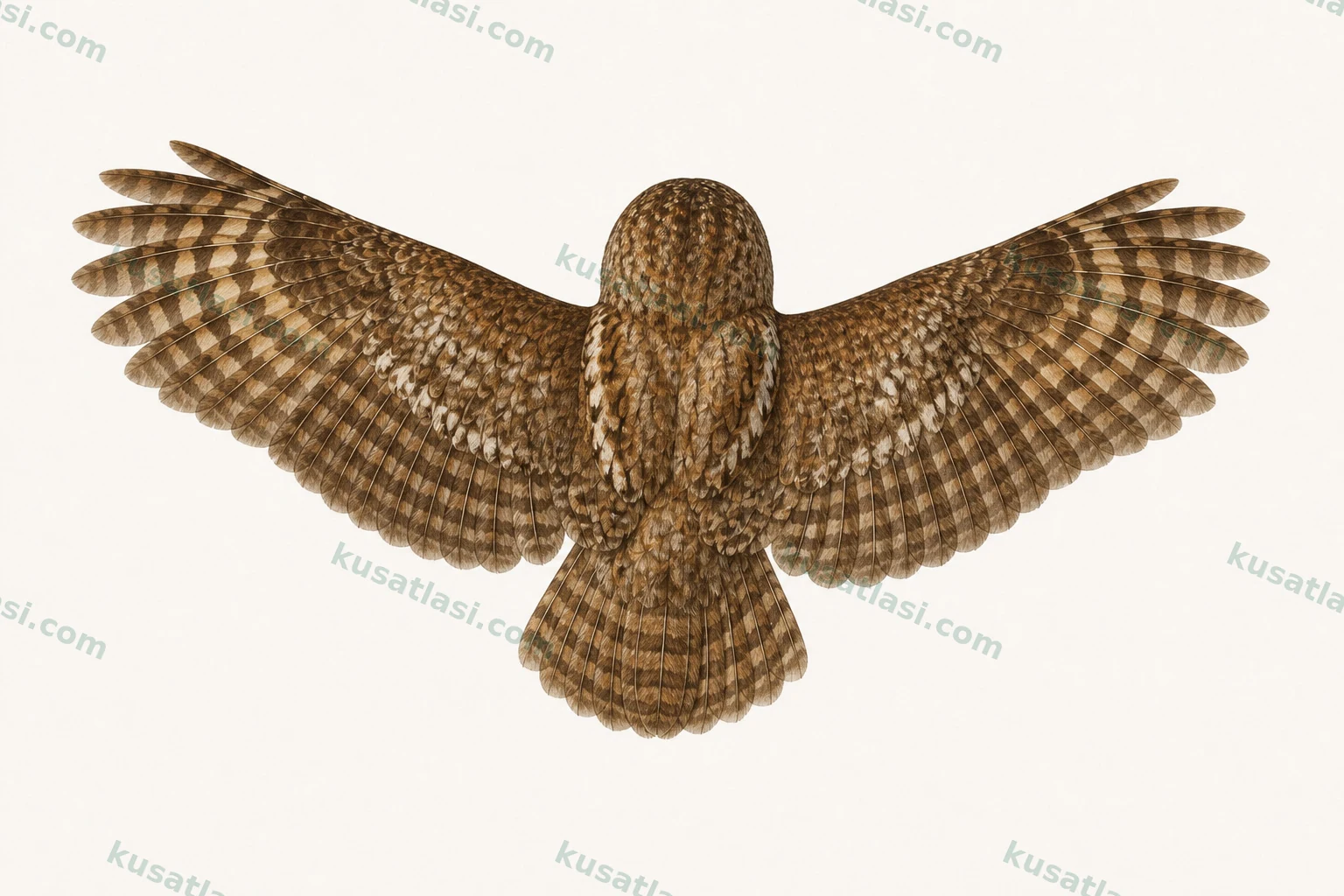
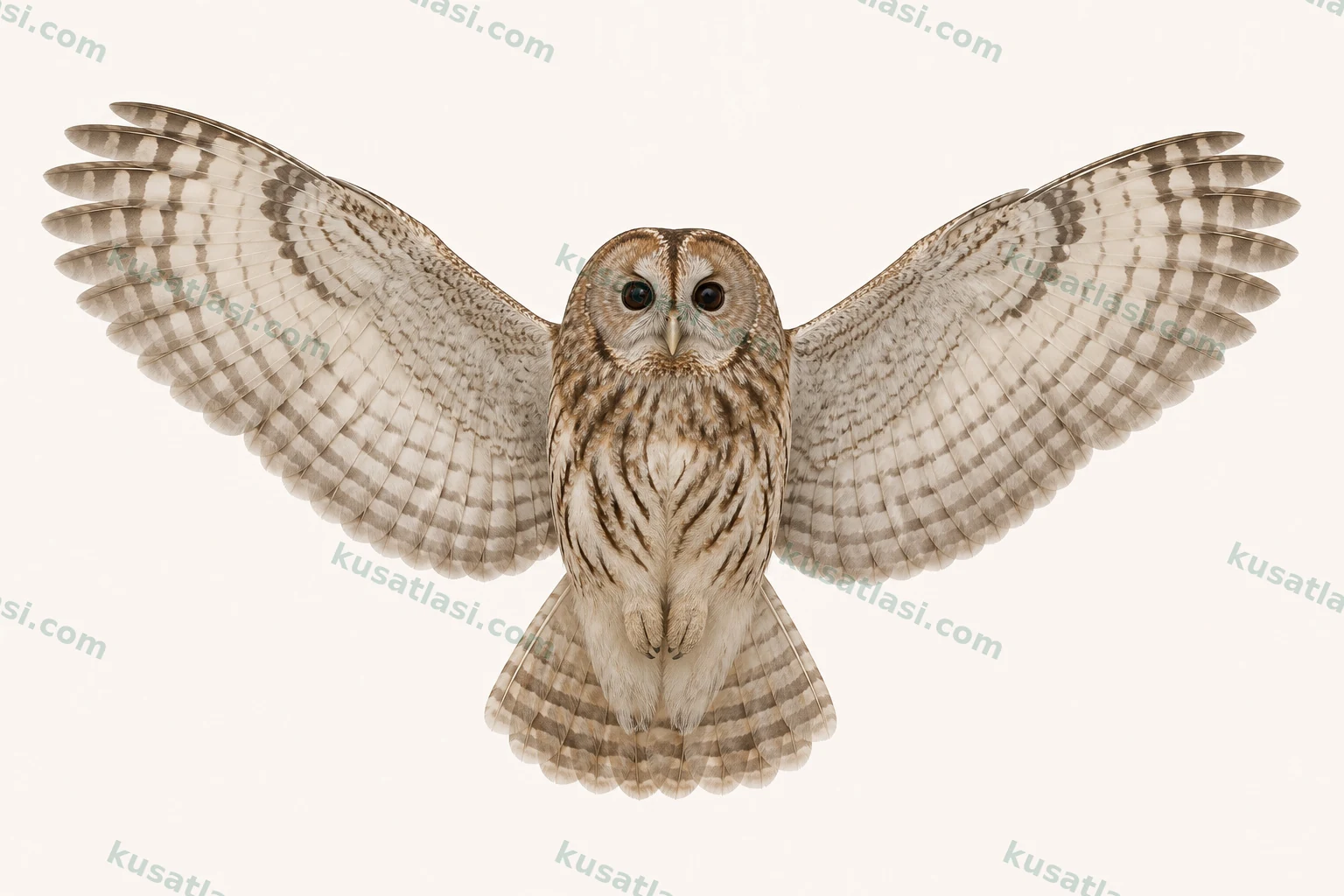
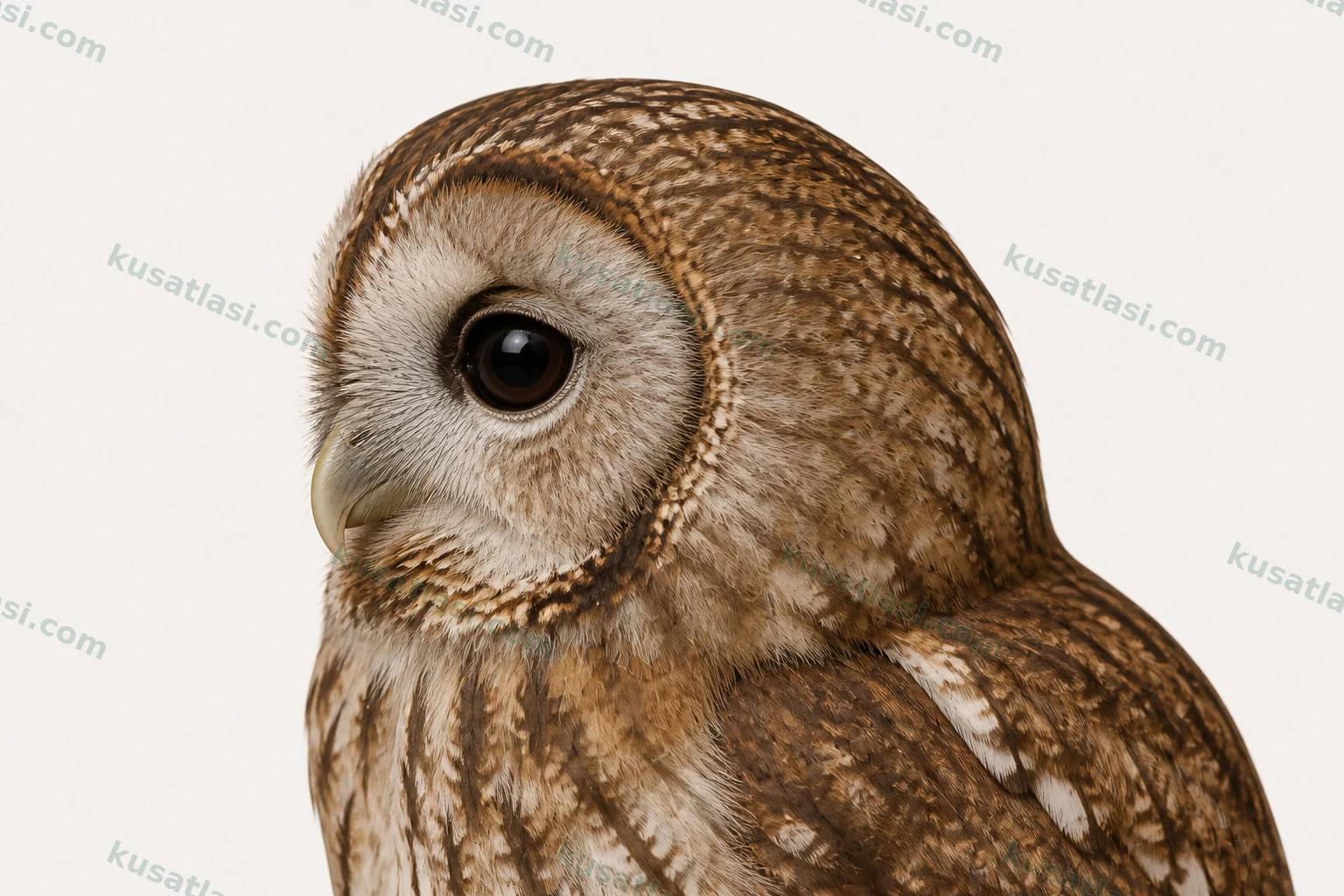
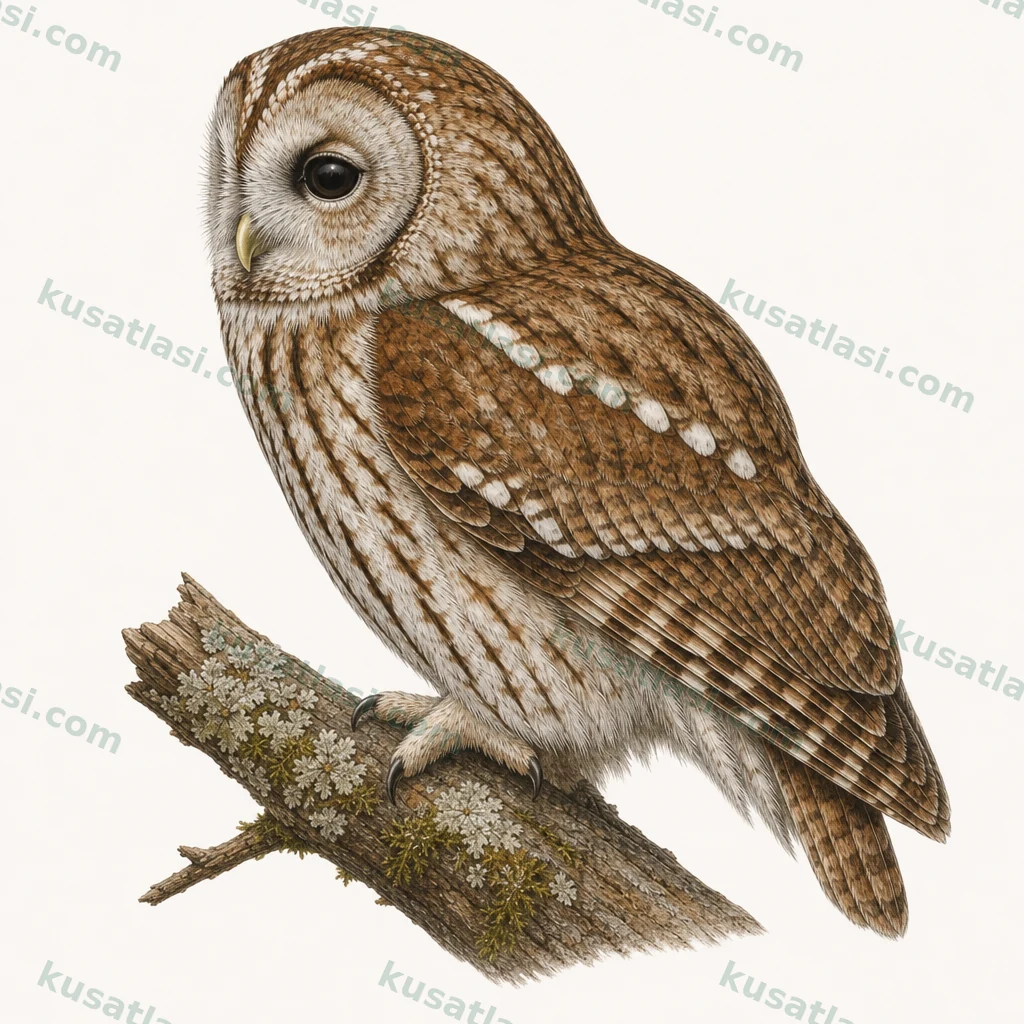
Tawny Owl identification views
Swipe left or right through all five plates.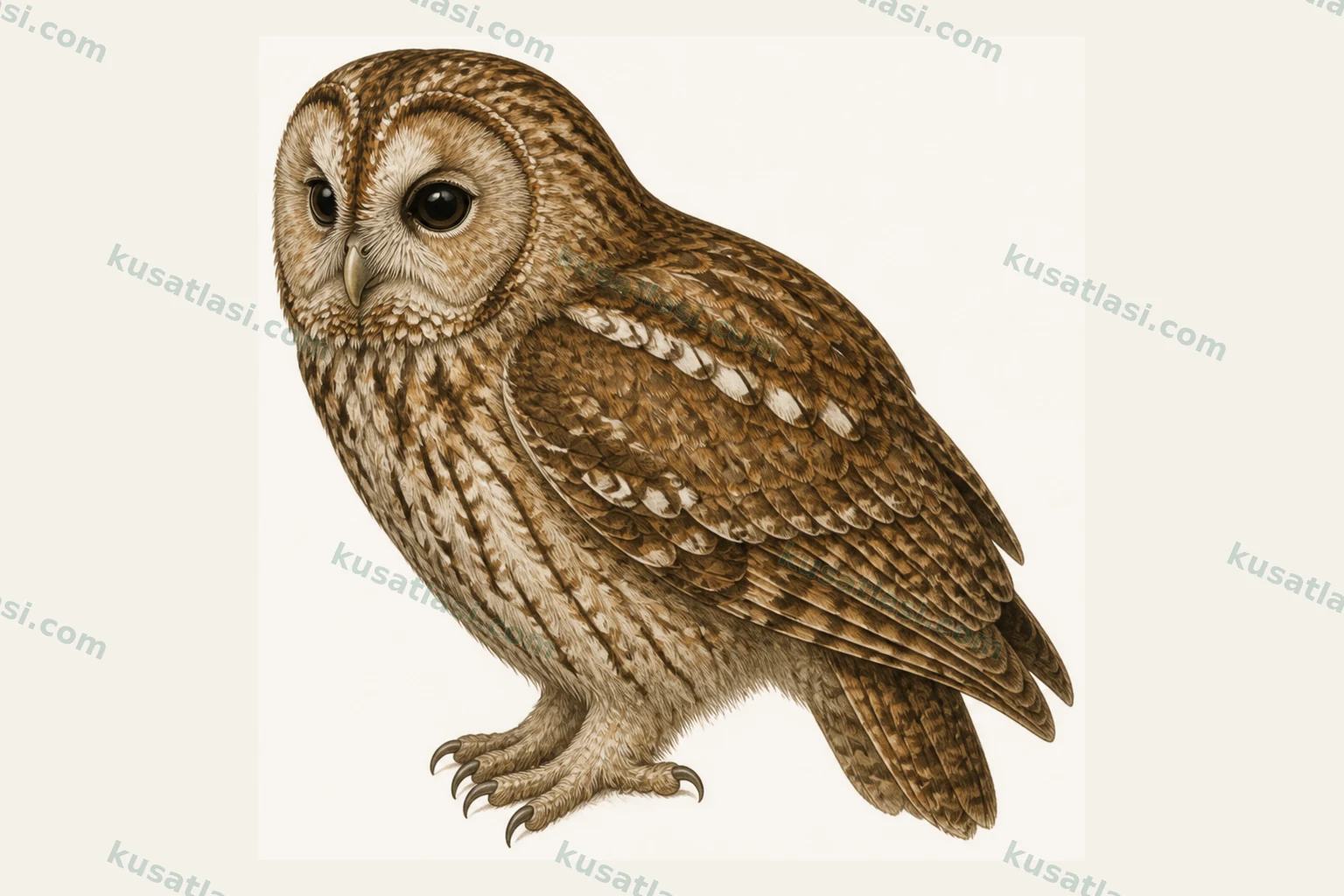
Owls
Tawny Owl
Strix aluco
Alaca Baykuş
Rounded-headed woodland owl with dark eyes and no ear tufts. Sexes similar; brown and grey forms are not sex characters.
- Order
- Strigiformes
- Conservation status
- LC Least Concern
First look in the field
Quick identification
- Rounded Head and Dark Eyes
Tawny Owl is a compact, medium-sized woodland owl.
- Sex and Colour Forms
Males and females look similar.
- Breeding Summary
Usually a tree cavity, suitable nest box or sheltered building recess is used.
Biometrics
Length
- Male
- 37–39 cm
- Female
- 37–39 cm
Wingspan
- Male
- 94–104 cm
- Female
- 94–104 cm
Weight
- Male
- 340–500 g
- Female
- 420–620 g
Detailed explanations of these measurements are available on our website, on the same species page.
World distribution
Tawny Owl
Customize map layers
Observation Sites
Bird Atlas recordsLoading observations…
Monthly record intensity
12 monthsRecord intensity is affected by observation effort.
Rotate the globe and compare the supported layers. Colours show broad range areas, not exact sightings or nests.
- Jan
- Apr
- Jul
- Oct
- Dec
Generalised data and method
Basemap: Natural Earth (public domain).
Bibliography ↗Authentic bird sound and ethical use
Voice and listening
See the detailed species account below.
Spoken guide
Narration has not been recorded; no audio file has been created.
Observe without approaching the nest
Breeding
See the detailed species account below.
Scientific species guide
Detailed account
Rounded Head and Dark Eyes
Tawny Owl is a compact, medium-sized woodland owl. Its large rounded head lacks projecting ear tufts; the eyes are dark and the face is rounded rather than heart-shaped. Assess the brown or grey upperparts and streaked pale underside together. A dark eye alone is not diagnostic.
Sex and Colour Forms
Males and females look similar. Females are generally larger, but measurements overlap; brown and grey forms do not represent the two sexes. Different poses and image scales are not evidence of size dimorphism. MME guide values are 37–39 cm, 94–104 cm wingspan, male mass 340–500 g and female mass 420–620 g, not a Turkish measurement series.
Breeding Summary
Usually a tree cavity, suitable nest box or sheltered building recess is used. A typical clutch has 2–3 eggs, with variation. The female incubates for about 30 days while the male supplies food. Young can leave the cavity before flying; flight develops around 35–39 days. Leaving the nest and becoming independent are different milestones.
Resident in Suitable Turkish Habitat
Tawny Owl breeds in Turkey and is mainly resident, not simply a summer visitor. Hearing it in winter or recording more birds in autumn does not establish a migration wave. Night survey effort and calling activity strongly affect how often it is detected.
A Dated Estimate
BirdLife's 2021 European table lists 20,000–50,000 Turkish pairs for 2002–2012, based on partial information. It is not a current 2026 census, and trends are uncertain. User sighting totals cannot be converted directly into breeding pairs or a national population estimate.
Territory and Dispersal
Established adults may occupy territories throughout the year while young move to find their own areas. Local dispersal differs from regular long-distance migration. Record time, direction and simultaneous calls to avoid repeatedly counting one bird. Calendar entries distinguish seasonal behaviour from year-round presence, not exact nationwide laying dates; map dots are not tracked routes.
Structure within Woodland
Broad-leaved or mixed woodland, mature parks and large gardens may support Tawny Owls. Consider cavities, sheltered daytime roosts and nearby feeding openings, not just tree numbers. Keeping one old tree while removing all surrounding cover may not retain the same habitat.
Cover beside Openings
Wooded shelter and grassy edges can provide different functions. Treeless open ground is not the typical starting point for this woodland owl. Watch from a safe path at dusk rather than inspecting every cavity, and do not infer absence from one brief visit.
Quiet Roosts and Nest Sites
An owl in an urban park is not immune to disturbance. Crowds, repeated flash and playback can disrupt resting birds. Avoid publicising precise roost or nest locations. Maintain habitat connections and assess wildlife use before tree work. Nest boxes require informed siting and maintenance; never climb to or illuminate an occupied cavity for a view.
Small Mammals and Other Prey
Mice and other small mammals are important, but Tawny Owl also uses small birds, large insects, earthworms and amphibians. Occasional records of other small vertebrates should not be presented as the main diet throughout Turkey. Prey availability varies between sites and seasons.
Listening from a Perch
A bird may wait and turn its head before dropping towards prey. Record waiting, ground visits, visible food and departures separately rather than interpreting every movement as courtship. Undigested hair and bone can be expelled as a pellet, which is not a dropping and may not identify the species by itself.
Observe without Bait
Do not reach into roost cavities or disturb a nest to collect remains. Food carried by adults during breeding may be for young. Bait, live rodents and repeated sound lures are unnecessary for observation. Retaining natural prey habitat matters; consider the food-chain effects of poisons rather than assuming that an abundant-looking patch is a safe feeding place.
A Duet Can Sound Like One Bird
Long territorial hoots and sharp contact calls are different vocalisations. The male commonly hoots and the female more often gives the sharp call, but neither is an absolute sex key. Preserve pauses and directional notes when recording natural calls.
Branching Young Are Not Always Orphans
Young Tawny Owls can leave the nest before full flight develops. A fluffy bird on a branch or ground may still have parents caring for it nearby. Watch from a distance; do not take it home or feed it. Visible injury or immediate danger calls for guidance from a local wildlife rescue professional.
Colour and Silence Can Mislead
Brown and grey forms do not equal male and female, and overlapping sizes complicate visual sexing. Existing drawings use different poses and scales, so the slider is not a measurement tool. Likewise, not hearing a nocturnal bird during a short visit does not prove disappearance. Repeated, non-disturbing observations are more informative than repeated playback.
Text and plates come from existing atlas records; references are in the central bibliography.
Open bibliography