
Existing atlas plates
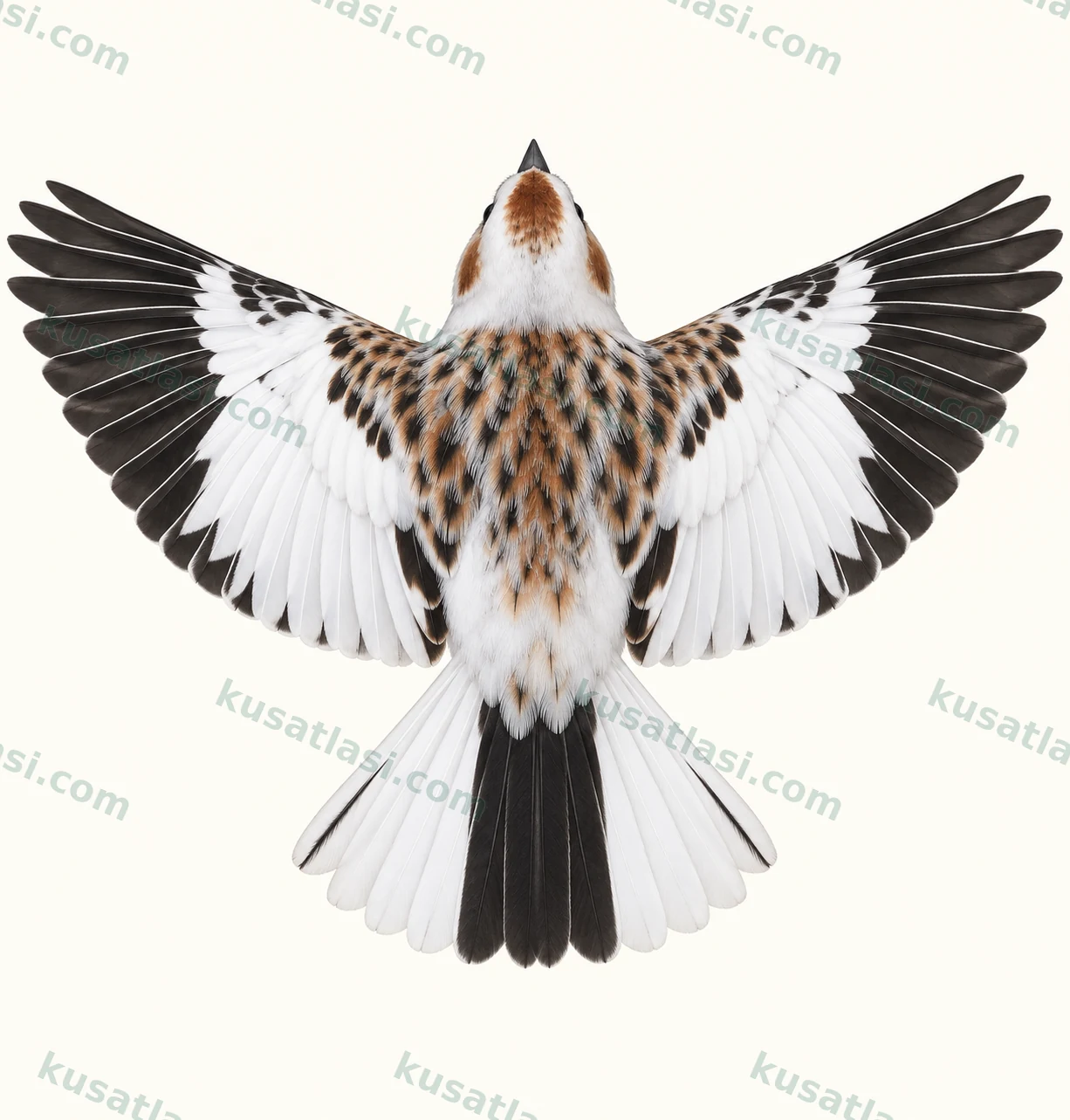
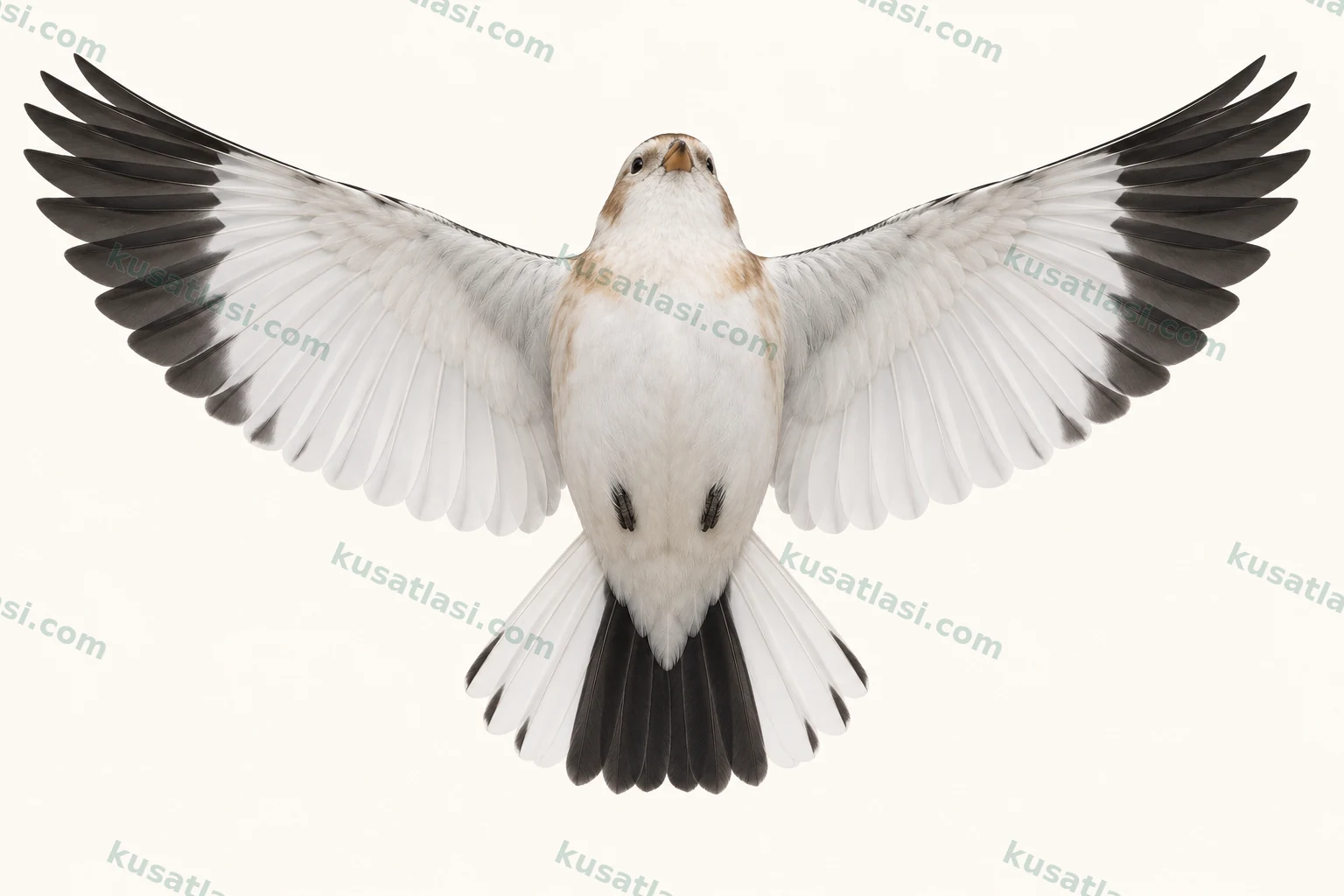
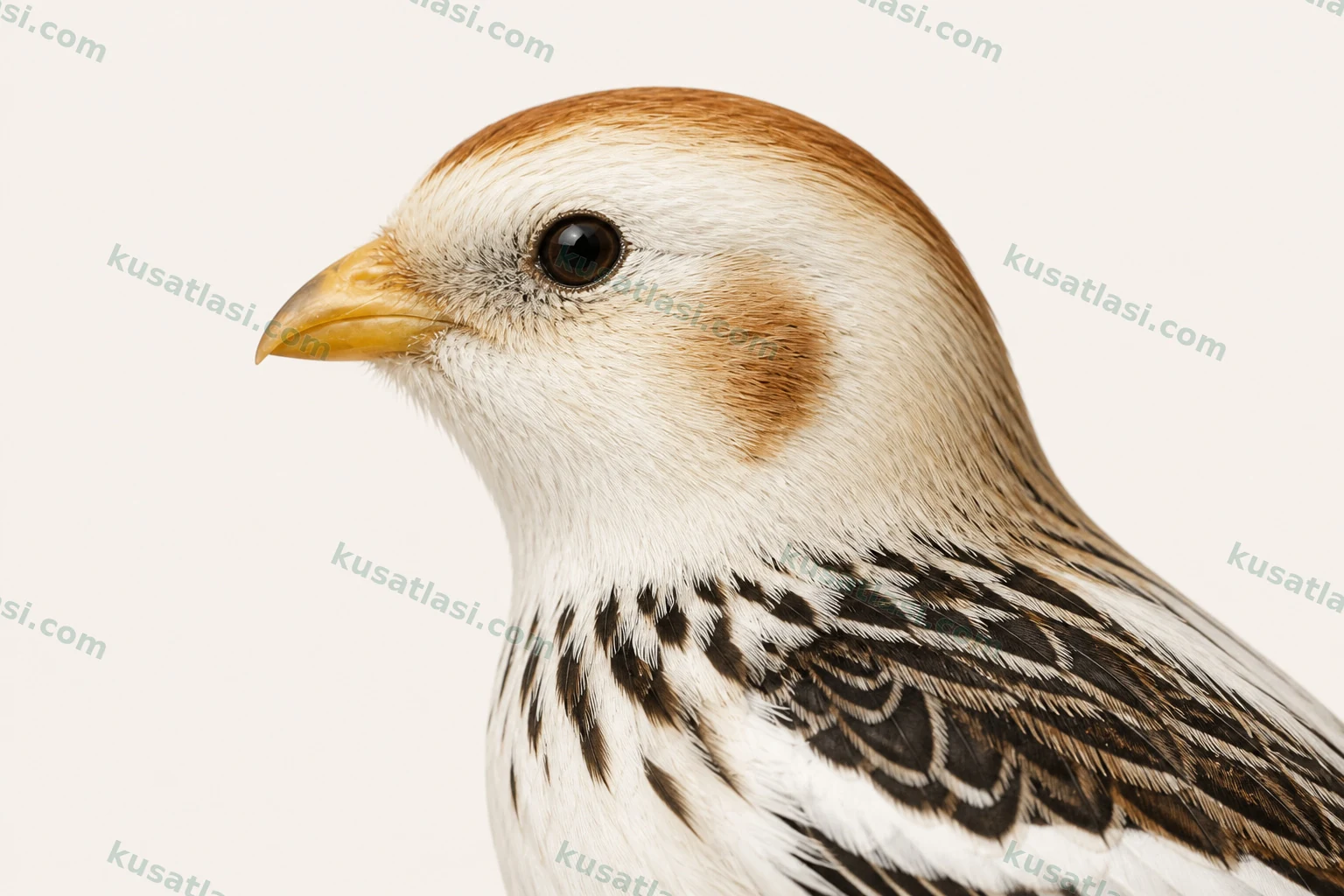
Snow Bunting identification views
Swipe left or right through all five plates.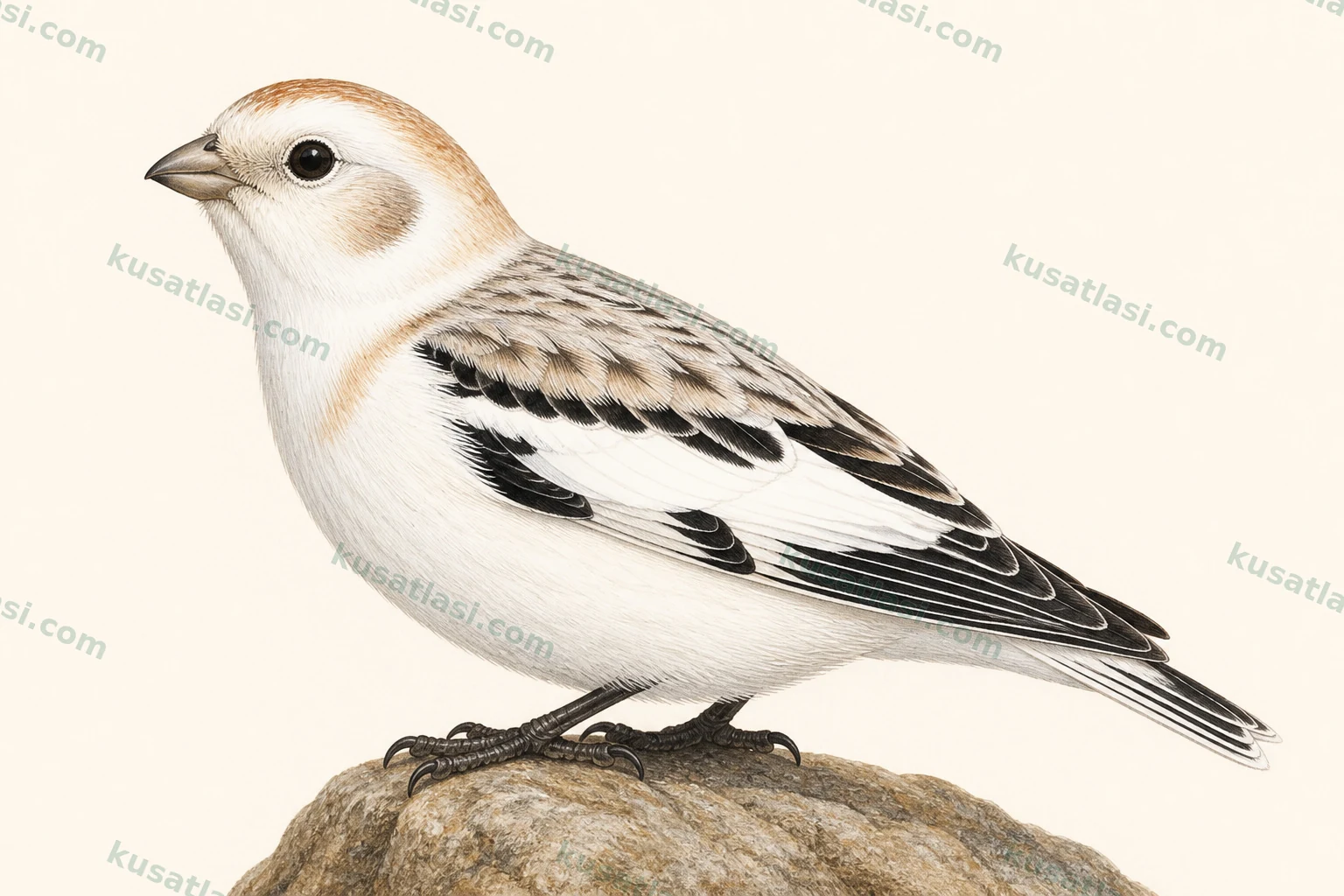
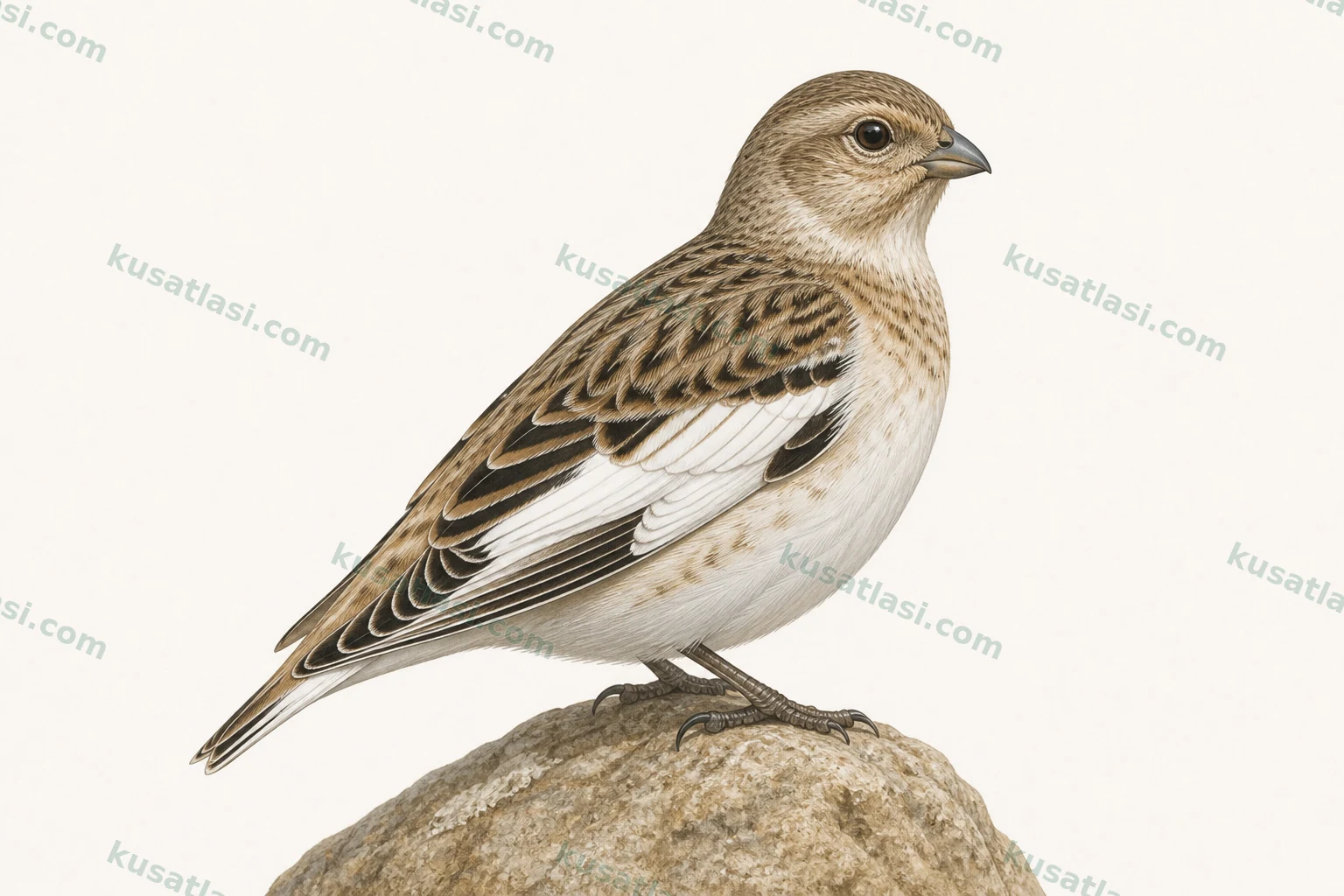
Longspurs and Snow Buntings
Snow Bunting
Plectrophenax nivalis
Alaca Çinte
Short conical bill, rusty-buff winter tones and broad white wing panels; a scarce Turkish winter visitor, not an asserted local breeder.
- Order
- Passeriformes
- Conservation status
- LC Least Concern
First look in the field
Quick identification
- Compact Shape and White Wing Panels
Snow Bunting has a short conical bill and a full-bodied shape.
- Season before Sex
Breeding males have a white head and underside with a black back; females are more streaked and dusky-headed.
- Northern Breeding Biology
A grass-and-moss cup deep in a rock crevice is lined with hair and feathers.
Biometrics
Length
- Male
- 16–17 cm
- Female
- 16–17 cm
Wingspan
- Male
- 32–38 cm
- Female
- 32–38 cm
Weight
- Male
- 28–50 g
- Female
- 26–42 g
Detailed explanations of these measurements are available on our website, on the same species page.
World distribution
Snow Bunting
Customize map layers
Observation Sites
Bird Atlas recordsLoading observations…
Monthly record intensity
12 monthsRecord intensity is affected by observation effort.
Rotate the globe and compare the supported layers. Colours show broad range areas, not exact sightings or nests.
- Jan
- Apr
- Jul
- Oct
- Dec
Generalised data and method
Basemap: Natural Earth (public domain).
Bibliography ↗Authentic bird sound and ethical use
Voice and listening
See the detailed species account below.
Spoken guide
Narration has not been recorded; no audio file has been created.
Observe without approaching the nest
Breeding
See the detailed species account below.
Scientific species guide
Detailed account
Compact Shape and White Wing Panels
Snow Bunting has a short conical bill and a full-bodied shape. Winter birds can blend with bare ground until broad white wing areas contrast with dark outer feathers in flight. White outer tail feathers flank a dark centre; white wings alone do not exclude White-winged Snowfinch.
Season before Sex
Breeding males have a white head and underside with a black back; females are more streaked and dusky-headed. Both sexes acquire buff-rusty areas in winter. Bills darken for breeding and become yellowish-orange outside it, so bill colour alone is not a sex key. MME values are 16–17 cm and 32–38 cm wingspan, males 28–50 g and females 26–42 g.
Northern Breeding Biology
A grass-and-moss cup deep in a rock crevice is lined with hair and feathers. Typically 4–6 eggs are laid; the female incubates about 12–13 days while the male brings food. Young develop in the nest for about 12–14 days. These describe northern breeding grounds, not a confirmed Turkish nesting record.
A Scarce Turkish Winter Visitor
Snow Bunting occurs as a scarce, irregular winter visitor, especially along the Black Sea coast. National-list membership does not make it a widespread Turkish breeder. Its appearance at a particular site or in a particular number cannot be guaranteed each winter.
Dated Examples
OSME's 2007–2011 report includes records from the Kızılırmak Delta in February 2010, Kefken and Bartın in November 2011, Vize in October 2007 and Terkos in December 2008. These are historical examples, not current sightings. The report's contemporary accepted-record total is not the present national total.
Breeding Range and Records
The species breeds around the Arctic and moves south in winter. A Turkish winter site should not therefore be labelled a summer nesting area. Repeated sightings may involve the same birds, so record dates, simultaneous numbers and habitat separately. Foreign population trends cannot simply be assigned to Turkey, and map dots do not trace an individual journey.
Open Shores and Ground
Winter habitats include sparsely vegetated shores, stony or sandy ground, lake margins and stubble fields. Scan low vegetation and seed-bearing debris as well as bare patches. This ground-feeding songbird is not a waterbird that routinely feeds while standing in water.
Camouflage and Movement
Buff and rusty winter tones blend with dry vegetation. Low, still birds may be missed until they walk. When a flock takes off, some individuals can remain concealed; observe without deliberately flushing birds or driving across their path.
Different Seasonal Functions
Northern rock crevices provide nest sites, while Turkish winter feeding areas offer food and resting space. These are not interchangeable functions. Watch from one position rather than surrounding a scarce group. Keep clear of restricted areas and retain natural coastal vegetation and open-ground mosaics instead of altering the site for photographs.
Seeds in Winter
Snow Buntings collect grass and other plant seeds from the ground or low vegetation. Stubble and shoreline debris can offer feeding opportunities. Walking and short runs do not always mean insect hunting; record general feeding if the item cannot be identified.
More than Dry Seed
Insects and spiders also enter the diet. Requirements on northern breeding grounds differ from a winter visitor's menu on a Turkish coast. Do not transfer dietary percentages from a foreign study to all Turkish birds. Identify season and habitat when describing food use.
Flocks without Baiting
Mixed open-country groups require individual identification; one flying bunting does not identify every bird nearby. Note resting and feeding separately and avoid repeated disturbance during harsh weather. Artificial seed piles, live insects and altered feeding sites are unnecessary for photography. Natural seed-producing vegetation and accessible ground should be retained together.
Feather Wear Reveals White
Warm-coloured feather tips wear away, revealing whiter areas beneath. A male becoming whiter in spring need not have grown an entirely new plumage. Two seasonal photographs do not automatically show different species or sexes.
A Cold Nesting Life
Deep crevices provide shelter but remain cold, making insulating nest material and male provisioning of the incubating female important. Males can reach northern breeding areas before females to secure sites. This does not identify the sex or origin of an early Turkish sighting; individual provenance requires tracking or ringing evidence.
Check the Tail as Well
White outer tail feathers beside a dark centre complement the broad white wing panel. Protected flight drawings misplace this tail contrast, so their white central tail must not be learned as diagnostic. Issues are recorded without replacing files. Confirm natural birds with several views, head pattern and flight characters together.
Text and plates come from existing atlas records; references are in the central bibliography.
Open bibliography