
Existing atlas plates
Semicollared Flycatcher identification views
Swipe left or right through all five plates.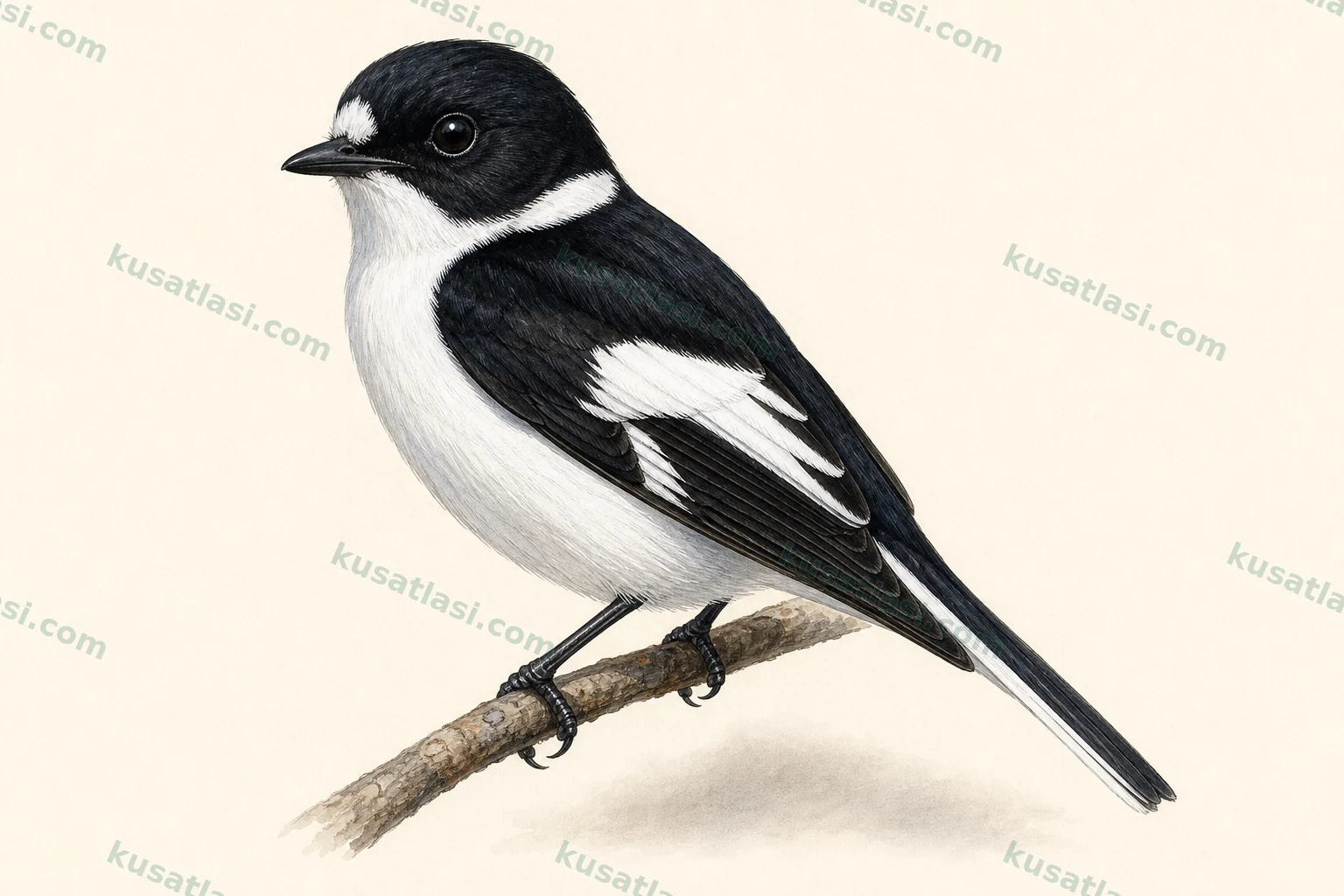
Old World Flycatchers
Semicollared Flycatcher
Ficedula semitorquata
Alaca Sinekkapan
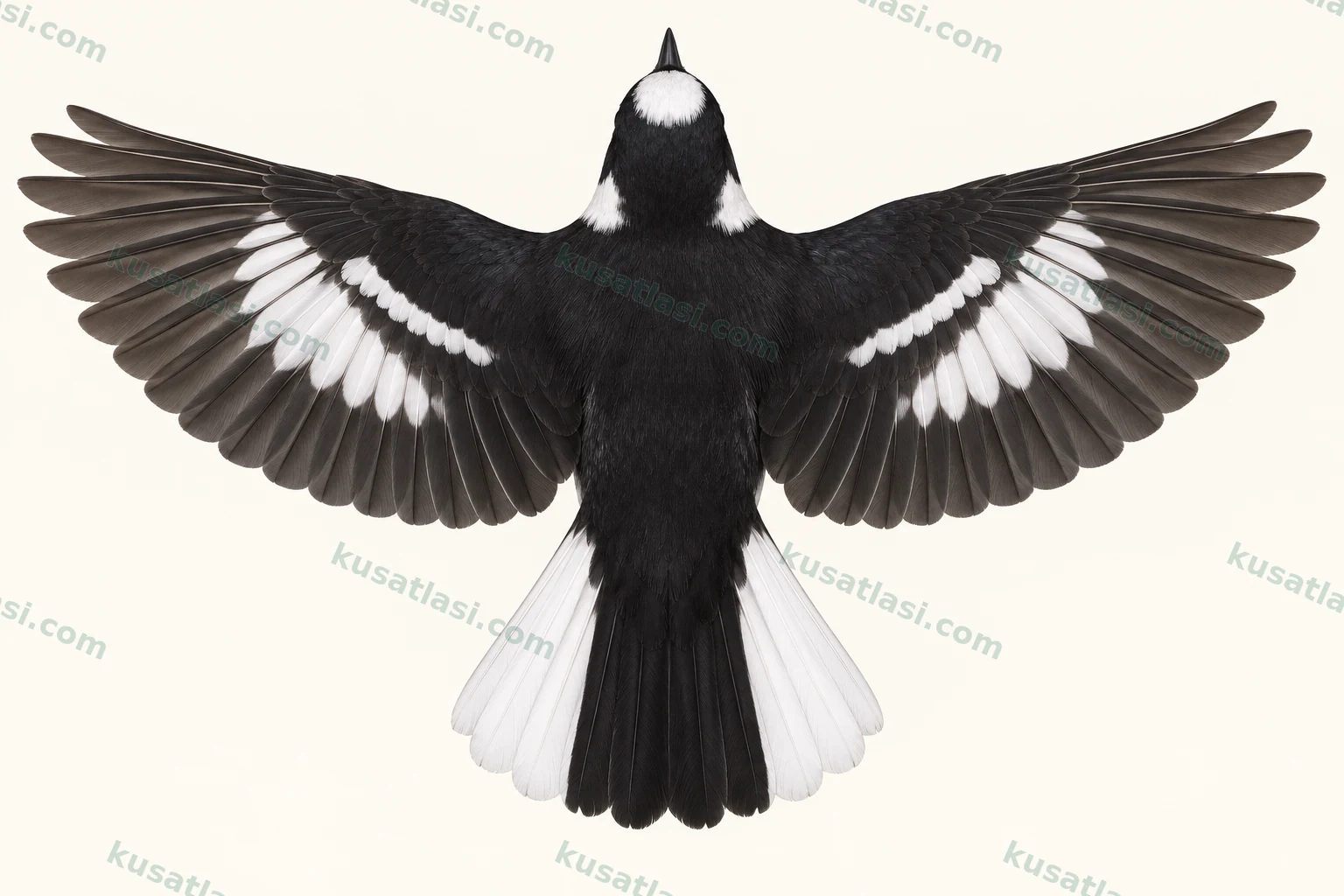
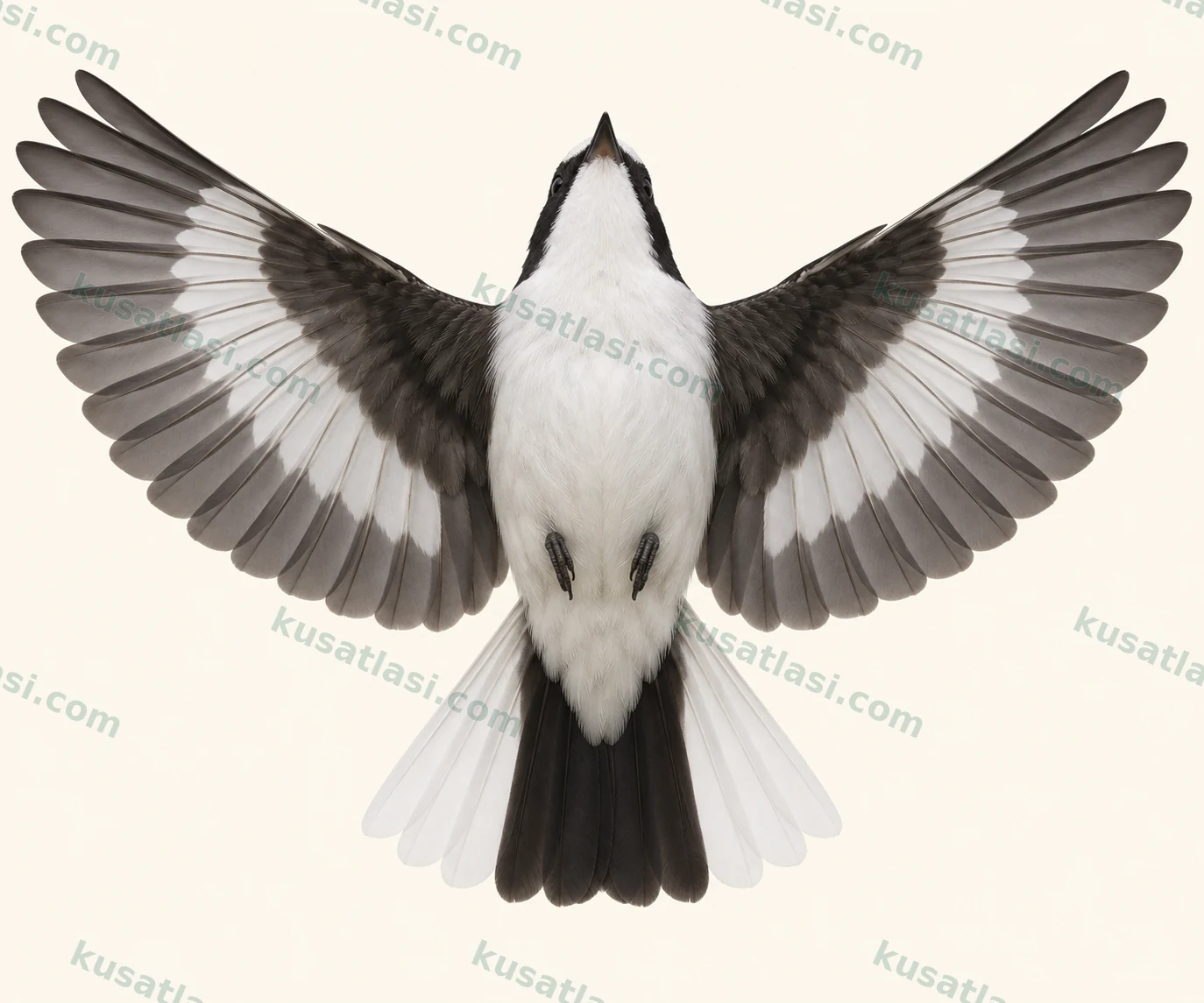
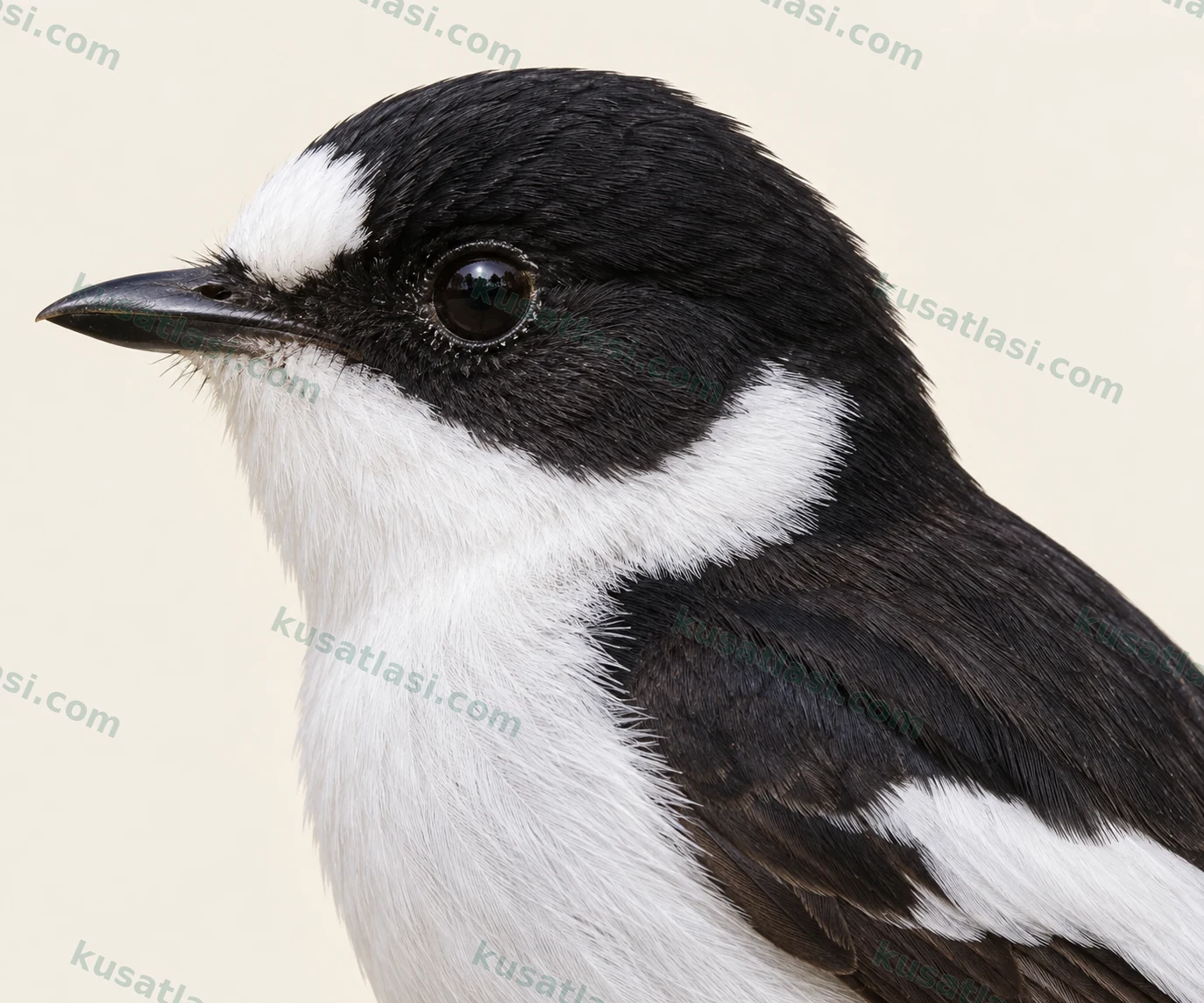
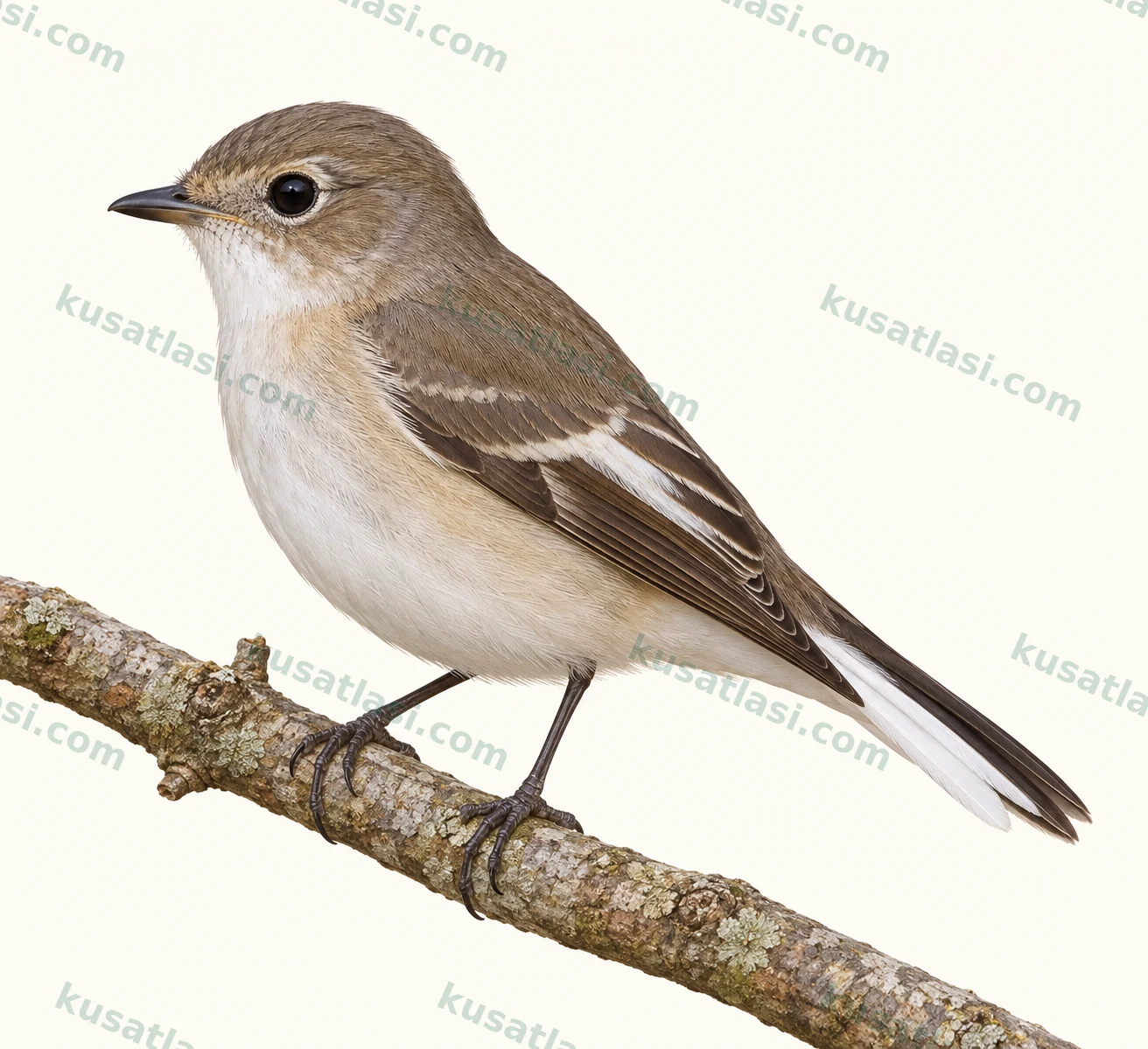
Breeding male has an incomplete pale collar and extra pale wingbar; female grey-brown. Compare several characters with similar flycatchers.
- Order
- Passeriformes
- Conservation status
- LC Least Concern
First look in the field
Quick identification
- Half-Collar and Wing Pattern
The breeding male combines dark upperparts with a white forehead and underside.
- Female and Seasonal Caution
Females and many autumn birds are brown-grey and difficult to separate from similar species.
- Cavity Nesting
A plant cup with fine lining is built in a tree cavity or suitable nest box.
Biometrics
Length
- Male
- 13 cm
- Female
- 13 cm
Wingspan
- Male
- 20–24 cm
- Female
- 20–24 cm
Weight
- Male
- 8–17 g
- Female
- 8–17 g
Detailed explanations of these measurements are available on our website, on the same species page.
World distribution
Semicollared Flycatcher
Customize map layers
Observation Sites
Bird Atlas recordsLoading observations…
Monthly record intensity
12 monthsRecord intensity is affected by observation effort.
Rotate the globe and compare the supported layers. Colours show broad range areas, not exact sightings or nests.
- Jan
- Apr
- Jul
- Oct
- Dec
Generalised data and method
Basemap: Natural Earth (public domain).
Bibliography ↗Authentic bird sound and ethical use
Voice and listening
See the detailed species account below.
Spoken guide
Narration has not been recorded; no audio file has been created.
Observe without approaching the nest
Breeding
A plant cup with fine lining is built in a tree cavity or suitable nest box. Usually 4–7 eggs, around 13–14 days of incubation and about 15 days of nest development are reported. Both parents feed young. These are biological ranges, not fixed dates for every Turkish site.
Scientific species guide
Detailed account
Half-Collar and Wing Pattern
The breeding male combines dark upperparts with a white forehead and underside. The pale neck sides do not form a complete nape ring; a narrow dark connection remains between head and back. Assess the additional pale wingbar as well as the main white wing patch.
Female and Seasonal Caution
Females and many autumn birds are brown-grey and difficult to separate from similar species. Age and feather condition matter. Existing comparison pictures differ in scale and pose, not in measured sex-specific size. Reference values are 13 cm, 20–24 cm wingspan and 8–17 g, shared between sexes rather than a Turkish biometric series.
Cavity Nesting
A plant cup with fine lining is built in a tree cavity or suitable nest box. Usually 4–7 eggs, around 13–14 days of incubation and about 15 days of nest development are reported. Both parents feed young. These are biological ranges, not fixed dates for every Turkish site.
Migrant Breeder and Passage Bird
The breeding range runs through the Balkans, Turkey and Caucasus towards northeastern Iran. A bird pausing in a park need not breed there. Date and behaviour should accompany habitat when interpreting Turkish records.
Keep the Estimate Dated
BirdLife's 2021 assessment lists 1,000–5,000 Turkish breeding pairs for 2002–2012, extrapolated from limited data. This is not a 2026 census; national trends are insufficiently known. Comparing older estimates with different methods cannot establish a precise decline.
Seasonal Identification and Routes
The species action plan places Turkish autumn passage broadly from late July/early August through September, with identification difficulties affecting records. Brown autumn plumage requires particular care. Wintering is African, but tracks of Bulgarian birds are not routes of every Turkish individual. Map dots here are observations, not telemetry, and no fixed journey length is asserted.
More than Tree Numbers
Mature deciduous and mixed woodland can offer cavities and feeding opportunities. Look along side branches and openings as well as high foliage. Forest structure matters; a new planting is not automatically equivalent to an old cavity-bearing stand.
Woodland Mosaics
Riverine trees, groves and suitable older gardens may be used. Describe the actual site's tree age, openness and behaviour rather than assuming one habitat label proves breeding. A migrant can stop in a broader range of wooded settings.
Observe without Opening Cavities
Do not tap trunks, insert cameras into holes or block a food-carrying bird. Boxes cannot replace the whole habitat and should not be opened simply for observation. Keep to permitted routes, avoid repeated approaches and protect precise nest locations. Retaining safe natural cavities and structurally varied woodland supports more than a single photograph.
Short Aerial Sallies
Flying insects are caught during brief movements from a perch. Watch natural departures and returns while also checking the bird's head and closed wing. Several flycatchers behave similarly, so feeding style does not establish species identity.
Not Exclusively in the Air
Small prey can also be taken from foliage. Do not reject the species because it picks a caterpillar from a leaf. If prey details are unresolved, record a small invertebrate rather than an invented insect species; distinguish searching, resting and successful captures where possible.
Food-Carrying Adults
A bird retaining prey and heading towards a cavity may be provisioning young. Increase distance instead of occupying its route. No Turkish daily intake or dietary percentages are asserted here. Avoid live bait and altered perches; natural food webs and undisturbed access are more important than forcing a clear view.
A Species, Not an Automatic Hybrid
An intermediate-looking collar does not make this bird a hybrid of Pied and Collared Flycatchers. It is recognised as a species. Still, a single unclear nape view is not enough; combine wing pattern, age and other features.
A Studied Annual Journey
A 2016 study reconstructed movements of 11 adult breeders from eastern Bulgaria. Autumn routes lay east of spring routes, with winter sites in eastern-central Africa. This sample does not establish the route of each Turkish bird, and connecting positions does not reproduce an exact flight path.
Categories and Drawing Limits
Older NT labels differ from the LC global category used here; neither label measures Turkey's local population trend. Protected illustrations have inconsistent full collars, black throats and unclear additional wingbars. Issues were recorded without editing images or pins. Do not learn those erroneous details as identification rules.
Text and plates come from existing atlas records; references are in the central bibliography.
Open bibliography