
Existing atlas plates
Eurasian Jay identification views
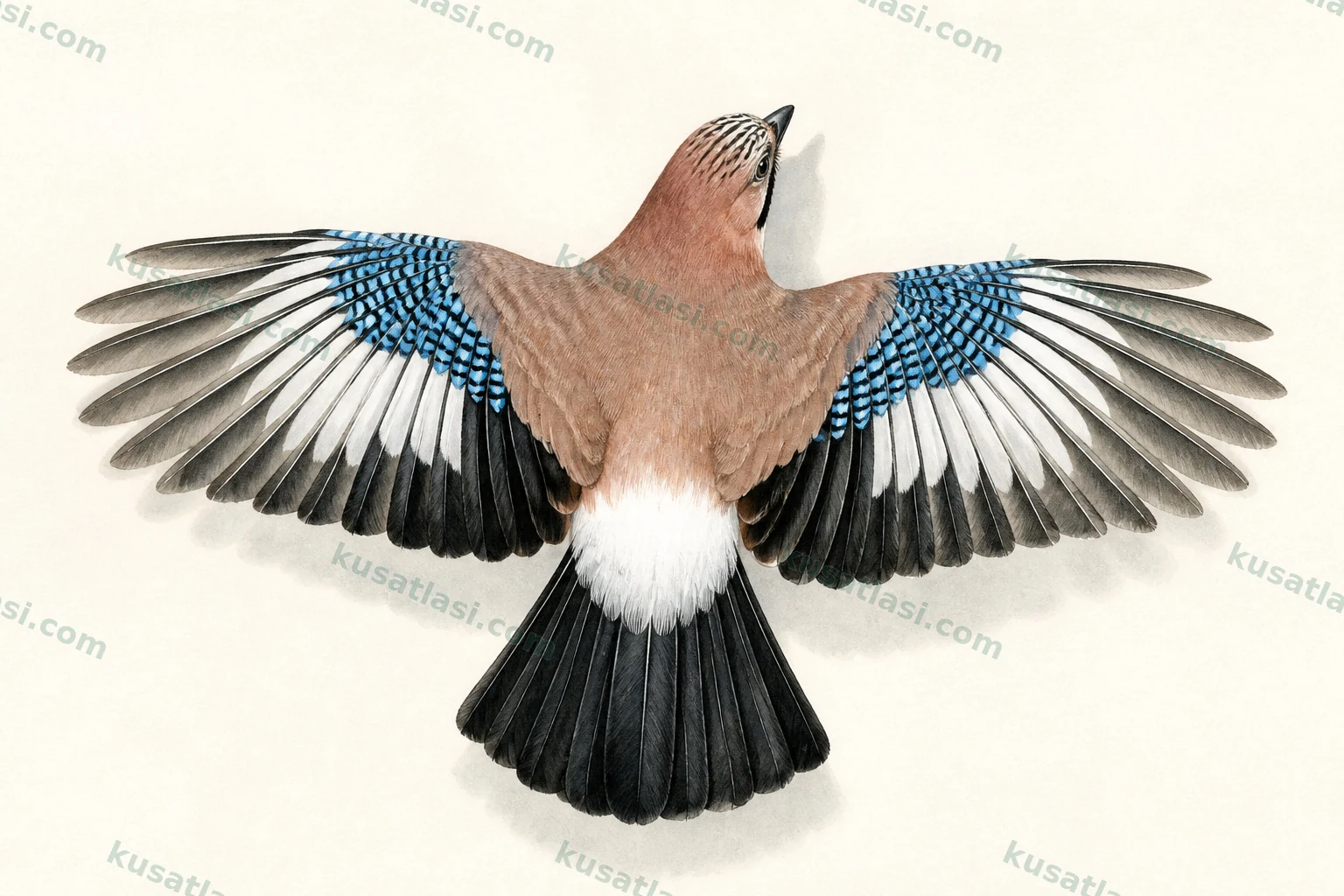
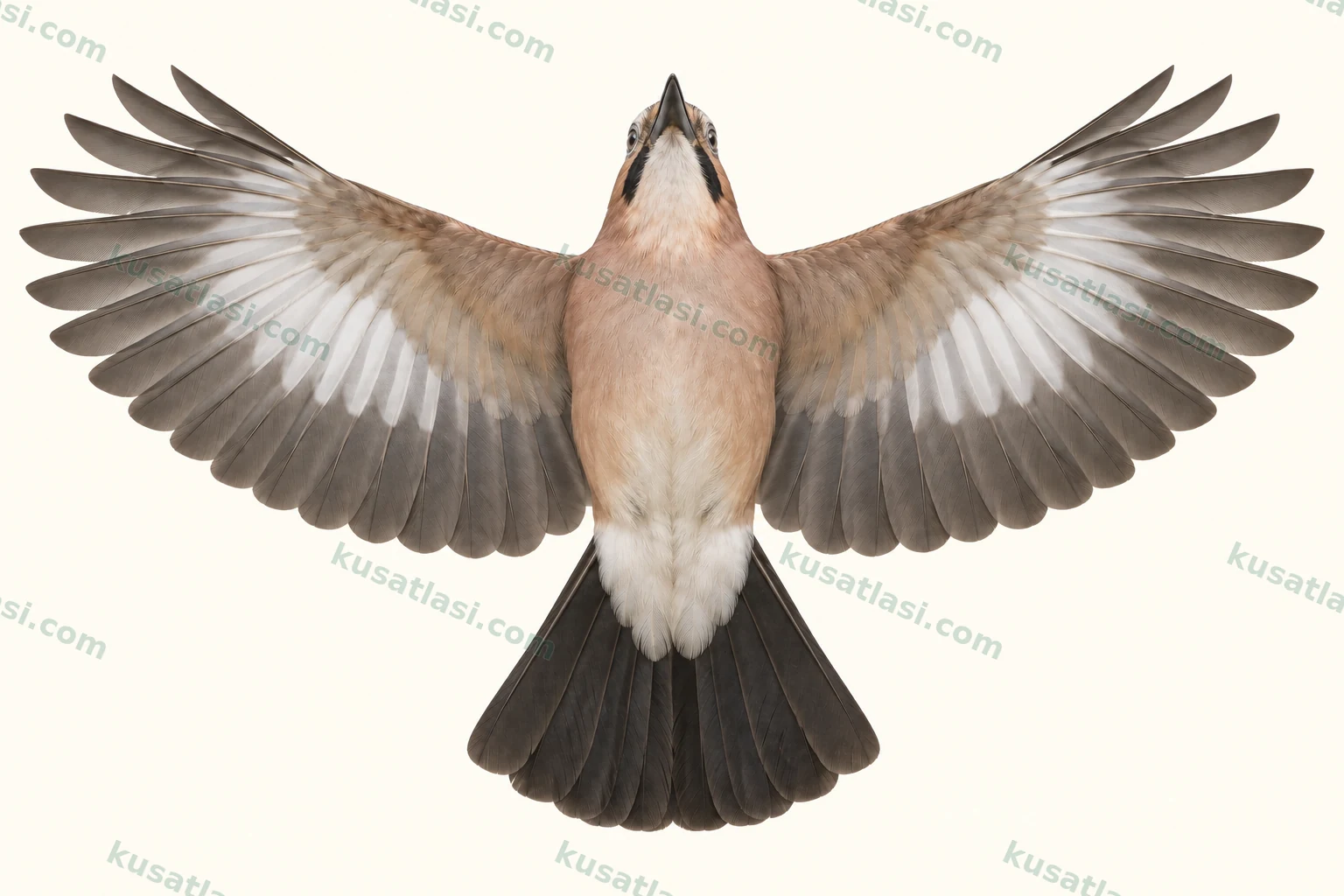
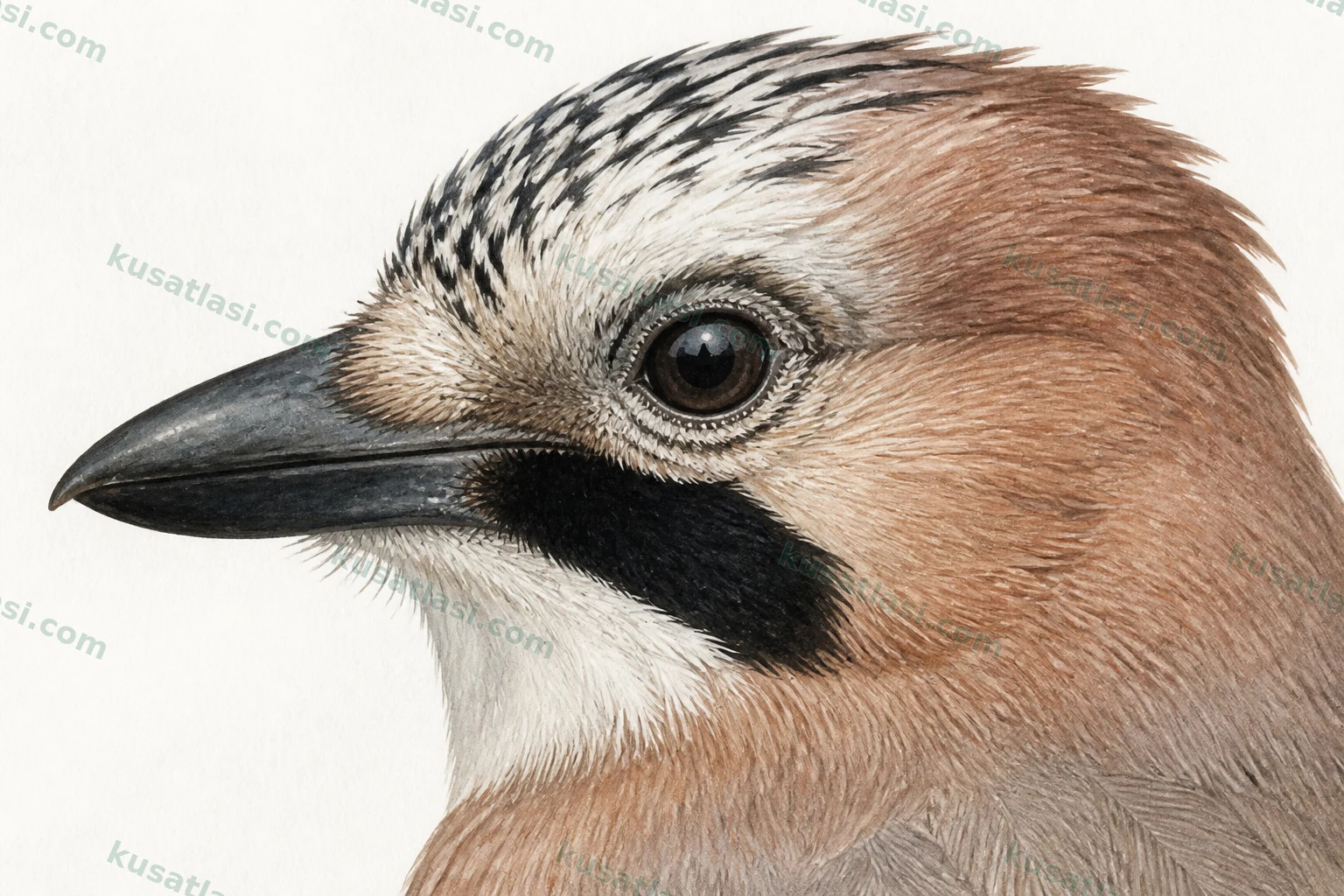
Swipe left or right through all five plates.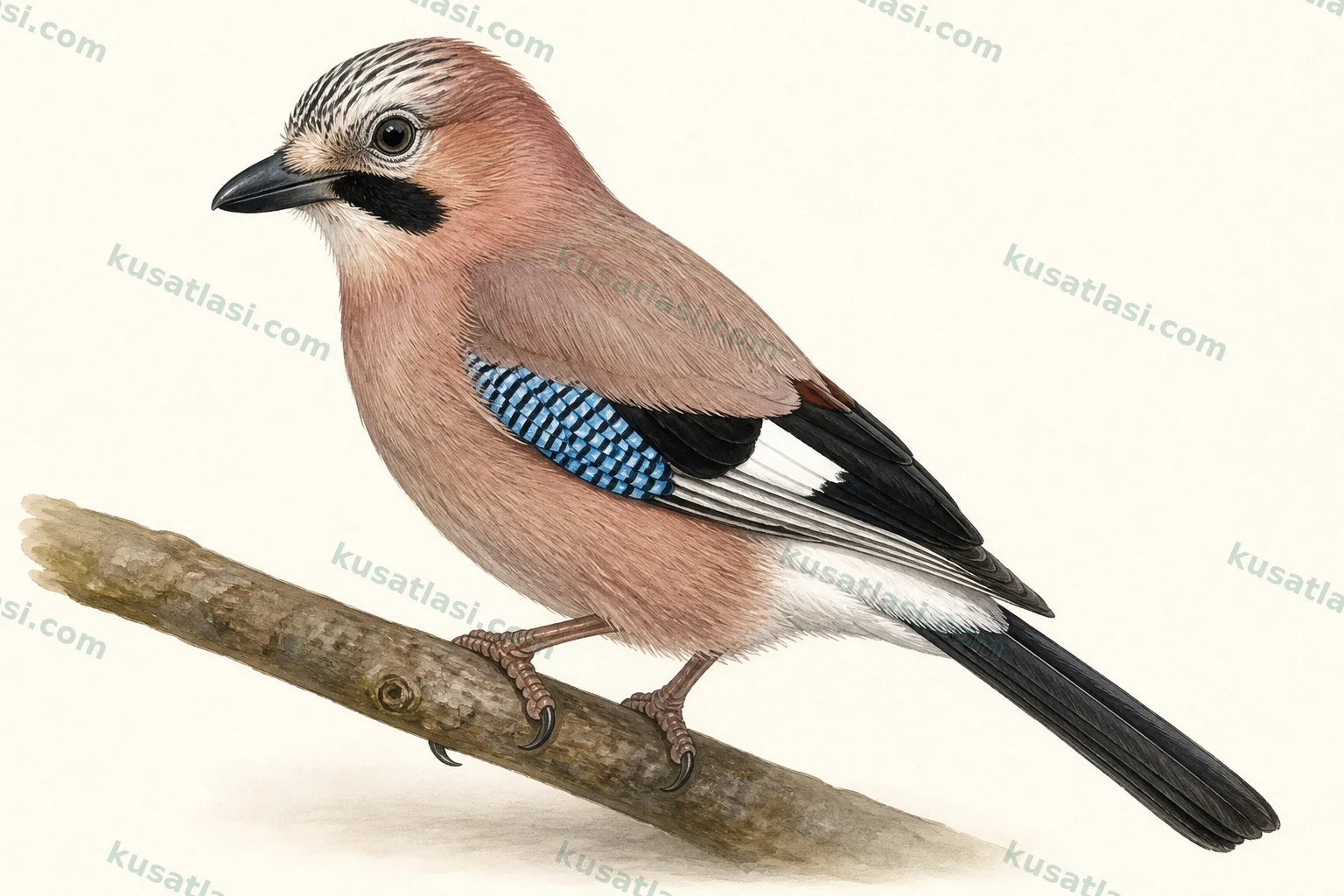
Crows, Jays, and Magpies
Eurasian Jay
Garrulus glandarius
Alakarga
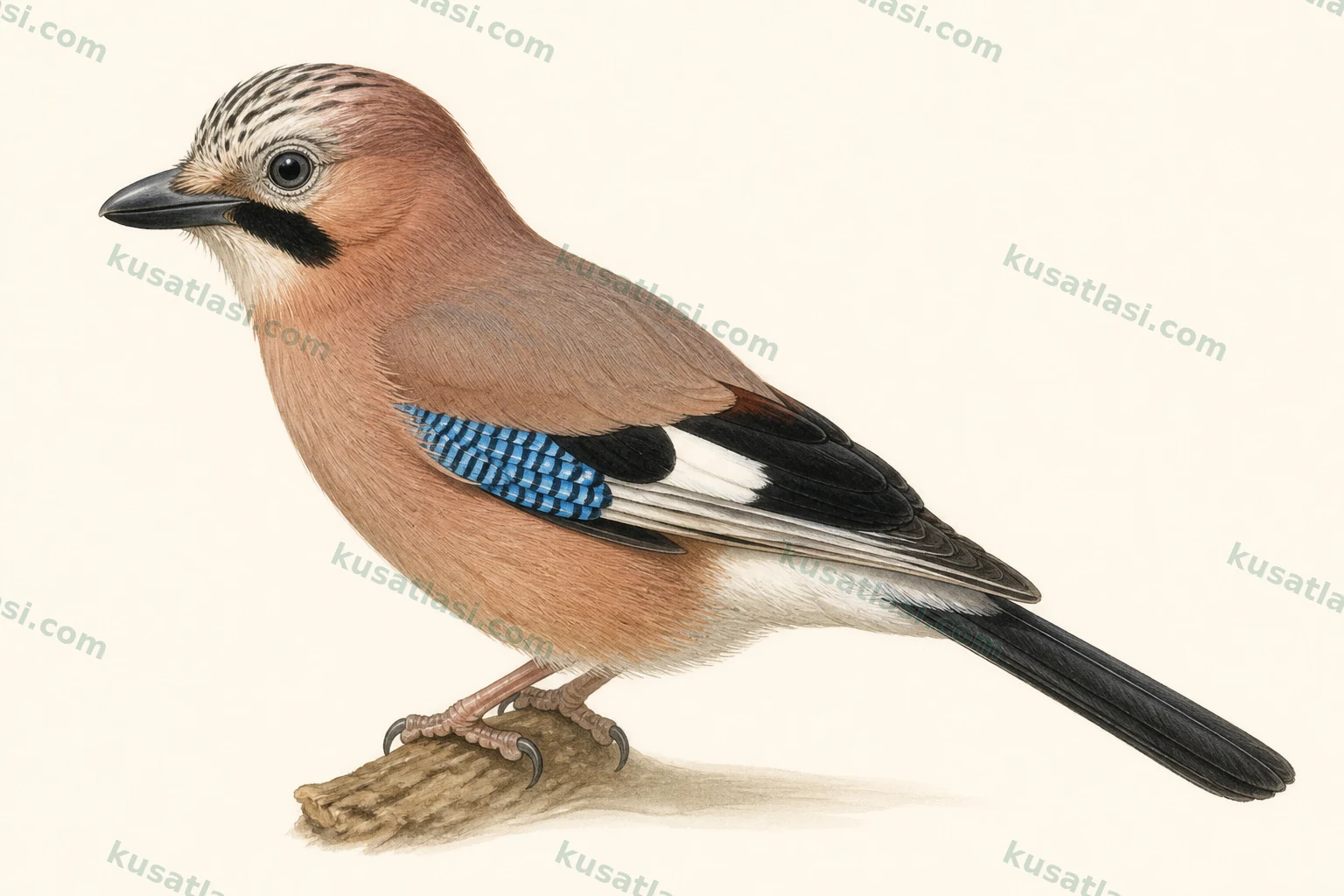
Pinkish-brown woodland corvid combining a dark moustache, barred blue wing patch, white rump and dark tail.
- Order
- Passeriformes
- Conservation status
- LC Least Concern
First look in the field
Quick identification
- A Woodland Corvid with a Blue Patch
Look for a pinkish-brown body, dark moustache and a blue-and-black barred patch on the folded wing.
- Similar Sexes
Male and female plumage is very similar; a blue wing patch is not a male badge.
- A Cup among Branches
A twig cup in a tree or shrub has a finer lining.
Biometrics
Length
- Male
- 32–34 cm
- Female
- 32–34 cm
Wingspan
- Male
- About 55 cm
- Female
- About 55 cm
Weight
- Male
- mean 172 g
- Female
- mean 164 g
Detailed explanations of these measurements are available on our website, on the same species page.
World distribution
Eurasian Jay
Customize map layers
Observation Sites
Bird Atlas recordsLoading observations…
Monthly record intensity
12 monthsRecord intensity is affected by observation effort.
Rotate the globe and compare the supported layers. Colours show broad range areas, not exact sightings or nests.
- Jan
- Apr
- Jul
- Oct
- Dec
Generalised data and method
Basemap: Natural Earth (public domain).
Bibliography ↗Authentic bird sound and ethical use
Voice and listening
See the detailed species account below.
Spoken guide
Narration has not been recorded; no audio file has been created.
Observe without approaching the nest
Breeding
See the detailed species account below.
Scientific species guide
Detailed account
A Woodland Corvid with a Blue Patch
Look for a pinkish-brown body, dark moustache and a blue-and-black barred patch on the folded wing. In flight the white rump contrasts with the dark tail. Combine these features instead of identifying a brief blue flash alone.
Similar Sexes
Male and female plumage is very similar; a blue wing patch is not a male badge. Crown markings vary geographically. Do not infer a young bird's exact age by counting bars in a distant illustration.
Biometrics
Mass values are BTO British sample means, not Turkish limits. Length follows Blasco-Zumeta and span Animal Diversity Web.
A Cup among Branches
A twig cup in a tree or shrub has a finer lining. Usually 4–5 eggs are incubated for about 18 days, with roughly 20–23 days in the nest. Both sexes contribute to care. Stay clear of provisioning routes.
Resident in Suitable Turkish Habitats
Woodlands and mature tree cover provide year-round opportunities, but occurrence is not uniform. Do not search a treeless plain with the same expectations as an oak grove. Urban records do not mean every built-up area is suitable.
Resident Does Not Mean Motionless
EURING/CMS describes mainly sedentary behaviour and local dispersal, with irregular movements in some northern populations. These do not define a fixed Turkish migration route. Autumn visibility can rise when birds carry food across openings.
Historical Population Estimates
BirdLife's 2021 table gives 600,000–2,000,000 Turkish pairs for 2002–2012, from expert opinion. Turkish short- and long-term trends are unknown there; this is not a 2026 census. Global LC does not guarantee local security. Compare repeated visits with similar effort, noting dates and habitats; map points do not trace individual journeys.
Woods and Cover
Oak, deciduous, mixed and coniferous tree cover can be used. Search leaf litter as well as branches; a feeding bird can disappear into cover quickly. Watch from an edge without flushing birds out for a clearer view.
A Turkish Field Example
A 2018 study of Trabzon's KTÜ Kanuni campus reported eight nest areas from 2016–2017 work. Nests were observed in conifers around 4–5 metres high in April–May. This local result is not a mandatory national height, season or tree choice.
Woodland Edges and Mature Parks
Trees with a shrub layer and nearby feeding ground are useful search areas. A food-carrying bird's first stopping branch need not mark its nest. Distinguish feeding, caching and resting. Do not remove cover for visibility or expose hidden food. Increase distance when alarm continues, and protect sensitive nest locations rather than publishing precise coordinates.
An Omnivore, Not Just an Acorn Eater
Acorns are prominent, but fruit, other seeds and invertebrates also feature. Small animals and birds' eggs or young may be taken. A single observation does not establish the main annual diet or a fixed percentage.
Carrying and Caching
Repeated trips from an oak may supply food stores rather than a nest. Record what you actually resolve through binoculars instead of inventing the tree or prey species. Buried acorns can be retrieved later, including in winter; some uneaten seeds may contribute to woodland regeneration. Not every cache becomes a tree.
Watch without Interfering
Do not dig up stores, use live bait or provide food near nests. Separate self-feeding from provisioning and keep clear of the latter's route. Witnessing predation on another bird does not justify harming a jay or destroying its nest. Natural observations give more meaningful evidence than staged feeding scenes.
More Than a Harsh Call
The conspicuous rasp is useful, but quieter sounds and mimicry also occur. Locate the caller before assigning an unusual sound to another species. Written imitations are not substitutes for natural recordings and visual confirmation.
A Memory Experiment
Davies and colleagues' 2024 experiment found that seven jays could later use visual details initially irrelevant to their task. This was discussed as episodic-like memory, not proof of human-like conscious recollection or unlimited wild memory.
Read Illustrations Critically
Both sexes show the blue barred patch. Pose and crop are not body-size measurements, and crown patterns vary geographically. The blue area in the protected underwing drawings was flagged for further review, not declared a confirmed error. Upperwing and underwing patterns should not be treated as identical. Plates and pins remain unchanged while findings are retained for the final report.
Text and plates come from existing atlas records; references are in the central bibliography.
Open bibliography