
Approved field-guide plates
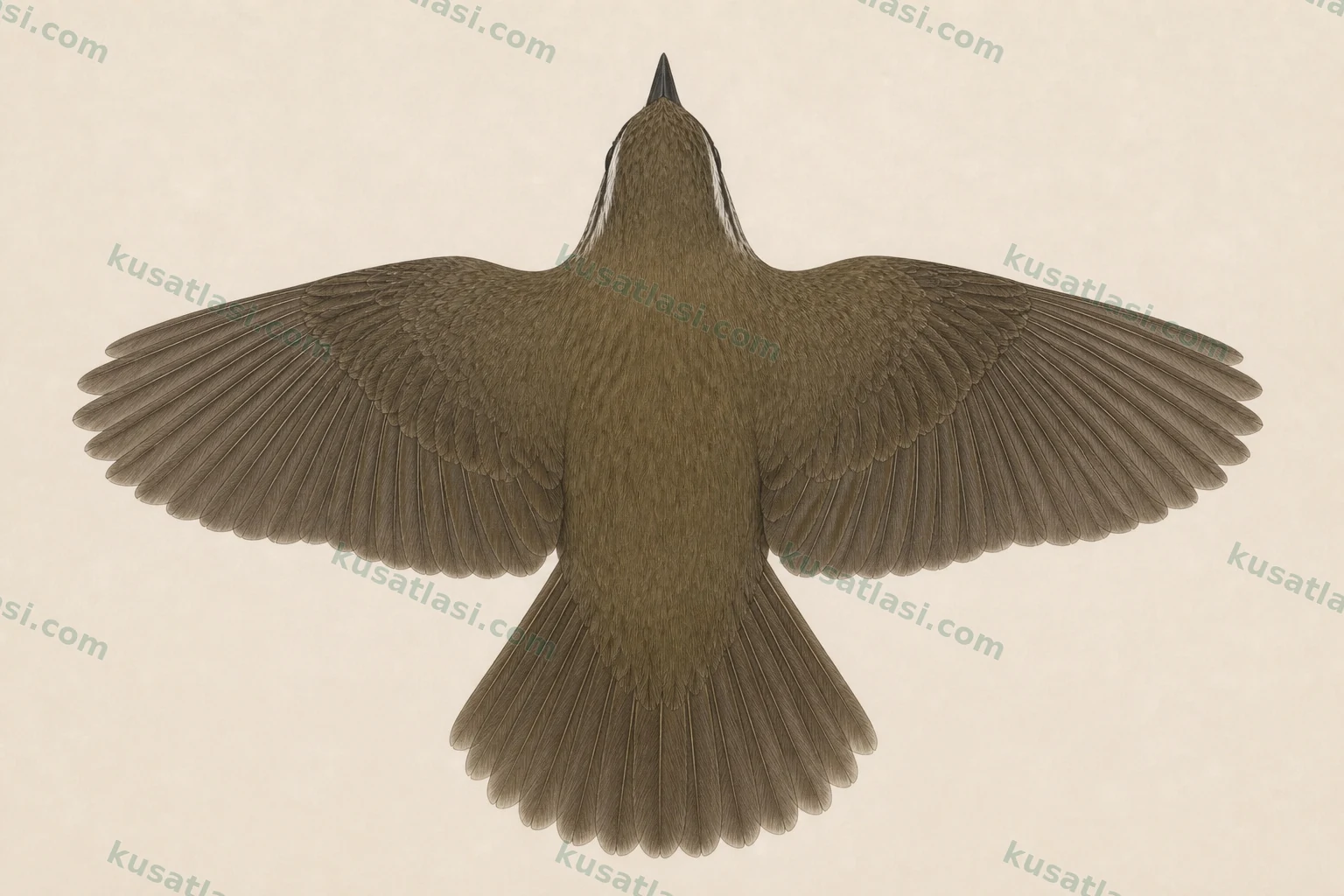
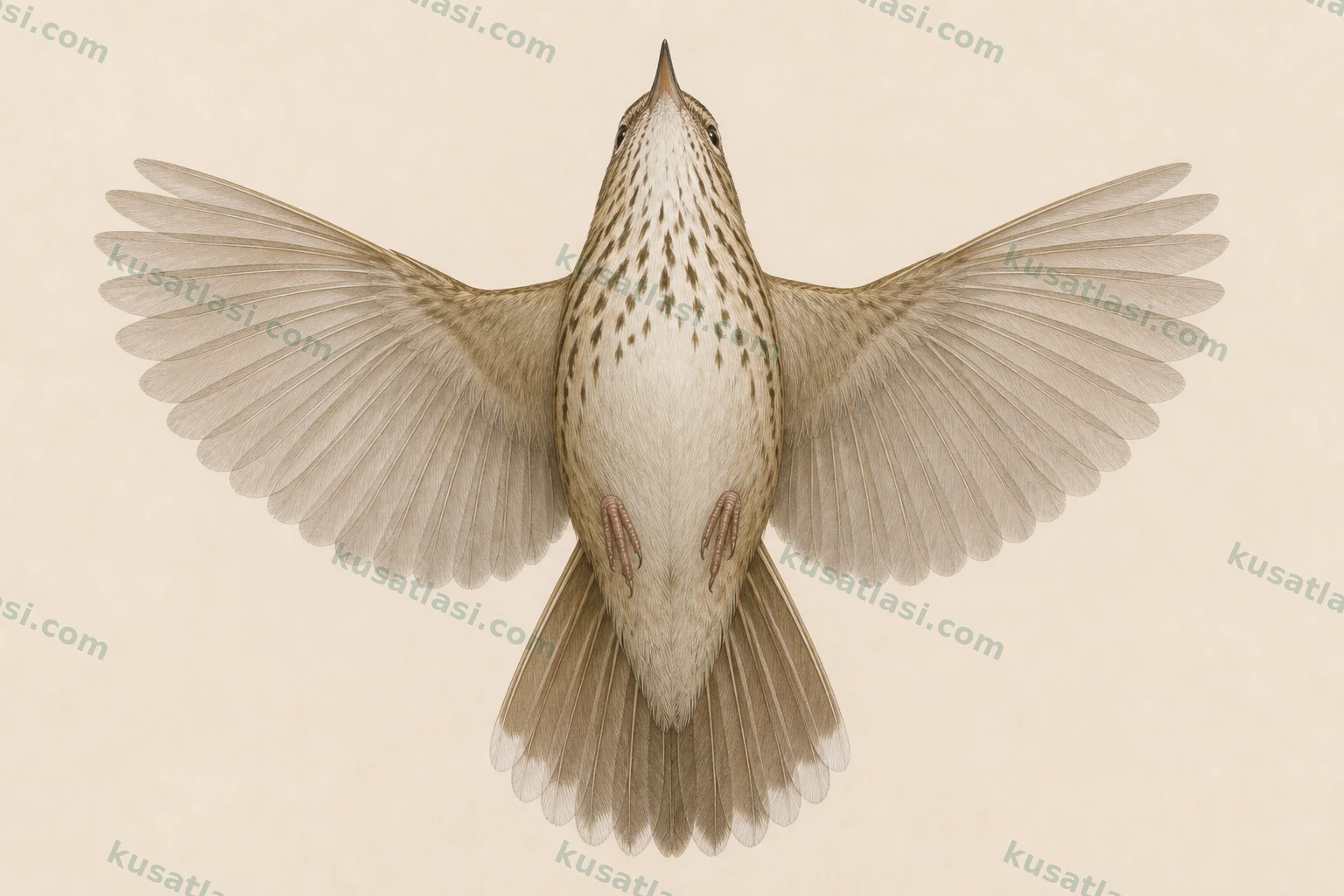
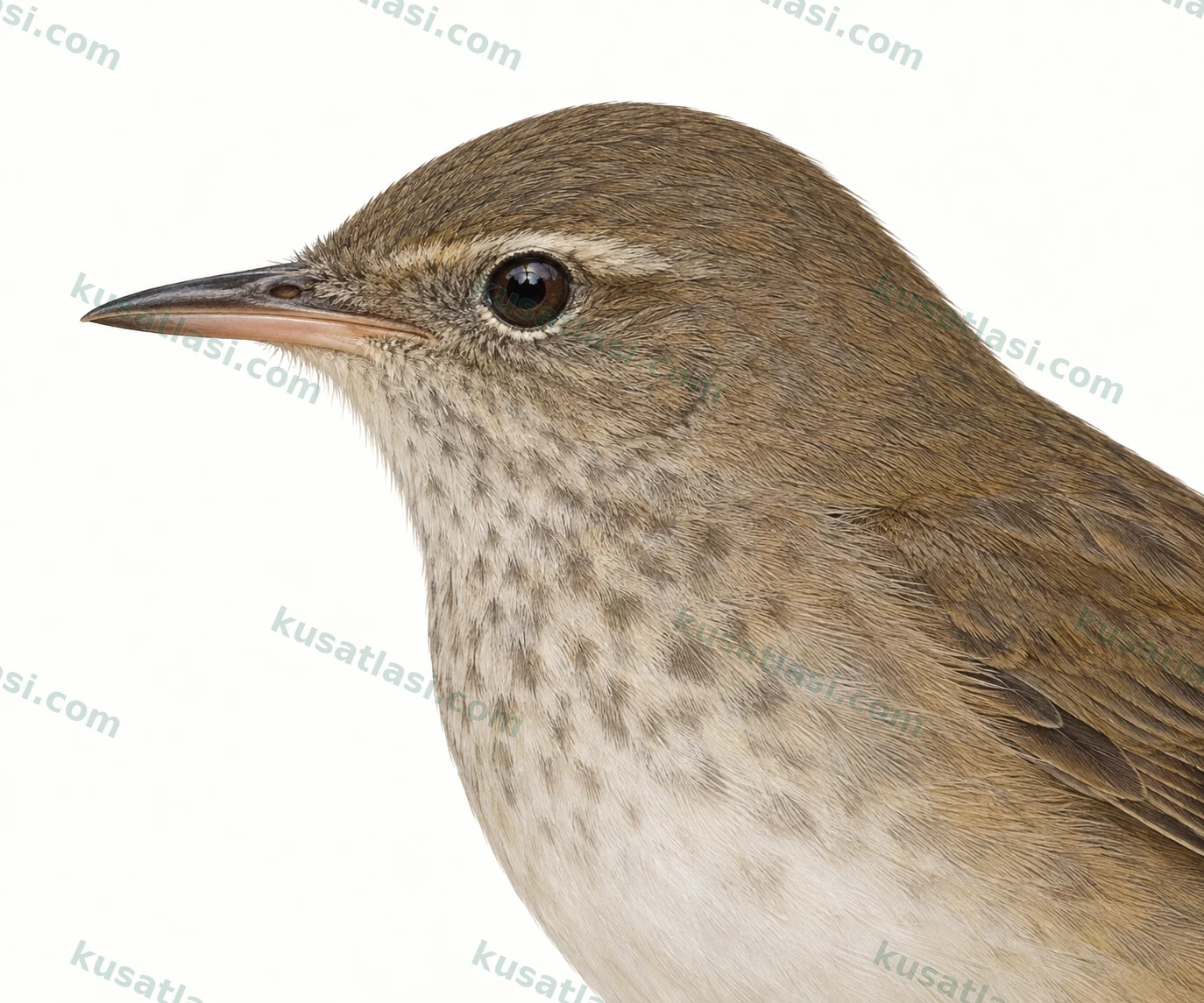
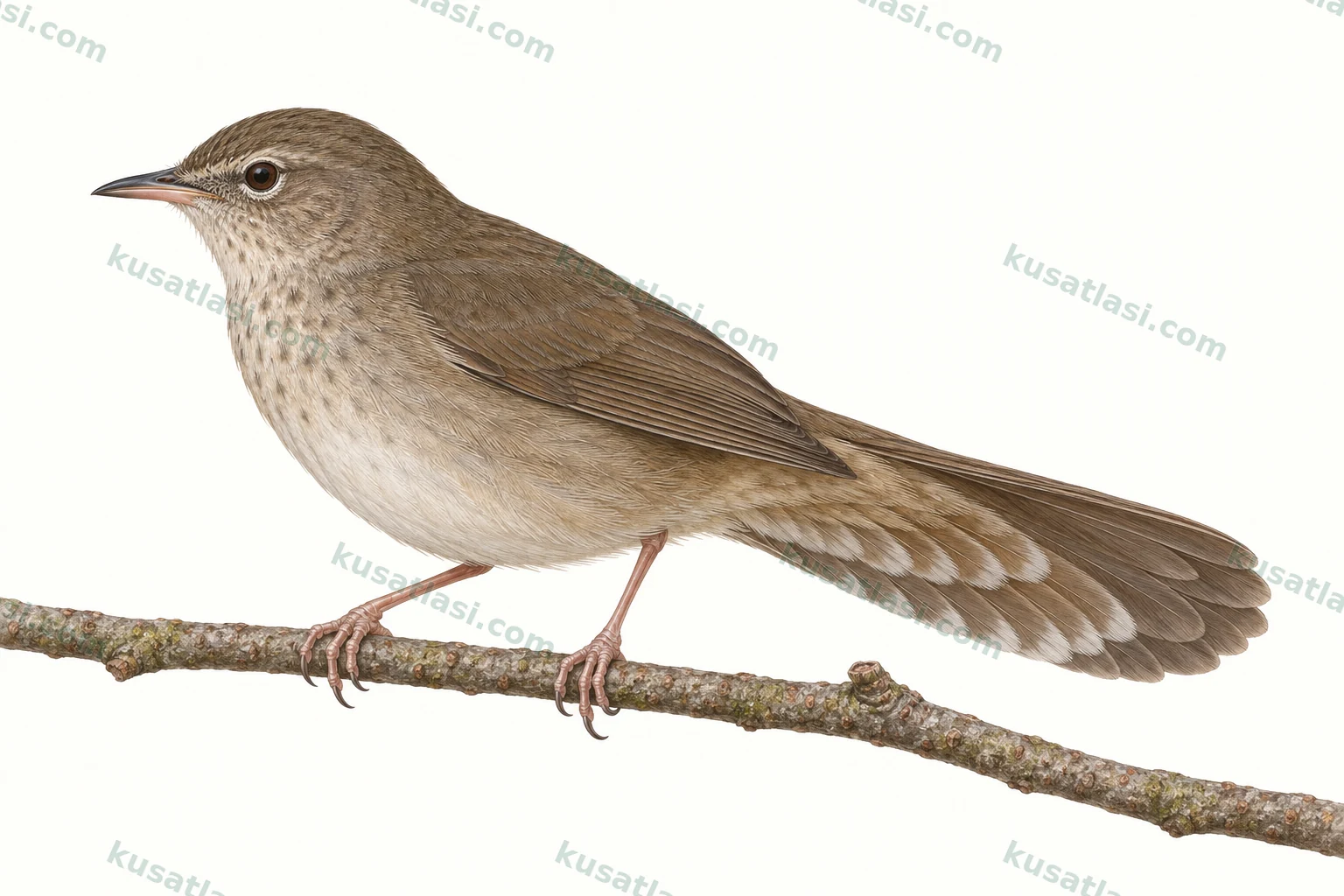
River Warbler identification views
Swipe left or right through all five plates.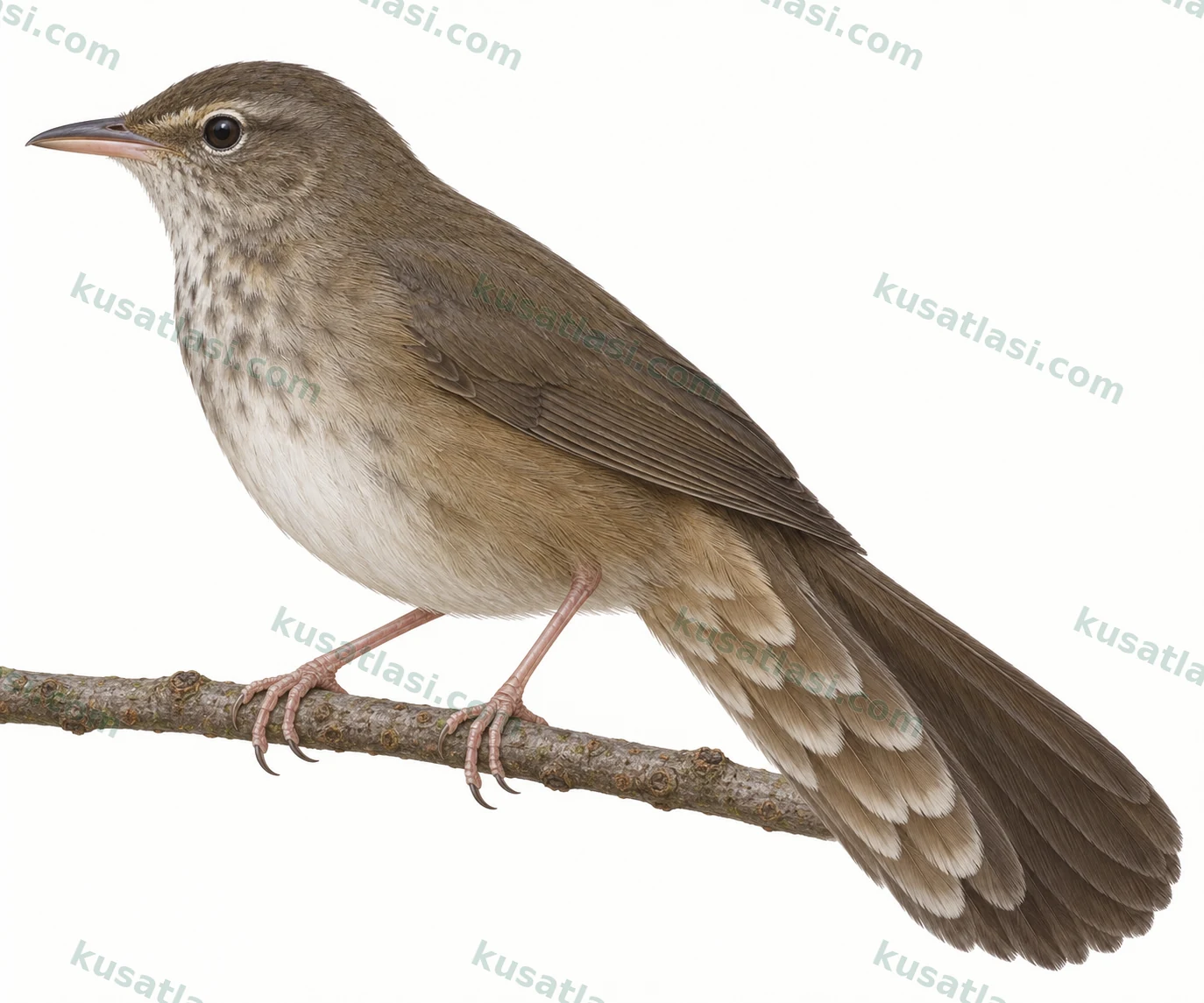
Grassbirds (Locustellidae)
River Warbler
Locustella fluviatilis
Ağaç Kamışçını
Combine plain olive upperparts, throat–breast markings and natural mechanical song; a Turkish passage record does not prove breeding.
- Order
- Passeriformes
- Conservation status
- LC Least Concern
First look in the field
Quick identification
- Plain upperparts
Olive-brown upperparts are largely unstreaked.
- Breast markings
Diffuse dark marks occur on the lower throat and breast.
- Undertail
Long pale-tipped coverts accompany the rounded tail.
- Mechanical song
A regular insect-like reel; a short fragment is not enough.
Biometrics
Length
- Male
- 13 cm
- Female
- 13 cm
Wingspan
- Male
- 20 cm
- Female
- 20 cm
Weight
- Male
- 17 g
- Female
- 17 g
Detailed explanations of these measurements are available on our website, on the same species page.
World distribution
River Warbler
Customize map layers
Observation Sites
Bird Atlas recordsLoading observations…
Monthly record intensity
12 monthsRecord intensity is affected by observation effort.
Rotate the globe and compare the supported layers. Colours show broad range areas, not exact sightings or nests.
- Jan
- Apr
- Jul
- Oct
- Dec
Generalised data and method
Basemap: Natural Earth (public domain).
Bibliography ↗Authentic bird sound and ethical use
Voice and listening
The male gives a long, regular, mechanical insect-like reel.
Document the direction and, if possible, the actual singer.
Do not use playback or part vegetation to force the bird into view.
Spoken guide
Narration has not been recorded; no audio file has been created.
Observe without approaching the nest
Breeding
A cup hidden in dense grass on or near the ground in breeding areas.
Typically 5–6.
The female incubates for roughly 11–13 days; a Turkish passage record is not breeding proof.
Never rely on one mark
Similar species
Common Grasshopper Warbler
Locustella naeviaShows prominent dark streaking on head and back.
Marsh Warbler
Acrocephalus palustrisCompare breast, undertail coverts and natural song together.
Scientific species guide
Detailed account
Appearance
River Warbler is a small, skulking olive-brown passerine. Mostly plain upperparts contrast with diffuse markings on the lower throat and breast. A fine pointed bill, subdued face and rounded tail complete the impression. Colour alone is insufficient: compare several regions on the same bird in similar light.
Adult Male and Female
A naturally singing male may reveal its position within dense vegetation and sometimes use a visible perch. Do not expect an entirely different bright male plumage. The female is broadly similar; the strength of throat markings varies and is not a dependable stand-alone sexing character. Differences in illustration colour or pose do not establish sex. Both biometric pills show species-wide values rather than independently measured male and female limits.
Young Birds and Wear
Juveniles resemble adults, while freshness, wear and light alter the apparent warmth of the plumage. Detailed feather structure may permit ageing, but an ordinary distant photograph may not. Leave age unresolved when those features are not visible rather than assigning it from one brown or grey tone.
A Practical Sequence
1. Check the weak eyebrow and narrow pale eye-ring, allowing for shadows around the eye.
2. Compare the largely unstreaked back with diffuse breast markings. Do not mistake shadows of vegetation for streaks.
3. When naturally visible, examine the long undertail coverts and their pale tips. These are not the tail feathers themselves, and cannot be checked in a dorsal flight view.
Similar Species
Grasshopper Warbler has stronger dark markings above. Savi's Warbler requires careful comparison of breast markings, undertail pattern and voice. Reed warblers should also be assessed using face, breast and undertail together. A short silent glimpse may remain unidentified; missing characters must not be supplied from expectation.
Nest, Eggs and Incubation
The concealed cup is on or close to the ground in dense vegetation, built from plant material with a finer lining. A typical clutch is 5–6 eggs. Published incubation values span approximately 11–13 days, by the female. These are general breeding facts, not evidence of nesting at a Turkish passage locality. Dummy eggs used in an experiment must not be mistaken for a natural clutch count.
Biometrics
| Measure | Value | |---|---| | Length | Male: about 14 cm; Female: about 14 cm | | Wingspan | Male: 19–22 cm; Female: 19–22 cm | | Weight | Male: 16–19 g; Female: 16–19 g |
Oiseaux.net species-wide values; BTO gives about 17 g. They do not determine the weight or sex of an individual seen in the field.
Wider Range
River Warbler breeds from central and eastern Europe toward western Siberia and winters in southeastern Africa. Breeding, passage and winter occurrence mean different things on a range map. An isolated observation does not establish year-round residence.
Turkey
The OSME regional list includes Turkey in its migration geography. Passage is therefore the appropriate context here; this account does not assign a Turkish breeding population without specific supporting evidence. For a bird that stays inside cover, submitted records are not a direct measure of abundance.
Seasonal Evidence
Spring and autumn migration provide the main context, but calendar cards are not fixed arrival dates. A summer song alone does not prove a nest. Record the date, habitat and behaviour together and document unusual observations carefully.
Reading Records
Map points show reported locations and monthly bars show reporting patterns, not a census. Differences in visit length, observer coverage and detectability influence both. No record from a month is not equivalent to proof that the species never occurred then.
The Lower Vegetation Layer
Look where tall herbs and shrubs meet the ground, not only at exposed reed tops. Dense low cover can hide the bird almost completely. Watch natural gaps from an existing path instead of opening vegetation to obtain a view.
Riverine Cover
Moist river margins and floodplain woodland with a developed herb layer are important breeding habitats. Research in Austria's Donau-Auen related occupied areas to their understorey structure. That local result should not be used to label every Turkish stream as a breeding site.
Stopovers
A small patch occupied on migration is not a complete description of the species' annual habitat. Note sheltering connections around a garden edge or scrub patch. Wait quietly when the bird disappears rather than following it into cover.
Maintaining Habitat
Keeping trees while removing all ground cover does not preserve the whole habitat. Uniform clearance can remove shelter. If an adult carries food or repeatedly enters one patch, stay back and never part vegetation to locate a nest. Management decisions need local evidence as well as a species name.
Small Invertebrates
Insects and spiders form the core of the diet. A fine bill is consistent with taking small prey, but its shape cannot identify a particular meal. If an object is not visible, record feeding rather than inventing the prey species.
Foraging Close to Cover
Watch vegetation and the ground layer through natural gaps. A bird disappearing into cover has not necessarily left the area. Do not cut plants or flush it to produce a feeding photograph; observation should follow its unprompted movements.
Food and Habitat
The Austrian floodplain study examined potential invertebrate food alongside vegetation. Habitat sampling does not demonstrate a fixed dietary percentage for every individual. Availability, access and shelter interact; no numerical Turkish diet chart is inferred from that study.
Watching Provisioning
Observe food-carrying adults remotely. Do not follow them to a nest, and retreat if your presence makes them wait or divert. A single photographed meal is not a complete nestling diet. Feeding induced with bait should not be presented as ordinary natural behaviour.
A Name Does Not Describe Every Stratum
The Turkish name should not direct attention only to treetops. Record the height of herbs, density of shrubs and visibility of the ground as well as the trees present. Such notes help compare the same place across seasons.
An Insect-like Sound
BTO highlights the insect-like quality of the song. A repeated vibration is nevertheless not automatically a bird: establish the direction and pattern and, if possible, associate the sound with the visible singer. An automatic identification remains a suggestion to check.
An Unexpected Visitor
A bird documented at Gambell, Alaska, in 2017 was published in Western Birds in 2018 as North America's first record. This is not a model for normal Turkish migration. The useful lesson is the combination of photographs and elimination of alternatives rather than reliance on one colour patch.
Global and Local Scales
BTO lists the global IUCN category as Least Concern. That does not mean every local population is secure. A global assessment and change in one floodplain are different scales; habitat condition and observation effort matter when interpreting local records.
Existing species account; references are in the central bibliography.
Open bibliography