
Existing atlas plates
European Golden-Plover identification views
Swipe left or right through all five plates.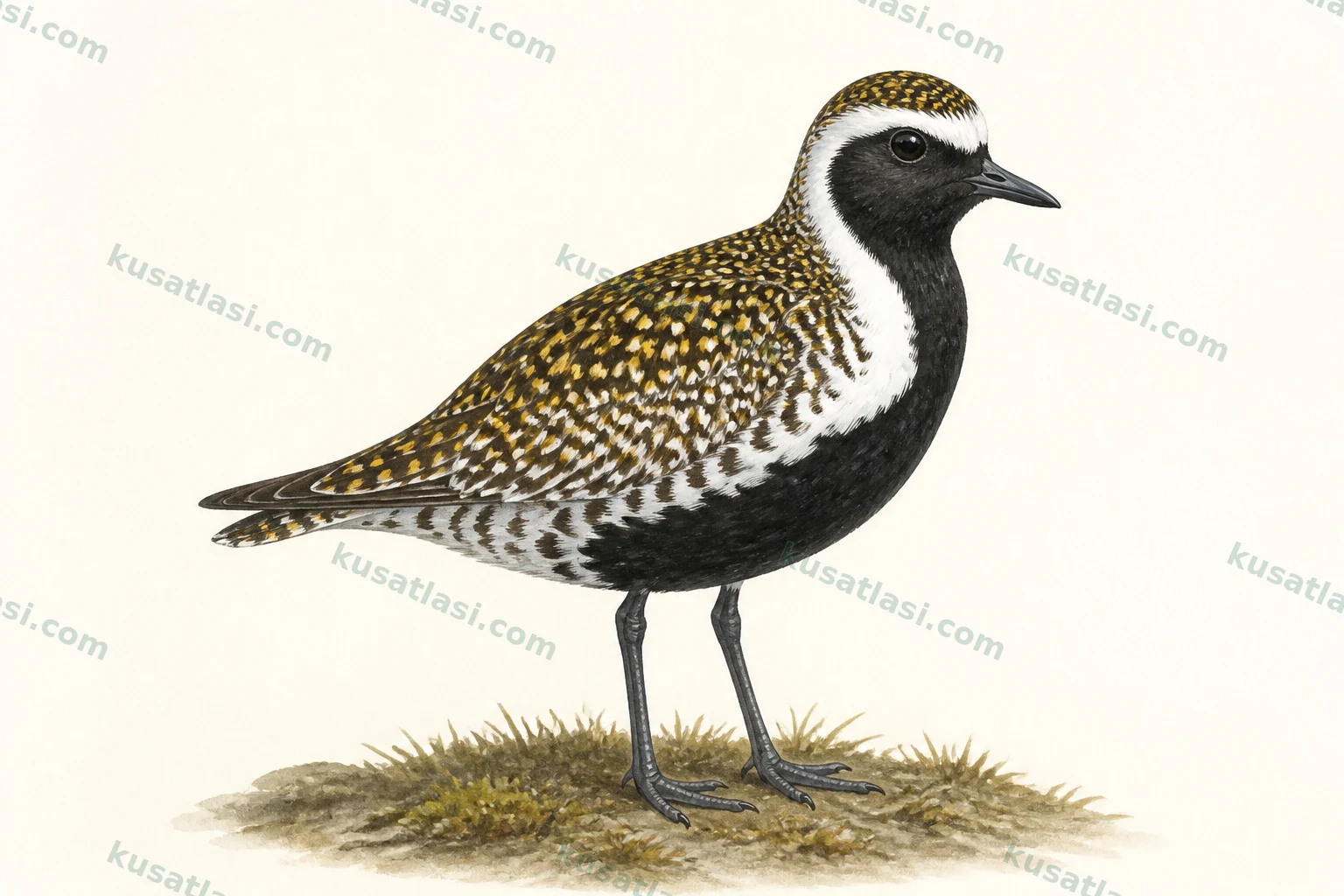
Plovers and Lapwings
European Golden-Plover
Pluvialis apricaria
Altın Yağmurcun
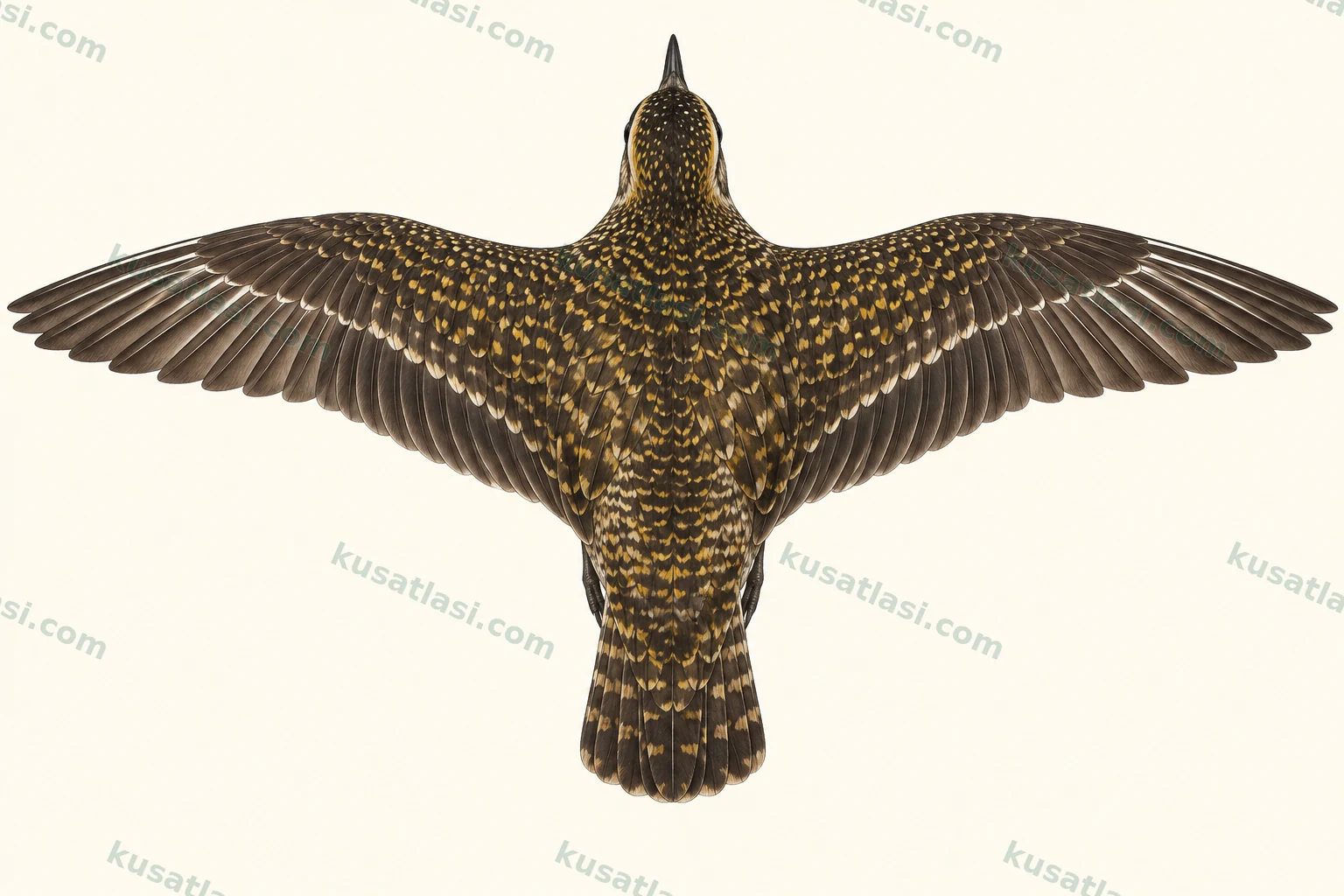
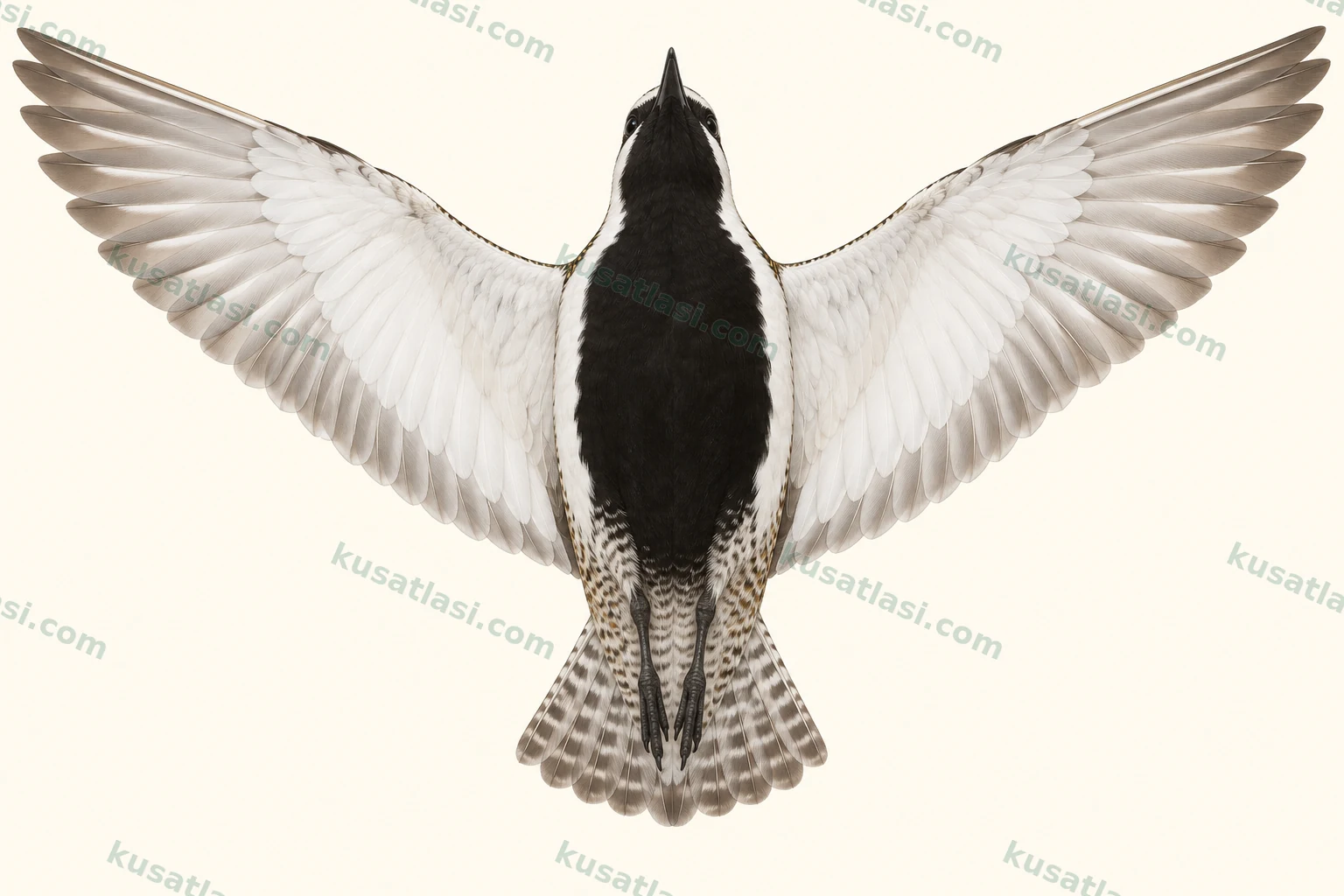
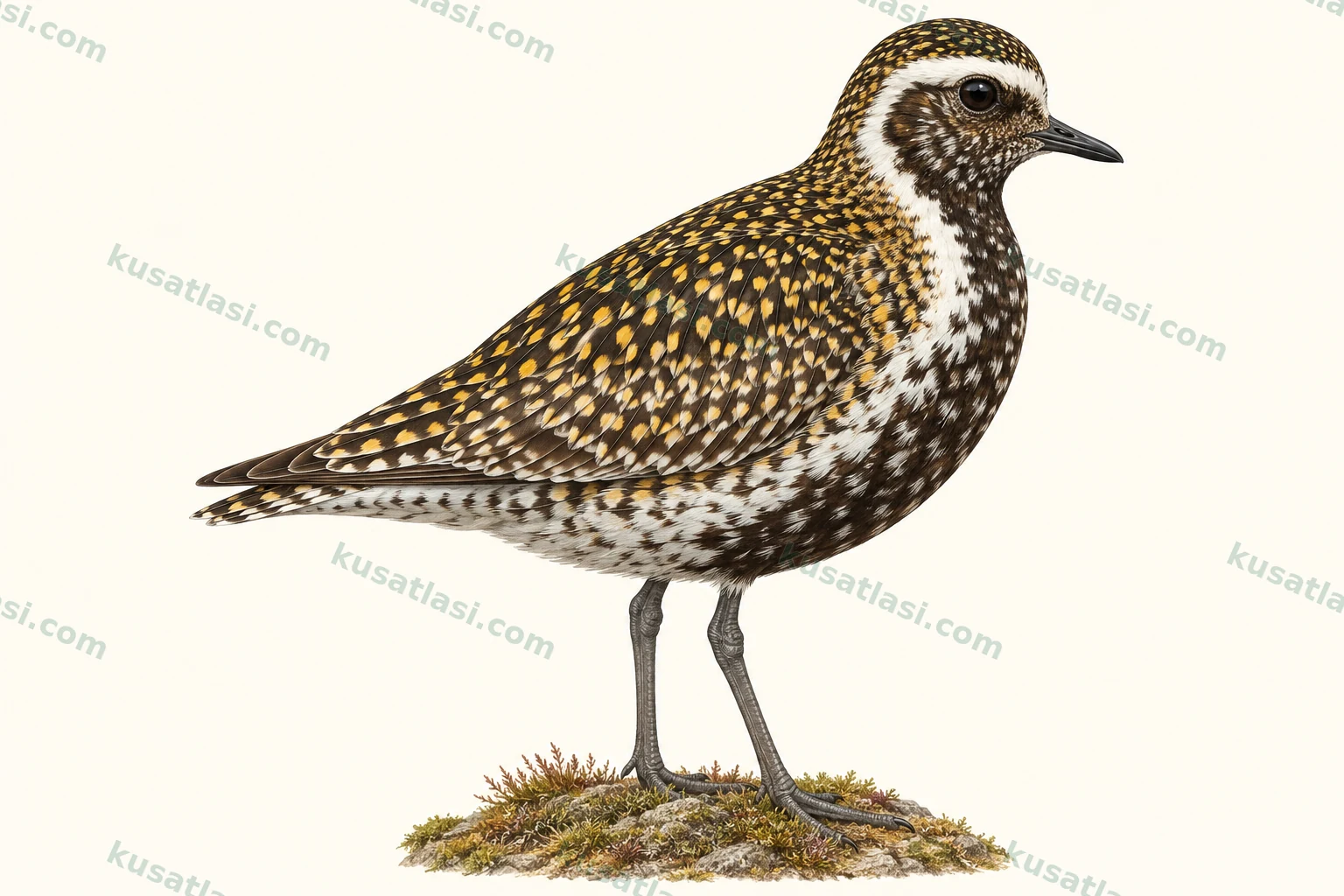
Gold-spangled upperparts and short straight bill; pale winter belly and white underwings and wingpits seen from below.
- Order
- Charadriiformes
- Conservation status
- LC Least Concern
First look in the field
Quick identification
- Golden Speckling and a Short Bill
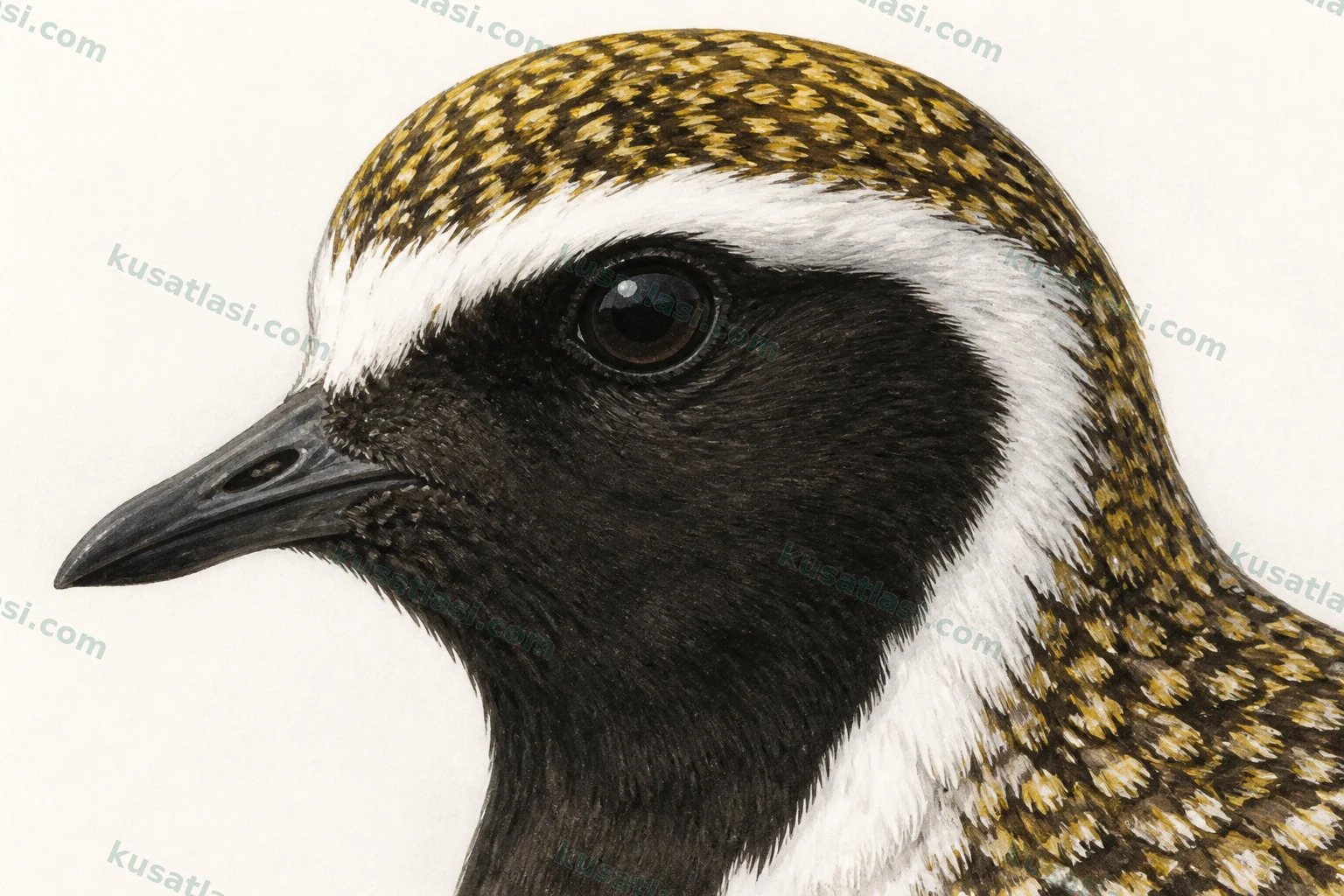
A compact plover with a large head, short straight bill and finely gold-spangled upperparts.
- Season Before Sex
Breeding plumage has variable black on the face and belly, bordered with white.
Biometrics
Length
- Male
- 26–28 cm
- Female
- 26–28 cm
Wingspan
- Male
- 67–76 cm
- Female
- 67–76 cm
Weight
- Male
- Mean about 208.5 g
- Female
- Mean about 208.5 g
Detailed explanations of these measurements are available on our website, on the same species page.
World distribution
European Golden-Plover
Customize map layers
Observation Sites
Bird Atlas recordsLoading observations…
Monthly record intensity
12 monthsRecord intensity is affected by observation effort.
Rotate the globe and compare the supported layers. Colours show broad range areas, not exact sightings or nests.
- Jan
- Apr
- Jul
- Oct
- Dec
Generalised data and method
Basemap: Natural Earth (public domain).
Bibliography ↗Authentic bird sound and ethical use
Voice and listening
See the detailed species account below.
Spoken guide
Narration has not been recorded; no audio file has been created.
Observe without approaching the nest
Breeding
See the detailed species account below.
Scientific species guide
Detailed account
Golden Speckling and a Short Bill
A compact plover with a large head, short straight bill and finely gold-spangled upperparts. At a distance it may look simply brown. Upright pauses and short runs help locate it, but identification needs the bill, body proportions and flight pattern together.
Season Before Sex
Breeding plumage has variable black on the face and belly, bordered with white. Females can be browner and less crisply marked. Turkish winter birds usually have pale bellies and mottled breasts; the sexes look alike then. Young birds resemble winter adults. A pale individual is not automatically female, and the black-bellied plates do not represent year-round appearance.
Measurements and Breeding
Mass is a BTO sample mean, not limits; these are not sex-specific Turkish measurements. On northern breeding grounds a shallow ground scrape is lined with grass and moss. Typically four eggs take 28–31 days to hatch. Young walk and feed early; 25–33 days refers to flight development, not time spent in the nest. This does not imply regular nesting in Turkey.
A Winter Visitor and Passage Bird
In Turkey the main expectation is autumn arrival, winter presence and spring departure, not a regular summer breeding population. Suitable open ground and wetland surroundings can hold flocks. Local timing varies with weather, freezing conditions and observation effort.
Turkish Evidence
İZKUŞ's Gediz Delta account by Ömer Döndüren includes the species among important regularly occurring winter waders. This supports looking at suitable habitat around Homa Lagoon, not a guarantee of sightings. BirdLife's 2021 table gives 1,000–5,000 Turkish wintering individuals for 2013–2019. It is a dated partial estimate, not breeding pairs or a current census; trends are uncertain.
A Broad Northern Breeding Range
Breeding extends from the North Atlantic through northern Europe into Siberia. Wintering regions include western Europe and Mediterranean, Black Sea and Caspian areas. Different populations take different paths. Independent records on this map are not an individual track. Document unusual summer observations instead of assuming breeding from presence alone.
Short Wet Grassland
Do not restrict a Turkish winter search to the waterline. Damp short grass, pasture and open agricultural ground may hold feeding birds. Only heads and backs can show above vegetation. Scan slowly and identify individuals within mixed lapwing flocks rather than treating every bird as the same species.
Delta Margins and Open Shores
Open ground near shallow water and muddy margins can also be used. Grassland and fields are particularly worth checking compared with a shore-only search for Grey Plover. Habitat supports identification but does not establish it. Separate feeding flocks from resting groups in your notes.
Northern Nesting Habitat Is Different
Tundra, short heath and peatland describe the northern breeding setting, not a reason to search Turkish uplands for nests. Here winter feeding and undisturbed resting areas matter. Retreat if birds repeatedly raise their heads or move away. Do not flush flocks for photographs; control dogs and respect access to farmland. A map point is not permission to enter a site.
Ground Invertebrates
Earthworms are important winter food; insects and their larvae are also eaten. Diet changes with season and locality. Short runs, pauses and ground-picking are useful behaviours to watch, but a peck alone does not identify the prey. Record an unresolved item as an invertebrate rather than guessing a species.
Feeding Beyond Daylight
Golden Plovers may feed at night. A flock resting by day does not mean that the area lacks food. Keep feeding and roosting records distinct and note the observation time. Avoid strong lights or approaching night flocks. Observed movements and properly conducted studies provide complementary evidence of habitat use.
Mobile Young Feed Themselves
Chicks on northern breeding grounds soon walk and pick their own food under parental protection. This differs from adults repeatedly carrying food to a nest. Turkish winter flocks should not be labelled family parties without evidence. Do not bait birds or block their movements with a vehicle; follow flock boundaries carefully when counting.
White Wingpits Need an Underside View
Gold on the back is not sufficient: related plovers can also look yellowish. The white area where the underwing meets the body is a useful distinction. Grey Plover has black wingpits; American and Pacific Golden-Plovers have greyer underwings. This must be assessed from below, not inferred from a dorsal illustration.
Winter Can Include Another Journey
A 2015 tracking study of Swedish breeders found that some birds moved farther south during winter cold spells while others stayed. It demonstrates flexibility, not a universal route or an explanation for every Turkish sighting. A temporary fall in local counts is not automatically mortality or a lasting population decline.
Black Bellies Are Seasonal
Bright breeding artwork differs markedly from winter appearance. Combine back pattern, short bill and the properly viewed underwing when assessing a pale winter bird. The conspicuous stripe in the preserved flight plate should not be treated as a precise model of the naturally narrow wing line. Consult natural examples in Sources and record date and plumage as well as the species name.
Text and plates come from existing atlas records; references are in the central bibliography.
Open bibliography