
Existing atlas plates
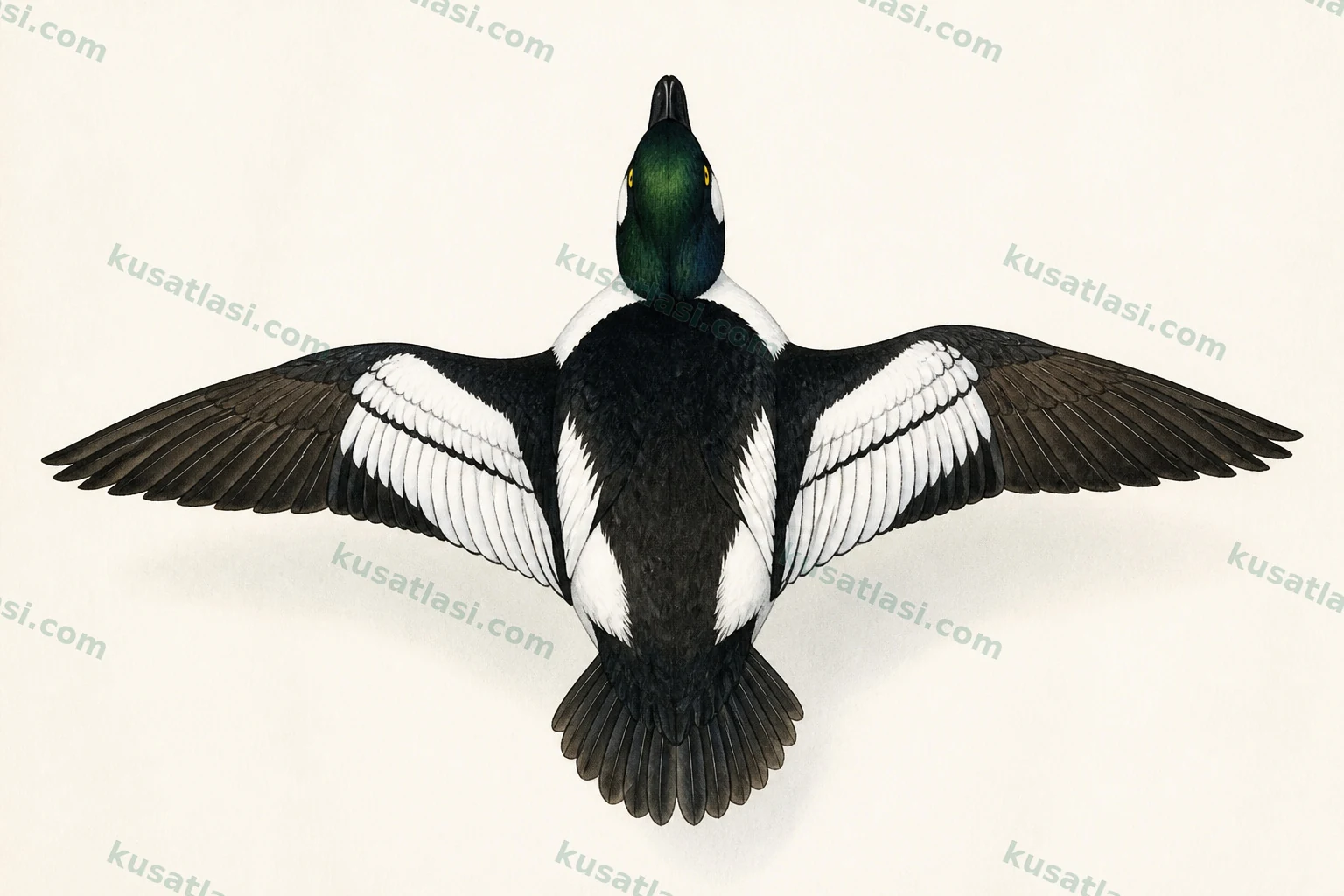
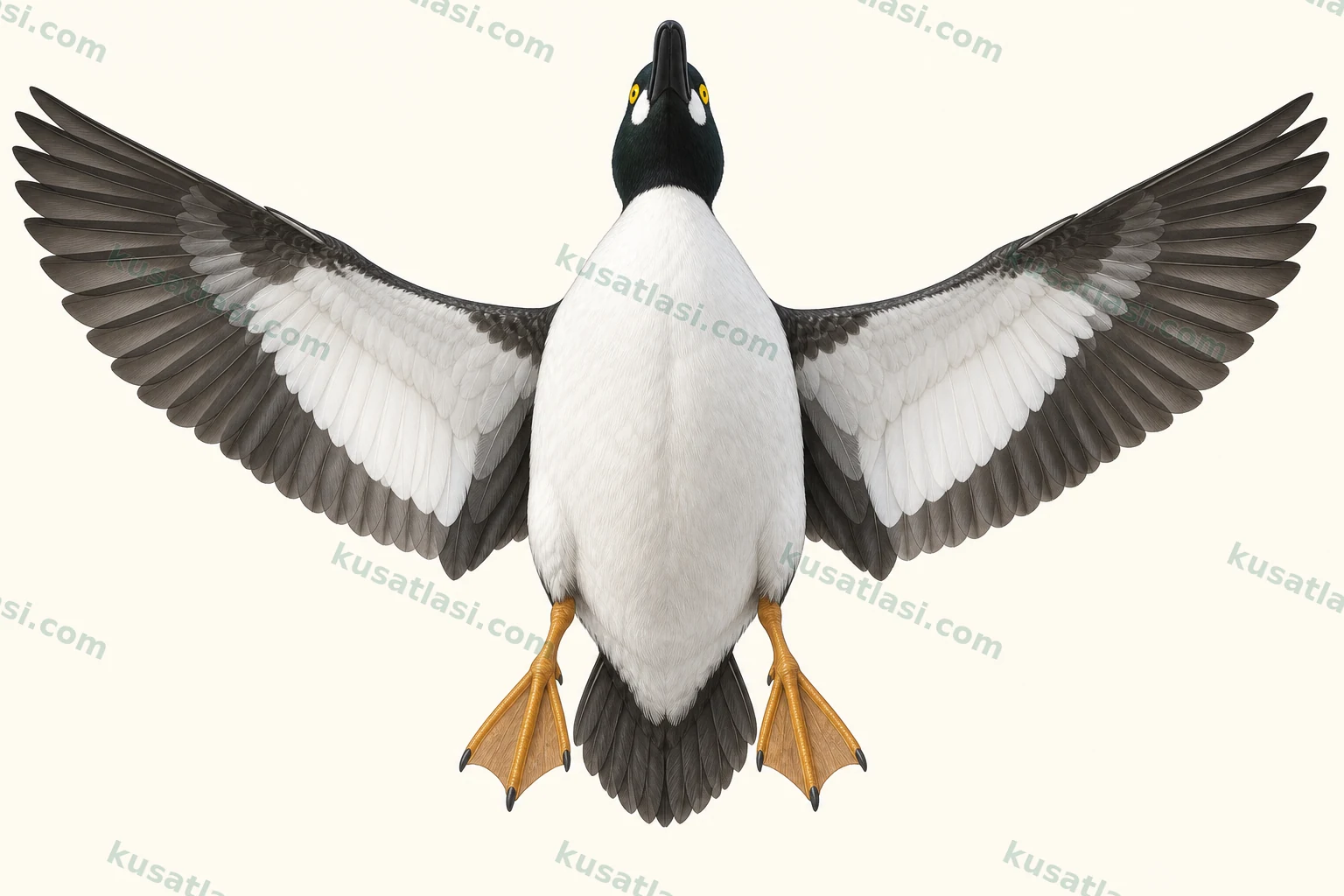
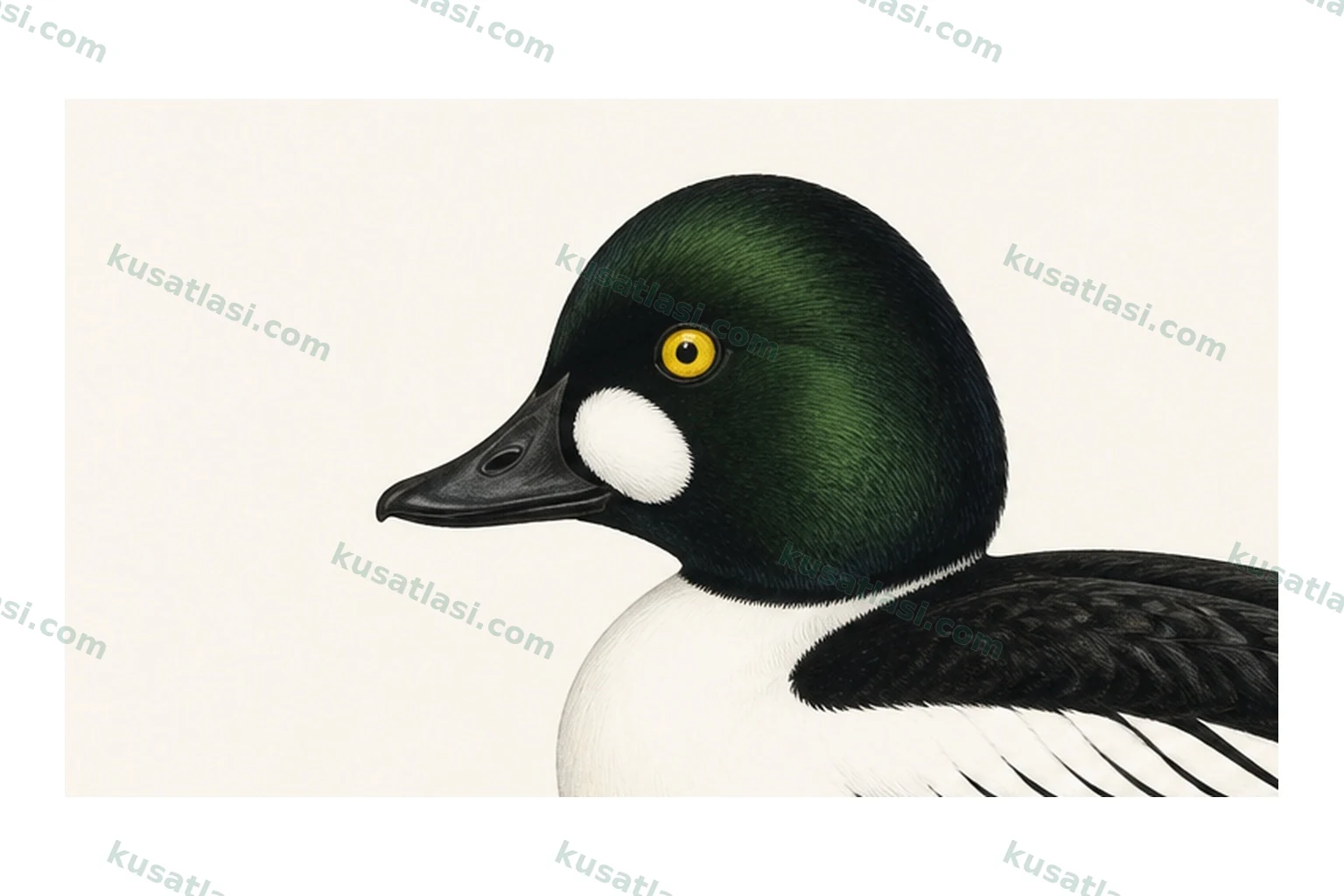
Common Goldeneye identification views
Swipe left or right through all five plates.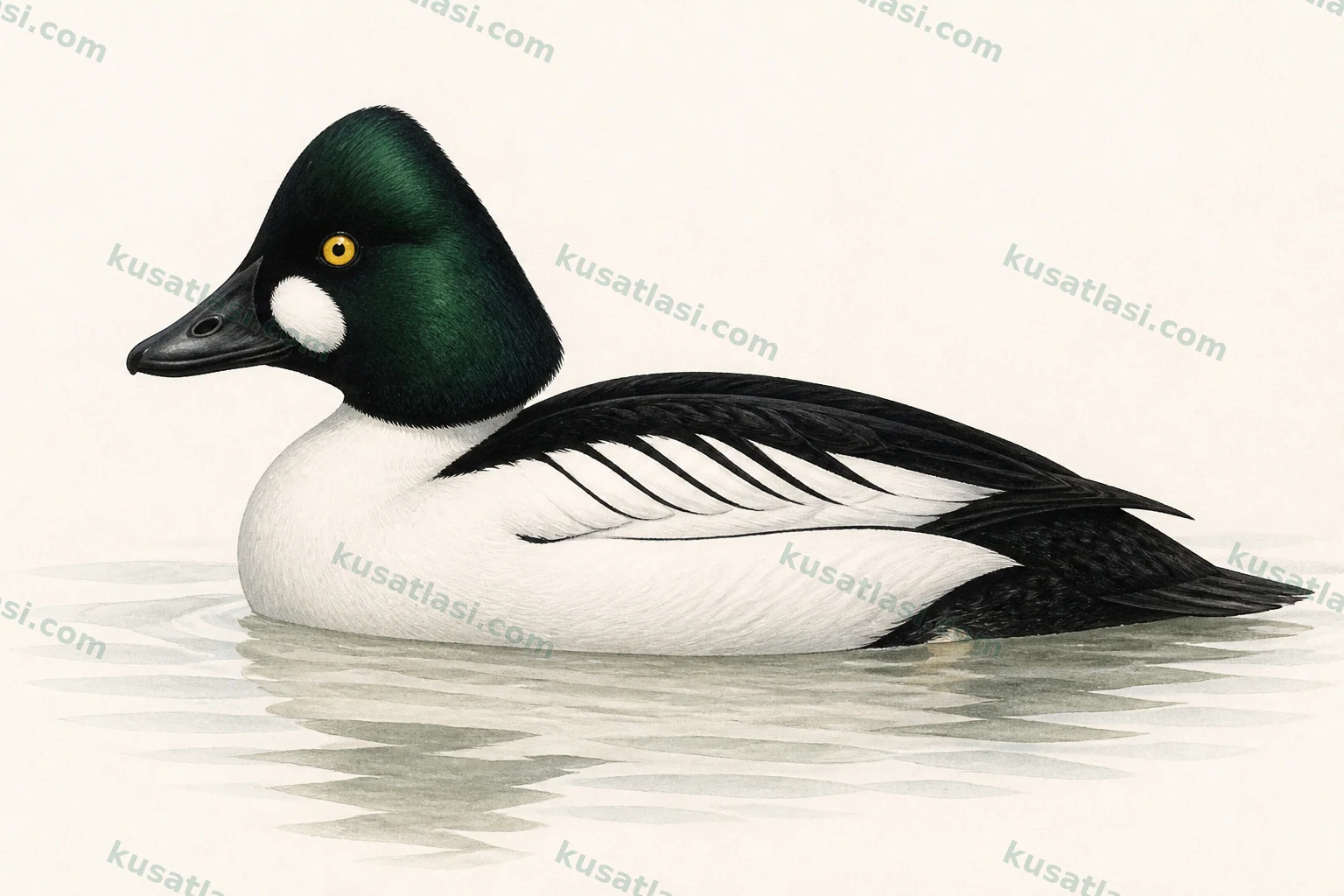
Ducks, Geese, and Waterfowl
Common Goldeneye
Bucephala clangula
Altıngöz
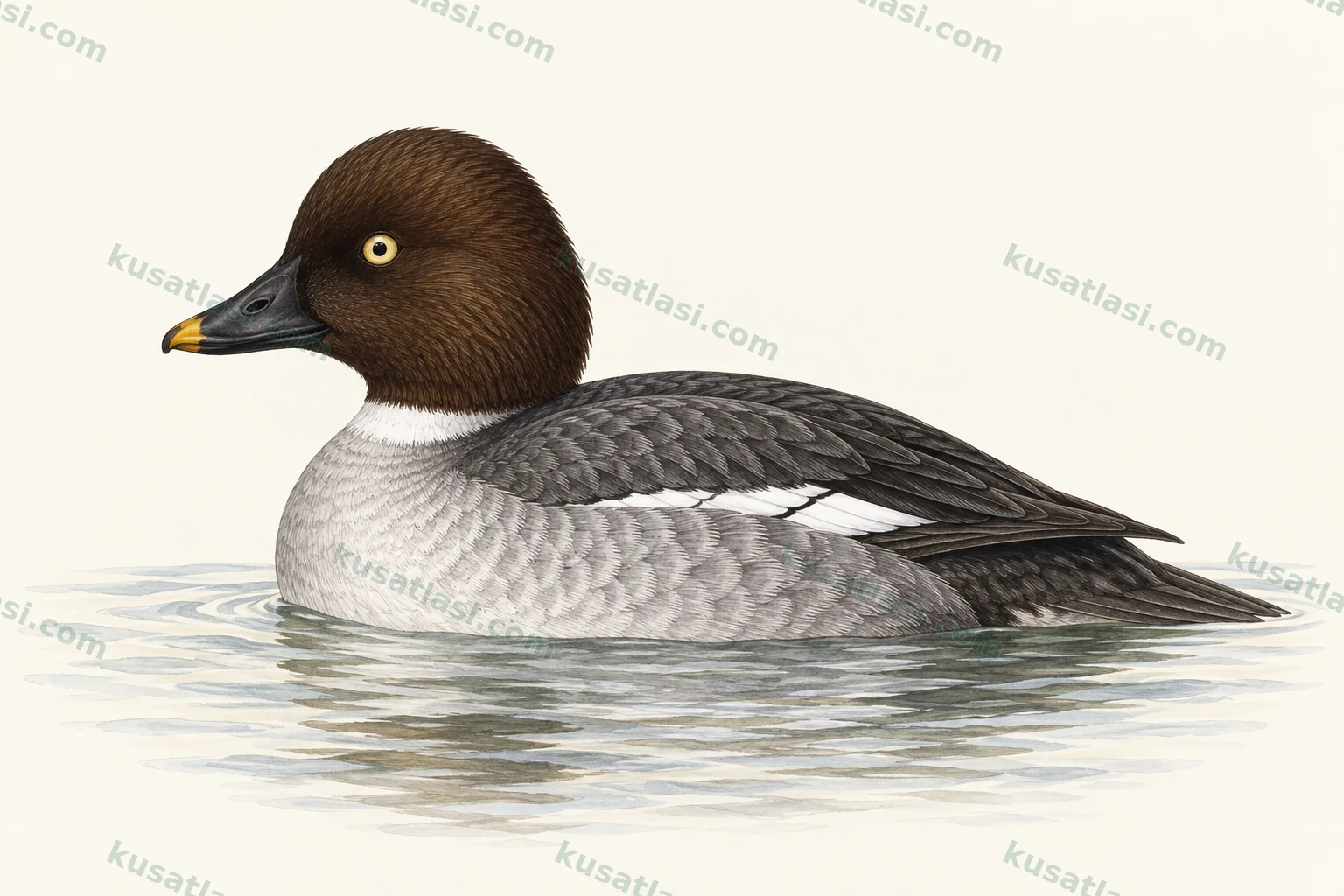
Large-headed diving duck; male with round white facial spot, female with brown head and grey body.
- Order
- Anseriformes
- Conservation status
- LC Least Concern
First look in the field
Quick identification
- Large Head and Compact Diving Shape
An adult male has a dark, green-glossed head, a round white spot near the bill base, a pale body and dark back.
- Female and Immature
Females have brown heads and grey bodies, with a pale neck ring that posture can obscure.
Biometrics
Length
- Male
- 42–50 cm
- Female
- 42–50 cm
Wingspan
- Male
- 65–80 cm
- Female
- 65–80 cm
Weight
- Male
- 850–1,200 g
- Female
- 650–850 g
Detailed explanations of these measurements are available on our website, on the same species page.
World distribution
Common Goldeneye
Customize map layers
Observation Sites
Bird Atlas recordsLoading observations…
Monthly record intensity
12 monthsRecord intensity is affected by observation effort.
Rotate the globe and compare the supported layers. Colours show broad range areas, not exact sightings or nests.
- Jan
- Apr
- Jul
- Oct
- Dec
Generalised data and method
Basemap: Natural Earth (public domain).
Bibliography ↗Authentic bird sound and ethical use
Voice and listening
See the detailed species account below.
Spoken guide
Narration has not been recorded; no audio file has been created.
Observe without approaching the nest
Breeding
Length and span are shared European guide ranges, not Turkish sex-specific measurements. Northern nests occupy tree holes or boxes, lined with down. BTO gives typically 8–11 eggs and 29–30 days of female incubation. Young leave early; 57–66 days is time to flight. This does not imply regular Turkish breeding.
Scientific species guide
Detailed account
Large Head and Compact Diving Shape
An adult male has a dark, green-glossed head, a round white spot near the bill base, a pale body and dark back. The short bill narrows towards its tip. Poor light can hide the green sheen; yellow eyes or black-and-white colour alone do not identify the species.
Female and Immature
Females have brown heads and grey bodies, with a pale neck ring that posture can obscure. Yellow at the bill tip varies. Young birds have darker eyes and immature males gradually acquire the adult pattern. Do not sex a bird from eye colour alone: check head colour, presence or absence of the white facial spot and body tone together. Natural examples are linked in Sources.
Size and Tree-cavity Nesting
Length and span are shared European guide ranges, not Turkish sex-specific measurements. Northern nests occupy tree holes or boxes, lined with down. BTO gives typically 8–11 eggs and 29–30 days of female incubation. Young leave early; 57–66 days is time to flight. This does not imply regular Turkish breeding.
A Scarce Turkish Winter Visitor
Winter is the principal season to look for Goldeneyes in Turkey, with passage also possible. Images of large northern flocks should not set expectations for equal abundance here. Suitable coastal or inland waters can hold single birds or small groups; timing varies between sites and years.
Dated National Evidence
BirdLife's 2021 assessment lists 6–100 wintering individuals for Turkey in 2013–2019. This is neither a current exact count nor breeding pairs. Unknown trends do not establish stability. A single mapped observation does not by itself prove present-day occurrence, regular wintering or breeding at that site.
Northern Forests and Ice-free Winter Water
Breeding spans northern Eurasia and North America. European winter concentrations decrease southwards from the Baltic and North Seas, with links also between western Siberia and Black or Caspian Sea regions. Do not assign every Turkish bird one origin. Map points are independent observations, not individual tracks. Document unusual summer birds without assuming local nesting.
Scan Open Water Repeatedly
Lakes, reservoirs and broad rivers can provide winter habitat. Diving birds disappear temporarily, so one scan may miss them. Food, usable open water and undisturbed resting places matter together. Waterbody size alone does not explain a record.
Sheltered Coastal Water
Bays, estuaries and other protected coastal areas are also worth checking. Waves and light may hide head patterns, and the same bird can appear differently coloured as it turns. Resolve head, bill and body rather than searching only for a bright eye.
Nesting Requires Different Habitat
On northern breeding grounds suitable cavities near wooded waters are important. Winter use of treeless shores is not a contradiction: seasonal needs differ. A box at a Turkish winter site does not guarantee nesting. Avoid pushing birds from resting places or interrupting dives, and never cut across a flock with a boat. Keep a distance at which normal behaviour continues.
Aquatic Invertebrates
Goldeneyes mainly obtain food by diving. Mollusks, small crustaceans and aquatic insects are important, with the balance changing by habitat and season. Prey in a coastal bay differs from prey in a freshwater lake. Record visible items without assigning an unseen prey species to every dive.
Not Exclusively a Fish Eater
Small fish and fish eggs are also taken, while plant material contributes less. Calling it exclusively fish-eating is misleading. Named North American prey should not be transferred to every Turkish wetland. Use a broader category when an item cannot be identified reliably.
Diving and Counting
Underwater propulsion comes from the feet with wings held close. Successive dives rapidly change the visible count. Watch a defined patch long enough to avoid counting resurfacing birds as newcomers. Ducklings feed themselves under maternal protection rather than relying on food delivered bill-to-bill. Do not lure birds with bread; natural foraging observations are more informative.
A Whistle Made by Wings
The distinctive flight whistle is mechanical, separate from vocal calls. Match a recording to the bird's activity: a passing flock's wing sound is not a courtship note from a duck on the water. Record whether birds were flying and how many were seen.
Display Before the Breeding Journey
Males throw their heads back, move forward and splash during courtship. Such displays occur in winter and early spring. A displaying pair in Turkey therefore does not prove a nest nearby. Watch the sequence naturally without playback that changes the interaction.
Leaving the Tree Before They Can Fly
Young can jump from the nest cavity soon after hatching and join their mother, long before flight develops. This describes northern nesting life, not a typical Turkish winter scene. Eggs can be laid in another female's nest and broods may mix later. A large group of ducklings is not a direct count of one female's clutch. Never obstruct their movements or inspect the cavity to confirm them.
Text and plates come from existing atlas records; references are in the central bibliography.
Open bibliography