
Existing atlas plates
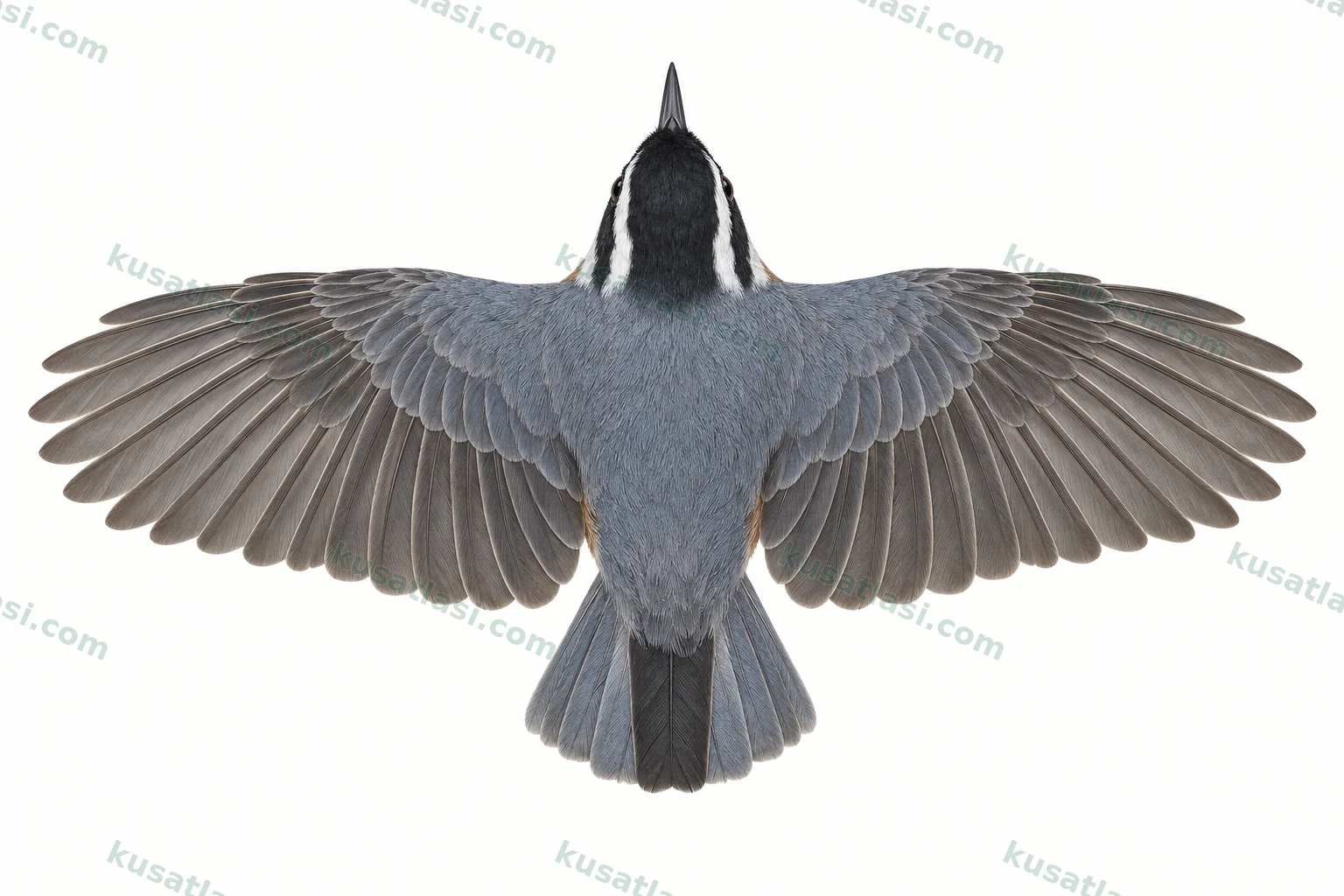
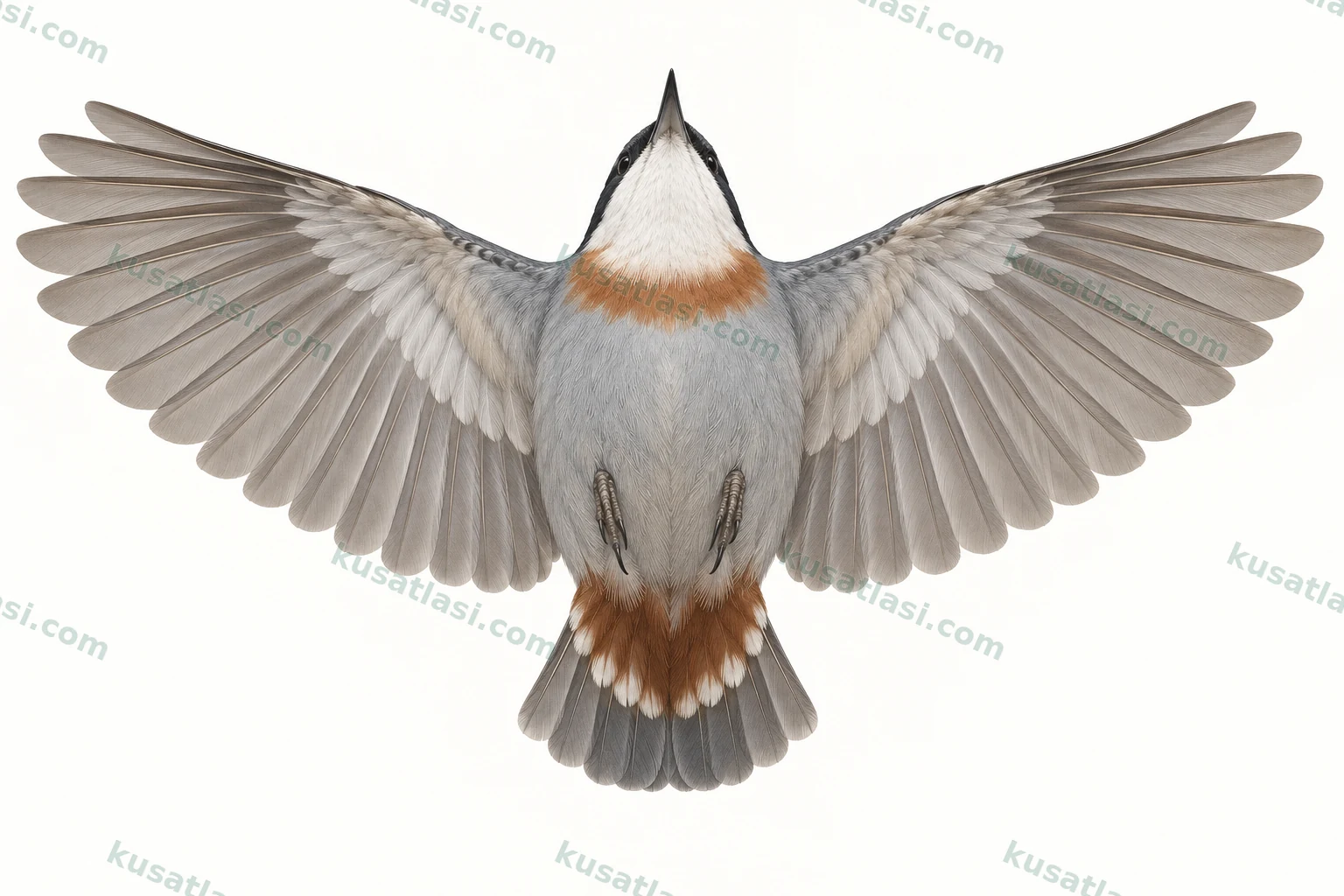
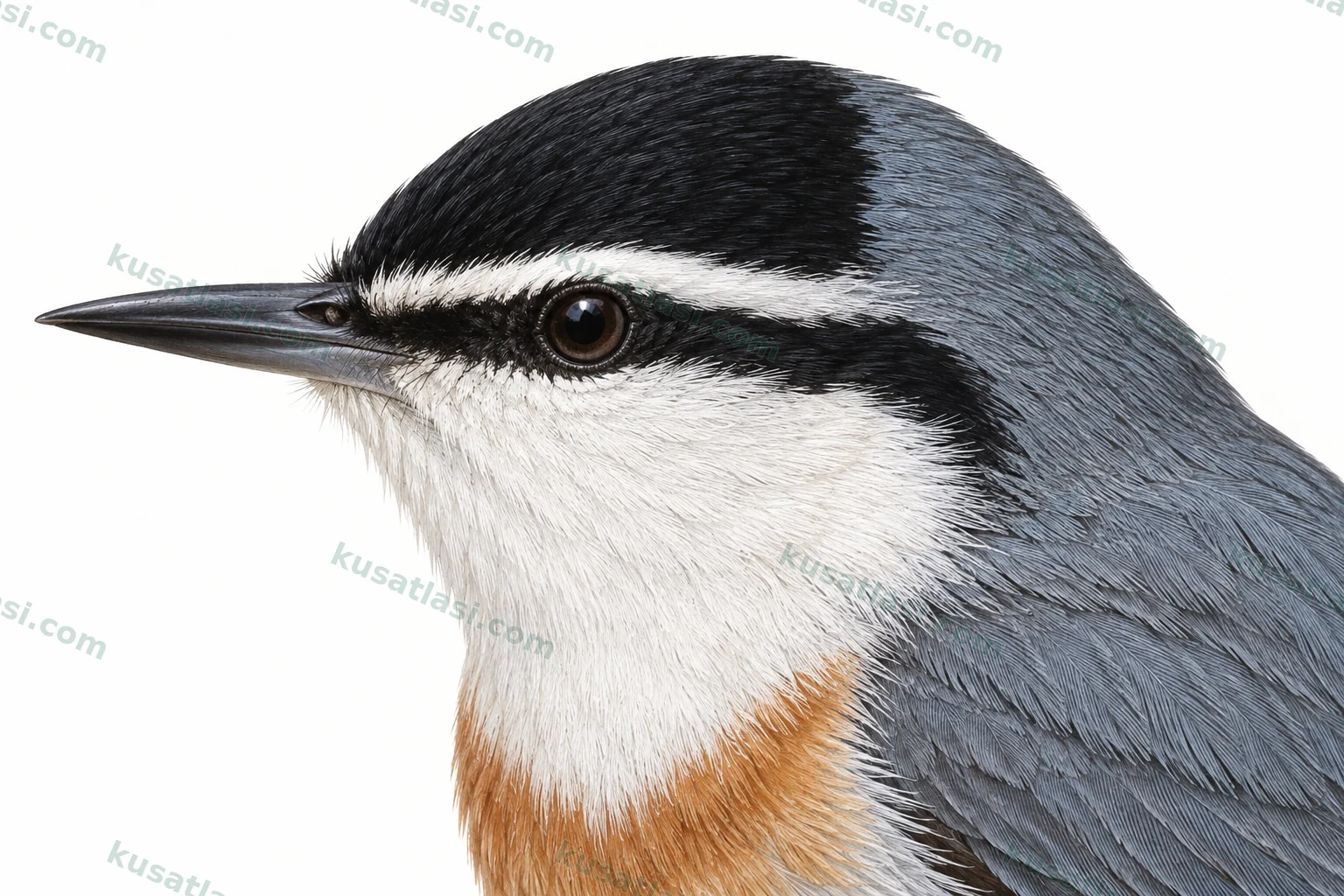
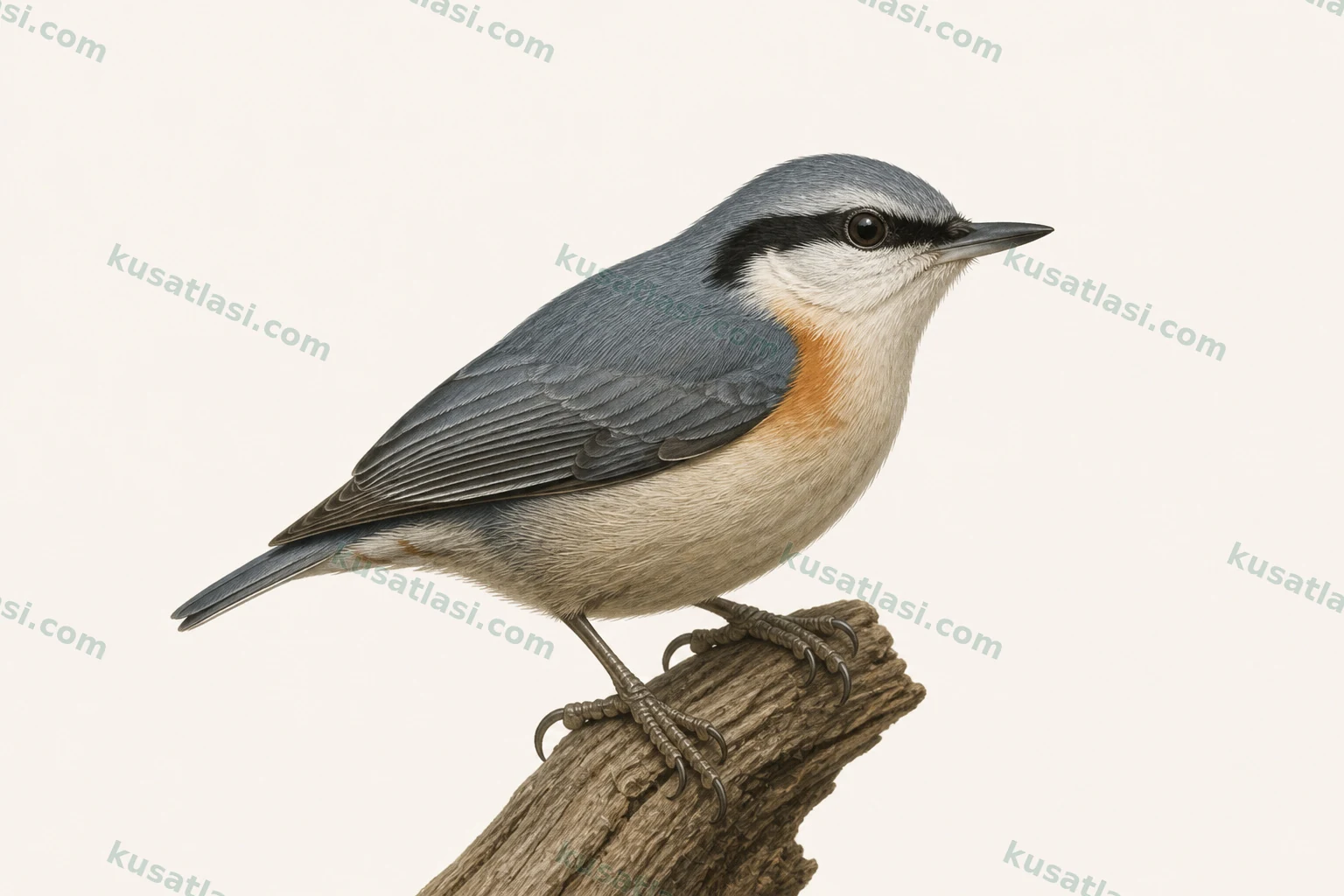
Krüper's Nuthatch identification views
Swipe left or right through all five plates.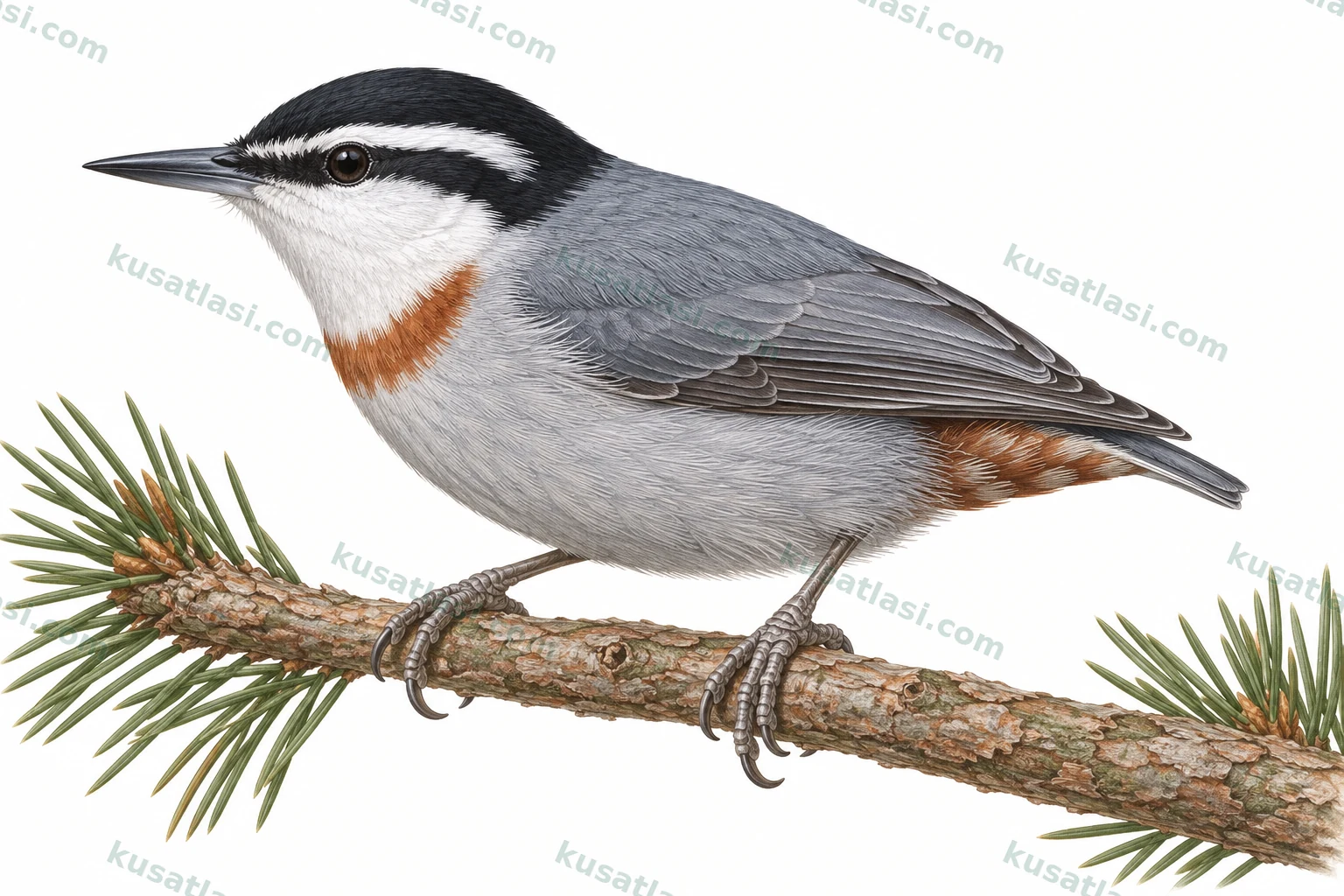
Nuthatches
Krüper's Nuthatch
Sitta krueperi
Anadolu Sıvacısı
In conifer woodland, combine forehead, eyebrow and breast pattern; do not treat artwork errors as diagnostic examples.
- Order
- Passeriformes
- Conservation status
- LC Least Concern
First look in the field
Quick identification
- Read Three Features Together
Look for the adult male's black forehead, white eyebrow and rusty breast patch on a small, short-tailed bird.
- Female and Young
Females have a less definite head pattern and paler breast marking; juveniles look greyer.
- Measurements and Nest
Shared ranges are 12–13 cm length, 21–23 cm wingspan and 10–14 g mass, not separate sex measurements.
Biometrics
Length
- Male
- 12–13 cm
- Female
- 12–13 cm
Wingspan
- Male
- 21–23 cm
- Female
- 21–23 cm
Weight
- Male
- 10–14 g
- Female
- 10–14 g
Detailed explanations of these measurements are available on our website, on the same species page.
World distribution
Krüper's Nuthatch
Customize map layers
Observation Sites
Bird Atlas recordsLoading observations…
Monthly record intensity
12 monthsRecord intensity is affected by observation effort.
Rotate the globe and compare the supported layers. Colours show broad range areas, not exact sightings or nests.
- Jan
- Apr
- Jul
- Oct
- Dec
Generalised data and method
Basemap: Natural Earth (public domain).
Bibliography ↗Authentic bird sound and ethical use
Voice and listening
See the detailed species account below.
Spoken guide
Narration has not been recorded; no audio file has been created.
Observe without approaching the nest
Breeding
Most natural nests in the Antalya research were in conifers. Tree names alone do not describe nesting opportunities: suitable cavities are important too. Do not open holes, cut branches or shine lights inside. Avoid blocking food-carrying adults and publicly disclosing active nest locations.
Shared ranges are 12–13 cm length, 21–23 cm wingspan and 10–14 g mass, not separate sex measurements. An Antalya study recorded tree cavities and nest boxes with bark lining, 4–7 eggs, 12–15 days of incubation and 15–19 days in the nest. These are study ranges, not fixed durations for every nest.
Scientific species guide
Detailed account
Read Three Features Together
Look for the adult male's black forehead, white eyebrow and rusty breast patch on a small, short-tailed bird. The preserved male artwork lacks the black forehead; the head plate incorrectly shows a black-and-white scaled breast. Do not learn those details from the drawings. Problems are logged without changing artwork; natural examples are linked in Sources.
Female and Young
Females have a less definite head pattern and paler breast marking; juveniles look greyer. A pale bird in one shaded photograph is not automatically female. Compare front and side views of the same bird. Opposite-facing slider pictures do not align anatomically.
Measurements and Nest
Shared ranges are 12–13 cm length, 21–23 cm wingspan and 10–14 g mass, not separate sex measurements. An Antalya study recorded tree cavities and nest boxes with bark lining, 4–7 eggs, 12–15 days of incubation and 15–19 days in the nest. These are study ranges, not fixed durations for every nest.
Centred on Anatolia
The range centres on Anatolia but also includes Lesvos and parts of the Caucasus. It is not confined to Turkey. Western and southern conifer forests, the Taurus and northern mountain forests provide the broad Turkish setting. Presence in every forest patch cannot be assumed from this outline.
Resident, with Local Movement
It occurs year-round, with local seasonal movements rather than one fixed long-distance migration route. Breeding and autumn group activity are distinguished in the calendar; altitude and weather affect timing. Few records in one month may reflect limited access or observer effort, not departure from the country.
Research Is Not a Sighting Guarantee
A 2018 study used over 1,400 point counts in Turkey and Lesvos and highlighted Beydağları, Aladağlar and Ilgaz–Kartalkaya for conservation. These are not guaranteed sightings on every current visit. Keep date, habitat and behaviour with each record. Independent map points are not the tracked journey of one individual; unsupported routes and distances are not displayed here.
Search the Forest in Layers
Conifer woodland is the starting point: examine the canopy and cone-bearing branches as well as eye-level trunks. Wait for a bird to reappear around a trunk rather than continually moving closer. Locate it first, then assess details without losing the small bird among branches.
Cavities Matter
Most natural nests in the Antalya research were in conifers. Tree names alone do not describe nesting opportunities: suitable cavities are important too. Do not open holes, cut branches or shine lights inside. Avoid blocking food-carrying adults and publicly disclosing active nest locations.
Mixed Woodland and Observation
Mixed stands may be used outside breeding. Habitat guides a search but cannot identify the species; other nuthatches and treecreepers may share a wood. Listen before looking, scan from permitted paths and let the bird choose its own perch. Playback changes behaviour and is unnecessary for learning its natural appearance.
Small Animal Prey
Insects and other small invertebrates are important in the warmer season. The Antalya nestling study recorded beetles and butterflies or moths; its sample is not a fixed national menu. If prey cannot be identified, record a broad category rather than inventing a species name. Keep nest-area observations brief.
Seeds and Storage
Conifer seeds become important in autumn and winter. An item placed in a bark crevice may be stored for later. Not every bill strike means a nesting hole is being excavated. Follow what the bird carries and whether it eats it; leave food stores undisturbed.
Separate Observation from Interpretation
Record the feeding surface and visible action. A short pause does not prove food shortage, nor does prolonged use of one tree establish an exclusive diet. Do not bait birds for a closer view. Seasonal patterns describe a broad tendency, not an identical meal for every individual on a given date.
A Regional Conservation Responsibility
Much of the range lies in Turkey, making its forests internationally important for this bird. Its Turkish name does not imply that it lives nowhere else. Explain real habitat needs rather than exaggerating rarity, and separate known facts from assumptions in observation notes.
Boxes Are Not Automatically Occupied
The Antalya research found 16 of 250 provided boxes used. Installing a box does not guarantee a breeding pair; location and study design matter. Box counts are not pair counts, and artificial provision does not replace protection of natural cavities. Occupied boxes should not be repeatedly opened out of curiosity.
Read Dates and Units
BirdLife's 2021 European assessment gives a Turkish estimate of 100,000–400,000 breeding pairs from 2002–2012, not a 2026 count of individuals. Uncertain trends must not be described as growth or stability. LC does not mean every local forest is secure. A dated estimate retains its original meaning even when newer sightings are added to a map.
Text and plates come from existing atlas records; references are in the central bibliography.
Open bibliography