
Existing atlas plates
Arabian Lark identification views
Swipe left or right through all five plates.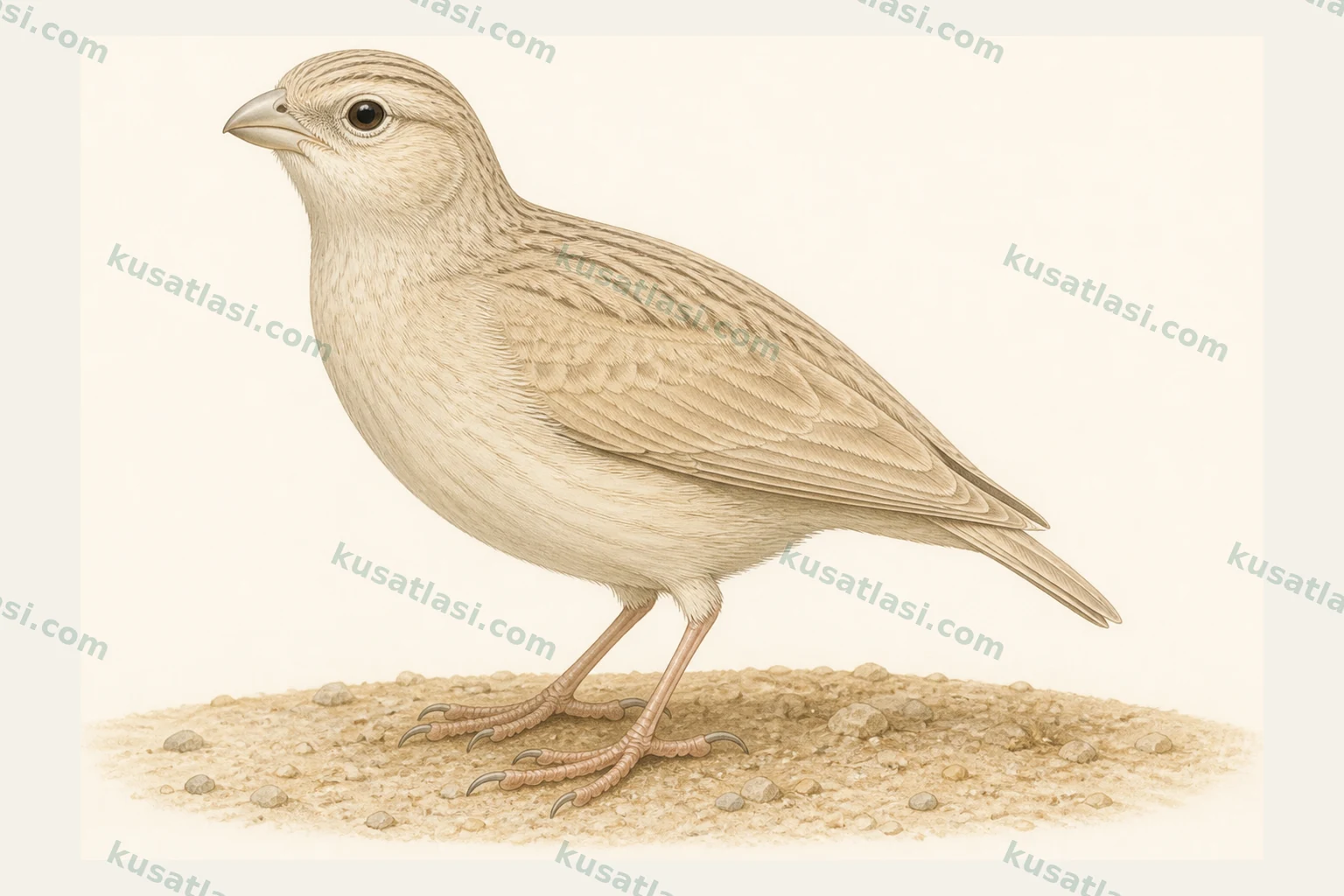
Larks
Arabian Lark
Eremalauda eremodites
Arabistan Toygarı
Arabian Lark (*Eremalauda eremodites*) is a 17–19 cm desert lark with homogeneous sand-buff upperparts, bulkier than Desert Lark, without mask, horns or yellow throat. Arabian Peninsula endemic; in Turkey only a vagrant — no breeding, every record documented. IUCN LC.
- Order
- Passeriformes
- Conservation status
- LC Least Concern
First look in the field
Quick identification
- Quick Identification
Arabian Lark is a small, pale desert lark with a relatively deep heavy bill, short tail, lightly streaked sandy upperparts.
- General Appearance and Posture
The body is compact, head rounded and bill stout.
- Male, Female and Juvenile
Sexes are very similar and cannot be safely assigned by one plumage photograph.
Biometrics
Length
- Male
- 10–11 cm
- Female
- 10–11 cm
Wingspan
- Male
- 25–30 cm
- Female
- 25–30 cm
Weight
- Male
- 12–16 g
- Female
- 12–16 g
Detailed explanations of these measurements are available on our website, on the same species page.
World distribution
Arabian Lark
Customize map layers
Observation Sites
Bird Atlas recordsLoading observations…
Monthly record intensity
12 monthsRecord intensity is affected by observation effort.
Rotate the globe and compare the supported layers. Colours show broad range areas, not exact sightings or nests.
- Jan
- Apr
- Jul
- Oct
- Dec
Generalised data and method
Basemap: Natural Earth (public domain).
Bibliography ↗Authentic bird sound and ethical use
Voice and listening
Calls are short dry or chirping lark notes; song is longer and repetitive. Birds forage on the ground and can move nomadically after rain. Preserve sound with images because one call is not diagnostic.
Spoken guide
Narration has not been recorded; no audio file has been created.
Observe without approaching the nest
Breeding
A small ground depression beside low vegetation is lined with grass, fine twigs, plant down and sometimes feathers. KSA Nature gives 3–4 eggs but marks incubation and nestling periods as unknown; values from other larks are not substituted.
See the detailed species account below.
Scientific species guide
Detailed account
Quick Identification
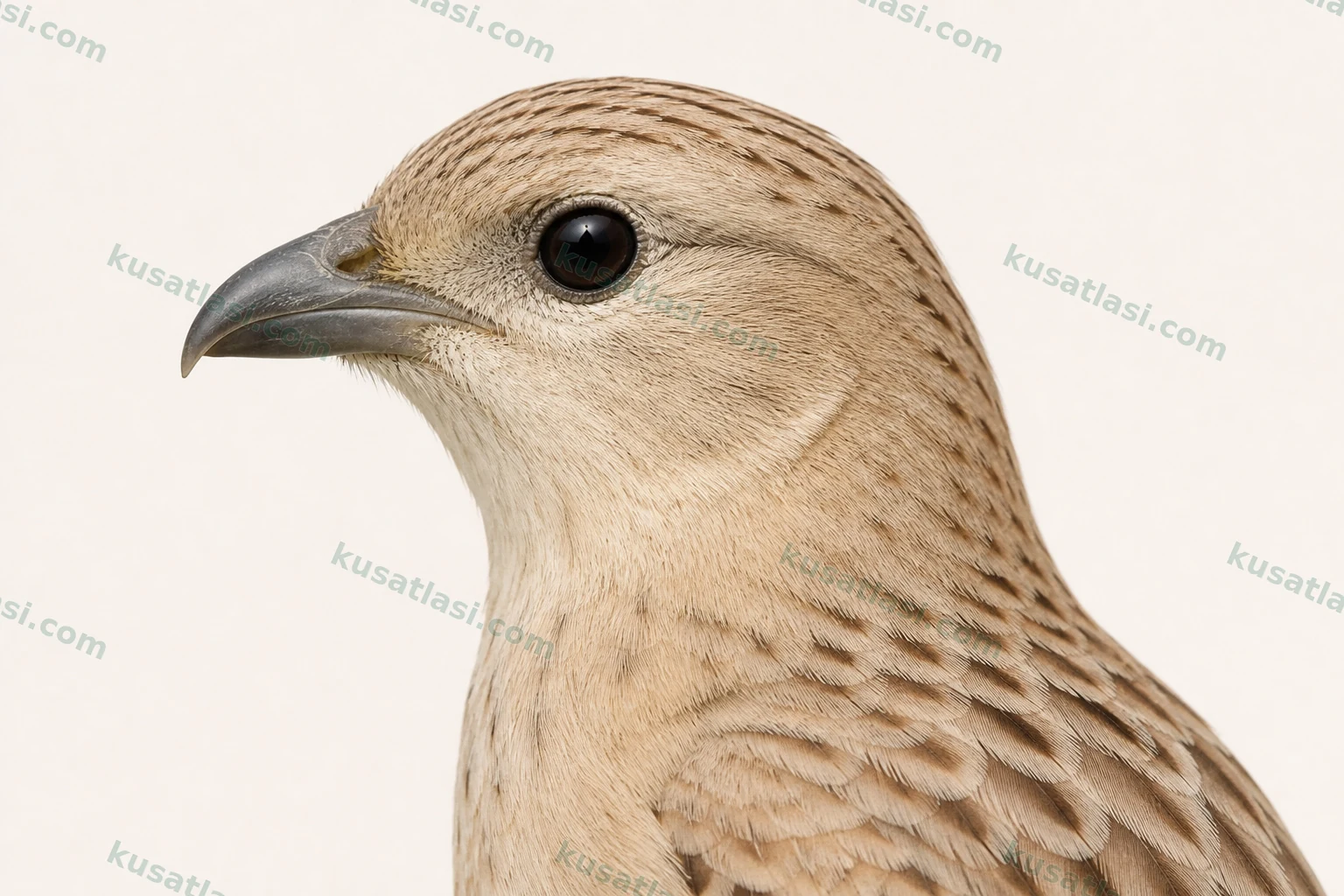
Arabian Lark is a small, pale desert lark with a relatively deep heavy bill, short tail, lightly streaked sandy upperparts, pale underparts and a dark moustachial line. Combine structure, face, tail and range; no single pale colour or bill shape proves the species.
General Appearance and Posture
The body is compact, head rounded and bill stout. Birds run in short bursts on flat sand or gravel and pause upright. Upperparts are sandy with fine streaks; breast streaking is weak and the belly pale.
Male, Female and Juvenile
Sexes are very similar and cannot be safely assigned by one plumage photograph. Juveniles are more strongly scaled and streaked. A darker bird is not automatically male.
In Flight
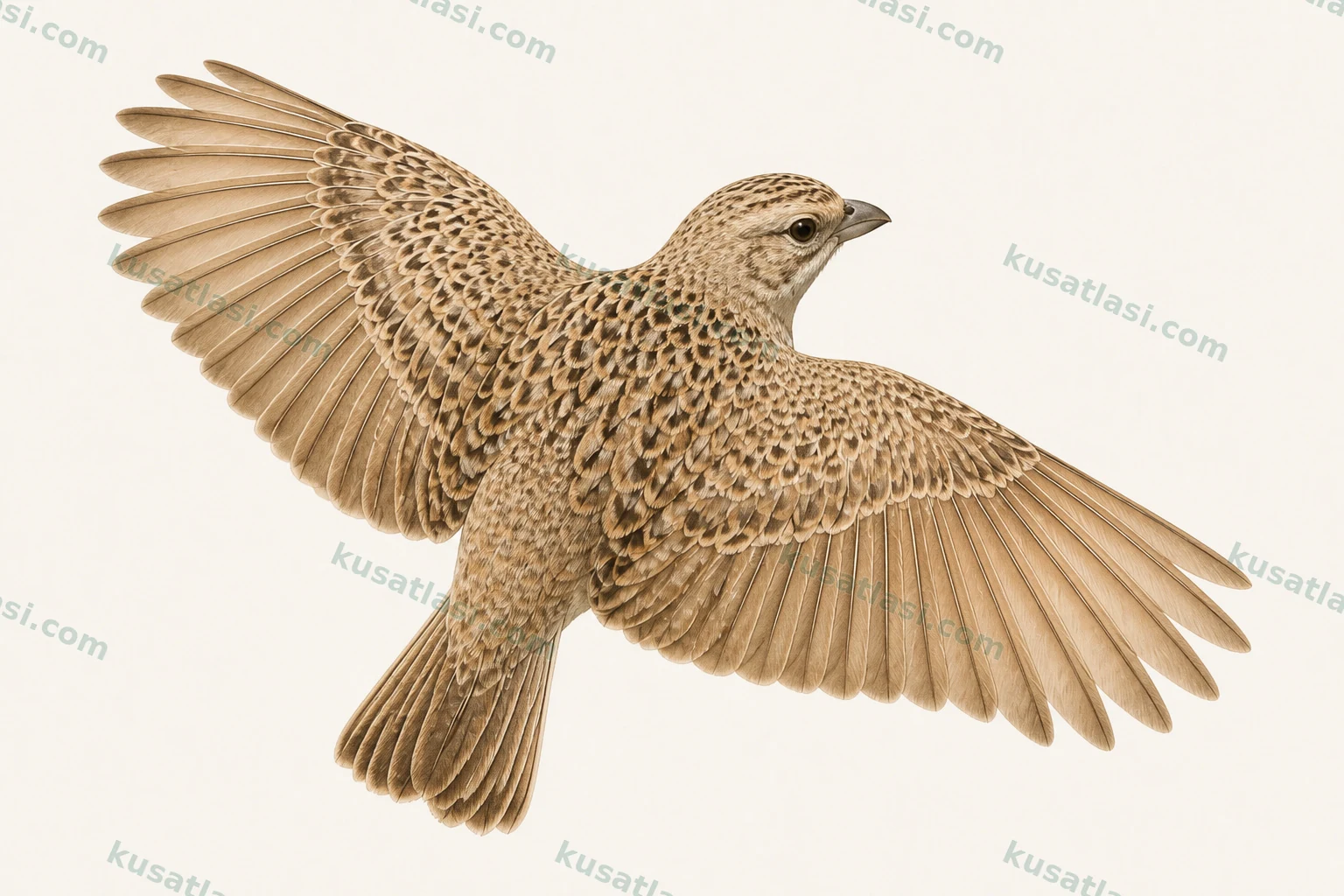
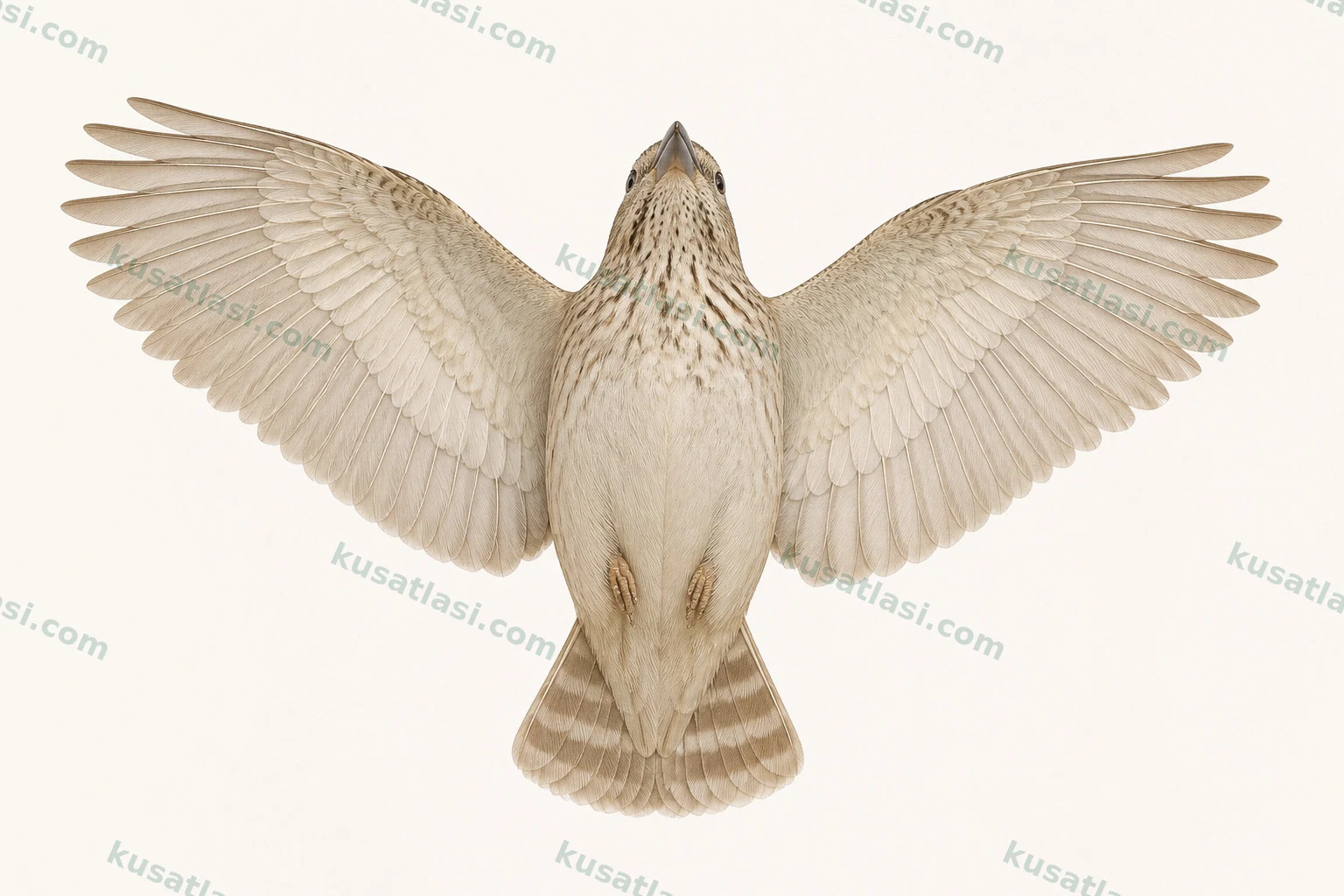
Broad wings show sandy coverts and darker remiges above; below, coverts are pale and flight feathers slightly darker. The tail is short. No unique underwing panel gives certain identification.
Voice and Behaviour
Calls are short dry or chirping lark notes; song is longer and repetitive. Birds forage on the ground and can move nomadically after rain. Preserve sound with images because one call is not diagnostic.
Similar Species
Dunn's Lark is the closest problem. Arabian averages larger and darker with a heavier bill and stronger moustachial stripe, but overlap can make vagrants inseparable. Desert, Bar-tailed and short-toed larks differ in bill, tail and pattern; Hoopoe-Lark is much larger and long-billed.
World Range
Arabian Lark is concentrated in Saudi Arabia and extends through parts of Jordan, Palestine, southern Syria, Kuwait, Yemen and Oman. Its occurrence is patchy on suitable sandy, gravel and stony plains. Old African records of Dunn's Lark are not transferred after the split without geographic review.
Status in Türkiye
Avibase lists Arabian Lark as Rare/Accidental in Türkiye and also retains a Dunn's/Arabian uncertain category. This does not establish regular passage, wintering or breeding. Old Eremalauda reports need documentary reassessment.
Migration Journey
Core populations are resident to nomadic and can respond to rainfall and short-lived food pulses. No fixed tracked Turkish route or distance is known, so records are not joined into a fictional country chain.
Breeding Area
Flat, open sandy, gravel or stony desert with sparse dwarf shrubs and seasonal plants is typical. Dense vegetation, wetland and steep rocky mountains are not core habitat.
Nest Site
A small ground depression beside low vegetation is lined with grass, fine twigs, plant down and sometimes feathers. KSA Nature gives 3–4 eggs but marks incubation and nestling periods as unknown; values from other larks are not substituted.
Daily Use
Birds forage during cooler hours, use low rises to watch and may gather after rain. Roadside detectability can bias records. Never drive off track or expose a nest site.
Food
The incompletely known diet includes seeds, adult insects and larvae, including caterpillars and grasshoppers. Green plant parts or small fruits may be taken after rain. No unsupported percentages are invented.
Hunting Method
Birds run, pause and peck bare ground, stones and plant bases. The deep bill handles seeds while surface invertebrates are picked directly. Groups can spread over a productive patch.
Observation Limit
Do not provide grain or water for a photograph. Provisioning changes behaviour and increases road risk. Withdraw if an adult carries food or alarms near a possible ground nest.
A Recently Split Species
Arabian Lark was long treated within Dunn's Lark. Current authorities often split the Arabian taxon, so old records and measurements require geographic checking.
Following Desert Rain
Irregular rain creates brief seed and insect pulses and can trigger nomadic movements rather than a fixed seasonal migration.
Bill and Tail
A deep bill and short tail are useful structural clues, but overlap with Dunn's Lark prevents certainty from this pair alone.
Unknown Means Unknown
A regional account gives 3–4 eggs but no verified incubation or nestling duration. Other lark values are not copied into the gap.
Türkiye Requires Caution
Rare/Accidental checklist status is not a migration route or population. Document unusual birds from several angles and retain raw sound.
Plate Review
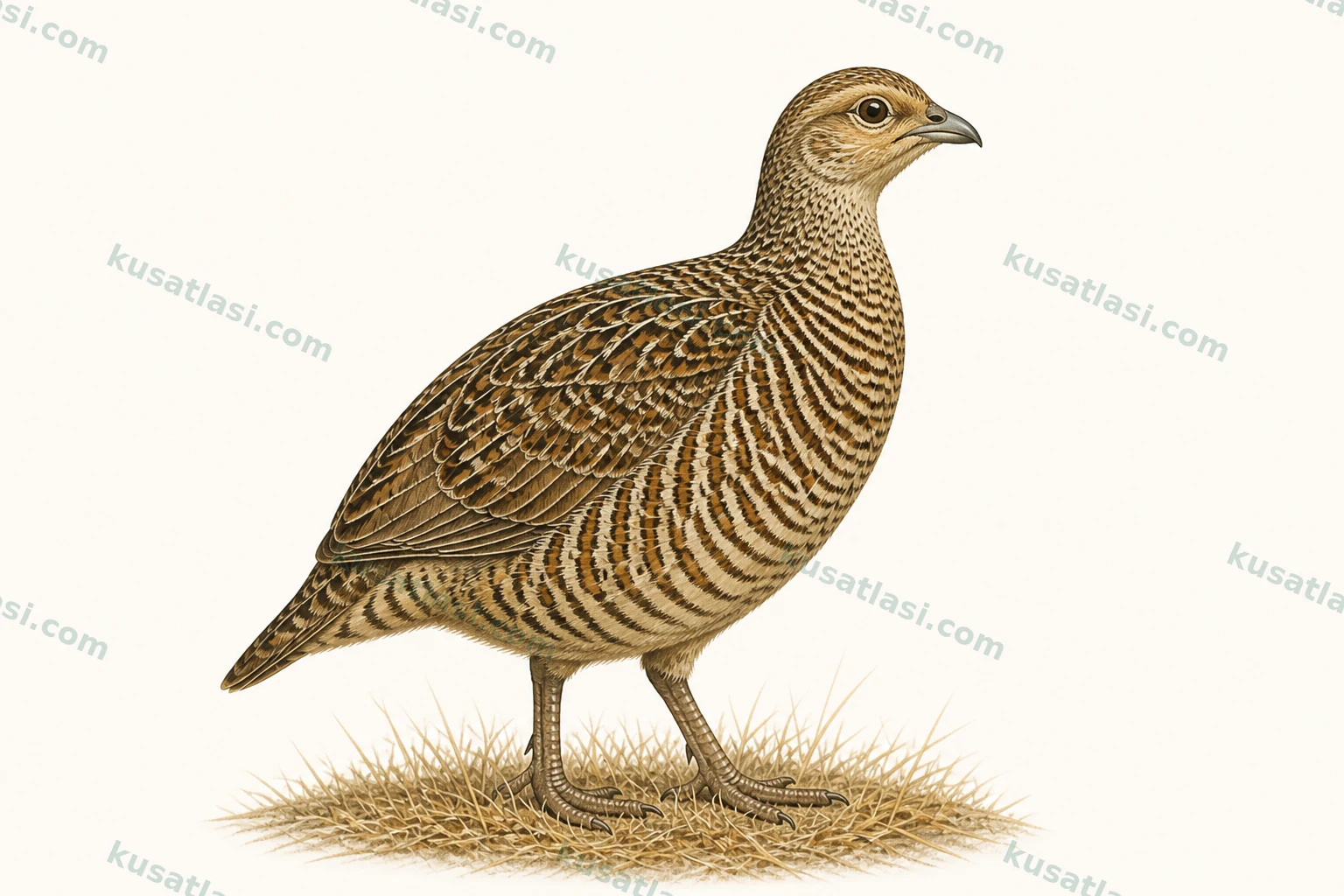
All five plates were viewed and left unchanged. The female plate depicts a quail-like bird and is a clear identity error. Perched/head bills are exaggerated and finch-like; flight plates are mechanically symmetrical with inconsistent proportions. Issues were recorded only in the report.
Text and plates come from existing atlas records; references are in the central bibliography.
Open bibliography