
Approved field-guide plates
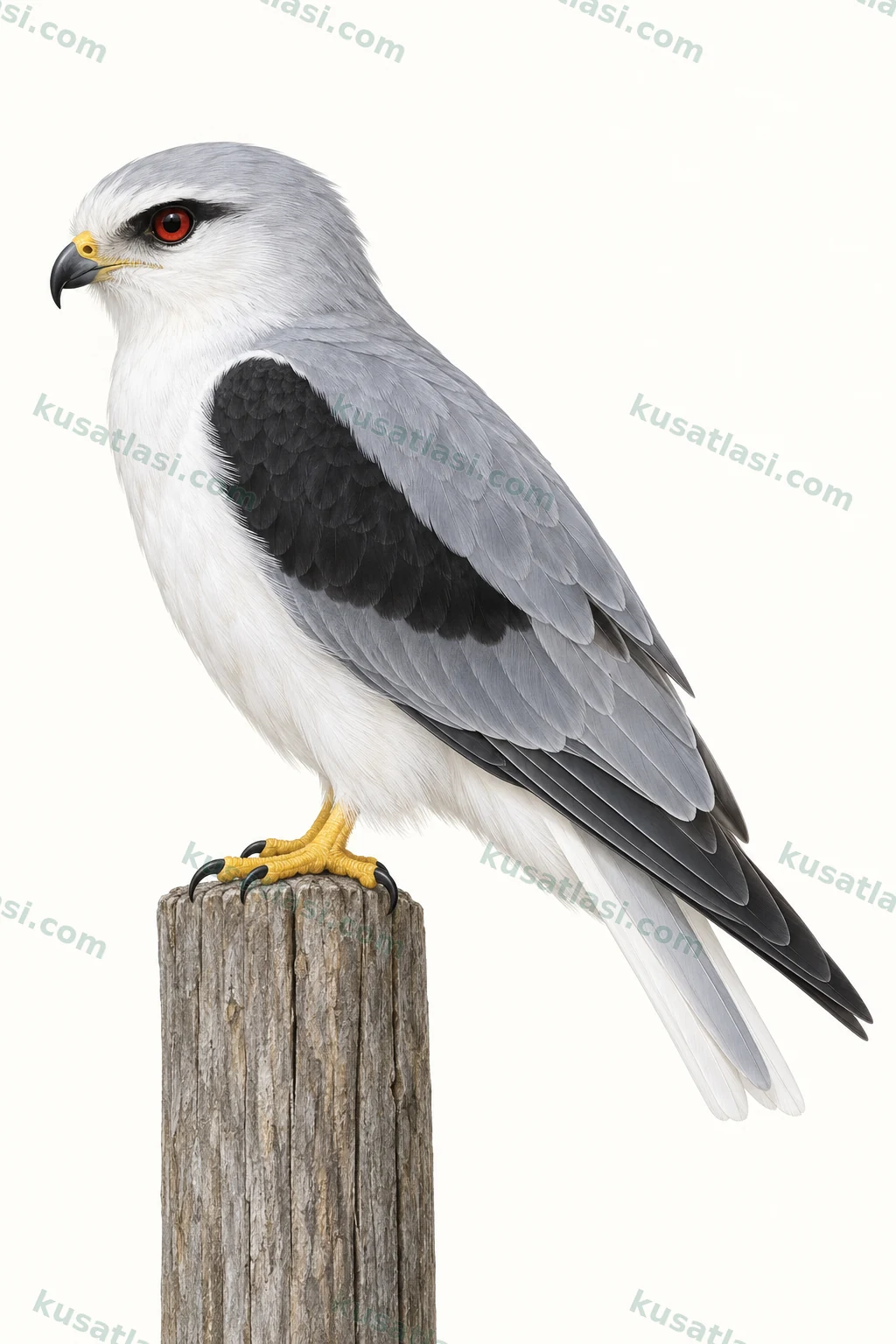
Black-winged Kite identification views
Swipe left or right through all five plates.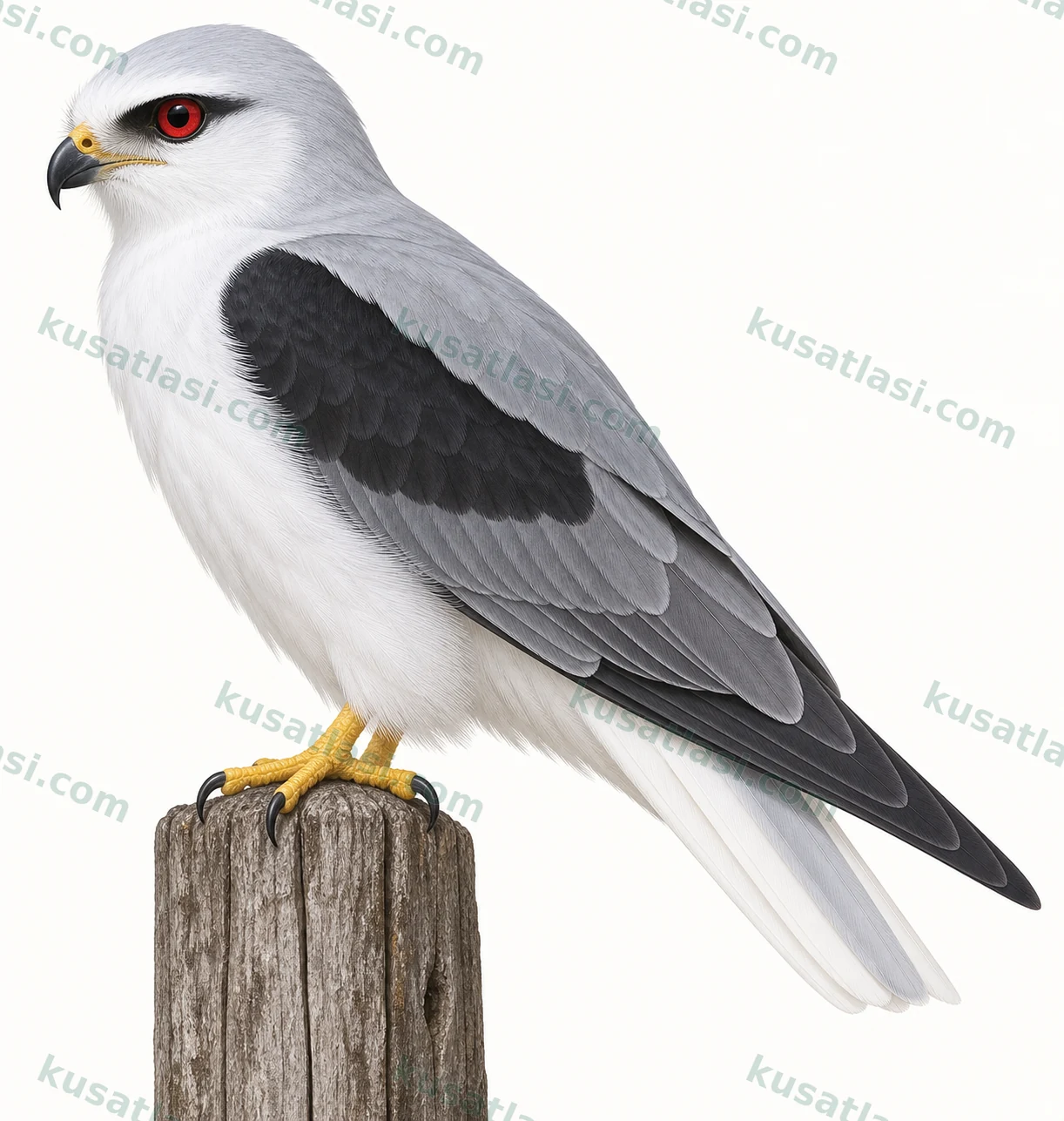
Hawks, Eagles, and Kites
Black-winged Kite
Elanus caeruleus
Ak Çaylak
Combine pale grey-white plumage, dark shoulders and a short tail; hovering alone is not diagnostic.
- Order
- Accipitriformes
- Conservation status
- LC Least Concern
First look in the field
Quick identification
- Black shoulders
Dark shoulder patches contrast with the pale grey back and white underside.
- Short tail
Consider the large-looking head together with the short tail.
- Hovering
It may hover while hunting, but hovering alone does not identify it.
Biometrics
Length
- Male
- 30–37 cm
- Female
- 30–37 cm
Wingspan
- Male
- 71–92 cm
- Female
- 71–92 cm
Weight
- Male
- 197–277 g
- Female
- 219–343 g
Detailed explanations of these measurements are available on our website, on the same species page.
World distribution
Black-winged Kite
Customize map layers
Observation Sites
Bird Atlas recordsLoading observations…
Monthly record intensity
12 monthsRecord intensity is affected by observation effort.
Rotate the globe and compare the supported layers. Colours show broad range areas, not exact sightings or nests.
- Jan
- Apr
- Jul
- Oct
- Dec
Generalised data and method
Basemap: Natural Earth (public domain).
Bibliography ↗Authentic bird sound and ethical use
Voice and listening
See the detailed species account below.
Spoken guide
Narration has not been recorded; no audio file has been created.
Observe without approaching the nest
Breeding
See the detailed species account below.
Scientific species guide
Detailed account
Appearance
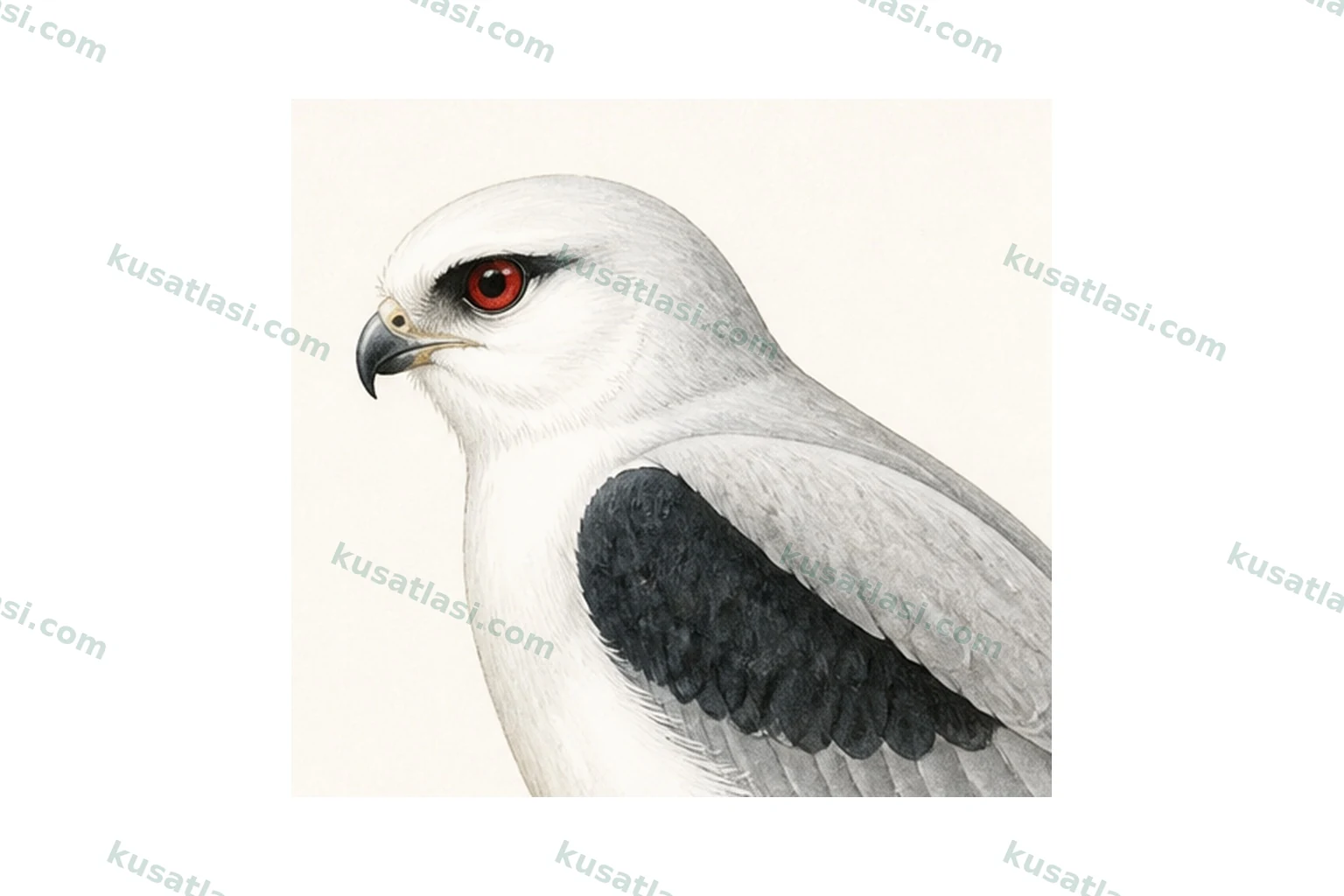
Black-winged Kite is a small pale raptor with grey upperparts, white underparts and conspicuous dark shoulders. The large-looking head, short tail and pointed wings help establish the silhouette. Adult red eyes are useful at close range, but failure to see eye colour at a distance does not exclude it.
Adult Male and Female
The sexes have similar plumage; there is no sharply different male colour pattern. Females can average heavier, but measurement ranges overlap. Comparing photographs taken at different distances cannot reliably establish sex. The weight pills use published male and female ranges, while length and wingspan remain species-wide values.
Juvenile
Young birds can show rusty head and breast tones and pale feather tips giving the upperparts a scaled appearance. This is not a separate female plumage. Freshness, wear and lighting affect the visibility of those features, so assess several areas rather than assigning age from a single warm tone.
Flight Views
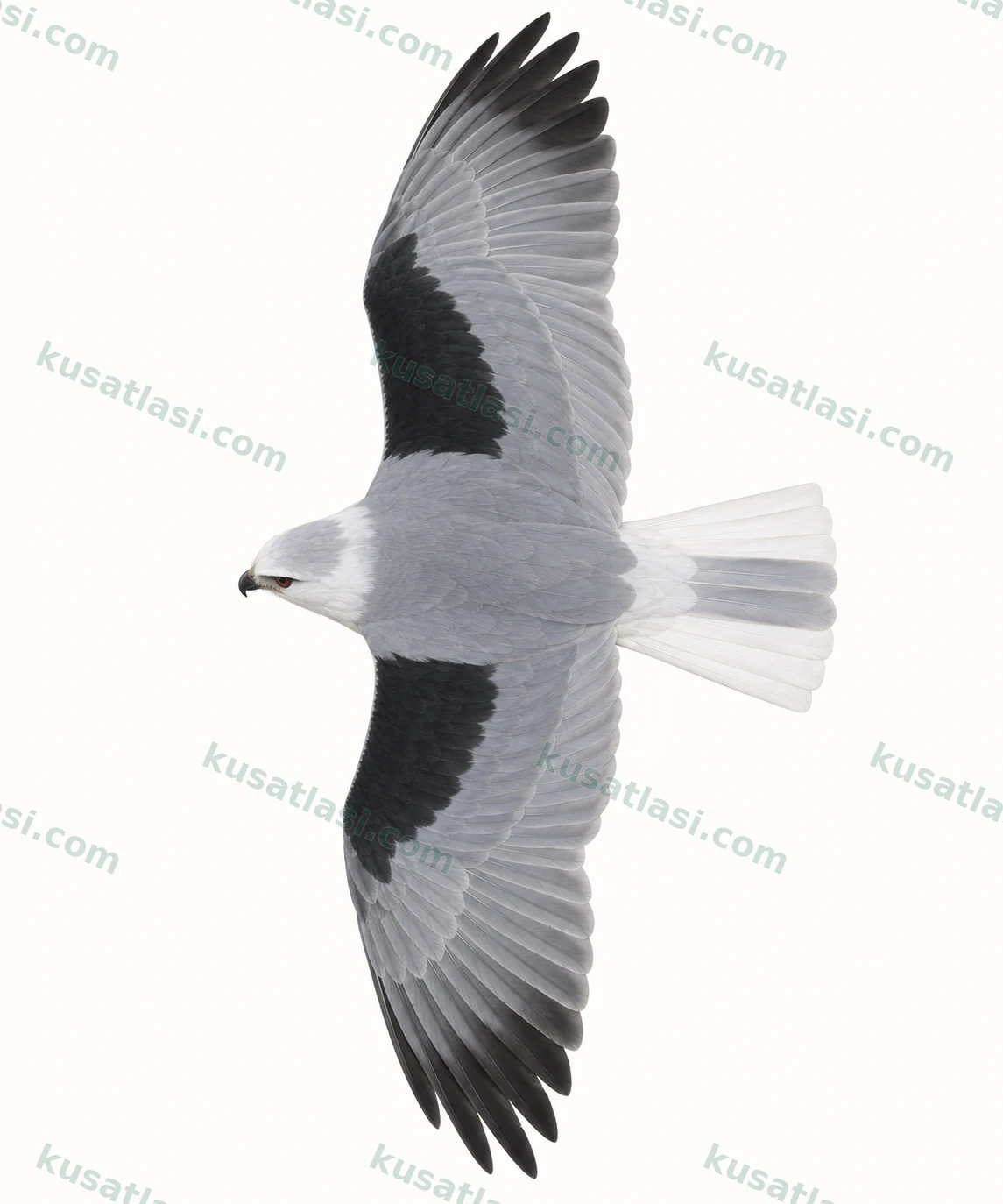
1. From above, assess the dark shoulder areas against grey upperparts. Allow for shadows cast by a wing or the body.
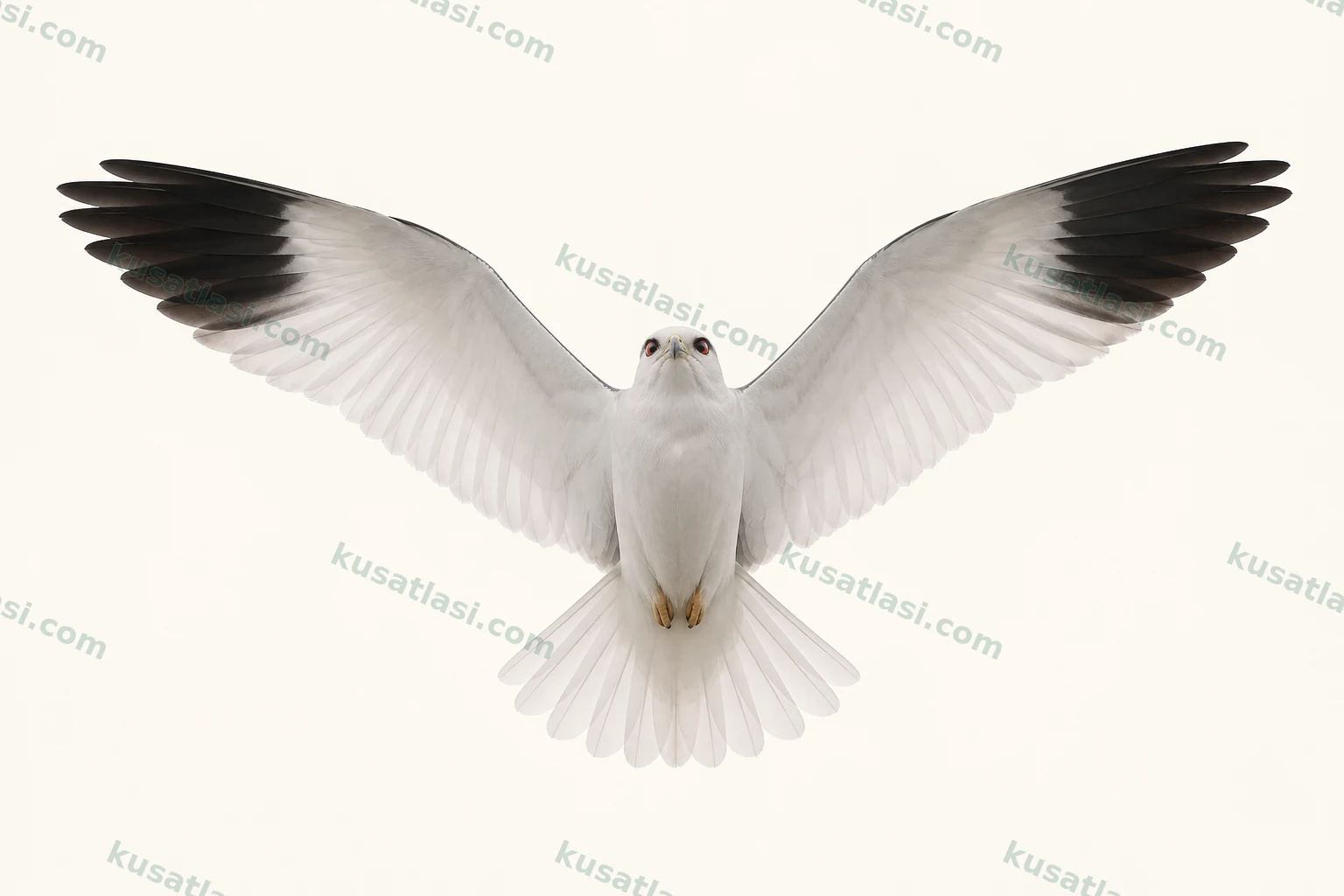
2. From below, examine the pale body and dark outer flight feathers. Underwing pigmentation varies geographically; a dorsal illustration cannot establish the ventral pattern.
3. The tail is short, unlike the conspicuous fork associated with Milvus kites. Adult tail feathers are mainly pale with a grey central pair. A dark terminal band in an illustration should not be treated as a required field character.
Behaviour and Alternatives
Hovering helps locate the bird but is not unique to it. Compare Common Kestrel's longer tail, male Hen Harrier's different proportions, and Black Kite's dark plumage and forked tail. Use a sequence of views because posture can temporarily hide important shapes.
Nest and Young
The nest is usually a small stick platform in a tree, with roots and green material also used. A typical clutch is 3–4 eggs, with a wider published range of 2–5. Incubation takes about 30–35 days. First flight can occur at about 30–40 days, but flying young may remain dependent. These general periods are not observed dates for a particular Turkish nest.
Biometrics
| Measure | Value | |---|---| | Length | Male: 30–37 cm; Female: 30–37 cm | | Wingspan | Male: 71–92 cm; Female: 71–92 cm | | Weight | Male: 197–277 g; Female: 219–343 g |
Length and span are species-wide; sex-specific mass ranges are published for the nominate subspecies. They do not identify the origin or sex of every Turkish individual.
Wider Range
Black-winged Kite occurs across extensive parts of Africa and Asia and in parts of Europe. Similar Elanus species in Australia and the Americas should not be merged with it merely because common names resemble each other. Check the scientific name when selecting evidence.
Turkish Breeding
Breeding is documented in Turkey. The supplement to BirdLife's 2021 European assessment gives a historical estimate of 5–10 pairs for 2013–2019, supported by atlas information. This establishes a dated breeding context, not a current 2026 national count.
Movement
Not every individual follows one fixed spring–autumn migration line. Food-related movement outside breeding can alter local presence. A bird staying for several weeks does not establish permanent occupation or identical numbers next year.
Reading Local Evidence
A map point is a reported location, not necessarily a nest or year-round territory. Calendar entries do not impose a single arrival date. Record observed breeding behaviour with dates and protect sensitive nest locations; repeated reports of the same bird are not additional pairs.
Open Ground and Perches
Open farmland, grassland patches and scattered trees can provide complementary resources. Clear ground permits prey search and a high perch offers a lookout. The presence of a tree alone does not establish suitable habitat; prey access matters too.
Agricultural Mosaic
Fields, grassy margins and dispersed trees form a useful combination. SEO/BirdLife highlights dry cultivation with scattered trees in Spain. That example does not make every Turkish farming system equally suitable; assess crop structure and field margins locally.
Open Land Near Water
A sighting on a river plain does not imply a fish-based diet or exclusive wetland dependence. Scan open branches and safe perches as well as the sky, considering the surrounding small-vertebrate habitat.
Disturbance
Do not stop dangerously on roads or approach directly beneath a perch. Repeated food deliveries to a tree call for greater distance, not a closer nest search. Climbing a tree or flushing a bird to obtain a flight photograph is not necessary for responsible identification.
Small Mammals
Rodents and other small mammals are important prey. Small birds, reptiles and other animals can also be taken. A dominant prey species reported in one country must not be assigned to all Turkish birds without evidence.
Searching and Striking
A kite may watch from a perch or hover before dropping toward the ground. Not every drop succeeds. If no prey is visible, record the attempt rather than inventing its identity or number. Transporting prey is a separate observation from capturing it.
Food and Breeding
Prey availability is related to movement and reproductive timing. A fixed national laying week would conceal that flexibility. A productive field in one year may not attract the same number of birds in the next.
Evidence and Ethics
Food-carrying alone does not reveal how many chicks are in a nest. Observe remotely and do not provide live prey or bait for photographs. Habitat and agricultural management assessments should consider prey communities, but this account is not a prescription for a particular field.
Hovering Is Not an Identification
Common Kestrel also searches by hovering. Combine behaviour with the short tail and contrasting shoulder pattern rather than assigning a species from one movement. Several views are especially useful when posture hides the tail.
Similar Sexes
Adult males and females look alike. A heavier average female does not make the larger-looking illustration a reliable sex key. Distance, feather posture and perspective all affect apparent size; leave sex unresolved without adequate evidence.
Reading Young Plumage
Warm head and breast tones and pale upperpart feather tips can indicate youth. A bird differing from an adult plate is not automatically a different species. Assess several feather areas and account for lighting.
Counts Have Dates and Units
Historical Turkish breeding estimates are useful but not current censuses. Several reports can refer to one bird; occurrence records cannot simply be added to obtain breeding pairs. Preserve both the date and unit when interpreting a number.
Conservation Scales
A global Least Concern assessment and a Spanish Near Threatened category have different geographic scopes. Local habitat concerns remain relevant. Always check the region and date of a category rather than transferring another country's classification to Turkey.
Species text and plates come from existing atlas records. Measurements were checked against reliable species sources.
Open bibliography