
Approved field-guide plates
Sanderling identification views
Swipe left or right through all five plates.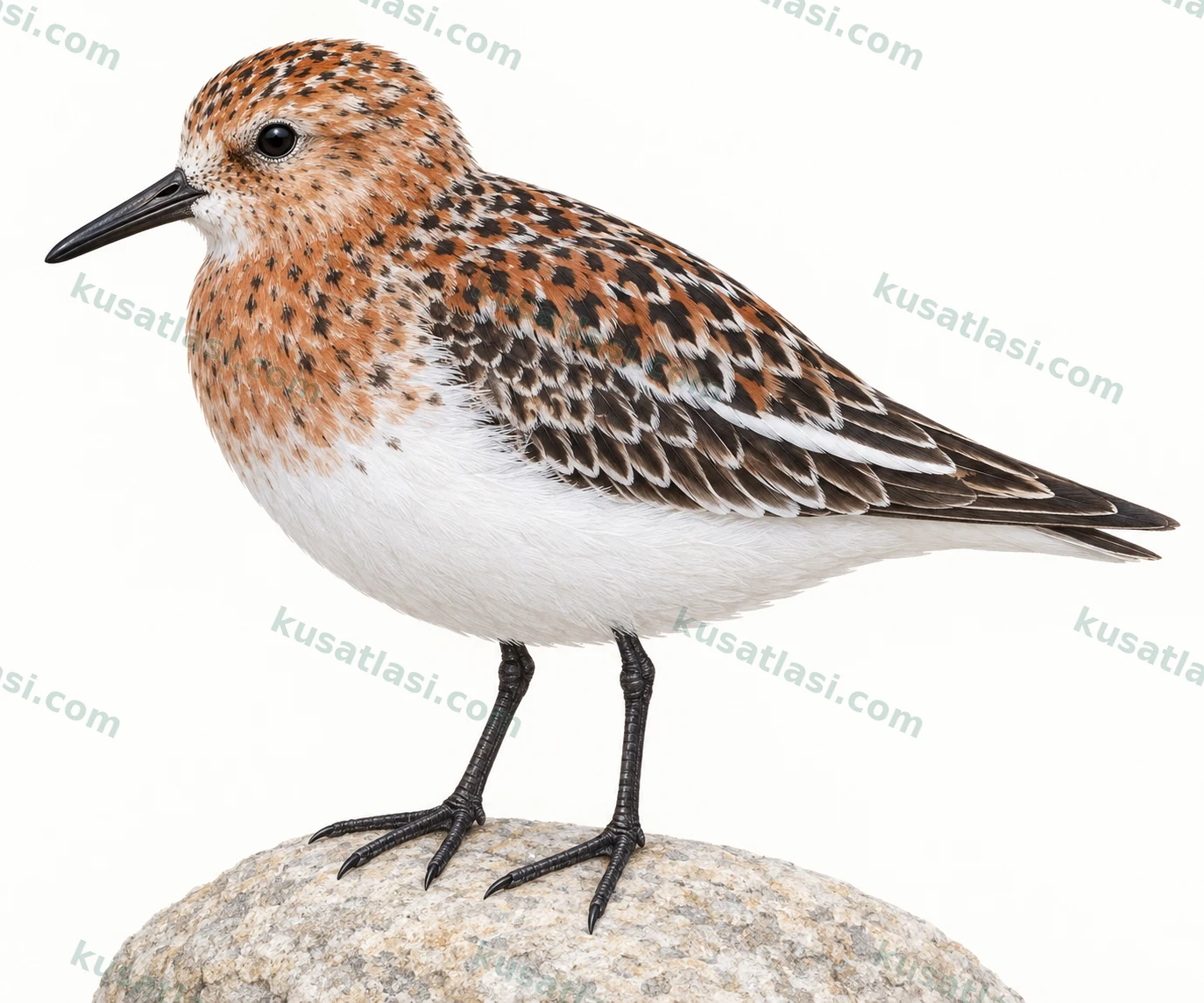
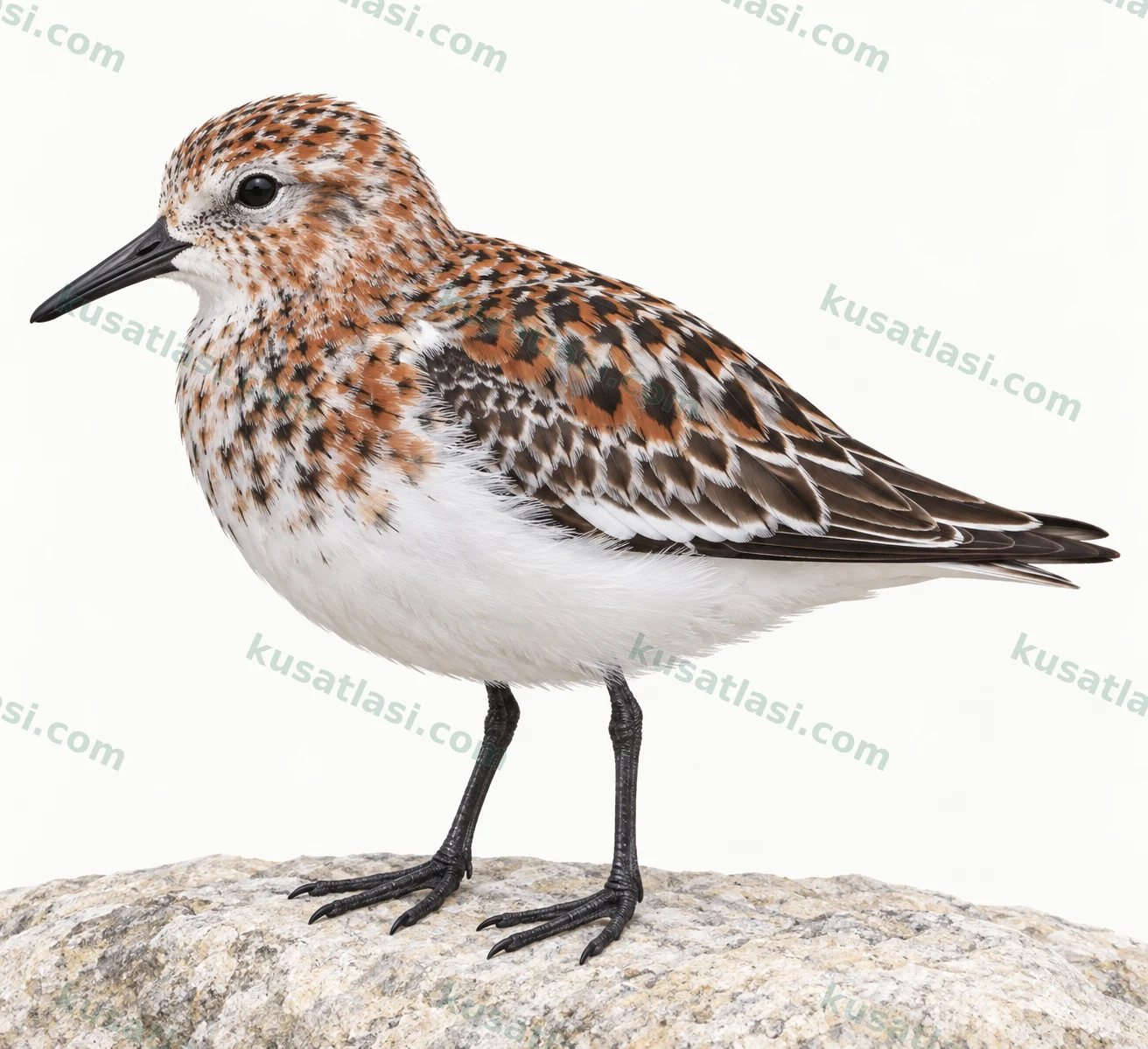
Sandpipers and Allies
Sanderling
Calidris alba
Ak Kumkuşu
Combine the straight black bill and legs, compact shape and seasonal plumage; surf-running alone is insufficient.
- Order
- Charadriiformes
- Conservation status
- LC Least Concern
First look in the field
Quick identification
- Compact shorebird
Check the short neck, straight black bill and black legs together.
- Seasonal plumage
Pale grey and white in winter; rusty in breeding plumage, checkered above as a juvenile.
- At the surf line
It follows the waves on wet sand, but this behaviour alone is not diagnostic.
Biometrics
Length
- Male
- 18–20 cm
- Female
- 18–20 cm
Wingspan
- Male
- 35 cm
- Female
- 35 cm
Weight
- Male
- 40–100 g
- Female
- 40–100 g
Detailed explanations of these measurements are available on our website, on the same species page.
World distribution
Sanderling
Customize map layers
Observation Sites
Bird Atlas recordsLoading observations…
Monthly record intensity
12 monthsRecord intensity is affected by observation effort.
Rotate the globe and compare the supported layers. Colours show broad range areas, not exact sightings or nests.
- Jan
- Apr
- Jul
- Oct
- Dec
Generalised data and method
Basemap: Natural Earth (public domain).
Bibliography ↗Authentic bird sound and ethical use
Voice and listening
The familiar sequence follows the surf: the bird moves onto freshly exposed wet sand to pick or probe for tiny invertebrates, then retreats from the next wave. Movement alone does not reveal the prey's identity.
Spoken guide
Narration has not been recorded; no audio file has been created.
Observe without approaching the nest
Breeding
A shallow ground scrape in High Arctic tundra, sometimes lined with leaves, lichens or moss.
Typically four; BTO reports a range of three to four.
24–27 days according to BTO; parental roles can vary.
Mobile soon after hatching; fledging takes about 16–18 days.
A summer record in Turkey is not breeding proof; do not flush feeding flocks.
Never rely on one mark
Similar species
Dunlin
Calidris alpinaUsually has a longer, downcurved bill; breeding birds have a conspicuous dark belly patch.
Little Stint
Calidris minutaSmaller and more delicate; apparent size is misleading when distances differ.
Red Knot
Calidris canutusLarger and bulkier; pale winter colour alone is insufficient.
Scientific species guide
Detailed account
Quick Identification
Sanderling is a compact, plump shorebird often seen running over wet sand as a wave recedes. A short-looking neck, black legs and a straight, fairly stout black bill about the length of the head are more reliable together than that memorable running behaviour alone. In nonbreeding plumage it is pale grey above and white below, sometimes with a dark mark at the shoulder. Check structure, the season and plumage before naming the bird.
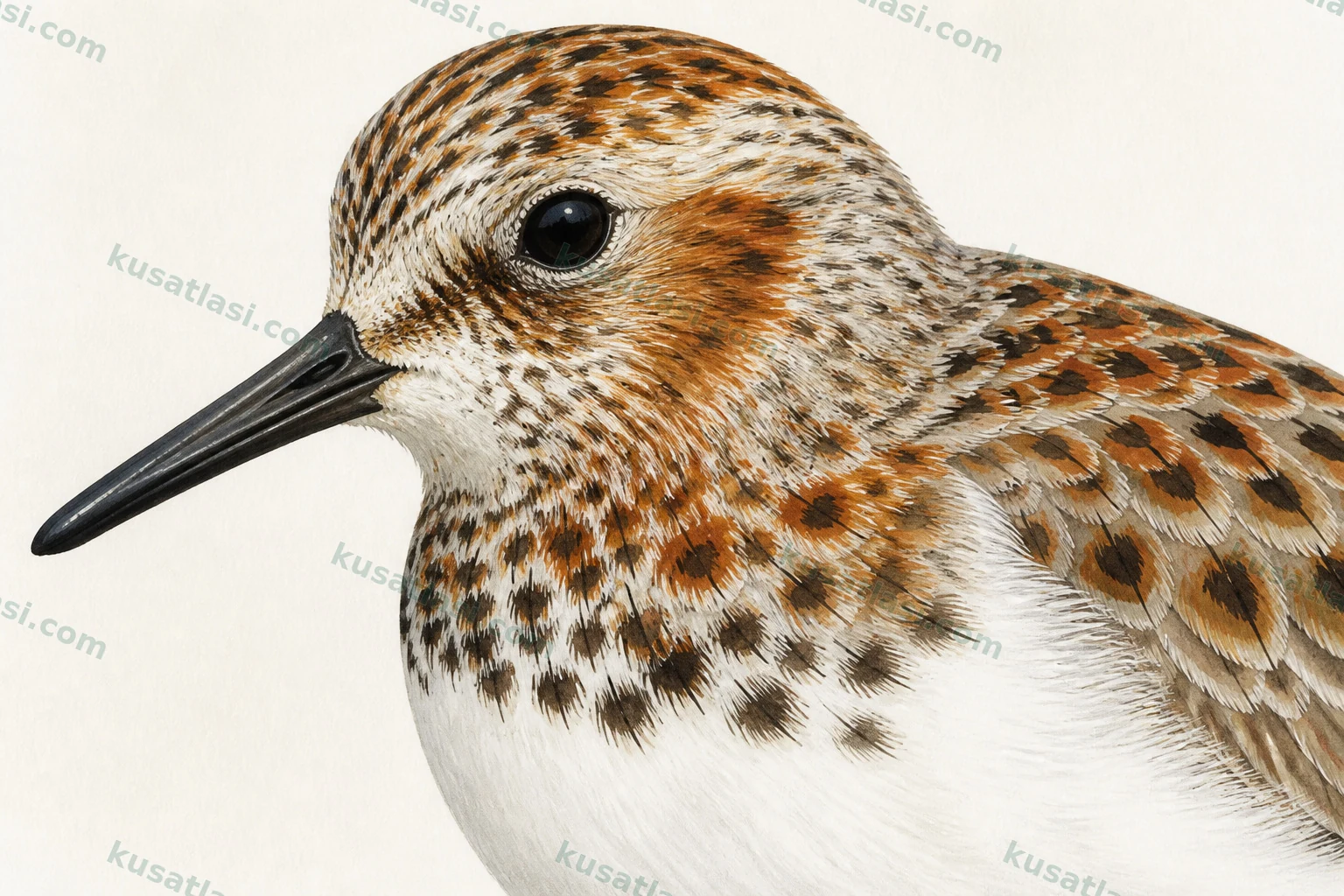
“Sanderling” is not a promise of a white bird throughout the year. Breeding adults develop warm rusty tones and dark spots on the head, neck and upperparts. Juveniles have dark-centred, pale-edged upperpart feathers, giving a distinctly checkered impression. A moulting bird can fall between the neat seasonal illustrations. First note date and apparent age, then compare visible features with the appropriate plate rather than forcing every bird into a winter image.
Appearance and Posture
The body looks rounded and compact, the neck often tucked in, and the bill relatively short and straight. Pale grey winter upperparts, clean white underparts and black legs make a strong combination. A dark shoulder patch may help, but light can hide it. Rapid steps can blur the legs in a photograph; do not infer a colour from a part that is not actually visible.
Rusty and dark markings increase in breeding plumage while the belly remains pale. Old and new feathers can occur side by side during moult. Wet feathers, mud and sunlight also alter apparent colour. Watching an undisturbed bird turn naturally provides several informative angles and is more dependable than a single heavily processed photograph.
Male, Female and Juvenile
Adult sexes overlap strongly in visible plumage. One adult being rustier than another does not establish sex: age, moult and lighting may account for the difference. There is no dependable winter-plumage colour key for separating males and females in the field. The male and female plates show the species' appearance, not a way to assign sex from an isolated photograph. Repeated species-wide biometrics likewise do not mean independent measurements for each sex.
Juveniles show dark feather centres with pale borders across the back and folded wing. Their checked upperparts differ from a more even adult winter grey. Wear and transitional plumage may blur this contrast, so assess the whole upperpart pattern rather than one feather. Mixed-age flocks can share the same shore. If age remains uncertain, keep that uncertainty in the observation instead of forcing an exact label.
Breeding individuals in High Arctic tundra may look very different from birds wintering on Turkish shores. A colourful summer bird in Turkey is not evidence of local nesting. Nesting requires direct evidence such as appropriate nest behaviour, eggs or young. Record place and date with plumage, and do not search a Turkish beach for the Arctic nest described in the breeding account.
In Flight
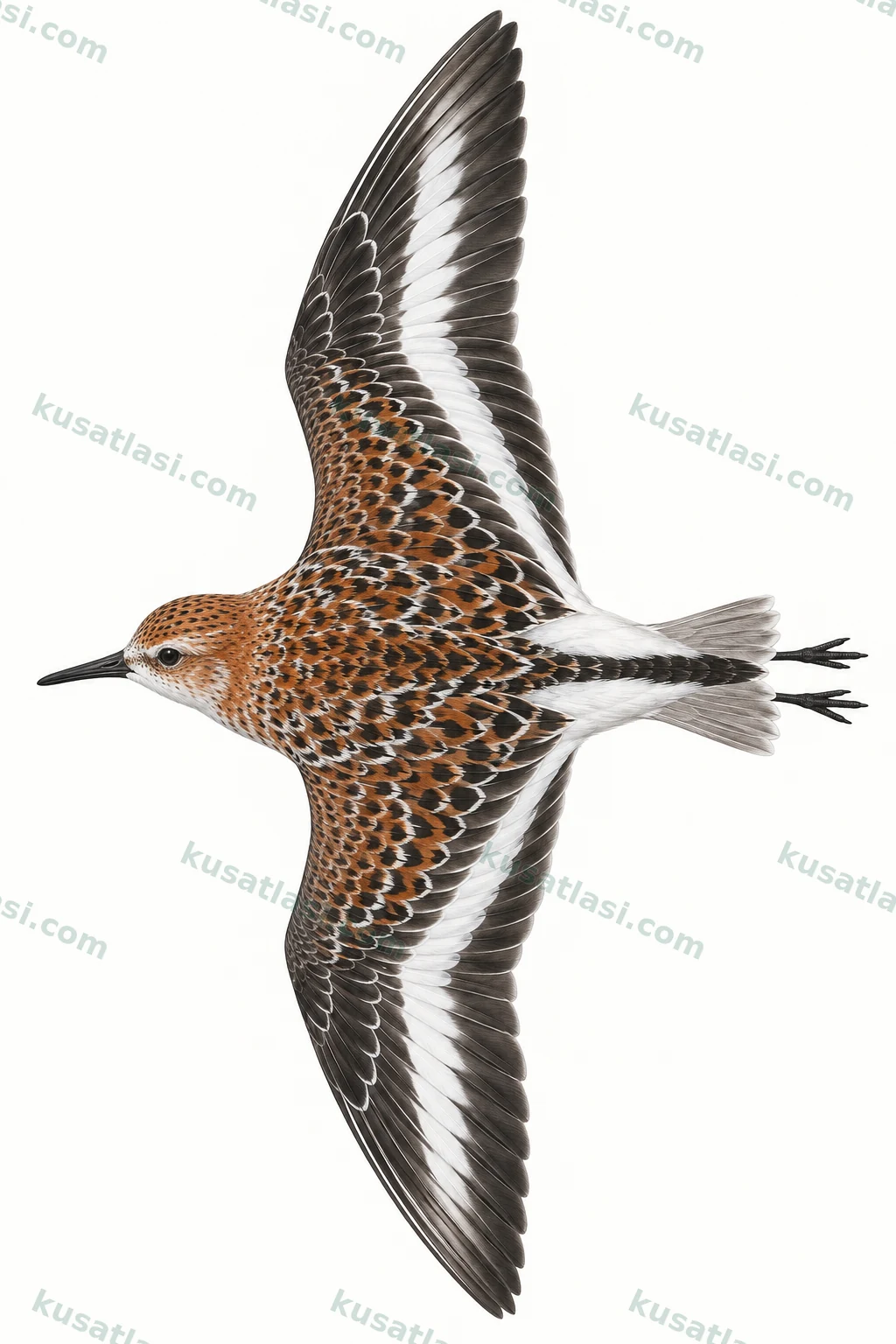
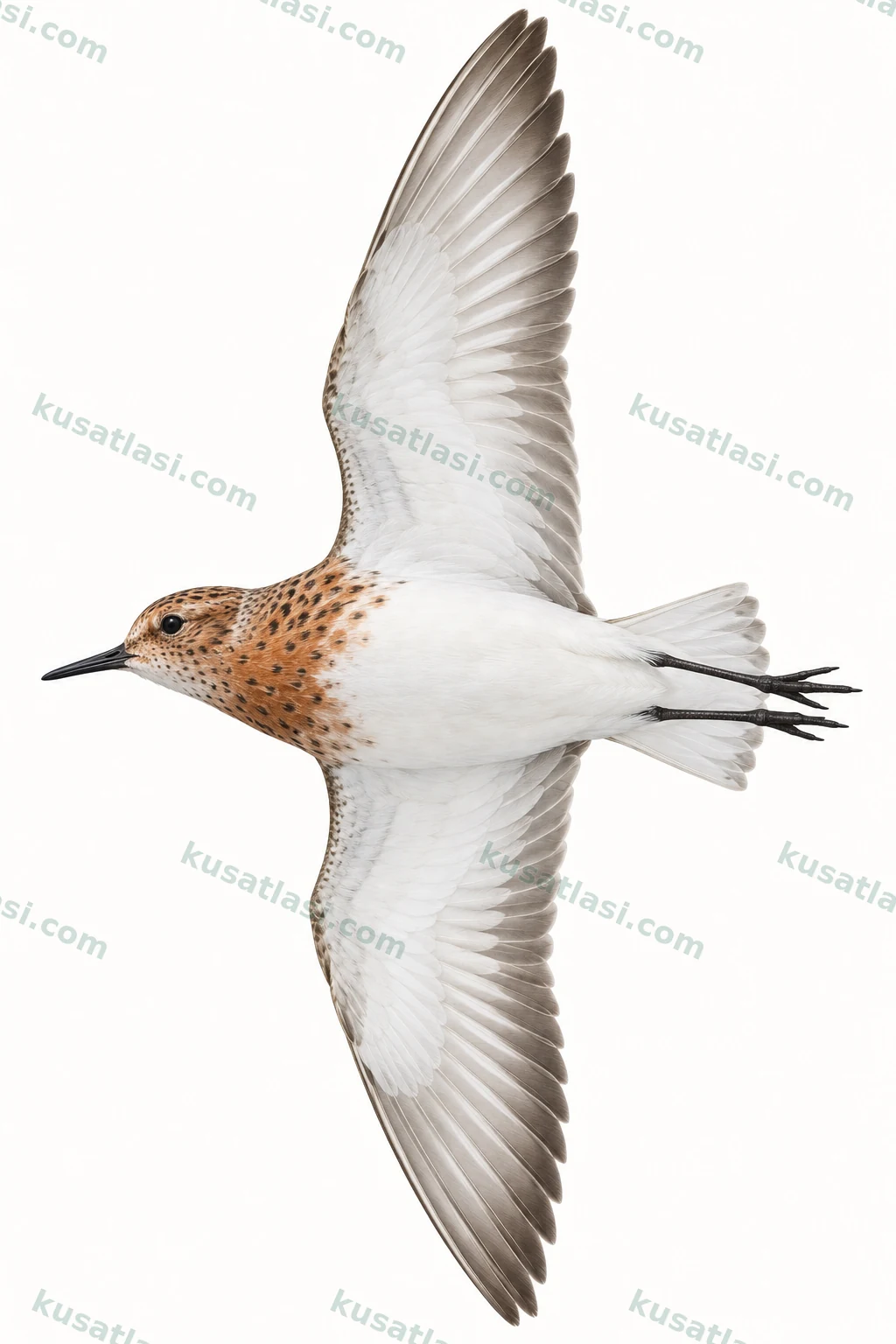
From above, a conspicuous white stripe runs through a darker wing. It is useful but not unique among small shorebirds, so check bill, leg and body proportions after the bird lands. From below, the body and underwing are pale; do not project rusty dorsal markings onto the ventral surface. Upperwing and underwing plates depict different views, and the viewing angle belongs in a careful record.
Turning and wingbeats change the apparent width of the white stripe. Strong backlighting may exaggerate white and turn dark feathers into silhouette. Wait for several natural flight moments rather than deciding from one frame. Do not chase a feeding flock simply to obtain a flight image: repeated flushing takes away feeding time and costs energy.
Voice and Behaviour
The familiar sequence follows the surf: the bird moves onto freshly exposed wet sand to pick or probe for tiny invertebrates, then retreats from the next wave. Movement alone does not reveal the prey's identity. If prey cannot be seen, record “feeding on wet sand” rather than asserting that a particular animal was caught. During migration and winter the species can occur among other shorebirds, so examine individual bills and plumages rather than treating the entire flock as one species.
Fine calls may be heard, but written syllables are only approximations. Other small shorebirds may call at the same time. Linking a sound recording to a photographed individual requires seeing that individual call. A bird taking flight because an observer approached is a disturbance response, not ordinary undisturbed behaviour. Leave space between observers and the feeding line, and keep dogs from repeatedly displacing the flock.
Similar Species
Dunlin can be pale in winter, but usually has a longer bill that curves downward. Its dark belly patch belongs to breeding plumage, not a winter identification checklist. Little Stint is more delicate and smaller, although size comparisons fail when birds stand at different distances. Red Knot is larger and heavier-looking. Compare structure and plumage together rather than relying on whiteness or apparent size alone.
Sanderling lacks a hind toe, leaving three forward-pointing toes, but this anatomical point helps only in a genuinely clear view. A toe hidden by sand or the other foot is not evidence of absence. The fast surf-line run, straight black bill, black legs, full body and seasonally appropriate plumage make a stronger combined identification. Record what the image actually shows and keep unresolved features uncertain.
Global Pattern
Sanderlings breed in the High Arctic and occur on coastlines across much of the world outside the breeding season. Tundra breeding habitat and a sandy winter beach represent different parts of the annual cycle. A broad range does not imply equal abundance on every coast.
Turkey
Passage and winter are important periods for coastal observation. The Gediz Delta account specifically includes Sanderling among wintering shorebirds. This local evidence should not be converted into one national abundance estimate or an exact arrival date for every Turkish beach.
Passage and Summer Records
Stopovers can be brief. Nonbreeding birds may remain outside the Arctic during summer, so a summer occurrence in Turkey is not automatically breeding evidence. Record date, locality, number and observed behaviour separately.
Reading the Map
Occurrence dots are not tracking fixes from one identified migrant. Repeated reports may concern the same bird, and observer effort influences apparent density. The monthly guide is a fieldwork aid rather than a measured national migration timetable.
Monthly field notes: January—scan wet sand and nearby resting flocks. February—check pale grey and white plumage with black bill and legs. March—record count changes with date and observation effort. April—expect mixed plumage during moult. May—rusty colour is neither another-species proof nor male proof. June—document summer birds without assuming nesting. July—follow local records rather than assigning a universal return date. August—look for juvenile checkering above. September—separate ages and similar species within flocks. October—check both feeding line and roost. November—used sand strips shift with surf. December—count without flushing or recounting the same birds.
Sandy Surf Zone
Search the wet sand exposed by retreating waves. Birds may run toward the water to feed and retreat as the next wave arrives. Available feeding ground changes with water conditions, so the flock need not remain at one point on the beach.
Lagoons and Shallows
Sandbars, lagoon margins and muddy shallows may also be used. Check substrate and water level rather than assuming that every coastal wetland offers the same feeding opportunities. Nearby shorebirds can provide useful size comparisons when standing at similar distances.
Resting Areas
Birds may gather on drier shore sections between feeding bouts. Overlapping birds can make identification and counting difficult. Wait for natural movement rather than flushing the flock to obtain a clearer view.
A Different Breeding Habitat
The sparsely vegetated Arctic breeding landscape is distinct from the Turkish coastal habitats described here. Do not use the nest description as an instruction to search a Turkish beach for nests. Keep access routes open and step back if birds repeatedly move away from you.
Using the Shore Without Disturbance
The wet surf line is only one part of the daily habitat. Sandy lagoon mouths, sandbars and shallow muddy margins can also provide food, while a drier shore or bar may hold resting flocks. Search feeding and resting areas together, noting substrate and water level. Birds packed tightly at a roost may obscure one another; wait for natural movement rather than forcing them to take flight for a count.
A feeding bird that repeatedly moves away from you may be responding to your approach. Do not block its route between surf and roost. On beaches compressed by dogs, vehicles or heavy foot traffic, the birds may have few safe alternatives. Arctic gravelly or sparsely vegetated tundra is the breeding setting, not an instruction to look for nests at a Turkish wintering beach. Record habitat with the date and season.
Coastal Prey
Small coastal invertebrates are major foods outside the breeding season, including crustaceans, worms and molluscs. Bill movements alone seldom identify prey to species. Record a visible prey item or describe the feeding action without inventing detail.
Working the Surf
Sanderlings pick from wet surfaces or probe sand left by retreating waves. Running back from the next wave and returning to feed creates the familiar surf-following rhythm. Combine this behaviour with the black bill and legs and appropriate plumage rather than using it alone.
Seasonal Change
Insects and other small invertebrates are important in Arctic breeding habitat. Plant material may also be taken when animal food is scarce. This seasonal account does not establish the exact meal of an individual observed on a Turkish beach.
Undisturbed Feeding
Repeated flushing costs both energy and feeding time. Observe from a fixed position without bait or bread, and distinguish an attempted capture from a confirmed swallow. The natural feeding surface provides more useful habitat information than an artificially attracted bird.
Observation and Energy
During breeding in the Arctic, insects and other small invertebrates become important, and plant matter can be taken when animal food is scarce. This seasonal account does not identify a particular prey item on a Turkish shore. A bill movement may be a probe or attempted capture rather than a confirmed swallow. Repeatedly flushing migrants or wintering birds both costs energy and reduces feeding time. Watch natural foraging from a fixed point and do not use bread or other bait.
Not Always White
The pale winter appearance changes substantially in breeding plumage, when rusty and dark markings develop. Seasonal differences must not be mistaken for a simple male–female colour distinction. A bird between plumages may look unlike either seasonal endpoint.
No Hind Toe
The absent hind toe is a notable anatomical feature. It can only be assessed in a genuinely clear view of the foot. A toe hidden by sand or another leg is different from an anatomically absent toe; do not approach simply to obtain this detail.
Following the Waves
Feeding opportunities move as waves expose and cover the sand. Watching a sequence reveals how running, picking and retreating relate to the changing surface. A photograph alone cannot show the complete behaviour.
Summer Does Not Mean Breeding
Nonbreeders can remain in nonbreeding areas during summer. A summer coastal record in Turkey therefore needs more evidence before any nesting claim. The High Arctic breeding account is not a Turkish nesting schedule.
Conservation Has Geographic Scales
BTO reports the global IUCN category as Least Concern. Regional monitoring priorities use different geographic scopes. A global category does not demonstrate that every local flock is increasing or that disturbance and loss of coastal habitat are unimportant.
Species text and plates come from existing atlas records. Measurements were checked against reliable species sources.
Open bibliography