
Approved field-guide plates
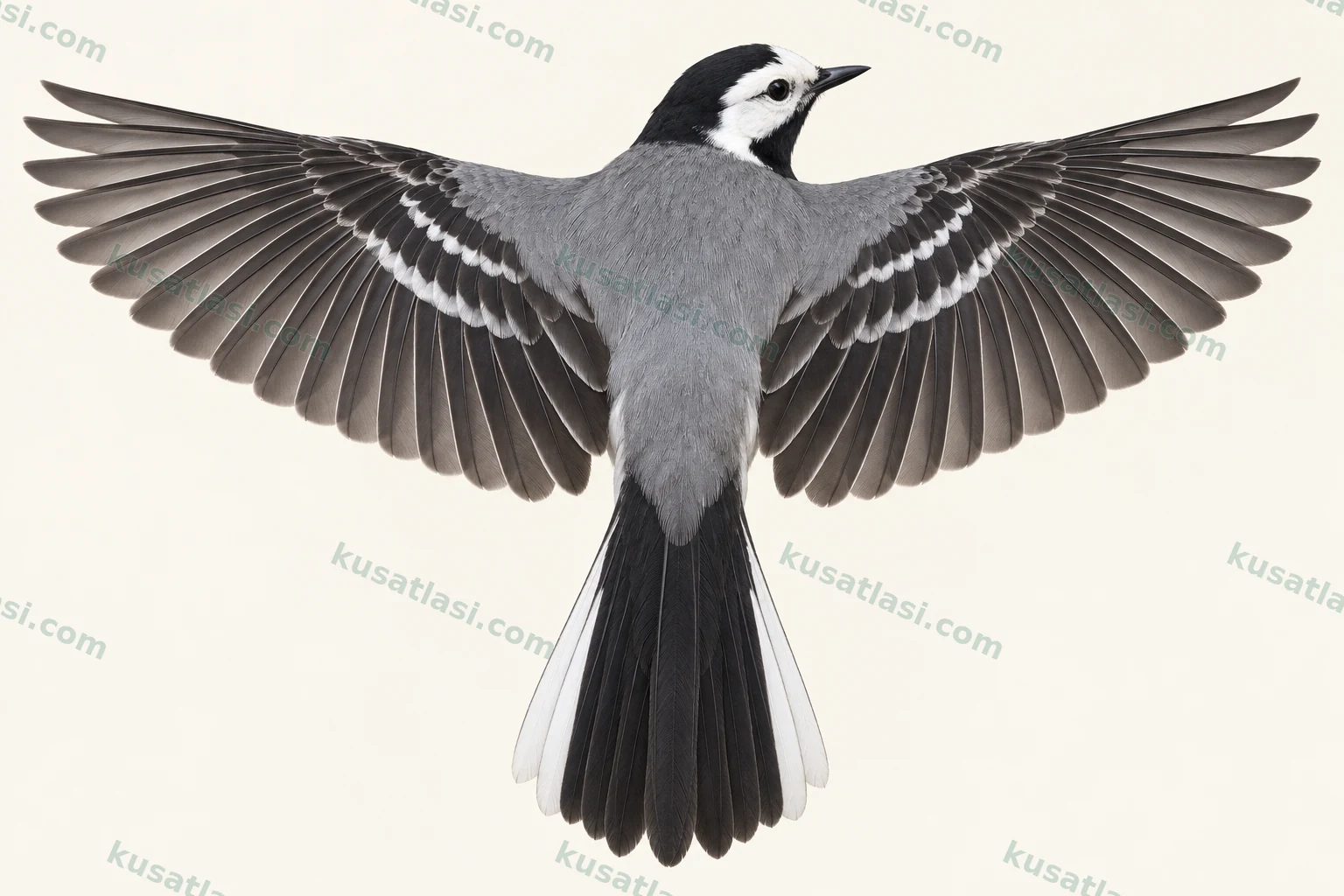
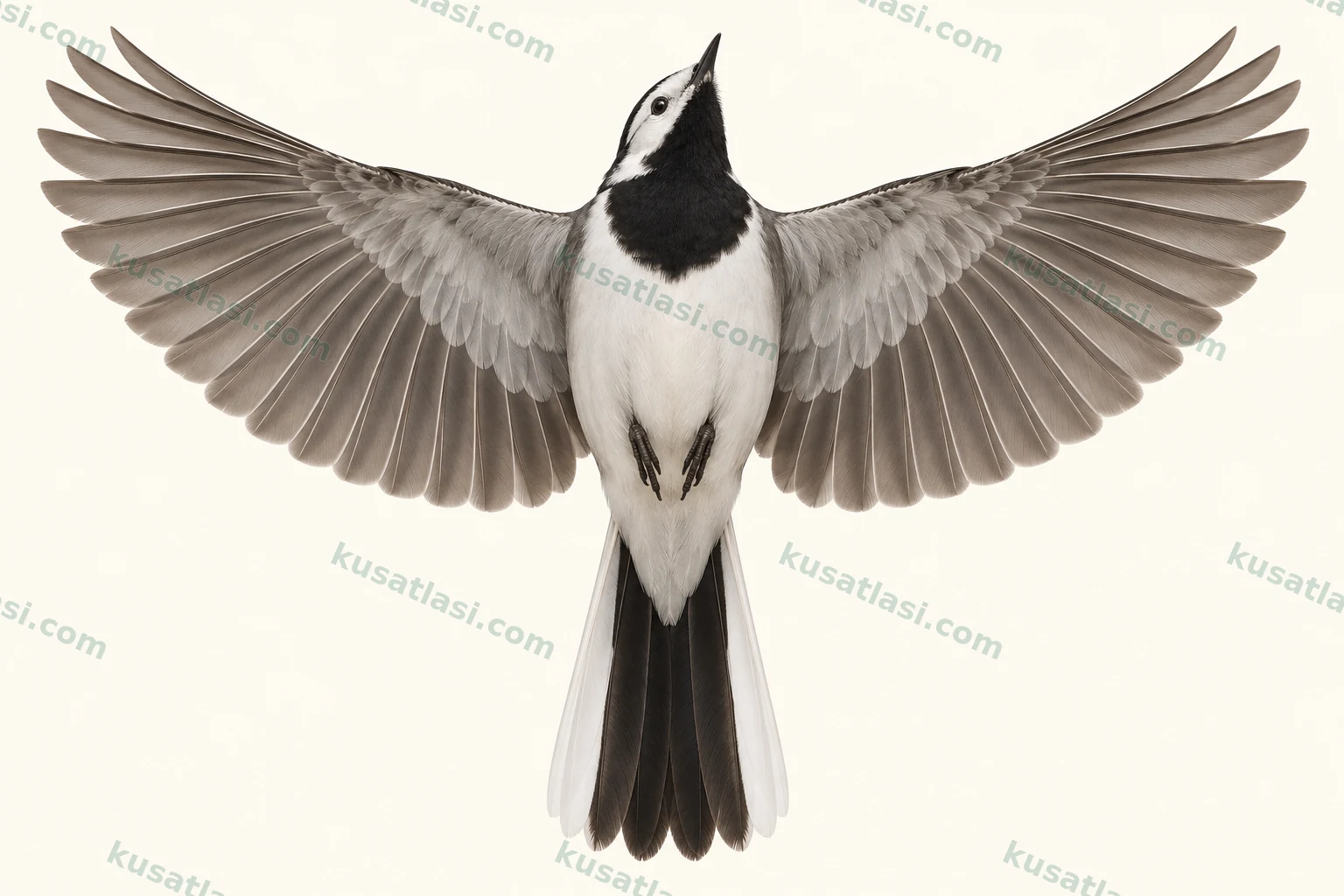
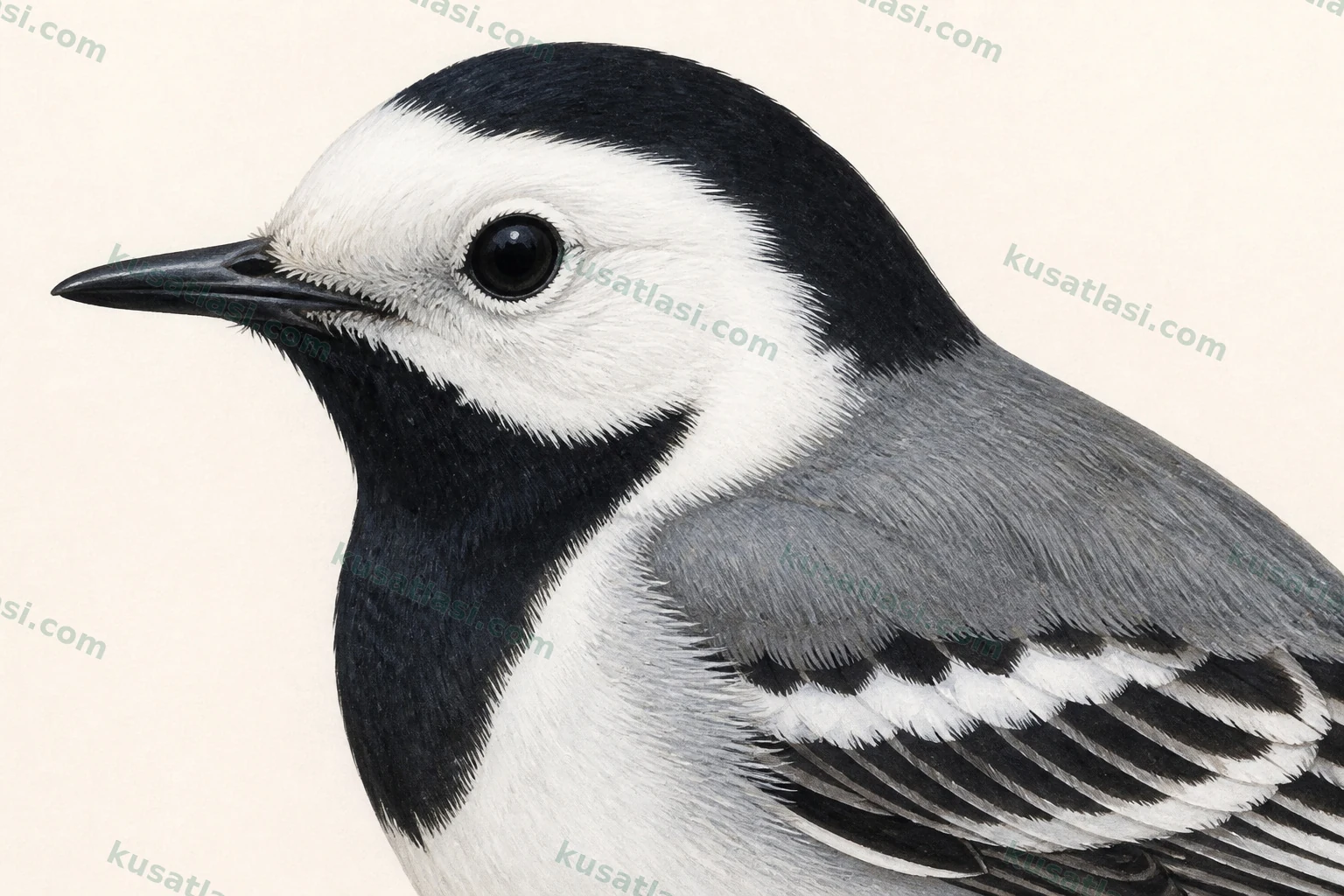
White Wagtail identification views
Swipe left or right through all five plates.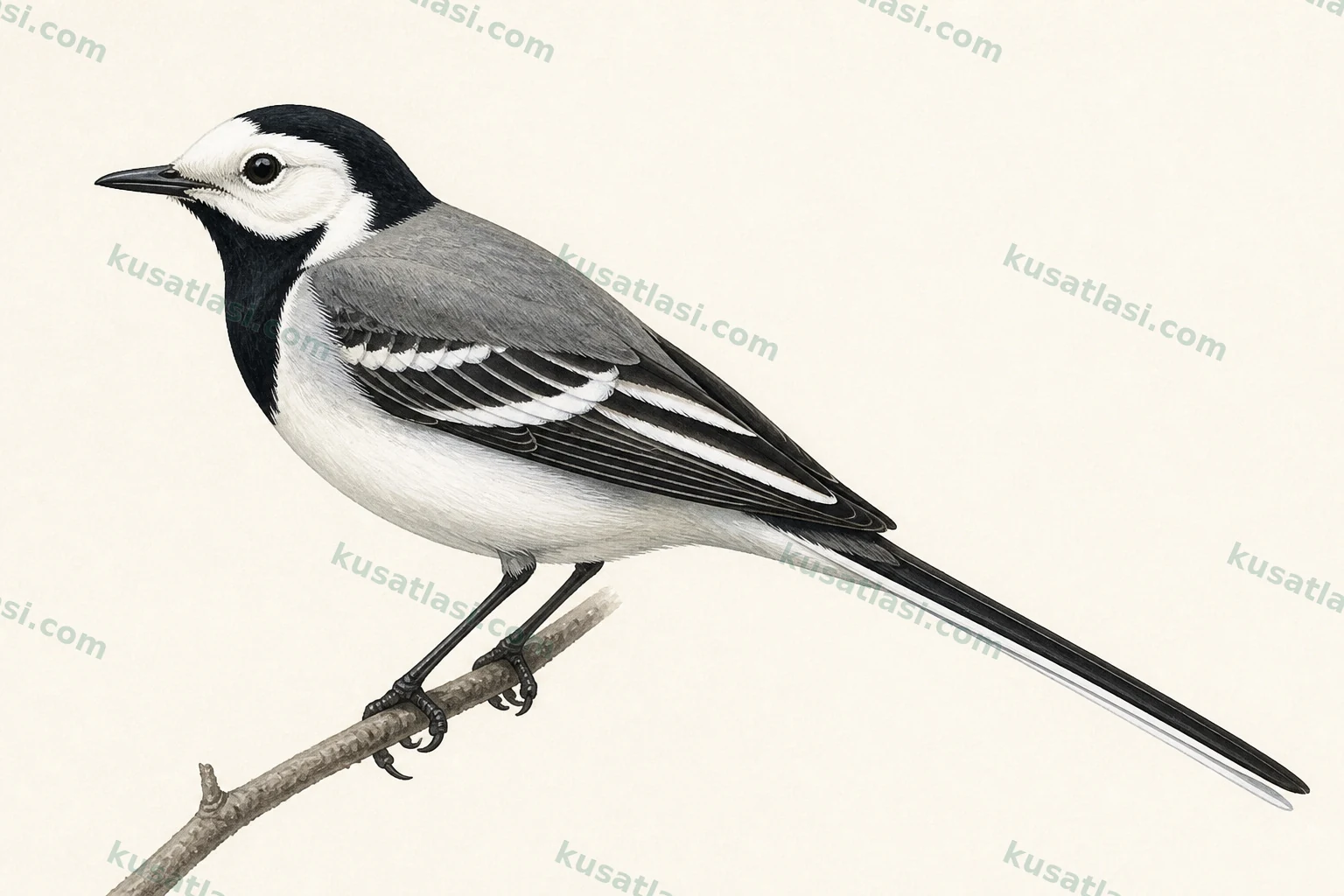
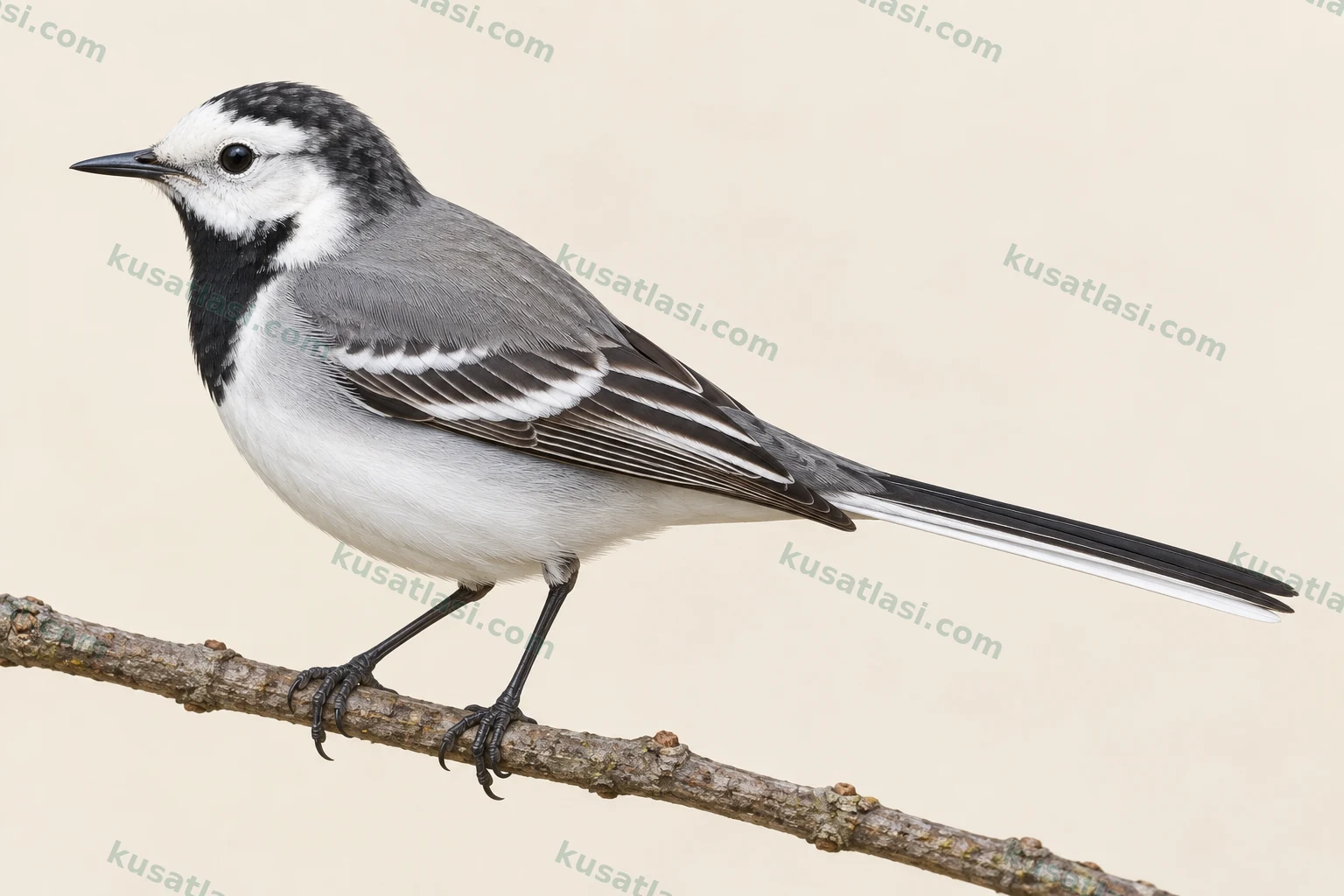
Wagtails and Pipits
White Wagtail
Motacilla alba
Ak Kuyruksallayan
Long white-sided tail, grey back and black-and-white head; distinguish sex from age, season and subspecies variation.
- Order
- Neognathae
- Conservation status
- LC Least Concern
First look in the field
Quick identification
- Slender build
A slim bird with a black-and-white head, grey back and long tail.
- Tail pumping
Often bobs its tail while walking on open ground; this alone is not diagnostic.
- White outer tail
The outer feathers, not the entire tail, are white; consider viewing angle in flight.
Biometrics
Length
- Male
- 18 cm
- Female
- 18 cm
Wingspan
- Male
- 25–30 cm
- Female
- 25–30 cm
Weight
- Male
- 17–25 g
- Female
- 17–25 g
Detailed explanations of these measurements are available on our website, on the same species page.
World distribution
White Wagtail
Customize map layers
Observation Sites
Bird Atlas recordsLoading observations…
Monthly record intensity
12 monthsRecord intensity is affected by observation effort.
Rotate the globe and compare the supported layers. Colours show broad range areas, not exact sightings or nests.
- Jan
- Apr
- Jul
- Oct
- Dec
Generalised data and method
Basemap: Natural Earth (public domain).
Bibliography ↗Authentic bird sound and ethical use
Voice and listening
Short, sharp calls are often heard in flight; the song can be a longer, more varied twittering sequence. Compare a natural recording with the bird seen at the same time.
Spoken guide
Narration has not been recorded; no audio file has been created.
Observe without approaching the nest
Breeding
A soft-lined cup in a sheltered wall niche, bridge or building ledge.
Usually four to six.
About 12–14 days, mainly by the female, sometimes with male help.
Leave after roughly two weeks and continue to receive parental food.
Never rely on one mark
Similar species
Grey Wagtail
Motacilla cinereaCompare yellow underparts, head pattern and proportions together; running-water habitat alone is insufficient.
Western Yellow Wagtail
Motacilla flavaFemales and juveniles may be pale, so little visible yellow alone cannot exclude it.
Scientific species guide
Detailed account
Slim Body and Long Tail
White Wagtail walks and runs on open ground while repeatedly pumping its long tail. The familiar Turkish appearance combines a grey back, black-and-white head, largely white underparts, slender dark bill and dark legs. Tail movement alone is not diagnostic because other wagtails share it.
Sex, Season and Age
Breeding males often show stronger black crown, nape and throat, while females can be less sharply marked. A pale throat alone cannot identify a female: nonbreeding plumage and young birds also differ from the strong adult breeding pattern. Young birds look duller and less sharply patterned. Worldwide subspecies add further variation.
White Outer Tail Feathers
The tail has dark central feathers and white outer feathers, not an entirely white surface. Establish dorsal or ventral view before comparing flight markings. Watch natural short flights without deliberately flushing the bird.
Nest and Family
A sheltered crevice, wall niche, bridge or building ledge can support a cup of plant material lined with soft hair and feathers. Usually 4–6 eggs are incubated for about 12–14 days, chiefly by the female with possible male assistance. Young leave at around two weeks and continue receiving food for a time; fledging is not immediate independence.
Voice and Behaviour
Sharp, short calls are especially noticeable in flight; song can be a longer and more variable twittering sequence. Rendered syllables are only approximations. For comparison with other wagtails, use a natural recording linked to the bird seen at the same time. The bird walks and makes quick short runs to collect small invertebrates. Frequent tail-bobbing is supportive but not continuous or sufficient on its own. Winter gatherings at communal roosts should not be flushed for photography. A local rise in numbers does not by itself show that the birds breed there.
Similar Species
Grey Wagtail also has a long, lively tail, but its yellow underparts, head pattern and proportions should be compared together; proximity to running water alone is not diagnostic. A breeding male Western Yellow Wagtail is often more obviously yellow below, yet females and juveniles can be pale, so lack of bright yellow is not enough to exclude it. White Wagtail itself changes with age, season and subspecies. A paler throat is not automatically a female or another species. Seek a combination of head, wing, underparts and the dark-centred tail with white outer feathers in suitable light.
Present Year-round in Turkey
White Wagtail occurs in both summer and winter, but local birds and migrants are not interchangeable. Movements away from cold areas can accompany passage of birds from elsewhere. Local winter scarcity does not mean the whole species has left the country.
Different Origins and Routes
European ringing evidence connects northern and eastern populations with southern regions including the Middle East and Nile valley. These are broad population connections, not a verified route for each bird observed in Turkey. Without an individually marked bird, origin remains uncertain.
Widespread Does Not Mean Uniform
Open ground around settlements, farmland and water provides opportunities. Density changes with food, weather, shelter and available nesting places. Repeated observation along a consistent route is more useful for detecting local change than assuming every suitable-looking park holds equal numbers.
Interpreting the Calendar
Monthly guidance describes seasonal behaviour within year-round presence. Nesting dates vary regionally. Many visits to one communal winter roost can increase record counts without proving population growth. Keep observation effort and repeat sightings separate from numbers of distinct birds.
Month-by-month field notes
1. January: Watch unfrozen shores and roost areas from a distance.
2. February: Do not mistake a pale winter throat for proof of female sex.
3. March: Not every arrival is a locally paired breeder.
4. April: Keep away from crevices that may contain nest entrances.
5. May: Do not follow a food-carrying adult to the nest.
6. June: Recently fledged young may still need parental care.
7. July: Allow for the paler head pattern of young birds.
8. August: Avoid counting movements of the same gathering as new birds.
9. September: Listen for calls during natural undulating flight.
10. October: Check the white outer feathers of the long tail.
11. November: Local cold and snow can change where birds occur.
12. December: Do not flush a roosting group for a photograph.
Walkable Open Surfaces
Short grass, bare ground and accessible shorelines let this wagtail pursue small prey. Search gaps in vegetation and wet edges, not only tree canopies. A small puddle or grass patch may hold a useful feeding opportunity.
More Than Streams
Lakes, rivers and coasts are used, but so are farmland, village yards, parks and car parks. Presence on paving means the bird may be taking small animals on that surface. Water is a useful habitat clue, not the sole requirement.
Sheltered Structural Niches
Wall gaps, roof spaces and bridge edges can provide nest support. Repeated food deliveries to one opening suggest nesting; do not approach to look inside. Closing an occupied access hole or relocating an active nest is not a safe casual intervention.
Daytime Feeding and Night Roosts
Outside breeding, birds can gather at communal roosts separate from daytime feeding places. Watch evening arrivals quietly at a distance. Living near people does not make a species insensitive to disturbance or independent of insect-rich habitat.
Mainly Small Invertebrates
Insects form the main diet, including flies, mosquitoes, butterflies and larvae. The prey available changes with season and habitat. Food delivered to chicks need not match every adult feeding observation, and a few sightings cannot establish national diet percentages.
Running and Short Aerial Pursuit
A bird may accelerate across the ground, pick prey from the surface or make a brief flight to catch an insect. Describe these actions separately. Seeing a tail movement during feeding does not establish its single biological function.
Opportunities Around Livestock
Grazing animals and disturbed soil can expose small prey. Following an animal does not necessarily mean feeding directly from it. Observe safely without approaching livestock or machinery to obtain a closer view.
Food for the Young
An adult carrying several insects may be provisioning a nest or fledgling. Do not follow it into a concealed nesting place. Bread and baiting are not substitutes for naturally available invertebrates; suitable open feeding habitat and quiet nest access matter more.
A Familiar Movement, Not a Complete Diagnosis
Tail pumping is conspicuous but shared by other wagtails. Combine it with shape and plumage. Proposed functions should not be presented as a proven explanation for every observed movement.
One Species with Many Looks
White Wagtail includes several geographical forms. The dark-backed British form and the familiar grey-backed continental form belong within the species. A random global photograph is therefore not a universal model for all Turkish individuals; age and season add further variation.
A Roost Is Not a Breeding Colony
Birds feeding separately by day can assemble together at night. Counts must allow for arrivals, departures and repeated movements. Two nearby observations of the same flock must not be added as independent populations.
Wing Length Is Not Wingspan
Ringing sources may give one wing's length in millimetres. This differs from the distance between both extended wingtips. The panel uses 25–30 cm wingspan. The matching male and female mass ranges are supported by MME rather than an invented sexual difference.
Species text and plates come from existing atlas records. Measurements were checked against reliable species sources.
Open bibliography