
Approved field-guide plates
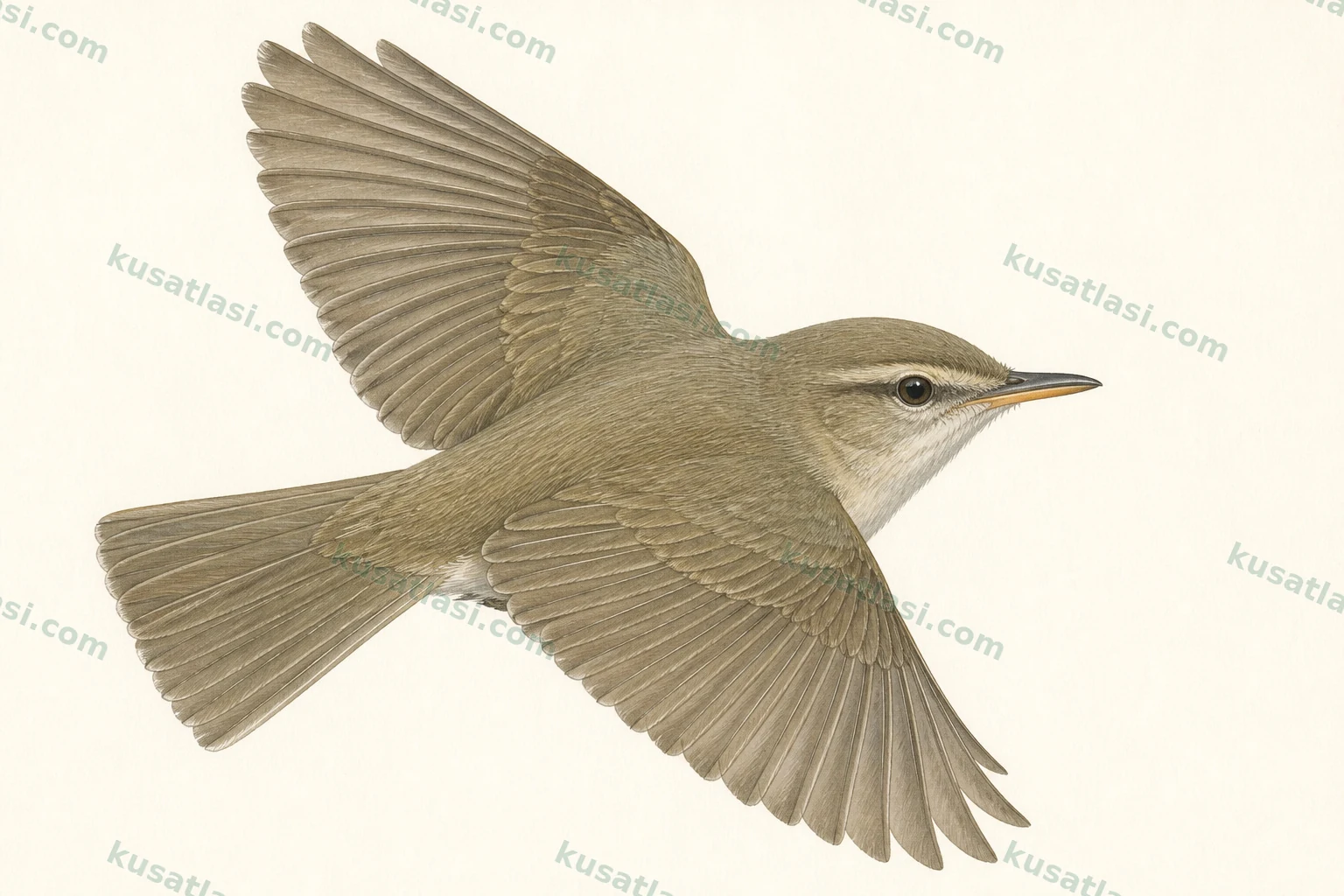
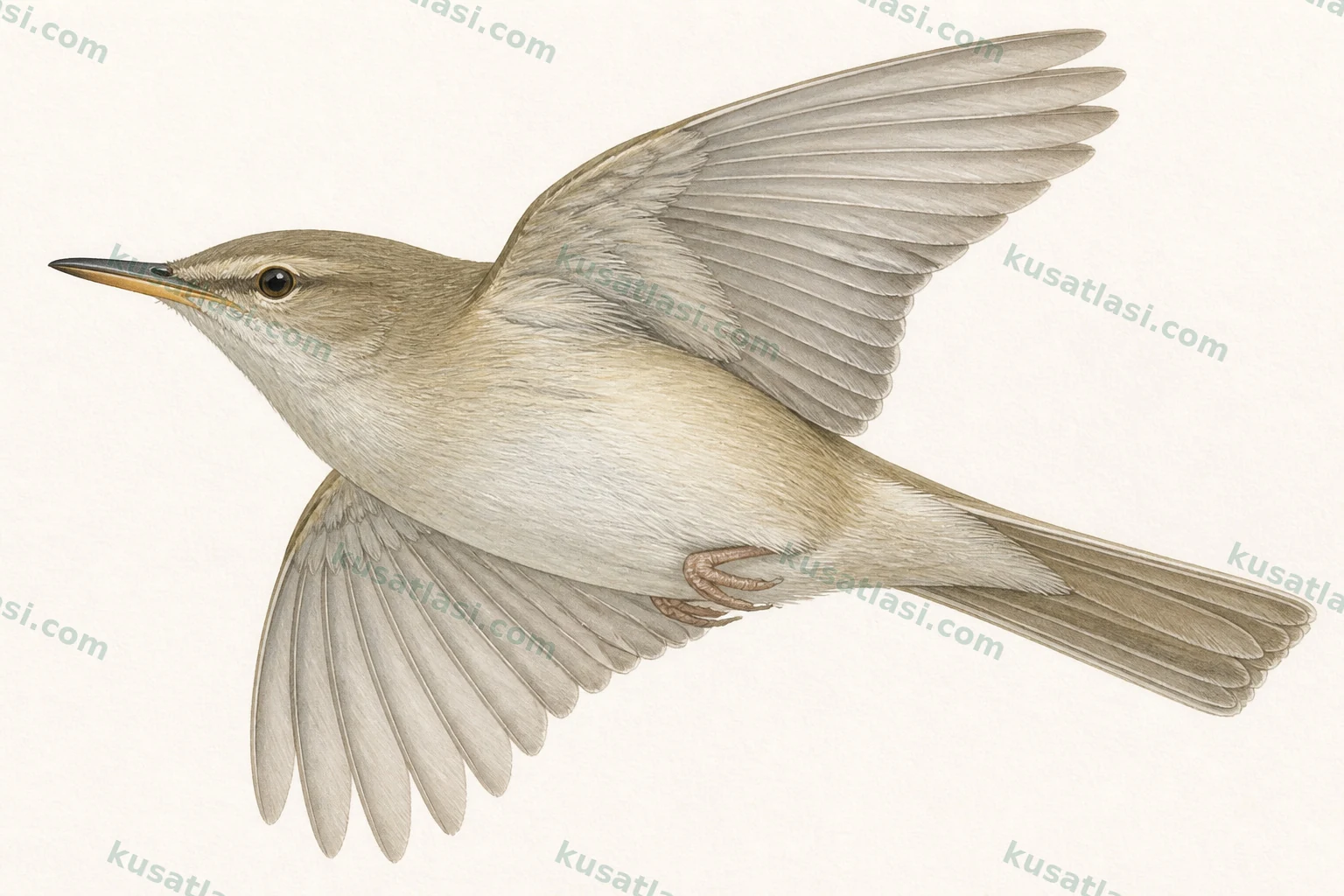
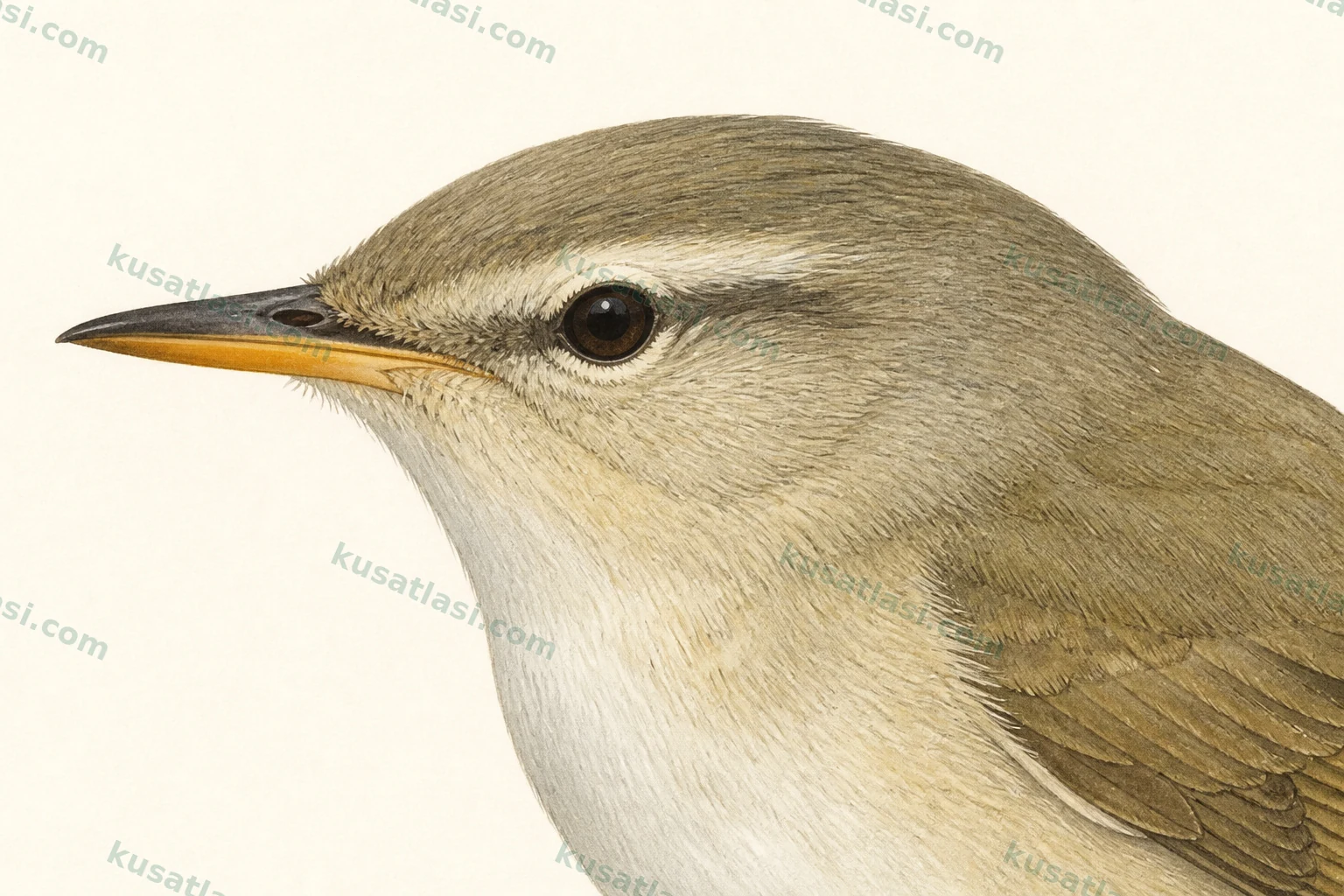
Eastern Olivaceous Warbler identification views
Swipe left or right through all five plates.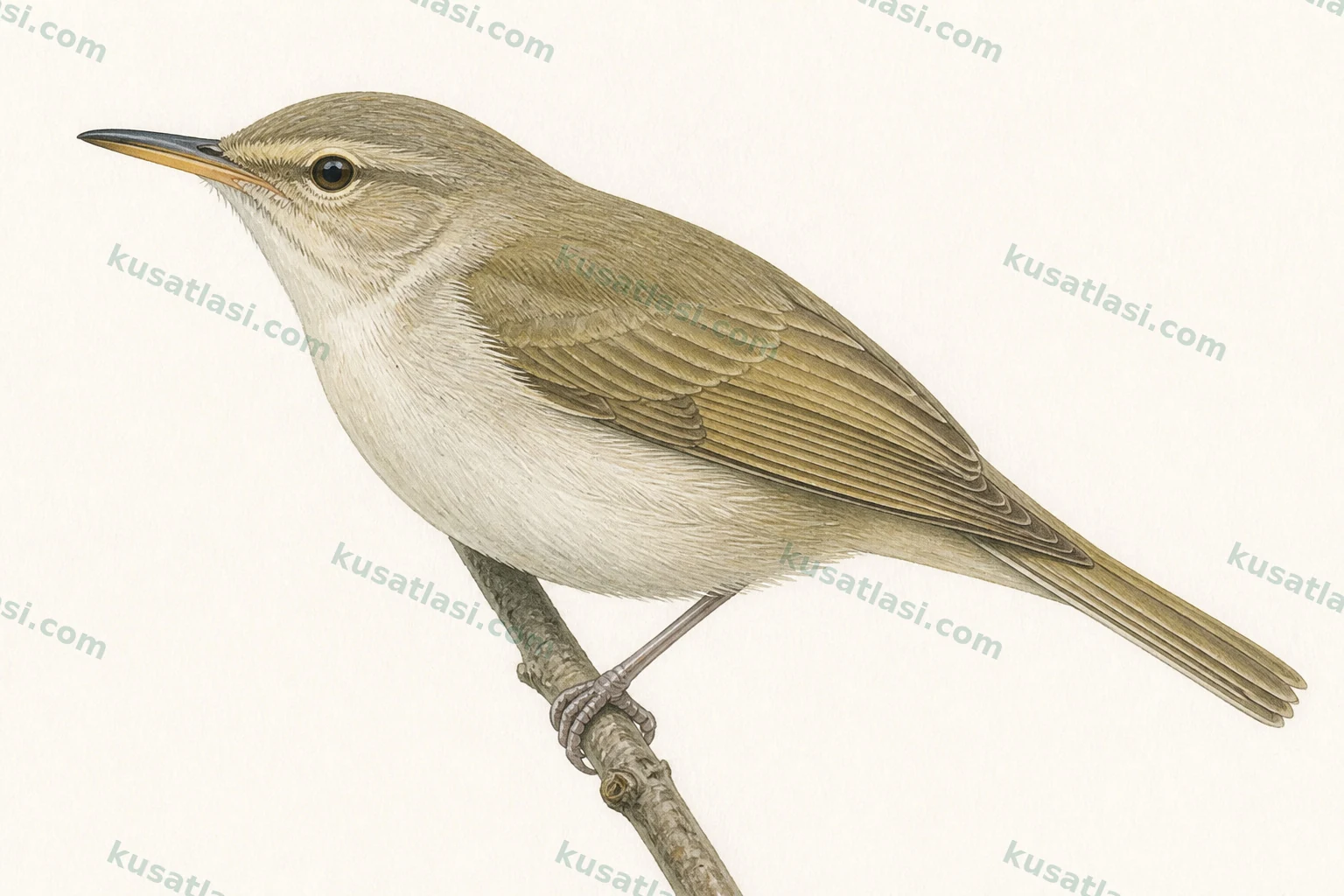
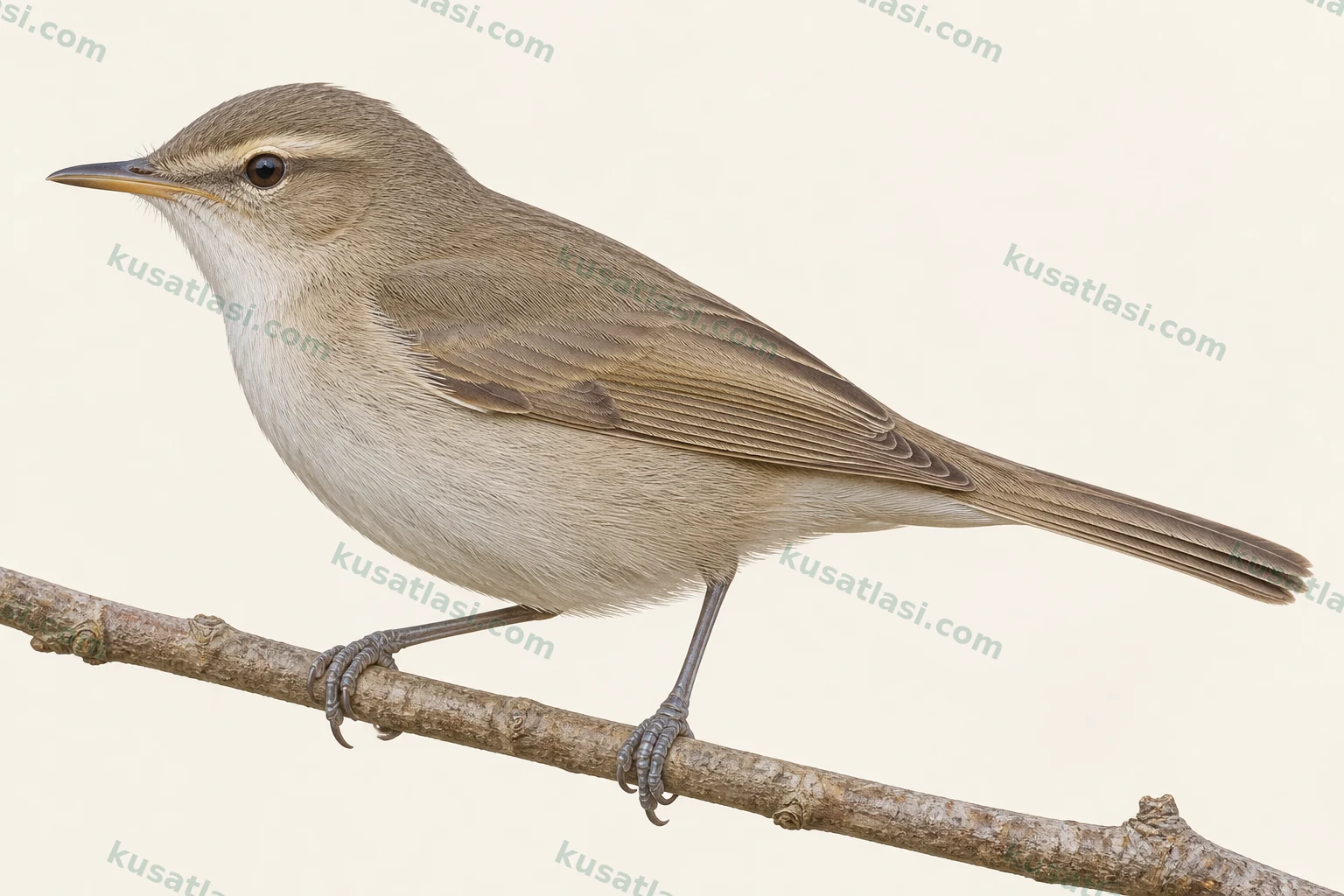
Reed Warblers and Allies
Eastern Olivaceous Warbler
Iduna pallida
Ak Mukallit
Combine plain pale plumage, the long slender bill, repeated tail movement and sound; do not identify by colour alone.
- Order
- Passeriformes
- Conservation status
- LC Least Concern
First look in the field
Quick identification
- Pale face
Assess the long, slim bill together with the pale grey-buff face.
- Plain upperparts
No bold wing or back mark identifies this bird on its own.
- Check lookalikes
Structure, voice and several marks are needed against reed and other olivaceous warblers.
Biometrics
Length
- Male
- 14 cm
- Female
- 14 cm
Wingspan
- Male
- 18–21 cm
- Female
- 18–21 cm
Weight
- Male
- 10.5 g
- Female
- 10.5 g
Detailed explanations of these measurements are available on our website, on the same species page.
World distribution
Eastern Olivaceous Warbler
Customize map layers
Observation Sites
Bird Atlas recordsLoading observations…
Monthly record intensity
12 monthsRecord intensity is affected by observation effort.
Rotate the globe and compare the supported layers. Colours show broad range areas, not exact sightings or nests.
- Jan
- Apr
- Jul
- Oct
- Dec
Generalised data and method
Basemap: Natural Earth (public domain).
Bibliography ↗Authentic bird sound and ethical use
Voice and listening
The song may run through repeated, fluid and at times rough phrases. Short dry calls are also heard; connect any recording to the bird actually seen.
Spoken guide
Narration has not been recorded; no audio file has been created.
Observe without approaching the nest
Breeding
A small, softly lined plant cup supported by a shrub or tree fork.
Usually 3–4, sometimes five; a Bulgarian study recorded two to five.
Approximately 11–13 days; not a fixed duration for every Turkish nest.
Watch food-carrying adults from a distance and avoid approaching a suspected nest.
Never rely on one mark
Similar species
Eurasian Reed Warbler
Acrocephalus scirpaceusCan look similarly plain brown; compare structure, voice and several marks.
Western Olivaceous Warbler
Iduna opacaOne photograph may not settle the identification; seek voice and structural evidence.
Scientific species guide
Detailed account
Overall Appearance
Eastern Olivaceous Warbler is a small, plain, pale grey-brown warbler with creamy underparts and a long slender pointed bill. Identification requires several characters rather than one colour impression. Record structure, wing appearance, tail movement and sound together.
Adult Male and Female
Adult sexes look alike. Fresh upperparts can have an olive tone, becoming paler and greyer with wear. The lower bill is pale yellowish and the upper bill darker. Differences between illustrations do not provide a reliable sex key. The biometric panel contains species-wide information, not independently established male and female ranges.
Young and Feather Wear
Young birds may appear warmer than adults. A pale wing panel can be more apparent in fresh plumage and difficult to see when worn. Neither its absence nor a slight warm wash provides a complete identification. Light and reflected foliage colour can also change the impression.
Head, Wing and Tail
1. The face is relatively plain; do not expect a strong, sharply defined long eyebrow.
2. A faint pale wing panel is not the same as two conspicuous white wingbars.
3. Repeated tail pumping while moving through vegetation is useful supporting evidence, especially against similar reed warblers. A still image cannot show the movement sequence.
Flight View
The dorsal view shows the continuity of the plain upperwing and back. There is no bold upperwing mark that establishes the species alone. The underside is paler and should not be inferred from a dorsal illustration. Follow a brief flight to the next perch and reassess structure and behaviour.
Breeding
A small cup of fine plant material is supported in a shrub or tree, often at a branch fork, with softer lining. Usually three to four eggs, occasionally five, are reported. A northwestern Bulgarian study found two to five, most often four. Incubation is approximately 11–13 days; that study used 12 days in its calculations. These are not measurements from every Turkish nest.
Measurements
Mass is BTO's mean, not a minimum–maximum range or a separate estimate for each sex. Condition and migration fuel affect individual weight. Length and span are species-wide guide values.
Voice and Behaviour
The song can comprise repeated phrases that alternate fluent and rougher sounds; short, dry calls may also be heard. A few written syllables cannot capture this variability. When a bird sings from within a shrub, first establish which individual is making the sound, then compare any natural recording with the bird in view. Do not use playback to provoke a response near a possible nest. Foraging birds move among leaves and fine branches to take small invertebrates. Tail movement can support identification but is neither constant nor equally rapid in every individual. A quieter bird has not necessarily left the area.
Similar Species
Eurasian Reed Warbler can appear comparably plain brown at a distance. Compare bill-to-head proportions, the unobtrusive face, tail behaviour and voice rather than a single shade of plumage. Other olivaceous warblers can be equally pale and similar in structure. Western Olivaceous Warbler, Iduna opaca, is a particularly close species; older accounts sometimes combined it with Eastern Olivaceous Warbler. Check the taxon attached to any comparison photograph or measurement. Good side views, bill and wing proportions, and a recording tied to the observed bird are preferable to a confident name from one illustration. An uncertain record is better labelled as such than forced to species level.
Taxonomic Scope
This account concerns Iduna pallida, formerly often called Hippolais pallida. Older accounts may include Western Olivaceous Warbler Iduna opaca. Information about Spain or western populations in such combined accounts should not automatically be transferred to Eastern Olivaceous Warbler.
Turkey in Summer
The species is a summer migrant breeding in suitable Turkish wooded and scrubby habitats. An Eber Lake field study recorded three birds in a wooded locality in June 2015, and atlas records provide additional breeding evidence. A dated local record is not a current national census.
Seasonal Movement
Migratory populations move toward African nonbreeding areas. Timing varies geographically and between years. No single national corridor or fixed migration distance is assigned here. Occurrence points are not a tracked journey by one individual.
Interpreting Evidence
A singing male, pair behaviour, food carrying and a confirmed nest are different evidence levels. Repeat surveys help distinguish transient occurrence from continuing site use. The monthly guide supports fieldwork and is not a quantified Turkish phenology study or a transfer of Britain's rarity status.
Month-by-month field notes
1. January: Support an unexpected winter report with photographs and natural sound.
2. February: Do not rush the identification of other pale warblers.
3. March: Follow local arrival records instead of using one date for every region.
4. April: Match a song heard at the shrub–tree edge to the bird actually seen.
5. May: Separate a singing individual from confirmed nesting evidence.
6. June: Observe food-carrying adults without blocking their route.
7. July: Compare warm-toned juveniles with worn adult plumage.
8. August: Look for quieter birds by leaf movement and tail behaviour.
9. September: Record the date and place of a short-staying migrant carefully.
10. October: Reconsider similar species in late observations.
11. November: Keep strong documentation for an exceptional report.
12. December: An empty local list is not proof of absence.
Trees with Scrub
Search semi-open vegetation where shrubs and trees occur together. Birds feeding within foliage may briefly appear on exposed branches. Waiting quietly can provide a better view than repeatedly approaching the vegetation.
Riparian Vegetation and Tamarisks
Streamside scrub, open wooded patches and tamarisks are useful search habitats. Association with water does not mean restriction to dense reeds. Record the actual vegetation layer and behaviour rather than distinguishing warblers by habitat alone.
Gardens and Dry Country
Gardens, orchards and settlement edges can be used where vegetation remains suitable. A Bulgarian study found nesting concentrated within settlements, but that local result should not be generalized to every Turkish village. In dry country, a vegetated channel can differ greatly from surrounding open ground.
Breeding-season Care
Do not open foliage around repeated food deliveries. Step back from alarm behaviour and avoid blocking access to a possible nest. The whole shrub-and-tree structure provides feeding and nesting opportunities, not just the exposed song perch.
Main Foods
Small insects and other invertebrates form the main diet. The slender pointed bill is used around foliage and branches. A brief peck observed at distance does not identify the prey species; record only the detail actually seen.
Foliage Searching
Watch how the bird moves between leaves and branches and how its tail and bill are used during the sequence. Brief appearances outside cover may alternate with longer hidden periods. The natural feeding sequence provides information missing from an isolated perched photograph.
Other Feeding Opportunities
Prey can be taken from a perch or in short flights. Fruit consumption is also reported in late summer, without replacing the basic insectivorous pattern. Local availability and season matter, so avoid assigning an exact meal without observation.
Provisioning and Observation
Food carrying can support a breeding record but does not reveal the number of nestlings. Watch remotely without bait or live prey, keep delivery routes clear, and distinguish a hunting attempt from a successful capture. Quiet observation preserves feeding time while allowing useful identification notes.
Behaviour Adds Information
The plain plumage overlaps with several warblers. Repeated tail movement is an additional clue that a sequence of observations can reveal. It supports identification but does not eliminate every alternative on its own.
Old Names Need Care
Older Hippolais pallida accounts sometimes use a broader species concept that includes Western Olivaceous Warbler. Check scientific names and geographic scope before transferring a biological fact. A familiar common name does not guarantee identical taxonomic coverage.
Feather Condition Matters
Fresh feather edges can make a pale wing panel easier to see; wear may reduce it. Warm juvenile tones are not a separate female plumage. Lighting and feather condition create variation unrelated to sex.
A Studied Cuckoo Relationship
A northwestern Bulgarian population has been studied for Common Cuckoo parasitism. Its local nesting outcomes are not universal rates for the species or for Turkey. Research findings are most useful when their locality and sample context are preserved.
Honest Uncertainty
Documented difficult separations from Western Olivaceous Warbler show the value of careful evidence. Store photographs, sounds and field notes together. An unresolved identification is preferable to an unsupported confident label when the necessary characters were not observed.
Species text and plates come from existing atlas records. Measurements were checked against reliable species sources.
Open bibliography