
World Birds
Field identification plates
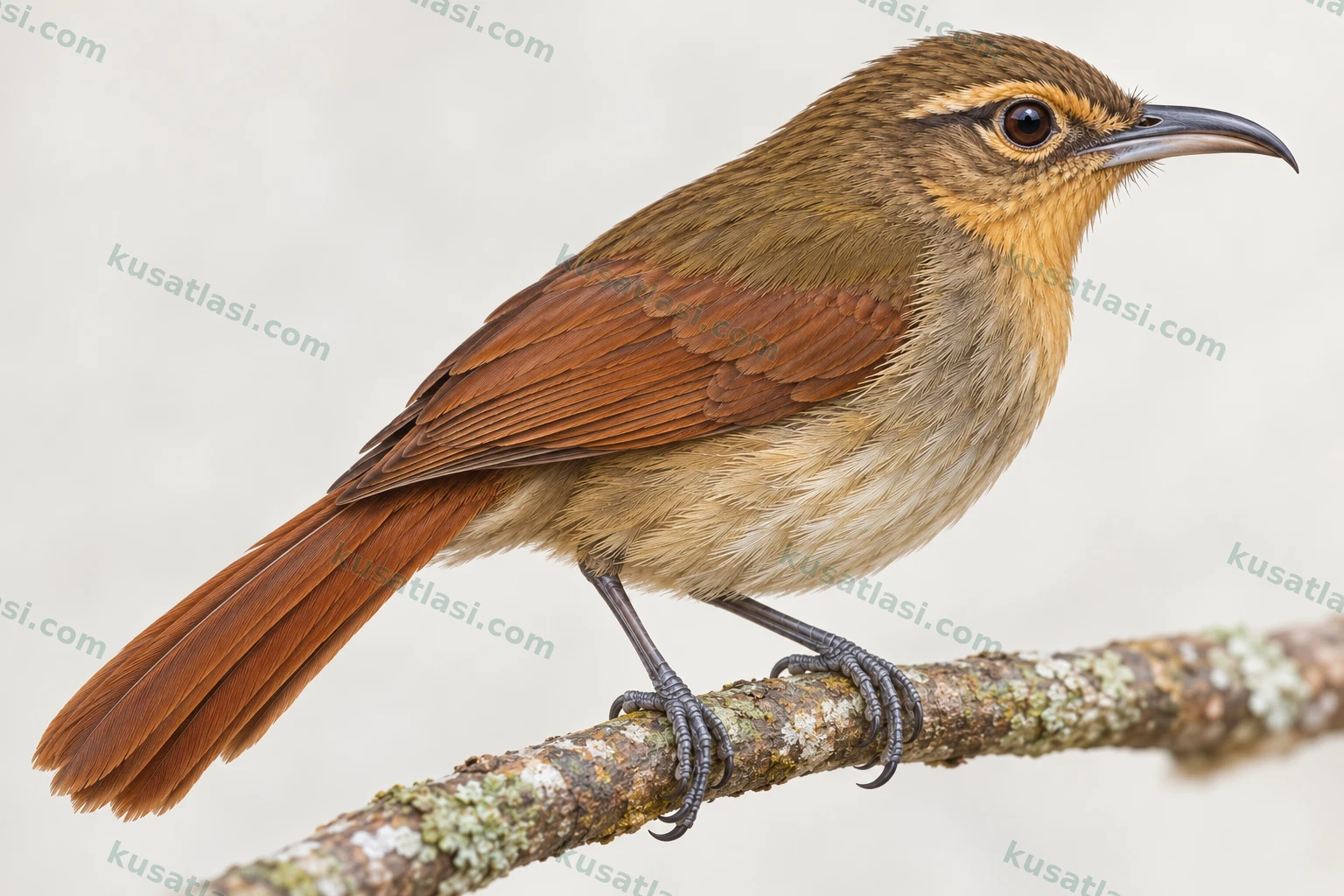
Swipe left or right between the two adult plates.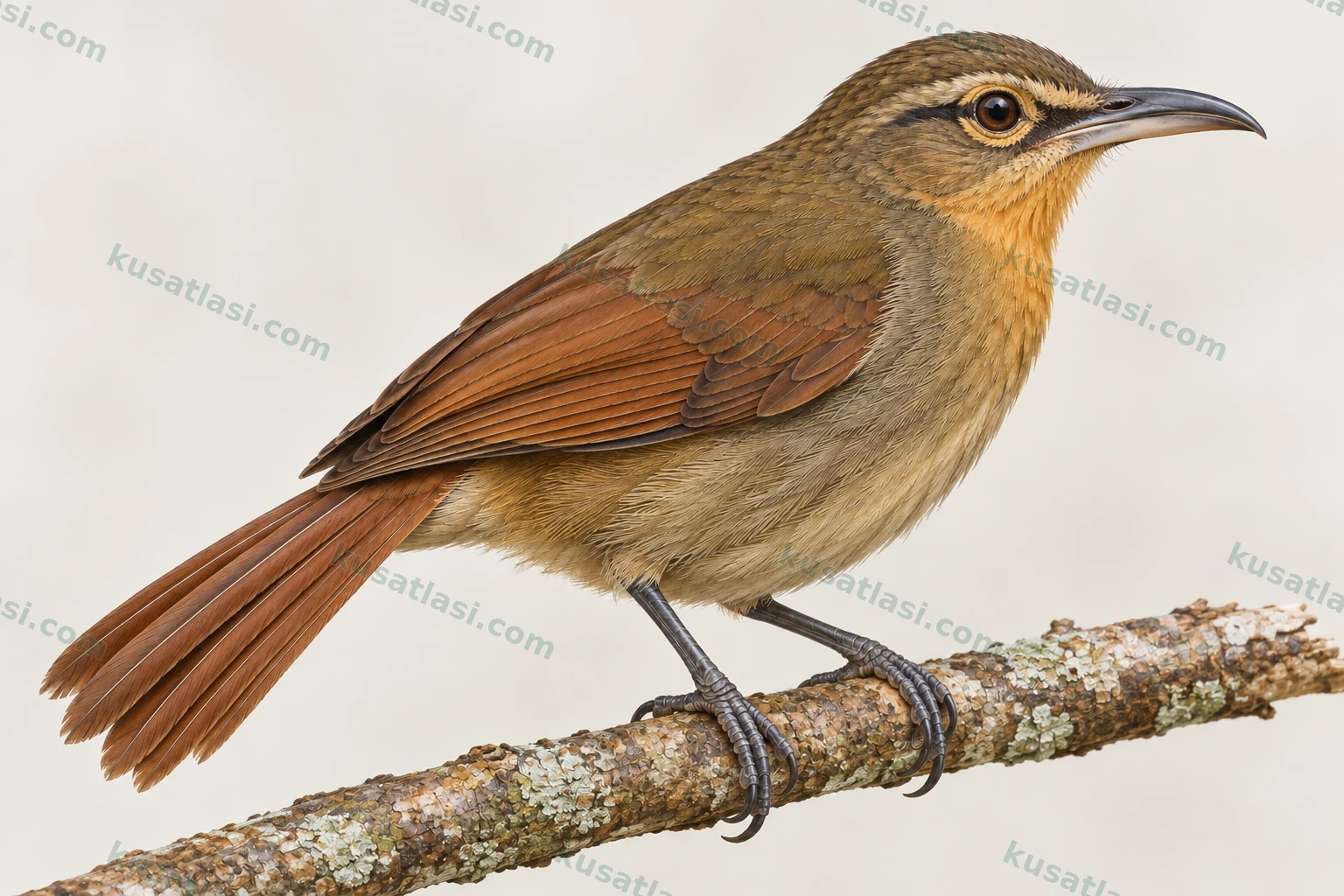
Furnariidae
Ochre-throated Foliage-gleaner
Automolus ochrolaemus
Look for the pale throat, conspicuous pale eyebrow and eye-ring together with the rufous tail.
- Order
- Passeriformes
- IUCN status
- LC · Least ConcernGlobal IUCN. BirdLife v10 (2025); taxon matching: AviList 2026 / IOC 15.2; checked 29 October 2026. Checklist year is not the species assessment date. Source and method · BirdLife
At a glance
- Examine the face as a whole
Look for the pale throat, conspicuous pale eyebrow and eye-ring together with the rufous tail.
- Hidden in cover
Expect brief glimpses in vines and dense low forest vegetation.
- Current species limits
Do not automatically transfer Costa Rican and Mexican records under the old combined name to this species.
Biometrics
Length
- Male
- 18–19 cm
- Female
- 18–19 cm
Wingspan
- Male
- Data unavailable
- Female
- Data unavailable
Weight
- Male
- 30–34 g
- Female
- 44–46 g
Length: Shared species value
World distribution
Ochre-throated Foliage-gleaner
Customise map layers
Observation points
Preparing globe…
Monthly record count
Bars show record counts in this sample, not bird abundance or a breeding calendar. They are affected by recording and observation effort.
Rotate the globe and compare layers. Coloured areas are not exact observation or nest locations.
The source does not provide verified monthly range boundaries. All areas are shown; the month slider and monthly playback are therefore disabled.
- Jan
- Apr
- Jul
- Oct
- Dec
Generalised data and method
Base map: Natural Earth · Public domain
Open central bibliography ↗Calendar
The species is resident. No monthly breeding calendar covering the entire current taxon was verified; months of other Automolus species are not used.
All months: Monthly data unverified.
January
February
March
April
May
June
July
August
September
October
November
December
Habitat
Central and eastern Panama; both sides of the Andes and Amazonian forests
In dense low cover, examine the pale throat, eyebrow, eye-ring and rufous tail together; listen to the natural voice too.
Sound
Descending nasal notes may accelerate and end compressed and broken. Tempo can vary regionally; assess voice with facial pattern and locality.
Do not play recordings to attract birds; observe quietly, especially near nests.
Breeding
The comparative scientific nest assessment supports a loose platform woven from leaf-stalks at the end of earth cavities. Typical egg numbers, incubation and nestling periods for the current taxon were not verified and were not transferred from other species.
Compare
Compare male and female
Expect brief glimpses in vines and dense low forest vegetation.
Species information
Quick identification
The Ochre-throated Foliage-gleaner is a brown bird difficult to pick out among branches in tropical forests of central and eastern Panama and South America. Its pale buff throat, conspicuous pale eyebrow and pale eye-ring attract attention together. The tail is rufous; most of the remaining body looks plain dark brown. The pale throat alone is insufficient. Assess facial pattern, tail colour, region and voice together.
General appearance and posture
The colour contrast between face and body matters. A pale eyebrow and eye-ring stand out against the dark brown head together with the warm pale throat. The rufous tail may contrast with the plainer brown body. In forest shade the pale face may look duller, in a sunspot brighter than usual. Following side and slightly frontal views of the same bird helps assess the eyebrow without confusing it with the throat.
It climbs through low forest vegetation tangled with vines and enters dense branches; sometimes it appears in ground leaf litter. Encounters therefore often provide intermittent brief glimpses rather than a fully exposed perched view. A tail hidden behind a branch or a concealed face should not be mentally reconstructed to make a certain identification. Noting what was unseen is as valuable as recording visible details.
The specialist account describes birds alone or in pairs. Two together do not establish which is male or female. Noticing the branches used and leaves inspected as it moves through dense cover helps relate movement to feeding. Interpreting every short pause as alarm or nest defence needs further behavioural evidence. Waiting at a non-disturbing distance provides a better observation than trying to draw the bird out.
Males, females and young birds
No reliable field key separating males and females on every encounter was verified in the examined sources matching current species limits. A pale-throated bird is not labelled male here, nor a darker bird female. Shadow, photograph colour settings and posture can change the same bird’s appearance. Where no verified sex character exists, leaving sex uncertain is better than adding false certainty.
The two sex boxes on measurement cards display the available shared information with its own explanation. A mean from three Amazonian specimens is not separate male and female means. The length range also comes from the nominate-subspecies account and does not establish identical size in all subspecies. Nor do the sources give a verified species-specific juvenile key, so not every faintly browed or dull bird is called young. Species identity can still be assessed separately using the seen facial pattern and natural voice while age and sex remain uncertain.
Appearance in flight
Because the bird is mostly encountered moving within dense forest cover, long exposed flight views are not the basis of identification. Its rufous tail and dark body may help during branch-to-branch movements but are not conclusive alone. No reliable diagnostic upperwing or underwing flight pattern for the current taxon was verified in the sources examined. Unseen facial marks should not be attributed to a brown silhouette passing in front of cover.
Following the bird’s natural landing on another branch allows face and tail details to be checked without trying to make it fly.
Voice and behaviour
Song is a descending sequence of nasal-sounding notes. The sequence may accelerate and finish in a more compressed, broken section. The South American classification committee’s assessment also discusses some Panama and northern Colombia voices being faster than Amazonian samples. One recording’s tempo should not be made a fixed threshold for all subspecies. The whole voice, natural context and bird seen matter together.
Especially where ranges approach Automolus cervinigularis in Panama, voice helps compare plain brown birds. Nevertheless, an imitated sound alone or a brief note of unclear context does not provide certain identification. Listening naturally from a distance and waiting for the bird is sufficient; using this description does not require forcing a playback response. Its hidden movement can also explain hearing it without immediately seeing it.
Similar species
1. Automolus cervinigularis is now treated separately, though old publications may include it under the broad “Buff-throated” name. Around Panama, compare the vocal sequence and current range boundary together rather than throat colour alone. Transferring an old Central American observation to this page without checking its scientific name and place could create a wrong species record.
2. Automolus exsertus is another separate species of the formerly combined group. Old size, sex or incubation details from Costa Rica and western Panama do not automatically belong to the Ochre-throated Foliage-gleaner. Determine the record’s current taxon; similar brown bodies and pale throats do not justify merging them.
Global range
Under the current taxonomic account, it occurs in central and eastern Panama west to Veraguas, and west of the Andes from northern Colombia to western Ecuador. East of the Andes it is resident in the forest belt from central Colombia, central Venezuela and the Guianas south to central Bolivia and Amazonian Brazil. This does not imply uninterrupted occurrence everywhere in all named countries. Real distribution is assessed with forest structure and local conditions.
Regional status
Four subspecies are currently recognised: pallidigularis from Panama to Colombia and northwestern Ecuador; turdinus in Amazonia north of the Amazon; nominate ochrolaemus south of the Amazon in southwestern Amazonia; auricularis associated with central Brazil and northeastern Bolivia. Position and the taxonomic account should be checked together rather than assigning subspecies from one country name. The old combined range including Mexico and Costa Rica cannot replace today’s Automolus ochrolaemus limits.
Migration and residency
The ornithological checklist of 2024 calls the species resident. No intercontinental seasonal route or verified monthly arrival–departure calendar for the current taxon was found in the sources examined. Residency does not mean every bird stays on the same branch throughout its life; daily feeding movements and local relocation are separate from long-distance migration. A record alone is neither breeding evidence nor a migration corridor. Painting points of the formerly combined species as the current species’ homeland would mislead.
Breeding habitat
Humid tropical forest and dense low vegetation form its basic daily environment. Tangled vines and branches are more usual encounter sites than an exposed treetop. The Amazonian white-sand habitat study classified the species regionally as not restricted to white-sand forest. This does not mean every field or dry open area is suitable breeding habitat.
Nest site
The comparative nest study of 2020, considering this species’ 1926 record, treats a loose platform woven from plant leaf-stalks at the end of earth cavities within the shared architecture. Tunnel lengths, egg counts and development periods of other Automolus are not used here. Typical clutch size, incubation and nestling periods for the current species could not be verified in the accessible sources examined. Seeing a hole in earth alone does not establish that it is this species’ nest.
Daily habitat use
Single birds or pairs move through dense low cover and sometimes descend to ground leaf litter. There is no need to open the forest, pull vines or approach a cavity entrance. Following natural feeding movements from a distance helps reveal face and tail markings. Where a nest is suspected, do not block the entrance or repeatedly call the bird out.
What does it eat?
The Amazonian ecomorphology study classifies the Ochre-throated Foliage-gleaner as insectivorous. Its own table row describes a low-forest-layer feeder occurring alone or in pairs. The study does not measure daily prey amounts or detailed percentages of prey species. The insectivorous classification is retained without adding unverified frogs, lizards, fruit or seeds. “Leaf” in the Turkish name does not mean it eats leaves either.
How does it feed?
Moving through vines and dense branches makes it important to watch the small places where it searches for insects. The specialist account notes occasional appearances in ground leaf litter. Recording the leaf inspected and the bill’s direction is more valuable than guessing an insect species without seeing the prey. Using low cover does not mean feeding only on soil. The feeding group in the measurement study cannot fill in details unseen in one observation. Following natural foraging does not require bait or disturbance of its cover.
An old name, new species limits
Birds formerly grouped under the English name “Buff-throated Foliage-gleaner” are no longer treated as one species. After Automolus cervinigularis and Automolus exsertus were separated, the remaining Automolus ochrolaemus took the name “Ochre-throated Foliage-gleaner”. This is more than changing a label; the bird and region behind an old book’s measurement must be checked again. Moving a Costa Rican breeding period to this species’ Amazonian population is not scientifically correct even when the historical name is the same.
The audible sign of a hidden bird
A brown body can disappear easily behind dense branches. The descending nasal sequence helps suspect its presence before seeing it. But speed and the ending do not divide equally sharply everywhere. The specialist assessment comparing Panama and Amazonia requires regional vocal differences to be considered. Listening to natural voice is less intrusive than opening vegetation to locate the bird.
Separating the sources of nest information
A comparative paper citing an old nest record of this species does not allow all relatives’ breeding figures to be transferred to it. Earth-cavity nest architecture may be supported while incubation days remain unknown. Architecture, clutch size and development period need different evidence. Not filling an unknown duration with a related species’ figure represents what is known more accurately.