
World Birds
Field Guide Plates
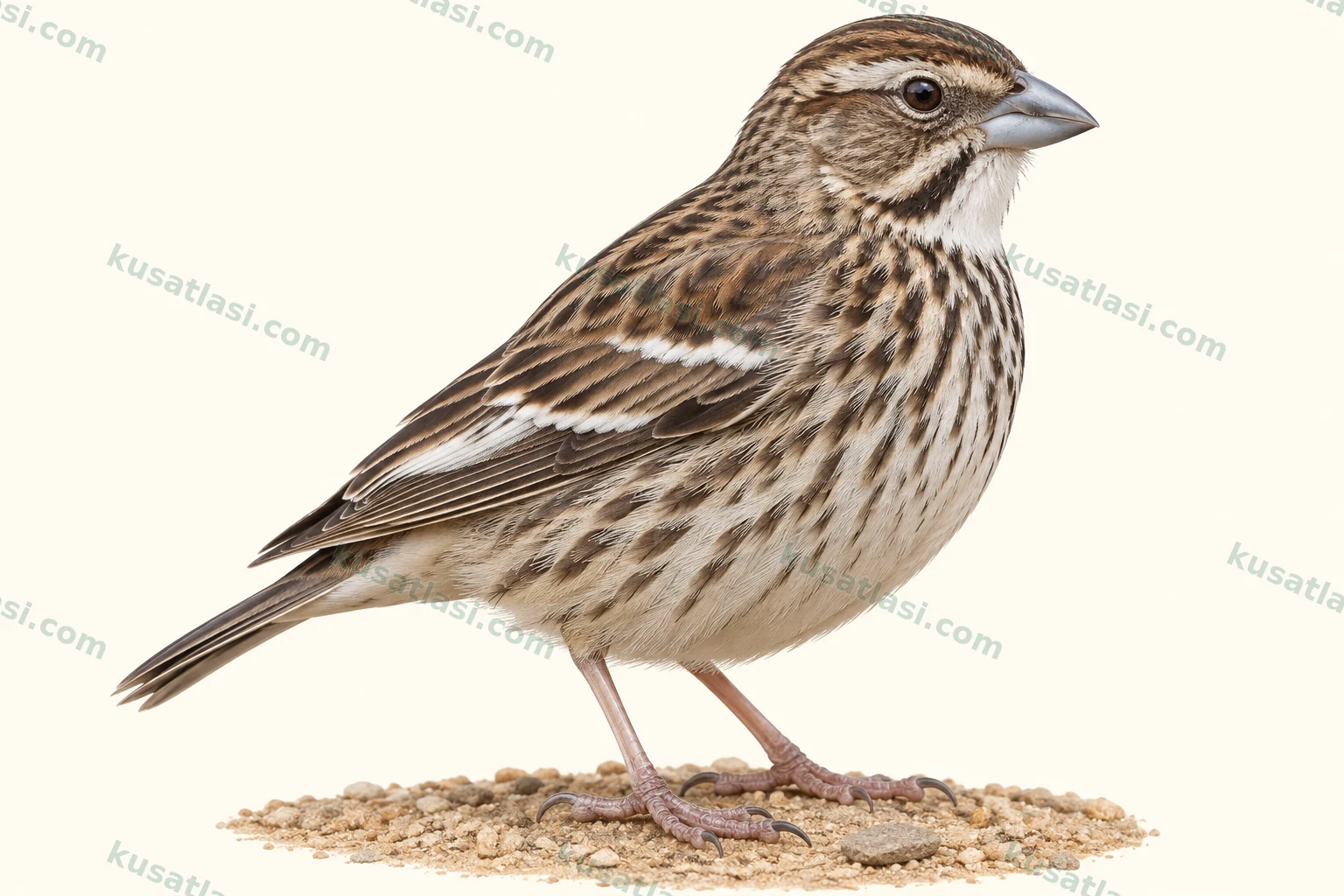
Swipe between the two adult plates.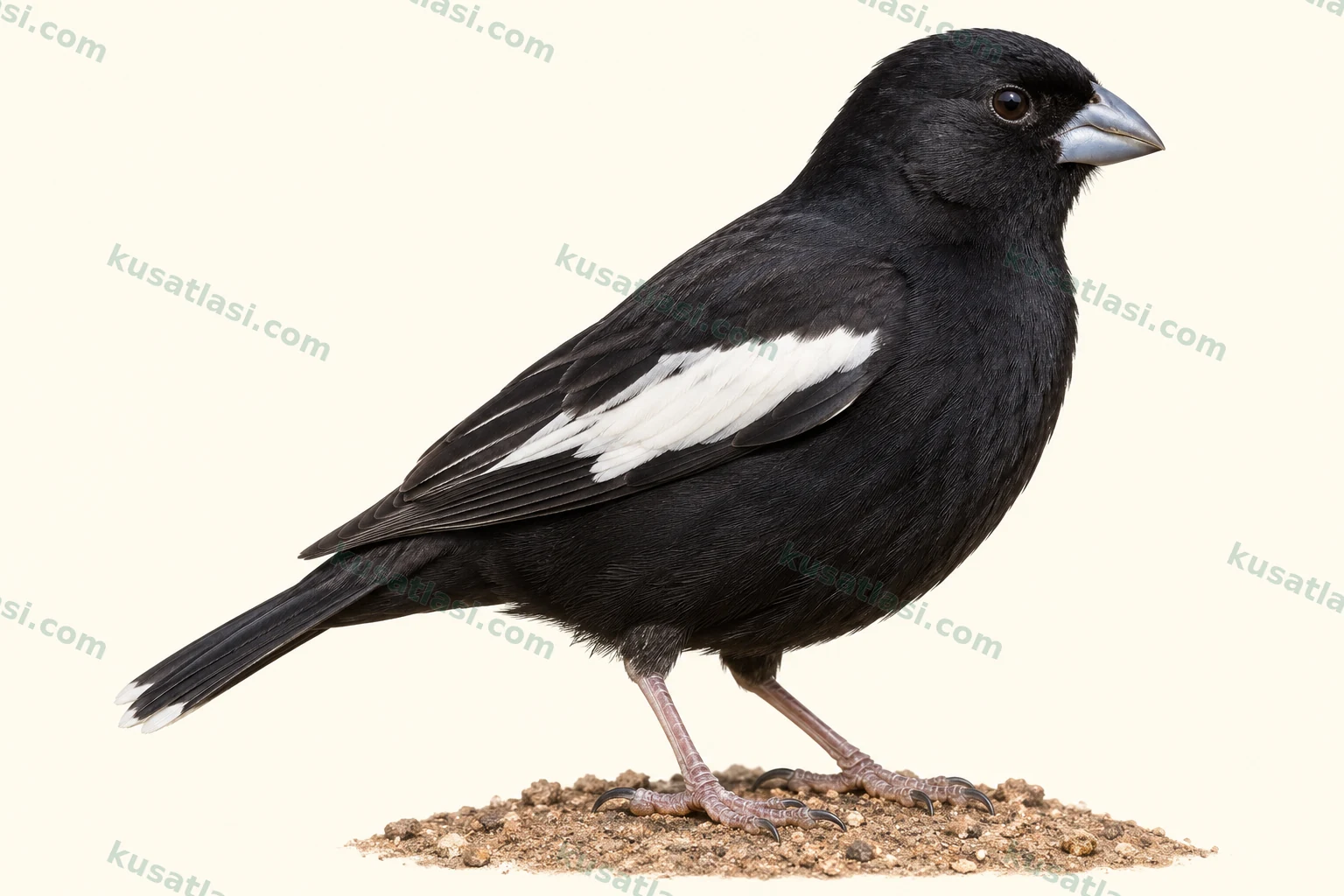
Passerellidae · Passeriformes
Lark Bunting
Calamospiza melanocorys
Ak Kanatlı Kara Serçe
Check the thick bluish bill and pale wing panel; the male changes colour seasonally.
- Order
- Passeriformes
- IUCN Status
- LCLeast Concern
Biometrics
Length
- Male
- 14–18 cm
- Female
- 14–18 cm
Wingspan
- Male
- 28 cm
- Female
- 28 cm
Weight
- Male
- 36.9–42.3 g
- Female
- 31.8–39.4 g
Detailed explanations of these measurements are available on our website, on the same species page.
At a Glance
- Thick bill
Pale blue-gray and conical.
- Pale wing panel
Also present in brown birds.
- Season matters
Black plumage is not retained year-round.
Breeding males are black and white; winter males, females and young can be brown and streaked.
Calendar
The Canadian assessment places most Alberta arrivals in late May; no exact whole-range monthly calendar is supplied.
Species Information
Quick Identification
A breeding male stands out through its black body and broad white wing patch. It is chunky and short-tailed, with a thick, pale blue-gray conical bill. Do not search only for black birds in winter: males change to brown, streaked plumage.
General Appearance and Posture
Ground-feeding birds show a heavy bill and compact body. At rest, pale feathering forms a panel along the folded wing. In breeding males, the prominent white is chiefly in the wing coverts, not the entire wing.
Males, Females and Young Birds
Females and young have brown upperparts and dark streaks over pale underparts, with a pale eyebrow, dark moustachial line and pale throat. Juveniles resemble females but can be buffier and more streaked. Nonbreeding males also resemble females, so brown plumage alone does not establish sex.
Appearance in Flight
Pale wing areas become conspicuous in flight even in brown birds. Winter flocks can move low over the ground in compact groups. A displaying male rises and then descends in a glide, unlike a flock simply moving between feeding areas.
Voice and Behaviour
Male songs contain repeated notes and faster trills arranged in distinct phrases. Early territorial songs can be harsher and more broken, becoming more flowing as pairing proceeds. Both sexes give a soft, drawn-out whistled call, often in flight.
Similar Species
Brown birds can be confused with open-country species such as Chestnut-collared Longspur (Calcarius ornatus) and Thick-billed Longspur (Rhynchophanes mccownii). Assess the thick bluish bill, breast streaking and long pale wing panel together. Cornell’s comparison guide lists both longspurs among similar species.
World Distribution
It is a bird of North America’s Great Plains, breeding from the southern Canadian prairies through the central and western interior plains of the United States. In Canada it occurs in southeastern Alberta, southern Saskatchewan and southwestern Manitoba. Wintering areas lie in the southwestern United States and the open country of northern and north-central Mexico.
Status Within Its Natural Range
Local numbers can vary greatly among years. The Saskatchewan Breeding Bird Atlas documents use of short and moderately tall grasslands, planted pasture and some agricultural areas. Abundance in one year followed by scarcity in another does not alone demonstrate a lasting increase or disappearance.
Movements and Migration
After breeding it moves south in flocks and can wander in winter with changing food and rainfall conditions. The Canadian assessment places most Alberta arrivals in late May and notes that males can precede females. This regional timing does not define one arrival date or an unchanging route for the whole continent.
Breeding Habitat
It uses short and mixed grasslands and grassy shrubsteppe. The USGS expert review emphasizes retaining protective nest cover alongside shorter feeding vegetation. Effects of grazing depend on grassland type and intensity; one grazing level cannot be prescribed everywhere.
Nest Site
The female selects a shaded site beneath a shrub, cactus or substantial grass clump. Both sexes build a ground-level cup of stems and fine roots, lined with finer grass or hair. Cornell gives 2–5 eggs, 10–12 days of incubation and a 7–9-day nestling period. Audubon describes a usual clutch of 4–5 and incubation mainly by the female for 11–12 days. These are differing source scopes for the same species, not values to average. Both parents feed the young. Keep out of ground-nesting cover.
Daily Habitat Use
Migration and winter feeding habitats include open grassland, weedy fields and dry shallow lake beds. An agricultural site used in winter need not provide the shade and concealment required for nesting. Watch flocks from an existing path or roadside rather than walking through vegetation clumps.
What It Eats
It eats seeds and invertebrates, with some fruit. Food includes grasshoppers, beetles, caterpillars, spiders and seeds of grasses and other plants. Young receive mainly insects. New Mexico State University’s wildlife education guide particularly notes the importance of seeds and grain in winter.
How It Forages
It gathers food while walking or running and can strip seeds from seedheads. Insects may be gleaned from vegetation, chased on foot or caught in short flights. During migration and winter it usually feeds in flocks, sometimes alongside other seed-eating birds.
Rainfall Responses Depend on Scale
A 2018 analysis of Great Plains bird counts from 1967–2014 linked regional abundance to wetter arrival conditions, but also, at another timescale, to drought over the preceding four years. This does not mean drought is beneficial everywhere. The study statistically compares regional counts and settlement patterns rather than tracking the route of every individual.
Leaving the Nest Is Not Independence
In Colorado shortgrass prairie, researchers followed 206 recently fledged birds from 82 broods using radiotelemetry and colored bands. Results published in 2006 associated the first three days after leaving the nest and severe drought conditions with lower survival. This local study does not support treating nest departure as immediate independence, nor does it supply one mortality rate for the entire range.