
World Birds
Field identification plates
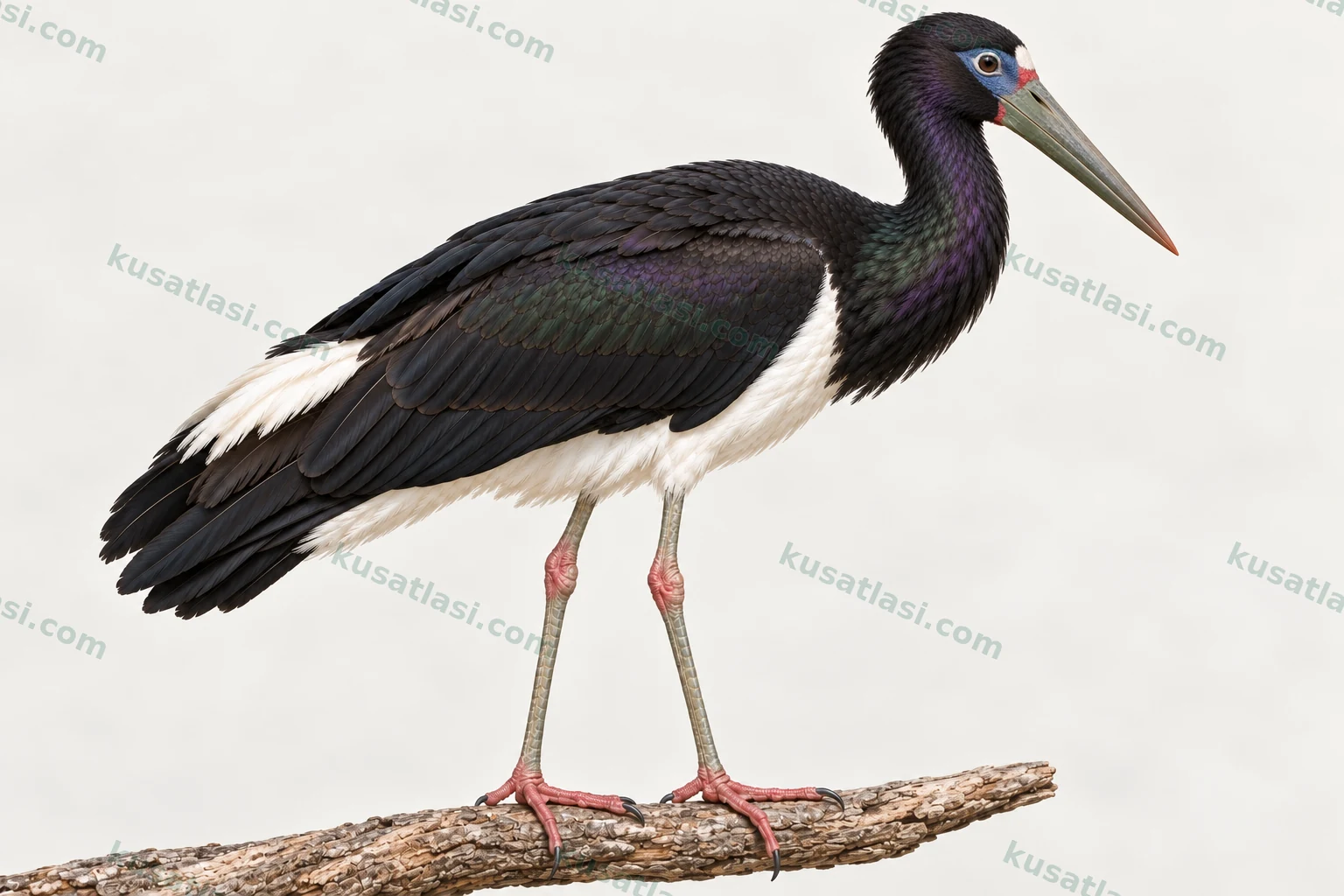
Swipe left or right between the two adult plates.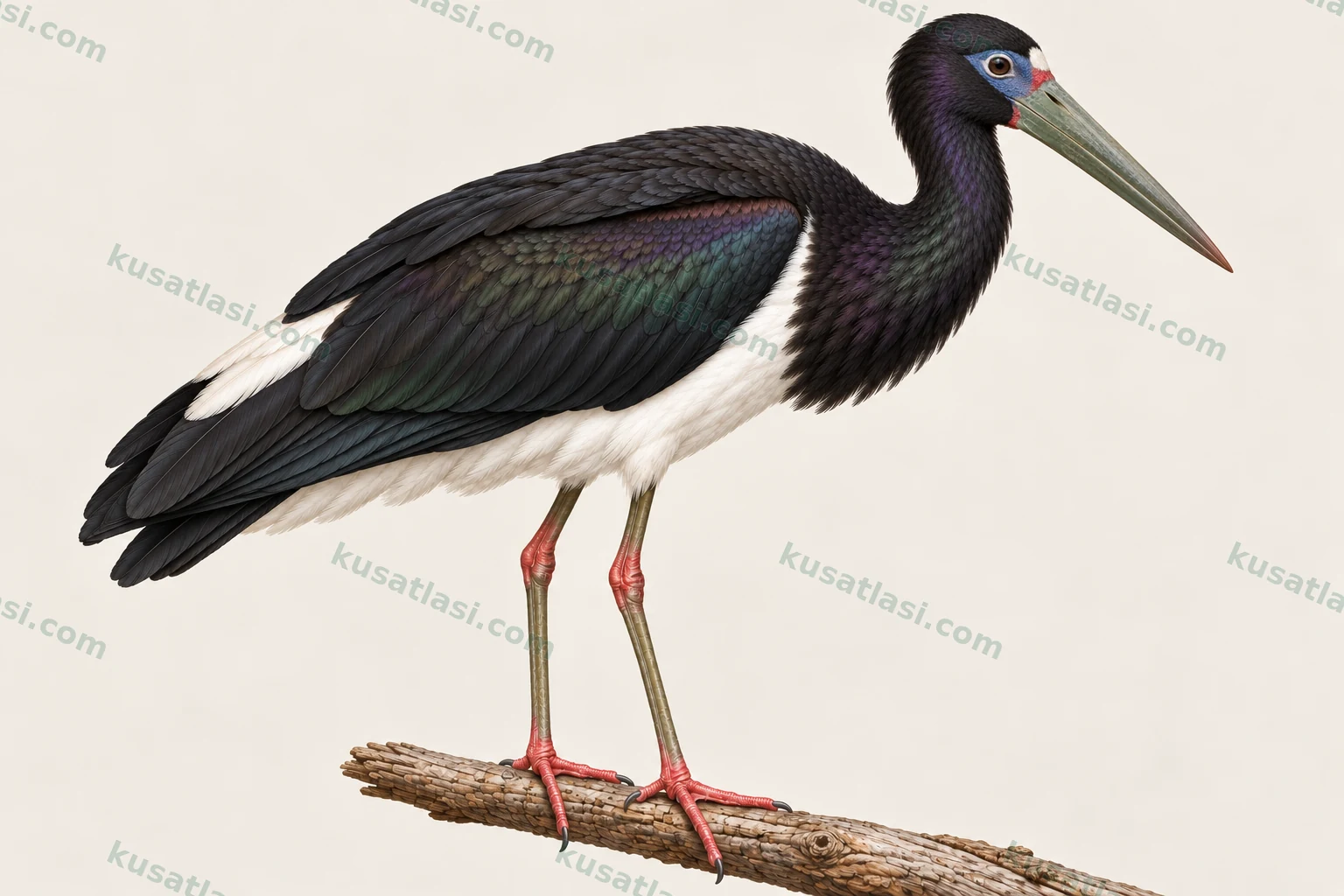
Ciconiidae
Abdim’s Stork
Ciconia abdimii
Assess them together with the dark neck and back; the tail feathers are dark.
- Order
- Ciconiiformes
- IUCN status
- LC · Least ConcernGlobal IUCN. BirdLife v10 (2025); taxon matching: AviList 2026 / IOC 15.2; checked 29 October 2026. Checklist year is not the species assessment date. Source and method · BirdLife
At a glance
- White belly and rump
Assess them together with the dark neck and back; the tail feathers are dark.
- Greenish-grey bill
It differs from the red bill of an adult Black Stork.
- Groups in open country
Watch grassland and birds searching for insects; do not decide from flock size alone.
Biometrics
Length
- Male
- 75–81 cm
- Female
- 75–81 cm
Wingspan
- Male
- 140 cm
- Female
- 140 cm
Weight
- Male
- 1.16–1.57 kg
- Female
- 1.16–1.57 kg
Length: Shared species value Wingspan: Shared species value Weight: Shared species value
World distribution
Abdim’s Stork
Customise map layers
Observation points
Preparing globe…
Monthly record count
Bars show record counts in this sample, not bird abundance or a breeding calendar. They are affected by recording and observation effort.
Rotate the globe and compare layers. Coloured areas are not exact observation or nest locations.
The source does not provide verified monthly range boundaries. All areas are shown; the month slider and monthly playback are therefore disabled.
- Jan
- Apr
- Jul
- Oct
- Dec
Generalised data and method
Base map: Natural Earth · Public domain
Open central bibliography ↗Calendar
The calendar is assessed regionally. In the Ethiopian and Nigerian colonies studied in 2018–2019, laying occurred in April–May and young took flight in June–July. South Africa is mostly a non-breeding area used in November–April.
All months: Monthly data unverified.
January
February
March
April
May
June
July
August
September
October
November
December
Habitat
African grasslands and savannas
Watch groups searching for insects in open grassland, lightly wooded savannas and some farmland. In breeding regions, view colonies in large trees from a distance.
Sound
It is generally quiet. The specialist source mentions occasional two-note whistles at nests and roosts, and bill-clattering during displays. A bill sound is not a song produced by the bird’s vocal organ. A real bird recording with verified species identity and licence has not yet been added.
Do not play recordings to attract birds; observe quietly, especially near nests.
Breeding
The branch-platform nest is placed in large trees and, in some regions, other high structures; dry grass and other natural materials may also be used. Single nests or colonies may occur. Three eggs were most frequent in the 2018–2019 Ethiopia–Nigeria study; most clutches in the 1996 northern Benin study had three–four eggs. Incubation was verified as 28–29 days in Benin. The 28–30 days mentioned in an older Nigerian account rely on previous studies. In the comparative research, young began flying at a mean age of 51 days in Ethiopia and 58 in Nigeria; the two regions are not combined into one number. Do not climb nest trees, drive adults away from young or share sensitive locations.
Compare
Compare male and female
It differs from the red bill of an adult Black Stork.
Species information
Quick identification
Abdim’s Stork is a long-legged stork with a white belly and a dark head, neck and upper body. It is often seen with other individuals in open grasslands, lightly wooded savannas and some farmland. At first it may suggest a Black Stork, but the combination of a white rump, greenish-grey bill and paler legs helps distinguish it. The white rump seen from above is particularly useful, although the bird’s posture may conceal this area.
Neither flock size nor proximity to water is used alone for identification. An Abdim’s Stork may be alone; other storks may also gather in the same feeding area. First examine the positions of the colours on the head, neck, belly and above the tail, then inspect the bill and legs. Seeing the same features again as the bird walks and spreads its wings gives a more reliable assessment than a brief glance.
General appearance and posture
The head, neck, upper back and visible surfaces of the folded wings look almost black. In suitable light, a purplish gloss may be visible on these dark feathers. The lower neck and upper breast are also dark; the belly and the broader area beneath the body are white. The whiteness on the lower back and above the tail contrasts with the dark upper body. The tail feathers are dark; a white rump and a white tail are not the same feature.
It is inappropriate to assign the two ends of this range to males and females. A standing bird changes its apparent height when it extends or shortens its neck. The total length given by a source and the standing height in a single photograph are therefore not interchangeable.
The bill is straight, prominent and greenish-grey. In the breeding season, bare blue and red areas on the face may stand out; these bare parts are paler at other times. The eye is brown. Most of the legs look greyish-green, while pink-red may occur on the feet and leg joints. This does not mean that the entire leg is bright red from top to bottom. Shade and distance may conceal the small coloured areas, particularly on the face.
On a walking bird, the boundary between the white belly and dark neck is easy to follow. Underwing features cannot be seen when the wings are folded. Rather than assuming that a feature hidden in one view is absent, wait for a suitable angle during the bird’s natural movements. Flushing the bird, driving it off its nest or scattering the flock is unnecessary for identification.
Males, females and young birds
Adult males and females have similar plumage patterns. The specialist species account states that the male is slightly larger, but this is insufficient to determine the sex of a single distant bird with certainty. Showing the same length, wingspan and weight values for both sexes on the cards indicates that the sources do not provide separate general measurements for these fields. Not every large-looking individual in a flock is called a male.
Young birds may be duller and browner than adults. The gloss of adult plumage is less pronounced. Weaker bare facial colours may also be considered, but pale facial colour alone does not establish age, because adult colours also fade outside breeding. Age is assessed by considering the overall plumage, season and any family behaviour together.
A chick growing in the nest, a bird not yet flying and a young bird joining a flock are not at the same developmental stage. A brownish appearance alone does not show how many days old an individual is. Watching a young bird receive food from an adult may confirm a family relationship; this does not mean that all young birds become independent at the same time.
Appearance in flight
The long, broad wings are suited to soaring. In flight the neck extends forwards and the legs trail behind the body. The upperwings are mainly dark. From below, examine the dark flight feathers together with the white area of the underwing near the body. Simply calling it “white-winged” without stating which wing surface is being viewed gives an incomplete account of its true appearance.
Voice and behaviour
It is generally a quiet bird. The specialist species account describes occasional two-note whistles at nests or roosts and bill-clattering during displays. Bill sounds are a behavioural feature independent of feather or bill colour; they do not establish the species alone. A sound from an unseen source must not be confused with other birds in the same place.
Abdim’s Stork may form groups when feeding. Many birds gather where insects are concentrated; this does not mean they live in flocks of the same size throughout the year. Not every bird in a gathering near nests is necessarily an adult breeding in the same colony. Feeding, resting, flying and carrying food to young are observed as distinct behaviours.
Species that may be confused
The Black Stork (Ciconia nigra) resembles it in its dark upperparts and white belly. An adult Black Stork has a bright red bill and legs; Abdim’s Stork has a greenish-grey bill, mostly paler legs and a white rump. The Black Stork is larger and usually less gregarious. Flocking behaviour alone is not definitive, however; young birds do not show adult bill and leg colours as clearly, so the white rump and overall body pattern are checked as well.
World distribution
Abdim’s Stork’s natural range covers sub-Saharan Africa and limited areas in the southwestern Arabian Peninsula. African breeding areas form a broad west-to-east belt; specialist sources describe a distribution from around Senegal towards Ethiopia and Somalia. The birds do not occur in every country in the same season or with the same frequency. Breeding places and feeding areas used outside breeding must be considered separately.
Status within its natural range
Colonies may be seen in large trees within villages in the northern breeding regions. All nests in the areas examined by the 2010 Nigerian study were in villages; this does not mean the species can breed only in human settlements. Natural woodlands and other nesting settings are also described in the sources. In South Africa it is mostly regarded as a non-breeding migrant.
BirdLife South Africa’s 2025 assessment gives the regional status as Least Concern; trend results differ among the datasets used. More records in one region and proof that the species is increasing worldwide are not the same thing. The page’s category information and local observation frequency must be understood separately.
Migration journey
Its seasonal movements within Africa have been studied. Seven adults tracked with transmitters from southern Niger were shown to travel to Tanzania, to areas south of Lake Victoria; one also used Zimbabwe. These records do not create a single obligatory route for all populations. Even birds from the same village had different movement strategies. Arrival in South Africa mostly falls in November–December, and pre-migration gatherings may be seen in March–April; variation between regions and years is retained.
Breeding habitat
Open grasslands, lightly wooded savannas and some cultivated areas are important habitats. It may also occur at wetland edges, but should not be regarded as dependent only on water like a fish-seeking wetland bird. Breeding studies highlight places combining open feeding grounds with large trees capable of supporting nests. Water in the same geographical area does not prove that every individual feeds there.
Nest site
The nest is a platform built of branches; materials such as dry grass may also be used. The Nigerian study found nests in various trees, including baobabs. One tree may support several nests. A study in Ethiopia comparing trees used and not used for nesting showed the importance of features related to trunk structure; no single tree species is considered essential throughout the range.
Daily space use
Feeding birds walk on the ground searching for suitable prey; trees or other high places may be used for resting and roosting. A nest tree is not the whole feeding area. Direct behaviours such as food being carried are watched to establish the connection between birds feeding at a distance and the colony. Protecting large trees and open feeding grounds is a broader requirement than protecting only the nest location.
What does it eat?
Insects and other invertebrates form the main food group. The specialist institutional account notes the importance of insects such as grasshoppers, with frogs, lizards, fish and small mammals taken less often. A study of chick food in Niger is among the sources showing the importance of the grasshopper Oedaleus senegalensis. This local finding does not mean that the same prey is eaten in the same proportion throughout the year in every region.
How does it forage?
It walks on the ground, takes small prey it sees with its bill and may feed with other individuals where insects are concentrated. Gatherings associated with insects appearing after rain or fire have been observed. There is no need to start a fire or alter the surroundings to see the birds. A flock’s presence in a field alone does not show what it is eating; prey capture or food being carried must be seen. A single food item brought to a chick describes that feeding event, not the species’ dietary proportions over an entire year.
Appearing with rain does not explain the cause
The arrival of Abdim’s Stork is associated with rainy periods in many regions. However, nests studied in Ethiopia and Nigeria in 2018–2019 showed no clear relationship between daily rainfall and the frequency of nest initiation. The research published in 2026 shows that timing may not be explained by a single factor. Internal seasonal processes are discussed as possible explanations, not presented as proven causes.
Young may develop differently within the same species
In the same comparative study, the mean age at first flight was 51 days in the Ethiopian sample and 58 in the Nigerian sample. These are local means published by the research. Combining the two figures into a new species-wide average would erase the regional difference shown by the study.
Not every individual follows the same migration route
Adults tracked from the same breeding area in Niger showed different movement strategies. Although the areas used in Tanzania are important, the seven birds in one study do not prove that every African population winters in the same place. Connections between breeding and non-breeding regions are examined separately to understand migration.
The weight source is not the wing sample
The cards show the shared value provided by the source.
Nesting in a village does not remove human impacts
Trees in settlements may provide colony nest sites. Studies also found human-made materials such as cloth and plastic in some nests. This does not mean that plastic should be left for the birds. Proximity to people does not mean disturbance has no effect; the causes of breeding differences between urban and rural samples require further investigation.