
World Birds
Field identification plates
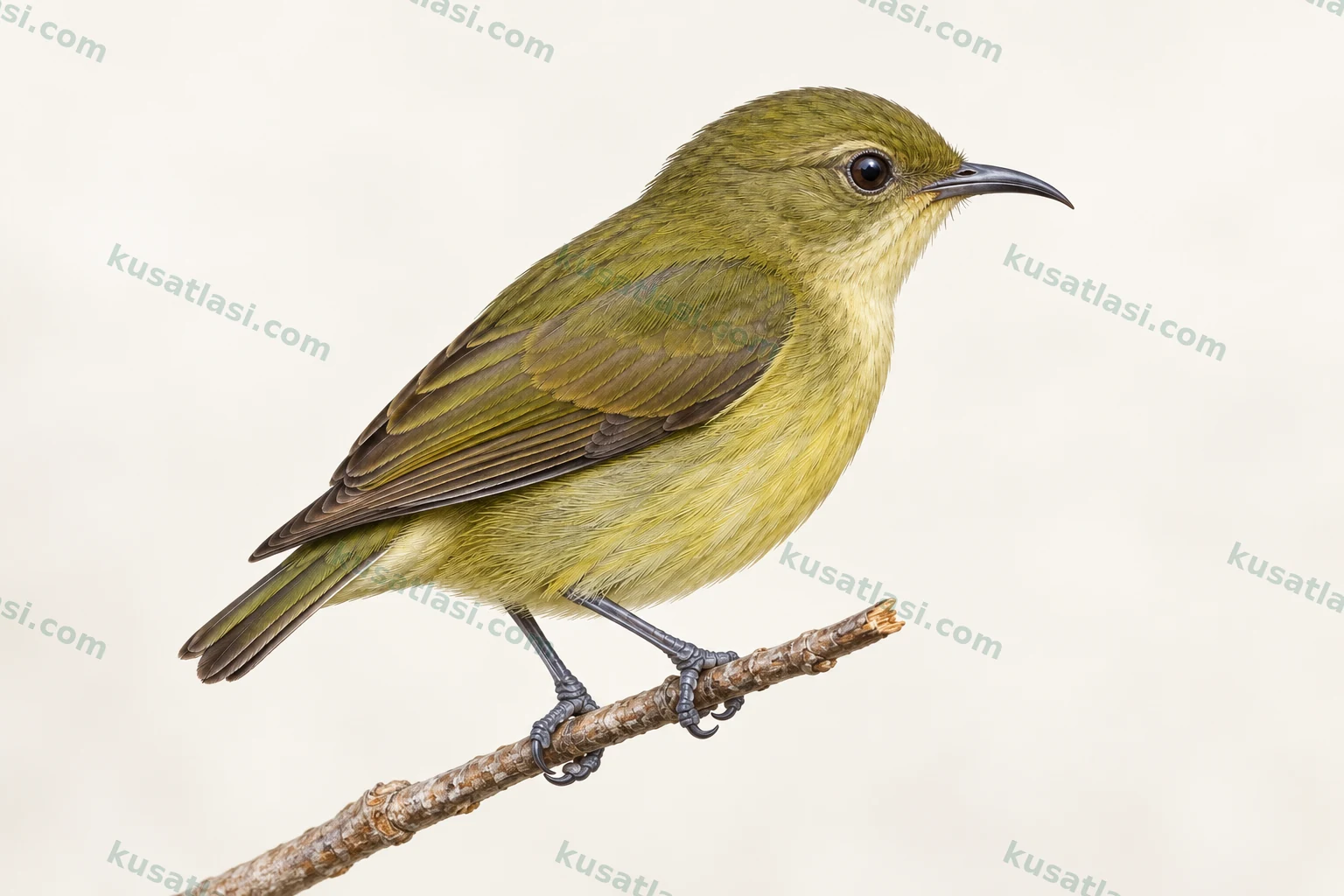
Swipe left or right between the two adult plates.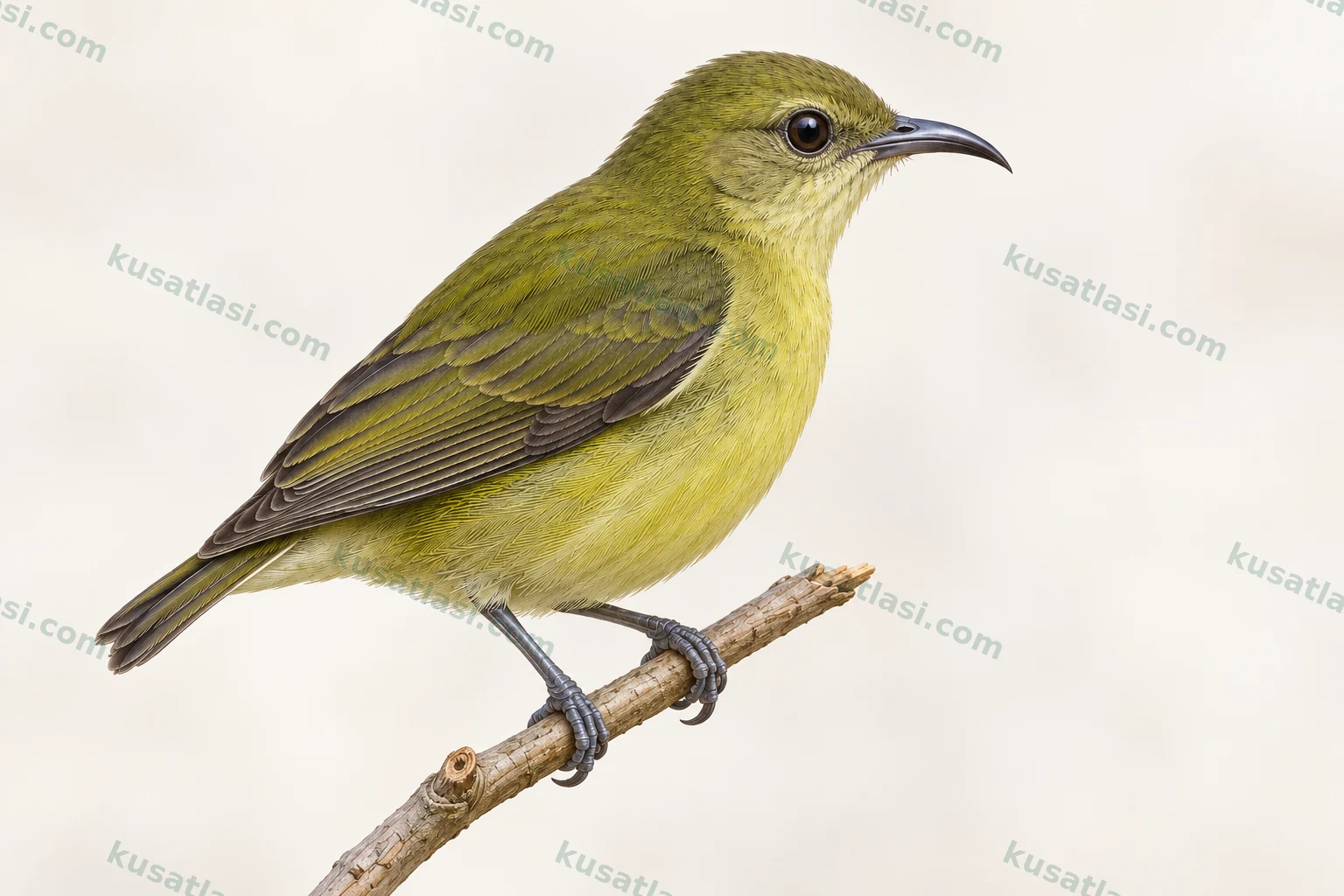
Dicaeidae
Plain Flowerpecker
Dicaeum minullum
View the olive-brown back and pale underparts together with the bill.
- Order
- Passeriformes
- IUCN status
- Source-taxon assessmentGlobal IUCN. BirdLife v10 (2025); taxon matching: AviList 2026 / IOC 15.2; checked 29 October 2026. Checklist year is not the species assessment date. Source and method
At a glance
- A small, plainly coloured bird
View the olive-brown back and pale underparts together with the bill.
- A short, slightly curved bill
The base of the lower bill may be paler; do not rely on a single colour impression.
- Mistletoe visits
Record fruit and flower behaviour separately, and check the region where you are.
Biometrics
Length
- Male
- 7.5–9 cm
- Female
- 7.5–9 cm
Wing length
- Male
- 4.635 cm
- Female
- 4.635 cm
Weight
- Male
- 4–8 g
- Female
- 4–8 g
Length: Shared species value Wing length: Shared species value Weight: Shared species value
World distribution
Plain Flowerpecker
Customise map layers
Observation points
Preparing globe…
Monthly record count
Bars show record counts in this sample, not bird abundance or a breeding calendar. They are affected by recording and observation effort.
Rotate the globe and compare layers. Coloured areas are not exact observation or nest locations.
The source does not provide verified monthly range boundaries. All areas are shown; the month slider and monthly playback are therefore disabled.
- Jan
- Apr
- Jul
- Oct
- Dec
Generalised data and method
Base map: Natural Earth · Public domain
Open central bibliography ↗Calendar
The species is broadly classified as resident; no verified monthly breeding and movement calendar applies throughout the range. The April–June period for the Taiwanese subspecies is regional only.
All months: Monthly data unverified.
January
February
March
April
May
June
July
August
September
October
November
December
Habitat
Eastern Himalayas–southern China and Southeast Asia to the Greater Sunda Islands
Look for the plain head, underparts and short bill together on mistletoe and fruit-bearing branches.
Sound
The song has thin, rapid, rising notes; calls are short and single or double. Sound alone does not establish identification.
Do not play recordings to attract birds; observe quietly, especially near nests.
Breeding
For the Taiwanese subspecies uchidai, a pear-shaped nest containing plant fibres, pine needles and spider silk was reported in the April–June period. Nest building and feeding of young were observed in Hong Kong. A reliable common clutch size and incubation duration could not be verified for the current narrowly defined species.
Compare
Compare male and female
The base of the lower bill may be paler; do not rely on a single colour impression.
Species information
Quick Identification
The Plain Flowerpecker is a very small, inconspicuously coloured songbird that moves among tree leaves and mistletoe clumps. It has olive-brown upperparts, pale greyish-white underparts and a short, fairly slender, slightly downcurved bill. The Hong Kong Bird Watching Society’s species account draws attention to the plain area around the eye, the pale base of the lower bill and the rapid, thin calls. A pale belly or small size alone does not reliably separate it from similar flowerpeckers. Rather than relying on a few seconds of a bird behind leaves, assess the bill, face and underparts together.
General Appearance and Posture
The Turkish name’s reference to pale colour does not mean that a brilliantly white bird should be sought. The back, crown and upperwings may appear pale olive to brown. The underparts are paler, but can look dirty grey in shade. The head is not strongly patterned; that plainness is useful only in combination with other features. A short tail, compact body and rapid movements on fine flowering or fruiting branches complete the general impression. Light, age and geographical subspecies differences mean that one colour tone in a photograph cannot represent the whole range.
The Hong Kong account describes a short, slightly downcurved bill with a paler base to the lower mandible. Taiwan’s National Museum of Natural Science describes the slender, pointed bill and pale yellow to pale green underparts of the Taiwanese subspecies uchidai alone. That second description cannot be used to assign the same underpart colour to all birds on Hainan, Borneo or Java. If fruit, a branch or shadow obscures a bird’s bill, its colour cannot reliably be inferred from the image. At a distance, waiting to see the head and bill together is safer than relying on colour.
A visit to mistletoe does not mean the bird lives attached to a single shrub. The Hong Kong account mentions records in scrub and degraded woodland at village edges as well as mature forest and forest edges; the pattern varies by region and period. A bird singing thinly from a branch may use a high, exposed perch. When feeding, it moves at short intervals among fruit-bearing branches. Approaching a flower and drinking nectar are separate observations, as are approaching a fruit and swallowing it. Recording appearance and behaviour together strengthens identification.
Males, Females and Young Birds
The species accounts used here do not distinguish males and females by a clear, reliable colour difference. A greener back should therefore not be labelled male, or a paler belly female.
The sources checked did not provide a verified, detailed sequence of juvenile plumage changes across all subspecies. This gap is not filled with another flowerpecker’s juvenile appearance. Seeing a small, recently fledged-looking bird with a family group, or noting an apparently paler bill, does not by itself confirm age. Distinguishing young from adults requires a reliable local photographic sequence and specialist explanation. The Taiwanese museum’s breeding note does not prove that juveniles have identical plumage throughout the range. In such cases, describing the visible features without assigning a definite age or sex is more useful.
Appearance in Flight
A short, rapid flight may take the bird from one mistletoe clump to a nearby tree. Yet a tiny dark silhouette in the air is not a reliable single mark among similar flowerpeckers. The Hong Kong account describes short single or double calls in flight; those sounds alone also do not establish identification without a matching recording and view. No verified species-specific marks distinguishing the upper and lower wing surfaces in flight were available here. A wing surface is therefore not described as though such a mark existed, nor is a false identification mark invented for an illustration.
The best opportunity is to see the bill and head when the bird lands again. The flight call, small body, plain upperparts and pale underparts can then be compared on the same individual.
Voice and Behaviour
The Hong Kong Bird Watching Society describes the song as thin, rapid, rising notes and the calls as short single or double sounds. Written imitations vary among listeners, so no single syllable is presented as an obligatory species signature. A singing bird on a high, exposed branch and a bird moving through foliage in search of fruit are different observation situations. Locating the tree from which a sound comes may be a starting point for seeing the bill and underparts directly. Where similar species occur, identification should combine the view, repeated sound sequences and the local species list rather than a single sound.
Ling-Hsuan Chuang’s university research in Taiwan examined the species’ use of fruit and nectar from certain mistletoes and its role in transporting seeds. This direct field study does not mean that the plant–bird relationship in one garden has the same strength in every Asian forest. The Hong Kong account’s observation of feeding on Oriental Mistletoe is also regional. Together, the sources show a bird that not only visits flowers but takes fruit and transports some seeds; the degree of use of each plant remains dependent on place and season.
Similar Species
1. Dicaeum erythrorhynchos is another small, plainly coloured flowerpecker, but its pale pinkish bill, which may look fuller, is particularly important. Matching pale underparts alone is insufficient. Whether the species genuinely overlap must be checked against local records; broad coloured areas on a country map do not prove that they occur on the same branch.
2. For Dicaeum agile, compare the stronger bill and prominent streaking on the underparts. If the bill is hidden in a photograph, look for actual visible streaks. Not every individual is assumed to appear the same colour in the light. Separation rests on several visible features and the correct geographical context.
3. Dicaeum concolor of the Nilgiris and Dicaeum virescens of the Andamans may appear in historical texts under the same broad “Plain Flowerpecker” heading as today’s Dicaeum minullum. They are separate species in current taxonomy. Transferring an old photograph or breeding note to D. minullum solely on its old heading is an error; check when the scientific name was used and where the photograph was taken.
Global Distribution
Under the current narrow species concept, Plain Flowerpecker has a broad but discontinuous Asian range from the eastern Himalayas through southern China and Southeast Asia to the Malay Peninsula and Greater Sunda Islands. The Hong Kong Bird Watching Society lists Hainan and Taiwan and areas extending through Myanmar and Thailand to Borneo, Java and Bali.
Status Within Its Native Range
Avibase’s current subspecies treatment lists minullum on Hainan, olivaceum on the mainland, uchidai on Taiwan, borneanum in the Malay Peninsula–Sumatra–Borneo region and sollicitans on Java and Bali. These names do not imply identical habitats, breeding dates or plumage colours everywhere. Historical D. concolor records may combine today’s D. minullum with the Nilgiri and Andaman species, so old distribution maps are not used without checking their scope.
Migration
AVONET classifies the species broadly as resident. This does not mean that every individual stays in the same tree throughout the year. Short local movements in response to fruit and flowers must be distinguished from regular long-distance migration. Increasing records in Hong Kong are considered in relation to the possible establishment of a breeding population there; they are not by themselves evidence of an intercontinental journey. No line showing a route is provided on the map because verified individual tracking routes, distances travelled and a migration calendar shared across the whole range are unavailable.
Breeding Habitat
The species is recorded in forest, forest edges and, locally, degraded woodland mosaics where trees and shrubs provide fruit or flowers. The Hong Kong account places early records in scrub and those after 2016 more often in mature forest and its edges; some observations in Hainan and Guangdong emphasize village edges and degraded scrub. These regional differences do not show that the whole species breeds only in undisturbed forest or only in gardens. The April–June breeding information for Taiwan’s uchidai subspecies is not a calendar shared by all subspecies.
Nest Site
Taiwan’s National Museum of Natural Science describes for uchidai a pear-shaped nest with an entrance, made from plant fibres, pine needles and spider silk. The sources checked do not provide a reliable typical clutch size or incubation duration applicable throughout the range under the current narrow species concept. Another flowerpecker’s clutch size is not transferred here.
Daily Space Use
The bird may search for food among fruiting mistletoe clumps, treetops and surrounding fine branches. Moving to a higher, more open branch to sing does not mean it spends the whole day there. Plant visits recorded in a Taiwanese garden depend on the spatial and seasonal distribution of resources. When watching a nest or feeding place, do not touch branches or repeatedly flush the bird at close range. Brief observation from a suitable distance protects both data quality and breeding safety.
What Does It Eat?
Field research at Taiwan’s National Cheng Kung University documents Plain Flowerpecker using the fruit and nectar of Taxillus pseudochinensis and interacting with Viscum articulatum and T. theifer. The Hong Kong Bird Watching Society reports feeding observations on Oriental Mistletoe. Mistletoe fruits and some flower products are therefore directly documented foods. AVONET’s broad diet category does not mean that every subspecies eats only plant material or uses those same three plants. No reliable single figure is given here for the share of insects or seasonal diet proportions throughout the species’ range.
How Does It Obtain Food?
The bird moves among fine fruit-bearing branches to reach small fruits and flowers. Chuang’s Taiwanese study examined plant visits, fruit removal and subsequent seed dispersal separately. Removing the outer covering or passage through the digestive tract affected germination of some mistletoe seeds, with effects differing among plant species. This does not mean that every mistletoe visit necessarily establishes a seed successfully on a new host. Taking fruit, releasing a seed and actual establishment of a new plant are separate stages. An observer who sees only a pecking movement should not record it as proven seed dispersal.
Although use of other foods when flowers and fruit are scarce may seem plausible, the species-specific sources checked for this page do not measure their proportions across the range. Numbers such as “it catches this many insects every day” are therefore not invented. Where possible, recording the plant, the food taken and the action actually performed together is more valuable.
A Small Bird’s Relationship With Seeds
Chuang’s Taiwanese research went beyond the statement that the bird eats fruit. The researcher followed when each plant offered fruit, bird visits, fruit removal and germination of seeds that had passed through the bird as separate stages. Taxillus pseudochinensis, T. theifer and Viscum articulatum did not respond in the same way. Removing the outer covering increased germination in some seeds, while passage through the digestive tract increased it in others. These results concern the plants and birds observed at the study site; the same magnitude of effect cannot be presented as known for all Asian mistletoes.
Confusion Caused by Old Names
Names in bird books can change over time. An old “Plain Flowerpecker / Dicaeum concolor” record may describe a broad concept combining features of three species recognized today. Distinguishing current D. minullum from D. concolor in the Nilgiris and D. virescens in the Andamans is therefore important. Importing an old measurement, clutch size or photograph without checking the date and geography is easy but wrong. Establishing the correct taxon sometimes requires more work than finding a new bird photograph. That is why the link between all text and measurements and the current scientific name is checked especially carefully for this species.
A Regional Breeding Record
The outcome of the nesting attempt by a pair seen building in Hong Kong on 2 April 1988 was not recorded. Feeding of a young bird in May 2017 is stronger breeding evidence; on the first day, both a Plain Flowerpecker and a sunbird were reportedly feeding it. This interesting detail does not show that two bird species jointly raise young in every nest. The Taiwanese museum’s April–June period and pear-shaped nest description also concern the uchidai subspecies. A regional record is not turned into a single breeding calendar for the whole broad range.