
World Birds
Field identification plates
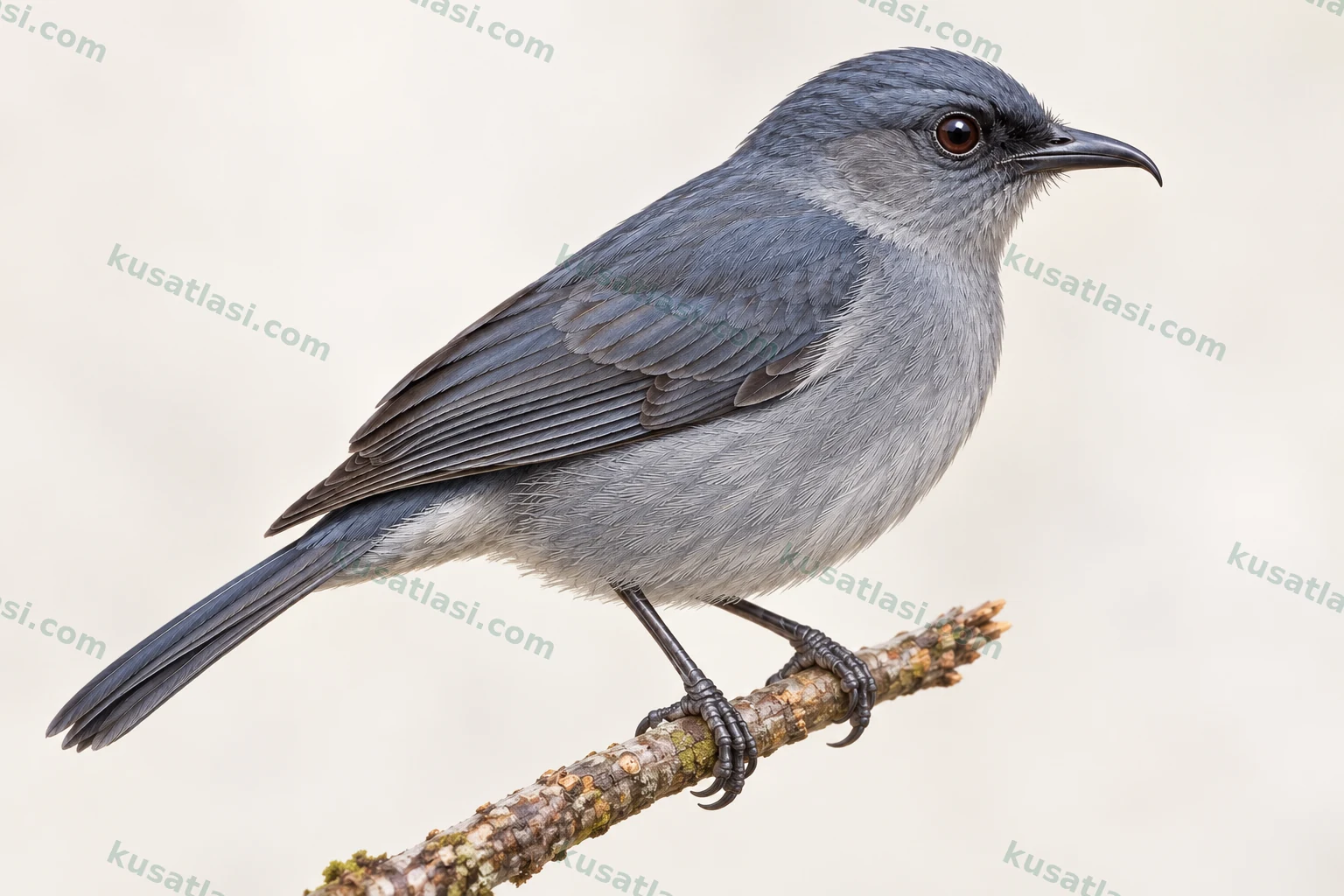
Swipe left or right between the two adult plates.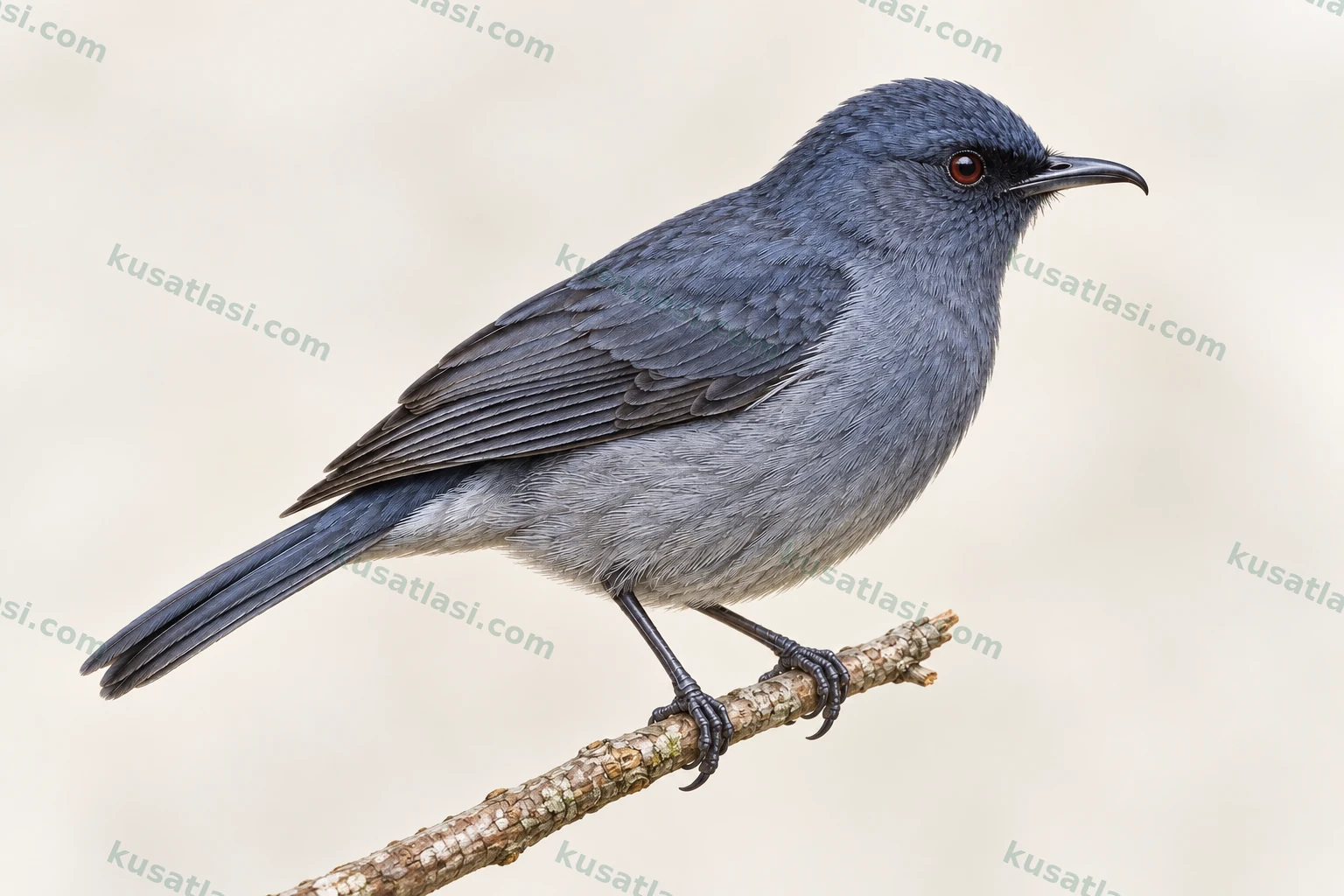
Thraupidae
Bluish Flowerpiercer
Diglossa caerulescens
Assess it with the wine-red eye and absence of a broad black mask.
- Order
- Passeriformes
- IUCN status
- LC · Least ConcernGlobal IUCN. BirdLife v10 (2025); taxon matching: AviList 2026 / IOC 15.2; checked 29 October 2026. Checklist year is not the species assessment date. Source and method · BirdLife
At a glance
- Greyish-blue body
Assess it with the wine-red eye and absence of a broad black mask.
- Watch its flower approach
Both piercing and natural-opening feeding are documented.
- Consider the mountain setting
Humid Andean forests and scrub-covered ridges are its main environment.
Biometrics
Length
- Male
- 13 cm
- Female
- 13 cm
Wing length
- Male
- 6.81 cm
- Female
- 6.81 cm
Weight
- Male
- 13.5–15.8 g
- Female
- 12.9–15.6 g
Length: Shared species value Wing length: Shared species value
World distribution
Bluish Flowerpiercer
Customise map layers
Observation points
Preparing globe…
Monthly record count
Bars show record counts in this sample, not bird abundance or a breeding calendar. They are affected by recording and observation effort.
Rotate the globe and compare layers. Coloured areas are not exact observation or nest locations.
The source does not provide verified monthly range boundaries. All areas are shown; the month slider and monthly playback are therefore disabled.
- Jan
- Apr
- Jul
- Oct
- Dec
Generalised data and method
Base map: Natural Earth · Public domain
Open central bibliography ↗Calendar
No monthly breeding or migration calendar for the whole range was verified. Wet- and dry-season sampling in Colombia is not treated as breeding months.
All months: Monthly data unverified.
January
February
March
April
May
June
July
August
September
October
November
December
Habitat
Mountain belt from Venezuela to Bolivia
In humid mountain forest and ridge scrub, look for grey-blue body, red eye and unmasked face together.
Sound
No reliable syllable sequence or species-specific vocal analysis was verified here. Check the record belongs to Diglossa caerulescens or its synonym Diglossopis caerulescens and identify the bird making the sound.
Do not play recordings to attract birds; observe quietly, especially near nests.
Breeding
A scientific review mentions historical nest records and treats nests as open cups. Typical clutch size, incubation and nestling periods were not verified; other flowerpiercers’ numbers were not used.
Compare
Compare male and female
Both piercing and natural-opening feeding are documented.
Species information
Quick identification
It is a small bird of humid Andean forest and low scrub-covered ridges. Assess bluish-grey body, wine-red eye and absence of a conspicuous broad black face mask together. “Blue bird” alone is insufficient: other more vividly blue flowerpiercers occur in the same regions. Check eye colour when the head turns into natural light rather than shade for a sounder comparison.
General appearance and posture
Greyish-blue feathers make the red eye stand out. Do not look for the marked black eye surround of the masked lookalike. Leaves can cast dark facial shadows; rechecking after a branch change distinguishes plumage from illumination. Size and colour alone do not suffice; watch face, eye and bill on the same individual.
The upper bill tip has a hook, but research found it small and inconspicuous compared with some shorter-billed flowerpiercers. The Torca series published total bill length as 1.58 cm (mean of 19 individuals; local measurement). This is the whole bill, not only the exposed portion. As it bends to flowers, the short hook can make feeding technique difficult to read at a glance.
The direction of flower approach is particularly interesting. This species can feed through both a side hole and the natural opening. Putting its head towards a flower does not alone prove piercing. Watch the contact point. Nearby branch, flower orientation and gaps between leaves affect posture; one posture is not fixed for every visit.
Males, females and young birds
The scientific studies examined provide no plumage key definitively sexing photographs. Shared card values do not prove identical male and female measurements. The wing mean comes from a museum series pooling sexes, whereas mass comes from a separate field study not publishing sex separation. Eye brightness does not determine sex.
No detailed species-specific reliable ageing key was verified for this account. A dull photo is not automatically juvenile: shade, distance and image quality alter appearance. Adult-useful blue-grey body, face pattern and eye colour do not imply equal visibility at every age. Another individual near a breeding bird is not by itself proven offspring.
Appearance in flight
Red eyes and lack of face mask are difficult to see in branch-to-branch flight through scrub. Linking views before take-off and after landing to one bird is valuable. A brief blue silhouette gives no conclusive identity. No source-verified flight key based on one upperwing or underwing mark was obtained.
A short crossing between flowering shrubs is a feeding movement, not necessarily part of a long seasonal journey. Watching the plant where it resumes feeding helps explain that activity.
Voice and behaviour
This account has no verified vocal analysis sufficient to describe an invariant syllable sequence. Check that a sound record's scientific name is Diglossa caerulescens or its old synonym Diglossopis caerulescens, avoiding similarly named species. If several birds move around flowers, ensure the heard and seen individuals match.
Feeding-visit diversity is a key behaviour. The Colombian study directly recorded natural-opening access to Clusia multiflora and piercing for nectar at Bejaria resinosa. The species' relationship with its surroundings is not explained solely by “flowerpiercer” in its name. Plant form and contact during the visit must be watched together.
Similar species
1. Diglossa cyanea can confuse through blue feathers and red eye. Its conspicuous black face mask is the key comparison; the Bluish Flowerpiercer is greyer and lacks that mask. View the face from another angle to avoid mistaking shadow for a true mask.
2. Diglossa glauca is another blue lookalike. Its yellow eye differs from the wine-red eye here. Do not decide from overall blue in a distant bird whose eye cannot be seen: compare face, body tone and locality together.
Global distribution
The natural range extends through mountainous Venezuela, Colombia, Ecuador, Peru and Bolivia. Associated with humid mountain forest, it is not a lowland bird uniformly spread across South America. The taxonomy source recognizes six subspecies. Northern Venezuela's coastal mountains, Perijá and successive Andean regions form parts of this broad range. Listing countries does not mean presence in every intervening valley and forest patch.
Status within its natural range
The Peruvian specialist account describes a broad eastern-Andean distribution but infrequent encounters at 1300–3100 m. That elevation range belongs to Peru, not a fixed boundary in all countries. Colombia's Torca and Yerbabuena 2700–3150 m belt and Boyacá's El Sinaí at 2500–2700 m are sites of separate studies, not the entire population's distribution. The source account gives Least Concern, not equal local abundance everywhere.
Migration
No verified long-distance route, country sequence or travel distance was established here. Daily movements between flowers do not yield such a route. Wet- and dry-season sampling does not prove migration or nesting in the same months. Local feeding movement, seasonal elevation change and long-distance migration are different questions; one record does not answer all.
Breeding habitat
Humid montane forest, forest–scrub mosaics and low ridge vegetation form its environment. The Colombian feeding studies used high-Andean forest and the scrub belt above it. Flowers matter for feeding; presence in a flowering shrub is not nest proof. Detailed species-wide breeding-area limits were not verified.
Nest site
A scientific nest review mentions historical nest and egg records for this species and describes flowerpiercer nests as open cups. This account nevertheless obtained no species-specific typical clutch, verified incubation or nestling period. The two eggs and measurements of the other species principally studied in the review are not transferred. Do not open scrub or displace parents to see nests.
Daily space use
Watch around flowers and their supporting branches while it feeds. Low ridge scrub in the Peruvian account and different Colombian forest layers show that one environment does not explain every behaviour. One plant visit does not mean exclusive dependence or all day on the same branch.
What does it eat?
Direct field observations document nectar feeding. Torca recorded species-specific visits to plants including Clusia multiflora, Bejaria resinosa and Macleania rupestris. Later Boyacá work found Cavendishia bracteata and Columnea strigosa pollen on the bird. Pollen does not give a plant's daily dietary percentage. Axinaea scutigera instead provides edible flower structures rather than nectar; not every flower association is nectar consumption.
How does it feed?
At a natural opening, bill and tongue reach into the flower. During piercing visits, the upper-bill hook helps hold the flower and the pointed lower bill helps make the hole. Flower orientation and shape also matter.
Both methods are documented in this species. A hole cannot certainly be assigned to it if the maker was unseen. Pollen carriage supports possible pollination, not experimental proof of greater fruit or seed production at every visit. The studies do not give the full daily diet or all food-group proportions.
Its name does not describe just one feeding method
“Flowerpiercer” highlights piercing, but this bird also uses natural openings. Direct Torca observations show different behaviour on different plants: natural-opening visits to Clusia multiflora and piercing at Bejaria resinosa. This illustrates why common names alone cannot explain animal behaviour.
A small mountain bird carrying pollen
Of 123 flowerpiercers caught in Boyacá, 27 were this species. Samples from heads, throats and bodies showed pollen of different plants. On some study plants the Bluish Flowerpiercer carried higher pollen loads than other flowerpiercers. This local community result does not prove identical effects for every Andean flower. Pollen carriage and direct measurement of seed production are different evidence.
Not every flower offers nectar
Axinaea scutigera is especially interesting: it is not treated like a nectar-providing flower, but involves feeding on edible flower structures. Its pollen on the bird shows that flower visits are not reducible to sugary liquid alone. Understanding the relationship requires identifying plant as well as bird.
The same bird under an older name
Older research uses Diglossopis caerulescens, the same species as current Diglossa caerulescens. Genus change does not require substituting another bird's data. Tracing names connects old weighing and feeding records to the right species. Two names do not mean two independent weighing series.