
World Birds
Field identification plates
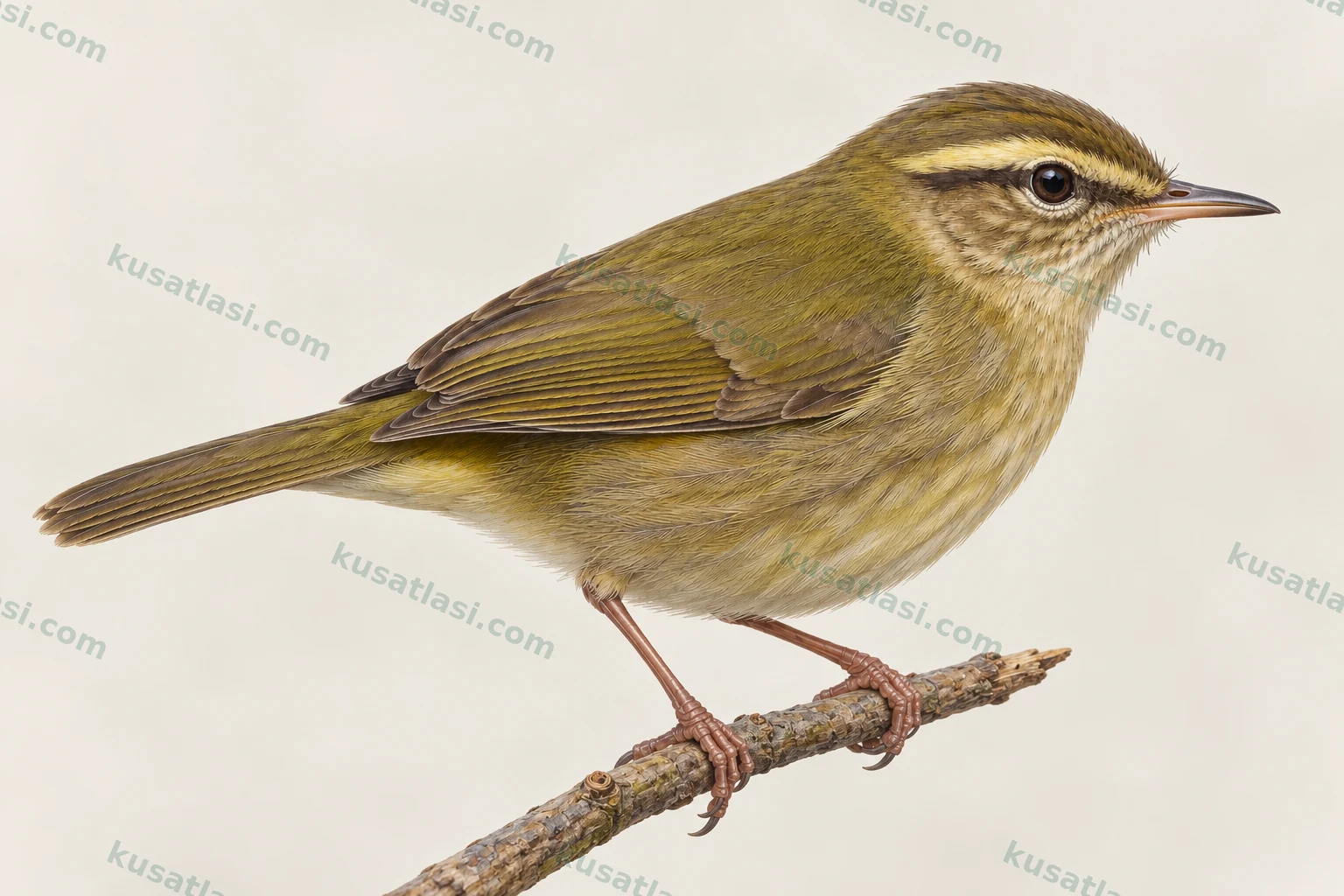
Swipe left or right between the two adult plates.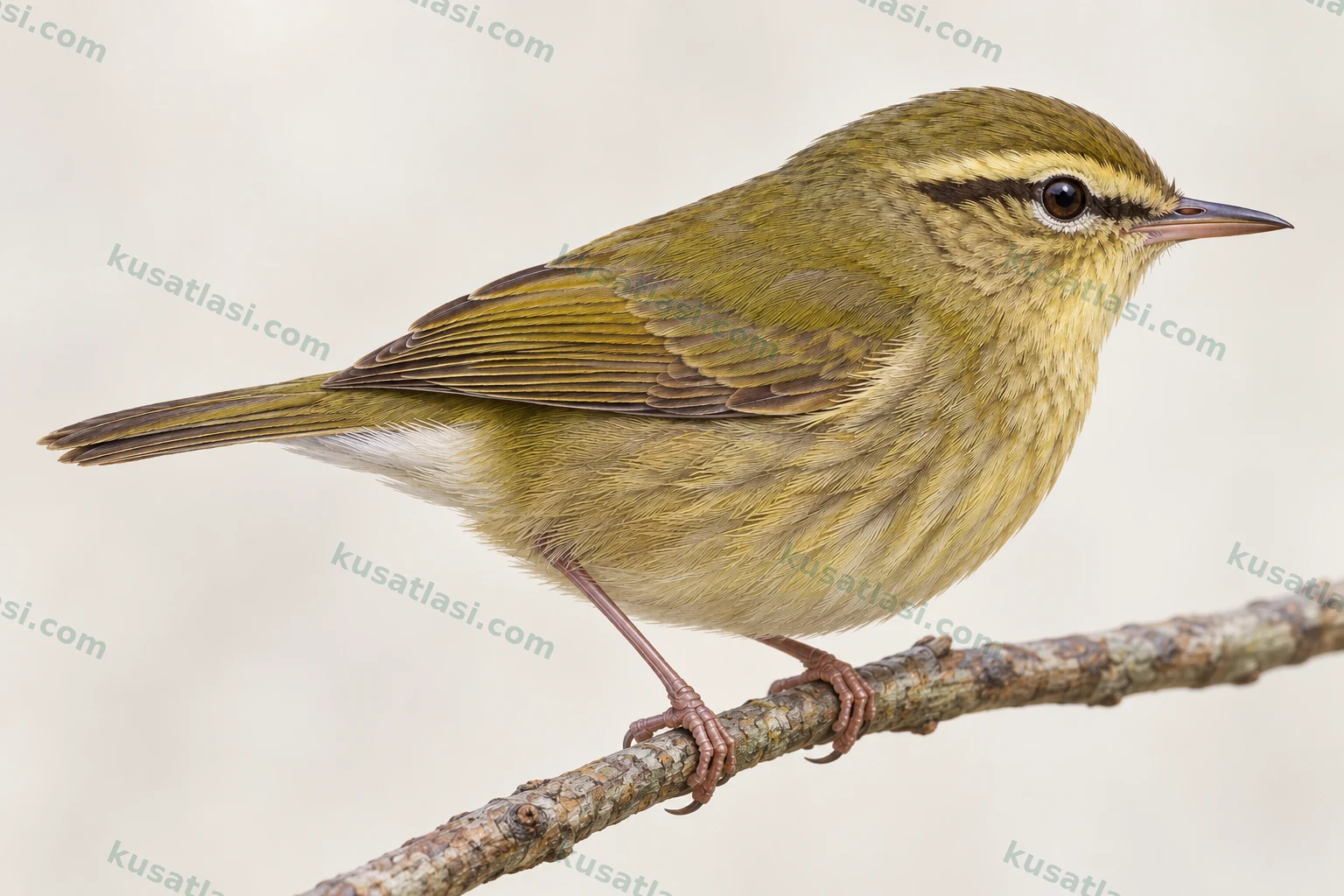
Cettiidae
Aberrant Bush Warbler
Horornis flavolivaceus
See it together with the dark eye stripe and olive-brown upperparts.
- Order
- Passeriformes
- IUCN status
- LC · Least ConcernGlobal IUCN. BirdLife v10 (2025); taxon matching: AviList 2026 / IOC 15.2; checked 29 October 2026. Checklist year is not the species assessment date. Source and method · BirdLife
At a glance
- Yellowish eyebrow
See it together with the dark eye stripe and olive-brown upperparts.
- No pale wing bar
Examine the wing carefully when comparing similar small songbirds.
- Mountain scrub
Breeding and winter elevations can vary regionally.
Biometrics
Length
- Male
- 12–14 cm
- Female
- 12–14 cm
Wing length
- Male
- 5.26 cm
- Female
- 5.26 cm
Weight
- Male
- Data unavailable
- Female
- 7.3 g
Length: Shared species value Wing length: Shared species value
World distribution
Aberrant Bush Warbler
Customise map layers
Observation points
Preparing globe…
Monthly record count
Bars show record counts in this sample, not bird abundance or a breeding calendar. They are affected by recording and observation effort.
Rotate the globe and compare layers. Coloured areas are not exact observation or nest locations.
The source does not provide verified monthly range boundaries. All areas are shown; the month slider and monthly playback are therefore disabled.
- Jan
- Apr
- Jul
- Oct
- Dec
Generalised data and method
Base map: Natural Earth · Public domain
Open central bibliography ↗Calendar
Breeding and winter belts may differ in elevation in the eastern Himalayas; no fixed monthly calendar was verified for the whole range.
All months: Monthly data unverified.
January
February
March
April
May
June
July
August
September
October
November
December
Habitat
Himalayas, Chinese mountains and northern mainland Southeast Asia
Compare olive upperparts, yellowish eyebrow, dark eye stripe and unbarred wing together.
Sound
Ali’s regional field guide describes a short thin whistle. An old Cettia label and connection to the visible bird must be checked before a single sound is treated as certain species evidence.
Do not play recordings to attract birds; observe quietly, especially near nests.
Breeding
Hume and Oates’s old compilation records one three-egg nest attributed to Gammie, but another nest from that era was reassigned to close Horornis fortipes. One historical case cannot establish a typical species-wide clutch or incubation in days. No new value is added without direct checks of current species limits, nest locality and bird identity; do not interfere with an active nest.
Compare
Compare male and female
Examine the wing carefully when comparing similar small songbirds.
Species information
Quick identification
The Aberrant Bush Warbler is a small songbird of dense scrub in the Himalayas and neighbouring Asian mountains. It is olive-brown above and yellowish or yellow-brown below. A pale yellowish eyebrow contrasts with a dark eye stripe. It lacks the conspicuous pale wing bars found in some leaf warblers. Its short, nearly rounded wing suits quick movement within cover. A yellow belly glimpsed inside a shrub does not justify certain identification: young of other local bush warblers can also have yellowish underparts.
General appearance and posture
The first impression is often the transition from olive-brown upperparts to yellowish underparts, not one bright patch. Ali's regional guide describes olive-brown crown and back, a pale eyebrow and dark eye stripe. The yellow below can appear olive-washed on throat and flanks. Briefly changing light in thick vegetation can make the same bird seem green one moment and brown the next. Record body tone, the forward extension of the pale eyebrow and lack of pale wing bars together. One photograph's colour temperature is not definitive identification.
A bird moving low within shrubs may be difficult to see whole. Brief appearance on the ground does not mean it spends the entire day there. Describing posture and height alongside vegetation density makes comparisons firmer.
The old Cettia flavolivacea name corresponds to current Horornis flavolivaceus. Alström and colleagues' multilocus analysis supported generic revision by showing the old Cettia assemblage was not one natural lineage. Species limits are a separate issue: some older lists also included Sunda-island forms in flavolivaceus, while current eBird/Avibase matching separates them as Horornis vulcanius. An old Indonesian specimen is not automatically this page's current species. Check locality and taxonomic interpretation before transferring old measurements, photographs or nest notes.
Males, females and young birds
Ali's field guide describes male and female appearance as similar. Available reliable sources give no rule sufficient to sex a free individual certainly from upperpart tone or eyebrow alone.
Specialist identification accounts describe young as potentially more uniformly yellowish below, but no proven key applies equally to every subspecies, age and light condition. Young of close species may also be yellowish. Two birds flying nearby are not thereby parent and young. Note actual evidence separately: direct feeding, independent flight or juvenile gape edges. If age or sex remains unresolved, retain that uncertainty so an observation does not later become unsupported breeding evidence.
Appearance in flight
A brief flight through dense scrub may reveal olive-brown upperparts and yellowish underparts together. Those colours alone do not separate the species; similar small songbirds also make short crossings within cover. Verified sources give no invariant single diagnostic mark on the upper- and underwing of every individual. No unknown underwing pattern has been added. Once it lands, examine pale yellow eyebrow, dark eye stripe, body tone and absence of conspicuous wing bars on the same bird.
Wind and sloping terrain can particularly change apparent height. Calm observation linking movement direction, landing shrub and subsequently visible face markings is more valuable than a blurred flight image. A flight image does not reveal a seasonal migration route either.
Voice and behaviour
Ali's regional guide describes a short thin whistle, a verbal summary of the form observed in that region. A written imitation does not mean every bird in another mountain belt has precisely that voice. Confirm separately whether a sound from thick cover belongs to the bird that appears afterwards. A recording labelled with the old Cettia name is not automatically suitable for narrow current Horornis flavolivaceus either.
The species generally remains hidden in vegetation and may appear only briefly. The older field guide reports higher breeding and lower winter belts in the eastern Himalayas. This is seasonal altitudinal movement, not proof that every individual makes the same long flight between countries. AVONET's broad scrub code and Ali's local observation are different evidence levels. Without elevation, month and vegetation, the word “migrant” cannot establish a detailed route.
Similar species
1. Brownish-flanked Bush Warbler Horornis fortipes can occur in the same cover. Aberrant has more olive upperparts, a yellower eyebrow and more distinctly yellow underparts. Differences may weaken in young birds; do not decide on one colour patch.
2. Yellowish-bellied Bush Warbler Horornis acanthizoides may also show yellowish underparts. Assess a more rufous-brown upperpart tone, differing pale throat and breast tones and body size together. A young bird of one species is easily likened to an adult of another.
3. Sunda Bush Warbler Horornis vulcanius was included in former broad flavolivaceus groups. Old Sunda-island records are not automatically transferred to the current page. Check locality and taxonomic decision first; a similar voice or olive colour does not make the species identical.
Global distribution
Current narrow Horornis flavolivaceus covers populations from the Himalayan belt to northern mainland Southeast Asia and Chinese mountain regions. Avibase and current eBird matching separate the old broad group's Sunda-island birds as Horornis vulcanius. BirdLife and some derived maps may colour Indonesia, Malaysia or the Philippines because they combine the groups; that country shading is not a verified range polygon for this page's narrow species.
Status within its natural range
Foothills, undergrowth, scrub and grassy strips do not cover every point of a country. Point observations do not sample all suitable habitat either. Maps should use only records matched to a reliable taxon.
Migration
Sálim Ali's eastern Himalayan guide reports birds at approximately 2400–3600 m during breeding and 700–2700 m in winter. These numbers have a regional field context; they do not mean all subspecies use the same elevations or each bird flies the same distance. Altitudinal change differs from directed intercontinental migration. AVONET's broad “partially migratory, altitudinal migrant” code gives no detailed individual route. Movements of Sunda forms within the old broad taxon cannot be drawn as journeys of the current narrow species.
Breeding habitat
Ali's eastern Himalayan field account stresses tall grass, dense scrub, ferns and forest undergrowth in the breeding belt. AVONET's association with scrub agrees with this local description but does not prove breeding wherever scrub occurs. Season and elevation are assessed together. A breeding claim should rest on a nest, feeding young or other direct evidence linked to the same current taxon, not merely a sound from a shrub.
Nest site
Hume and Oates's old compilation reports one three-egg nest associated with a bird identified by Gammie. The same historical source explicitly notes another old nest was later regarded as Horornis fortipes. One case is therefore not turned into an “always lays three eggs” rule. The original specimen, region and period Cettia name need reassessment against present boundaries. No incubation duration in days was verified. Opening an active nest or driving an adult away is not justified to fill a data gap.
Daily space use
An individual moving in dense grass and scrub may approach the ground or emerge a little above cover. A few seconds' appearance gives no whole-day proportions. Ali's higher breeding and lower winter belts do not prove two birds in different seasons are the same individual. Recording elevation, date, slope aspect and vegetation separately helps reveal local patterns; a country boundary alone gives neither range nor habitat detail.
What does it eat?
AVONET codes the current narrow species among invertebrate feeders. Sálim Ali's eastern Himalayan field guide also names insects as food. These sources agree on general diet, but the studies checked give no regional insect-family percentages, winter–summer comparison or daily prey counts. A peck in vegetation cannot establish ant, insect larva or spider. Copying close species' food lists is unreliable too. A definite prey name is used only when actually seen and its observation locality recorded.
How does it hunt?
Ali's description of scrub, tall grass, ferns and undergrowth indicates dense cover where small prey may hide. AVONET's invertebrate and scrub codes describe the general search setting, not direct measurements of which leaf each bird takes prey from. Because the body is often hidden, a moving plant alone does not prove a capture. Record actual taking action, plant, search height and month separately to compare behaviour. A Sunda-island feeding observation under broad old flavolivaceus is not direct evidence for current Horornis flavolivaceus.
A change of genus
Older field books may call it Cettia flavolivacea; the current record uses Horornis flavolivaceus. Alström and colleagues' multilocus study published in 2011 is important evidence that traditional Cettia was not one natural group. A name change alone does not mean the bird's appearance changed. But matching data requires checking whether an old measurement belongs to this species or another member of the old broad group. Knowing scientific-name history prevents incorrect transfer of records.
The Sunda separation
AVONET's BirdLife-matched Horornis flavolivaceus row also includes Sunda Bush Warbler Horornis vulcanius specimens separated in the current eBird table. Placing old Sunda-island records on the Himalayan bird's map transfers the same confusion into geography. Different organizations can use different species boundaries even in the same year; taxonomic scope matters alongside source name.
The limit of a nest record
Hume and Oates's compilation gives one historical three-egg case associated with Gammie's identified individual. The same text explains another nest was later assigned to Horornis fortipes. This small detail shows why old nest accounts cannot be copied blindly. Three eggs in one nest give neither the species' typical clutch, breeding behaviour on other continents or mountains, nor incubation days. No new number is created without checking place, date and specimen identity.