
World Birds
Field identification plates
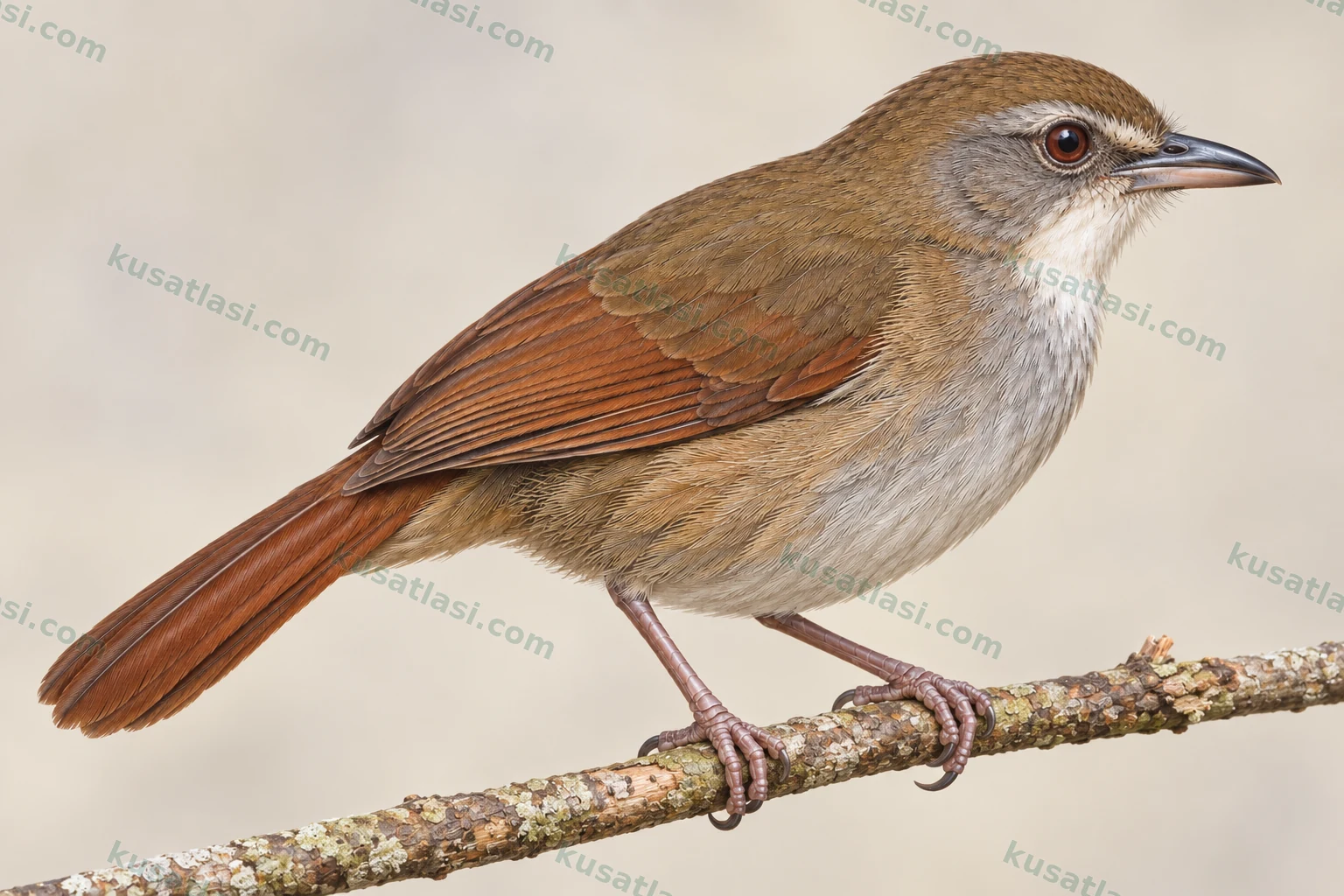
Swipe left or right between the two adult plates.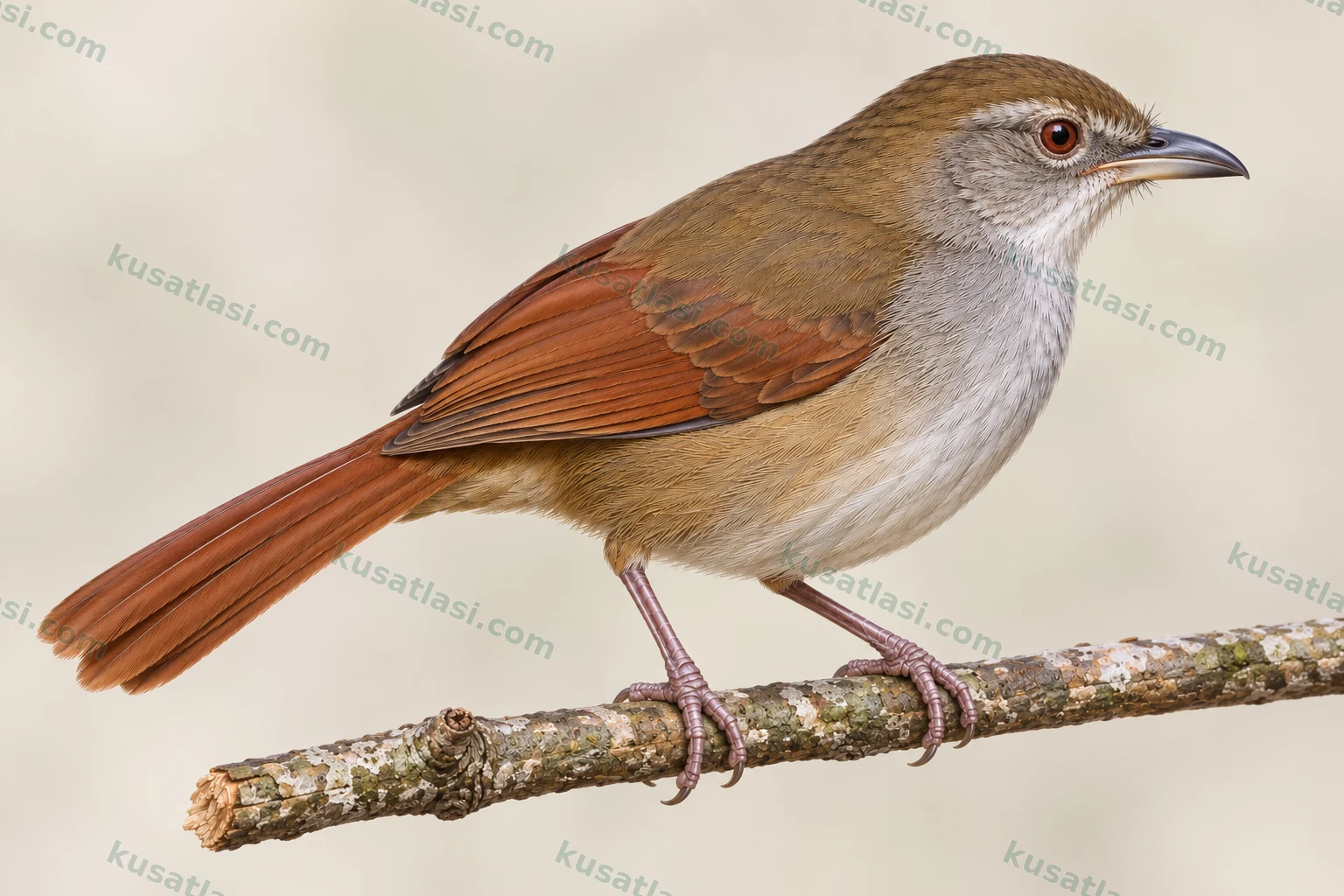
Pellorneidae
Pale-breasted Illadopsis
Illadopsis rufipennis
Try to see the plain grey cheek and short dark leg together.
- Order
- Passeriformes
- IUCN status
- LC · Least ConcernGlobal IUCN. BirdLife v10 (2025); taxon matching: AviList 2026 / IOC 15.2; checked 29 October 2026. Checklist year is not the species assessment date. Source and method · BirdLife
At a glance
- Face and feet together
Try to see the plain grey cheek and short dark leg together.
- Just above the ground
Watch natural movements among low plant stems, bushes and climbers.
- Listen to the whole song
Assess the full series rather than a short call, together with appearance and recording locality.
Biometrics
Length
- Male
- 14–15 cm
- Female
- 14–15 cm
Wing length
- Male
- 6.93 cm
- Female
- 6.93 cm
Weight
- Male
- 18–30 g
- Female
- 18–25 g
Length: Shared species value Wing length: Shared species value
World distribution
Pale-breasted Illadopsis
Customise map layers
Observation points
Preparing globe…
Monthly record count
Bars show record counts in this sample, not bird abundance or a breeding calendar. They are affected by recording and observation effort.
Rotate the globe and compare layers. Coloured areas are not exact observation or nest locations.
The source does not provide verified monthly range boundaries. All areas are shown; the month slider and monthly playback are therefore disabled.
- Jan
- Apr
- Jul
- Oct
- Dec
Generalised data and method
Base map: Natural Earth · Public domain
Open central bibliography ↗Calendar
Western Cameroon sources discuss March–August breeding signs in lowlands and different seasonal context in highlands. These regional records are not a fixed monthly breeding or migration calendar for all Africa.
All months: Monthly data unverified.
January
February
March
April
May
June
July
August
September
October
November
December
Habitat
West and Central African forests, Bioko; western Kenya and far northwestern Tanzania
In humid forest understorey, examine plain grey face, pale throat and short dark legs together; listen to natural song.
Sound
In the Budongo comparison, short chirps precede a whistle at similar pitch, falling slightly at its end. A regional description; a short call alone does not separate similar species.
Do not play recordings to attract birds; observe quietly, especially near nests.
Breeding
Korup and western Cameroon studies record birds in breeding condition, not nest numbers. Reliable accessible sources did not sufficiently verify current-taxon nest structure, typical clutch size, incubation and nestling periods.
Compare
Compare male and female
Watch natural movements among low plant stems, bushes and climbers.
Species information
Quick identification
The Pale-breasted Illadopsis is a small passerine hiding among low plants in Africa’s humid forests. Assess pale throat, plain grey cheek and short dark legs together. The paleness in its name is insufficient: the Ugandan comparative study specifically notes that the similar Illadopsis albipectus can look whiter below. Rather than naming a bird among leaves from breast brightness alone, try to see its face and legs, listen to its natural voice and note its feeding height.
General appearance and posture
The side of the face looks plain grey, without the pale patch above the area between eye and bill base that may appear in Illadopsis albipectus. Dark legs and a relatively short-legged appearance aid comparison in a low-perching bird. The Budongo study describes leg colour from dark grey to purplish black. These do not justify a conclusive identification from one dark photograph. Leaf shade can darken pale legs too; where possible, see face and feet together during several natural movements of the same individual.
The lesser wing coverts are plain, resembling the surrounding upperwing feathers. Searching only for conspicuous breast spots is insufficient when comparing the pale shaft streaks and tip marks of the similar species. The study shows that some Illadopsis albipectus have very weak scaling below. Absence of a visible pattern therefore does not automatically mean Pale-breasted Illadopsis. Where part of a bird is hidden, record the view without completing unseen marks as present or absent.
Budongo observations describe movement in very low vegetation, often perching on lower grass and sapling stems just above the ground. It also enters bushes and climbers and may take food from both ground and plants. This prevents restricting it to a bird that only walks on the forest floor. Low movements slightly above ground support comparison with the more ground-focused similar species. Remember that this is a regional observation; perching on one branch is not certain identification.
Males, females and young birds
No reliable external key separating adult sexes at every encounter throughout the range was verified for this work. A whiter breast, darker legs or singing alone do not justify male or female labels. Sex and reproductive condition examined in scientific studies do not imply that these can be read from a distant bird. Unknown sex may be recorded as such; species and sex identification are assessed separately.
Young birds in Budongo were described with cream shaft streaks in body plumage. These are not presented as an ageing key consisting merely of one or two pale breast dots. The same study notes the importance of rufous face and eye surroundings and different wing appearance in young Illadopsis albipectus. A regional age comparison cannot conclusively separate juveniles of every subspecies from one photograph. Examine where feathers are actually visible, colour distribution and natural voice together.
Appearance in flight
Brief face views and movements among low plants are more useful than long open flight for identifying this understorey bird. During a transfer between plant clumps, legs and throat may stay behind leaves. Unseen marks are not added to the flying silhouette. No verified upperwing or underwing flight key usable alone was found for the species. Waiting for its next natural stopping point rather than driving it out provides an observation opportunity.
A brief flight view need not be recorded as if all identification features had been seen.
Voice and behaviour
The Ugandan comparison describes short chirps followed by a whistle falling slightly at its end. One or several chirps may precede the whistle; the whistle portions of consecutive songs remain at similar pitch. The study distinguishes the more continuous-sounding voice of Illadopsis fulvescens, which alternates high and low whistles. This regional description is not used to force every African subspecies’ voice into the same pattern.
Short calls may resemble those of Illadopsis albipectus; hearing one brief sound does not settle their separation. Listening to a complete natural song series and then awaiting a face and leg view is more useful. Current taxonomy recognises Tanzanian Illadopsis as a separate species; voice difference is an important basis for that split. A recording from an old broad account is not transferred here merely because the name resembles it. Recording place, date and the bird’s identity remain important to interpretation.
Similar species
1. Compare Illadopsis albipectus’s longer, paler legs, facial pattern and pale lines on lesser upperwing coverts. Breast scaling is not conspicuous in every individual, so searching for it alone is insufficient. Feeding in Budongo was more ground-centred, whereas Pale-breasted Illadopsis often moved on stems slightly above; this behaviour supports the other marks.
2. Illadopsis fulvescens is compared by its longer-tailed, stronger-billed appearance. In the Budongo description its underparts are more uniformly pale brown; its throat is not as white and contrasting as this species’. Changes in whistle pitch also matter. A bird climbing to a high branch does not confirm that species without seeing a long tail or hearing its voice and other features.
3. Illadopsis distans, the Tanzanian Illadopsis, may be included in the old broad species. It is now recognised separately; old Pugu and Zanzibar records are not automatically added to the current Pale-breasted Illadopsis account. A country or old scientific name alone does not resolve current taxonomic identity; check which bird the source covers together with voice and locality.
Global range
In its current scope, the species occurs in West African forests from Sierra Leone to Ghana and in suitable forest extending east from southern Nigeria. Bioko Island is included. It reaches western Kenya through Central Africa, with Cabinda in northwestern Angola, the Democratic Republic of the Congo and suitable areas of far northwestern Tanzania included southwards. This broad description does not imply uninterrupted presence in every country or equal suitability of every wooded patch. Forest structure and local records are evaluated alongside country names.
Regional status
The Korup study described it as one of the common species in the understorey of Cameroonian primary and secondary forest. Records above 1,000 metres in the Rumpi Hills were scarcer; this local result is not an exact upper limit throughout the range. Uganda’s Budongo comparisons provide separate regional evidence on face, legs and feeding height. West African extrema and the more widespread eastern and central rufipennis are distinct subspecies accounts; some lists separate Bioko as bocagei. One old subspecies total is not presented as immutable.
Migration and seasons
The Korup account classifies the species as resident in its region. No verified intercontinental migration line or monthly arrival–departure calendar was found for the whole range. Relating lowland and highland western Cameroon to different breeding seasons is not evidence of collective migration between countries. Eastern Tanzanian, Pugu and Zanzibar records of the former broad species are checked under current Illadopsis distans, not automatically mapped as this species’ range.
Breeding habitat
The humid tropical forest understorey matters for daily encounters in both primary and secondary forest. Cameroon’s Korup records and Uganda’s Budongo observations support this low-stratum use in different regions. Low bushes, lower sapling stems and climbers are surfaces used for movement. Occurrence in secondary forest does not make every open agricultural site after complete forest removal suitable breeding habitat.
Nest site
Accessible reliable sources did not sufficiently verify nest structure and placement, typical clutch size, incubation and nestling duration for the current taxon. Female breeding-condition records in Cameroon do not replace those details. Nest and egg numbers of other birds published alongside it do not belong to this species either. Observe a possible nest without opening it, altering its entrance or approaching the adult.
Daily habitat use
In Budongo the species moved very low, often perching on plants just above ground, and used bushes and climbers too. Food may be taken from ground and plants. Nearby Illadopsis albipectus’s stronger ground use makes the behavioural comparison meaningful. One short encounter does not represent a full day’s movements. Awaiting natural passages without driving the bird from hiding offers another chance to see face and feet.
What does it eat?
AVONET classifies the species among invertebrate feeders. This general group has not separately measured every insect eaten or the daily amount. The Budongo comparison reports food taken from both ground and plants. The 40 digestive samples examined for Illadopsis albipectus in that study are not this species’ sample. No unverified prey list, fruit proportion or agricultural pest-reduction percentage is added.
How does it feed?
Movement along thin stems just above ground may make searching between low plant surfaces and the ground easier to follow. Entering bushes and climbers is also part of Budongo observations. This prevents restricting it to walking only on the ground or feeding always in high branches. The surface towards which the bill points may be seen while prey remains hidden; then a particular insect capture is not recorded. Watching natural searching from afar preserves behaviour and distinguishes seen food from inference.
A pale-breasted name does not settle identification
The name does not guarantee whiter underparts than every similar species. The Budongo comparison shows that Illadopsis albipectus may look whiter, with breast pattern varying among individuals. Plain grey face and short dark legs therefore gain importance. Replacing all observed features with a name can cause errors, particularly in shaded forest images.
A breeding sign is not a nest count
The Korup study reported 11 females in breeding condition: six in March, three in May and one each in July and August. These are not 11 nests or incubation days. In the later western Cameroon study, a still little-developed brood patch dated 11 April indicated breeding activity, not an exact laying date. Explaining what different evidence shows separately makes monthly calendars more honest too.
Old species limits are not transferred to new records
The Tanzanian Illadopsis split considered marked voice differences together with small appearance differences and geographical context. An old Tanzanian record under Illadopsis rufipennis may consequently not belong to today’s species. Pugu and Zanzibar information is checked with its new identities. The same-looking scientific name in an old work does not prove that all its measurements and breeding data match the present narrower taxon.