
World Birds
Field identification plates
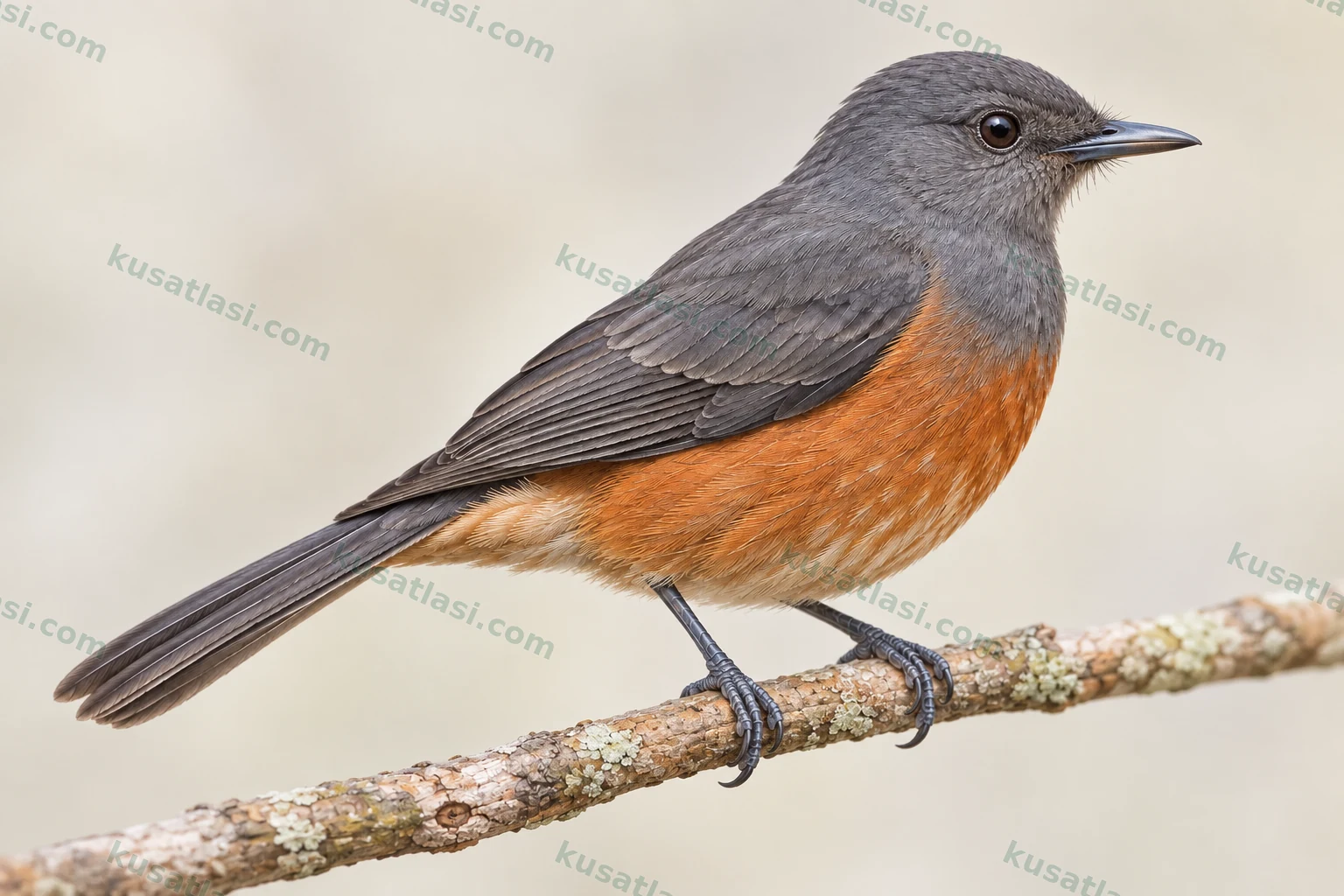
Swipe left or right between the two adult plates.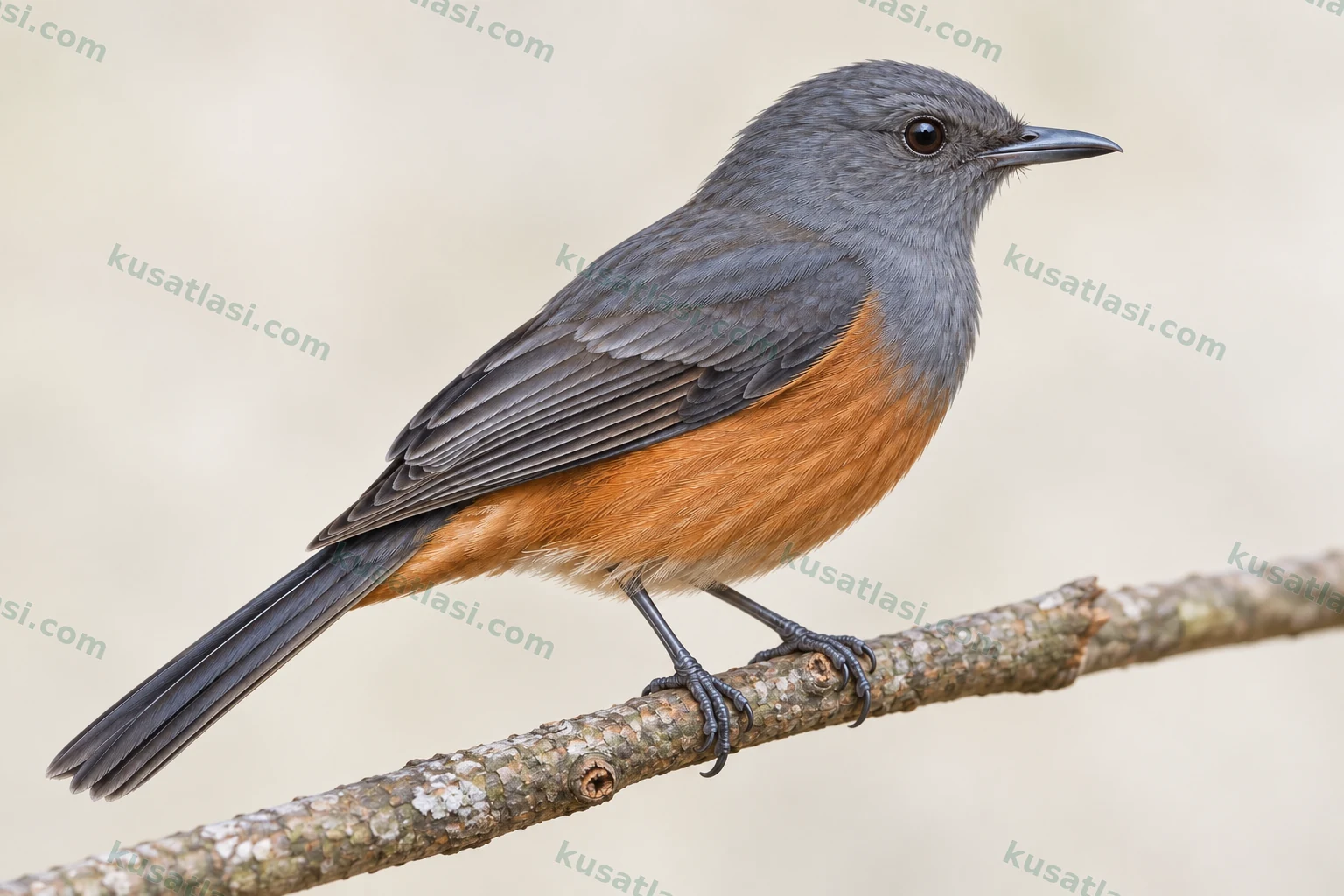
Monarchidae
Island Monarch
Monarcha cinerascens
Resident populations occur on small wooded islands of Wallacea and Melanesia.
- Order
- Passeriformes
- IUCN status
- LC · Least ConcernGlobal IUCN. BirdLife v10 (2025); taxon matching: AviList 2026 / IOC 15.2; checked 29 October 2026. Checklist year is not the species assessment date. Source and method · BirdLife
At a glance
- Small wooded islands
Resident populations occur on small wooded islands of Wallacea and Melanesia.
- Grey and rufous
Examine grey breast, rufous underparts and a face without a broad black mask together.
- Record the island name
A coastal-islet record is not breeding evidence for an entire large island.
Biometrics
Length
- Male
- 16–19 cm
- Female
- 16–19 cm
Wing length
- Male
- 7.95 cm
- Female
- 7.95 cm
Weight
- Male
- 24–41 g
- Female
- 24–41 g
Length: Shared species value Wing length: Shared species value Weight: Shared species value
World distribution
Island Monarch
Customise map layers
Observation points
Preparing globe…
Monthly record count
Bars show record counts in this sample, not bird abundance or a breeding calendar. They are affected by recording and observation effort.
Rotate the globe and compare layers. Coloured areas are not exact observation or nest locations.
The source does not provide verified monthly range boundaries. All areas are shown; the month slider and monthly playback are therefore disabled.
- Jan
- Apr
- Jul
- Oct
- Dec
Generalised data and method
Base map: Natural Earth · Public domain
Open central bibliography ↗Calendar
No verified species-wide annual migration calendar was found.
All months: Monthly data unverified.
January
February
March
April
May
June
July
August
September
October
November
December
Habitat
Small wooded islands from Wallacea to Melanesia
Approximate region; entire large islands are not coloured as resident range.
Sound
A harsh call was reported from the Cassini pair, but no complete recording exists.
Do not play recordings to attract birds; observe quietly, especially near nests.
Breeding
A historical comparison concerns nests on Emirau. Reliable species-specific information on the typical clutch size and duration of incubation was not verified. The observations on Ashmore and Cassini are not evidence of nests.
Compare
Compare male and female
Examine grey breast, rufous underparts and a face without a broad black mask together.
Species information
Quick Identification
The Island Monarch Monarcha cinerascens is a songbird associated with small wooded islands in the island belt from eastern Indonesia to the Solomons. Head, back and upper breast are mostly grey; from lower breast to undertail the plumage is rufous-orange. The adult lacks the broad black facial mask of some close monarch relatives. These three features together can separate it from similar grey-and-rufous birds; a rufous belly alone is not diagnostic.
The repeated male and female card values explicitly indicate that sex-specific results were not found.
Colour tone and bill length vary among island populations. In a pair Ekins saw on Cassini Island, head, back and upper breast were lead-grey and the underparts rusty-rufous. One bird passing overhead showed a rufous arc under the wing. This feature in a single pair is not an obligatory identification mark for every subspecies. Scientific publications have also found genetic differences between some island populations. A proposed taxonomic split is being considered; this page retains the currently accepted Monarcha cinerascens.
Overall Appearance and Posture
Island Monarch is a medium-sized, fine-billed monarch mostly seen among tree and shrub leaves. Grey head and back form a soft but distinct colour boundary above the rufous underparts. Ashmore birds' closed wings looked relatively pale, while spread flight feathers looked darker. The tail was darker than the back too. A grey-blue-looking bill and lack of a broad black facial mask are read with the extent of grey on the upper breast in suitable light. Rufous can appear strong in coastal scrub under low sun, brown in deep shade. Treating a photograph's colour saturation as the sole criterion is especially misleading among island populations.
Ekins's Cassini pair moved near one another in coastal scrub with vines. Carter and colleagues' Ashmore records show a few individuals using low island vegetation. These are direct individual observations, not proof of the same height, duration or constant pairing on every island. The small-island emphasis of its distribution does not mean the bird necessarily lives over the sea. Island vegetation is needed for food, concealment and perching. A settlement or coastal-garden record does not make every open beach suitable.
In 2022, Ó Marcaigh and colleagues compared samples from Wakatobi and Menui in Wallacea and from Melanesia. The study confirmed resident populations on small islands and explained problems with older maps colouring Sulawesi and Timor throughout as continuous breeding range. Mean genetic distance between Wallacean and Melanesian groups was 2.7%, and the authors proposed they might be separate species. This interpretation does not mean two separate species names have already been formally chosen. Colour and build must be interpreted with island origins stated; an old map's boundary must not be copied as today's habitat.
Males, Females and Young Birds
According to the expert guide assessed by Carter and colleagues, adult males and females look generally alike. Sex of birds seen side by side at Ashmore could not be settled from photographs alone. A grey-headed, rufous-bellied individual is therefore not safely labelled male simply for looking brighter. Although each value appears in both boxes, it neither shows exactly equal growth in both sexes nor separate calculations by AVONET for each sex.
Some immature birds in the Ashmore study had less uniformly grey backs, duller rufous underparts and a less distinct black border at the bill base. These details can be seen against adult photographs; no identical sequence of maturation tones on all islands has been demonstrated. The researchers also described dark brown bills, yellowish gape edges, darker grey upperparts and brown edges to wing feathers in two young female museum specimens from Timor. These two specimens do not prove identical marks appearing on the same day in all young. Uncertain age and sex remain uncertain in the record. No young seen beside a pair at Ashmore or Cassini does not imply absence of breeding on all islands.
Appearance in Flight
Dark wing and tail, grey head and rufous lower body can be followed together in short flight. Ashmore observers wrote that the closed wing looked paler than the spread flight feathers. In one bird seen from below at Cassini, a rufous arc was noticed on the inner underwing. This is a valuable local flight observation, not a certain distinguishing mark required in all ten subspecies. The grey-breast to rufous-lower-belly transition can be judged better after the bird perches again. A brief passage over sea is not a confirmed annual migration route either.
Doubling a value or estimating from a photograph to fill the card creates information absent from the source. Ability to change islands and following the same route in a particular month each year are separate questions. Individual records and genetic studies can support the first; the second needs directional tracking over multiple years.
Voice and Behaviour
Ekins reported a harsh chattering call from the Cassini pair but explicitly wrote that he did not record it fully. Its sequence or frequency therefore cannot be presented as a definitive acoustic signature for birds on every island. Genetic divergence between island groups alone does not establish that voices must be identical or different. This section is written field information about voice, not a promise of automated sound identification or playback.
AVONET classifies the species as invertebrate-feeding, associated with wooded habitats and not a regular long-distance migrant. These classes do not mean the same insects on every island, every bird hunting on the same branch or no movement. The 2011 Ashmore and Cassini accounts documented individuals on small coastal islands. The 2022 genetic work discusses how past and recent island dispersal may have developed. Even the authors' interpretation of a Wakatobi-specific genetic marker in a Menui bird as possible evidence of natal dispersal allows other explanations; it must not be drawn as a certain route.
Confusable Species
1. Black-faced Monarch Monarcha melanopsis has a broad black adult facial mask. Its young can be more similar. The Ashmore study assessed Island Monarch's narrow black bill-base border, darker flight feathers and broad grey extending onto the lower breast together, not a single patch. One coastal observation must not become an unchanging colour template for all islands.
2. Black-winged Monarch Monarcha frater also has grey and rufous areas. The adult's black face and darker wing are important differences; young can be harder to identify. Habitat on large islands and the observation locality are also compared.
3. Young Spectacled Monarchs Symposiachrus trivirgatus are a regional confusion possibility. Ekins points out their different face, cheek and pale-belly pattern. None of these three species is settled without considering colour tone, age and island record together.
World Distribution
Island records within the current broad taxonomic scope of Island Monarch extend from Wallacea to Melanesia, from eastern Indonesian island groups to the Bismarcks and Solomons. Ó Marcaigh and colleagues examined samples from Wakatobi, Menui, Bismarck and Solomon groups. The small size and sea separation of Wakatobi and Menui are important to understanding island distribution.
Status in Its Natural Range
The study stresses that old maps overstated continuous resident areas on large Sulawesi and Timor. One large-island sighting does not mean permanent breeding populations in every forest. Local observations must distinguish small island, coastal islet and main island. Showing genetically distant Wallacean and Melanesian populations under today's single accepted scientific name reflects current taxonomy; it does not turn the split proposed in 2022 into a finalized taxonomic change.
Migration Journey
AVONET does not classify it as a regular seasonal long-distance migrant. Nevertheless, birds seen at Ashmore Reef in October–November of 2004, 2007, 2008, 2009 and 2010 directly documented its ability to reach distant islands. Carter, Clarke and Swann suggested dispersal from Indonesian islands; they did not track the departure island or present Ashmore breeding evidence. The pair Ekins watched for four minutes on Cassini on 15 October 2010 is not a nest record either. These records are not turned into a certain annual route or the same seasonal rule for every population. Genetic divergence records past colonization, not an annual map of a living bird's journey.
Breeding Habitat
Expert sources compiled by Ekins associate Island Monarch with coastal forest, scrub and gardens and in some regions moist lowland and hill forest. This does not make every garden observation a breeding site. Resident populations in Ó Marcaigh and colleagues' study were sampled on small islands such as Wakatobi and Menui. Vegetated ground and open sand on a small island should not be coloured as identical habitat. Birds on Ashmore's vegetated coral islet may have been temporary visitors, so calling it definite breeding habitat would be wrong. Breeding-area marks require real nests or strong local breeding evidence.
Nest Site
In 1951 Sibley compared Island Monarch nests he had previously seen on Emirau with the cup nest in tree forks of another monarch. This historical comparison is a limited clue to nest form; alone it confirms neither clutch size, a precise nest-height range nor incubation days. Reliable species-specific typical clutch size and incubation duration were not found in the sources examined. Two eggs or a particular number of days are not borrowed from another Monarcha. A nest observation should record island, date, plant and behaviour without approaching closely to frighten the bird.
Daily Habitat Use
Ashmore and Cassini records show visiting birds can use low coastal vegetation. Ekins reports the pair watched for four minutes moving close together within vine-covered scrub. This does not measure a whole day's home range. Use of scrub, tree edges and denser woodland may vary with island structure. An individual main-island record and a resident small-island population should not share the same map category. Only vegetation the bird actually used is recorded at the observation point.
What Does It Eat?
AVONET2 codes Island Monarch as an invertebrate-feeding species. This supports its general food type, not a published detailed stomach or faecal analysis of the proportions of insect families. Possible prey on one island is therefore not written as compulsory food for the whole taxon. Coastal scrub and forest-edge invertebrate communities may differ; available sources do not quantify their shares. Expert field accounts describe an insect-hunting monarch moving among plants, but prey cannot be named definitely unless swallowing was directly seen. Fruit, lizard or particular caterpillar information from other monarchs is not automatically copied.
How Does It Forage?
Its thin bill and agile movements in vegetation fit an invertebrate search, but bill shape alone cannot reveal every hunting method. Ashmore and Cassini studies document movements in coastal scrub, not numbers of prey captures or a daily time budget. An observer can describe short movements on branches, leaves or in air; without seeing actual capture and swallowing, they should not say it ate a particular insect. A shrub abundant on one island but absent elsewhere suggests methods and dietary proportions might differ regionally; this is a hypothesis, not a measured result. Keeping evidence limits clear helps understanding of the species.
Small Islands and Old Maps
Island Monarch is an example in island biogeography of birds reaching distant small islands. Ó Marcaigh and colleagues' 2022 field and genetic study showed resident birds on Wakatobi and Menui's small islands. Old maps could colour the bird as continuously resident throughout large Sulawesi and Timor. A coastal-islet specimen does not prove occurrence in the main island's interior forests. Map zoom and clear observation locality are therefore not mere visual details but part of accurate biology.
Meaning of Genetic Divergence
The same study reported mean genetic distance of 2.7% between Wallacean and Melanesian samples; the researchers proposed they might be separate species. This is a scientific taxonomic proposal. Since reliable current lists still accept Monarcha cinerascens, this page uses that name. Genetic divergence strongly warns against assuming uniform appearance or voice; mitochondrial data alone are not used here to declare which island bird is a separate official species.
Wing Measurements and Identification
The rufous underwing arc Ekins saw on one Cassini bird is a local flight detail, not a universal mark necessarily separating every subspecies. Grey breast, rufous underparts, unmasked face and observation island together give a more reliable identification.