
World Birds
Field identification plates
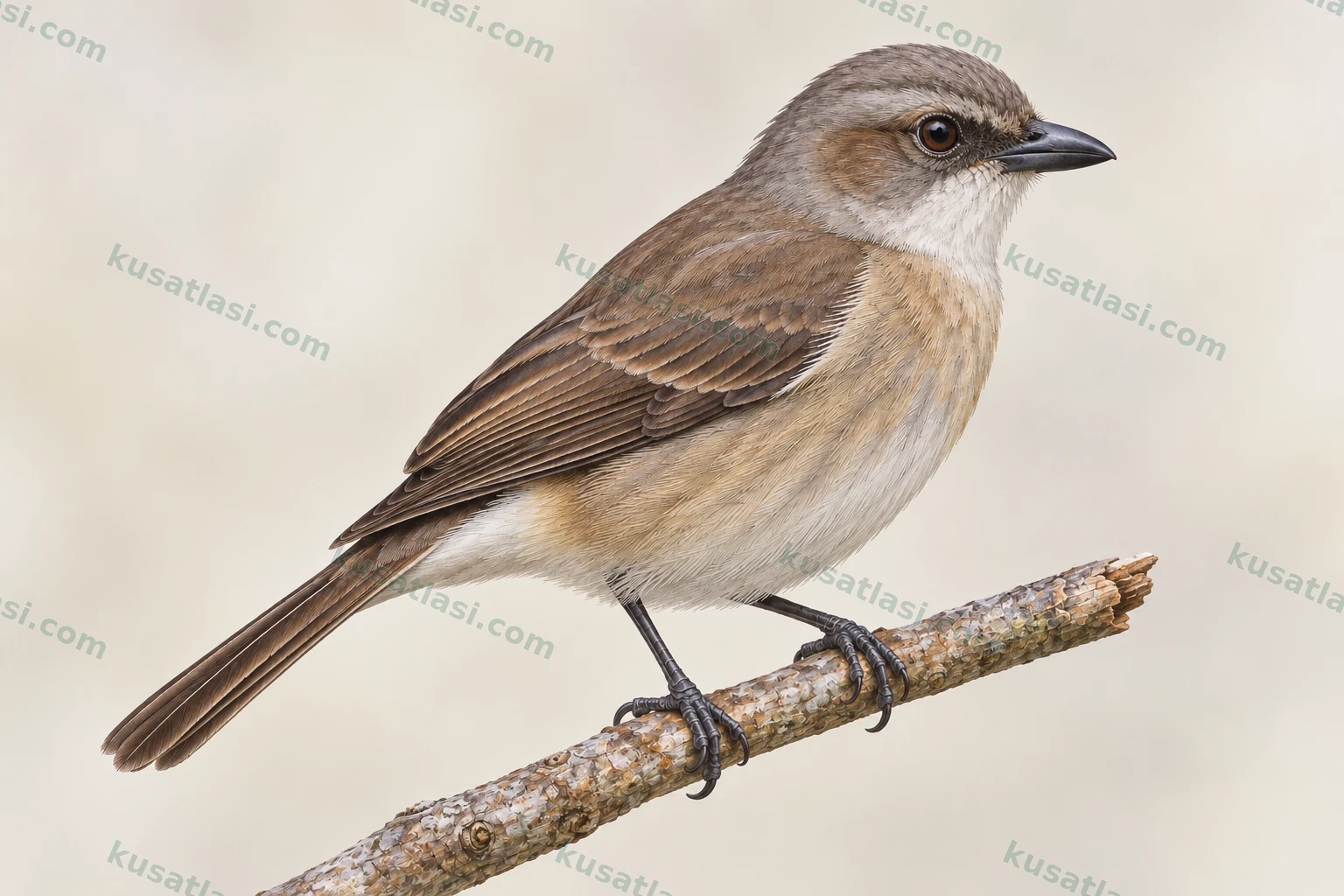
Swipe left or right between the two adult plates.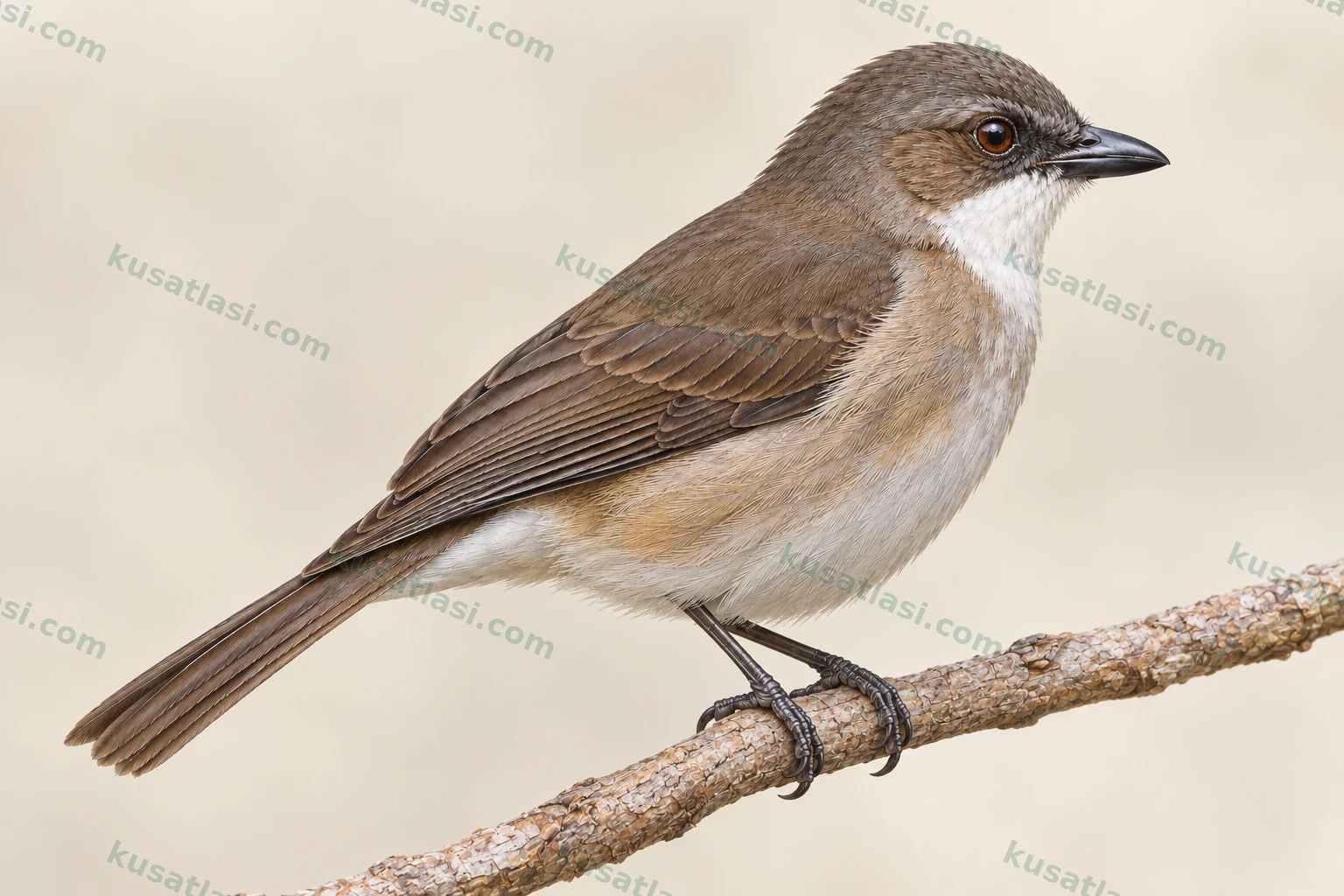
Pachycephalidae
Island Whistler
Pachycephala phaionota
It lives on small wooded islands in eastern Indonesia.
- Order
- Passeriformes
- IUCN status
- LC · Least ConcernGlobal IUCN. BirdLife v10 (2025); taxon matching: AviList 2026 / IOC 15.2; checked 29 October 2026. Checklist year is not the species assessment date. Source and method · BirdLife
At a glance
- Small wooded islands
It lives on small wooded islands in eastern Indonesia.
- Plain appearance
Examine brown back, greyish head and white throat together.
- Record the island name
The Rani record is not breeding evidence for the main island of Biak.
Biometrics
Length
- Male
- 16 cm
- Female
- 16 cm
Wing length
- Male
- 8.42 cm
- Female
- 8.42 cm
Weight
- Male
- Data unavailable
- Female
- 24.5–25 g
Length: Shared species value Wing length: Shared species value
World distribution
Island Whistler
Customise map layers
Observation points
Preparing globe…
Monthly record count
Bars show record counts in this sample, not bird abundance or a breeding calendar. They are affected by recording and observation effort.
Rotate the globe and compare layers. Coloured areas are not exact observation or nest locations.
The source does not provide verified monthly range boundaries. All areas are shown; the month slider and monthly playback are therefore disabled.
- Jan
- Apr
- Jul
- Oct
- Dec
Generalised data and method
Base map: Natural Earth · Public domain
Open central bibliography ↗Calendar
No verified species-wide monthly migration calendar was found.
All months: Monthly data unverified.
January
February
March
April
May
June
July
August
September
October
November
December
Habitat
Small islands of the Moluccas, Kai, Aru and Raja Ampat
The approximate island region is shown; tentatively identified Nanusa birds are not mapped as confirmed range.
Sound
It was not verified whether the Nanusa voices apply to the whole species.
Do not play recordings to attract birds; observe quietly, especially near nests.
Breeding
An older specialist account reports a local nest about 2 m above the ground containing two eggs. The taxonomic identity of the Nanusa birds associated with a nest containing one egg at about 1 m remains uncertain. Neither record is a general rule. The duration of incubation was not verified.
Compare
Compare male and female
Examine brown back, greyish head and white throat together.
Species information
Quick Identification
The Island Whistler Pachycephala phaionota is a songbird of small wooded islands in eastern Indonesia, wearing soft shades of brown and white.
The adult looks brown-backed, greyish-headed, white-throated and off-white below. These are general clues given by the expert guide for islands around New Guinea. The blackish bill, dark eye and slight tonal difference between head and body are examined together. Its plain appearance can make identification difficult at first; “a brown bird” is not enough. Small island, woodland and white throat together are more useful. Because related coastal whistlers occur, comparisons must always state the island and current scientific taxon. A photograph without a source locality cannot represent every island population.
Overall Appearance and Posture
The body is small and compact; when perched in trees or shrubs, the pale throat, brown back and greyish head can often be compared in one view. Pratt and Beehler describe it in various woodland types on small wooded islands. This does not mean it is confined to the high mountains of the large island of New Guinea. Coastal scrub, secondary woodland and mangroves appear in expert species accounts. Sparse scrub on one island does not provide the same light and background as dense forest on another, and the bird's apparent colour changes accordingly. Silhouette, throat, head and tail are therefore assessed together.
No sharp black-and-yellow pattern is sought between the greyish head and pale breast. The Island Whistler's plain appearance requires not borrowing the appearance of more brightly coloured relatives in the genus. In a field photograph, the white throat can look dull in shade and the breast reflect yellowish brown. One photograph cannot establish whether this tonal difference reflects species limits, individual variation or lighting. For the westernmost Nanusa birds in particular, a 2017 scientific study described a darker brown head and darker ochre breast and called for further identity research. Those birds are not presented here as definite, typical P. phaionota.
Seeing a bird resting on a branch does not always mean it is in breeding condition. Its grip and short movements also occur in other songbirds of small wooded islands. Island location is highly valuable for field identification. An immature museum specimen is known from Rani islet; this is not evidence of nesting within the large island of Biak. Biak's own whistler Pachycephala melanorhyncha must not be confused with islet records. Failing to distinguish islet and main island on a map gives a biologically wrong impression of distribution.
Males, Females and Young Birds
The species guides examined describe adult males and females as similar. This does not mean sex can be established with certainty from one photograph.
Pratt and Beehler write that young birds can have more olive-brown tops and sides of the head. This may help when compared with the adult's greyish head, but shade, feather wear and island differences must be considered. Not every bird seen as “brown-headed” is automatically young. Since the dark-headed Nanusa birds' identity is a separate research question, attributing their colour to all young birds would also be wrong. If age cannot be determined, the record remains unaged. Two birds close to a branch do not alone prove breeding, parenthood or fidelity to the same mate.
Appearance in Flight
A short branch-to-branch flight may leave an impression of brown wings and tail; however, no single certain flight-only mark valid on all islands was found in verified sources. No unreal colour patches are therefore added to upperwing or underwing. When the bird perches again, the greyish head, white throat and pale underparts are checked together. A few seconds of underwing view do not replace knowing locality and age. Comparisons with related whistlers must state the wooded island's name.
No wingspan number is created for the card until one is directly verified. Investigating the genetic history of ancestors that may have crossed to neighbouring islands differs from showing living birds flying the same route every year. Current seasonal sea crossings require tracking or reliable repeated observations.
Voice and Behaviour
The English name “whistler” relates to the group of songbirds with whistle-like voices; the name alone does not prove the same song on every island. Kelly and colleagues state there were insufficient old recordings to compare the voices they recorded in the Nanusa Islands with known species voices. Moreover, those birds' taxonomic identity remains open to research. We therefore do not treat those sounds as definitive examples identifying every population of Island Whistler.
Expert accounts mention searching for insects in island woodland. AVONET2 also codes the species as invertebrate-eating and associated with forest habitat. This broad food class does not give proportions of particular insects or every detail of hunting. Waiting on a branch and making a short move towards a leaf can also occur in close relatives. An observer should distinguish prey actually swallowed from merely touching a leaf. A habit seen in one region should not be written as everyday behaviour on all islands.
Confusable Species
1. Biak Whistler Pachycephala melanorhyncha is another taxon endemic to the large island of Biak. The Island Whistler record from Rani islet is not automatically a main-island Biak record or breeding proof. Observation locality must be mapped at islet level.
2. Mangrove Whistler P. cinerea and other brown whistlers have historically been compared within broad taxonomic groupings. Similar coastal vegetation or a pale throat does not allow numbers and photographs of different species to be used interchangeably.
3. Kelly and colleagues found the dark-headed, dark-ochre-breasted Nanusa birds similar to P. phaionota but left their identity open. Describing those records as a definitive distinguishing mark, a confirmed new range or the species' typical colour everywhere would be wrong. Local voices and detailed comparison are needed.
World Distribution
The Island Whistler's accepted main range covers the Moluccas of eastern Indonesia and small islands such as Kai, Aru and Raja Ampat off western New Guinea. Pratt and Beehler describe it through small wooded islands around New Guinea. Bishop and van Balen's 2023 scientific review mentions a young individual collected on Rani islet; it does not conclude that a resident or breeding population exists on the large island of Biak.
Status in Its Natural Range
Nearby land within the same bay can support different bird communities. The map must therefore show small-island positions clearly and avoid implying a wrong broad area on the main island. The western records in the Nanusa study are tentative identifications needing taxonomic examination, not confirmed range boundaries.
Migration Journey
AVONET associates this species with a non-migratory lifestyle, but that does not establish that every individual on the different small islands never crosses the sea in its lifetime. Brady and colleagues' 2022 phylogenetic research shows repeated historical dispersal of the whistler family to islands. This is not a map of a current annual migration route. Kelly and colleagues' possible new-range interpretation for the Nanusa bird must first be verified together with taxonomic identity. No verified annual distance, route or monthly calendar was found for this species, so none is invented.
Breeding Habitat
Expert accounts associate Island Whistler with coastal scrub, secondary woodland and mangroves. Pratt and Beehler write that different wooded habitats on small islands around New Guinea can be used. Together, these accounts require avoiding a single forest type as a compulsory condition on every island. Colouring an entire island does not mean all bare coast or settlement is suitable habitat. Kelly and colleagues' Nanusa sampling mostly took place in patches of natural forest; this method does not prove every unvisited garden and coast there absolutely unusable for the species.
Nest Site
Sources describe a small woven cup nest above the ground. No verified incubation duration was found. Nests should be watched without disturbance, with island and date recorded.
Daily Habitat Use
Tree and shrub branches matter for foraging and perching. Small-island conditions can bring coastal woodland and inland patches close together, but the distance a particular bird travels all day was not measured. AVONET's forest and invertebrate-feeding codes are not a detailed daily movement map. The observation record separately states island, distance from coast, vegetation and behaviour seen.
What Does It Eat?
Expert accounts list insects as basic food. AVONET2 codes it as an invertebrate consumer; this category does not distinguish at species level other small invertebrates that may have been seen besides insects. We do not give a prey name, proportion or year-round use without verification. It would be wrong to treat the sometimes thick-looking bill as evidence of hunting large lizards from shape alone. Fruit-eating in other whistlers is likewise not automatically transferred to this species. Prey availability on small islands may vary with season, rainfall and vegetation; percentages absent from sources are not calculated.
How Does It Forage?
It is described searching for food with short movements among tree and shrub leaves. AVONET's broad “invertebrate-eating” and “perching” classes do not specify the exact leaf or seconds required to take prey. Seeing an insect actually caught and swallowed is direct evidence; stretching a bill to a leaf alone does not show which creature was eaten. Feeding height may also change between mangrove edges and other woodland types. Behaviour of tentatively identified Nanusa birds must not be transferred to all confirmed populations. The feeding paragraph should distinguish direct species evidence from family generalization.
Differences between Islands
Bishop and van Balen in 2023 report an immature Island Whistler specimen known from Rani islet. Rani is near Biak, but not the same landmass. Inferring presence or breeding on the large island of Biak from that specimen alone erases biological differences between islands. If map zoom conceals the distinction, text and source record must be especially clear.
Why Treat the Nanusa Record Cautiously?
Kelly and colleagues in 2017 likened birds on Karatung and Marampit to Island Whistler. They described a darker head and breast and wrote that taxonomic identity needed further study. They saw one egg in a nest about 1 m high; the earlier expert account reported about 2 m and two eggs. The contrast is interesting but does not turn a tentative identification into a definite species. One “one egg” record and another “two eggs” record do not establish unchanging rules for birds worldwide.
Family History and Species Observation
Brady and colleagues' genetic study investigates historical dispersal of whistlers to different island groups. It is not a tracking study documenting which island an Island Whistler flew from and to in a particular year. Separating past colonization from present regular migration gives a more honest account of a bird's actual field behaviour.