
World Birds
Field identification plates
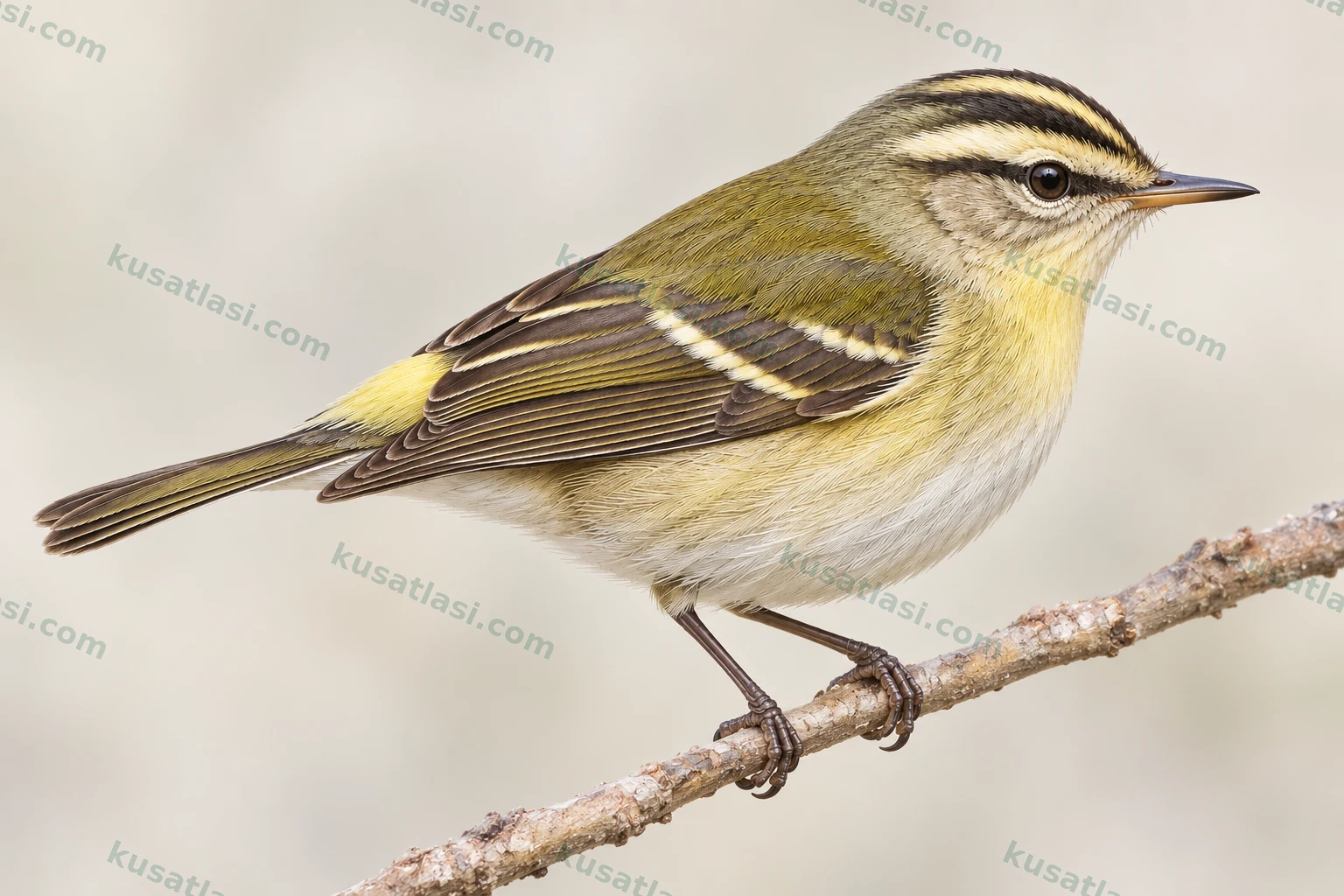
Swipe left or right between the two adult plates.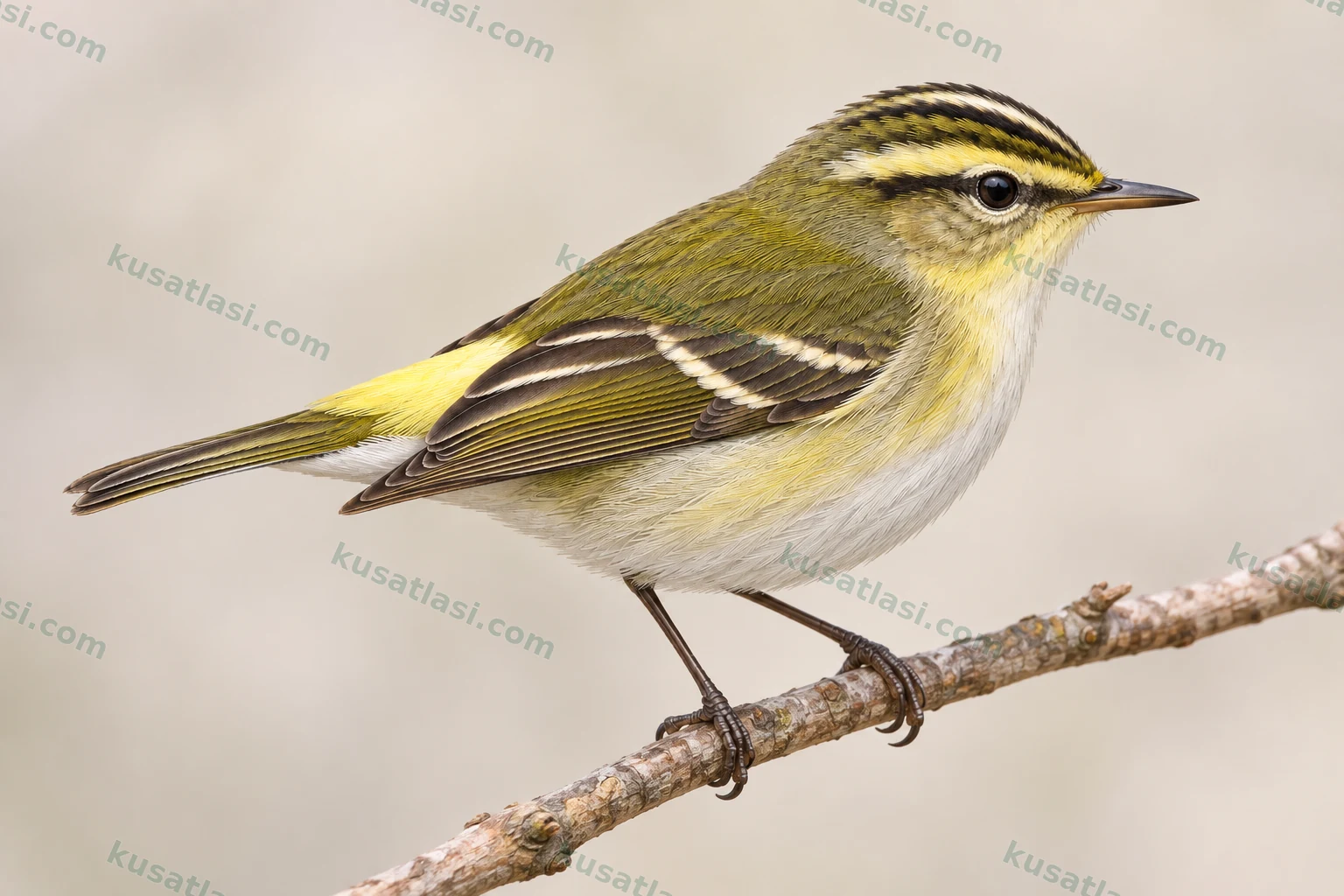
Phylloscopidae
Lemon-rumped Warbler
Phylloscopus chloronotus
See the pale area at the tail base together with head and wing stripes.
- Order
- Passeriformes
- IUCN status
- LC · Least ConcernGlobal IUCN. BirdLife v10 (2025); taxon matching: AviList 2026 / IOC 15.2; checked 29 October 2026. Checklist year is not the species assessment date. Source and method · BirdLife
At a glance
- Pale rump
See the pale area at the tail base together with head and wing stripes.
- Two wing bars
They are not diagnostic alone; consider the similar Sichuan species.
- Elevation and season
Separate Himalayan summer breeding forest from lower winter grounds.
Biometrics
Length
- Male
- 9–10 cm
- Female
- 9–10 cm
Wing length
- Male
- 5.05 cm
- Female
- 5.05 cm
Weight
- Male
- 4.5 g
- Female
- 6.2 g
Length: Shared species value Wing length: Shared species value
World distribution
Lemon-rumped Warbler
Customise map layers
Observation points
Preparing globe…
Monthly record count
Bars show record counts in this sample, not bird abundance or a breeding calendar. They are affected by recording and observation effort.
Rotate the globe and compare layers. Coloured areas are not exact observation or nest locations.
The source does not provide verified monthly range boundaries. All areas are shown; the month slider and monthly playback are therefore disabled.
- Jan
- Apr
- Jul
- Oct
- Dec
Generalised data and method
Base map: Natural Earth · Public domain
Open central bibliography ↗Calendar
Breeding in the high Himalayas and winter descent to lower elevations are documented. There is no verified species-level monthly calendar covering all regions; the single Gujarat record is not a general migration calendar.
All months: Monthly data unverified.
January
February
March
April
May
June
July
August
September
October
November
December
Habitat
From Pakistan to the eastern Himalayas and neighbouring Chinese mountains
See rump, eyebrow, crown and both wing bars together; take care when separating the Sichuan species.
Sound
Lemon-rumped and Sichuan warbler calls were compared in scientific research; identifying birds from one sound in the transition area needs care.
Do not play recordings to attract birds; observe quietly, especially near nests.
Breeding
A Chinese study using historical taxonomy recorded three nests needing current identity checks on mossy trees about 2–4 m up. No reliable shared clutch size or incubation period was verified for narrow current P. chloronotus; numbers are not invented.
Compare
Compare male and female
They are not diagnostic alone; consider the similar Sichuan species.
Species information
Quick identification
The Lemon-rumped Warbler is a very small leaf warbler of Himalayan coniferous and mixed forests. Greenish above and pale below, it shows a pale eyebrow extending behind the eye, a pale central crown stripe, two pale yellowish folded-wing bars and a light yellow rump. The rump is the short back area at the tail base, not an entirely white tail. Two wing bars or one yellowish patch from afar do not separate similar warblers.
General appearance and posture
Small body and fine dark bill suggest a quick foliage insect-searcher. A broad pale eyebrow contrasts with a fine dark eye stripe; central crown stripe and two yellowish bars show in good light. None is unique. Sources emphasize near-identity with Sichuan Leaf Warbler, sometimes beyond even a good photograph. Record head, wing, rump and locality together.
Trivedi and Mori's unusual Gujarat record was initially named as another warbler before photographs were re-examined. The same bird's eyebrow, crown stripe, two yellowish bars and dark bill were described, not a mandatory shade for every Himalayan population. Boesman and Praveen also show the difficulty of reliable plumage separation from Sichuan. Photograph markings support a preliminary identification; good voice linked to that bird or other strong evidence may be needed where lookalikes can occur.
Green can look dull grey-green in shade and yellowish rump nearly whitish. Photo settings and wear alter these impressions. Eyebrow extent and dark eye-stripe position are miscompared at different angles. One body colour risks mixing populations of the former broad taxon. Describe colour location and viewing conditions explicitly.
Males, females and young birds
Checked species sources do not give regular plumage differences reliably sexing birds in the field. Brighter rump is not labelled male or paler wing female. This does not claim the sexes are identical in every respect.
No comprehensive reliable juvenile moult sequence for all subspecies was found in checked open sources. A pale wing bar alone is not youth; wear and light can cause it. Following an adult gives no precise age either. Assess feeding relationships, geography and reliable records separately for young identification. Wrong age or sex can distort later range and breeding interpretation.
Appearance in flight
The pale rump may flash during short branch changes. Tiny lookalike silhouettes, one pale stripe and guessed size are not reliable separation. No confirmed species-specific upperwing/underwing key valid for every individual was found. Do not invent a spot on an unseen surface.
After landing compare face lines, crown, folded wing and rump on the same bird. Brief hovering or leaf-directed sally may show feeding, not unique identity. Body orientation locates whether yellow is actually rump or wing side. Backlit white and sunlit yellow can be the same bird. Several clean views are worth more than one blurred flight frame.
Voice and behaviour
Boesman and Praveen compared calls with Sichuan Leaf Warbler to revisit northeastern Indian identities. Despite song and main-call differences, border records did not divide into two perfectly clean groups. Western Arunachal was closer to Lemon-rumped, eastern records to Sichuan. Hybridization or gene flow is their hypothesis, not genetically proven fact. Memorizing one note to name every bird is therefore unsuitable.
Specialist habitats show searching branches, conifers and forest layers. Oiseaux.net's ecological compilation reports invertebrates and tree foraging, not the same insect everywhere. Often exact prey is unseen. If the observation only says “took a small invertebrate beneath a leaf”, preserve that level without unrecorded species or percentages.
Similar species
1. Sichuan Leaf Warbler, Phylloscopus forresti, is the critical comparison. Boesman and Praveen explicitly describe plumages too alike for reliable separation. Pale rump and two wing bars do not decide. Especially in eastern Himalayas towards China, good sound tied to the same bird or expert review matters.
2. Pallas's Leaf Warbler, Phylloscopus proregulus, formerly belonged to the same broader complex. Old “Pallas's” measurements and breeding notes are not automatically current chloronotus. Check scientific name, date and geography. Shared crown and wing stripes do not settle taxon limits alone.
3. Other small Phylloscopus can show eyebrows, crown traces or double wing bars. Gujarat's first misidentification is a concrete warning. Unseen rump is not “colourless”; note movement, camera angle and verified local candidates together.
Global distribution
Under the current narrow concept, it is recorded across the Himalayas from Pakistan through Nepal, northern India and Bhutan eastwards, with some Chinese mountains farther east. Records can have been confused with other members of the historical pale-rumped group. Avibase's current mapping separates P. chloronotus from P. forresti.
Status within its natural range
Boesman and Praveen's northeastern Indian call research shows that country maps alone cannot draw a definite boundary. Western and eastern Arunachal approach different acoustic groups; a possible transition needs more genetic work. No narrow polygon invented from one photo feature is presented as definitive range.
Migration
It is described as an altitudinal migrant breeding high and descending to Himalayan foothills in cold seasons. Trivedi and Mori cite approximately 2200–4200 m breeding and foothills to about 2100 m wintering, a field-guide range rather than an obligatory individual route. The unusual Gujarat winter record does not mean every bird goes there annually. No exact tracked distance, shared departure month or fixed route joining every mountain range was verified. Elevation change is not confused with directed intercontinental migration.
Breeding habitat
Summer high-Himalayan conifer and mixed conifer–broadleaf forests feature in specialist accounts, with rhododendron thickets and wooded openings nearby. Oiseaux.net gives about 2000–4200 m, the field-guide-derived breeding 2200–4200 m having a different scope. The ranges are not combined into a new limit. A winter record is not spring eggs at the same spot.
Nest site
Alström, Olsson and Colston's 1992 taxonomy study reported three Chinese nests assigned then to P. (proregulus) chloronotus on mossy trees at about 2, 3 and 4 m. Because it separated Sichuan, historical name matching and locality need checking. No range-wide clutch or incubation is derived from three nests. The fractional egg interval in Oiseaux.net's automated compilation is not presented as an actual clutch. Opening branches or prolonged nest watching may disrupt breeding.
Daily space use
It may move among upper and lower layers searching foliage invertebrates. Lower wooded winter slopes do not contradict high summer breeding forest. Gujarat's single photographed shrub-perched bird is momentary use, not primary breeding habitat. Brief quiet edge observation improves behaviour records and avoids possible nest disturbance.
What does it eat?
AVONET and Oiseaux.net classify it as an invertebrate hunter. Insects and other small invertebrates form the context, but checked sources do not measure each prey group's range-wide percentage. Do not write “caught a caterpillar” without seeing what entered the mouth. Even one forest-season prey sample would not become the whole year's menu.
How does it hunt?
Specialist accounts describe searching leaves and fine branches in trees and short aerial captures. Different branch heights do not mean always canopy or always ground. Gleaning and aerial sallies are separate recorded actions. Mixed flocks do not prove all share the same prey. If only leaf-searching was seen, prey identity stays open.
AVONET's invertebrate category is broad coding from sources, not one experiment's full food list. Four wing specimens are not feeding samples. Measurements cannot supply stomach contents or daily prey counts. Direct observations with place, season and prey visibility would go beyond that label. No unverified percentage or caterpillar quantity is given.
The limits of similar appearance
Sichuan and Lemon-rumped are so alike that Boesman and Praveen do not finalize many field identifications from plumage alone. “Yellow rump in the photo” cannot by itself decide the taxon in that border area.
A photograph first misnamed
A small warbler photographed in Gujarat in 2011 was first published as another species. Trivedi and Mori later reviewed it with experts and presented a Lemon-rumped record. One record does not trace a regular winter route. For nearly identical current taxa, photo limits without sound still matter. Correcting an identification improves science; the first label need not be final.
Old name, new boundary
Names formerly broader around Pallas's are now separated species. The 1992 comparisons help understand Sichuan and Lemon-rumped, but every old nest or sound is not automatically the present narrow taxon. Avibase helps track name concepts. Check place, date and contemporary scientific name before copying breeding counts or voice. No incubation day is invented here.