
World Birds
Field identification plates
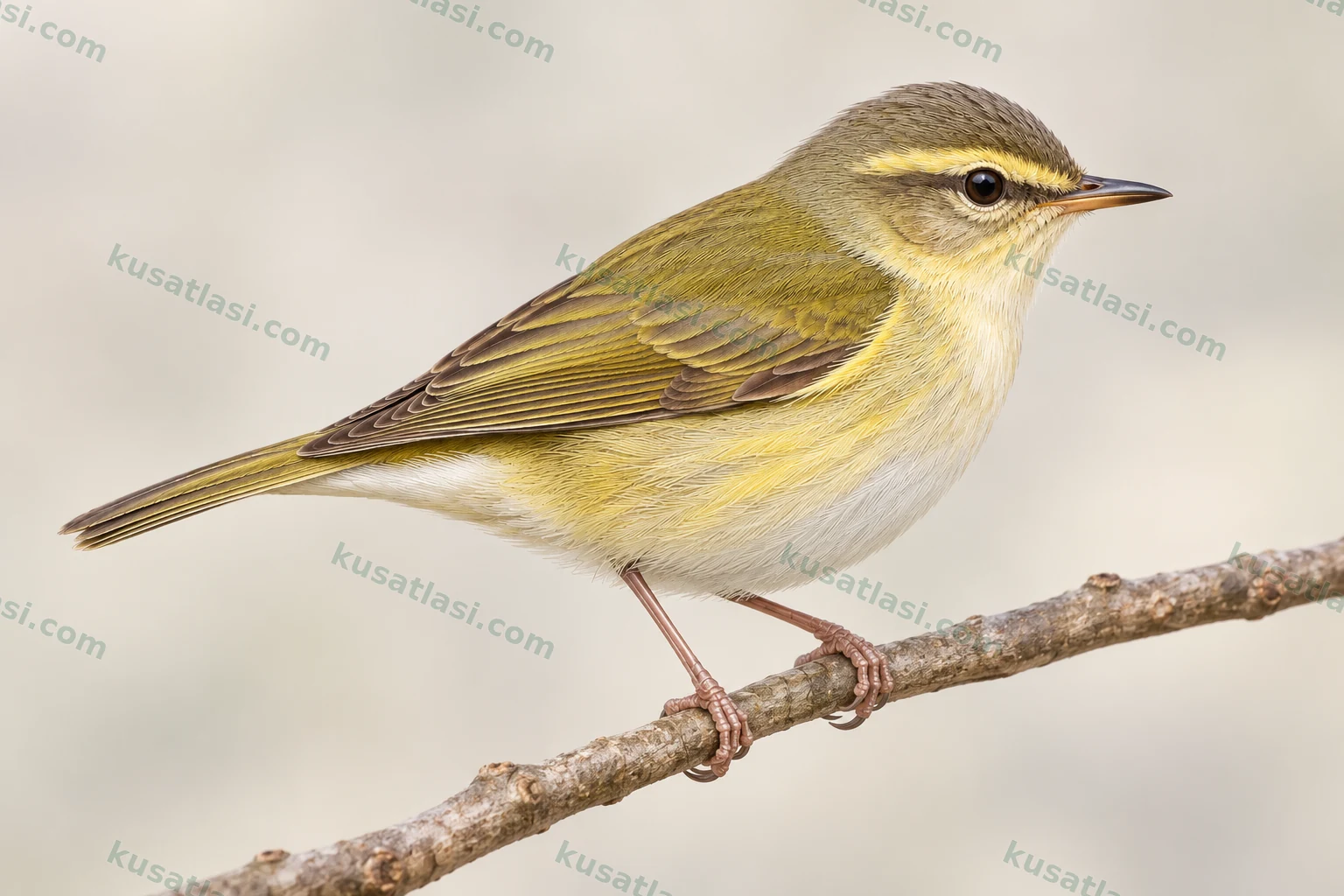
Swipe left or right between the two adult plates.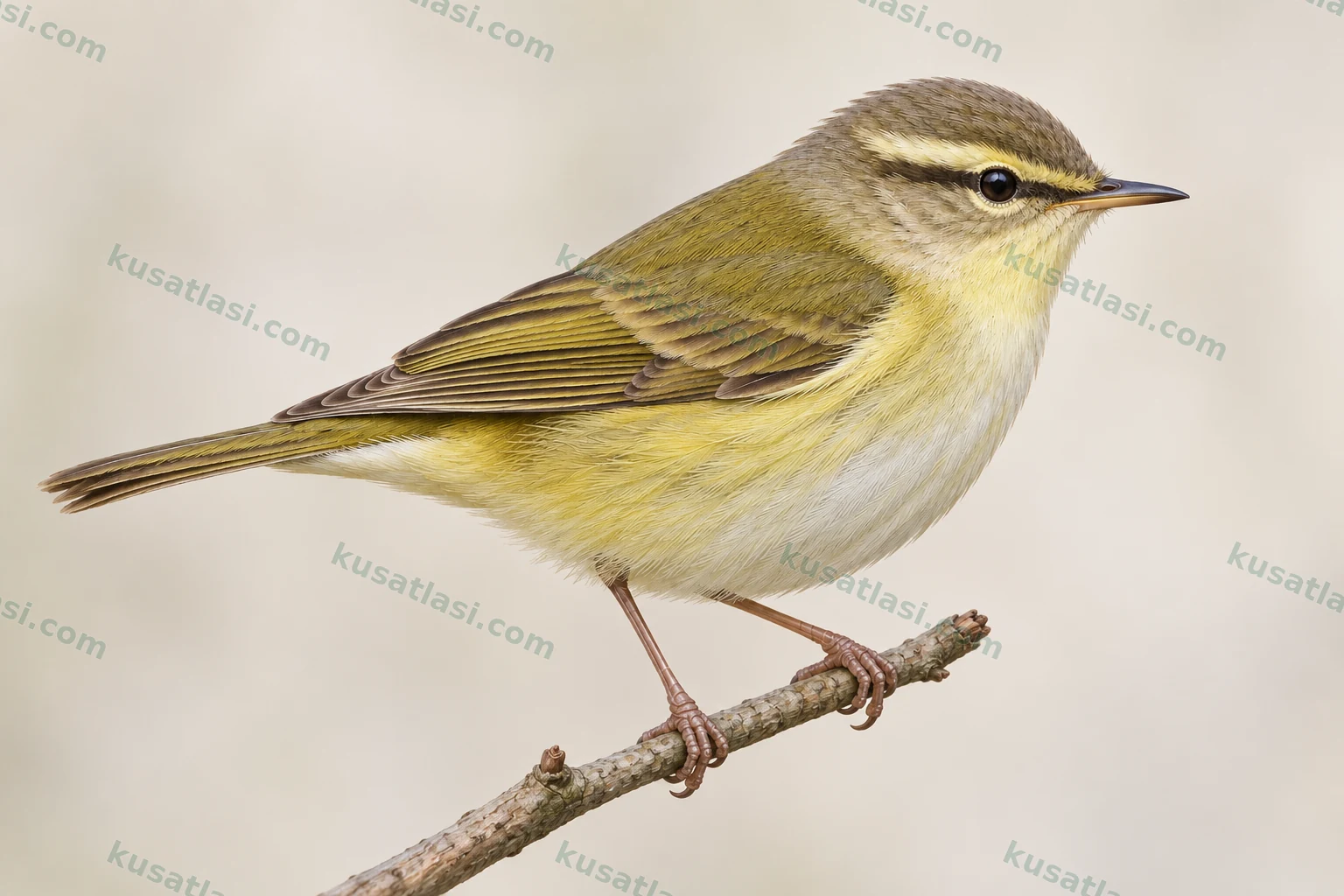
Phylloscopidae
Island Leaf Warbler
Phylloscopus poliocephalus
It explores outer leaves in mountain forests of New Guinea and nearby islands.
- Order
- Passeriformes
- IUCN status
- Source-taxon assessmentGlobal IUCN. BirdLife v10 (2025); taxon matching: AviList 2026 / IOC 15.2; checked 29 October 2026. Checklist year is not the species assessment date. Source and method
At a glance
- A small forest bird
It explores outer leaves in mountain forests of New Guinea and nearby islands.
- Facial marks
The dark eye-stripe and pale eyebrow are conspicuous; not every form has a crown stripe.
- Separate old records
Numfor and Biak birds are now separate species.
Biometrics
Length
- Male
- 10 cm
- Female
- 10 cm
Wingspan
- Male
- Data unavailable
- Female
- Data unavailable
Weight
- Male
- 8.5–11.5 g
- Female
- Data unavailable
Length: Shared species value The body length shown is the representative value given in the Mimika field guide for Papua, Indonesia. The source gives no separate lengths for males and females.
World distribution
Island Leaf Warbler
Customise map layers
Observation points
Preparing globe…
Monthly record count
Bars show record counts in this sample, not bird abundance or a breeding calendar. They are affected by recording and observation effort.
Rotate the globe and compare layers. Coloured areas are not exact observation or nest locations.
The source does not provide verified monthly range boundaries. All areas are shown; the month slider and monthly playback are therefore disabled.
- Jan
- Apr
- Jul
- Oct
- Dec
Generalised data and method
Base map: Natural Earth · Public domain
Open central bibliography ↗Calendar
No single verified monthly migration calendar by island was found.
All months: Monthly data unverified.
January
February
March
April
May
June
July
August
September
October
November
December
Habitat
New Guinea and nearby Melanesian islands
The map shows an approximate region, not individual records or precise habitat boundaries.
Sound
A reliable series of recordings by island was not verified.
Do not play recordings to attract birds; observe quietly, especially near nests.
Breeding
New Guinea sources describe a spherical moss nest on a mossy slope or in a tree hollow, with two white eggs; this is not a rule for all islands. Incubation days were not verified.
Compare
Compare male and female
The dark eye-stripe and pale eyebrow are conspicuous; not every form has a crown stripe.
Species information
Quick Identification
The Island Leaf Warbler Phylloscopus poliocephalus is a small songbird extending from New Guinea's mountain forests to neighbouring island chains.
In the New Guinea form, the upperparts are olive, the underparts washed yellowish, the eye-line dark and the eyebrow pale. A pale central crown stripe may be visible, but it is absent in the poliocephalus form of the Bird's Head Peninsula. No single rule of “a crown stripe in every individual” is possible. As the bird moves quickly among forest leaves, facial lines must be seen on the same individual. Numfor Leaf Warbler Phylloscopus maforensis and Biak Leaf Warbler P. misoriensis may fall within this group in older publications, but are separate species in the current account. An old “Island Leaf Warbler” label must not be used to transfer biometrics, maps or photographs without checking the island.
Overall Appearance and Posture
Pratt and Beehler describe the New Guinea mountain-forest bird as a small leaf warbler moving among canopy foliage, with a yellowish tinge below. The dark eye-stripe sets off the pale eyebrow. Crown darkness and visibility of the pale central stripe vary by island form. The form in the Bird's Head and Neck region has no pale central stripe on its grey crown; in giulianettii elsewhere on mainland New Guinea, a pale stripe down the dark grey crown is described. The nearby Goodenough form also shows a darker crown. These differences do not identify a subspecies with certainty in one sighting; locality and other marks are needed.
Examining the outer edges of leaves, the bird often appears briefly in the treetops. Its thin bill and small body give a leaf-warbler appearance; a feature such as a wing-bar or breast mark cannot be presented as an unchanging diagnostic mark in every form. Yellow underparts in forest shade can look duller than in sunshine. A bird in a treetop and a brief flight in the lower layer are not seen in the same light. The field guide's New Guinea account does not automatically describe all plumage details of forms in the Moluccas or Solomon Islands. Visual comparisons must therefore identify the island population depicted.
Males, Females and Young Birds
The expert guide and research examined do not offer a species-wide key safely separating males and females by plumage tone or eyebrow thickness alone.
No complete reliable key to young birds by island and subspecies was found either. Even if a young bird might look duller, age or species cannot be settled on that basis alone. New Guinea has other small olive songbirds; the perch, eyebrow and eye-stripe, and crown must be examined together. Birds moving beside one another do not prove a parent–offspring relationship. If actual feeding of young is seen, date, island, nest surroundings and photographs of the same individuals should be recorded separately. An unknown age is not labelled adult simply to fill a gap.
Appearance in Flight
Small size and olive upperparts may be noticed during a short flight among leaves. These impressions also occur in other related leaf warblers. The New Guinea guide gives no single line on the upperwing or underwing valid across all island forms and sufficient for certain identification alone. No invented diagnostic feature for a wing angle has therefore been added. When the same bird perches after flight, the pale eyebrow, dark eye-stripe, yellowish wash below and presence of a crown stripe are compared together. The absence of a central crown stripe in the Bird's Head form must also be remembered.
Drawing a flight line over forest does not mean regular seasonal migration between New Guinea and all the islands. A map of genomic relationships and a map of living birds' annual movements require different evidence.
Voice and Behaviour
Pratt and Beehler describe a very thin, rapid, repeated song for the New Guinea form, sometimes with final sounds rising towards the limits of human hearing. Two or more birds may sing simultaneously. This is the guide's regional account of voice, not a claim that every form on every island sings the same phrase. Ng and colleagues' 2018 comparison of leaf-warbler voices from different islands shows that separating related taxa by a single heard syllable may not always be reliable. Recordings labelled under an old scientific name must be rechecked against current taxon limits.
The New Guinea field guide describes birds moving in small groups of their own species or with white-eyes, gerygones and other insectivores, gleaning prey from outer canopy leaves. They may sometimes catch flying prey with a short sally. These are New Guinea observations, not measurements showing equally sized year-round groups on every island. The 2024 genomic study shows that related species can coexist on Kolombangara; sharing an island does not mean continuously meeting at the same height, on the same branches and over the same prey. Recording flock composition, height and date improves understanding of behaviour.
Confusable Species
1. Numfor Leaf Warbler Phylloscopus maforensis is a separate species of Numfor Island. It may occur under older broad Island Leaf Warbler labels; its greyish appearance on Numfor is not included in the measurements and range of current P. poliocephalus.
2. Biak Leaf Warbler Phylloscopus misoriensis is a separate species living on Biak. It has local features such as orangish legs and bill. An old photograph coming from Biak does not make it this page's species.
3. Kolombangara Leaf Warbler Phylloscopus amoenus may occur alongside the pallescens form of Island Leaf Warbler on Kolombangara. Crown darkness, underpart tone, voice, altitude and ensuring observations concern the same individual are evaluated together; a single colour does not establish identification.
4. Rote Leaf Warbler Phylloscopus rotiensis is a separate species from another island. Its inclusion in a scientific comparison does not justify transferring its wing measurements to Island Leaf Warbler biometrics.
World Distribution
Current Phylloscopus poliocephalus occurs in New Guinea's mountain belt and some neighbouring island chains extending east and west. Avibase lists named forms in separate New Guinea mountains and in the Moluccas, Bismarcks and Solomons. This does not mean equal density in every forest on every island or continuous habitat across the intervening sea.
Status in Its Natural Range
Pratt and Beehler's New Guinea guide describes occurrence in mainland mountains and some nearby islands such as Yapen and Karkar; it gives 1,200–1,800 m as typical and 600–2,400 m as regional limits. These elevations belong only to the New Guinea account and are not copied to other islands. Current Numfor and Biak species are not added to this map. Species limits of Rote, Peleng, Taliabu or Makira birds may differ in old lists; island and checklist year must be read together.
Migration Journey
Living in mountains and on separate islands is not the same as making a regular long migration between islands each year. The 2024 northern Melanesian study investigates divergence of related populations and historical gene flow; it does not track an individual's annual route. Elevations in the New Guinea guide do not show all birds covering the same metres in particular months either. An observation point on an island shows habitat use, not the sea route flown or another island where a nest was built. Map design must state the kind of movement evidence as well as taxon limits.
Breeding Habitat
Pratt and Beehler's New Guinea guide describes the Island Leaf Warbler in mountain forests, mostly below the cloud-forest belt. Searching the outer foliage for small prey, it sometimes joins small insectivorous flocks in the same forest. This regional description does not mean every Moluccan or Solomon population breeds under the same elevation, tree and rainfall conditions. A breeding-habitat claim should rest not merely on a singing bird but on an event such as a nest or feeding of young with secure species and locality identification.
Nest Site
The New Guinea expert guide reports a mossy spherical nest on a mossy bank or in a tree cavity, containing two white eggs. This is that region's guide account, not a general rule that every island form has the same typical nest and eggs. The form, date and elevation of the nest concerned must be separately verified. No reliable incubation-day measurement covering the entire current species was found. Opening a nest to count eggs disturbs the bird and is not an ethical way to remedy missing information.
Daily Habitat Use
In New Guinea, outer canopy leaves are prominent in foraging. Birds often move in small groups, some joining flocks of white-eyes and other insectivores. A brief appearance in a treetop does not prove the whole day is spent only at that height. Co-occurrence with related species on the same island in the Kolombangara study does not mean completely shared microhabitat. Recording tree layer, elevation, month and island helps assign older broad “island leaf warbler” records more safely to current taxa.
What Does It Eat?
Pratt and Beehler describe the New Guinea bird taking small insects and spiders. AVONET also codes the currently matched species as an invertebrate-eating forest bird. The two sources agree on general food type, but give neither proportions of insect families taken across all islands nor the spider share in every season. Bark-searching observed by Ng and colleagues in the Rote Leaf Warbler cannot be directly transferred across this species; the Rote bird is separate. Moving a leaf alone does not show the prey species captured, and tree height does not determine the food list. A concrete prey record must state the conditions in which bird and prey were seen simultaneously.
How Does It Forage?
The New Guinea field guide reports that Island Leaf Warblers carefully glean small prey from outer forest-canopy leaves, occasionally catching a flying insect in a short sally. These behaviours show two different ways to take prey within vegetation. Not every leaf movement is successful foraging, nor has every bird darting off necessarily caught an insect. Moving in a flock does not mean every member eats the same prey species. AVONET's “invertebrate-eating” code is a general dietary class, not a percentage analysis of particular insect species. Extending regional field observations to other islands requires new direct evidence. Recording the leaf used, prey-taking action, height and island is more valuable than generalization.
Related Species on One Island
DeCicco and colleagues' 2024 genomic study of northern Melanesian populations sheds light on the co-occurrence of Island Leaf Warbler's pallescens form and the separate Kolombangara Leaf Warbler Phylloscopus amoenus on Kolombangara in the Solomons. Related species living side by side are a strong counterexample to assuming all island birds are uniform. The study concerns past gene flow and lineage relationships; alone it does not show which branch a particular bird hunts on today. Subspecies and island details in old records are therefore preserved. Kinship along an island chain does not imply identical appearance and ecology in every form.
Limits of the Rote Comparison
In 2018, Ng and colleagues described a separate leaf warbler on Rote using morphology and genomic evidence. The New Guinea poliocephalus and giulianettii specimens compared in that paper differ from the Rote bird in throat and eyebrow tones and some head marks. The Rote specimen's wingspan and mass are not measurements of the species on this page.
What Is Known and Unknown about the Nest
In their New Guinea account Pratt and Beehler describe a mossy spherical nest on a mossy bank or in a tree cavity and two white eggs. This is a real record in its New Guinea context, but it does not give equal clutch sizes to all forms from the Moluccas to the Solomons. Since incubation days are not verified, no duration is borrowed from another related leaf warbler. If new nest data emerge, the bird's current taxon, island, date and observation method must be verified together. A regional observation then retains its value without misrepresenting the entire range.