
World Birds
Field identification plates
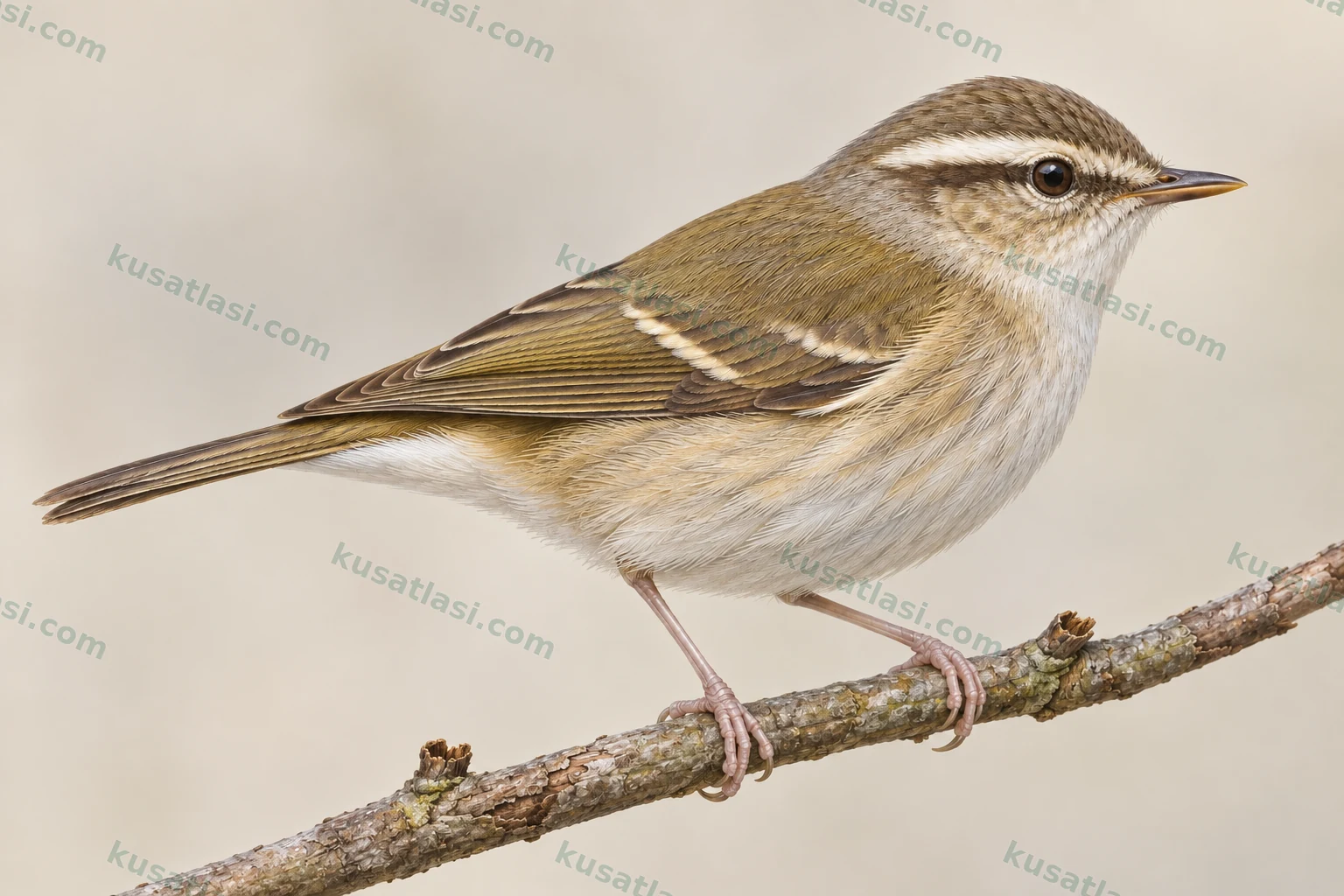
Swipe left or right between the two adult plates.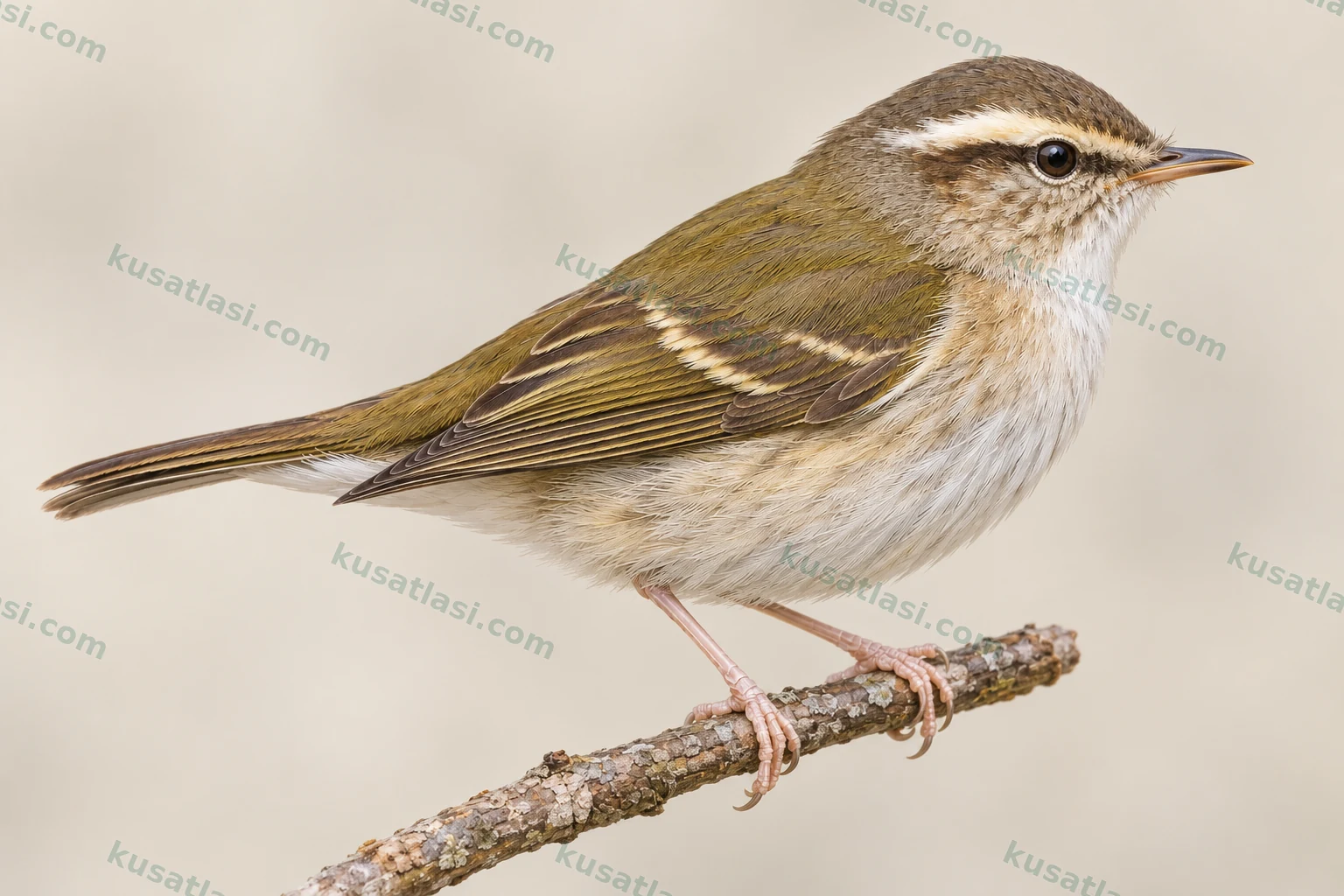
Phylloscopidae
Pale-legged Leaf Warbler
Phylloscopus tenellipes
Assess them together with the pale legs and faint wingbars.
- Order
- Passeriformes
- IUCN status
- LC · Least ConcernGlobal IUCN. BirdLife v10 (2025); taxon matching: AviList 2026 / IOC 15.2; checked 29 October 2026. Checklist year is not the species assessment date. Source and method · BirdLife
At a glance
- White eyebrow and dark eye-stripe
Assess them together with the pale legs and faint wingbars.
- The sibling species is very similar
Do not make a conclusive distinction in a silent bird by appearance alone.
- Low forest cover
Observe natural voice and tail movements without opening the vegetation.
Biometrics
Length
- Male
- 10–11 cm
- Female
- 10–11 cm
Wing length
- Male
- 5.99 cm
- Female
- 5.99 cm
Weight
- Male
- 9–13.5 g
- Female
- 14 g
Length: Shared species value Wing length: Shared species value
World distribution
Pale-legged Leaf Warbler
Customise map layers
Observation points
Preparing globe…
Monthly record count
Bars show record counts in this sample, not bird abundance or a breeding calendar. They are affected by recording and observation effort.
Rotate the globe and compare layers. Coloured areas are not exact observation or nest locations.
The source does not provide verified monthly range boundaries. All areas are shown; the month slider and monthly playback are therefore disabled.
- Jan
- Apr
- Jul
- Oct
- Dec
Generalised data and method
Base map: Natural Earth · Public domain
Open central bibliography ↗Calendar
The local Amur study found median passage dates of 19 May in spring and 15 August in autumn. They belong to the study years and do not set monthly boundaries for every region.
All months: Monthly data unverified.
January
February
March
April
May
June
July
August
September
October
November
December
Habitat
Continental East Asian forests; Southeast Asia in winter
Watch dense forest undergrowth from the edge. Record spontaneous voice together with the pale eyebrow and legs; take its resemblance to the Sakhalin Leaf Warbler into account.
Sound
Thin, repeated insect-like song. Separation from the Sakhalin Leaf Warbler requires a good recording and structural comparison; a single call duration or frequency does not ensure identification.
Do not play recordings to attract birds; observe quietly, especially near nests.
Breeding
Specialist ornithologist’s account: a domed moss-and-root nest in a hollow on the ground; 5–6 white eggs, 12 days of incubation by the female. The sample is not described; the young’s development period could not be verified.
Compare
Compare male and female
Do not make a conclusive distinction in a silent bird by appearance alone.
Species information
Quick identification
The Pale-legged Leaf Warbler is a small leaf warbler of East Asian forests. Its upperparts are plain brownish olive and its underparts pale. A dark eye-stripe lies below a long, conspicuous white eyebrow. The legs look pale pinkish; two thin, faint pale wingbars may be visible. Seeing these features together supports identification but does not suffice to separate it from the Sakhalin Leaf Warbler. The two species’ plumage, bare parts and measurements overlap extensively. A silent bird should not be conclusively named by leg colour alone.
General appearance and posture
In most views the crown gives a darker grey-brown impression than the back’s brownish-green tone. The whitish eyebrow extends backwards above the eye, with the eye-stripe forming a dark band below it. The underparts are generally whitish; the breast and flanks may show dirtier grey-brown tones. There is no need to look for a bright yellow belly in every photograph. Assessing several moments as the bird changes direction helps separate shade underneath from the actual feather colour.
There may be a dark area on the lower bill. Record this alongside the pale legs and eyebrow; it does not exclude the sibling species on its own. The wingbars are not strong broad colour bands. Their thin, faint appearance can be obscured by feather wear, light and leaves. Failure to see them in one frame should not be recorded as definite absence. Structure and head pattern provide a more consistent record than a chance impression of colour.
While feeding in low vegetation the bird may move its tail vertically and descend to the ground. The Sakhalin Leaf Warbler does this too; it is a useful behavioural note, not a conclusive distinction. Only the head or back may show in dense cover. A tail hidden by leaves should not be confused with a genuinely short one; try to assess the entire body across several views.
Males, females and young birds
The institutional guide checked does not reliably distinguish males and females by appearance. A darker head or paler legs therefore do not justify assigning sex.
In autumn ringing on the Amur, 31 of 32 captures that could be aged were assessed as young and one as adult. The fresher feathers of young birds and the worn or moulting feathers of adults were examined during that study period. This is not a general key allowing every freshly feathered bird seen from a distance to be called young. Ageing depends on feather condition examined closely and on season. Without sufficient evidence, a reliable species record may omit age and sex.
Comparison of genetically identified birds in Korea supports this careful approach too. The scientific abstract reports that the species’ plumage, bare parts and biometrics are almost identical. Differences usable by researchers in detailed examination must not be turned into infallible rules for ordinary photographs. Record the observed features separately from the certainty of the final identification.
Appearance in flight
The checked sources offer no mark that conclusively separates this species from a brief flight view based only on upperwing or underwing pattern. Pale underparts and a small body may be seen as it passes between patches of cover, but these are shared by other leaf warblers. Combine a perched view, facial detail and spontaneous voice. If the flight frame lacks enough detail to distinguish the sibling species, preserve the uncertainty rather than give a conclusive name.
Scientific comparisons of the relative lengths of wing feathers also exist. The Korean study’s abstract reports high but incomplete success in separating specimens by this method. Detailed measurements and feather comparisons in the hand cannot be presented as a definitive visual key for an ordinary flight photograph.
Voice and behaviour
Voice is especially valuable for separation from the Sakhalin Leaf Warbler. The Pale-legged Leaf Warbler’s breeding song may give the impression of a thin, repeated insect-like sequence; its sibling has a different song structure. In a comparative call study, Pale-legged Leaf Warbler samples were higher-pitched. However, the sample of certainly identified Sakhalin birds was limited. The researchers did not demonstrate a single frequency threshold that perfectly separates every bird; call duration is not a reliable sole discriminator either.
A good natural recording allows the structure and repetition of a sequence to be examined. Distance, background noise and recording quality are considered. A momentary thin note, even combined with leg colour, does not conclusively exclude the sibling. Waiting patiently at the edge of low cover and watching natural behaviour is appropriate. Opening dense plants or using playback to call a bird out in a breeding area is unnecessary.
Similar species
1. The Sakhalin Leaf Warbler, Phylloscopus borealoides, is the principal comparison. Plumage colours, legs and measurements may be very similar. Song, a suitable recording and expert examination where necessary provide stronger evidence. The Korean study using genetically identified specimens demonstrates the limits of simple colour distinctions. Older sources treating both species together require their historical range and winter records to be reassessed.
2. The Pale-footed Bush Warbler, Hemitesia pallidipes, belongs to a different family despite its similar Turkish name. Its white-throated, brown, shorter-tailed bush-warbler appearance should not be confused with the head, wing and tail structure of this leaf warbler. If only pale legs were noticed, name similarity does not complete identification; check the scientific identity and entire bird.
Global range
The breeding range covers forests in the continental Russian Far East, northeastern China and around Korea. A current scientific comparison also reports breeding in South Korea’s Jiri, Seora and Sobaek mountain forests. It is a migrant reaching wooded regions of Southeast Asia in winter. The very similar Phylloscopus borealoides, breeding in Sakhalin and Japan, is treated as a separate taxon. The entire breeding range from old combined accounts is not copied here.
Status within its natural range
The global conservation category is Least Concern; this does not mean that every local forest or population is in the same condition. Because silent birds are difficult to separate from the sibling, winter-record identities require care. A Southeast Asian study confirmed Singapore birds initially thought to be Pale-legged Leaf Warblers as Sakhalin Leaf Warblers. An old observation point alone therefore does not establish this species’ present, certain winter range.
Migration
Standardised ringing research on the Amur directly documented local spring and autumn passage. In the years studied, the median passage dates were 19 May in spring and 15 August in autumn; these are results for a particular study site and years. In the earlier autumn study, most captures were concentrated in the first half of August. These dates are not the beginning and end of passage throughout the range. A ringing location does not reveal an individual’s entire winter journey or exact flight distance; regional seasonal information is kept distinct from verified tracking.
Breeding habitat
Moist deciduous and mixed forests, especially areas with dense undergrowth, form the main breeding habitat. The specialist account from the Russian Far East also discusses stream and river terraces and covered slopes. Breeding is reported in Korean mountain forests. These regional details do not require one elevation or tree species for the entire species. Dense shrubs and grasses beneath the trees are important surroundings for its concealed movements.
Nest site
An ornithologist’s account of Siberian birds describes the nest on the ground in a hollow in a steep earthen surface, more rarely among stones. The delicate domed structure is made of moss and small roots and lined with hair or wool. The account gives 5–6 white eggs and 12 days of incubation by the female. These are specialist-guide details with no stated sample size; they are not presented here as definitive results of a new nest study. Fledging duration could not be independently verified.
Daily habitat use
Feeding occurs mainly in low forest vegetation and sometimes on the ground. In the Amur ringing study, captures were concentrated in areas of dense bushes and small trees. Failure to catch it in the wetland sampled by the study does not mean the species avoids all wetlands. Watch from the edge rather than opening the undergrowth to see the bird, and do not approach possible nesting hollows.
What does it eat?
The species is described as insectivorous, searching for small animal food in the forest’s lower vegetation. The sources checked do not provide a detailed prey inventory or seasonal dietary percentages covering all its food. Food lists from neighbouring species are therefore not transferred here. Prey size in the paper comparing migration timing was the authors’ estimate from literature, not a directly measured mean. These data cannot establish dependence on one insect group or an exact daily consumption.
How does it obtain food?
Institutional descriptions state that the bird forages in low and middle vegetation and occasionally descends to the ground. It picks small prey while moving among leaves and low cover. Vertical tail movements may accompany this behaviour; because the sibling also does this, it does not establish certain identification. Reaching towards a leaf does not identify the prey taken. Distinguish prey actually seen from a feeding event inferred only from movement. Watching this search in dense cover from a distance is more appropriate than trying to drive the bird into the open.
An identification changed by sound
A comparison published in 2014 showed that Singapore birds initially thought to be Pale-legged Leaf Warblers were Sakhalin Leaf Warblers. The study treated certainly identified breeding-ground recordings separately from provisionally identified migration and winter recordings. Despite very similar plumage, song and call analysis can provide important evidence. The limited Sakhalin sample did not demonstrate that every sound could be identified conclusively by one frequency. A scientific correction does not mean copying every detail of an observation to another species either.
Early autumn passage
Autumn captures on the Amur are concentrated in August. Research comparing leaf warblers at the same site discusses links between migration timing, breeding, moult and winter geography. This does not prove that every individual departs on the same date. A correction to the paper’s migration-duration table was published in 2021; start and end dates in the old table must not be used as journey durations in days.