
World Birds
Field identification plates
Swipe left or right between the two adult plates.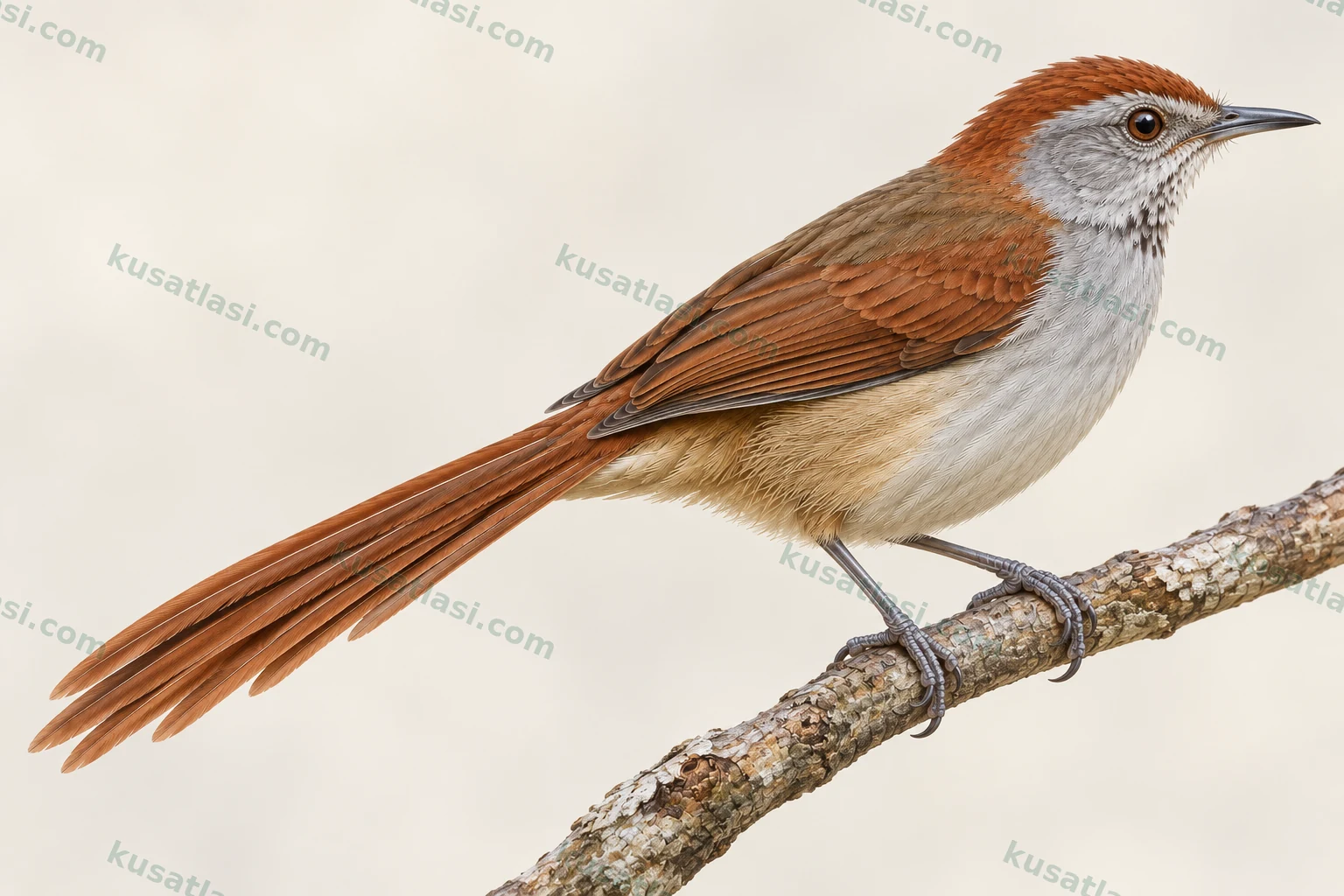
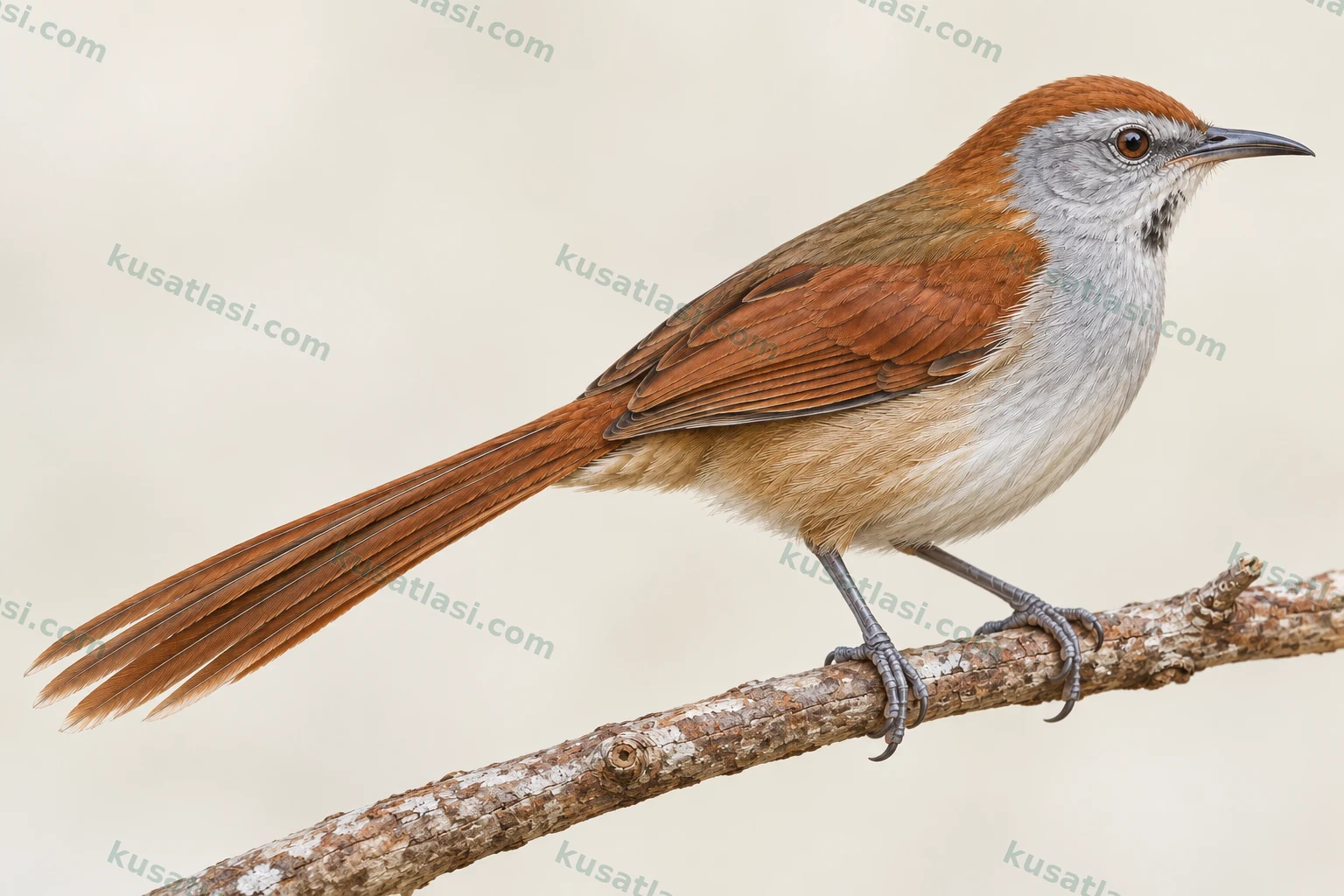
Furnariidae
Pale-breasted Spinetail
Synallaxis albescens
Examine pale grey-brown body, pale throat and rufous crown–wing areas together.
- Order
- Passeriformes
- IUCN status
- LC · Least ConcernGlobal IUCN. BirdLife v10 (2025); taxon matching: AviList 2026 / IOC 15.2; checked 29 October 2026. Checklist year is not the species assessment date. Source and method · BirdLife
At a glance
- Pale underparts
Examine pale grey-brown body, pale throat and rufous crown–wing areas together.
- Long tail, low cover
Wait for the natural movements of the bird hidden among grass and shrubs.
- Repeated voice
Listen for the sneeze-like two-note song; assess location and appearance together.
Biometrics
Length
- Male
- 13–16 cm
- Female
- 13–16 cm
Wing length
- Male
- 5.44 cm
- Female
- 5.44 cm
Weight
- Male
- 9–17 g
- Female
- 9–17 g
Length: Shared species value Wing length: Shared species value Weight: Shared species value
World distribution
Pale-breasted Spinetail
Customise map layers
Observation points
Preparing globe…
Monthly record count
Bars show record counts in this sample, not bird abundance or a breeding calendar. They are affected by recording and observation effort.
Rotate the globe and compare layers. Coloured areas are not exact observation or nest locations.
The source does not provide verified monthly range boundaries. All areas are shown; the month slider and monthly playback are therefore disabled.
- Jan
- Apr
- Jul
- Oct
- Dec
Generalised data and method
Base map: Natural Earth · Public domain
Open central bibliography ↗Calendar
Breeding activity was recorded during September–January in the 2003–2011 Águas Emendadas study. This is a central Brazilian calendar; monthly limits throughout the range were not verified.
All months: Monthly data unverified.
January
February
March
April
May
June
July
August
September
October
November
December
Habitat
Costa Rica–Panama; suitable South American scrub and savanna, Trinidad
In low grass and shrub cover, watch the pale-breasted, rufous-crowned, long-tailed bird; listen to its repeated natural song.
Sound
A harsh, short, sneeze-like two-note series is repeated. Assess it together with the pale breast and rufous head–wing areas; the bird may be more visible during natural song.
Do not play recordings to attract birds; observe quietly, especially near nests.
Breeding
In the central Brazilian study, an enclosed twig nest is entered through a horizontal side tunnel; three white eggs are usual. Mean incubation 18.1 days (5 nests), nestling period 13.6 days (4 nests). Regional results, not fixed values for the whole range.
Compare
Compare male and female
Wait for the natural movements of the bird hidden among grass and shrubs.
Species information
Quick identification
The Pale-breasted Spinetail is a small, long-tailed passerine that hides among grasses and low shrubs. Its general appearance is pale grey to brown; rufous tones on the crown and around the wing shoulders form more conspicuous colour areas. The pale throat and breast matter when comparing darker similar spinetails. Rather than deciding from a rufous crown alone, assess pale underparts, long tail and repeated sound sequence together. These details become easier to follow when the bird moves to a more visible branch to sing.
These source explanations also appear below the cards.
General appearance and posture
Read the plain pale grey-brown body together with the rufous crown and wing areas. The rufous is not extended to the whole tail or body. The long tail helps reveal its shape even when seen briefly as it moves through low vegetation. The pale throat can be assessed particularly from the side and slightly in front. It may look darker in a shaded photograph; one image’s brightness setting does not replace the bird’s actual identification pattern.
It tends to hide along grassy field edges, in tangled wild vegetation and at the shrubby boundaries of regrowth. Only its head or tail may show in dense cover. Its appearance on an open branch may be especially noticeable during song, providing a useful viewing opportunity. Yet it does not necessarily sing at the same height and place every time. Following its natural movements rather than driving it from cover offers a better view without forcing unseen details.
A bird visiting a nest may enter and leave a bush at short intervals. This can suggest breeding, but one entry does not establish the presence of eggs or chicks. The scientific study in Brazil monitored enclosed nests and the developmental stages inside them separately. A pile of twigs in the field does not confirm this species’ nest. Appearance, natural voice, location and behavioural context should be recorded together.
Males, females and young birds
The sources examined did not establish reliable field criteria for distinguishing males and females at every encounter throughout the current species’ range. A redder-crowned bird is therefore not labelled male, nor a paler one female. Light, hidden feathers and image colour settings may change the appearance of the same individual. Two birds together or an individual carrying nest material do not alone determine sex either. Where definitive features are lacking, leave the male–female distinction open.
The shared wing-card value comes from published specimens considered together; separate male and female means were not calculated. Most museum specimens being male does not prove that every female has the same measurement. Source context is retained alongside the figure. Nor did this review establish reliable field criteria for distinguishing young birds across all subspecies. A less rufous-looking crown or faint throat does not determine age by itself. Species identity may be assessed while age and sex remain uncertain.
Appearance in flight
As this species is mostly encountered in low cover, long, exposed flight views do not form the basis of identification. A long tail and pale grey-brown body may briefly show as it passes between bushes. A glimpse of the rufous wing area also supports the description; however, an unseen throat or head pattern must not be added to a flying silhouette. No reliable species-specific upperwing or underwing flight key was verified in the sources examined.
Neither migration distance nor flight speed is calculated from this. Following the landing point after natural movement is more useful for rechecking face and breast colour. Presenting an unseen flight feature as certain makes comparison with similar species harder.
Voice and behaviour
The song is conspicuous as a regularly repeated, harsh, short, sneeze-like sound. The specialist identification account compares it to “a-choo”; it helps detect the bird when it remains inside scrub. A vocal imitation does not contain every detail of a real recording; note order, repetition and natural context matter more. A singing bird may emerge onto a visible branch, showing the benefit of watching quietly after hearing it.
The scientific comparison with Synallaxis beverlyae, described from the Orinoco, emphasises that the Pale-breasted Spinetail’s simple two-note song differs markedly from that species’ voice. Plumages may resemble each other while voices differ. Identification therefore does not rely only on pale-breasted, rufous-crowned appearance. Listening to natural song and waiting is enough; playback to force a response is unnecessary. Repeatedly approaching a nest is not regarded as harmless behaviour that necessarily provides more scientific information.
Similar species
1. Synallaxis brachyura is darker, particularly in its throat, which is not as pale as in the Pale-breasted Spinetail. Despite similar rufous crown and wing areas, compare overall underpart colour, locality and voice together. A photograph darkened by shade alone does not show this species.
2. Synallaxis beverlyae is a similar-looking bird that may occur locally alongside this species around Venezuela’s Orinoco. The original comparison describes differences between grey and brown shades of face and underparts, but voice is especially important too. The Pale-breasted Spinetail’s simple two-note series is not used in place of this close look-alike’s voice. The regional comparison is not turned into a single colour threshold for every subspecies.
Global range
The range extends from southwestern Costa Rica to southern and central Panama, and in South America from suitable open and scrubby Colombian areas to Venezuela, Trinidad and the Guianas. It occurs in suitable cover in coastal and inland Brazil and southern Amazonia, eastern and northern Bolivia, around southeastern Peru, and parts of Paraguay, Uruguay and Argentina. The current taxonomic account notes its southern extension to Río Negro in Argentina. This broad framework does not imply uninterrupted distribution everywhere in every country.
Regional status
Scrub and savanna surroundings must be distinguished from closed tropical forest when reading this range. A coloured country on a map does not place the bird in every dense forest. The Águas Emendadas study in central Brazil provides nest records in open Cerrado and scrubby grassland; the Orinoco work discusses local contact with another similar species on suitable river islands. These are regional findings from different environments. Subspecies scope can vary with source and checklist, so an old list is not confused with a current count.
Migration and seasonal status
No verified intercontinental migration line or monthly arrival–departure calendar covering the entire range was found in the sources examined. A September–January nesting season observed in central Brazil does not mean all birds travel between countries during those months. Breeding period, daily habitat use and migration are different information. One observation point is not breeding evidence or a migration corridor by itself; regional nest data do not determine the calendar for all South America.
Breeding habitat
Low scrub, tangled grasses, field edges and boundaries of regrowing vegetation matter in daily life. Most nests in the central Brazilian breeding study were in scrubby grassland and open Cerrado. The researchers explicitly state that habitats were not searched equally; the distribution does not experimentally establish the degree of habitat preference.
Nest site
The nest is an enclosed mass of interwoven twigs, with a horizontal side-entry tunnel leading to the egg chamber. Softer plant material lines its inner floor. Mean height above ground in the study was 30 cm (the mean of 30 central Brazilian nests, not a fixed height throughout the range). Three white eggs were usual.
Daily habitat use
The bird hides in dense low vegetation and may be more visible when singing. Pulling vegetation aside to open a nest entrance is unnecessary. Regular scientific nest monitoring does not recommend equally frequent approaches by ordinary visitors; the study also reports one nest lost through human interference. Avoid blocking a suspected entrance, listen from afar and wait for natural movements.
What does it eat?
AVONET’s dietary classification places this species among invertebrate feeders. This broad group is not a measurement of one prey species or a daily food percentage. Occurrence in scrub and grass does not mean the Pale-breasted Spinetail eats leaves or field seeds. Unverified insect identities, prey quantities or rates of reducing agricultural pests are not added. The cover used and food actually swallowed are kept as separate observational information.
How does it feed?
Following its movements inside low vegetation and the small surfaces towards which it directs its bill helps interpret feeding. If prey was not seen, looking at a leaf is not recorded as catching a particular insect. Passing between plants, progressing through cover and pausing briefly are assessed in their own context. A broad diet group does not fill these details. Neither putting out food nor parting the hiding branches is needed for a better view. Watching natural searching from a distance preserves behaviour and separates visible prey from unseen guesses.
A twig nest with a side entrance
The central Brazilian study describes all nests as enclosed twig masses entered through a horizontal side tunnel. Soft plant material lines the egg chamber floor. Snake-skin pieces, plastic strips or wrapping were also recorded in some nests. Finding such material does not recommend adding plastic or snake skin to nests. Its presence and experimentally demonstrating a benefit to the bird are different questions.
Three eggs are common, not fixed
Of 16 monitored nests, ten had three eggs, five had two and one had one. “Usually three” is supported by this local distribution, not a claim of exactly three in every nest. The two eggs measured in detail came from the same nest and averaged 1.97 × 1.44 cm (the published mean of two eggs, not an unvarying species-wide egg size). The limitations of a small sample must stay attached to the number.
Where a duration starts matters
Mean incubation in the central Brazilian study was 18.1 days (five nests; from laying the last egg to hatching the first). The nestling period was 13.6 days (four nests; from the first egg hatching to the last chick leaving). These periods have different starting and finishing points. Comparing day counts with another study without those definitions can mislead. A regional mean does not mean identical duration in every nest either.
Success rate is a regional result
Four of the 16 closely monitored nests fledged young, eleven were lost to predators and one was abandoned. The study’s 25 percent success applies to this sample, not all 35 nests found and not the whole continent. A nest lost through observation interference also recalls the consequences of approaching. Learning about breeding does not make repeatedly inspecting enclosed entrances necessary or harmless.