
World Birds
Field identification plates
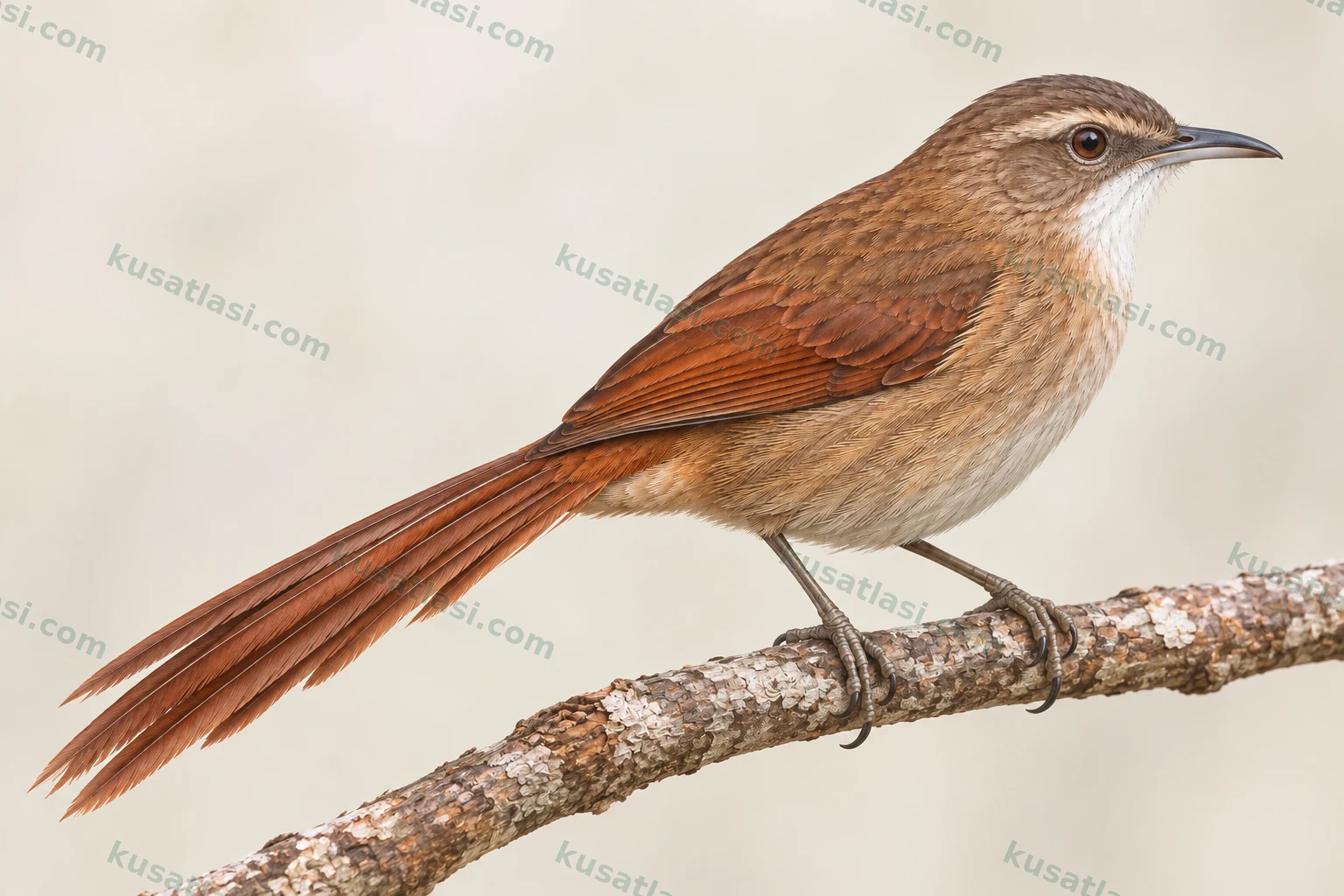
Swipe left or right between the two adult plates.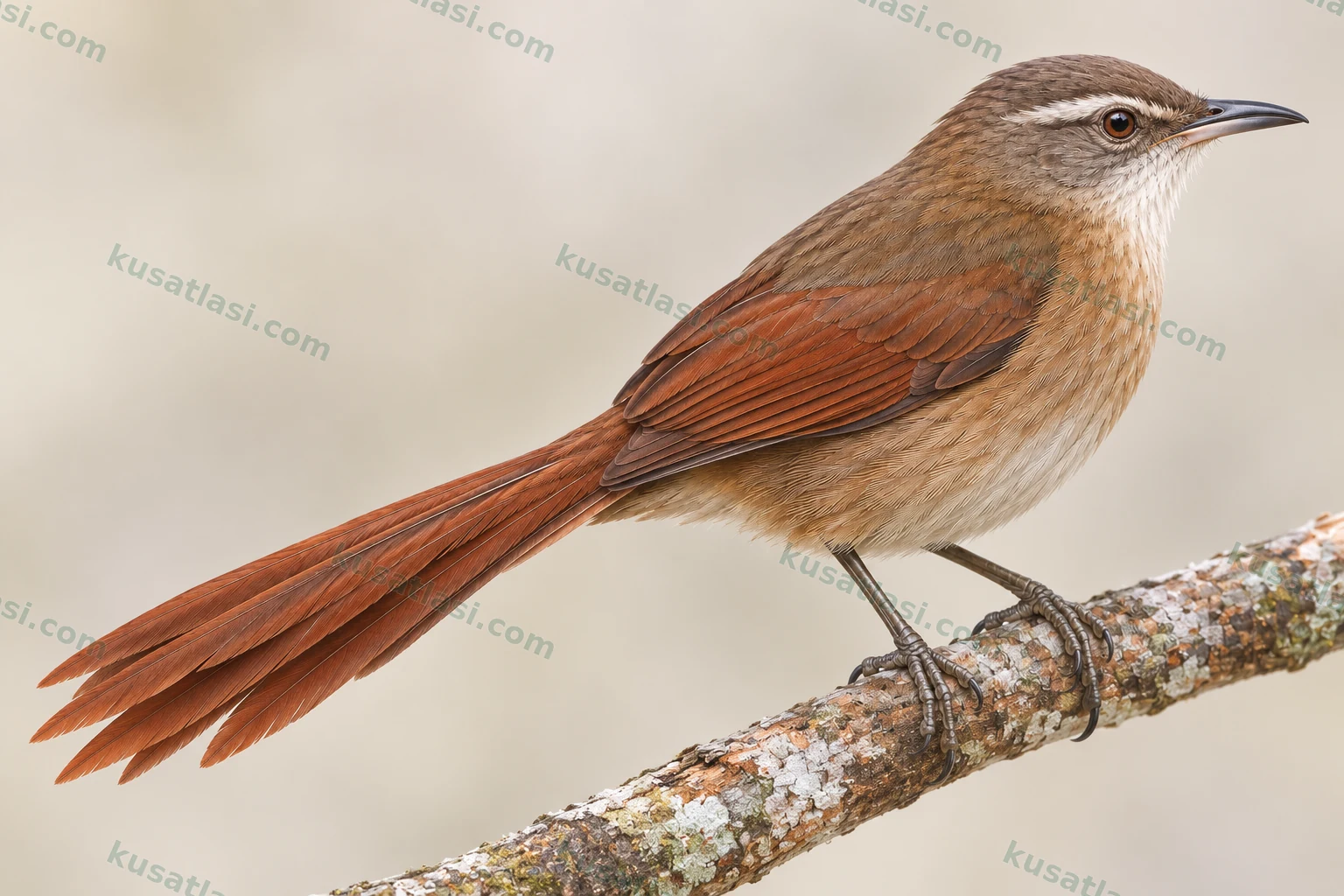
Furnariidae
Plain-crowned Spinetail
Synallaxis gujanensis
The crown is dull grey-brown; compare the rufous crowns of close species.
- Order
- Passeriformes
- IUCN status
- LC · Least ConcernGlobal IUCN. BirdLife v10 (2025); taxon matching: AviList 2026 / IOC 15.2; checked 29 October 2026. Checklist year is not the species assessment date. Source and method · BirdLife
At a glance
- No rufous cap
The crown is dull grey-brown; compare the rufous crowns of close species.
- Rufous wing and tail
See both areas together with the pale eyebrow and body tone.
- River scrub
Locality and historical taxon name matter in separating close species.
Biometrics
Length
- Male
- 15–17 cm
- Female
- 15–17 cm
Wing length
- Male
- 6.06 cm
- Female
- 6.06 cm
Weight
- Male
- 13–22 g
- Female
- 13–22 g
Length: Shared species value Wing length: Shared species value Weight: Shared species value
World distribution
Plain-crowned Spinetail
Customise map layers
Observation points
Preparing globe…
Monthly record count
Bars show record counts in this sample, not bird abundance or a breeding calendar. They are affected by recording and observation effort.
Rotate the globe and compare layers. Coloured areas are not exact observation or nest locations.
The source does not provide verified monthly range boundaries. All areas are shown; the month slider and monthly playback are therefore disabled.
- Jan
- Apr
- Jul
- Oct
- Dec
Generalised data and method
Base map: Natural Earth · Public domain
Open central bibliography ↗Calendar
Riverbank and island vegetation depends on seasonal water changes; the studies reviewed supplied no reliable monthly breeding or migration schedule for the entire range.
All months: Monthly data unverified.
January
February
March
April
May
June
July
August
September
October
November
December
Habitat
Amazon basin, Guianas and neighbouring South American regions
Examine the dull crown, pale eyebrow, rufous wing and pointed tail together.
Sound
Boesman compared recordings under different taxonomic concepts. A single sound is not certain identification without linking the recording to the visible individual and current species.
Do not play recordings to attract birds; observe quietly, especially near nests.
Breeding
Reliable sources did not verify a typical clutch size or incubation in days for current narrow Synallaxis gujanensis. Nest records under the former broad taxon may belong to other split species. Counts are not transferred without direct evidence of nest locality, structure and bird identity; avoid disturbing birds when approaching an active nest.
Compare
Compare male and female
See both areas together with the pale eyebrow and body tone.
Species information
Quick identification
The Plain-crowned Spinetail is a furnariid of scrub and low vegetation in the Amazon basin and neighbouring South American regions. It has no conspicuous rufous crown cap: the crown is duller grey-brown. Look for the pale eyebrow, rufous wings and long, pointed rufous tail together. The throat is pale, while breast and flanks may look warmer buff. “Spinetail” describes the tapered tail feathers, not a separate needle-like stabbing organ. Some close relatives also have rufous wings and tails, so those two patches alone do not give certain identification.
General appearance and posture
The dull brown crown and back are less bright than the rufous wings and tail. Peru Aves's regional description particularly stresses the greyish crown without a rufous cap. Oiseaux.net recognizes six subspecies, so one photograph's body tone should not be imposed on every geographical population. The pale face stripe stands out in suitable light but may disappear in deep shade. Graduated, pointed tail feathers can be partly hidden while the bird moves through narrow shrubs. An apparently short tail in one frame should not immediately be assumed truly short.
Its slender bill suits collecting small invertebrates among branches. In Rosenberg's Peruvian river-island study the species chiefly searched small branches and twigs, sometimes moving by exposed tree roots and descending to the ground. This direct observation does not mean it always feeds on the ground in every forest; the islands' vegetation is a particular context. Forcing shrubs apart to watch longer also changes behaviour. From a quiet position, note the plant surface searched and its height.
Current Synallaxis gujanensis need not share the boundaries of a name sometimes applied more broadly in older studies. Avibase separates the accepted narrow species from historical groups including S. maranonica and S. albilora. The similar Turkish names distinguish this species, Açık Suratlı Dikenkuyruk, from S. albilora, Ak Yüzlü Dikenkuyruk. Similar names do not imply biological identity. Adding the second species' records to the first species' map or biometrics after seeing one pale facial patch would be wrong. Read the source's dated taxonomic concept together with locality.
Males, females and young birds
The specialist accounts reviewed offered no verified range-wide field rule reliably separating males and females by one head or wing tone alone.
No verified daily sequence of juvenile moult across all subspecies was found in the reviewed sources. A duller crown alone does not mean a juvenile; shade, feather wear and geography can create the same impression. A bird moving with an adult in scrub may be its young, but a shared branch does not establish family ties. Age notes should specify feeding or feather condition actually seen. Uncertainty about age and sex is a limit of the observation, not a failure to identify the species.
Appearance in flight
Short flights between shrubs briefly expose the rufous wing and long tail. These two areas, warmer than the body, are useful clues, but similar Synallaxis can also have rufous wings or tails. The checked studies established no invariant, independently diagnostic pattern on upper- and underwing. No special colour patch is therefore added to an unseen underwing. If it lands again, check the absence of a rufous cap, facial stripe and body tone on the same bird.
Perspective in a short flight also distorts tail length. Noting flight direction and landing shrub helps establish whether the next view concerns the same individual. One rufous flash is easily confused with another long-tailed species. Slow observation from several angles is more valuable than certainty forced into one frame.
Voice and behaviour
Boesman compared recordings associated with Plain-crowned, White-lored and Maranon spinetails. Some vocal groups differed clearly in rhythm and note shape. However, historical recording names may not exactly match current species limits; an old “gujanensis voice” is not automatically narrow modern S. gujanensis. Do not mark the shrub from which sound came as a species observation without securely tying the recording to the visible bird.
Rosenberg's island observations directly show searching on twigs and small branches. That is not the same as fast aerial hunting. Descending beside exposed roots also does not mean continuous ground feeding. River levels and young-island vegetation change seasonally; a shrub used at one time may not remain there later. Record behaviour with place and season rather than as one immutable species action.
Similar species
1. White-lored Spinetail (Synallaxis albilora) needs particular care because of older broad-taxon records. It is currently a separate species; the Turkish names' pale/white components are very similar. Boesman's vocal-group comparison supports separation, but one syllable without securely matching bird and recording cannot resolve every observation. Old egg and measurement notes must be examined with their taxonomic concepts.
2. Maranon Spinetail (Synallaxis maranonica) is another historical S. gujanensis-complex member. Its narrow range and work on its distinct vocal group show the need to recheck old records around the eastern Andes. A glance at a grey-brown crown or rufous wing does not alone establish the boundary; locality and the date of the source's name usage matter.
3. Dark-breasted Spinetail (Synallaxis albigularis) was another comparison species in Rosenberg's same river-island study. Peru Aves finds Plain-crowned Spinetail's greyish, uncapped crown useful regionally. A rufous wing alone does not identify the species without considering breast tone, crown, face and tail together.
Global distribution
Narrow current Synallaxis gujanensis is associated with river margins, gallery forests and scrub in the Amazon basin. Avibase gives a complex distribution from eastern Colombia to eastern Bolivia and across Amazonian Brazil to the Guianas and eastern Venezuela. Some older sources combined S. albilora and S. maranonica under the same broader name; these records cannot be mapped without checking new boundaries.
Status within its natural range
Oiseaux.net's six-subspecies account also indicates geographical variation. Country names do not mean every part of those countries is occupied; deep forest, river islands and scrub cannot be treated as identical habitats.
Migration
Rosenberg's river-island observations were made in a local environment with changing water levels and vegetation. The shrub group used by a bird can be recorded there, but island shifts do not prove annual long-distance migration for the entire species. Distribution arrows drawn from an older broad concept are not the current narrow species' migration route. Seasonal habitat change and directional migration remain distinct phenomena.
Breeding habitat
Specialist sources include riverine scrub, gallery forest and humid tropical lowlands among environments used by the current species. Rosenberg's young Peruvian river islands form a particular study area; behaviour there is not automatically extended to every Amazon forest. Water levels can change the low vegetation of young islands, making the observation season important. Seeing a bird is not breeding evidence unless a particular nest is found there.
Nest site
Various nest and egg notes exist under the old Synallaxis gujanensis name, but its current boundary excluding S. albilora and S. maranonica is not clear in every old record. Reliable sources reviewed did not verify a typical clutch size or incubation in days applicable throughout narrow S. gujanensis. A domed nest and eggs of another spinetail are not borrowed for this species. Opening an apparently active shrub nest to identify its owner may disrupt behaviour.
Daily space use
Rosenberg directly observed birds searching small branches and twigs, sometimes nearing the ground beside exposed tree roots. This does not make them exclusive ground-feeding specialists. Vegetation succession and flooding can alter available surfaces on river islands. Recording branch height, plant species and water level separately makes daily space-use results easier to compare among sites.
What does it eat?
AVONET codes the species broadly as an invertebrate feeder. Birds directly observed by Rosenberg on Peruvian river islands searched small branches and twigs, regional evidence of seeking small arthropods on branch surfaces. Probing a branch does not by itself identify the prey caught. The checked studies provide neither range-wide percentages of insect families nor daily prey counts. An easy but unsupported assertion such as “always eats ants” is therefore not made. Food data must be tied to the current narrow taxon and the observation locality.
How does it hunt?
Sequentially examining fine branches and twigs is not the same as taking prey beneath leaves or engaging in long aerial pursuit. Rosenberg describes Plain-crowned Spinetail mainly using branches, sometimes moving around exposed Cecropia roots and descending to the ground. These actions are directly documented for two islands and that study period, not identical root use throughout the range. If a falling item was not confirmed as prey, the note must remain accordingly limited.
Rapidly changing young-island scrub can also alter search surfaces. No numerical data were verified here measuring the effect on annual diet. Separately recording height, plant and actual prey visibility improves ecological understanding. Transferring a prey group from neighbouring spinetails merely through family resemblance is not scientific evidence.
Boundaries inside a name
Synallaxis gujanensis as recognized today is not every bird in the former broad gujanensis group. Avibase lists the narrow current species separately; White-lored S. albilora and Maranon S. maranonica are other taxa. This is more than naming order: an old nest's egg count or a museum wing can enter the wrong species' card. Study date, locality and the taxonomic understanding used then must be considered together.
Searching a river island
In 1990 Rosenberg quantitatively studied habitat and foraging on Napo River islands in northeastern Peru. Plain-crowned Spinetail mainly searched fine branches and twigs, sometimes descending by exposed Cecropia roots. Water levels and plant communities on young islands can change quickly. This study gives direct behavioural observations, not one feeding-percentage programme for every Amazon forest. Showing a regional result's boundaries does not diminish it; it explains its conditions of validity.
Vocal groups and interpretation
In 2016 Boesman compared vocal features of recordings from the former broader spinetail group. Some recordings within the broad “gujanensis” voice group differed from others in rhythm and maximum frequency. This is useful evidence for discussing taxon boundaries, not an automatic correction whenever a recordist used the wrong species name. Check whether the bird was actually seen in the recording and its locality too.