

World Birds IUCN statusLC · Least ConcernGlobal IUCN. BirdLife v10 (2025); taxon matching AviList 2026 / IOC 15.2; checked: 29.10.2026. The list year is not the species’ assessment date. Source and method · BirdLife OrderPasseriformesPasserines FamilyFurnariidaeFurnariidae
White-chinned Thistletail
Asthenes fuliginosa
Brown bird of high-Andean cover with a white chin and long narrow tail.
Biometrics
Length
Male18–20 cm
Female18–20 cm
Shared species value
Wing length
Male5.8 cm
Female5.8 cm
Shared species value
Weight
Male14–20 g
Female14–20 g
Shared species value
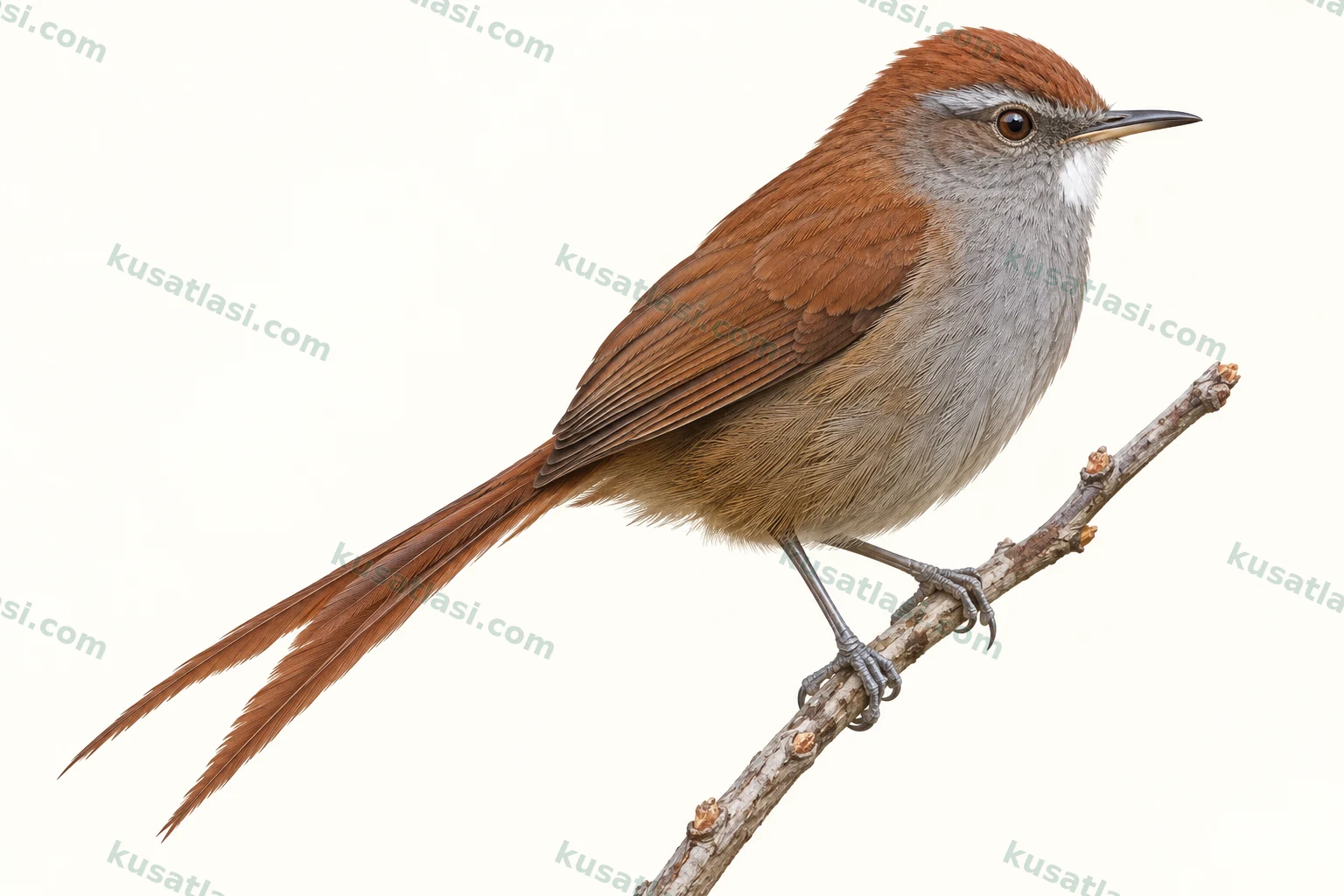
White-chinned Thistletail
Northern and central AndesObservation guide in its natural range
Look for three features together
Do not rely on a single featureUnstreaked grey underparts, white chin and throat.
Long, loose and finely pointed.
Dense treeline scrub and páramo cover.
Compare male and female
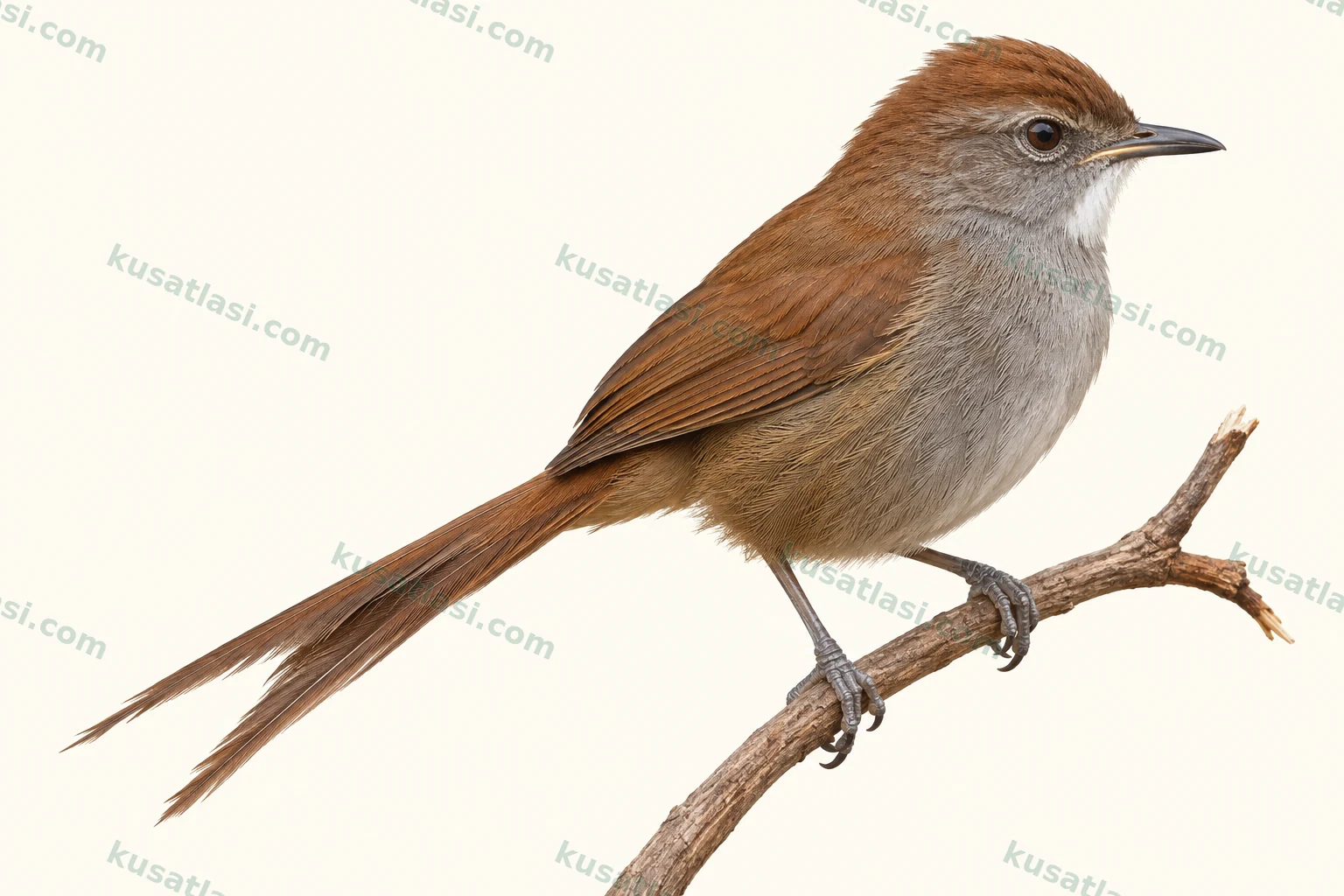 FemaleMale
No reliable detailed adult-sex and young-bird field key was found.
Where to look in its natural range?
Dense transition cover in the high mountains of Venezuela–Colombia–Ecuador–Peru.
Resident; July–September breeding record in eastern Colombia. Detailed breeding months elsewhere unverified.
January
Data unavailable
February
Data unavailable
March
Data unavailable
April
Data unavailable
May
Data unavailable
June
Data unavailable
July
Eastern Colombia: Breeding status reported in an expert synthesis.
August
Eastern Colombia: Breeding status reported in an expert synthesis.
September
Eastern Colombia: Breeding status reported in an expert synthesis.
October
Data unavailable
November
Data unavailable
December
Data unavailable
Nest, egg and incubation
Low ball nest of moss, grass and plant fibres; two eggs. Incubation and fledging periods unverified.
Sharp short call; accelerating, slightly rising rattling song.
Do not play recordings to attract birds; observe quietly, especially near nests.
Species information
Quick identification
White-chinned Thistletail Asthenes fuliginosa is a small passerine of dense high-Andean scrub and the treeline. Look together for warm brown upperparts, largely unstreaked grey underparts, white chin and throat and a long narrow pointed tail. White-chinned Thistletail is the English name of the same species.
General appearance and posture
The body lacks the heavy streaking of many similar Andean birds. A short indistinct pale eyebrow and thin pale eye-ring lightly mark the face. An institutional Colombian guide describes pale amber eyes, grey-cream underparts and a tail more chestnut than the body. Tail feathers look loose and finely pointed; the tail may be raised in alarm.
Males, females and young birds
Accessible sources examined did not provide a detailed young-bird key or reliable sexing criteria. Tail posture does not establish male or female. Forms from different mountain regions must not be interpreted as sex differences either.
Appearance in flight
No verified species-specific underwing identification pattern was found. A long finely pointed tail may help in a bird moving through cover, but a tail view alone is insufficient. Identification depends on seeing the whole bird within cover rather than waiting for a long exposed flight.
Voice and behaviour
The institutional field guide reports sharp short calls and a thin rattling song that accelerates and rises slightly. Birds may remain alone or in pairs in dense cover. The 2024 Belmira study documented feeding movement and vocalisation on separate dates; calling does not show a nest was present at the time.
Similar species
Look for this species' warm upperparts, pale eye surround and white chin and throat together.
Streaked canasteros may have more obvious body streaking. In other nearby thistletails, assess the full tail and throat appearance; a long tail alone is shared.
World distribution
The natural range extends from around southwestern Venezuela through Colombia and Ecuador to the northern and central Peruvian Andes. Current AviList recognises four subspecies. Their Colombian–Ecuadorian and Peruvian mountain belts differ; older subspecies boundaries do not entirely match the current list.
Status within its natural range
The global category is Least Concern. Two new observations were recorded in June 2024 in Belmira páramo, Antioquia, Colombia. They were published as extending the previously known range about 170 km northward in the Central Cordillera. They did not measure a bird travelling 170 km or settling there newly.
Movements
It is classified as resident; no regular long-distance migration was verified. Gaps in observations between mountain belts do not prove absence. The map shows verified current-taxon points; every intervening valley is not painted as occupied habitat.
Breeding habitat
It uses treeline dwarf woodland, dense scrub and mixed tall grass and fern cover. The transition between páramo and high-Andean forest matters. The current field paper gives a general 2300–4000 m belt, locally with Polylepis woodland; Belmira observations were at two distinct high points within it.
Nest site
The institutional Sibundoy guide describes a low, ball-shaped nest of grass, moss and fine frailejón plant fibres, with two eggs. This is an expert synthesis of an older breeding record. July–September breeding status was reported for eastern Colombia, not a calendar for all the Andes. Incubation and time to fledging were not verified.
Daily use of space
It moves through cover alone or in pairs. For observation, the dense transition strip between forest and open high grassland is valuable rather than a sharp separation between them. Local habitat-area size has not been measured.
What does it eat?
Specialist and institutional accounts give small invertebrates as the main food. The Sibundoy guide also reports seeds; the annual quantity eaten has not been measured. Belmira observations showed foraging among branches, interpreted as probably taking a small arthropod; the prey was not directly identified.
How does it forage?
It works through dense vegetation, collecting food from leaves and branches. The guide reports solitary or paired feeding, often separate from mixed bird groups. Specialisation on a particular insect or prey percentages were not verified.
A new record is not a new migration measurement
The Belmira observations changed the known range boundary. Researchers consider this reason for more study in the area. Two records two days apart need not show two different birds or a breeding pair and cannot replace a population count.
A subspecies boundary can be studied again
The study treated the subspecies identity of Belmira birds cautiously. A local form should not be labelled certainly from geographic proximity alone; vocal and genetic comparison could provide stronger evidence. The page follows four currently accepted forms while retaining this local uncertainty.
The tail may be noticed before the throat
In dense cover the white chin may show briefly while the long loose finely pointed tail attracts attention more easily. A tail raised in alarm is a behavioural clue helping reveal the whole bird. Other long-tailed birds in the same area nevertheless make seeing the face and body necessary too.