
Approved field-guide plates
Great White Pelican identification views
Swipe left or right through all five plates.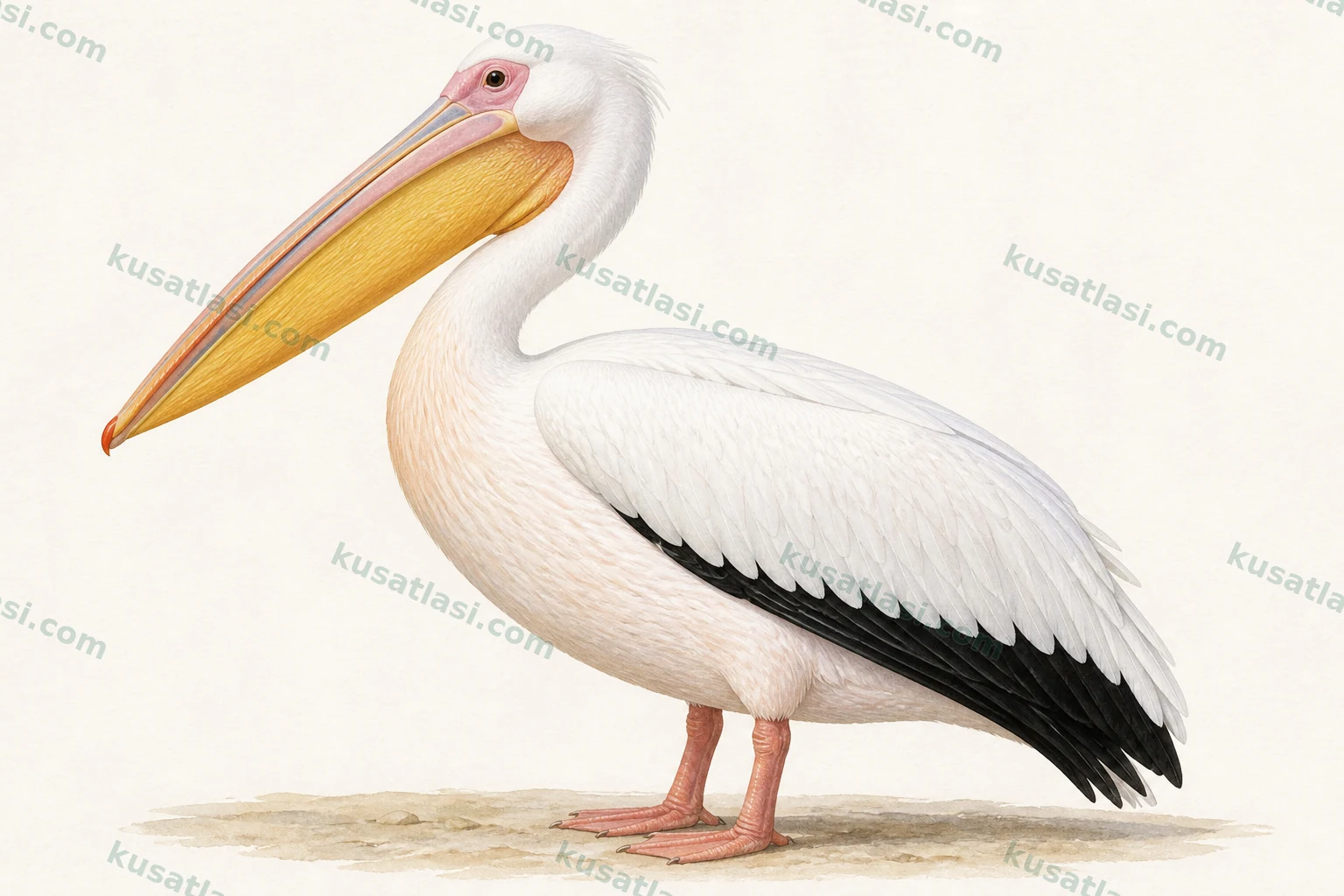
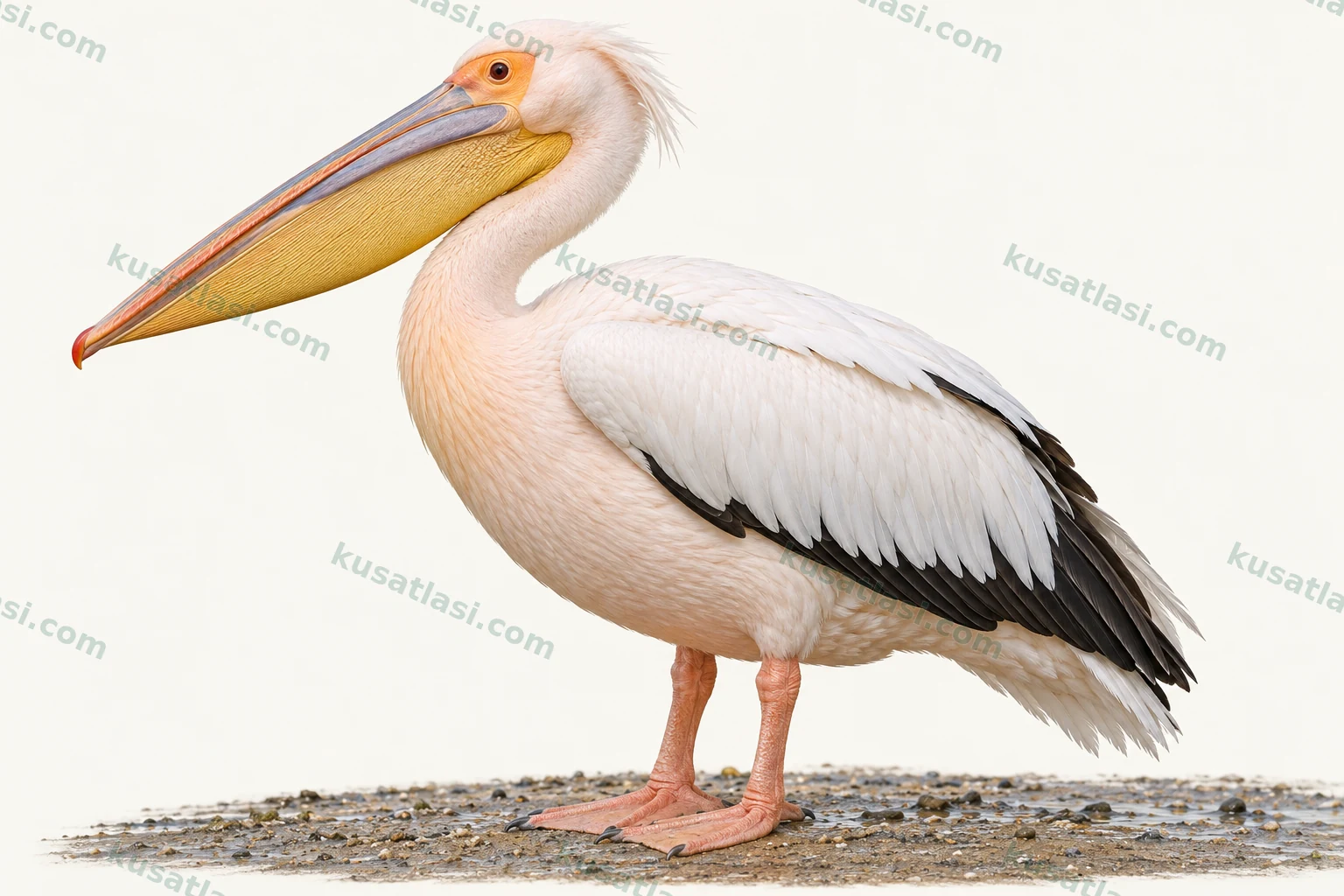
Pelicans
Great White Pelican
Pelecanus onocrotalus
Ak Pelikan
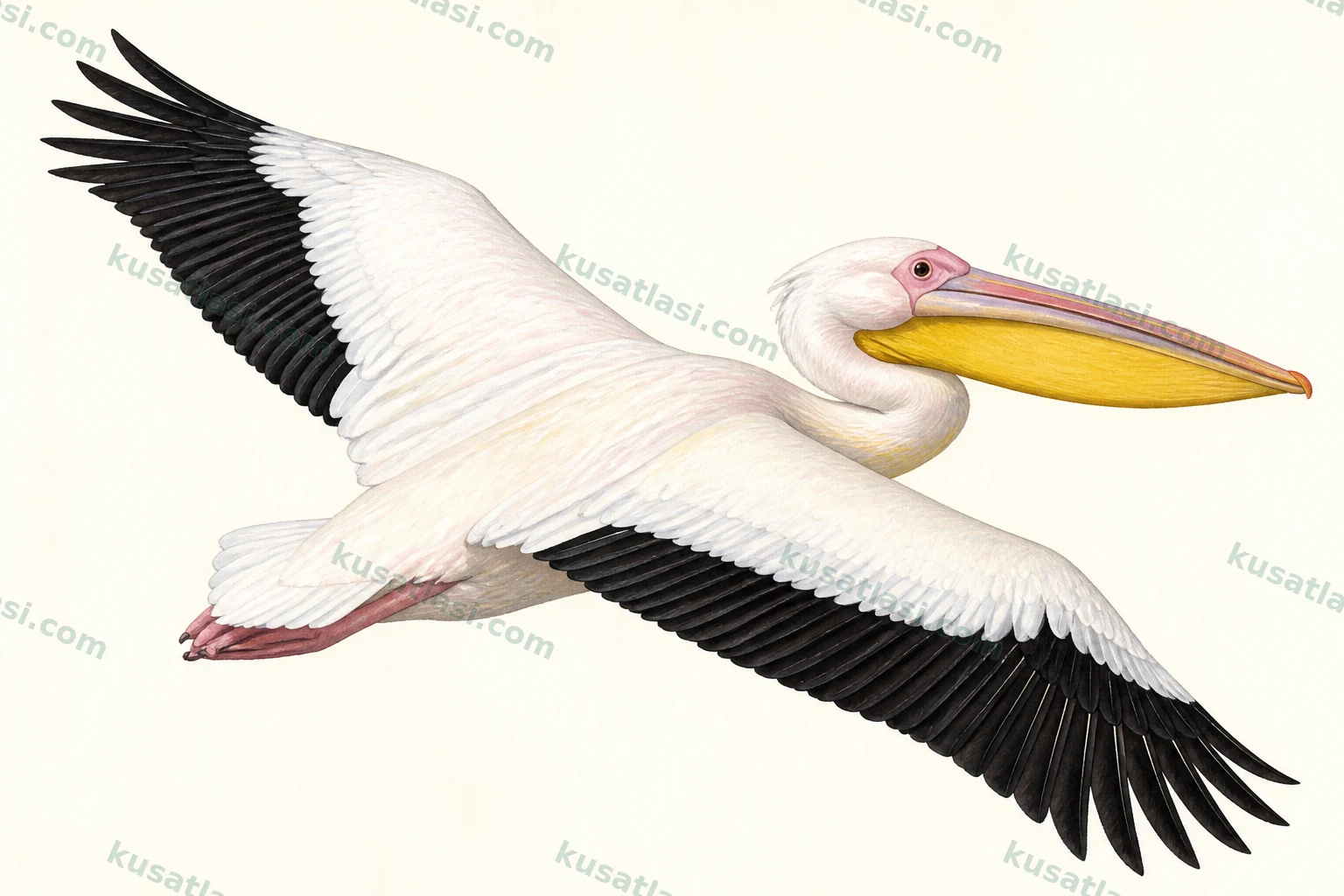
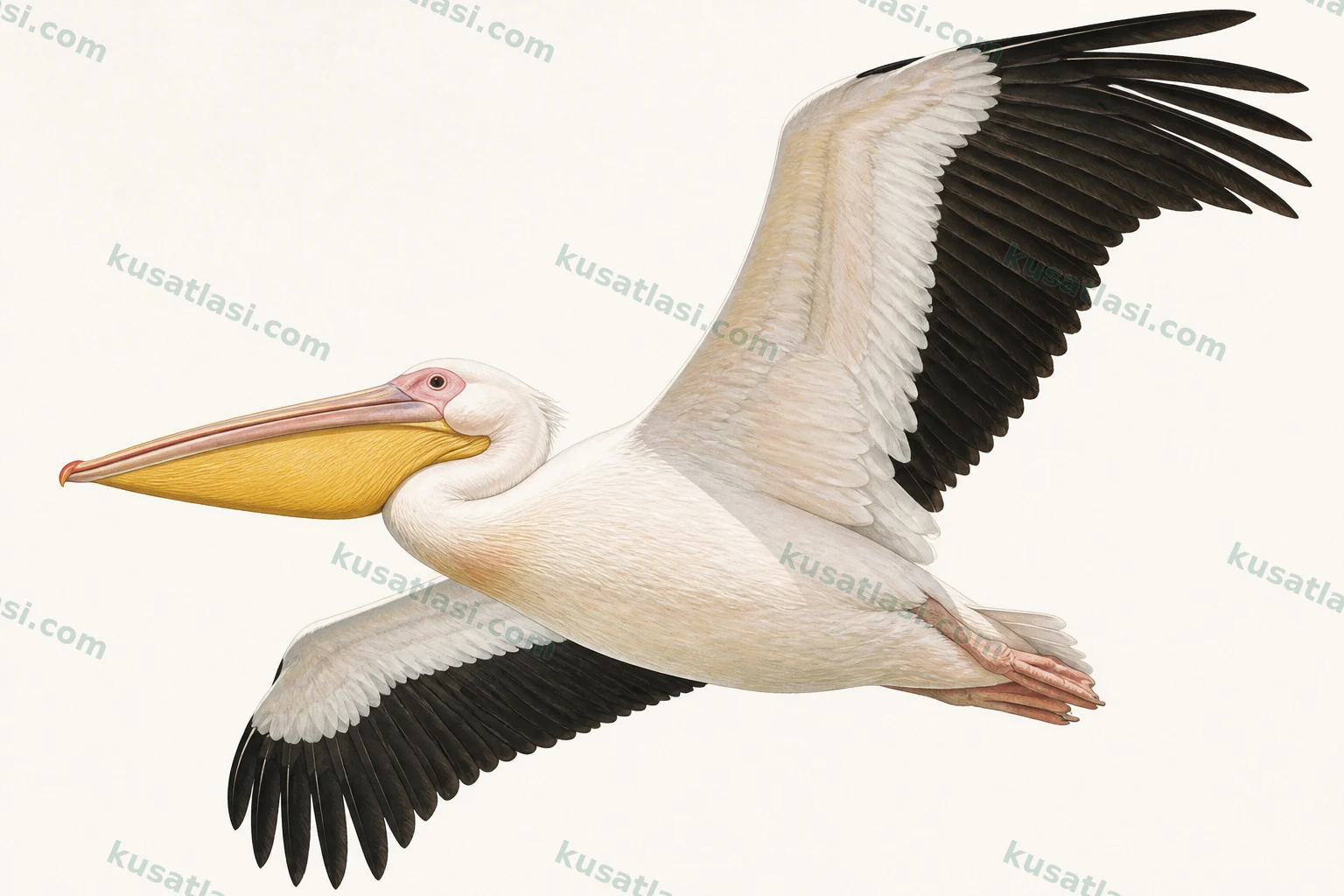
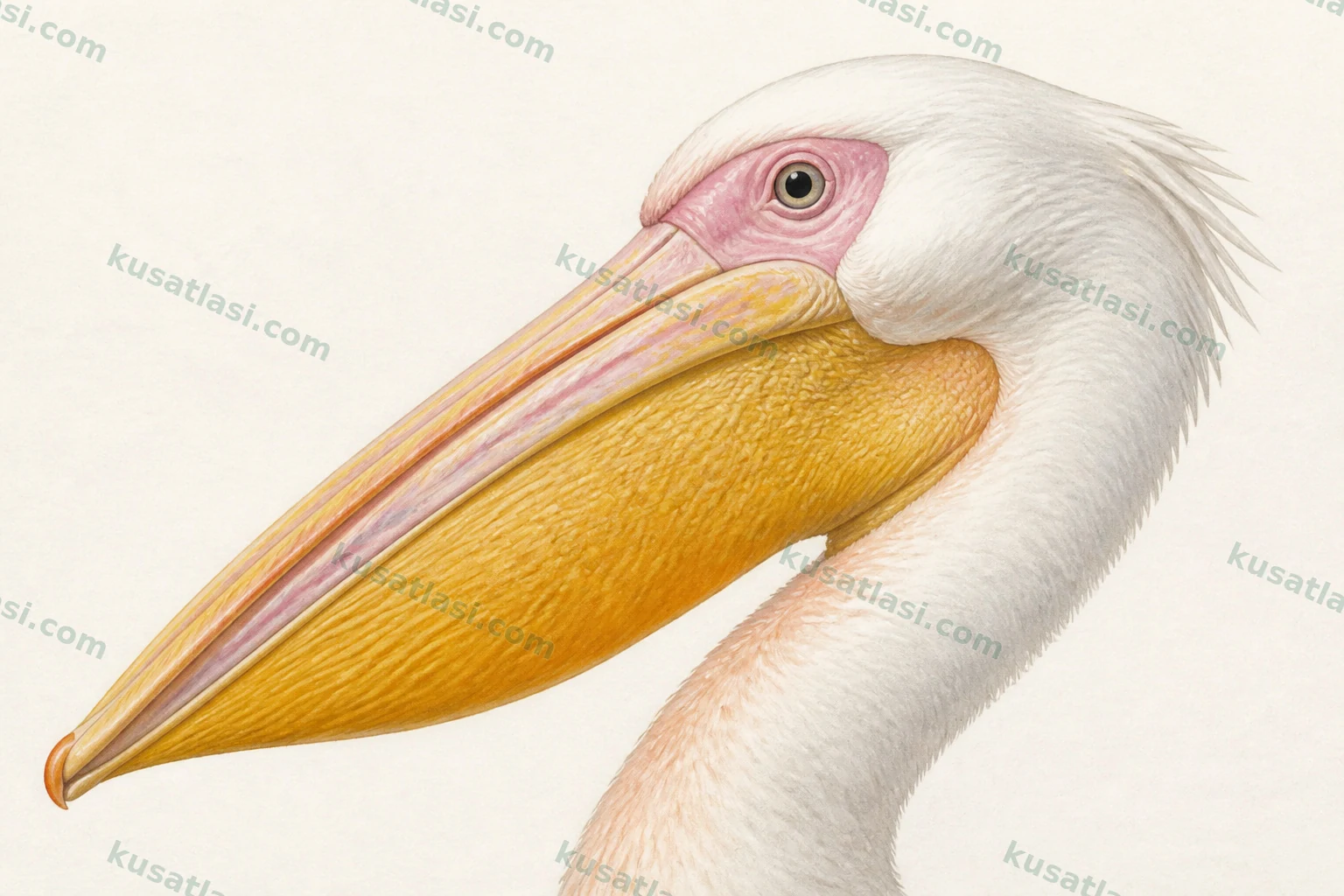
Combine broad bare eye skin, pale body and dark flight feathers; compare Dalmatian Pelican from the appropriate wing view.
- Order
- Neognathae
- Conservation status
- LC Least Concern
First look in the field
Quick identification
- Huge pouched bill
Check the large throat pouch together with the very large body.
- Dark flight feathers
Dark flight feathers contrast with pale wing coverts in flight.
- Retracted neck
The neck is drawn back in flight; a stork extends its neck.
Biometrics
Length
- Male
- 175 cm
- Female
- 148 cm
Wingspan
- Male
- 226–360 cm
- Female
- 226–360 cm
Weight
- Male
- 9–15 kg
- Female
- 5.4–9 kg
Detailed explanations of these measurements are available on our website, on the same species page.
World distribution
Great White Pelican
Customize map layers
Observation Sites
Bird Atlas recordsLoading observations…
Monthly record intensity
12 monthsRecord intensity is affected by observation effort.
Rotate the globe and compare the supported layers. Colours show broad range areas, not exact sightings or nests.
- Jan
- Apr
- Jul
- Oct
- Dec
Generalised data and method
Basemap: Natural Earth (public domain).
Bibliography ↗Authentic bird sound and ethical use
Voice and listening
Birds resting on water are often quiet. Low grunts may be heard in breeding colonies; do not approach a colony or flush birds to hear them.
Spoken guide
Narration has not been recorded; no audio file has been created.
Observe without approaching the nest
Breeding
Reeds and twigs on secure ground or an islet within a colony.
Usually one to three, commonly about two; four have also been documented.
Approximately 29–36 days; both parents care for the brood.
Do not approach colonies or nest islets; changing water levels can alter access.
Never rely on one mark
Similar species
Dalmatian Pelican
Pelecanus crispusCompare the dark underwing flight-feather area and breeding plumage together.
Storks
Ciconia spp.They extend the neck in flight and lack a throat pouch.
Scientific species guide
Detailed account
Overall Appearance
Great White Pelican is a very large waterbird with broad wings and a long bill bearing an expandable pouch. Adults are mainly white, sometimes more pink-toned in breeding condition. Dark flight feathers can be partly concealed at rest but form a strong contrast when the wing opens.
Adult Male and Female
Males are generally larger and heavier. Breeding facial skin may be pinkish-yellow in males and more orange in females, but colour must be assessed with season and conditions. Both sexes possess the large bill and pouch. The panel uses separately published male and female length and mass values; wingspan remains a shared species-wide range.
Young Birds
Young pelicans have browner heads and upperwings than the clean white adult. A dark pelican is not automatically another species. Check the head, back and coverts together, distinguishing juvenile body colour from the naturally dark flight feathers of adults.
Head and Flight
1. Check the broad bare area around the eye extending toward the bill. Pouch colour alone is insufficient because Dalmatian Pelican can have a vividly coloured breeding pouch.
2. From above, dark flight feathers contrast with the pale back and wing coverts.
3. From below, the broad dark flight-feather area contrasts strongly with pale coverts. This differs from the paler grey underwing flight feathers of Dalmatian Pelican.
4. The neck is drawn back in flight. A White Stork can also appear black-and-white but flies with the neck extended and has no pouch. Avoid judging all characters from one backlit photograph.
Nest and Breeding
Colonies nest on suitable secure ground or islets in wetlands, using plant material such as reeds and twigs. A typical clutch is about two eggs, with one to three commonly given in guides; four has also been documented at Lake Tana. Incubation lasts approximately 29–36 days and both parents care for the brood. First flight may occur at about 9–10 weeks. These are general biological figures, not dates observed at every Turkish colony.
Measurements
Lengths are sex-specific guide figures published by Tama Zoo, not fixed values for every individual. Wingspan is a broad species-wide range. Age and condition affect mass; perceived size in photographs is influenced by distance and posture.
Voice and Behaviour
Pelicans resting on water are often quiet. Low grunts may be audible in a breeding colony, so silence does not rule the species out. Record natural sound from a distance; do not enter a colony or flush a flock to obtain a call. Great White Pelicans may fish together, rest in groups on open water and soar on rising air. A flock flying in one direction may be moving between feeding and roosting sites, not necessarily migrating. An active nest requires evidence beyond the number of birds present. When counting a moving flock, guard against counting the same birds twice at different points.
Similar Species
Dalmatian Pelican is also large and pale. Compare the Great White Pelican's bare eye area and the strong flight contrast between pale coverts and black flight feathers; the Dalmatian's loose, curled nape feathers and paler grey underwing provide further context. Pouch colour varies with season and lighting and is not a safe single character. Smaller pelicans require attention to structure and wing pattern, since distance distorts apparent size. Storks may look similarly large and black-and-white in flight, but lack a throat pouch and extend the neck instead of drawing it back. Retain several views of head, underwing and silhouette for a difficult record.
Broad Range
Breeding areas include the Black Sea region and Central Asia, while resident populations also occur in Africa. Migratory and resident populations cannot be represented by one universal movement timetable. Turkish records require their own locality and date context.
Turkey
Wetlands can hold passage flocks, and breeding is documented at particular sites. Official accounts identify Aktaş Lake as a breeding wetland and report nesting on an islet at Yedikır. It would therefore be misleading to describe one site as the timeless sole Turkish breeding locality.
Passage and Winter
A large concentration may be feeding or resting rather than breeding nearby. Winter occurrence varies regionally with open water, food and weather. Keep numbers, direction and behaviour separate, and avoid recounting the same flock at different observation points.
Maps and Evidence
The map contains occurrence locations, not a satellite track of one bird. Observer effort affects apparent density. Neither a foreign colony's route nor a daily movement estimate is assigned to every pelican in Turkey. The calendar is qualitative field guidance, not a guaranteed monthly presence schedule.
Month-by-month field notes
1. January: On open water, check both age and pelican species.
2. February: Record local count changes alongside weather.
3. March: In flight, view neck posture and wing pattern together.
4. April: Do not turn a resting flock into a count of active nests.
5. May: Watch colonies from a distance and do not land on nest islets.
6. June: Colonies need not be at the same breeding stage.
7. July: Distinguish dark-backed young birds from adults.
8. August: Separate group feeding from directed migration flight.
9. September: Avoid double-counting the same flock at different sites.
10. October: Check the Dalmatian Pelican possibility using the underwing.
11. November: Survey both shallow feeding water and safe roost islets.
12. December: Record effort; failure to see birds is not proof of absence.
Productive Wetlands
Lakes, lagoons, deltas and shallow waters provide feeding opportunities. Accessible fish, safe resting ground and room for take-off matter together. Waterbody size alone does not establish suitability on a given day.
Feeding Shallows
Watch flocks swimming and dipping their bills in shallow areas. Observe from shore or authorized viewpoints rather than driving a boat through the group. Natural coordinated movements are easier to understand without disturbance.
Islets and Water Level
Secure ground can provide resting or nesting places. Changing water levels can connect an island to land or flood low nest sites, so habitat cannot be judged solely from a fixed mapped shoreline. Resting birds are not automatically local breeders.
Colony Connections
Adults may feed away from the nesting site. Protecting the colony alone does not preserve every feeding opportunity or travel route. Do not approach nests, land on colony islets or use a drone for close views; increase distance if the flock responds to your approach.
Mainly Fish
Fish form the principal diet. The large bill and expandable pouch help capture prey with water. A large bill does not mean that every prey item is large, and an unseen fish should not be assigned a species in the observation record.
Cooperative Fishing
Birds may swim in an arc or line, concentrating fish before dipping their heads. Watching a sequence reveals the coordination. Cooperative feeding supports behavioural understanding but does not alone rule out other pelican species.
An Active Pouch
The pouch changes shape as it works with the bill. A raised head or expanded pouch does not reveal the exact number or identity of prey from a distance. Distinguish the observed action from its presumed result.
Provisioning and Local Movement
Both parents participate in care. Flights between feeding grounds and colonies need not be migration. Record movement with its date and context. Avoid feeding birds to draw them ashore, and report entanglement to wildlife authorities without attempting a risky intervention yourself.
Hidden Contrast
A resting adult can look almost entirely white, while the opened wings reveal extensive dark flight feathers. This is why one posture is not enough. Separate dorsal and ventral views when comparing with Dalmatian Pelican.
Soaring
Broad wings allow use of rising air currents. Flock flight is striking, but not every formation is on a long-distance migration; local travel between feeding areas can produce similar observations.
Changing Facial Colour
Breeding condition can intensify pinkish plumage and sex-related facial skin colours. These are not fixed year-round paint patterns. Do not identify sex from one illustrated shade without the supporting seasonal and structural context.
Different Counting Units
Total birds, active nests and breeding pairs measure different things. Feeding visitors and migrants may join local birds. Keep the units separate in reports rather than converting a flock total into breeding pairs.
Local Studies Remain Local
Lake Tana research documents variation in clutch size. Its breeding months, water conditions and success rates should not be transferred directly to Turkey. Findings from different regions are valuable when their original place and time are retained.
Species text and plates come from existing atlas records. Measurements were checked against reliable species sources.
Open bibliography