
Approved field-guide plates
Mediterranean Gull identification views
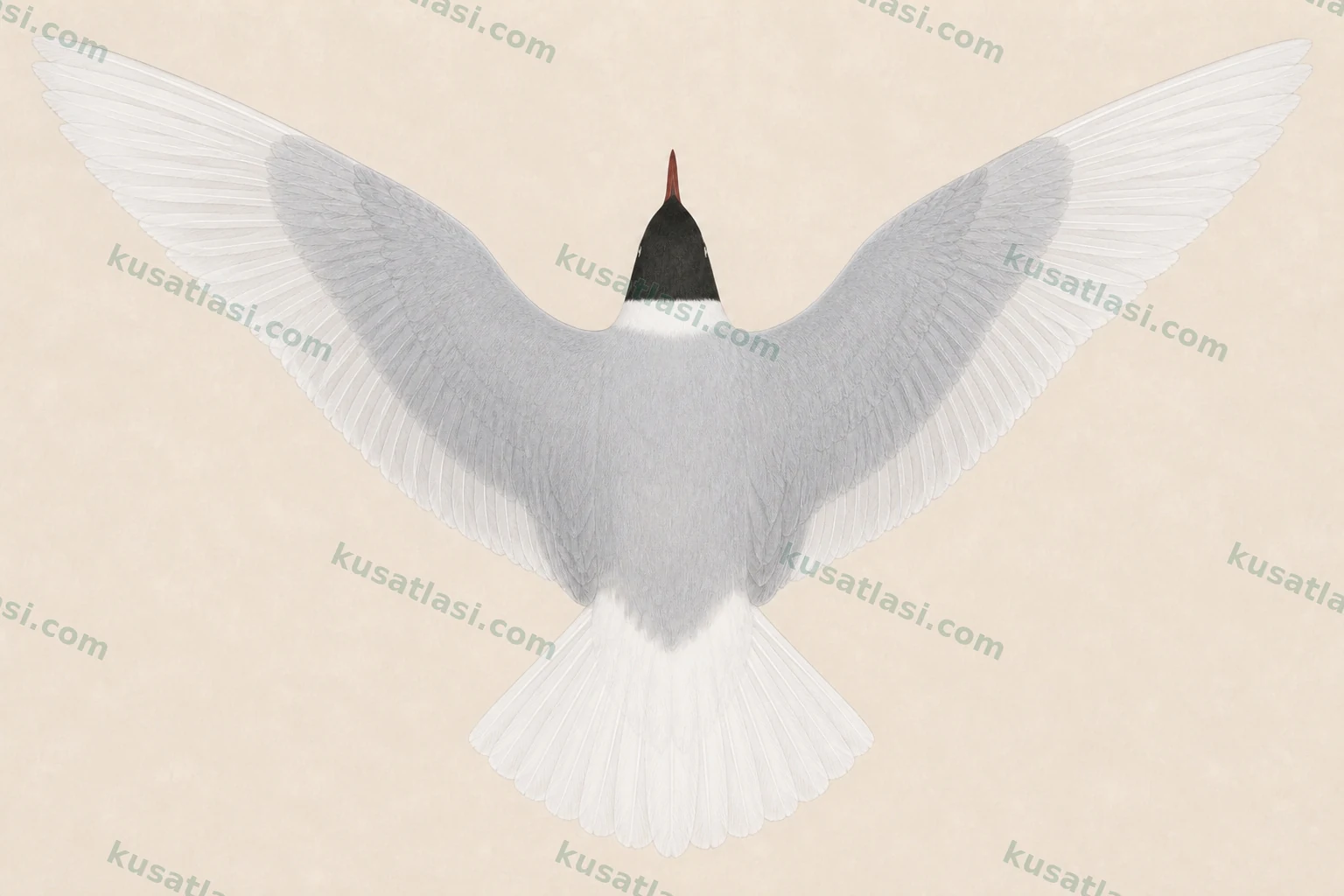
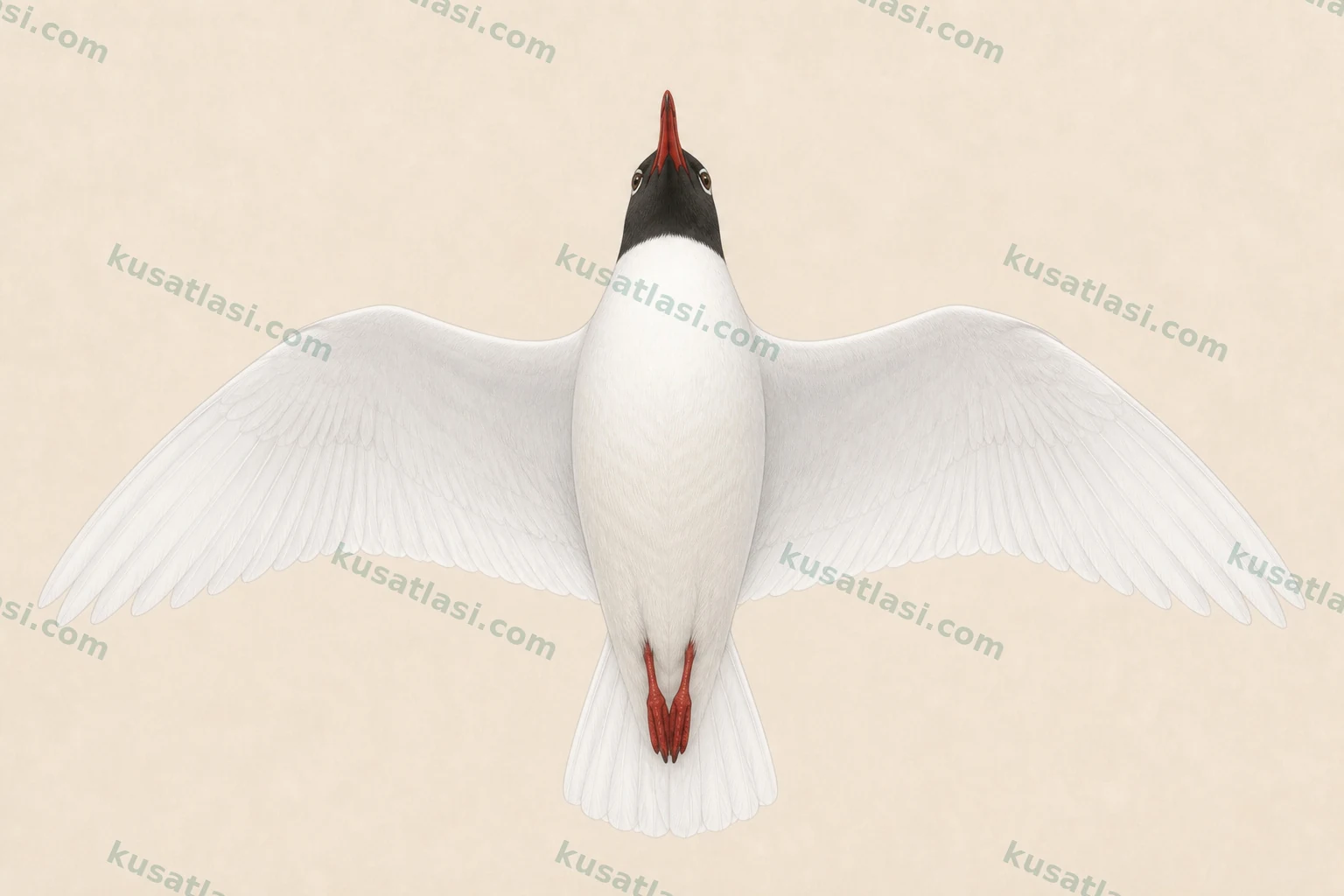
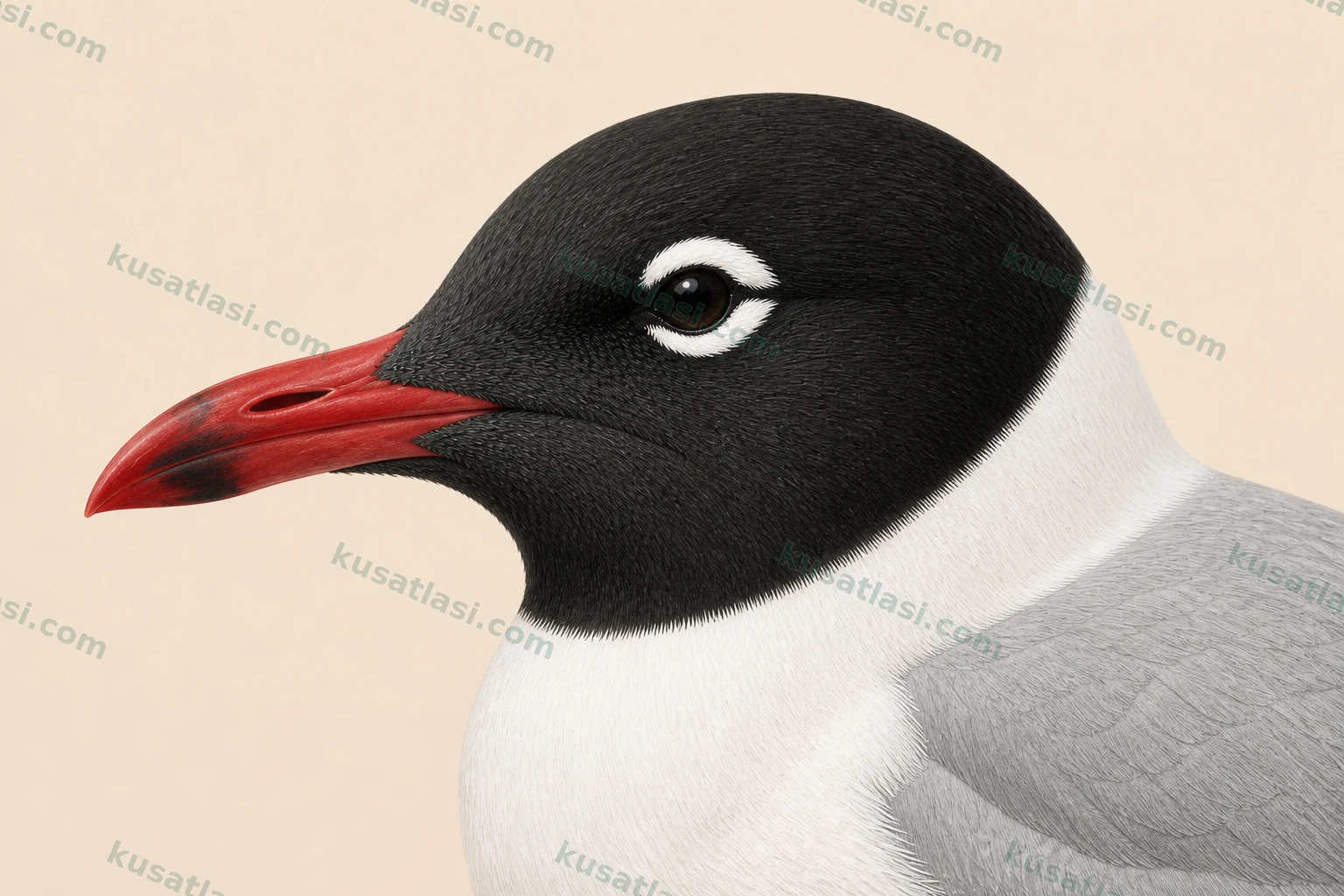
Swipe left or right through all five plates.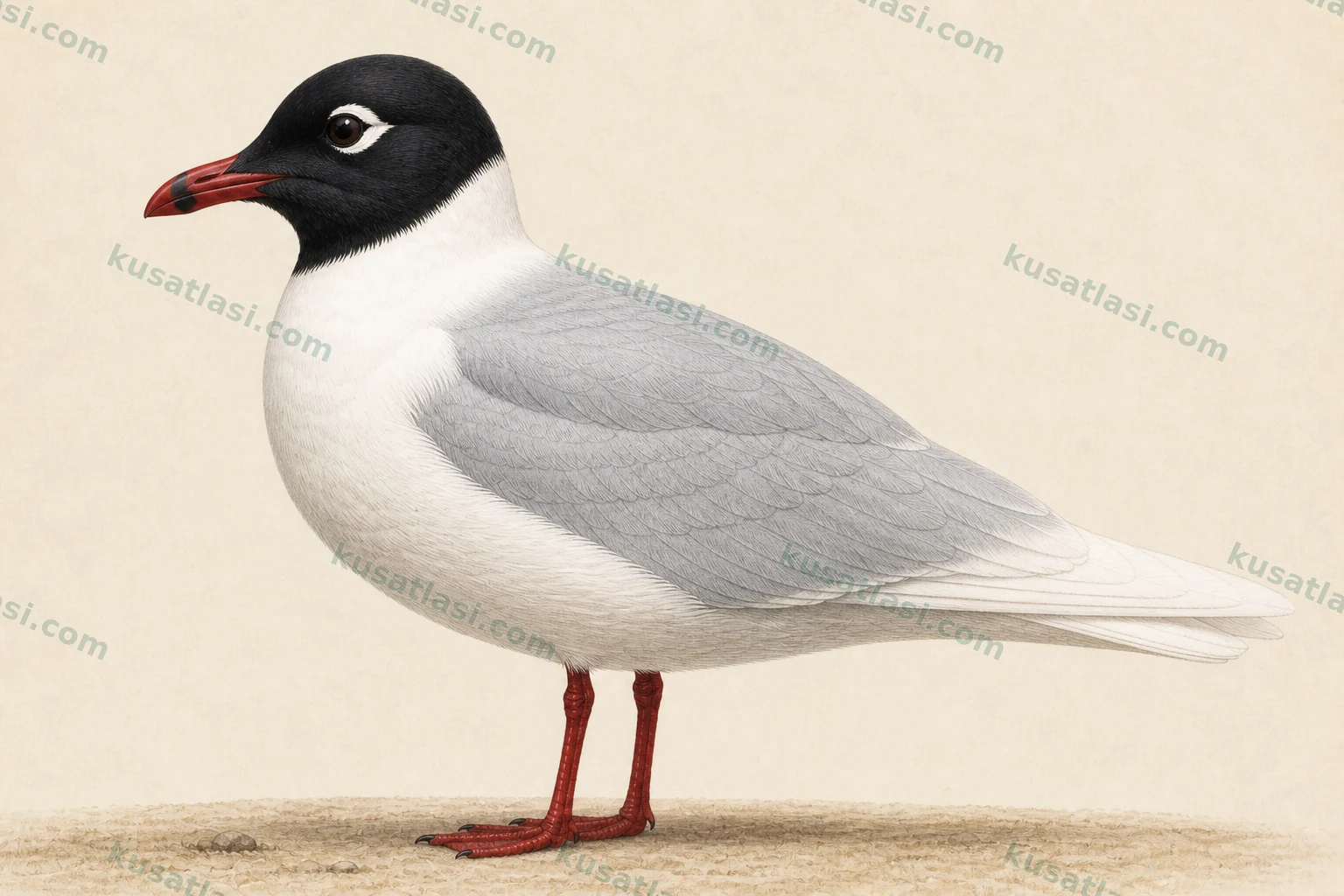
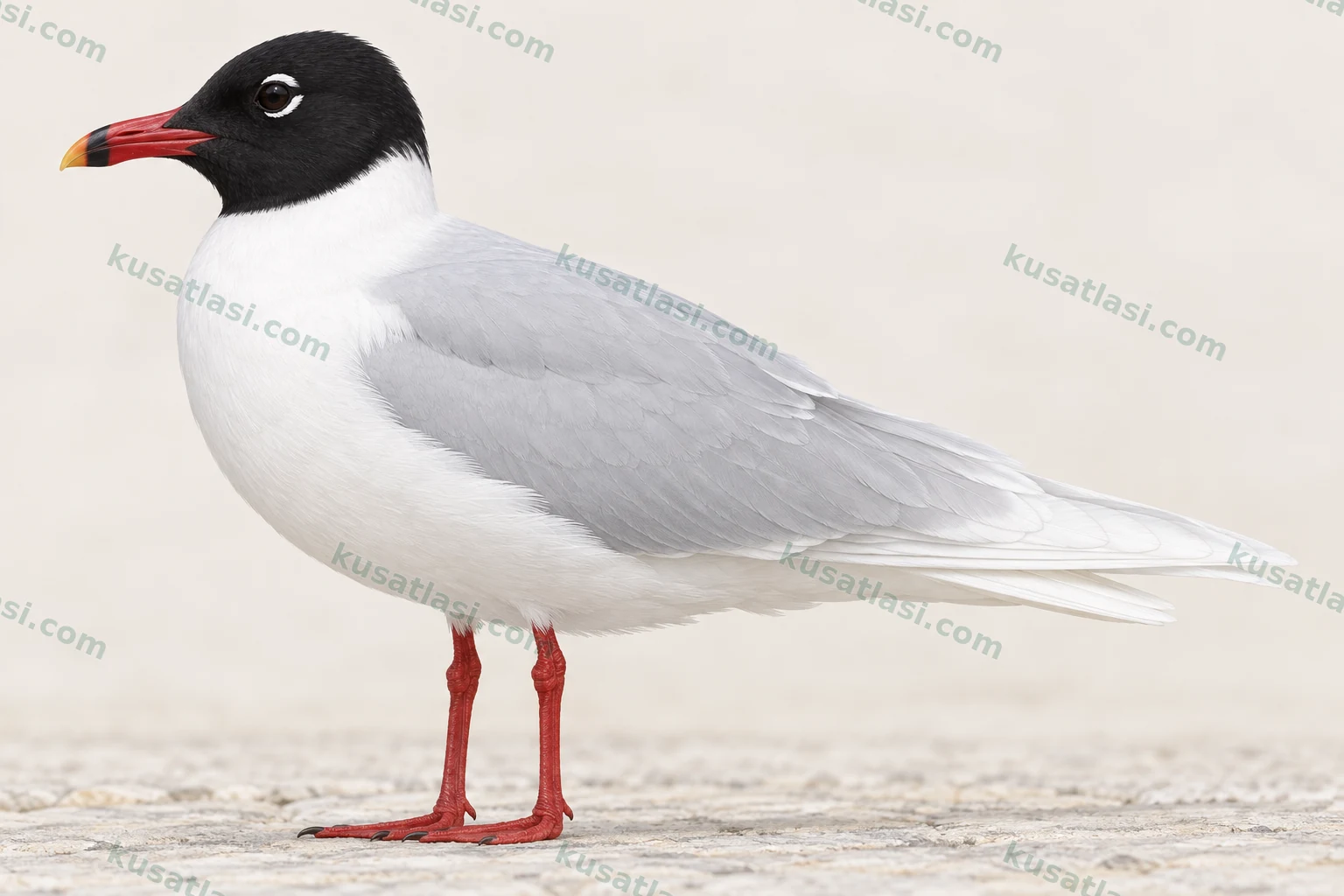
Gulls, Terns, and Skimmers
Mediterranean Gull
Ichthyaetus melanocephalus
Akdeniz Martısı
Assess age first, then combine pale adult wingtips, pale underwings and the stout bill.
- Order
- Charadriiformes
- Conservation status
- LC Least Concern
First look in the field
Quick identification
- Pale wingtips
Adult wingtips look almost white in flight.
- Seasonal head
The head is dark in breeding plumage and mostly white in winter.
- Age first
Young birds have dark flight feathers and lack the adult wingtip pattern.
Biometrics
Length
- Male
- 38 cm
- Female
- 38 cm
Wingspan
- Male
- 98–105 cm
- Female
- 98–105 cm
Weight
- Male
- 220–256 g
- Female
- 220–256 g
Detailed explanations of these measurements are available on our website, on the same species page.
World distribution
Mediterranean Gull
Customize map layers
Observation Sites
Bird Atlas recordsLoading observations…
Monthly record intensity
12 monthsRecord intensity is affected by observation effort.
Rotate the globe and compare the supported layers. Colours show broad range areas, not exact sightings or nests.
- Jan
- Apr
- Jul
- Oct
- Dec
Generalised data and method
Basemap: Natural Earth (public domain).
Bibliography ↗Authentic bird sound and ethical use
Voice and listening
See the detailed species account below.
Spoken guide
Narration has not been recorded; no audio file has been created.
Observe without approaching the nest
Breeding
Colonies occupy suitable ground near water, including islands and sparsely vegetated sites. Safe nesting substrate and accessible food matter in both coastal and inland settings. Water-level changes, access from land and disturbance can alter suitability; open water alone does not explain it.
Scientific species guide
Detailed account
Appearance and Sex
Mediterranean Gull is a small to medium gull with a pale grey back and strikingly pale adult wingtips. It usually looks slightly larger and heavier-billed than Black-headed Gull. Breeding adults have a black hood, white feathers around the dark eye, and red bill and legs. Males and females are similar in plumage; apparent size alone does not reliably sex a distant bird.
Winter and Younger Birds
Winter adults lose the solid hood and retain dark markings behind the eye. Juveniles have patterned brown upperparts; the back becomes greyer as feathers change while darker juvenile wing feathers can remain. Second-winter birds approach adults but may retain black outer flight-feather markings. Neither a dark wingtip nor a black hood alone settles age and species.
Flight
1. From above, assess the very pale adult back and wingtips together, allowing for glare.
2. From below, the pale adult underwing helps distinguish Little Gull, whose adult underwing is dark.
3. Younger Mediterranean Gulls can have black in the wing; apply an age-appropriate comparison.
4. Compare size only with birds at a similar distance and recheck bill and head after landing.
Nesting and Measurements
Ground nests occur in colonies near water, including sparsely vegetated sites and islands. Three eggs are typical; both parents incubate for about23–25days and care for chicks, which commonly fledge at35–40days. Historical ringing records document chicks at Bolluk, Kulu and Gediz, without implying unchanged colonies today.
| Measure | Value | |---|---| | Length | Male: 36–40 cm; Female: 36–40 cm | | Wingspan | Male: 92–100 cm; Female: 92–100 cm | | Mass | Male: 220–380 g; Female: 220–380 g |
These are shared species ranges: length and mass from CIESM, span from MME. They are not diagnostic sex thresholds.
Türkiye and Its Region
The name does not restrict this gull to the Mediterranean coast. Breeding records include inland Turkish lakes, while coastal sites serve other seasonal roles. The Black Sea region is an important part of the broader breeding distribution.
Dated Evidence
A2003ringing review describes chick work at Bolluk and Kulu during1997–2002and at Gediz in2002. These establish breeding history, not current colony size. The ODTÜ Erdemli list records winter and passage use, illustrating another local pattern. Neither site should stand for all of Türkiye.
Movement Records
Spring movement, breeding, post-breeding dispersal and autumn passage can overlap locally. Calendar guidance is approximate rather than a national timetable. A sighting dot is not an individual's tracked route. Record a naturally visible ring code accurately with date and place, without approaching or catching the bird. Repeated sightings of one marked individual must not be counted as different birds.
Breeding Ground
Colonies occupy suitable ground near water, including islands and sparsely vegetated sites. Safe nesting substrate and accessible food matter in both coastal and inland settings. Water-level changes, access from land and disturbance can alter suitability; open water alone does not explain it.
Feeding and Resting
Outside breeding, scan mixed gull groups along coasts and wetlands. A resting bird may hide its head in its wing, so wait for natural movement rather than flushing it. Farmland and inland water can also be used for feeding. Tracking work in Italy confirms flexible habitat use, not a fixed habitat percentage for Turkish birds.
Responsible Access
Watch from a stable distant position, avoid nesting islands and retreat if birds alarm. Keep routes between colonies and feeding areas unobstructed. General habitat and regional notes are useful without sharing sensitive nest locations. A bird disturbed repeatedly no longer demonstrates normal resting or feeding behaviour.
Varied Resources
The species uses a range of food rather than only marine fish. Insects can be important in summer; fish, worms and other available resources also contribute. A gull sitting on water is not necessarily fishing, and an unseen prey item should remain unidentified in a field record.
Land and Water
GPS work at two northern Adriatic colonies found use of farmland, inland waters and marine habitat. Choices differed among individuals and with breeding stage and weather. The Italian percentages are not Turkish diet estimates. The useful message is flexibility, not a universal feeding formula.
Chicks and Human Food
Parents commute to feed themselves and growing chicks, so temporary absence does not prove abandonment. Observe returns without approaching nests. Opportunistic feeding does not justify providing bread or scraps for photographs. Record naturally observed feeding actions and visible food, keeping inference separate from direct evidence.
Geography Behind the Name
The Black Sea is important in the species' breeding history, and Turkish chick records include inland lakes. A geographical common name therefore does not define its full range or habitat requirements.
Age Before Wing Colour
The pale adult wingtip is memorable, but young and second-winter birds can retain black. Compare head, back, wing and tail on the same individual. A mixture of old and new feathers during moult can complicate the picture further; a single adult portrait is not a guide to every age.
Sex, Season and Rings
Seasonal head change is more obvious than plumage differences between sexes. A white-headed winter bird is not automatically female. Ring readings can link repeated observations to one individual, provided the code is complete and recorded without pursuit. Historical Turkish ringing demonstrates the value of such evidence, but old totals must not be presented as today's population. Least Concern status does not remove the need to protect local nesting habitat.
Species text and plates come from existing atlas records. Measurements were checked against reliable species sources.
Open bibliography