
Existing atlas plates
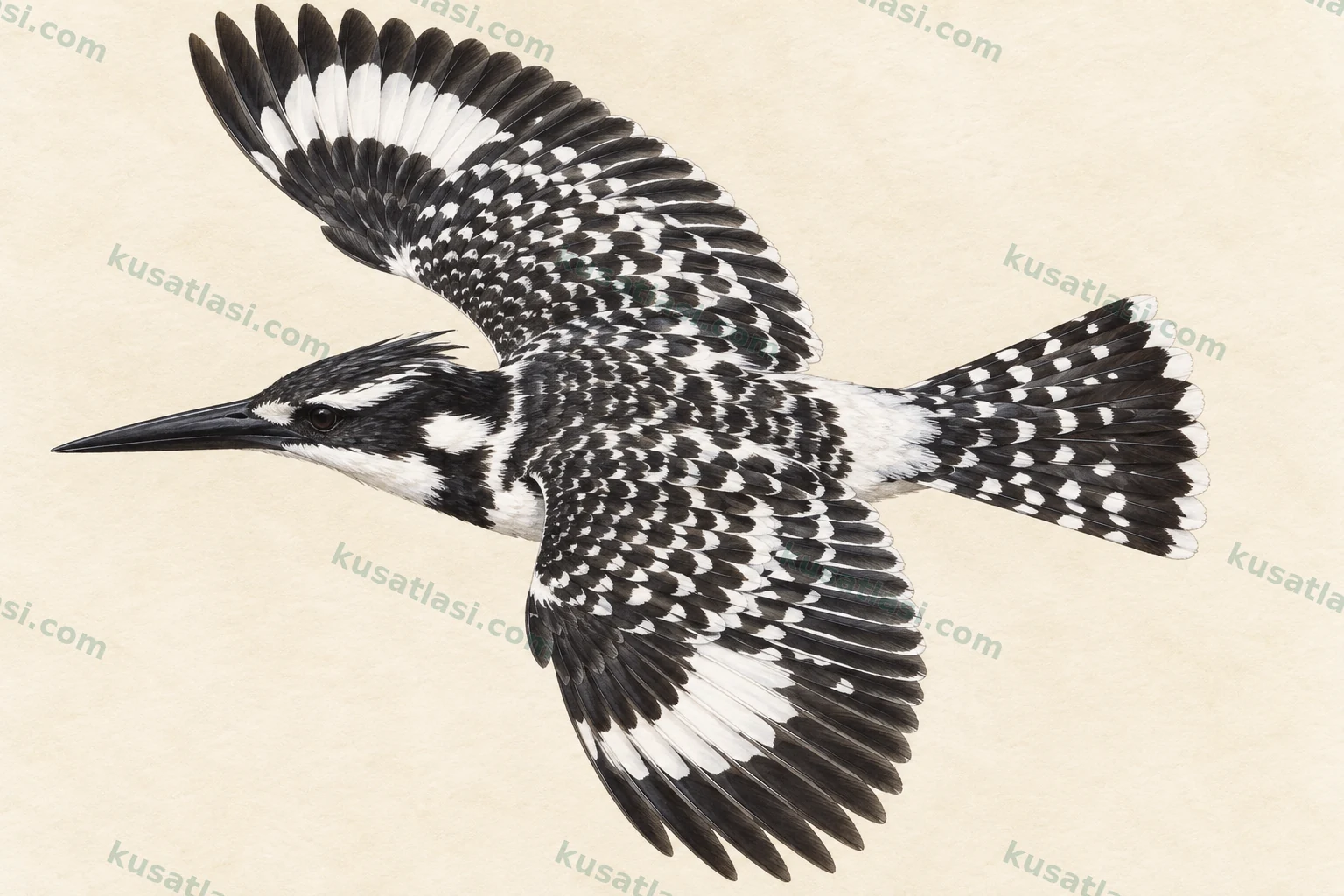
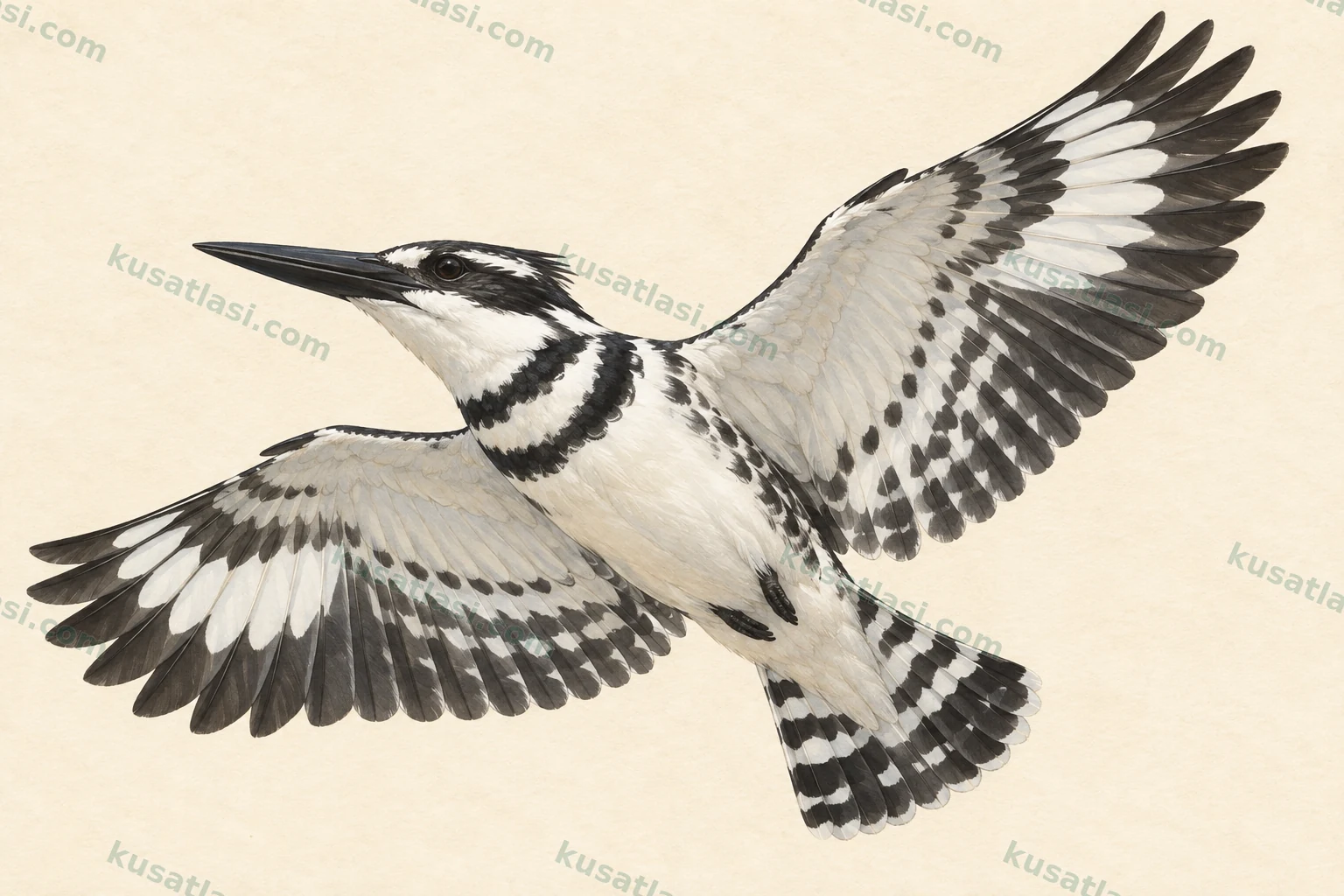
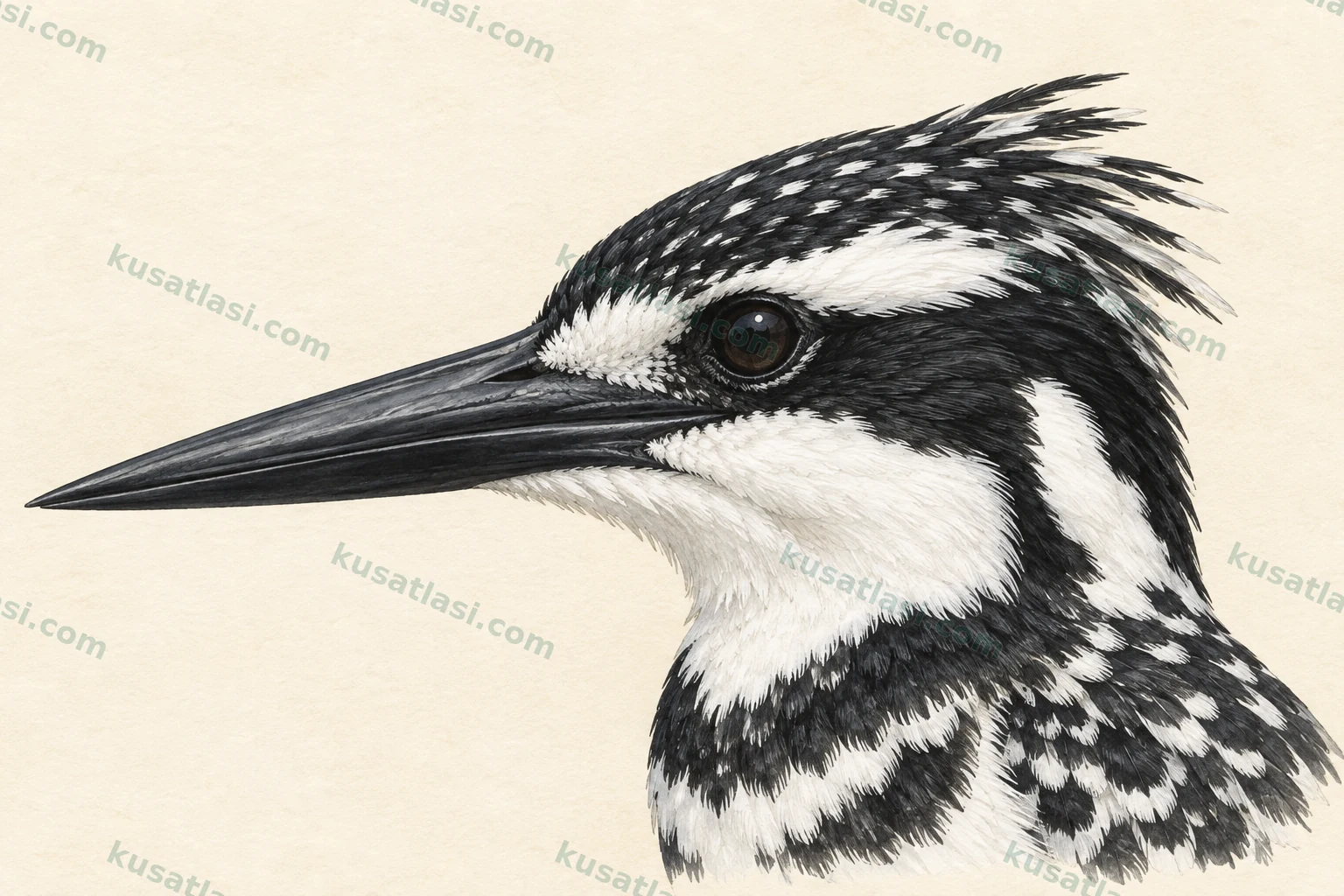
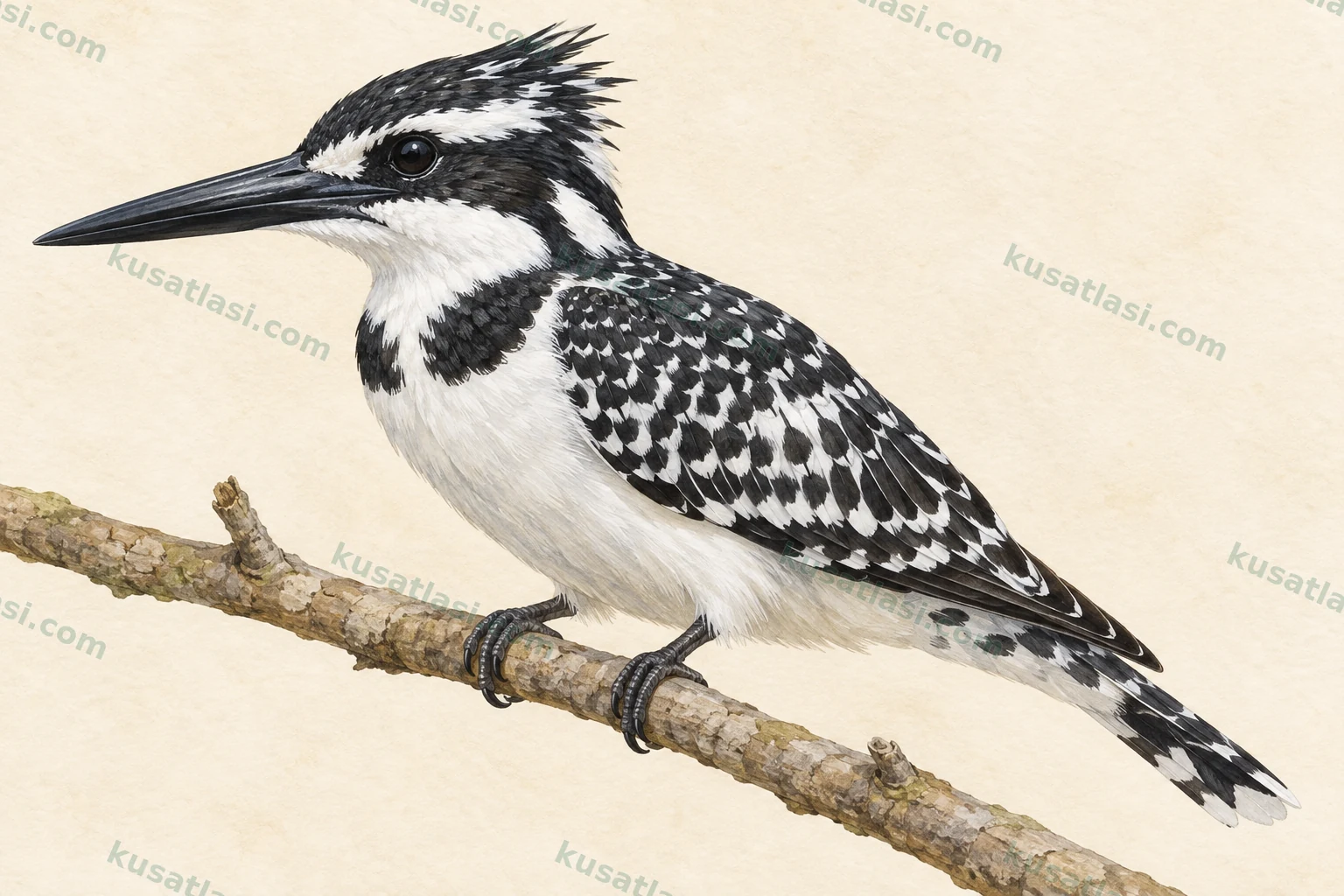
Pied Kingfisher identification views
Swipe left or right through all five plates.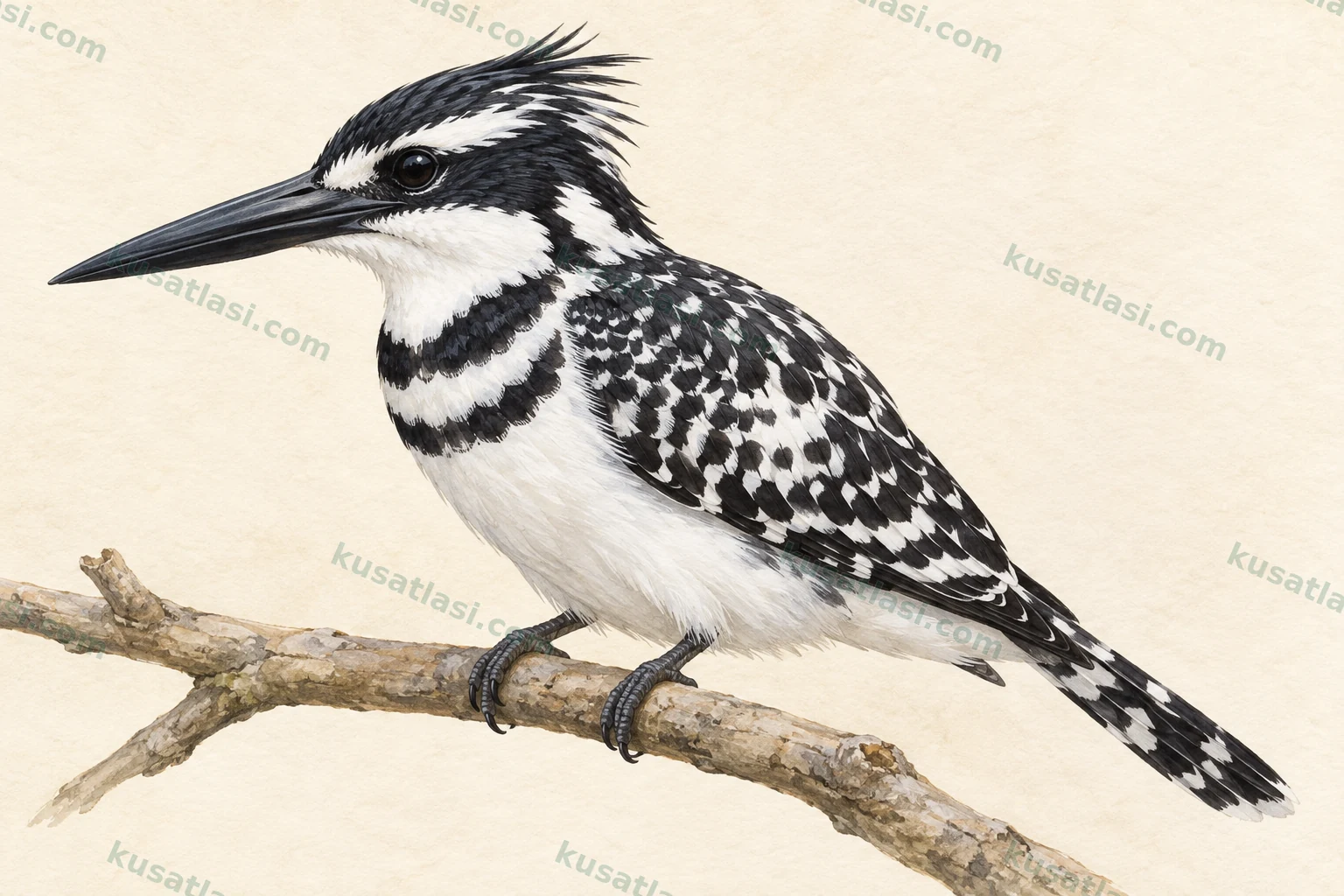
Kingfishers
Pied Kingfisher
Ceryle rudis
Alaca Yalıçapkını
Black-and-white crested kingfisher with a long dark bill; adult male has two breast bands, female one usually broken band.
- Order
- Coraciiformes
- Conservation status
- LC Least Concern
First look in the field
Quick identification
- A Black-and-white Water Hunter
Pied Kingfisher has a large head, a bushy crest and a long dark bill.
- Sex and Age
Adult males have two breast bands; females have one, usually interrupted centrally.
- A Burrow Nest
A tunnel excavated by both sexes in an earth or sand bank ends in a chamber.
Biometrics
Length
- Male
- 25–29 cm
- Female
- 25–29 cm
Wingspan
- Male
- About 47 cm
- Female
- About 47 cm
Weight
- Male
- 70–100 g
- Female
- 70–100 g
Detailed explanations of these measurements are available on our website, on the same species page.
World distribution
Pied Kingfisher
Customize map layers
Observation Sites
Bird Atlas recordsLoading observations…
Monthly record intensity
12 monthsRecord intensity is affected by observation effort.
Rotate the globe and compare the supported layers. Colours show broad range areas, not exact sightings or nests.
- Jan
- Apr
- Jul
- Oct
- Dec
Generalised data and method
Basemap: Natural Earth (public domain).
Bibliography ↗Authentic bird sound and ethical use
Voice and listening
See the detailed species account below.
Spoken guide
Narration has not been recorded; no audio file has been created.
Observe without approaching the nest
Breeding
A tunnel excavated by both sexes in an earth or sand bank ends in a chamber. Usually 4–6 eggs are incubated for about 18 days; young remain inside for roughly 24–29 days. Other birds may assist the pair. Observe from outside the adults' access route.
Scientific species guide
Detailed account
A Black-and-white Water Hunter
Pied Kingfisher has a large head, a bushy crest and a long dark bill. Its contrasting pattern separates it from the blue kingfishers normally encountered in Turkey. Hovering over water is useful supporting behaviour, not proof by itself.
Sex and Age
Adult males have two breast bands; females have one, usually interrupted centrally. A partly hidden breast should not be sexed with confidence. Young birds can be duller and shorter-billed. The new adult-female plate shows the centrally interrupted single band, but a single obscured view still should not be used for certain sexing.
Measurements
Length and mass follow Animal Diversity Web; span follows Qatar Bird Observation Group. Shared values are used because separate Turkish sex-specific ranges were not verified.
A Burrow Nest
A tunnel excavated by both sexes in an earth or sand bank ends in a chamber. Usually 4–6 eggs are incubated for about 18 days; young remain inside for roughly 24–29 days. Other birds may assist the pair. Observe from outside the adults' access route.
Localised in Turkey
Suitable waters of southern and southeastern Turkey matter to the species; do not expect it equally at every lake. Breeding and winter records do not prove that an individual stays on the same bank all year. An old photograph is not evidence of present occupancy.
Dated Numbers and Different Units
BirdLife's 2021 assessment lists 300–500 Turkish breeding pairs for 2013–2019, based on expert opinion. Its separate winter figure of 5–210 is in individuals. These cannot be divided to derive survival or migration rates and are not a 2026 census. Declining trends were reported.
Local Risk within a Wide Range
Global LC and European EN refer to different assessment areas. A widespread African–Asian bird can still have vulnerable populations near its range edge. Independent observation points do not trace an individual journey; neither the map nor monthly guide assigns an exact international route.
Water and Hunting Space
Lakes, rivers, ponds and suitable coastal waters can be used. Note visibility, open water and bank structure as well as the name of the habitat. A single bird at a large wetland does not demonstrate uniform use of every shore.
Perches and Hovering
Scan branches and posts overlooking water, but also open areas where a bird may hover. Do not cut branches, install a perch or provide bait for a photograph. Keep your position clear of feeding and nest-access routes.
The Nest Bank Is a Separate Resource
Food alone does not supply a safe burrow site. Suitable earth or sand faces matter; not every hole belongs to this kingfisher. Avoid standing above tunnels or approaching entrances. Changes to banks and water levels may affect breeding opportunities. Record visible alterations without inferring a population collapse from one visit, and share sensitive nest details responsibly.
Search, Dive and Capture
Small fish form the main diet. A bird may scan from a perch or hover above water. Separate searching, diving and returning with prey in field notes; a dive is not automatically successful.
Handling the Catch
Prey can be carried to a perch. If details are unresolved, record a small fish rather than an invented species. Studies from elsewhere do not establish the exact Turkish menu or daily intake of a photographed individual. Aquatic invertebrates can supplement fish, without implying identical proportions everywhere.
Food for Young
A bird carrying prey towards a bank may be provisioning a nest. Step out of its route rather than following it to the entrance. Helpers may contribute, so each food-carrying adult does not represent a separate breeding pair. Avoid live bait, supplied fish or disturbance of water to force prey into view; natural behaviour provides better evidence.
Hovering Is Not Unique
The bird's stationary wingbeats are a hunting method, not an identification test on their own. Terns may also pause over water. Combine the crested head, dark bill and contrasting body pattern before naming a distant silhouette.
Sexing without Guessing
The two-band male and usually broken single-band female pattern is more useful than apparent size. Pose and obscuring feathers can conceal a band. Record sex as unknown when necessary, and allow for young birds rather than forcing an adult label.
Helpers and Five-view Plate Use
Additional adults may assist at nests; one encounter cannot reveal their relationships or total nest numbers. The renewed plate set separates perched male, dorsal flight, ventral flight, head morphology and adult female. Male and female crops are not measurements of sex-specific size. Use the plates with verified written characters and natural views rather than treating one illustration detail as proof.
Text and plates come from existing atlas records; references are in the central bibliography.
Open bibliography