
World Birds
Field identification plates
Swipe left or right between the plates.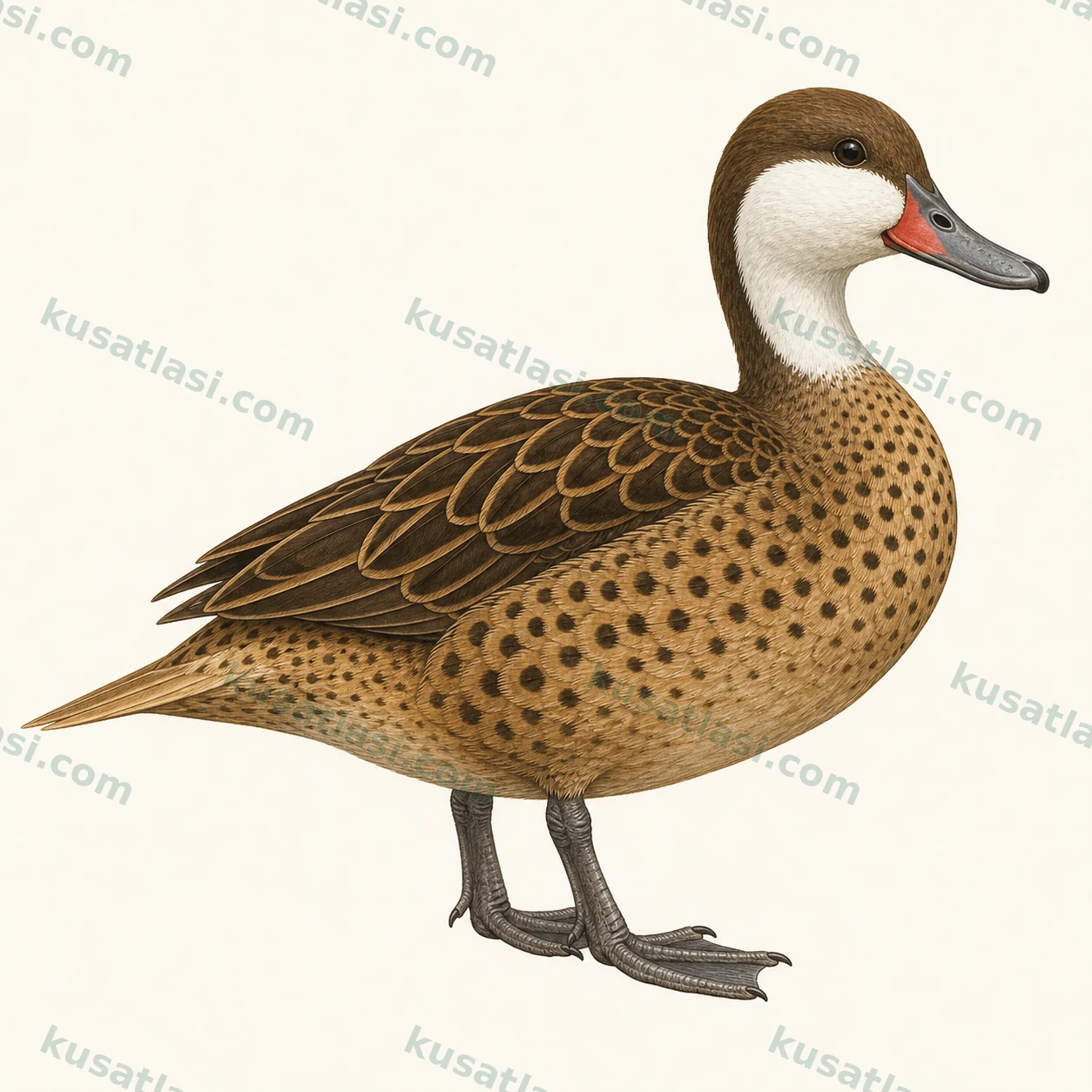
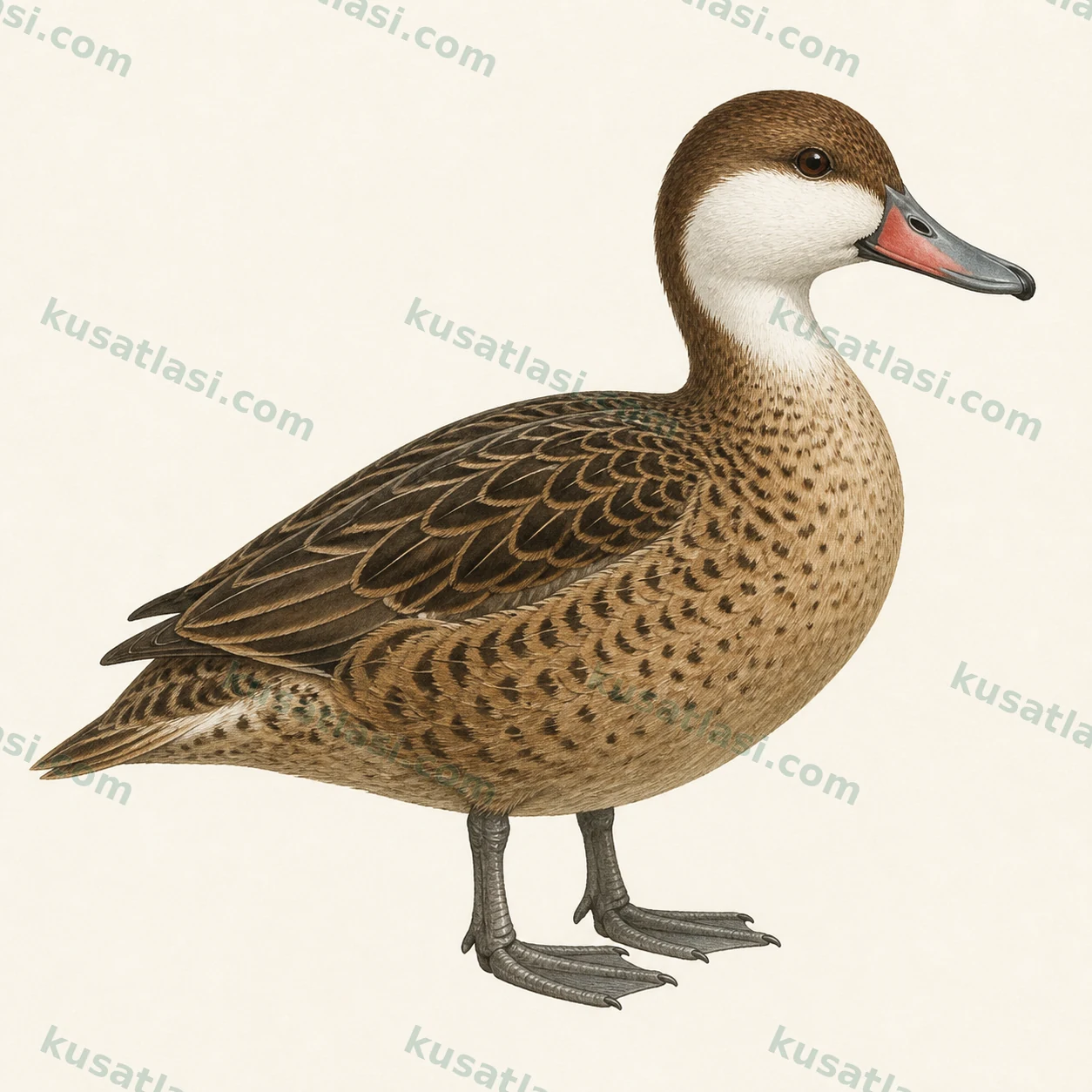
Anatidae
White-cheeked Pintail
Anas bahamensis
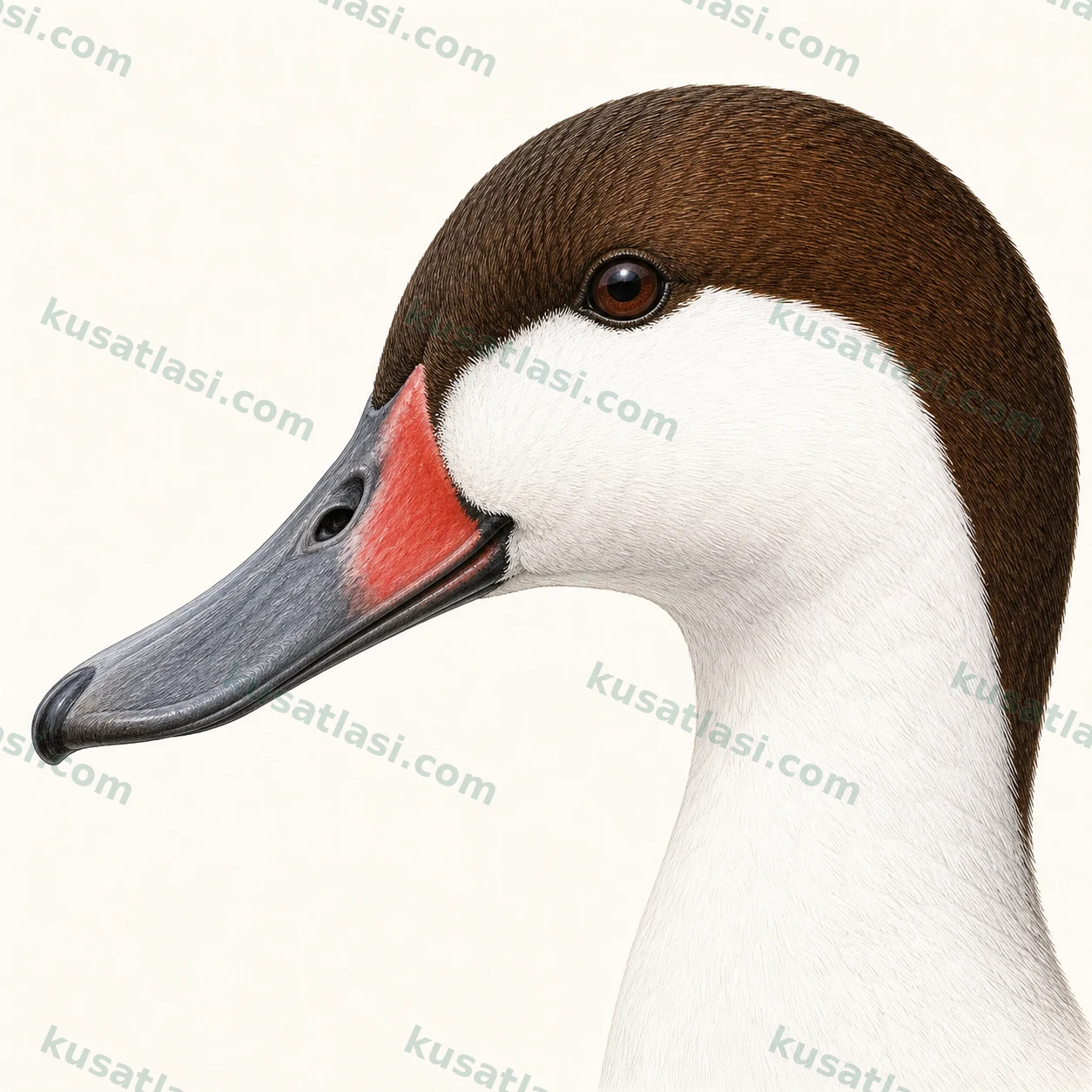
The white face has a sharp boundary with the dark brown crown and nape.
- Order
- Anseriformes
- IUCN status
- LCLeast Concern
This is a global category, not a regional category for Türkiye or Europe. BirdLife/IUCN
Source list: 2025; checked: 29.10.2026
At a glance
- White cheeks and throat
The white face has a sharp boundary with the dark brown crown and nape.
- Blue-grey bill, red base
The bill sides are blue-grey and its base distinctly red.
- Long pointed tail
The central tail feathers extend into a fine point.
Biometrics
Length
- Male
- 44–51 cm
- Female
- 44–51 cm
Wingspan
- Male
- 68–80 cm
- Female
- 68–80 cm
Weight
- Male
- 400–700 g
- Female
- 400–700 g
Detailed explanations of these measurements are available on our website, on the same species page.
World distribution
White-cheeked Pintail
Customise map layers
Observation points
Preparing globe…
Monthly record count
Bars show record counts in this sample, not bird abundance or a breeding calendar. They are affected by recording and observation effort.
Rotate the globe and compare layers. Coloured areas are not exact observation or nest locations.
The source does not provide verified monthly range boundaries. All areas are shown; the month slider and monthly playback are therefore disabled.
- Jan
- Apr
- Jul
- Oct
- Dec
Generalised data and method
Base map: Natural Earth · Public domain
Open central bibliography ↗Calendar
Most populations are resident; local movements may follow changes in water and food. No series of accepted wild records from Türkiye was verified in this review.
All months: Verified monthly wild occurrence information for Türkiye was unavailable; record origin requires separate assessment.
January
February
March
April
May
June
July
August
September
October
November
December
Habitat
Bahamas, Caribbean and South America
In its natural range: saline lagoons, shallow brackish waters, mangroves and coastal marshes; the origin of records in Türkiye requires separate assessment.
Saline lagoon
Shallow brackish water, saltworks and sheltered bays.
Mangroves and coastal marshes
Vegetated tropical coastal waters in the natural range.
Origin check
For a Turkish record, document rings, plumage condition and the possibility of escape.
Sound
Female: soft quacks. Male: thin whistles and low notes. Voice does not prove origin or wild status.
Do not play recordings to attract birds; observe quietly, especially near nests.
Female
Soft duck quacks.
Male
Thin whistles and low notes.
Clue
Voice does not prove origin or wild status.
Breeding
In its natural range, a concealed ground nest near water is lined with leaves, grass and soft feathers. The female lays 5–12 eggs; incubation lasts about 26 days. The female cares for the ducklings.
Vegetation beside water
In the natural range, a ground nest concealed under shrubs, grass or mangroves.
Grass cup with feathers
Made of dry plants and lined with the female’s feathers.
5–12 eggs
Pale cream-white eggs are unmarked.
About 26 days
The female incubates; precocial young enter the water early.
Compare
Northern Pintail
Anas acutaFace: No white cheek
Bill: No red bill base
Male: Chocolate-brown head
Compare male and female
Males and females have similar patterns; males may average larger and show a more pronounced tail extension. Sex cannot be determined certainly in an isolated bird; juveniles are duller with a pale bill base.
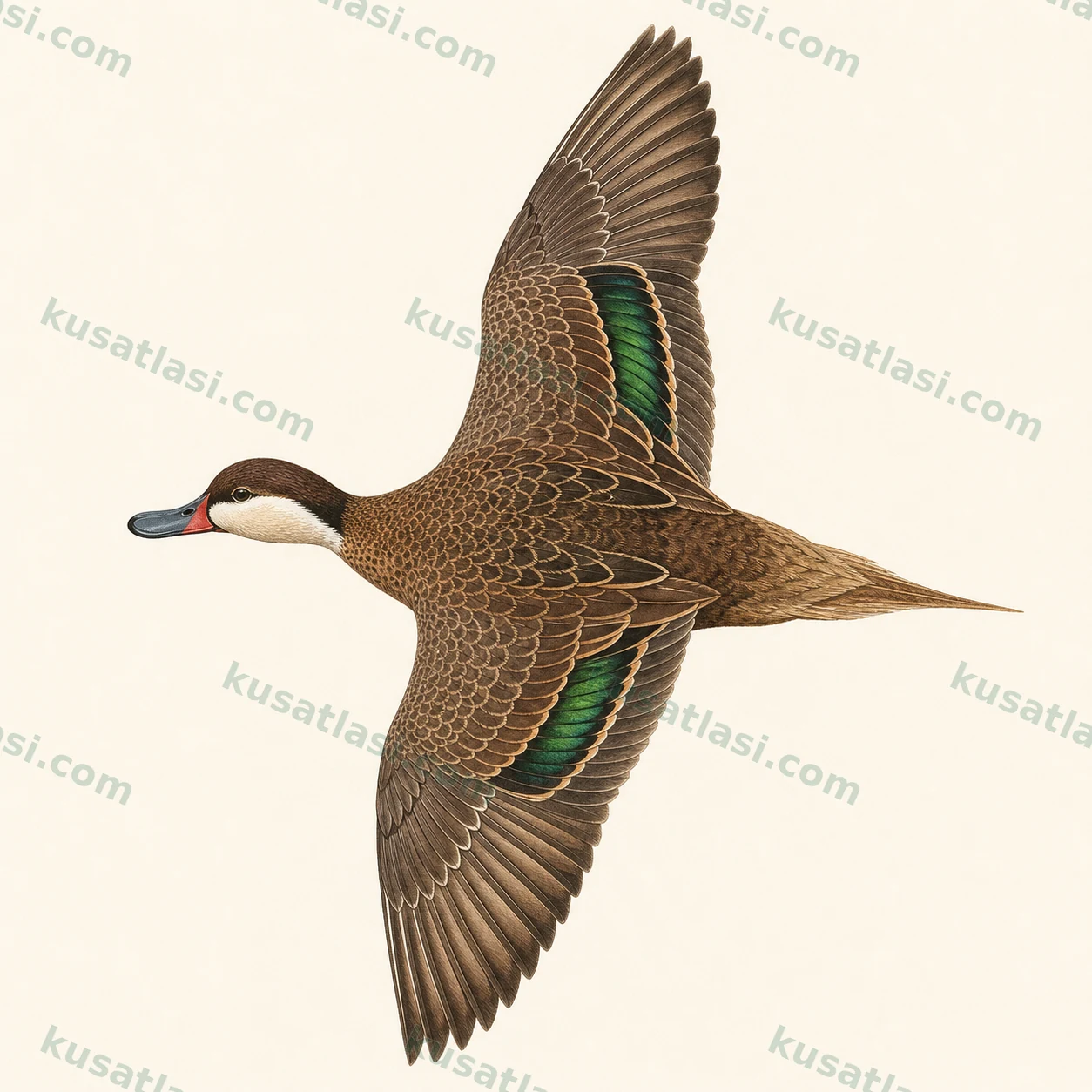
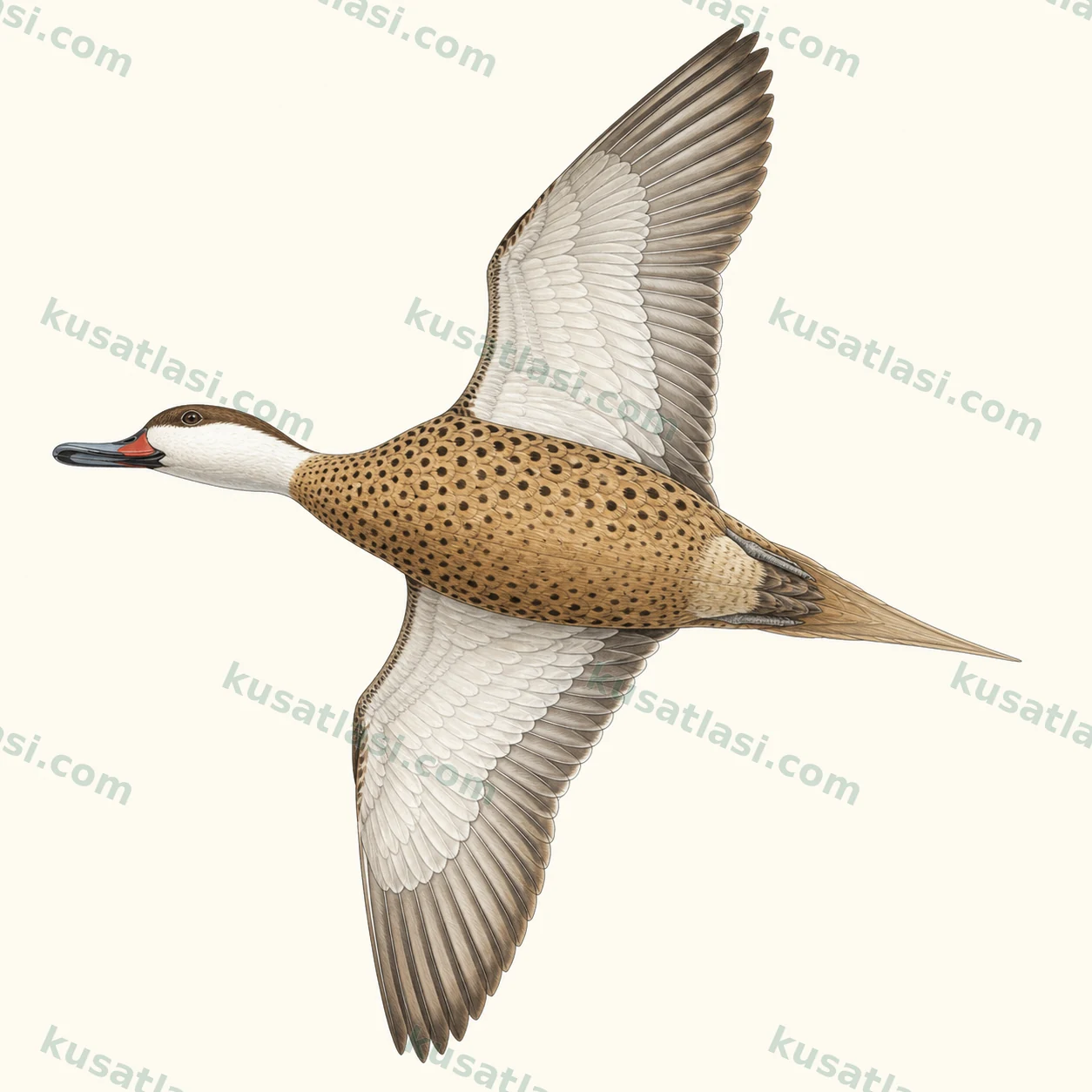
Look for the green speculum above and pale wing below
Above, the dark wing shows a green speculum and pale edges; below, the wing is paler. The pointed tail is visible from both angles.
Not sufficient alone. A green speculum alone is insufficient; confirm white face, red-based blue-grey bill and pointed tail together. In Türkiye, document origin separately.
Species information
Quick identification
White-cheeked Pintail has a brown spotted body and white cheeks and throat that contrast strongly with its dark crown. Red marks the sides of the bill base; the rest of the bill looks dark grey or blue-grey. A slender body and pale pointed tail complete the face pattern.
General appearance and posture
Chile’s official species guide describes the crown, nape and hindneck as reddish brown with fine dark streaks. The lower half of the head, throat and front of the neck are white, dividing the face into contrasting dark and light areas. The flanks and feathers covering the upper and lower tail base are light brown. Red occurs at the base of the upper part of the grey bill. This colour description concerns the Chilean subspecies rubrirostris.
The tail is narrow, pointed and cream tinged with pale brown. Dark grey legs and webbed feet may remain hidden beneath the swimming body. Nicole Bouglouan’s account describes dark back feathers with light brown edges and dark spots on the brown breast and belly. Crown and nape are dark brown; head sides, throat and upper front of the neck are white. The bill ends in a dark nail.
Males, females and young birds
Adult males and females share the basic pattern: brown body, dark crown, broad white face and red-based bill. The Bahamas National Trust guide to subspecies bahamensis describes females as slightly duller, with a less vivid orange-red bill-base patch. Light, distance and individual appearance can make these small differences difficult to judge. Do not confidently sex an isolated bird as female merely because it looks paler or smaller.
The university guide states that juveniles lack the adult’s red bill base, have a duller green speculum and may show a yellowish tinge, especially below. This concerns young birds resembling adults but not yet showing their vivid colours, not newly hatched downy ducklings. The juvenile bill is also described as shorter than the adult’s.
Appearance in flight
In flight or with the wings open, read the white cheek–throat area, spotted brown body and pale pointed tail together. The Eastern Caribbean field guide describes brown and green areas on the upperwing separately from the pale underwing patch. The green area is the speculum, the coloured flight-feather patch in duck descriptions; the upperwing pattern and pale area below are different surfaces. Check which wing surface is visible. A pale underwing view cannot reveal the edge colour of the speculum above.
Voice and behaviour
Males give low whistle-like sounds and females soft quacks. Nicole Bouglouan’s specialist account describes fast, agile flight; birds may occur alone, in pairs or in small groups.
According to the Smithsonian account, a shallow ground hollow near water, hidden among grass and dense plants, is lined with leaves, grass and soft feathers. The female lays 5–12 eggs, which hatch after about 26 days of incubation. Within hours, ducklings can walk, swim and gather food, but remain dependent on their mother’s protection. The female cares for them. Watch the birds’ movements from a distance rather than approaching an active nest.
Similar species
Red-billed Teal or Red-billed Duck (Anas erythrorhyncha) can look similar through its pale cheek and dark crown. Much more of its bill is red, however, with a dark upper central line. In White-cheeked Pintail, red is concentrated at the sides of the bill base. The British Waterfowl Association account describes both sexes of Red-billed Teal as similarly coloured, with a greyish body and pale-edged flank feathers. Red on the bill alone is insufficient: examine its position, the pale facial area and body pattern together.
Ruddy Duck (Oxyura jamaicensis) may also have white cheeks below a dark crown and is a genuine comparison in the Hispaniola field guide. It differs in a stockier body, short thick neck and broad powerful bill. The stiff tail is often raised, but may also lie on the water, so posture alone does not decide identification. Breeding males have a blue bill and chestnut body. Outside breeding, the male bill is dull grey and the body plainer brownish. Females and first-year males may have a dark line across the pale cheek. A blue bill does not characterise every age and sex. Compare White-cheeked Pintail’s red bill base, spotted body and pale pointed tail alongside these structural differences.
World distribution
Its natural range extends from the Bahamas and Caribbean to South America, including the western coasts of Peru, Chile and Ecuador and inland and southern areas such as Bolivia and Argentina. Subspecies bahamensis in the Caribbean and northern South America, rubrirostris farther south in South America, and galapagensis on the Galápagos Islands are geographically separated. The Galápagos subspecies, not the whole species, is endemic to those islands. The English name Bahama Pintail does not mean all birds live only in the Bahamas.
Status in Türkiye
The natural range described above excludes Türkiye. No series of accepted wild records from the country was verified in this review; this does not mean it has never been seen there. Swimming on an open lake does not prove natural migratory arrival. Escape from captivity or human transport must be considered separately using observation and record history.
Movements
Most populations are resident; this does not mean every individual stays on the same small pool all year. The Trinidad and Tobago university guide describes non-breeding movements by some South American birds and movements when water or food declines. The Eastern Caribbean guide likewise notes local dispersal with changing water levels. These movements cannot be presented as the regular migration route of a northern-breeding duck travelling south through Türkiye each year.
Breeding habitat
It lives in tropical and subtropical salt, brackish and fresh waters. Brackish water has a salinity between freshwater and seawater. Lagoons, mangrove edges, tidal channels, coastal marshes and calm shallow inland lakes may be used. During nesting, relatively undisturbed places with dense grasses and other low plants providing concealment matter. The Charles Darwin Foundation reports Galápagos subspecies galapagensis mainly in saline lagoons; this local example does not mean the entire species can live only in seawater.
Nest site
The Bahamas National Trust regional guide describes ground nests hidden beneath plants on coastal islets and among mangrove roots. In one particular Bahamian example, females could commute from the nesting islet to feeding areas. The feeding pond and the place containing the eggs are not always the same spot.
Daily use of space
During the day it searches for food, moves over the water surface and may travel in pairs or small groups. Declining available food and water may cause it to change areas.
What does it eat?
It eats aquatic plants, seeds and algae as well as small aquatic invertebrates. Algae are organisms that make food using light in water. The Bahamas National Trust account of subspecies bahamensis lists brine shrimps, small aquatic crustaceans, water insects and various fly larvae. Seeds of aquatic plants such as Ruppia and various land grasses are also taken. This is a regional food account for the Bahamas, not evidence that the same prey is eaten in the same proportions in Türkiye.
How does it forage?
It mostly gathers food at the surface in shallow water or reaches its head underwater to plants below. It may tip forward with its tail raised. The university guide also reports occasional feeding by submerging the whole body and diving. Thus “dabbling duck” does not mean a bird that never dives. One posture does not establish exactly what it is eating.
Interesting facts
A scientific study conducted in the Bahamas in 1985–1987 and published in 1992 showed more varied pair relationships than a single fixed pattern. Most birds formed monogamous pairs, but some males were associated with two mates at the same time. Some marked pairs stayed together the next breeding season, while others changed partners. These observations concern that Bahamian population; the same proportions cannot be assigned to all islands or South America. Being paired during breeding does not mean a mate never changes throughout life.
Earlier accounts of the species’ status in Chile have changed with new records. The country’s official 2015 assessment describes year-round presence and nesting documented in some places for a bird previously treated only as a scarce summer visitor. This does not establish abundant ducks in every Chilean wetland; it shows that “summer visitor only” was inadequate. The example illustrates why observation dates and actual breeding evidence must be read together when assessing residency.
The Charles Darwin Foundation describes a broad yellowish-brown border to the green speculum of Galápagos subspecies galapagensis. Presented with the subspecies name, this feature describes the regional appearance of the island population.
The British Ornithologists’ Union includes White-cheeked Pintail in its British Category E list dated 14 June 2022. This category covers records of introduced, transported or escaped captive birds that are not regarded as a self-sustaining established population. The British classification does not by itself establish the origin of an individual in Türkiye. Identifying a species by appearance and assessing its origin through record history are separate tasks.