
World Birds
Field identification plates
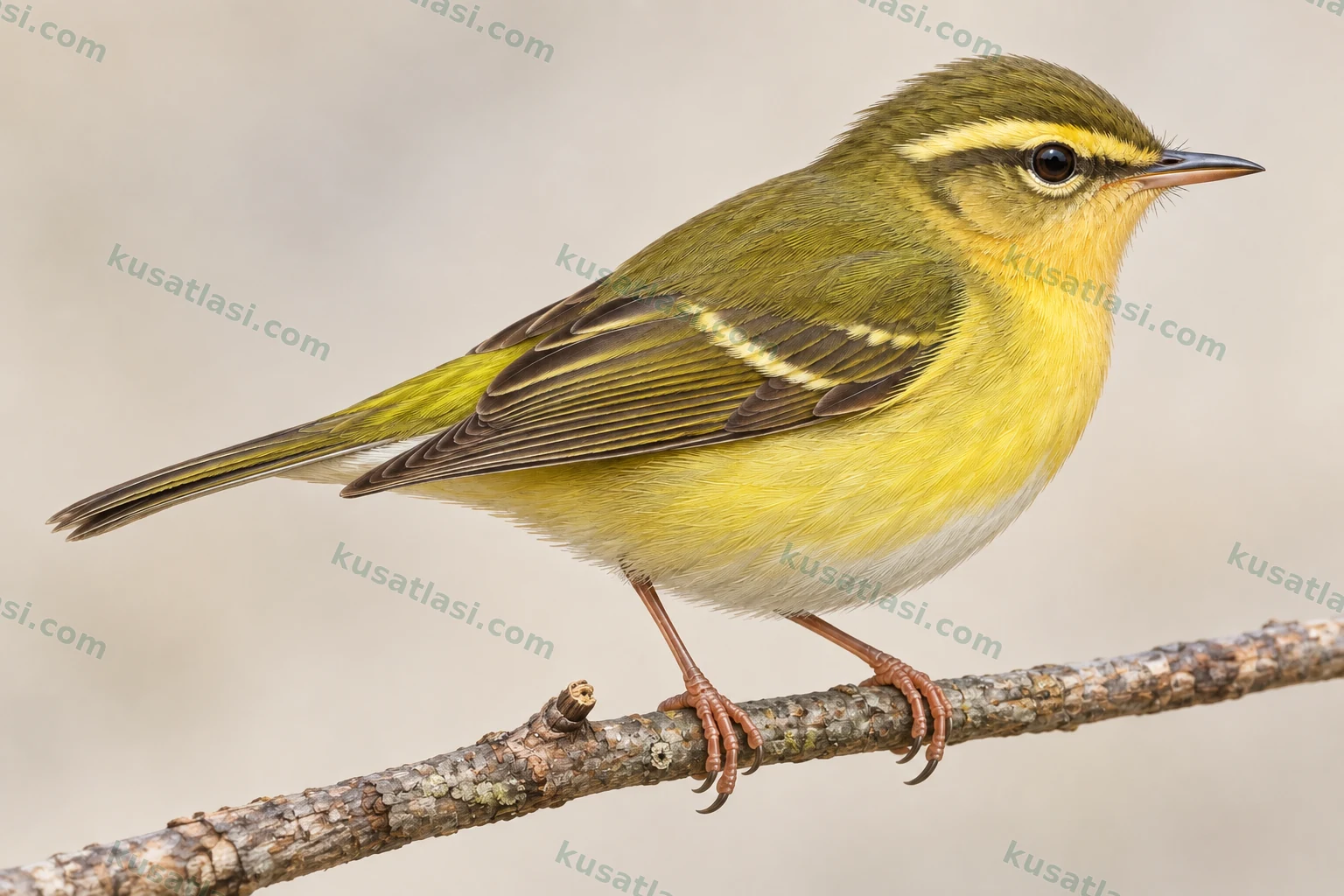
Swipe left or right between the two adult plates.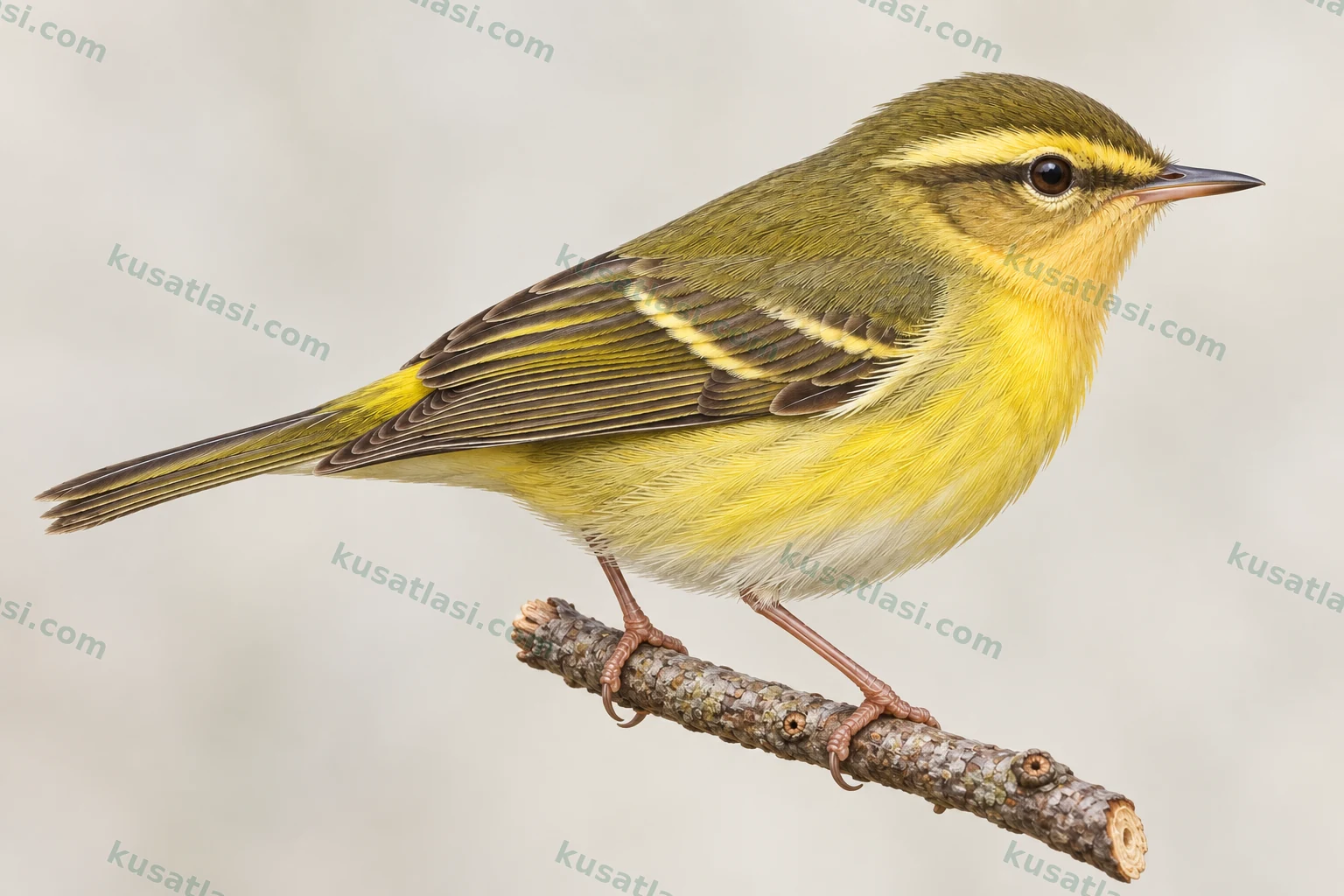
Phylloscopidae
Buff-throated Warbler
Phylloscopus subaffinis
Watch the eyebrow fading before the eye together with dull yellow-brown underparts.
- Order
- Passeriformes
- IUCN status
- LC · Least ConcernGlobal IUCN. BirdLife v10 (2025); taxon matching: AviList 2026 / IOC 15.2; checked 29 October 2026. Checklist year is not the species assessment date. Source and method · BirdLife
At a glance
- Weak eyebrow, dark bill tip
Watch the eyebrow fading before the eye together with dull yellow-brown underparts.
- No pale wing bars
Assess the plain wing, facial lines and short bill together.
- Mountain scrub
High slopes in the breeding season and lower scrub in winter matter.
Biometrics
Length
- Male
- 10–11 cm
- Female
- 10–11 cm
Wing length
- Male
- 5.09 cm
- Female
- 5.09 cm
Weight
- Male
- 6.2 g
- Female
- Data unavailable
Length: Shared species value Wing length: Shared species value
World distribution
Buff-throated Warbler
Customise map layers
Observation points
Preparing globe…
Monthly record count
Bars show record counts in this sample, not bird abundance or a breeding calendar. They are affected by recording and observation effort.
Rotate the globe and compare layers. Coloured areas are not exact observation or nest locations.
The source does not provide verified monthly range boundaries. All areas are shown; the month slider and monthly playback are therefore disabled.
- Jan
- Apr
- Jul
- Oct
- Dec
Generalised data and method
Base map: Natural Earth · Public domain
Open central bibliography ↗Calendar
It moves seasonally to lower wintering areas. Mandala’s April breeding attempt and summer records do not establish monthly boundaries for the entire range.
All months: Monthly data unverified.
January
February
March
April
May
June
July
August
September
October
November
December
Habitat
Mountainous China and northern Vietnam; northern Southeast Asia in winter, with additional northeastern Indian records
On scrub-covered slopes, watch the eyebrow weakening before the eye, dark bill tip and dull yellow-brown underparts together.
Sound
Strong, lively, repeated song notes may have a quiet introduction. Thin calls and a short two-note call are also reported; assess the sequence with facial and bill features.
Do not play recordings to attract birds; observe quietly, especially near nests.
Breeding
At Mandala in April 2019, a pair carrying grasses to a concealed place at a tree base strongly supports a breeding attempt; success is unknown. Nest shape, clutch size, incubation and chick development periods were not verified.
Compare
Compare male and female
Assess the plain wing, facial lines and short bill together.
Species information
Quick identification
The Buff-throated Warbler is a small, plain-looking passerine of mountainous Asia. It lacks conspicuous pale wing bars, a pale central crown stripe and white marks on the long wing feathers folded over the back. The upperparts are brownish olive; the eyebrow and underparts appear pale yellow to pale yellow-brown. A weak eyebrow before the eye, short dark-tipped bill and an overall appearance that is not bright yellow matter together. A yellowish throat alone is insufficient for identification.
General appearance and posture
The head and back are usually dull brownish olive. Current field descriptions also report a greenish upperpart tone, so describing every individual as entirely green-free and plain brown would be wrong. The throat and underparts look duller and more pale yellow-brown than the bright yellow of its close relative Phylloscopus affinis. The cheek and ear area are relatively dark. The eye stripe may look weaker than in similar species. The eyebrow is often clearest directly above the eye.
The bill looks small and short; the dark tip of the lower mandible is particularly useful in a good side view. A paler area at the bill base does not make the whole lower mandible pale. Compared with Phylloscopus armandii, the legs usually look darker, greyish to olive-brown. Leg colour can be hard to establish in shade. If the face and feet are differently lit in a photograph, that contrast must not decide identification alone.
Field records at Mandala describe birds feeding among low plants and grasses. Appearing briefly among shrubs on an open slope does not mean that the species always stays in the open. One can first note the vegetation layer in which it moves, then facial markings and bill colour. Waiting quietly rather than parting vegetation to expose the bird improves the chance of seeing its natural posture and affects a possible nest site less.
Males, females and young birds
Two reliably distinct male and female field plumages were not verified. Williamson’s assessment of the genus describes similar-looking sexes; even where some species differ in measurements, uncertainty about specimen sex labels and overlap of measurements are emphasised. A longer-looking wing or slightly yellower underparts therefore do not identify a male or female conclusively here. Within an observed pair, posture alone does not establish which bird is male.
No verified species-specific plumage key conclusively separating young birds in a brief field view was found either. An old Indian museum record labelled as a young female is not a field rule describing every young bird. A record may retain uncertainty when age and sex are unknown. The shared mean in both wing-card boxes likewise does not mean that every male and female is identical in size; it represents a published value combining specimens.
Appearance in flight
The absence of pale wing bars is easy to check on a perched bird, but the wing surface may not be fully visible during a brief flight. Not seeing a white flash is not, by itself, species identification. The sources examined did not provide an independent flight key distinguishing this bird conclusively by one underwing patch. When it perches again, observe eyebrow, bill, underpart tone and natural call together. Flushing it is unnecessary to see it fly.
Voice and behaviour
The song includes strong, lively, repeatedly delivered notes; some sequences may begin with a quieter introductory note. Softer, thin insect-like calls are also reported. Researchers in India used a short two-note call in identification. These descriptions do not mean that all its vocalisations consist of one syllable. Rhythm, introduction and the distinction between call and song must be assessed alongside plumage and locality.
A sound from a shrub cannot always be certainly linked to a bird seen in the same shrub during a brief observation. Recording an unseen sound source remains useful, with uncertainty retained. At Mandala, birds carrying nesting material called regularly and one sang briefly. Those behaviours form part of the evidence of a breeding attempt there; they do not alone show successful breeding elsewhere.
Similar species
1. Phylloscopus affinis and the very similar Phylloscopus occisinensis may cause confusion through yellowish underparts. Assess the Buff-throated Warbler’s weaker eyebrow fading before the eye, short dark-tipped bill and dull yellow-brown underparts together. Colour under different light is not conclusive alone.
2. Against Phylloscopus armandii, the shorter bill, darker legs and yellow-brown throat not sharply differentiated from its surroundings matter. Throat colour alone is unreliable without seeing the full eyebrow and eye-stripe pattern.
3. Phylloscopus fuscatus and Phylloscopus schwarzi may occur in similar cover during migration and winter. They generally look larger and fuller-bodied, with more conspicuous pale brown eyebrows. Compare proportions, face, bill and natural voice together rather than deriving a bird’s size from its size in a photograph.
Global range
Mountainous China forms the main natural range. The scientific species assessment describes a known breeding range from central China to northern Yunnan, also including southeastern China and northern Vietnam. Wintering areas include southern Yunnan and other parts of southern China, northern Myanmar, northern Thailand, northern Laos and northern Vietnam. These country names do not mean that every part of each country is suitable. Season, elevation and the nature of shrub cover matter.
Status within its natural range
Northeastern Indian records help clarify its status there. Two older museum specimens came from Mizoram and Meghalaya. A newer publication reviews records in Arunachal Pradesh, Sikkim, Nagaland, Manipur and Mizoram. A pair carrying grass at Mandala in April 2019 provides strong evidence of a breeding attempt; successful breeding was not verified because the nest interior and young were not seen. Birds seen there later do not automatically fill that evidential gap.
Migration
Seasonal movement between high breeding areas and lower wintering areas is reported. Cornell describes descent to foothills and lowland scrub in winter. The Indian study’s winter records came from two hilly areas at about 1,400 m; finding no lowland winterers in that local study does not exclude low areas in other countries. Exact daily routes, flight distances or changing monthly boundaries were not verified. One record should not be drawn as an uninterrupted migration route.
Breeding habitat
Mountain shrub-covered slopes and forest areas near the tree line are important. The scientific assessment describes open slope scrub and an elevation belt of 1,800–3,600 m as breeding habitat. This is a broad habitat summary, not equal abundance at every elevation or identical breeding dates everywhere. Combined shrub and grass cover is especially notable in the Mandala observations.
Nest site
In April 2019, a pair carried collected grasses to a sheltered place at the base of a tree trunk. Researchers did not see the concealed nest and stopped approaching for fear of causing harm. The behaviour supports a breeding attempt; nest shape, clutch size, incubation and chick development periods remain unverified. A related species’ nest is not transferred here.
Daily habitat use
It moves among low plants and grasses when feeding. Lower shrub habitats may be used in winter. Quietly watching covered transitions between the forest limit and open slope is useful. Following a carried stem to approach a possible nest is unnecessary; distant observation keeps behaviour natural and protects the concealed site.
What does it eat?
AVONET’s compiled diet class places it among invertebrate feeders. The basic species-specific information that can safely be conveyed is the importance of small invertebrates in its diet. The field publication examined does not present stomach or faecal analysis identifying each prey item. Insect families, prey sizes, daily numbers and seasonal percentages were not verified, so a detailed menu is not supplied. Grass carried for nesting is not presented as food.
How does it obtain food?
At Mandala, birds were watched actively foraging among low plants and grasses. Following their movements between patches of cover and brief bill actions is more meaningful than looking only for birds on exposed branches. A small item in a bird’s bill does not always identify its prey group. Opening cover, putting out food or flushing the bird may alter feeding behaviour; its natural search can be examined from a distance.
What a grass-carrying pair reveals
During the April 2019 Mandala observations, the pair collected grasses and followed an indirect route to a concealed place at a tree base, later reappearing without material. Such repetitions provide stronger evidence of a breeding attempt than a single grass-carrying sighting. The researchers did not force the cover to find the nest. Successful breeding remains unknown; territorial pairs in May and records continuing until July do not replace unseen eggs or young.
Context for the small wing measurement
The source also states its limited confidence in museum sex labels.
Matching older names to the current species
The name Phylloscopus affinis subaffinis may occur in old sources. The species described here is currently accepted as Phylloscopus subaffinis. Using only measurements explicitly tied to this taxon in an old book differs from treating all its affinis information as shared. Correct name matching is as important as colour in similar-looking birds.