

World Birds IUCN statusAccording to source taxonGlobal IUCN. BirdLife v10 (2025); taxon matching AviList 2026 / IOC 15.2; checked: 29.10.2026. The list year is not the species’ assessment date. Source and method OrderApodiformesSwifts and allies FamilyTrochilidaeTrochilidae
White-throated Mountaingem
Lampornis castaneoventris
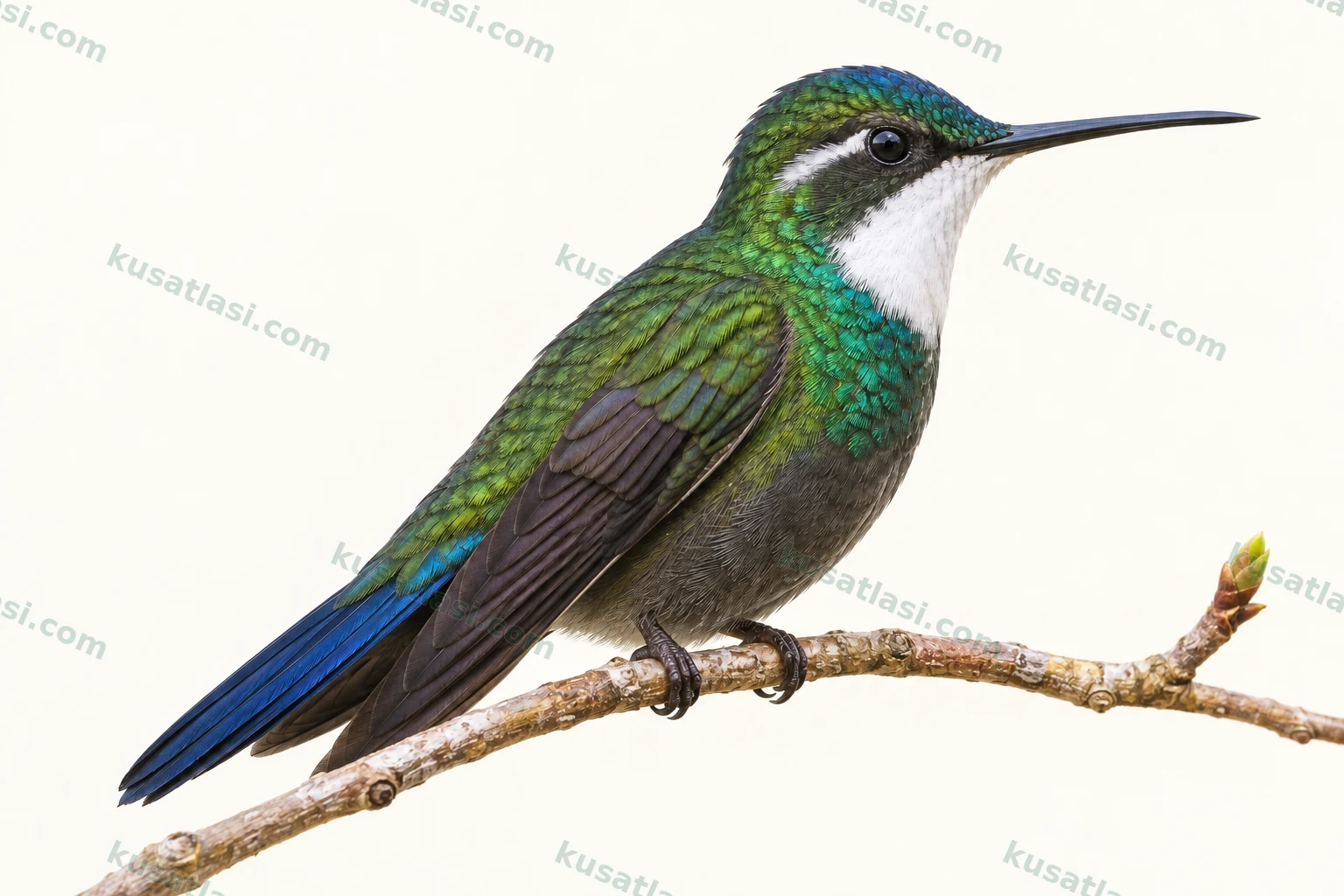
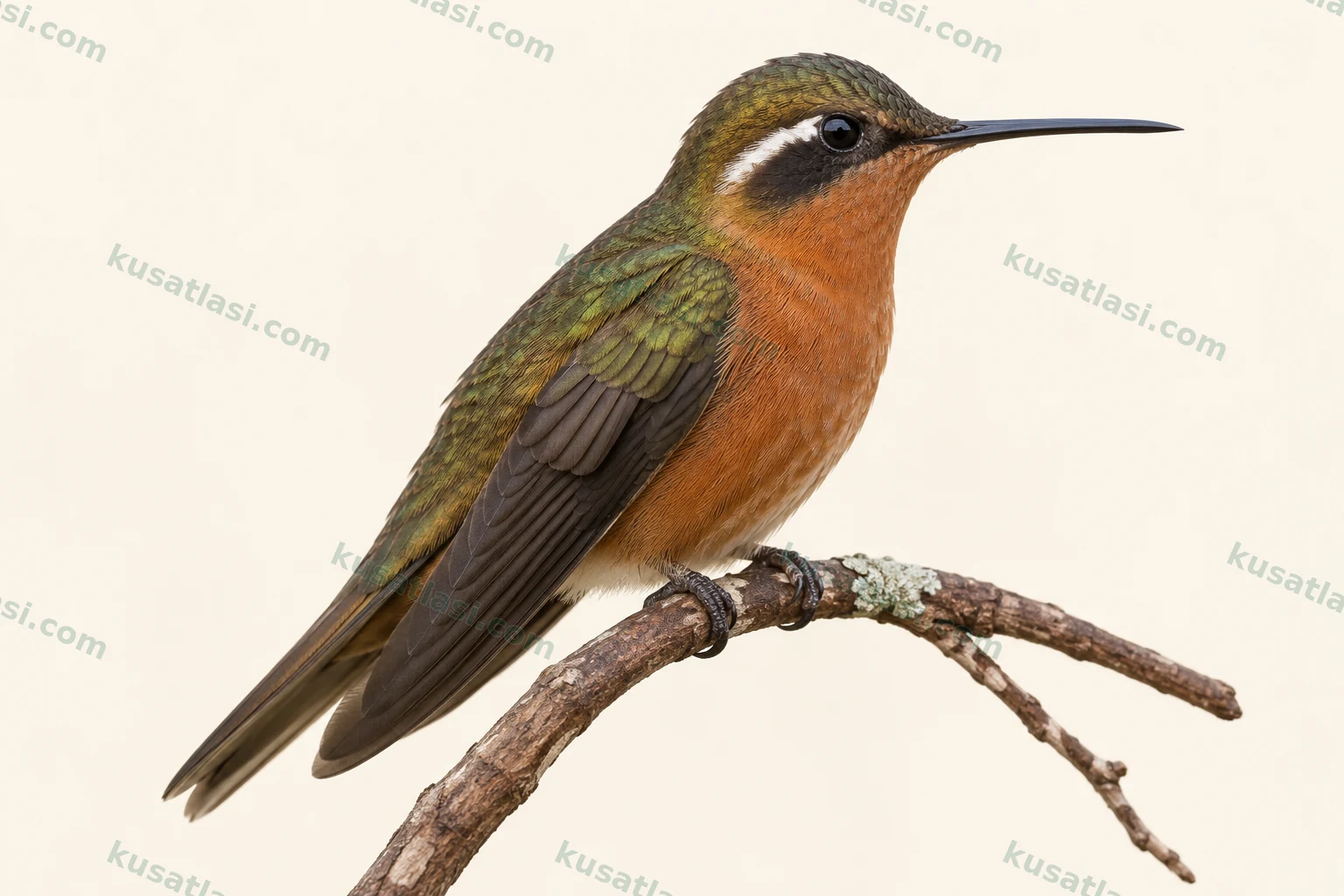
Male white-throated, female cinnamon below; both have a white stripe behind the eye.
Biometrics
Length
Male10–12 cm
Female10–12 cm
Shared species value
Wingspan
MaleData unavailable
FemaleData unavailable
Weight
Male6.3 g
Female4.7–5.6 g
White-throated Mountaingem
Southern Costa Rica and western PanamaObservation guide in its natural range
Look for three features together
Do not rely on a single featureWhite throat and shining forecrown; tail grey or blue according to locality.
Cinnamon underparts, dark cheek and white post-eye stripe.
Mountain forests of southern Costa Rica and western Panama.
Compare male and female
 FemaleMale
Adult male white-throated, female cinnamon below; a detailed common juvenile key was not verified.
Where to look in its natural range?
Mountain forest, flowering edges and gardens adjoining forest.
Resident mountain bird; a reliable common monthly breeding calendar was not verified. Local feeding movements; no verified shared migration route.
All months: Data unavailable
January
February
March
April
May
June
July
August
September
October
November
December
Nest, egg and incubation
Two eggs in compiled data; nest details, incubation and duration in the nest were not verified.
No reliable common vocal key verified; assess with appearance and regional identity.
Do not play recordings to attract birds; observe quietly, especially near nests.
Species information
Quick identification
The White-throated Mountaingem Lampornis castaneoventris is a small hummingbird of mountain forests in southern Costa Rica and western Panama. Adult males combine white throat, green body, light-dependent shining forehead and a white stripe behind the eye. Females have cinnamon throat and underparts: the white throat in the name is not shared by both sexes. Dark cheek and white post-eye stripe help even during a brief flower visit.
This page covers two populations currently placed in one species: cinereicauda in Costa Rica's Talamanca Mountains and castaneoventris in western Panama differ particularly in male tail colour. The western tail is grey, the eastern bluer; do not combine both in one bird. An older Gray-tailed Mountain-gem account need not fall outside this page's concept. Check which population the scientific name denotes.
General appearance and posture
It is small and compact with a slender dark bill. A perched bird's dark cheek and pale stripe behind it define the head. A male's shining forehead may appear continuous with the green upperparts or flash blue. The white throat is a separate area below; not all the lower body is white. Seeing head, throat and breast together helps establish the boundary.
Cloudbridge's Costa Rican inventory explicitly describes the cinereicauda male's blue forecrown, white throat, post-eye stripe and grey tail. This local comparison combines several marks. A Savegre Macaulay Library record also notes changing brilliance when a perched male turns its head.
Males, females and young birds
Adult males have white throats and shining heads; adult females have warm cinnamon underparts. Females also have a prominent white post-eye stripe, dark cheek and green back. Their tails are not the male's bright blue identification mark. A duller bronze-toned female tail helps comparison, although a brief view may not resolve it reliably.
Cloudbridge particularly stresses difficulty separating females from Lampornis calolaemus. Warm underparts and a pale post-eye stripe occur in both, so cinnamon alone does not identify the female. Recognised males at the site, well-lit tails and local taxon scope are assessed together. A nearby male may help, but proximity alone does not establish a pair.
No detailed verified juvenile plumage key covering both populations was found. Not every female-looking bird is automatically female; possible immaturity is assessed separately. Assuming incomplete male throat development without reliable age information does not justify definite age or sex labels.
Appearance in flight
It may hover at flowers and then move to nearby plants or another flower. Face stripe and throat show briefly while rapid wings can blur. Grey or blue tail helps regional identification, but a shadowed tail in one flight frame is not definitive colour evidence.
Voice and behaviour
Search flowering forest edges, openings and gardens beside forest; it also visits hummingbird feeders. One feeding-site sighting does not mean its entire life is spent in that garden. Kormann and colleagues recorded cover-related feeding visits separately from individual numbers. One bird may return; many visits do not mean many different birds.
No standalone vocal key covering the whole range and separating close hummingbirds was verified. A general hummingbird chirp is not definitive identification. Cloudbridge used visual traits and photographic records as important local identity evidence. Record head, face, throat and tail as well as behaviour.
Similar species
Purple-throated Mountain-gem Lampornis calolaemus is compared through its adult male's purple throat, versus white here. Females are much more alike; Cloudbridge says the duller tail may help their separation.
Talamanca Hummingbird Eugenes spectabilis is a larger hummingbird of the same mountain forests. Cloudbridge describes purple male forecrown and turquoise throat, with mostly grey female underparts. The smaller Lampornis male's white throat and female's cinnamon underparts matter in this comparison.
Global range
Its natural range centres on southern Costa Rica and the far-western Panamanian mountains. Current AviList places cinereicauda in Costa Rica's Talamanca Mountains and nominate castaneoventris in western Panama's mountain forest. It does not occupy every Central American hummingbird area. Older broader Lampornis groupings are not assumed identical to present boundaries.
Status within its natural range
Cloudbridge Nature Reserve is a documented example of reforesting mountain forest on Talamanca's Pacific slope in Costa Rica. Its 2016–2020 inventory recorded the bird through point counts, walks and photographs. This does not prove continuous occupancy across the mountain chain or equal habitat value in every garden. As no category evaluation is supplied for the current combined concept, an old narrow-concept conservation label is not transferred to the whole species.
Movements and migration
It is treated as a resident mountain bird; no verified long-distance seasonal route is provided. Feeding movements between southern Costa Rican forest patches and connecting tree lines have been studied. This is not interpreted as regular Costa Rica–Panama migration. Observations may vary with flowering elevation and slope, but shared monthly altitude limits were not verified.
Breeding habitat
It uses mountain forest interior and edges, shrubby openings and flowering gardens beside forest. Cloudbridge records document reforesting Talamanca cloud forest. A newly cleared pasture is not equivalent to established second-growth forest. Continuity of tree and shrub cover and arrangement of flowers matter to daily use.
Nest site
A two-egg record appears in compiled life-history data for this taxon. A reliable detailed original account of nest height, construction, incubation or nestling duration was not verified for this scope. Conflicting online durations are not imported from other Lampornis. The compiled two-egg record is not a census of all directly monitored nests.
Daily habitat use
In a 2012 southern Costa Rican experiment, birds visited artificial flower resources placed between forest edge and pasture. Resources near tree-lined fences received more use than arrangements at equal distance across bare pasture. Thin tree lines between patches may therefore be feeding connections, not merely scenery. The result is limited to that experimental geography and resource arrangement.
What does it eat?
It uses nectar and small insects and occurs in flowering gardens and at hummingbird feeders. Kormann and colleagues directly recorded its visits to artificial flowers offering sugar solution in southern Costa Rica. Experimental food does not define the natural flower list or mean sugar is the entire diet. Seasonal insect proportions were not measured here.
How does it forage?
It reaches flowers while hovering and flies between resources. Visits to resources along a wooded corridor exceeded those arranged similarly in open pasture. This directly supports cover use while feeding. The same study's detailed Heliconia tortuosa pollination experiments chiefly concern Phaethornis guy; not every plant experiment result is assigned specifically to the White-throated Mountaingem.
Grey and blue tails belong to the same current concept
Costa Rica's cinereicauda and Panama's castaneoventris occur under separate species headings in some older works because of tail differences. The list used here treats them as two subspecies. Replacing the Costa Rican male's grey tail with the Panamanian blue one misrepresents diversity. Locality directly helps colour comparison.
Visits are not individuals
The species table's 37 represents recorded feeding visits, not 37 marked individuals or the local population. Visit counts describe resource use; counts of different birds address another question. Pollination results for all hummingbirds in the study are not assigned to this species alone.
A local inventory also helps identification
Cloudbridge does more than list names: it describes male and female identification in the Talamanca population. The grey-tailed white-throated male and cinnamon-underparted female are documented within the same local scope. It explicitly stresses difficulty separating females from Purple-throated Mountain-gem. This caution is more useful than claiming every female can be named conclusively from one photo.