

World Birds IUCN statusAccording to the source taxonGlobal IUCN. BirdLife v10 (2025); taxon matching AviList 2026 / IOC 15.2; checked: 29.10.2026. The checklist year is not the species assessment date. Related IUCN assessment: Fringilla coelebs — Common Chaffinch: LC · Least Concern. This category belongs to the named source taxon. An exact match to the scope of this page has not been verified, so it is not transferred as an independent species category. Source and method OrderPasseriformesPasserines FamilyFringillidaeFringillidae
African Chaffinch
Fringilla spodiogenys
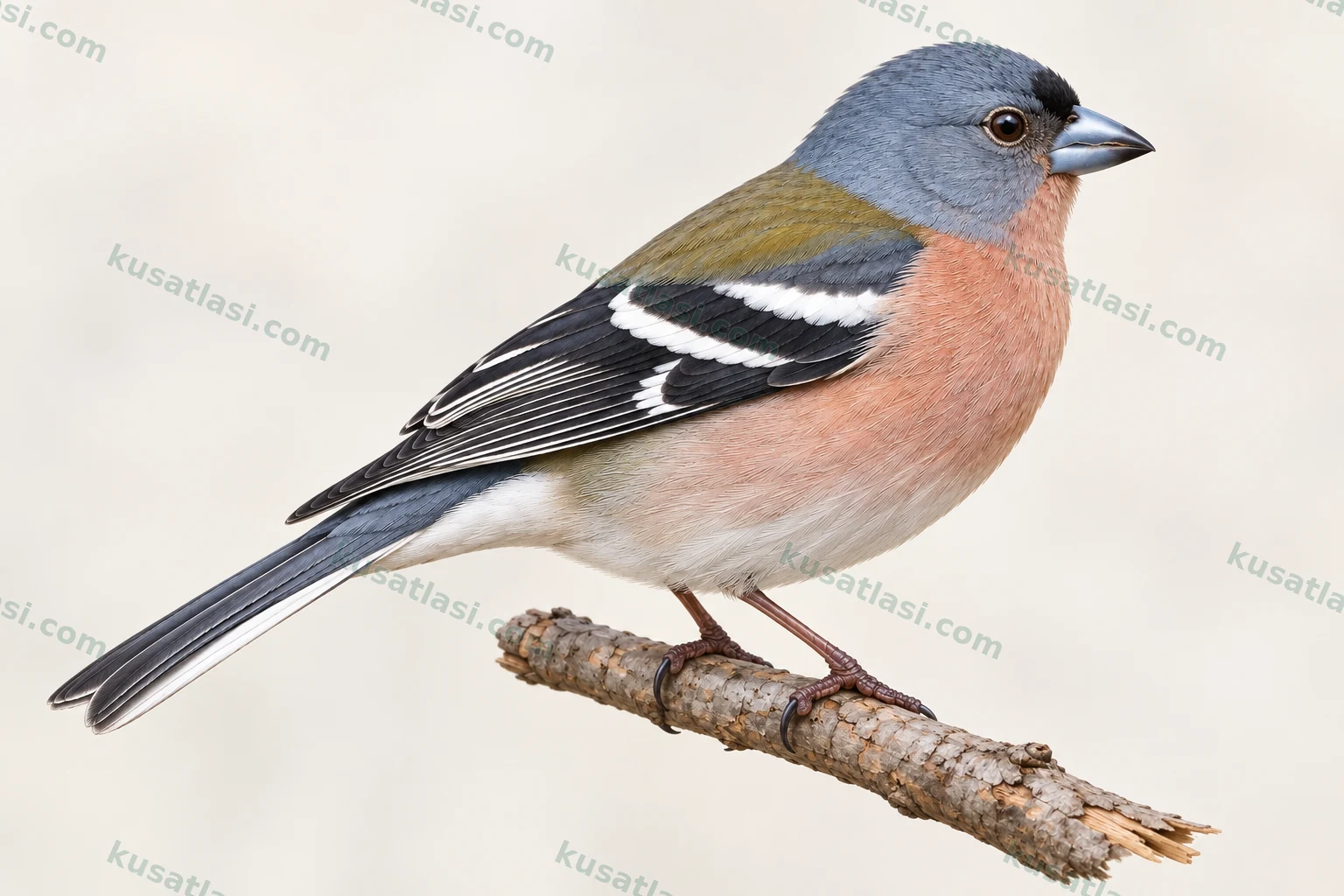
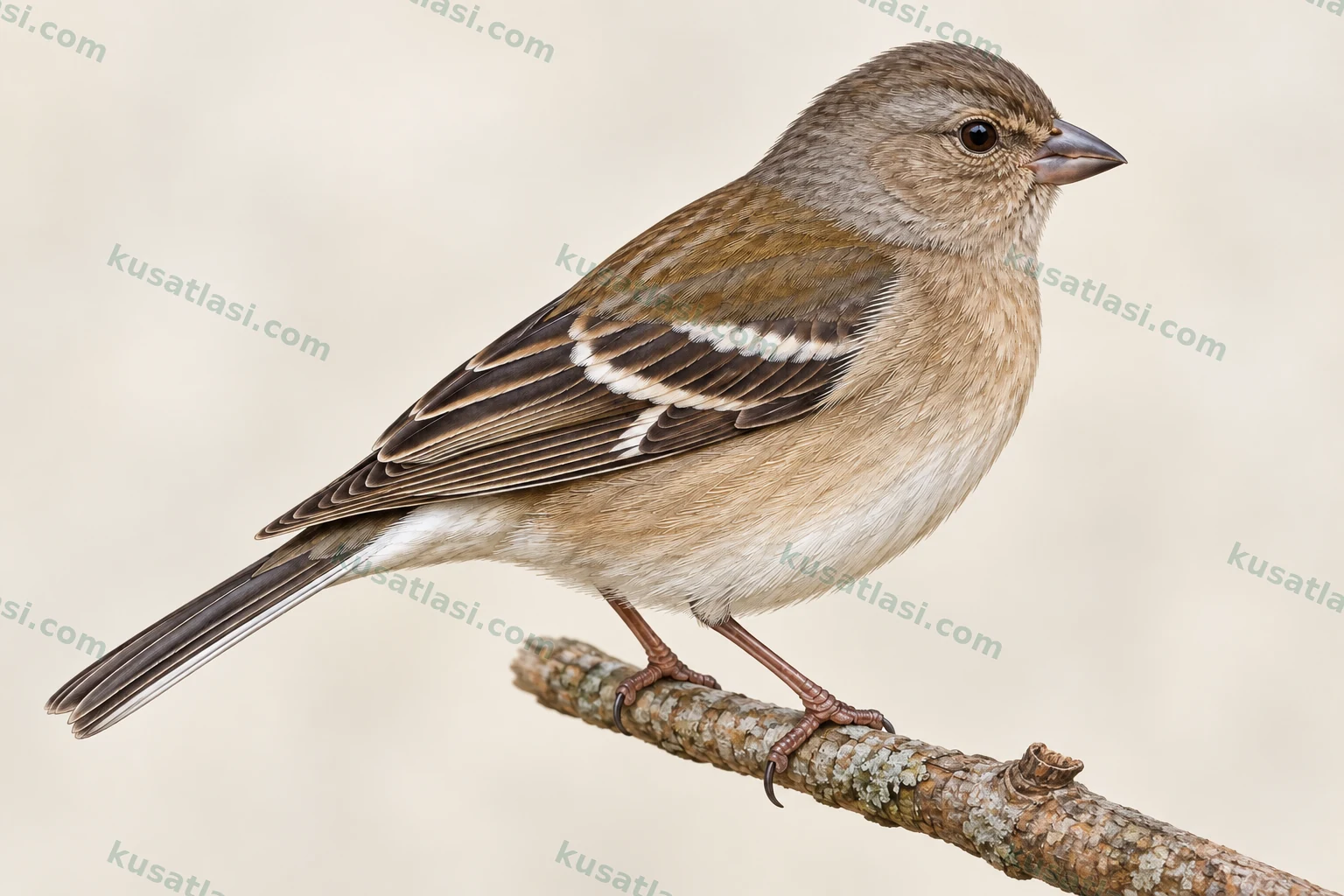
The male has a blue-grey head and green back; the female is duller. In both sexes, assess the wing pattern and white extending across three outer tail feathers together.
Biometrics
Length
Male16.39 cm
Female15.62 cm
Length values are published means from prepared museum specimens of the nominate subspecies in eastern Tunisia and northwestern Libya; these are not field measurements of live birds.
Wing length
Male9.11 cm
Female8.53 cm
Weight
Male23.22–23.6 g
Female21.87–22.12 g
African Chaffinch
North African woodlandsObservation guide in its natural range
Look for three features together
Do not rely on a single featureSuitable woodlands in Morocco, Algeria, Tunisia and Libya; a winter flock may also include Eurasian Chaffinch.
Head, back and the white on three outer tail feathers are checked together.
Compare male and female
 FemaleMale
The male is more conspicuous with a blue-grey head and green back; the female is duller. Tail white helps in both sexes; geographical forms and young are not named from one colour alone.
Where to look in its natural range?
Watch head, back and outer-tail white together on wooded slopes, forest edges and in gardens of Morocco–Tunisia–Libya.
The results section of the 2016–2017 El Kala National Park study recorded egg-laying from 12 April to 27 May. This Algerian example does not establish the same breeding limits for other countries.
January
Resident North African woodland populations; breeding time is assessed using local records. No verified regional date specific to this month was supplied; this does not mean local absence.
February
Resident North African woodland populations; breeding time is assessed using local records. No verified regional date specific to this month was supplied; this does not mean local absence.
March
Resident North African woodland populations; breeding time is assessed using local records. No verified regional date specific to this month was supplied; this does not mean local absence.
April
Resident North African woodland populations; breeding time is assessed using local records. Algeria, El Kala National Park (2016–2017): egg-laying from 12 April to 27 May; regional study.
May
Resident North African woodland populations; breeding time is assessed using local records. Algeria, El Kala National Park (2016–2017): egg-laying from 12 April to 27 May; regional study.
June
Resident North African woodland populations; breeding time is assessed using local records. No verified regional date specific to this month was supplied; this does not mean local absence.
July
Resident North African woodland populations; breeding time is assessed using local records. No verified regional date specific to this month was supplied; this does not mean local absence.
August
Resident North African woodland populations; breeding time is assessed using local records. No verified regional date specific to this month was supplied; this does not mean local absence.
September
Resident North African woodland populations; breeding time is assessed using local records. No verified regional date specific to this month was supplied; this does not mean local absence.
October
Resident North African woodland populations; breeding time is assessed using local records. No verified regional date specific to this month was supplied; this does not mean local absence.
November
Resident North African woodland populations; breeding time is assessed using local records. No verified regional date specific to this month was supplied; this does not mean local absence.
December
Resident North African woodland populations; breeding time is assessed using local records. No verified regional date specific to this month was supplied; this does not mean local absence.
Nest, egg and incubation
At El Kala in Algeria,34 nests were studied. Three to four eggs were most frequent, and incubation lasted 12–15 days in 20 records. These results are not generalised to other subspecies.
Descending vibrating, rattling song and short contact calls are assessed together with tail, head and back pattern.
Do not play recordings to attract birds; observe quietly, especially near nests.
Species information
Quick identification
African Chaffinch Fringilla spodiogenys lives in wooded areas of North Africa and has a strong conical bill. In the adult male, leaden-blue head and nape, greenish back, pale pink breast, white wing bars and extensive white on the outer tail are seen together. Females are duller brown-grey; a pale facial surround and tail white may help with a good view. The most reliable field comparison with Eurasian Chaffinch Fringilla coelebs does not rest on one breast colour: head tone, green back, wing white and especially the distribution of white on the spread tail’s three outer feathers are examined together. Corso and colleagues found the last pattern particularly useful in museum specimens. A brief distant view can change apparent white extent through light and angle.
Older sources often use Fringilla coelebs africana or F. coelebs spodiogenys. Recuerda and colleagues proposed recognising the North African group as Fringilla spodiogenys in 2021; nominate spodiogenys, western africana and northeastern Libya’s harterti are three subspecies within this scope. F. coelebs africana in Ramdani and colleagues’ El Kala breeding study refers to the western subgroup of this species, not an Algerian breeding study of Eurasian Chaffinch. Old names need tracking as taxonomic limits change; two former names do not imply two separate African Chaffinch populations.
General appearance and posture
The finch body, large-headed impression, short neck, relatively strong bill and two white wing bars are recognisable. The male’s green back and blue-grey head differ from the more chestnut back and cheeks of the Eurasian male. Tunisia’s nominate subspecies is generally paler; western africana may look darker with a more distinctly green back. Svensson describes harterti males with a conspicuous white patch in the middle of the nape and yellower flight-feather edges. These are geographical differences within the species. Birds in other regions must not all be forced into the pale Tunisian appearance.
Males, females and young birds
In good light the male’s grey-blue head and cheeks, green back and pale pink underparts are conspicuous. Extensive outer-tail white can be hidden in a resting bird; check again as it turns or flies briefly. Females are duller, brownish and grey. Corso and colleagues report a paler eye surround, stronger bill and potentially more extensive tail white than in Eurasian females. Wing-bar size overlaps, however; identifying a female by a broad white wing bar alone can mislead. The dull adult-female-like appearance of young birds also requires care; very fine subspecies distinctions are not forced when age is unknown.
The El Kala breeding study measured nests and eggs; the nest’s mass in grams is not the adult bird’s mass.
Appearance in flight
Extensive white on the outer tail feathers helps identify a flying bird. Comparing museum specimens, Corso and colleagues highlighted white extending over three outer tail feathers in the African group versus more restricted white in the Eurasian group. Contrast is often brighter in males, but the tail pattern is useful in females too. White upperwing bars and pale feather edges are seen together. A side view of the tail alone may not reveal how many feathers are white; watching natural wing and tail movements is more reliable. No special underwing mark absent from the sources is added.
Wing white may also show in similar finches during a brief fast passage; assess pale tail area, head and back colours and region together. If only a narrow part of the wing is photographed, identification remains a possibility.
Voice and behaviour
This finch uses perches in woodland, appears in pairs in breeding areas and can be seen on the ground at feeding sites. Song comprises descending sequences with vibrating and rattling sounds. Short contact calls are also heard. Older North African field publications described voices different from Eurasian Chaffinch, but a single written syllable is not sufficient without reliable comparison. Voice may vary with age, season and region, so head, wing and tail are observed too. Listening to natural song from a distance is preferable to approaching a nest while seeking a recording.
Branch selection, nest-building and carrying food to young can be observed directly during breeding, but not every nest is at the same height. The observer does not approach the tree or nest unnecessarily.
Similar species
1. Eurasian Chaffinch Fringilla coelebs is the main confusion risk, especially for visitors from outside North Africa. Compare male back and cheek colour and, in both sexes, outer-tail white extent, bill structure and geography together. Eurasian birds also have white wing bars, so these alone are not conclusive.
2. Brambling Fringilla montifringilla is compared by its orange breast and white rump revealed in flight. The breeding male has a black head; outside breeding, black looks patchy on the male’s head, while the female’s is grey-brown. African Chaffinch’s white outer tail feathers and Brambling’s white rump are different anatomical marks. In a distant winter flock, recording which white region was genuinely seen reduces misidentification.
Genetic relationship with Canary Islands Chaffinch Fringilla canariensis does not show the two breeding commonly together on mainland North Africa. Colour differences among the three North African forms do not automatically indicate another European or island species either. First examine the same bird’s head, back, wing and tail together; do not force subspecies or sex under poor viewing conditions.
Global distribution
African Chaffinch occupies the North African belt from wooded northwestern Morocco through Algeria and Tunisia to northwestern Libya. The Jebel Akhdar population of northeastern Libya is described as the separate subspecies harterti. Western africana occurs in Morocco, Algeria and western Tunisia; nominate spodiogenys in eastern Tunisia and northwestern Libya.
Status within its natural range
These boundaries are not lines of equal density at every point; gaps occur between suitable wooded patches. Recuerda and colleagues’ taxonomy treats the North African group at species level, while Svensson’s museum series demonstrate colour and size differences among geographical forms. Isolated Mediterranean island records are not translated into continuous breeding colour across the island belt without separate verification.
Migration
North African populations are generally resident; short movements must be distinguished from regular intercontinental migration. Finding nests at El Kala in spring proves breeding there, not directly which valley the birds use in winter. Movement records require date, place and verified subspecies identity. Eurasian Chaffinch’s extensive migration pattern is not copied to the African species because of close relationship.
Corso and colleagues describe winter mixed flocks of resident African and Eurasian Chaffinches in Tunisia. This rules out assuming every chaffinch in North Africa is the native African species. The same publication discusses isolated coastal and island records in the Mediterranean; these few observations do not prove a regular intercontinental migration route. Recording date and habitat with colour helps distinguish a resident population from visiting birds.
Breeding habitat
African Chaffinch breeds on wooded slopes, forest edges and Mediterranean habitats retaining trees. A two-year El Kala National Park study provides a concrete example: researchers found nests in cork oaks and olive trees. This does not show identical tree preference in every Tunisian tree or every Libyan mountain. Svensson reports Jebel Akhdar birds in northeastern Libya in woodland, gardens and scrub. Thus suitable treed and food-rich edges matter alongside dense forest interiors.
Nest site
Of 34 El Kala nests in 2016–2017, most were in cork oak and the remainder in olive. Mean height was 6.28 metres, with the lowest measured nest at 3.5 and the highest at 9 metres. Cup nests rested on branches. Moss, lichens and plant fibres were recorded outside, with finer material, hair and feathers inside. These materials complete the branch-supported cup. Three or four eggs were most frequent in these local samples across two years. In 20 records incubation lasted 12–15 days, averaging 13.65 days; it is not a compulsory duration elsewhere. Climbing the nest tree or waiting below for days can affect breeding. These numbers describe observed Algerian africana samples, not universal constants for all finches in different countries. Breeding success and predation varying by year and place require giving numbers in context.
Daily space use
The bird may sing from perches, move among branches and forage on open ground within the same wooded surroundings. El Kala nest sites document breeding-season use, not every detail of winter feeding. Open patches, shrubs and edge paths around trees offer different opportunities from one continuous forest. Food and season need separate examination before asserting always on the ground or always in trees. Both nest sites and everyday feeding ground should be retained.
What does it eat?
African Chaffinch’s strong finch bill can take plant food, especially seeds. Small invertebrates may also matter during chick provisioning, but the examined El Kala paper did not measure year-round percentages of individual insects. Details such as equal consumption of seeds from all local oaks and olives are therefore not invented. A reliable species account may summarise food categories, but proportions measured for another Fringilla are not automatically transferred. A nest in an olive tree does not prove an olive-only diet. Feeding and the tree supporting the nest are recorded separately.
How does it feed?
It moves in short steps over open ground, picking up visible small food with its bill, and may also forage near branches and bushes. Although a hunting heading refers to animal prey, gathering seeds is part of feeding too. The El Kala breeding study counted nest sites and eggs in detail but did not quantitatively track every adult food source. It cannot provide a special insect-catching technique, daily flight distance or fixed prey list. If carried food is seen, record its kind, place and time separately. Carrying food to young does not alone show adults using the same food all year.
An old name and a new species boundary
European and North African chaffinches were long combined in a broad Fringilla coelebs concept. Recuerda and colleagues’2021 study assessed genetic and other evidence together and proposed five species; Fringilla spodiogenys is the oldest valid name for the North African birds. The study’s own DNA samples did not include all three North African subspecies. This shows both that species limits rely on evidence and that directly examined samples must be identified separately. An old Algerian bird labelled F. coelebs africana no longer establishes Eurasian Chaffinch by name alone.
Why the tail white matters
Corso, Viganò and Starnini compared 614 museum specimens:264 from the African and 350 from the European group. African birds had extensive white on three outer tail feathers, versus more restricted white in Eurasian specimens. The female mark was duller than the male’s but still useful. Wing white overlaps, so no single mark suffices. A pattern revealed by spreading museum feathers is not as clear in a momentary field view of a closed tail; wait for a good view.
What a measurement means
It is particularly important not to present the nests’14.70 gram mean mass as the bird’s body mass; a scientific table’s row heading establishes what its weight entry actually measures.