

World Birds IUCN statusLC · Least ConcernGlobal IUCN. BirdLife v10 (2025); taxon matching AviList 2026 / IOC 15.2; checked: 29.10.2026. The list year is not the species’ assessment date. Source and method · BirdLife OrderApodiformesSwifts and hummingbirds FamilyTrochilidaeTrochilidae
White-bellied Woodstar
Chaetocercus mulsant
Tiny Andean woodstar; white patches beside the lower back and metallic wing buzz in the male.
Biometrics
Length
Male8 cm
Female8 cm
Shared species value
Wing length
Male3.92 cm
Female3.92 cm
Shared species value
Weight
Male3.8–4 g
Female3.8–4 g
Shared species value
White-bellied Woodstar
Andean belt from Colombia to BoliviaObservation guide in its natural range
Look for three features together
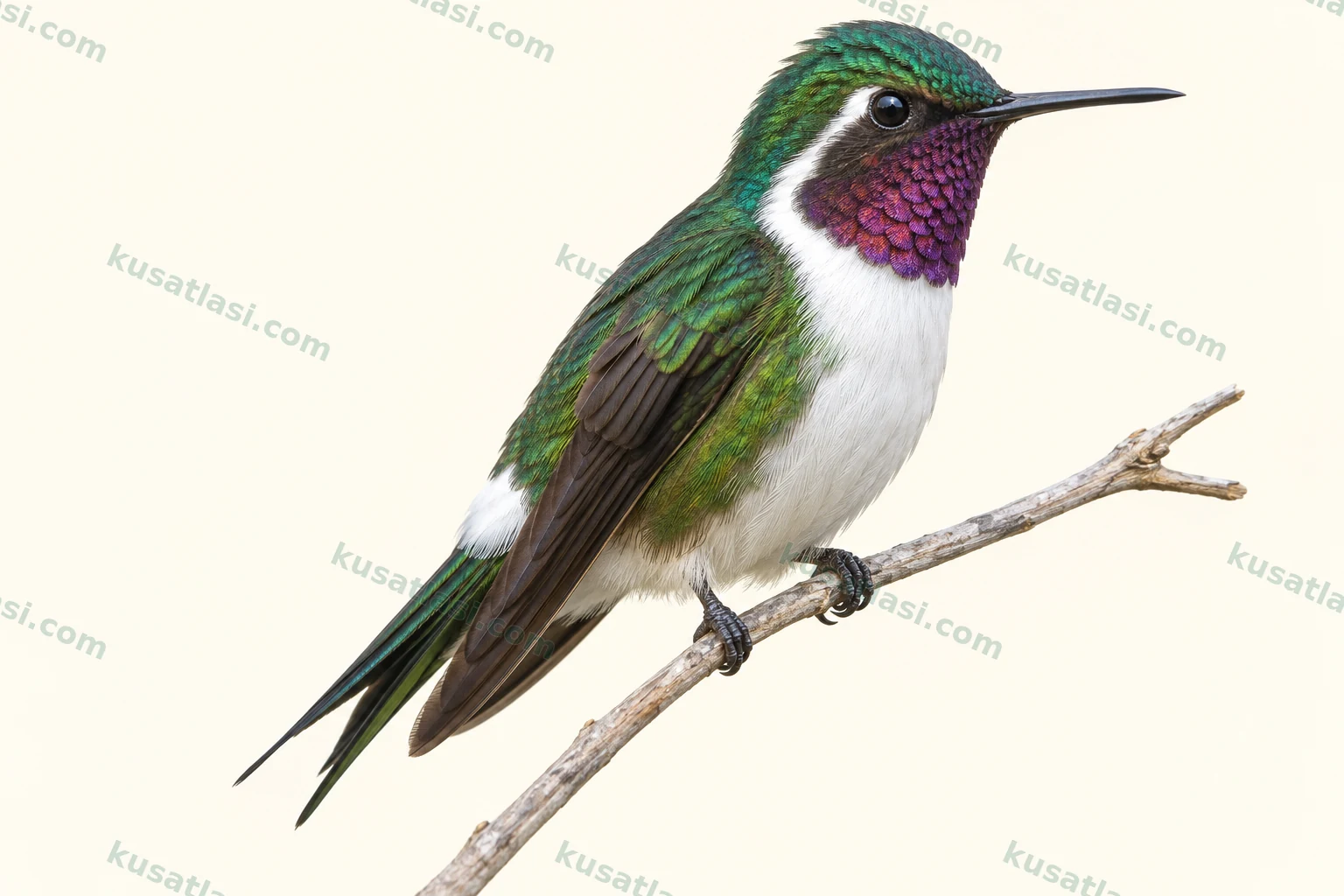
Do not rely on a single featurePurple throat, white breast and belly.
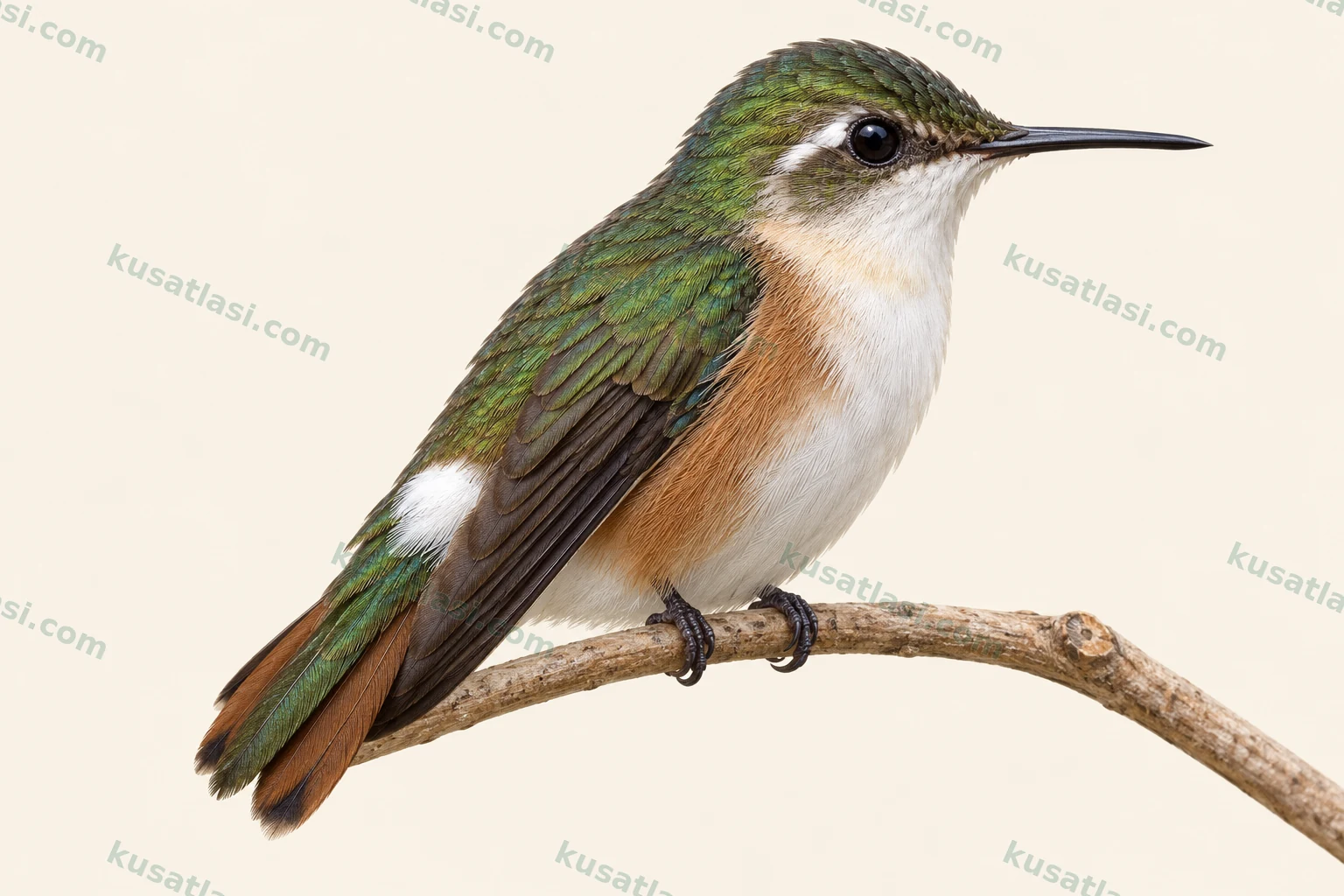
White throat, warm-coloured sides.
Conspicuous white side patches in both sexes.
Compare male and female
 FemaleMale
Adult sexes differ; detailed juvenile appearance was not found.
Where to look in its natural range?
Flowering forest edges, scrub and gardens.
Resident; no reliable regional breeding calendar.
All months: Data unavailable
January
February
March
April
May
June
July
August
September
October
November
December
Nest, egg and incubation
Possible fibrous cup with lichen from a Colombian photograph; eggs and periods unverified.
Male metallic wing buzz; detailed call key not found.
Do not play recordings to attract birds; observe quietly, especially near nests.
Species information
Quick identification
The White-bellied Woodstar Chaetocercus mulsant is a very small hummingbird of the Andean belt from Colombia to Bolivia. The male has a bright purple throat, white breast and belly and dark green sides. White patches at the sides of the lower back matter in both sexes. White-bellied Woodstar denotes the same species.
General appearance and posture
The male has emerald-green upperparts and a forked tail. The dark side of the head contrasts with a pale line behind the eye. The female shows bronze-green upperparts and warmer yellowish-brown sides.
Males, females and young birds
The female has a white throat, a pale post-eye line and warm-coloured sides. The adult male's bright purple throat is not a female mark. The examined sources supplied no detailed reliable key to every juvenile plumage stage.
Appearance in flight
Its flight can resemble a large bumblebee; the male's wings make a distinct metallic buzz. This is not the same as vocal song. White patches beside the lower back may show in flight, but comparison with other tiny woodstars is needed.
Voice and behaviour
It visits flowers in Andean woodland, scrub and gardens and may come to feeders. Cornell gives an elevational range of about 1100–3500 metres. Accessible sources did not provide enough information for a detailed call repertoire.
Similar species
Females of Gorgeted Woodstar Chaetocercus heliodor and other small woodstars may look similar. Assess this species' more conspicuous white belly and broad white patches at the sides of the lower back together. Flight buzz alone is not an unvarying key to sex or species.
World distribution
It occurs in the Andes of Colombia, Ecuador, Peru and Bolivia. Current taxonomy accepts one subspecies. Its habitats are woodland and scrub in the mountain belt; a feeder record does not show the entire natural range.
Status in its natural range
The checked global category is Least Concern. Using gardens does not mean that it lives only around people.
Movements
The specialist ecological compilation classifies it as resident. Direction and distance of local elevational movements following flowering were not sufficiently verified. No reliable long migration route was found.
Breeding habitat
It uses montane forest edges, wooded clearings, scrub and gardens. Colombia's Cundinamarca guide describes it among the region's small hummingbirds. Look in semi-open areas with flowering plants.
Nest site
A 2024 scientific review discusses the possibility of a cup nest of fine plant material covered outside with lichen, based on a photograph from San Cristóbal, Medellín, Colombia. Nest information remains limited. Two eggs, measurements and nest heights of other Chaetocercus in the same paper are not confirmed data for this species. Eggs, incubation and development periods were not verified.
Daily use of space
It uses flowers and sometimes feeders. Visit frequency in one garden is not interpreted as the population's daily consumption or area size. The male's wing buzz may alert an observer to its arrival.
What does it eat?
Nectar is the verified basic food. Sources report aerial flower visits and feeder use. Regional proportions of natural plant species and amounts of invertebrate prey were not verified in this research.
How does it feed?
It hovers before a flower and reaches nectar with its bill. Its tiny size and bee-like flight do not make it an insect. A special association with flower shape or measured pollination success is not claimed without verification.
The buzz comes from the wings
The male's metallic flight sound differs from song produced by the vocal organ. It may attract attention with the tiny body and bee-like flight. Hearing it does not justify giving a particular wingbeat rate without measurement.
A relative's eggs are not this species' eggs
The scientific genus review of 2024 explicitly states that White-bellied Woodstar breeding information remains scarce. The Colombian nest photograph permits an inference about shape, whereas the two white eggs well known in other species are only a possibility here. They are not presented on cards or in text as a verified clutch size.