

World Birds IUCN statusLC · Least ConcernGlobal IUCN category. BirdLife v10 (2025); taxon matching: AviList 2026 / IOC 15.2; checked: 29.10.2026. The list year is not the species assessment date. Source and method · BirdLife OrderPasseriformesPasserines FamilyFringillidaeFringillidae
African Citril
Crithagra citrinelloides
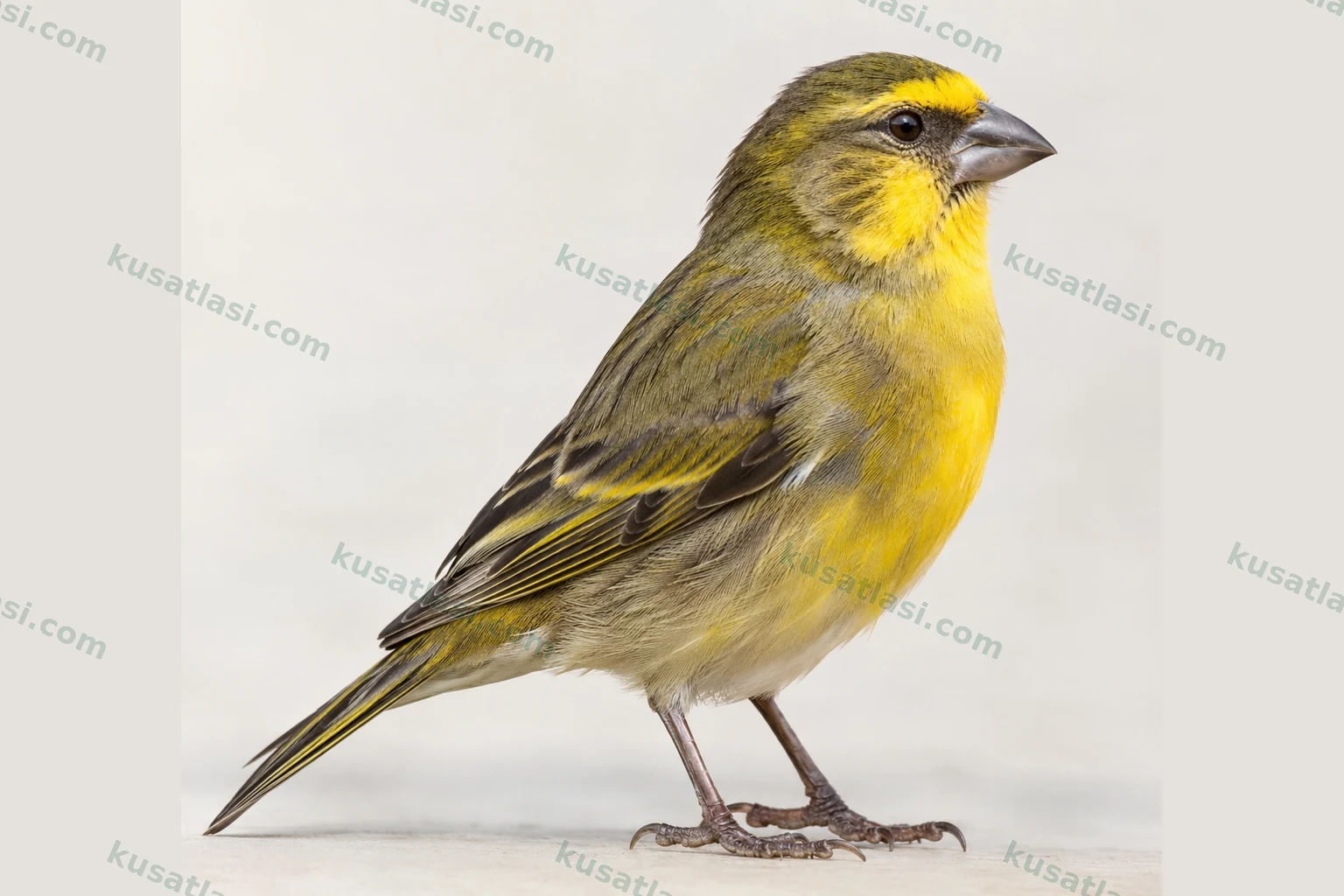
A small pointed bill, forked tail, olive-green upperparts and yellow underparts. Sex, age and facial differences between Kenyan and northern populations are assessed together.
Biometrics
Length
Male11–12 cm
Female11–12 cm
Shared species value
Wing length
Male6.64 cm
Female6.64 cm
Shared species value
Weight
Male11.5–15.4 g
Female14.7–15 g
African Citril
Suitable middle and higher elevations in Eritrea, Ethiopia and KenyaObservation guide in its natural range
Look for three features together
Do not rely on a single featureThe northern adult male is dark-faced; the female is streaked. Young can resemble females.
Do not force the Kenyan kikuyensis appearance to fit the northern mask pattern.
Assess the forked tail, bill and whole individual’s pattern; evaluate each bird in a flock separately.
Compare male and female
 FemaleMale
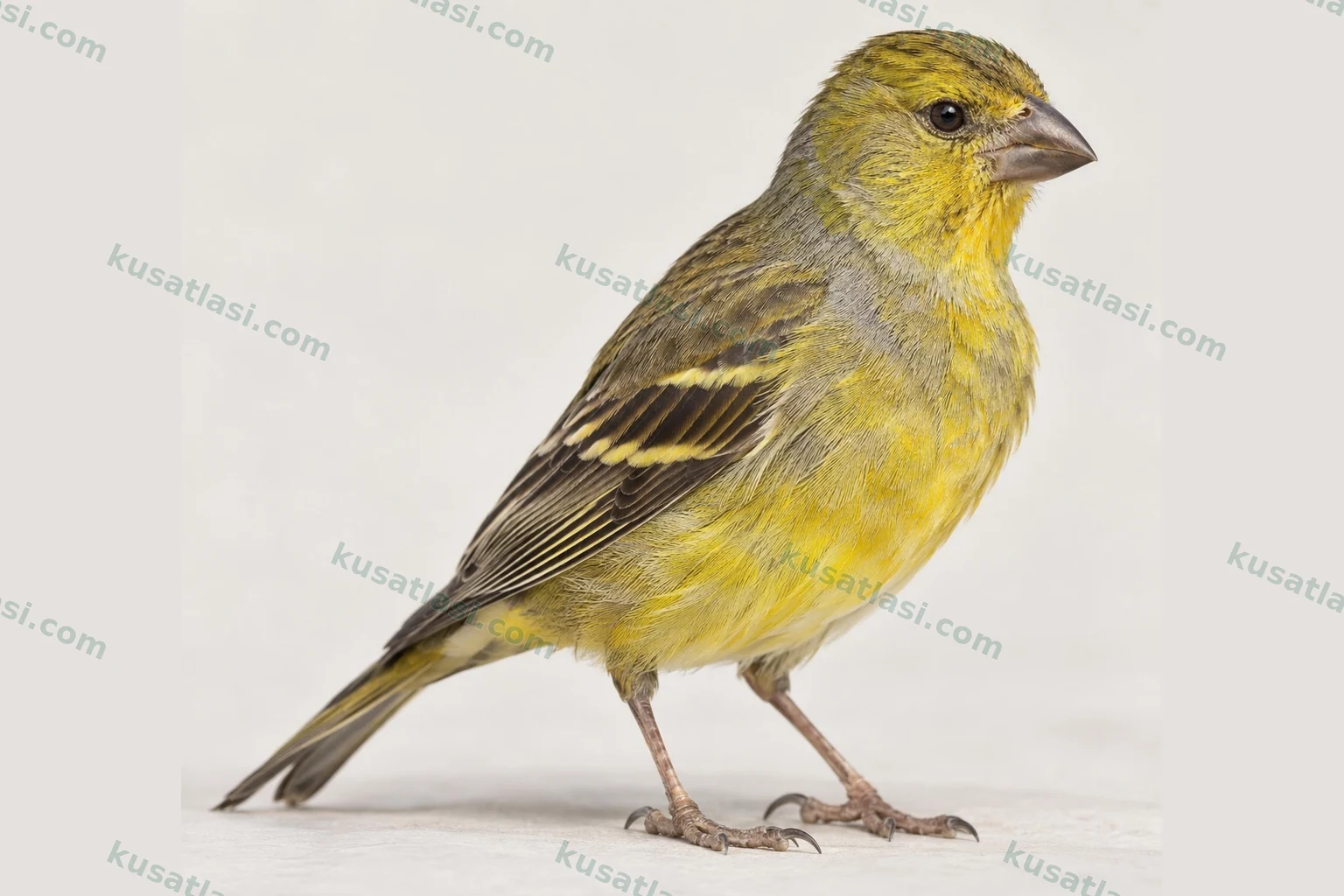
The northern adult male has a dark face and cleaner yellow underparts; females are streaked and young resemble females. The Kenyan population may have a different facial pattern; a plain face alone does not prove a female.
Where to look in its natural range?
Watch small groups at forest edges, in moist scrub, gardens and low vegetation from a distance. Do not label every plain-faced bird female.
The expert account reports residency, rain-related breeding and irregular local movements. No monthly nest study separated by region was verified for the whole range; no single definite migration or breeding calendar was produced.
All months: Resident populations; breeding and local movements are assessed with regional rainfall and records. No verified regional date specific to this month was supplied; this does not mean local absence.
January
February
March
April
May
June
July
August
September
October
November
December
Nest, egg and incubation
A cup of fine grass and rootlets in a suitable bush or plant. The expert synthesis gives two to four eggs,12–13 days of incubation by the female and a nestling period of about 15 days. Both sexes may feed young; nest departure is not independent feeding. The compilation value 2.4 was not used as the actual total in a nest.
The song combines high-pitched rapid twittering and whistles. Specific whistle patterns from older broadly defined taxa were not transferred as this species’ certain call.
Do not play recordings to attract birds; observe quietly, especially near nests.
Species information
Quick identification
African Citril Crithagra citrinelloides is a small seed-eater recognised by its small pointed bill, forked tail, olive-green upperparts and yellow underparts. In adult males of Ethiopia and Eritrea, the dark facial mask and cleaner yellow underparts stand out together. Adult females have a plainer face and conspicuous dark streaks below. Not every streaked bird is female, however: young birds can look similar. Shadow around a yellow bird’s eye in a photograph must not be mistaken for a real facial mask. The whole head, breast and belly pattern, bill and tail are assessed together.
Kenya’s kikuyensis population does not have exactly the same face as the northern nominate subspecies. The expert account describes yellow eyebrows that can meet across the forehead and a dark cheek area. Looking for a black mask over the entire forehead of a Kenyan bird could therefore lead to rejecting a correct individual. Region accompanies colour; one detail is not made compulsory for every geographical appearance. The English name African Citril matches the current scientific name Crithagra citrinelloides. Older Serinus citrinelloides is a former genus placement, not another bird. Information about the similarly named Southern Citril must not be transferred to this species.
General appearance and posture
The body is small, and the bill looks short and pointed, suited to taking seeds. Olive upperparts and yellow underparts are assessed on the same bird. The forked tail may be less obvious when closed; a tail tip hidden behind a branch gives incomplete evidence of shape. If only the head can be seen, wait for a better view rather than assume the body pattern. The brightness of yellow is affected by light, shade and image processing. Warmer colour in a photograph does not prove a different subspecies or a male. Where a pattern occurs anatomically can be more informative than colour intensity.
Feeding on the ground, perching on low vegetation and singing from a high point produce different postures. Bill proportions in a bird lifting its head on a high perch may not look the same as in one bending to seek seeds. The Turkish name’s use of iskete also does not mean every European siskin’s plumage and behavioural features occur here; the marks in this account apply directly to Crithagra citrinelloides.
Males, females and young birds
The northern adult male’s dark face and yellow underparts are useful together. Females lack the dark mask and have conspicuous streaks below. Both marks belong to the complete appearance, rather than relying on either alone. Because young birds have a female-like streaked appearance, not every plain-faced bird is labelled female. The expert account notes that young can show greyer, brownish or pale warm tones. Such colour may suggest youth, but age-appropriate plumage, overall pattern and observational context are assessed together. Confusion with a worn or shaded adult remains possible.
Robert Dowsett and Françoise Dowsett-Lemaire’s Ethiopian review particularly emphasises how closely immature male African Citrils can resemble Southern Citril. Thus an unmasked bird cannot immediately be recorded as another species. Remembering only the adult male plate and rejecting every bird unlike it is inappropriate. Female and juvenile descriptions are not merely incomplete colouring of the male. For an uncertain bird, adult male marks not yet visible must be distinguished from marks genuinely absent in that taxon. If necessary details cannot be seen, sex and age remain open.
Appearance in flight
In flight, try to see the small body, tail shape and light-and-dark colour areas. Leaving a high perch and a feeding group’s short movement need not be the same behaviour. In a blurred image, not seeing a fine pattern expected on the folded wing is a normal gap in evidence, not proof of a plain wing. Upper- and underwing marks are not interchanged without first establishing which surface is visible. A brief silhouette may be insufficient to separate African Citril from similar small seed-eaters. Seeing face and underparts after it perches again is more revealing.
The direction of a moving group does not give a migration route. Moving among garden, field edge and woodland differs from longer seasonal movement. A line of map points is not presented as tracking data for one individual’s journey. Watch natural take-offs and landings rather than flush birds to see their wing patterns. Not transferring one flock member’s conspicuous mark to every bird is particularly important when females and young are together.
Voice and behaviour
Cornell’s current species account describes song as a combination of high-pitched rapid twittering and whistles. Singing from a high perch can make a bird more visible than others feeding within nearby vegetation. A heard voice is not assigned to another small bird nearby without seeing its source. The number of birds in a group and the number vocalising can differ. Playback is not needed to draw birds close to hear natural song. The voice information here is a written description.
African Citril may occur in pairs or small groups. Proximity at one feeding site does not prove that the whole group tends one nest. Seed-bearing plants and an open feeding surface help explain the group’s presence. Vocal information from an older broad species account needs caution: the 2015 Ethiopian paper discusses another call of three to four distinct whistles that could be confused with this taxon. A voice pattern belonging to another species in the genus has therefore not been added as a certain African Citril mark. Place and taxonomic identity also form part of interpreting a recording.
Similar species
Southern Citril Crithagra hyposticta is similar, with olive upperparts and pale yellow underparts. Cornell’s current account compares its similar sexes, some streaking below and absence of the northern adult male African Citril’s dark face. Yet immature male African Citrils can resemble it. Age, geography and the same individual’s natural voice are assessed together. Historical Ethiopian Southern Citril claims have also been discussed; an old record alone does not prove the two occur together everywhere.
Yellow-fronted Canary Crithagra mozambica is another small seed-eater with yellow underparts and streaked grey-green upperparts. The yellow eyebrow and cheek area are compared with the complete head pattern. A female’s paler appearance makes identification by brightness alone unreliable between the two species. Drier grassland and scrub context may help; a garden or field edge alone is not diagnostic. Mixed-species flocks are possible, so the name of one yellow individual is not assigned to the whole group. Each bird’s face, breast pattern and body proportions must be seen separately.
Global distribution
The current African Citril species scope includes suitable areas of Eritrea and Ethiopia and a separate Kenyan population. The expert taxonomic account distinguishes the nominate subspecies in the north from kikuyensis in Kenya. This does not mean continuous coverage of the African continent. Combining other Crithagra ranges under the name East Africa is especially misleading. Old Serinus records are not added to this map without confirming present taxonomic identity. One local observation point does not make every grassland and woodland in the country breeding habitat.
Status within its natural range
Ethiopian records relate to forest edges, scrub and open woodland. A field review published in 2015 describes African Citril encounters and dark-faced males from around Debre Libanos towards Awassa and the Bale Mountains in autumn 2014. These observations document places visited by researchers, not equal density across the entire country. The 2025 bird-community study around Jer Silase also recorded the species. Its forest, farmland and streamside records inform local habitat use; one study does not establish national abundance or breeding every month. Global conservation category is assessed separately from local record numbers.
Migration
The expert species account reports general residency and irregular postbreeding movements. Increased sightings in one place during rains do not prove that all birds arrived by the same route from another country. Food, vocal activity and observation conditions can change reporting density. No country sequence or migration distance is drawn because verified individual tracking data are absent. The calendar describes resident populations, not definite monthly breeding boundaries across the whole range. Map observations and model predictions remain separate too. An African point recorded under an older broad species name is not treated as a new natural-range extension without checking modern splits.
Breeding habitat
African Citril may use forest edges, moist scrub, open woodland, gardens and farmland at middle and higher elevations. It need not therefore be sought only in undisturbed forest interiors. A garden sighting does not prove a nest in the same garden. Food and shelter provided by vegetation are assessed together. Ethiopian and Kenyan surroundings are not identical, so one landscape photograph is not treated as obligatory habitat for the whole species. Local elevation and rainfall context offer more detail than the country name.
Nest site
The expert account describes a cup of fine grasses and rootlets in a bush or suitable plant. It gives two to four eggs,12–13 days of incubation by the female and a nestling period of about 15 days; these are not presented as one experimental result measured across every region. Both sexes may feed young. Leaving the nest, strong flight and independent feeding are different stages. The compilation table’s value 2.4 is not the number of eggs in an actual nest; the nest description uses the directly reported range. Do not open branches or displace adults to inspect a nest.
Daily space use
Low seed-bearing vegetation and open ground used for feeding serve different functions from high singing perches. Finding a bird on a high branch does not show that it spends the entire day there. Jer Silase’s local habitat records remind us that different environments can be used together within an area. Differences in sampling methods among habitats also limit direct conversion of counts into preference rankings. Observing the bird on its chosen plant is more meaningful than directing it elsewhere for an image. Once a nest is located, describe the general surroundings rather than spread its precise position.
What does it eat?
African Citril mainly eats seeds. The expert account also describes other plant food and small amounts of small insects. This is not an unchanging seed-only menu. Seeing the food plant and seeing which part of it is eaten are separate observations. Landing on a flower does not by itself prove nectar feeding, nor landing on a fruiting branch fruit consumption. Food adults take for themselves and food carried to young should also be distinguished in the record. No universal percentages are given because sampling to verify every food group’s share across the entire range is unavailable.
How does it feed?
Its main feeding task is seeking seeds rather than chasing small prey. It can collect food on the ground and low vegetation; when it lands on a seed-bearing plant, try to see the food actually taken. A small group may comprise independent individuals using the same food patch. Proximity does not show that they feed each other. Record substrate and plant; if the item in the bill cannot be resolved, leave its identity uncertain. Scattering seeds or feed to gather birds changes natural space use. Watching from a distance with binoculars helps them continue feeding and helps establish what food is genuinely taken.
An immature male can resemble another species
Assessing 2014 Ethiopian field observations, Dowsett and Dowsett-Lemaire discussed the resemblance of immature male African Citrils to Southern Citril as an important identification problem. This shows the limits of learning a species only through its most distinctive adult male appearance. A bird without a visible dark face is not immediately transferred to another species. The authors not hearing the other species’ distinctive call during one particular visit is not conclusive evidence of its absence everywhere and always. Observations and broader geographical inference remain separate.
Why did the genus name change?
Older Serinus citrinelloides and current Crithagra citrinelloides are different genus placements of the same species account. Cornell’s taxonomic explanation bases the change on molecular classification studies. Zuccon and colleagues’2012 research addresses how similar plumage and feeding appearance do not always demonstrate close relationship. This does not mean every yellow seed-eating bird in the field is one species. Even with the current name, the scope of old publications must be checked. Genus reassignment and species splitting are different operations.
A record near a monastery
The published bird-community study around Jer Silase includes African Citril in its local species list. A record gains meaning with habitat and counting method. Different observation methods were used in different environments; the results should not be read directly as the population of all Ethiopia. Inconsistent research dates within the text also prevented treating it as a precise monthly breeding calendar. A local presence record is valuable, but no scientific paper answers every biological question.
A decimal egg count
In comparative life-history tables, clutch values compiled from several sources can be decimal. The 2.4 in the African Citril row is not an actual number of eggs that could be counted inside one nest. The nest account uses the expert source’s directly reported range of two to four eggs. This apparently small distinction preserves what the data measure: a compiled value, one observed nest and a fixed number for the whole species are different things.