

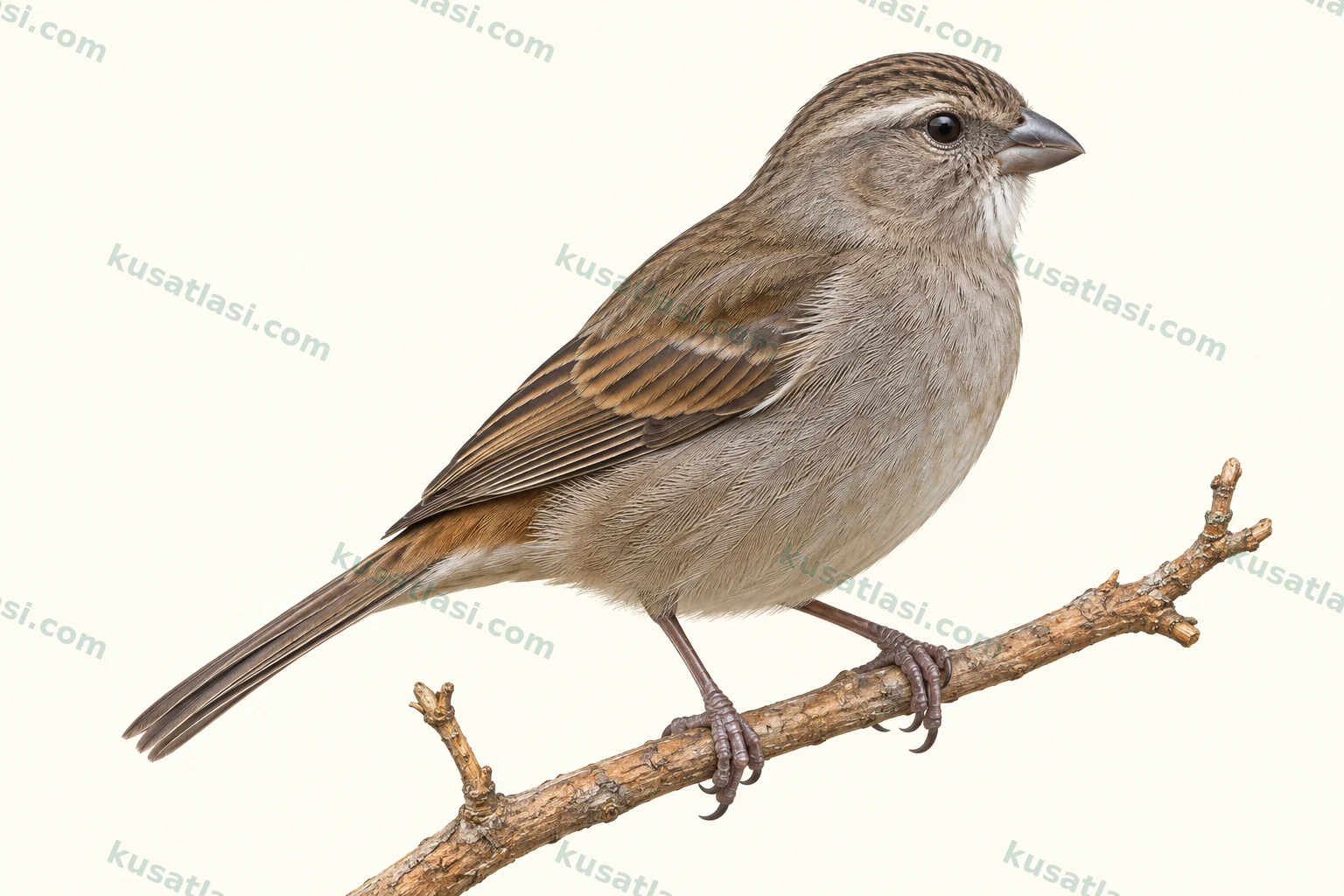
World Birds IUCN statusLC · Least ConcernGlobal IUCN. BirdLife v10 (2025); taxon matching AviList 2026 / IOC 15.2; checked: 29.10.2026. The list year is not the species’ assessment date. Source and method · BirdLife OrderPasseriformesPasserines FamilyFringillidaeFringillidae
Brown-rumped Seedeater
Crithagra tristriata
Plain grey-brown seedeater of the Horn of Africa highlands; white eyebrow, small white chin and unstreaked adult underparts.
Biometrics
Length
Male13 cm
Female13 cm
Shared species value
Wing length
Male6.8 cm
Female6.8 cm
Shared species value
Weight
Male12–19.5 g
Female12–19.5 g
Shared species value
Brown-rumped Seedeater
Eritrea, Ethiopia and northwestern SomaliaObservation guide in its natural range
Look for three features together
Do not rely on a single featureRead the pale eyebrow and small white chin together.
Distinctly unstreaked in adults; juveniles may show finer streaking.
Mountain woodland, juniper scrub, forest edges and suitable gardens.
Compare male and female
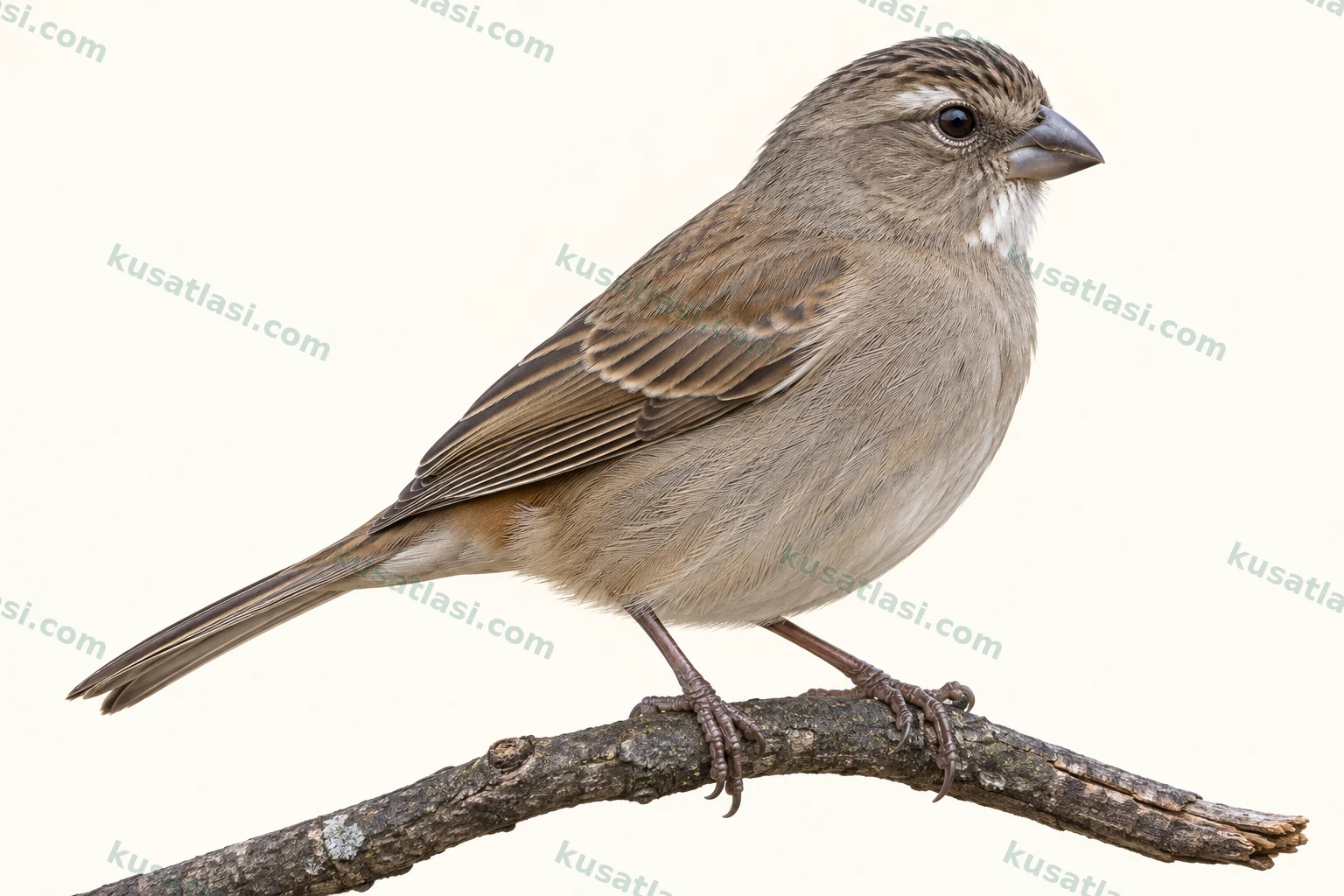 FemaleMale
Adults are similar; juveniles may have a greyer eyebrow and fine breast streaks.
Where to look in its natural range?
Highland juniper woodland, scrub and openings with seed-bearing plants.
Resident; small feeding groups may wander locally. Definite shared breeding months were not verified. Resident; local movements between feeding places.
All months: Data unavailable
January
February
March
April
May
June
July
August
September
October
November
December
Nest, egg and incubation
Cup nest of plant fibres and fine grass on a branch of a shrub or small tree. Three eggs; reliable incubation and juvenile development periods were not found.
Repeated, slightly raspy whistles and short, high-pitched calls.
Do not play recordings to attract birds; observe quietly, especially near nests.
Species information
Quick identification
Brown-rumped Seedeater Crithagra tristriata is a small, plainly coloured finch of the Horn of Africa's highlands. Grey-brown upperparts, paler underparts that are distinctly unstreaked in adults, a white eyebrow and a small white patch on the chin and centre of the throat are read together. Its short, thick, conical bill gives it the appearance of a seed-eating bird.
The adult's plain underparts help in comparisons with similar, more streaked seed-eating birds. Examine the head and body separately: dark streaks on the head do not mean that all the underparts are streaked too. When the bird turns naturally, look for the white eyebrow above the dark cheek and the small white chin patch.
General appearance and posture
The back and nape are brown, with darker wings and tail. A pale eyebrow extends back above the eye, contrasting with the dark face. The underparts have off-white, pale grey and brownish tones. The dull breast helps define the small white chin patch; do not expect the entire throat to be brilliant white.
It may forage on the ground, on grasses or in low plants. On a perched bird, read the short bill, small body and relative tail length together. A bird lowering its head on the ground may hide its eyebrow or chin patch.
Males, females and young birds
Adult males and females look very similar, without an obvious adult colour distinction. A difference in tone caused by one member of a pair standing in brighter light is not a sex marker. The pale eyebrow, small white throat patch and plain underparts matter in both adult appearances.
A young bird may look warmer and light brown, with a pale grey eyebrow rather than the adult's clean white one. Fine breast streaking differs from the adult's plainer underparts. A streaked juvenile must therefore not be assigned to another streaked seedeater species on that feature alone.
Juvenile appearance is not an exact age scale in days. Feather development and plumage can vary between individuals. A warm brown bird beside a greyer adult in a group must be considered in terms of both age and lighting.
Appearance in flight
The specialist account describes direct flight. A brief crossing may reveal a brown body and darker wings and tail, but this alone is not said to separate all similar small finches. Smaller marks such as the eyebrow and chin should be checked again when the bird next perches naturally.
A small group going from one seed patch to another may be making a daily or local feeding movement. Such a flight is not evidence of regular long-distance migration. The English name's emphasis on a brown rump does not mean that the bird must show that area in flight.
Voice and behaviour
Cornell describes a simple song of repeated, slightly raspy whistles. The specialist account also reports short, high-pitched calls. As other seed-eating birds may share its surroundings, match a sound, where possible, to the actual individual whose eyebrow and chin patch can be seen.
It may forage in pairs, alone or in small groups. Some small groups outside the breeding season wander within the natural range to find food. This social appearance does not imply flocks of the same size in every season.
Similar species
In comparison with Streaky Seedeater Crithagra striolata, the adult's plainer, distinctly unstreaked underparts are important. Remember that juveniles can have breast streaks; streaking alone is not decisive. Where possible, examine each bird's eyebrow and throat marks on that same individual's body.
Among similar dull-coloured Crithagra species, check the white eyebrow and small white chin patch together. Do not combine the appearance of bright yellow-rumped species with the description of this brown bird. If a photograph does not show the rump, do not guess its colour; identify cautiously from the marks that are visible.
World distribution
Its natural range lies in the high, wooded parts of the Horn of Africa. The current list includes juniper woodland in Eritrea, Ethiopia and northwestern Somalia. All the low, dry eastern regions of Ethiopia should not be treated as the same range. Elevation, vegetation and places with suitable seed resources matter; national borders alone do not define habitat.
Status within its natural range
The global list snapshot places it in Least Concern. It may be locally common, with records from forest edges, scrub and gardens. Its presence around Addis Ababa does not show that all urban areas are equally suitable. This natural range in the Horn of Africa is not restricted to two countries; Somalia is included in the current taxonomic record. One local sighting is not a population census of the whole region.
Movements
It is resident. Small groups wandering between feeding places outside the breeding season must not be presented as a seasonal long-distance migration route. The availability of seed-bearing plants may affect local movements, but no single tracked route across the whole natural range, or shared arrival and departure months, was verified. The calendar indicates residency; a record in a particular garden does not imply equal abundance in another country in the same month.
Breeding habitat
It uses mountain scrub, juniper and mixed woodland, forest edges and rocky slopes. It may also visit gardens with suitable vegetation. Breeding habitat is not bare rock alone; nest support and nearby feeding places both matter. Small openings with seed-bearing grasses may share its daily space with trees and shrubs.
Nest site
The specialist species account describes a cup nest made from materials such as fine dry grass, plant fibres, animal hair and spider webs. A horizontal branch in a shrub or small tree can provide support; juniper is mentioned. Three eggs also agrees with the life-history compilation. Reliable incubation and juvenile development periods were not found in this search; a two-week period from another seedeater is not transferred here.
Daily use of space
It searches for seeds on the ground and on plants, and may use the low tree and shrub layer. Not every plant occupied by a feeding group is a nest support. Carrying a fibre and swallowing a seed are different behaviours. Do not open up bushes around a nest; watch natural movements from an existing path and do not offer extra food.
What does it eat?
It feeds mainly on small seeds. Seeds of grasses and other plants are important in its diet. This does not mean it uses one plant in every season or eats in fixed proportions. Its conical bill suits seed use, but not every object seen in a bird's bill can be identified as a seed merely from its shape.
How does it forage?
It can take seeds on the ground and from standing seedheads. Foraging is interwoven with low scrub and woodland cover. Distinguish perching on a grass stem from picking and swallowing a seed; do not guess the plant's name if its identity is unclear. When a group arrives at one spot, do not assume that all birds take the same food in equal amounts. Preserve natural seed-bearing plants; do not clear ground or set up a feeder for observation. Its occurrence in gardens suggests that natural feeding behaviour may also be watched there.
Young birds may not fit the simple key
A juvenile may have finer breast streaks and a paler grey eyebrow. This shows why an adult identification statement cannot be applied unchanged to every age. Treating a streaked individual immediately as another species without considering age can cause mistakes, especially in small groups. Assess bill, head and geography together.
Juniper is more than a background tree
Juniper woodland forms part of its natural habitat, and the specialist account also reports juniper as nest support. The feeding opening and the branch holding the nest may be different places. Seeing a nest on a horizontal branch does not mean that every juniper nearby is used, or that only this tree is chosen.
An older genus name does not mean a different bird
Older sources may use Serinus tristriatus. The currently accepted name is Crithagra tristriata; the taxon described here matches the same record identity. A word ending changing with the genus does not by itself show that a different species exists. Check geography and the identification concept alongside the names.
Resident birds can change feeding places
Small groups wandering within the natural range do not contradict residency. Moving between seed resources and undertaking regular long-distance migration are different processes. Absence from the same garden every day does not prove that the whole population has migrated to another country; distinguish observation dates from actual movement data.