

World Birds IUCN statusLC · Least ConcernGlobal IUCN category. BirdLife v10 (2025); taxon matching: AviList 2026 / IOC 15.2; checked: 29.10.2026. The list year is not the species assessment date. Source and method · BirdLife OrderPasseriformesPasserines FamilyPasserellidaePasserellidae
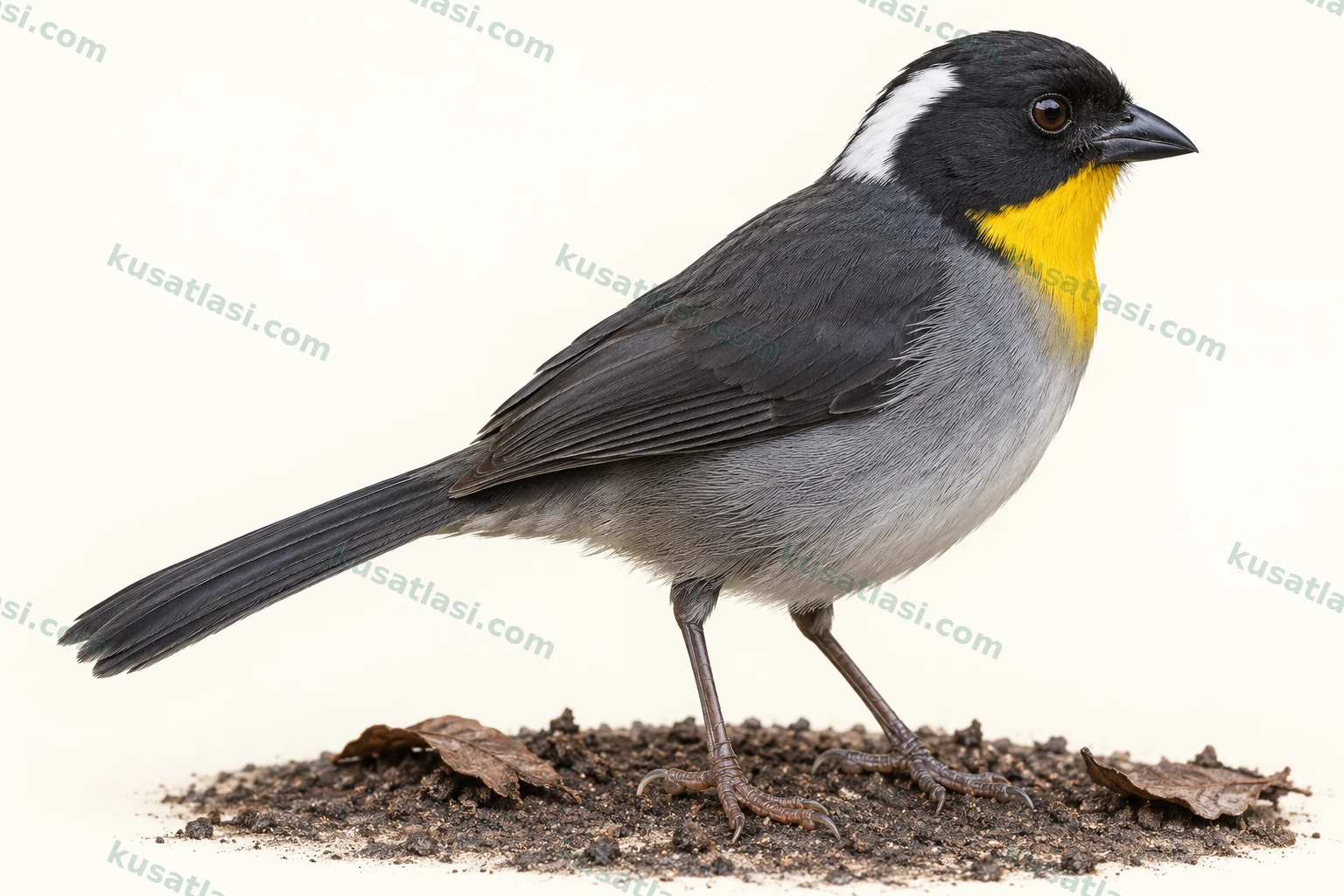
White-naped Brushfinch
Atlapetes albinucha
Mountain songbird with a pale central stripe on its black head; yellow and grey underparts can vary geographically.
Biometrics
Length
Male17–21 cm
Female17–21 cm
Shared species value
Wing length
Male7.33 cm
Female7.33 cm
Shared species value
Weight
MaleData unavailable
Female32.4 g
White-naped Brushfinch
Mountains of Mexico, Central America and northwestern South AmericaObservation guide in its natural range
Look for three features together
Do not rely on a single featureCheck the central pale stripe together with throat and breast.
Do not automatically use yellow and grey underparts to sex the bird.
Compare male and female
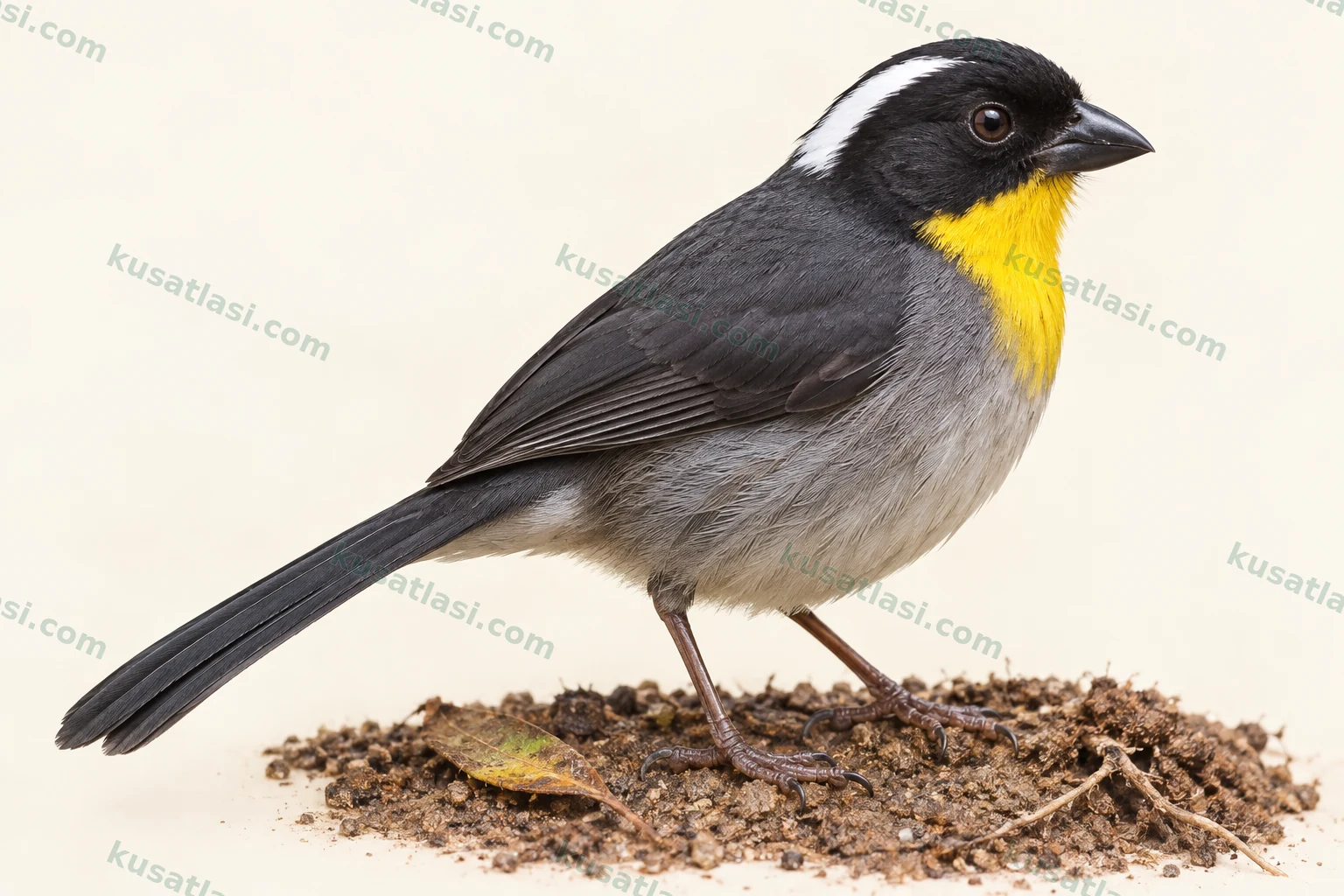 FemaleMale
Geographic yellow–grey underpart differences are not male–female differences.
Where to look in its natural range?
Vegetated forest understorey, mountain scrub and woodland edges.
Regional nests: Oaxaca June, Costa Rica June and September. A single breeding season for the full range was not verified.
January
Regional breeding records; seasonal movements are poorly known. No verified regional date is given for this month. This does not imply local absence.
February
Regional breeding records; seasonal movements are poorly known. No verified regional date is given for this month. This does not imply local absence.
March
Regional breeding records; seasonal movements are poorly known. No verified regional date is given for this month. This does not imply local absence.
April
Regional breeding records; seasonal movements are poorly known. No verified regional date is given for this month. This does not imply local absence.
May
Regional breeding records; seasonal movements are poorly known. No verified regional date is given for this month. This does not imply local absence.
June
Regional breeding records; seasonal movements are poorly known. Oaxaca and Costa Rica: local nest records.
July
Regional breeding records; seasonal movements are poorly known. No verified regional date is given for this month. This does not imply local absence.
August
Regional breeding records; seasonal movements are poorly known. No verified regional date is given for this month. This does not imply local absence.
September
Regional breeding records; seasonal movements are poorly known. Costa Rica: a nest raising another species’ young.
October
Regional breeding records; seasonal movements are poorly known. No verified regional date is given for this month. This does not imply local absence.
November
Regional breeding records; seasonal movements are poorly known. No verified regional date is given for this month. This does not imply local absence.
December
Regional breeding records; seasonal movements are poorly known. No verified regional date is given for this month. This does not imply local absence.
Nest, egg and incubation
Plant-fibre nest in low vegetation. Two young in the Oaxaca record; typical egg number, incubation and fledging duration were not verified.
Sings on a shrub or tree. A certain voice-only key separating coloured populations was not verified.
Do not play recordings to attract birds; observe quietly, especially near nests.
Species information
Quick identification
The White-naped Brushfinch Atlapetes albinucha is a songbird of mountain woodland in Mexico, Central America and northwestern South America. The pale central stripe through its black head is an important starting mark. Head, throat and breast must be seen together. Underparts are not expected to match across all populations.
Some Mexican birds have yellow underparts. Farther south, a yellow throat can accompany a pale grey breast. Geography does not make one male and another female. Older Yellow-throated Brushfinch and Atlapetes gutturalis names must be compared with the present broad species concept.
General appearance and posture
Watch head–body proportions, bill shape and the pale stripe's actual boundaries. A brightly lit nape alone is insufficient. Overhead light can create a pale reflection on dark feathers, whereas a real stripe retains its position as the bird turns. A brief side view can hide the crown stripe behind leaves.
Dark head and pale stripe may appear briefly among low plants. A perched breast can be clearer while the crown needs another angle. Wait to see head, throat and breast on the same individual rather than combining two birds. This especially avoids confusing yellow- and grey-bellied populations.
Males, females and young birds
The evidence examined did not provide a colour-only key reliably sexing adults throughout the range. Yellow or grey breast relates to geography, not an automatic sex label. Being at a nest alone does not establish sex either. Behaviour of known individuals differs from visual guesses.
At the described Oaxaca nest, white central head feathers were starting in two young estimated at about nine days. This is a nestling stage, not the full body pattern of an adult. Pale head feathers alone do not establish adulthood. Estimated age is not an exact development duration obtained by following hatching.
Incomplete young plumage is not forced into an adult pattern. Independent feeding, receiving food and actual feather appearance can be recorded separately. Looking smaller beside adults does not yield size or exact age without controlling photographic perspective.
Appearance in flight
In a bird emerging from cover, the head pattern is visible more briefly than the body. The sources did not verify a certain key based on one spread-wing pattern. Recheck head and underparts when it perches naturally.
A brief crossing can make the breast seem grey or yellow through light. Camera settings and leaf reflections matter especially between shade and sun. Flight direction can be noted, but one direction does not prove seasonal migration. Local searching movements differ from long-distance travel.
Voice and behaviour
Pairs can forage in low vegetation near ground, using a more exposed shrub or tree to sing. Follow the sound-producing branch and the actual visible bird together. Several songbirds can share scrub, so an unseen singer is not assigned here by a colour guess.
The genetic study's assessment notes that the voices of differently coloured populations are not easily separated reliably. No two certain voice keys are therefore created for grey- and yellow-breasted birds. Detailed recording, geography and view count together. Playback near nests is unnecessary for hearing natural song.
Similar species
Arremon brunneinucha has a dark rusty crown, narrow warm-coloured eyebrow and white throat; some populations lack its dark breast band. In albinucha, the pale central head stripe and geographically appropriate throat–breast pattern matter together. Dark cheeks and woodland alone do not separate them.
Atlapetes pallidinucha has a warm brown forecrown, pale nape, yellow underparts and greyish upperparts. It is a separate taxon in higher Andean scrub. The shared reference to the nape in Turkish names does not make one bird. Compare the front-to-back head colours and actual locality.
Global range
It ranges from Mexico through Central American highlands to Colombia and northern Ecuador. Habitat does not cover every square metre. Mountain woodland is interrupted by low or differently structured land. Oaxaca's Sierra Juárez and Colombia's Nariño studies are actual local examples.
Status within its natural range
The category is Least Concern. Yellow- and grey-underpart populations share the broad species concept. Their distributions do not exactly match genetic differentiation. A local mountain record or sample is not a continental population total. Conserving woodland and low cover maintains feeding and shelter habitat.
Movements and migration
No verified whole-species seasonal route was provided. Historical expansion in genetic work is not today's annual journey. Approximate map points record occurrence, not breeding, wintering or migration by themselves. Regional nests are assessed separately, without one season applied to all Central America.
Breeding habitat
It uses humid mountain woodland, vegetated pine–oak understorey and associated scrub. Low-cover structure matters separately from big trees alone. The Oaxaca nest was in a vegetated roadside opening of cloud forest, not evidence that a bare roadside is equally suitable.
Nest site
The June 2000 Sierra Juárez nest stood 88 cm above ground among grasses and ferns. Dry plant material formed it, lined with fine pine needles. Two young were seen; eggs were not followed. Two nestlings therefore do not establish typical clutch size. Full incubation and fledging durations were not verified.
Daily habitat use
Do not part vegetation to see the bird. Watch food-carrying adults' routes and hidden nests from a distance, leaving room for care to continue.
What does it eat?
It consumes plant foods and small arthropods. El Charmolán research in Colombia distinguished ten plant and three arthropod food types in its faecal samples. These compose thirteen types, not daily food-weight percentages. Beetles, flies and hymenopterans were identified. The five-species total sample is not this species' sample alone.
How does it forage?
It takes fruit in scrub and searches low surroundings. The Nariño study observed use of fruiting shrubs such as Miconia. Seeds in faeces help identify potentially transported plants, without proving every seed survived or germinated. Taking fruit differs from standing beside a branch. No bait is left for natural feeding observations.
Yellow and grey belong within one species
Underpart colour varies geographically. Genetic research found that strong plumage contrast does not correspond to equally complete genetic separation. Populations are not identical copies; appearance and species boundaries are not automatically equivalent.
Historical expansion is not present migration
Past connections between mountain populations were discussed with genetics and climate models. These are not tracks from a device on a present bird. Turning possible expansion thousands of years ago into a seasonal arrow changes the research meaning.
It can raise another bird's young
Molothrus aeneus laying in its nests is documented in Costa Rica. A pair near Cartago reportedly raised the parasite's young in June and September nests. This is brood parasitism, not hybrid breeding. Parasite eggs and host eggs are counted separately.
Finding a nest does not give every duration
Oaxaca's two already-hatched young do not reveal original egg count or incubation start retrospectively. Developmental appearance and duration measured by tracking are different evidence and cannot substitute for each other.
Food types differ from amounts eaten
A dropping may contain an insect group and several seeds. Type counts cannot become daily food mass. Nariño gives real dietary diversity evidence, not an unchanging menu or percentage for the whole range.