

World Birds IUCN statusLC · Least ConcernGlobal IUCN category. BirdLife v10 (2025); taxon matching: AviList 2026 / IOC 15.2; checked: 29.10.2026. The list year is not the species assessment date. Source and method · BirdLife OrderPasseriformesPasserines FamilyThraupidaeThraupidae
Buff-bridled Inca Finch
Incaspiza laeta
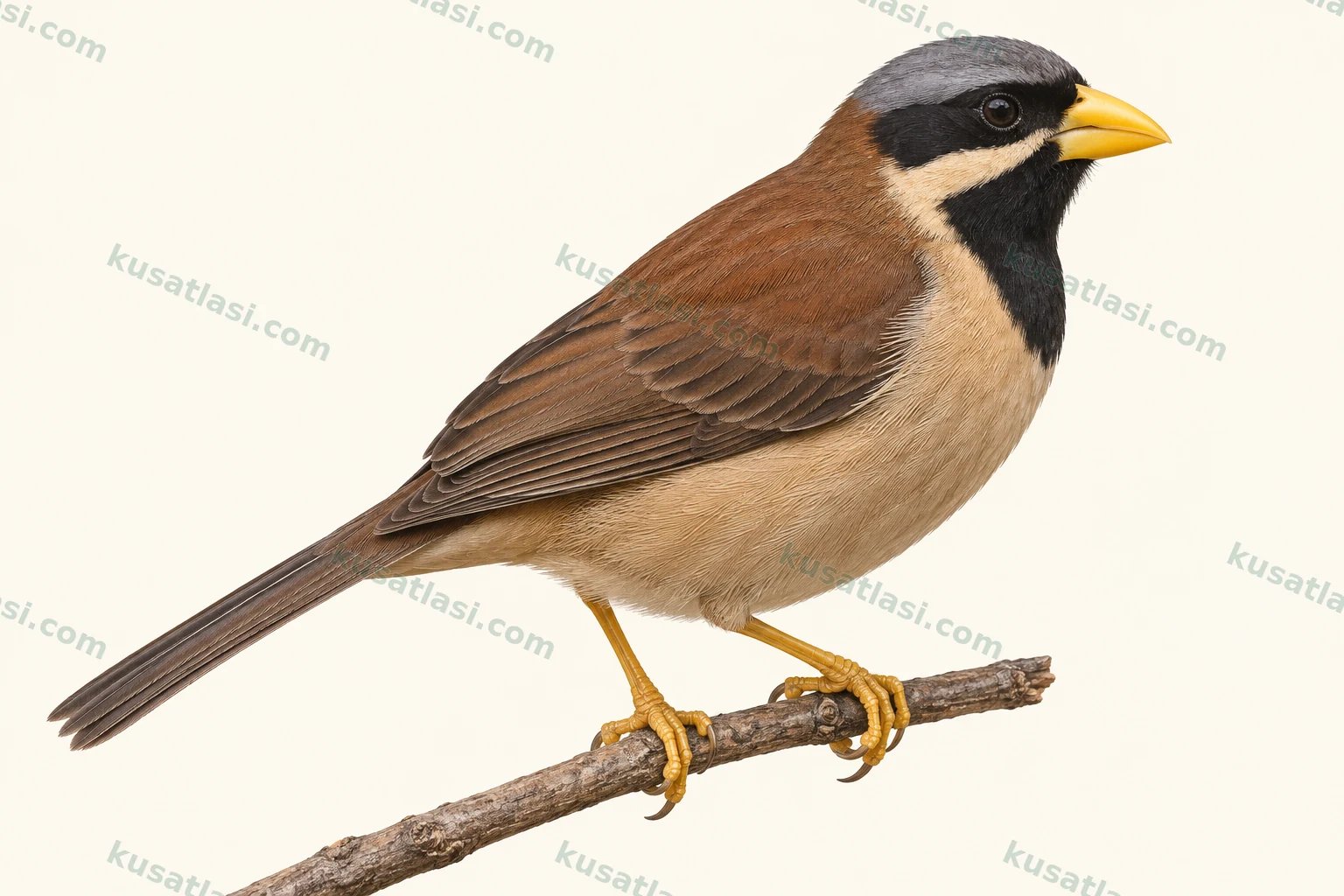
In the dry scrub of the Upper Marañón, look for a black face and throat, a broad pale warm-toned moustachial stripe, a grey head and a chestnut back. The adult sexes look alike. The pale streaked appearance belongs to young birds.
Biometrics
Length
Male14 cm
Female14 cm
Shared species value
Wing length
Male6.45 cm
Female6.45 cm
Shared species value
Weight
Male19.5–23.5 g
Female19.5–23.5 g
Shared species value
Buff-bridled Inca Finch
Upper Marañón basin, PeruObservation guide in its natural range
Look for three features together
Do not rely on a single featureA broad pale moustachial stripe borders the side of the black throat.
The crown and wing coverts are grey and the back is chestnut.
Dry scrub of the Upper Marañón basin in Peru.
Compare male and female
 FemaleMale
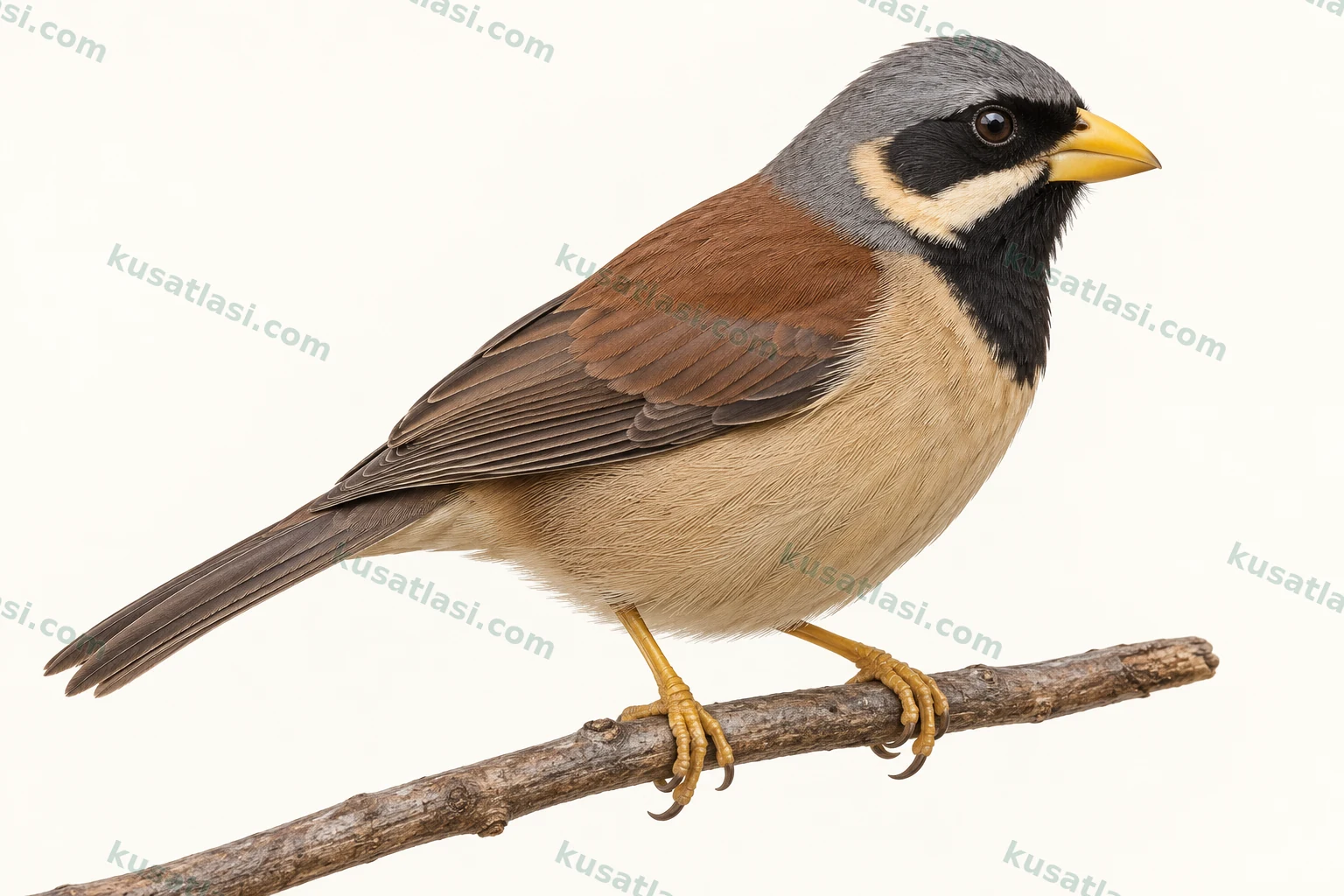
In the original description, adult males and females have similar plumage colours. The pale streaked appearance of young birds is not female plumage.
Where to look in its natural range?
Dense scrub in dry Andean valleys. It forages mostly on the ground.
No verified breeding months were found for this species. Historical specimen collection months are not used as a breeding calendar.
All months: The species is resident, and no regular long-distance migration has been confirmed. No verified regional date was provided for this month. This does not indicate local absence.
January
February
March
April
May
June
July
August
September
October
November
December
Nest, egg and incubation
Nest location and structure, clutch size, full incubation duration and time to first flight were not verified in the reliable sources reviewed and were not taken from other Inca finches.
No verified syllable sequence is given that would identify the species on its own. Match a sound to the bird in view.
Do not play recordings to attract birds; observe quietly, especially near nests.
Species information
Quick identification
The Buff-bridled Inca Finch Incaspiza laeta is a small bird of dry scrub in Peru’s Upper Marañón basin. A broad buff moustachial stripe borders the black face and throat. The grey head, chestnut back and warm pale belly are best assessed together with this pattern. The bill and feet are yellow. The Turkish name includes a word for white, but the stripe need not appear pure white in all light. The key feature is the pale, warm-toned stripe along the side of the black throat.
Its English name is Buff-bridled Inca Finch. Modern classifications place the species in the tanager family. The word “finch” in the English name is not a guide to its family. Haemophila laeta in older publications is the same species under an earlier genus combination. Match the name to this scientific identity rather than to any black-faced Peruvian bird. Other Inca finches also have a black face and yellow bill. Even with a clear view of the broad pale stripe, check the back, head and location.
General appearance and posture
In Salvin’s original description, the forehead and the area around the eyes are black, while the crown and rear of the nape are dark slate grey. The pale, warm-toned borders on either side of the black throat define the head pattern. This differs from an entirely black head. The grey crown is easier to see when the bird lowers its head, and the black around the eye is clearer when it turns sideways. If a branch hides part of the head, wait for another angle before treating a feature as absent.
The chestnut back contrasts with the grey head. The original description also calls the greater wing coverts slate grey, so the upperparts are not uniformly chestnut. Look for the warm back beside the cooler folded wing. Grey feathers can look lighter in sunlight and darker in shade. Recording which group of feathers carries the colour is more informative than recording a colour alone.
The belly is pale with a warm tone. The black throat does not form a broad black bib down the breast and belly. Seeing both the facial stripe and the underside strengthens an identification when the face is visible for only a few seconds. If dark shade extends down from the throat, use another posture to check whether it is part of the plumage pattern. Record that the head and body features were seen on the same bird.
Males, females and young birds
Salvin’s series included a female specimen, and he explicitly reported no conspicuous difference in plumage colour between the sexes. Adult females are not assigned a separate appearance with no moustachial stripe or a grey or non-black throat. A less distinct head pattern in one photograph does not by itself identify a female.
Cornell describes young birds as paler and streaked, with facial and throat markings that are still weak. These are age-related features and should not be presented as adult female plumage. A young bird without the fully developed adult pattern is not necessarily a different species. Assess age only as far as visible feather features allow. The presence of adults nearby provides context but does not establish kinship or sex.
Wear, shade and the light within scrub affect how colours appear. If the boundary of the black area is indistinct in an image, record the visible features of the head and body rather than assigning a definite age or sex. Playing calls or putting out food is unnecessary to bring the bird into the open. Watching it move naturally lets you compare the same bird from different angles and avoids attaching a definite label to an uncertain view.
Appearance in flight
In a brief flight, the contrast between the warm back and grey wings may stand out more than the fine head markings. A specialist account for Peru also reports white on the outer tail feathers. Closely related Inca finches can show this marking too, so a flash of white in the tail is not enough for a firm identification. Watch where the bird lands and look again at its face and throat. A blurred wing photograph does not establish the bird’s sex.
Grey coverts on the folded wing do not describe the entire underside of an open wing. The sources do not provide a detailed underwing pattern to add here.
Voice and behaviour
The bird is seen under dense dry scrub, especially while foraging on the ground. It can quickly disappear at the base of a bush. Watch the gaps it crosses from a distance to get another look at its face. The sources reviewed provide no measured vocal key that applies in every situation, so no definitive syllable sequence or calling rate is given here. Where possible, link a sound to the bird in view at the time.
Similar species
The Rufous-backed Inca Finch Incaspiza personata also has a black face and throat, yellow bill and chestnut back. Salvin described both species separately in the same publication. In the Buff-bridled Inca Finch, look for the broad, warm pale moustachial stripe bordering the throat and the warm pale belly. A chestnut back alone does not distinguish the two. Use reliable locality information, a side view of the head and the contrast between wing and back together. An incomplete photograph need not be assigned a species.
World distribution
The species is endemic to Peru. The current taxonomic account limits it to the Upper Marañón drainage in the arid Andes of western Peru. Northern Peruvian valleys draining into the Marañón fall within this area. Localities around Lima where other Inca finches occur should not be added to its range. The country name on the map does not mean it occurs throughout Peru.
Status within its natural range
Salvin’s 1895 specimen series came from around Cajabamba, Huamachuco and Cajamarca. A modern study of the Marañón dry forests places the species in the southern part of the valley system it examined and describes its geographic replacement by Incaspiza watkinsi to the north. That does not describe birds travelling north in one season and south in another. Two species occupying different areas is distinct from movement within one species.
Migration
The data compilation classifies this bird as resident. No regular long-distance migration route has been confirmed. Historical specimens collected from January to April do not establish a breeding period or a season of obligatory arrival. Collection dates cannot substitute for records of eggs, young or nests. The map distinguishes potential range from licensed example observations. It does not show that birds or nests are present in every predicted cell, and sparse records do not establish absence from every valley without observations.
Breeding habitat
The bird uses dense scrub in dry valleys and vegetation associated with seasonally dry forest. This is distinct from moist Andean cloud forest. Take the structure of the scrub and the ground cover into account rather than treating every valley slope as equivalent habitat. The habitat account describes environments the bird can use. A bush with no documented nest is not thereby a breeding site.
Nest site
The original description, specialist species accounts and regional study reviewed did not provide verified information on nest structure, typical clutch size, full incubation duration or the time from the nest stage to first flight for this species. A close relative’s nest or a general estimate for passerines cannot fill these gaps. Ground foraging does not establish that the bird nests on the ground, and the nest site remains unconfirmed.
Daily habitat use
The ground beneath bushes is important for feeding. From an open path or edge, observers can wait for a bird to appear on its own. Pushing through dense scrub to look for a possible nest disrupts both cover and the bird’s behaviour in a small, restricted area. Keep feeding sites, resting sites and confirmed nests separate. A return to the same bush is not enough to establish that it holds a nest.
What does it eat?
The referenced AVONET diet classification places this species among birds that use both plant and animal foods. This general classification does not quantify any one seed or insect as its main food throughout the year. The sources reviewed did not establish annual diet percentages for this species, so no precise seed-to-insect ratio is given. The classification is not presented as though it came from a local study of stomach contents.
How does it forage?
A specialist field account reports that it looks for food mostly on the ground. If you see bill movements under a bush, try to identify separately what the bird picks up. Bill contact with the ground does not by itself prove that a seed or insect was swallowed. Do not count repeated movements of the same bird as separate individuals. If the food is out of sight, record only that the bird was foraging on the ground. Scattering food to draw the bird into the open could confound a record of natural feeding. Leave the natural vegetation and foraging area intact.
The original description compares both sexes
The 1895 publication did not describe only a colourful male. It reported no conspicuous sex difference in plumage colour in a series that included a female specimen. This helps avoid identifying every pale or streaked bird as a female. Cornell describes a distinct appearance associated with youth. Age and sex are different categories, and a documented juvenile appearance cannot justify the features on a plate of a female.
The north and south of the valley
The 2021 Marañón study places the Buff-bridled Inca Finch in the southern part of the dry-forest system and Incaspiza watkinsi in the north. This geographic replacement involves two different species rather than an annual migration by the same bird. Treating the valleys between mountains as one uniform area hides this distinction between local birds. Zooming in on a map should help identify the right valley rather than merely the country.
Tracing an older name
Haemophila laeta in the original publication and the current Incaspiza laeta are names in the history of the same taxon. Haemophila personata, described by the same author on the same pages, is a separate species. Similar genus names or publication in the same year do not justify combining data on the two birds. Reading the full name helps determine which bird a measurement, locality or note about sex applies to.
Conserving dry forest
The Marañón study discusses the expansion of farming and livestock areas and the fragmentation of dry forests by roads as regional pressures. That environmental assessment does not measure a decline in this bird’s population. It helps explain the species’ narrow geographic context. Scrub and patches of dry forest should not be seen as merely empty hillsides. Keep the place and date of the conservation evidence in view, and distinguish potential impacts from losses established by counts.