

World Birds IUCN statusNT · Near ThreatenedGlobal IUCN. BirdLife v10 (2025); taxon matching AviList 2026 / IOC 15.2; checked: 29.10.2026. The list year is not the species’ assessment date. Source and method · BirdLife OrderPasseriformesPasserines FamilyThraupidaeThraupidae
White-throated Shrike-Tanager
Lanio leucothorax
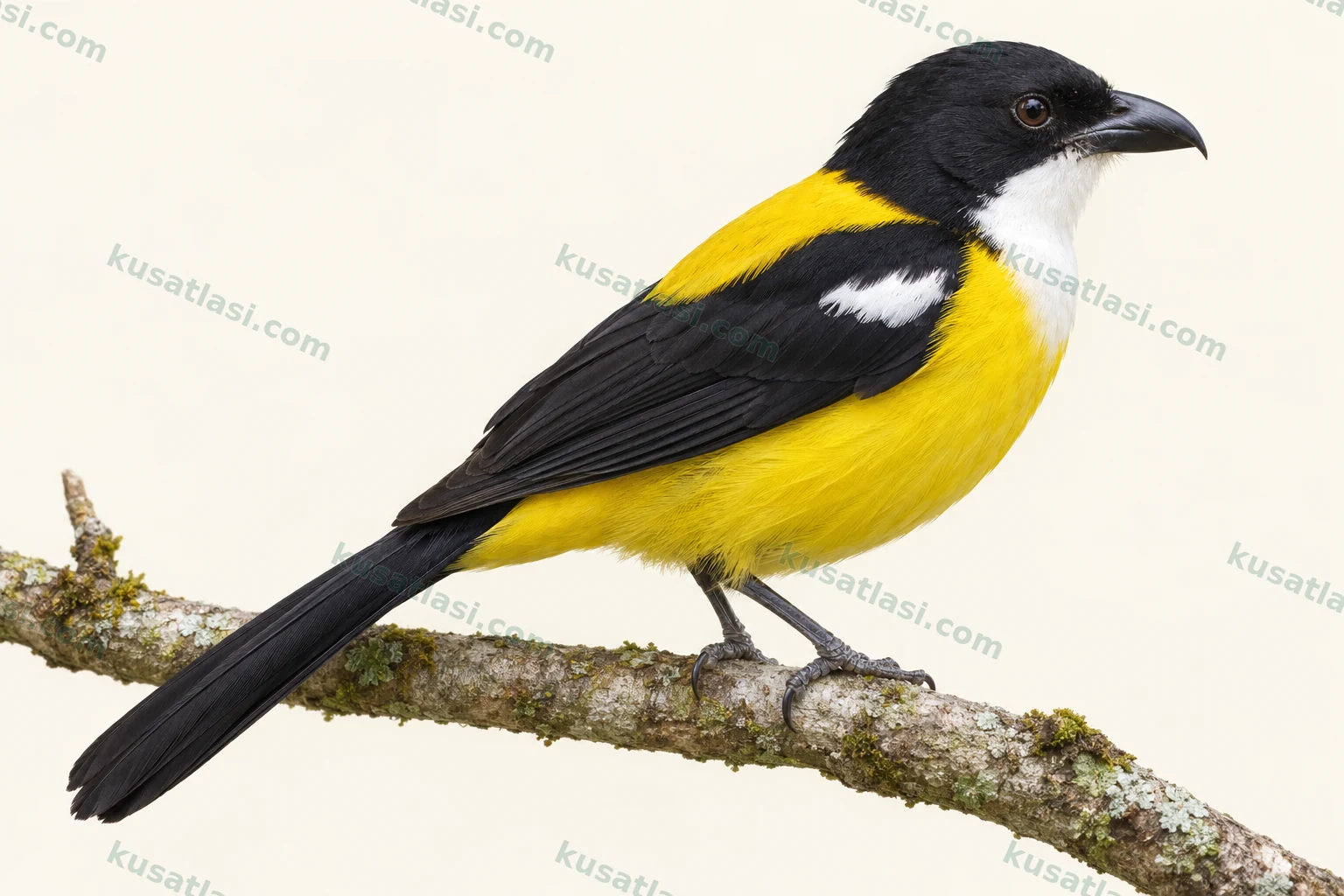
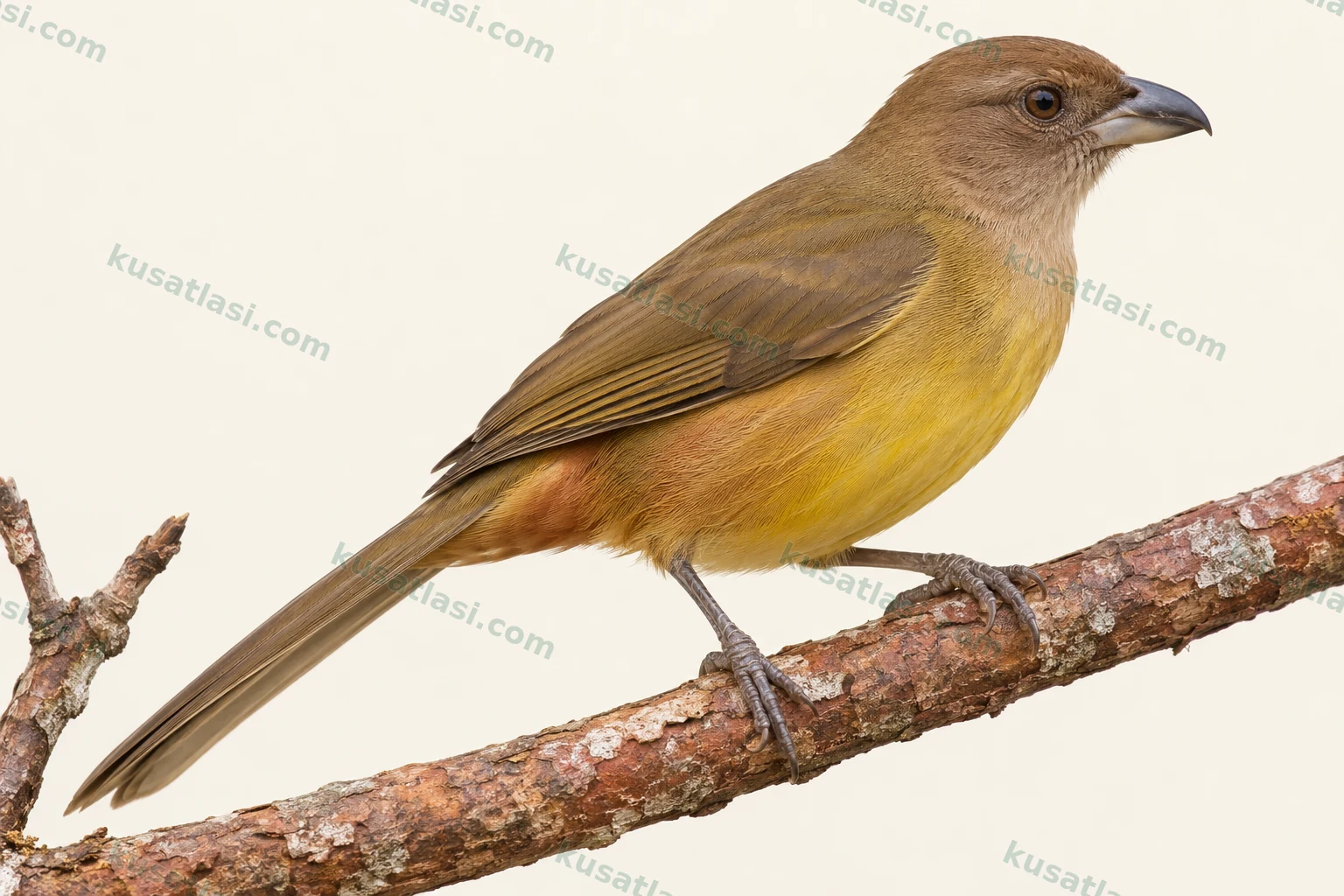
A Central American tanager with a strong hooked bill. Males have a black head and wings, white throat and shoulder, and yellow body. Females have brown upperparts and a yellow belly.
Biometrics
Length
Male20 cm
Female20 cm
Shared species value
Wing length
Male10.27 cm
Female10.27 cm
Shared species value
Weight
Male36 g
Female40 g
White-throated Shrike-Tanager
Humid forests of eastern Honduras, Nicaragua, Costa Rica and western PanamaObservation guide in its natural range
Look for three features together
Do not rely on a single featureLook at the hooked bill tip together with the head and throat.
Look for the black head, white throat and shoulder, and yellow body together.
Compare male and female
 FemaleMale
The adult male is yellow and black with a white throat. The female has brown upperparts, a pale throat and yellow belly. Young birds may resemble females.
Where to look in its natural range?
Look in mixed flocks in the middle levels of humid forest.
The species is resident. The Costa Rican account records breeding in May and a young bird that had just left the nest in July.
January
Regional examples from Costa Rica do not set exact limits for the breeding season. No verified regional date is given for this month. This does not indicate local absence.
February
Regional examples from Costa Rica do not set exact limits for the breeding season. No verified regional date is given for this month. This does not indicate local absence.
March
Regional examples from Costa Rica do not set exact limits for the breeding season. No verified regional date is given for this month. This does not indicate local absence.
April
Regional examples from Costa Rica do not set exact limits for the breeding season. No verified regional date is given for this month. This does not indicate local absence.
May
Regional examples from Costa Rica do not set exact limits for the breeding season. Breeding record from Costa Rica.
June
Regional examples from Costa Rica do not set exact limits for the breeding season. No verified regional date is given for this month. This does not indicate local absence.
July
Regional examples from Costa Rica do not set exact limits for the breeding season. Record of a young bird that had just left the nest in Costa Rica.
August
Regional examples from Costa Rica do not set exact limits for the breeding season. No verified regional date is given for this month. This does not indicate local absence.
September
Regional examples from Costa Rica do not set exact limits for the breeding season. No verified regional date is given for this month. This does not indicate local absence.
October
Regional examples from Costa Rica do not set exact limits for the breeding season. No verified regional date is given for this month. This does not indicate local absence.
November
Regional examples from Costa Rica do not set exact limits for the breeding season. No verified regional date is given for this month. This does not indicate local absence.
December
Regional examples from Costa Rica do not set exact limits for the breeding season. No verified regional date is given for this month. This does not indicate local absence.
Nest, egg and incubation
In Costa Rica, a cup-shaped nest was recorded in a low shrub near a stream. The reported clutch size is two eggs. Incubation duration and the time young birds take to develop have not been verified.
In mixed flocks, check which bird calls and what it is doing. Do not assume every call is an alarm.
Do not play recordings to attract birds; observe quietly, especially near nests.
Species information
Quick identification
The White-throated Shrike-Tanager Lanio leucothorax is a strong-billed, long-tailed tanager of humid Central American forests. An adult male shows a black head and wings, white throat and shoulder patch, and yellow body. The female looks browner. Check her pale throat together with her yellow belly. The distinct hook at the tip of the bill helps identify either sex regardless of colour. Seeing it in a mixed flock in the middle forest levels provides additional context.
Do not identify a yellow-and-black bird by colour alone. Check the head, throat, shoulder and bill on the same individual. Posture can hide part of the shoulder patch, so a single view without it does not establish that it is absent. The female's pale throat may be less distinct than the male's bright white patch. Shade changes the appearance of the yellow belly and brown upperparts. Colour on a neighbouring bird cannot fill in a mark on the one you are following.
General appearance and posture
The long tail and strong bill help define the outline. Distance and posture affect the bird's apparent body proportions.
It can be seen at middle levels of the forest. The expert account describes pairs taking a leading role in mixed flocks. This does not put them physically at the front of every flock at all times. A short pause on a branch gives a chance to see the bill and throat together. The movements of nearby birds do not identify the tanager on the branch. Note both the forest level and the plumage marks you see.
Males, females and young birds
Adult male and female plumage differs markedly. The male's black head, white throat and yellow body form a different combination from the female's browner upperparts, pale throat and yellow belly. Treating the female as a faded version of the male can obscure details of the head and upperparts. These differences help if the view supports adult age, but a partial rear view does not establish sex.
The Costa Rican account notes that young birds resemble females and can look more reddish brown. A female-like bird is not necessarily young, and a brown bird is not necessarily an adult female. Consider feather condition and the context separately when assessing age. Do not assume juvenile details appear at the same stage in every region. In particular, seeing a young bird in a family group does not measure the time until independence.
Colour patterns differ between Caribbean and Pacific forms. The Costa Rican account describes geographic variation in the black on the male's rump and under the tail. This variation cannot stand for the full distinction between sexes. Without knowing where a bird was observed, do not combine marks from different regional forms on one individual. Keep the white throat, shoulder, strong bill and body pattern together when identifying the species.
Appearance in flight
The contrast between black wings and a yellow body can help when an adult male moves between branches. If a yellow-and-black bird appears briefly in flight, recheck the bill and throat. No verified key identifies it from a single upperwing or underwing mark. When it perches naturally, look at the position of the white shoulder patch and the bill tip. Do not expect the same colour contrast in females.
A mixed flock moving between trees is not tracing a migration route. Consider movement in the forest in the context of foraging and daily habitat use. Records from separate valleys cannot be assigned to the same individual without tracking. Joining observations on a map does not create an annual route. Approaching to make a bird fly can disrupt both the identification view and the flock's natural foraging.
Voice and behaviour
Watch movement and listen to calls together in mixed flocks. Cornell's account of the scientific work uses this species as an example of birds that help guide a flock. Research on flock behaviour examines how calls relate to communication. It does not establish what every sound means. One field observation cannot show that an alarm affects every other bird in the same way.
A 2018 study compared sound characteristics of leading and following birds in different mixed flocks. The results support a relationship between communication and flock organisation without decoding each of this tanager's calls. Until you see the caller, do not assign sounds of other tanagers or flycatchers in the flock to this species. Keep locality, the bird seen and the direction of the sound separate in the record.
Similar species
Its yellow and black colours can recall those of orioles. Examine the strong hooked bill, white throat and shoulder area together. A yellow belly alone is insufficient. The forest level provides context but does not establish family. One bird joining a mixed flock does not make all its yellow birds the same species. If the head is hidden, wait for a better view.
Throat colour matters in comparison with Lanio aurantius. In the adult male White-throated Shrike-Tanager, look for the pale throat, black head and yellow body together. Check geography too. Do not transfer measurements or nest information between similar birds. Even a detailed breeding study of Lanio versicolor, in the same genus, does not establish incubation or young development times for this species.
Global range
The natural range is in humid Central American forests from eastern Honduras through Nicaragua and Costa Rica to western Panama. It does not cover the full area of those countries. Consider suitable forests on Caribbean and Pacific slopes, local bird communities and regional forms. The origin of the type specimen in Costa Rica does not make the species endemic to that country.
Status within its natural range
The Costa Rican species account names lowland and foothill forests on Caribbean slopes and the southern Pacific region. A local elevation range reaching 900 m does not have the same geographic scope as a broader account highlighting around 750 m. Do not use one source's limit as a hard line for every country. Presence in forest mixed flocks does not show that the bird uses every open area in the region equally.
Movements and migration
The species is classed as resident. No regular long-distance migration route was verified. A flock changing trees within a forest is daily behaviour rather than an annual journey. Approximate map points show records in natural settings. They do not give every locality the same breeding season or link the points by a tracked route. Regional breeding observations also do not establish one calendar for Central America.
Breeding habitat
Humid forest with tall trees and areas around streams within it are important. A pair in a mixed flock is not a direct nest record. The forest level used to find food need not be the one where the nest is placed. Costa Rican breeding information does not apply automatically to nests in every other country.
Nest site
A scientific nest review mentions a Costa Rican nest in a low shrub near a stream. The regional species account describes a cup-shaped nest and two eggs. The life-history review's two-egg record also matches this taxon. Incubation duration and the time until young leave the nest were not verified. The Costa Rican account records breeding in May and a young bird that had just left the nest in July. These do not establish the exact beginning and end of breeding across the species' range.
Daily use of habitat
It can occur as a pair or small family group in the middle and upper forest levels. Travelling with a mixed flock between branches does not mean every species takes the same prey. Watching from an existing path without disturbing the forest allows you to see natural foraging and visible identification marks. If a shrub by a stream is used as a nest site, keep your distance.
What does it eat?
An ecological review records invertebrate prey. The strong bill is a structural feature associated with taking prey, but it does not identify which species it eats. No verified percentages of daily foods establish dependence on one particular insect. Seeing it in a fruiting tree is not a fruit consumption record unless the bird is seen taking the fruit. The name tanager does not establish the proportions of foods in the diet.
How does it hunt?
It forages with mixed flocks in the forest. Cornell's field behaviour account includes it among flock members that can take insects exposed by movement around them. Do not assume each bird uses the same method all the time. If prey is visible after a movement from a branch, record it separately. A change of position alone is not a successful capture. Follow the flock's natural progress without trying to redirect it with sound.
Yellow and black plumage does not establish relatedness
The male's colours may recall an oriole, but current taxonomy places the species in Thraupidae. Similar appearance and scientific relatedness are separate. The strong bill and white throat and shoulder help field comparison. A yellow body alone cannot establish the family.
A mixed flock is more than a crowd
Calls and movements can affect one another in a flock of different species. Cornell's account of the scientific work uses this tanager as an example of leadership. Leadership does not mean always standing physically at the front. Observe the direction of the flock, repeated calls and movements of surrounding birds together. The 2008 scientific account from La Gamba also lists it in mixed flocks in mature forest. That record concerns the forest context of that region.
Researchers test what calls do
The 2018 study looked for a relationship between communication and leadership in different mixed flocks. Leading species did not all have the same vocal characteristics. A universal call pattern should therefore not be expected in every leader. Do not label a tanager sound an alarm merely because it sounds harsh. Record the behaviour around it as well.
A nest record does not tell the whole life history
The Costa Rican nest in a low shrub is a valuable nesting habitat record. The available reports give two eggs, but do not establish incubation or young development durations. Detailed work on other species in the same genus does not fill those gaps. Regional May and July records do not establish a fixed breeding calendar across the range.