

World Birds IUCN statusLC · Least ConcernGlobal IUCN category. BirdLife v10 (2025); taxon matching: AviList 2026 / IOC 15.2; checked: 29.10.2026. The list year is not the species assessment date. Source and method · BirdLife OrderPasseriformesPasserines FamilyThraupidaeThraupidae
White-throated Seedeater
Sporophila albogularis
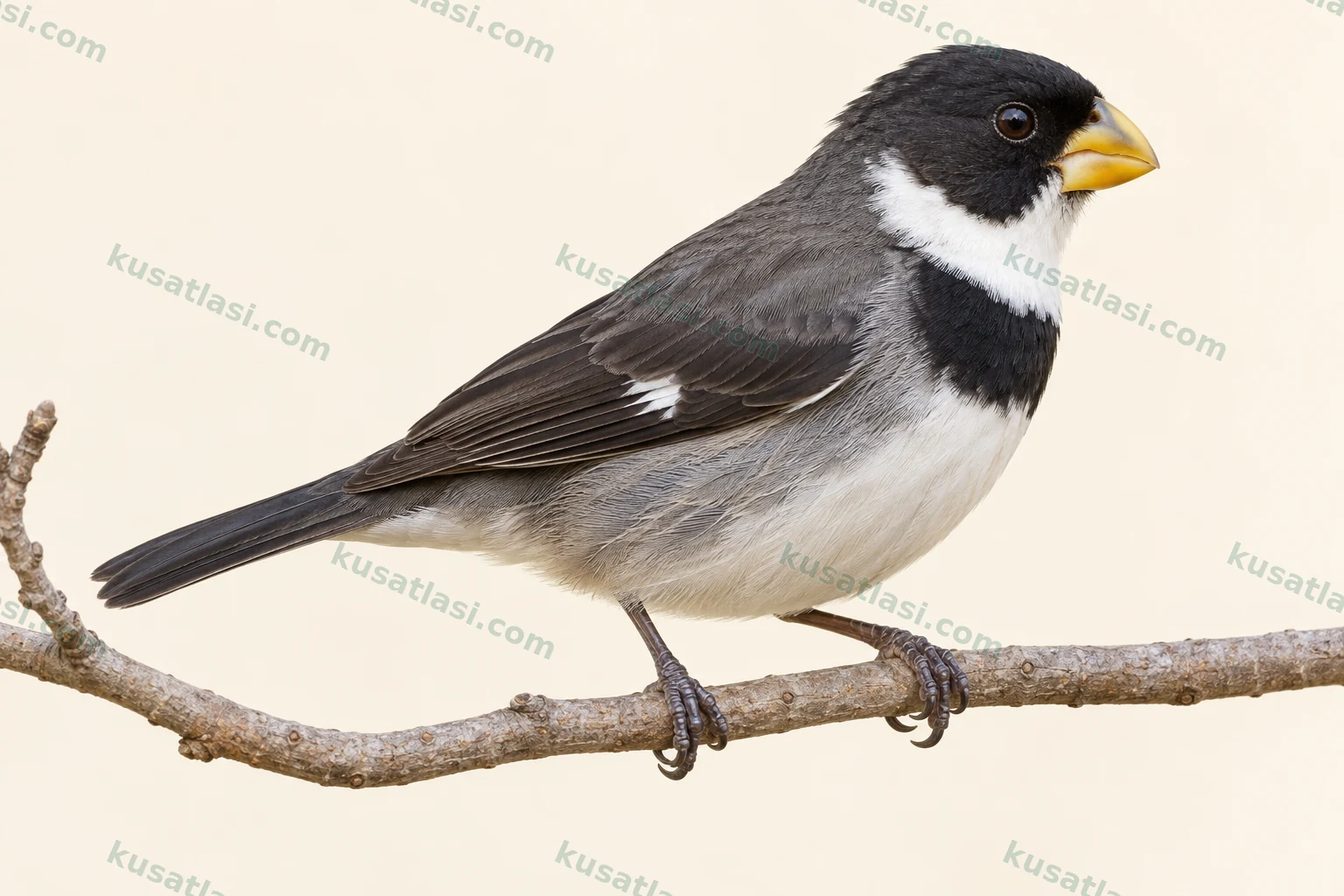
A seedeater of northeastern Brazil. Adult males show a white throat extending onto the sides of the head, a black breast band and a large yellow bill.
Biometrics
Length
Male11 cm
Female11 cm
Shared species value
Wing length
Male5.63 cm
Female5.63 cm
Shared species value
Weight
Male9.7 g
Female9.7 g
Shared species value
White-throated Seedeater
Northeastern Brazil; the Caatinga regionObservation guide in its natural range
Look for three features together
Do not rely on a single featureCheck the white throat extending to the sides together with the male's large yellow bill.
Check the black breast band and white wing patch. Plain, female-like birds can be difficult to identify with certainty.
Compare male and female
 FemaleMale
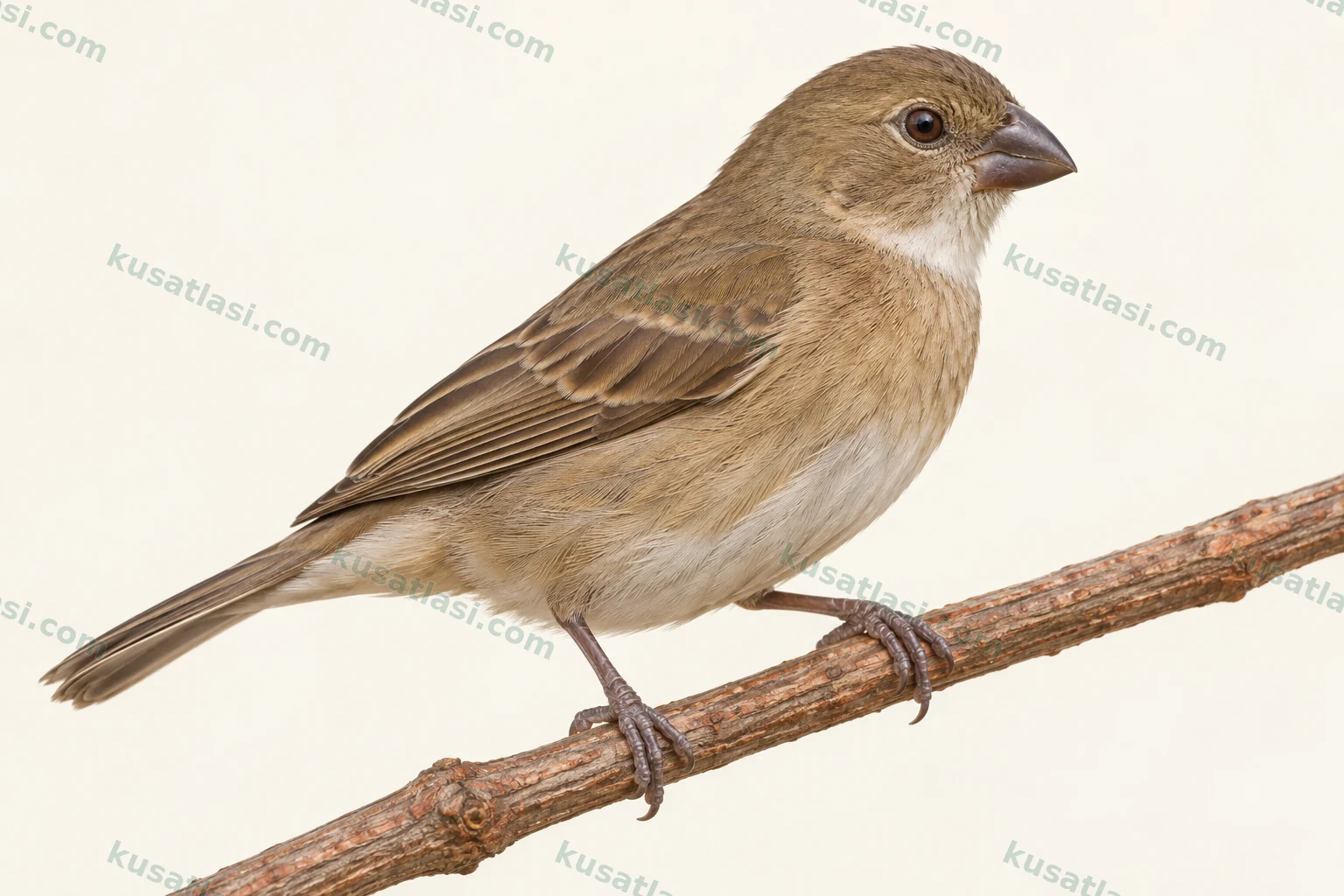
Adult males are black, grey and white with a yellow bill. Females are olive-brown with pale underparts. Young birds and other female-like seedeaters require careful distinction.
Where to look in its natural range?
Watch small groups using dry scrub, open woodland edges and seed sources.
Resident species. Monthly breeding limits applicable across the natural range were not verified.
All months: Monthly breeding limits were not verified. No verified regional date is given for this month. This does not imply local absence.
January
February
March
April
May
June
July
August
September
October
November
December
Nest, egg and incubation
Nests were directly recorded in Sergipe guava orchards. Typical egg number, incubation and young development durations in the wild were not verified.
A detailed sequence of notes in the natural song was not verified for this account. Vocal training in captivity is not used as a key to natural song.
Do not play recordings to attract birds; observe quietly, especially near nests.
Species information
Quick identification
The White-throated Seedeater (Sporophila albogularis) is a small seed-eating bird of dry scrub and open woodland in northeastern Brazil. In adult males, the white throat extends onto the sides of the head, with a black breast band below it. The upperparts are grey and black. A large yellow bill and a white wing patch complete the face and throat pattern. Look for these features together on the same bird rather than identifying it by the white throat or yellow bill alone.
Females are much plainer, with olive-brown upperparts and pale yellowish-brown underparts. They resemble females of other seedeaters nearby, so sharing a bush with a male is insufficient to identify one with confidence. Examine each bird separately in a mixed flock. If the view of a plain bird is inadequate, the record can be left at Sporophila rather than attributing the adult male’s pattern to it by guesswork.
General appearance and posture
The bill is short and thick, as expected in a seedeater. In males, the yellow is conspicuous in good light, but shade from branches or backlighting can make the bill look dark. A sideways turn of the head makes it easier to see how far the white extends. Leaves in front of the breast may hide the black band. Wait until the bird is in the open before concluding that the band is absent.
The small body and thick bill give a different first impression from that of a slender-billed insect eater. Fluffed feathers can also make the bird look larger than it is.
Males, females and young
Adult males show strongly contrasting areas of black, grey and white, unlike the brown females. This is a confirmed difference between adults. A plain bird is not necessarily female, as its age and stage of plumage development also matter. No species-specific key reliably separating all juvenile stages was verified for this account. The adult male’s colour pattern and a precise date for changing plumage are therefore not assigned to young birds.
When a flock contains several female-like individuals, their appearance alone is an unreliable basis for calculating the sex ratio. Nearby song may come from another bird, so watch for the bird actually making the sound. If part of the male pattern is visible, check the white throat, black breast band, wing patch and bill together. A feature that is out of view should not be treated as absent.
Appearance in flight
The wing patch seen on a perched bird can look different during a short flight as the angle changes. Once the bird lands again, match the pale patch with the breast band and the white on the sides of the head. When a flock takes off together, similar small birds can look like a single species. Try to see individuals perched in the open before identifying the whole flock from brief silhouettes.
Voice and behaviour
The species occurs in dry scrub, savanna and clearings next to dry woodland. It can mingle with other seedeaters. This social setting provides context for identification, but birds in the same group may belong to different species. In an active flock, first look for the adult male’s distinctive pattern and then assess the other birds by their own features.
A study of bird keeping and trade in Paraíba recorded particular interest in this species. There are also accounts of captive birds being trained with the sounds of other birds. These accounts do not establish that all individuals mimic in the same way in the wild. A detailed sequence of notes for wild song was not verified for this account, so an unsupported transcription is not used as an identification key.
Similar species
When comparing with Sporophila caerulescens, check the throat just below the bill. The White-throated Seedeater lacks the other species’ dark patch beneath the bill. The similar breast bands are insufficient on their own. Look at the white extending onto the sides of the head and the area under the bill together, taking care that shadows do not create a misleading dark patch.
The white on the male Sporophila lineola is arranged differently across the forehead and face. Check the forehead, cheeks and throat separately because a white head mark can occur in different places. This comparison of adult males does not apply directly to brown, female-like birds. Do not assign the identity of a distinctive male nearby to a plain bird seen poorly. If a clear view is unavailable, keep the record uncertain.
Global range
The natural range lies in northeastern Brazil, where the species is endemic to the Caatinga region. The current taxonomic account places it from the area around Piauí and Pernambuco to northern Bahia. Dry scrub and open woodland are important parts of this landscape. Occurrence in Brazil does not imply a nationwide range or natural presence in every state.
Status within its natural range
A study of guava orchards in Sergipe listed the species among the birds recorded and documented nesting. This shows that it can use some agricultural settings. The study’s assessment of the bird community as a whole found that the orchards did not substitute for native Caatinga vegetation for species sensitive to its loss. Finding the White-throated Seedeater in an orchard does not show that native vegetation is dispensable for all birds.
Migration
The species is classified as resident. Regular long-distance migration or a route passing through a particular sequence of countries was not verified. Presence in a mixed flock at a seed source is not evidence of seasonal migration. Rainfall and plant growth can vary in dry landscapes, but these general changes do not establish a month-by-month journey. Interpret approximate map points within the evidence-supported natural range and keep records from trade or captivity separate.
Breeding habitat
Its main habitats are dry Caatinga scrub, savanna-like openings and the edges of dry woodland. The Sergipe study also recorded nesting in cultivated guava orchards. That finding does not make every bare field suitable for breeding. Food-bearing herbaceous cover and the vegetation structure the bird can use may serve different purposes in the same area.
Nest site
The guava orchard study provides direct records of nests in an agricultural setting. A nest record is separate from evidence of typical clutch size, incubation duration or the number of days young spend in the nest. These details were not verified for this account from species-specific studies in the wild. Counts and durations from other Sporophila species or captive trials are not applied here.
Daily habitat use
Watch openings together with nearby scrub and woodland edges. Where seedeaters gather, note where each bird actually feeds. A nest in an orchard gives observers no licence to approach. Parting branches or exposing the nest can disturb the bird. Record feeding and care from a distance that lets the birds behave naturally.
What it eats
The species feeds mainly on seeds. Both an ecological compilation and a direct survey of the bird community in Sergipe classify it as a seed eater. That classification does not identify the plants eaten in every season or quantify the daily diet. A record from a guava orchard does not prove that guava fruit is the main food. Herbaceous plants and other food sources in an agricultural area must be considered separately.
How it feeds
The short, thick bill is a conspicuous feature of this small foraging seedeater. It can feed in the same area as other similar birds. Seeing the seed a bird actually takes is stronger evidence than counting a bird perched on a plant as a feeding record. A detailed list of seeds taken and the composition of the food given to young were not verified, so no particular plants or insect proportions are specified. Food given to captive birds does not measure the wild diet.
A white throat alone is insufficient
The white throat of the male extends onto the sides of the head. Assess it together with the black breast band, yellow bill and wing patch. A bird with its head turned may hide some of these features. Waiting for a natural change in posture provides more information than identifying the species from one pale area. The brown female must be compared with similar plain birds, using her own appearance rather than looking for the adult male’s marks.
Endemism highlights the importance of a small range
Presence in Brazil does not mean the species is equally widespread throughout the country. The northeastern Caatinga is central to its natural range. A captive bird recorded in a distant city does not extend that range. Consider the observation site, the bird’s origin and the circumstances of the record together.
It can nest in an orchard
The guava study in Sergipe includes a direct nest record. It also emphasises that the orchard bird community does not represent all species found in native vegetation. Use of agricultural habitat by one species does not make native scrub and woodland unimportant for conservation in the region. These are distinct findings when interpreting the nest record.
Human interest is not a population count
The Paraíba study found this species among the birds that attracted considerable interest for keeping and trade. Interviews describe which birds people prefer and do not measure the number of individuals in the wild. Interest in the bird’s appearance and voice does not make capture safe for it. Watching it in native vegetation provides a sounder basis for identification than treating the images and sounds of caged birds as the sole example of its life in the wild.