

World Birds IUCN statusLC · Least ConcernGlobal IUCN. BirdLife v10 (2025); taxon matching AviList 2026 / IOC 15.2; checked: 29.10.2026. The list year is not the species’ assessment date. Source and method · BirdLife OrderPasseriformesPasserines FamilyThraupidaeThraupidae
Black-backed Bush Tanager
Urothraupis stolzmanni
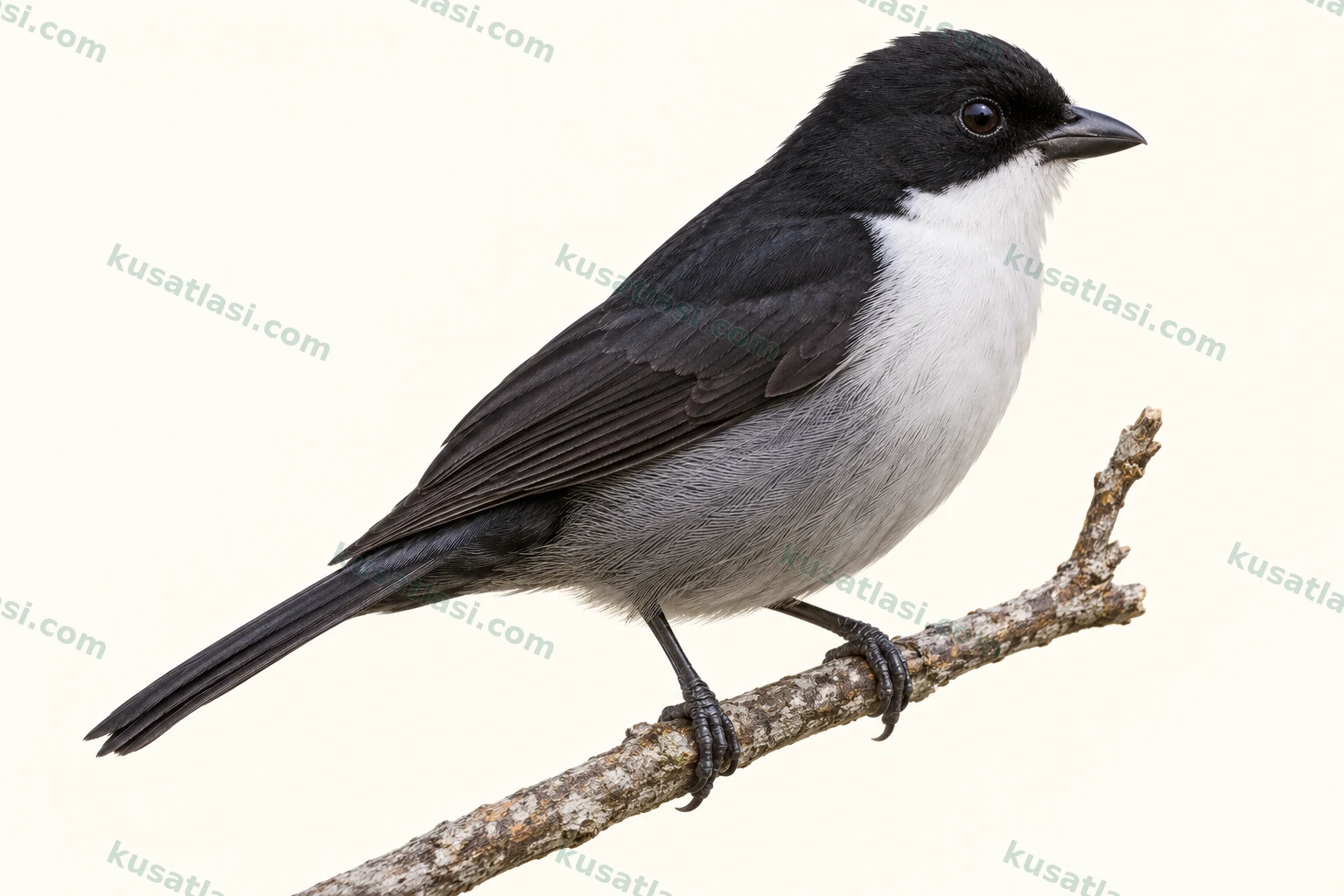
Small tanager of high-Andean cover, with a black back, white breast and grey belly.
Biometrics
Length
Male15 cm
Female15 cm
Shared species value
Wing length
Male7.35 cm
Female7.35 cm
Shared species value
Weight
Male19–27 g
Female19–27 g
Shared species value
Black-backed Bush Tanager
Andes of Colombia and EcuadorObservation guide in its natural range
Look for three features together
Do not rely on a single featureBlack upperparts; white throat and breast; grey belly.
Adult males and females look similar.
Stunted trees and dense shrubs at the forest limit.
Compare male and female
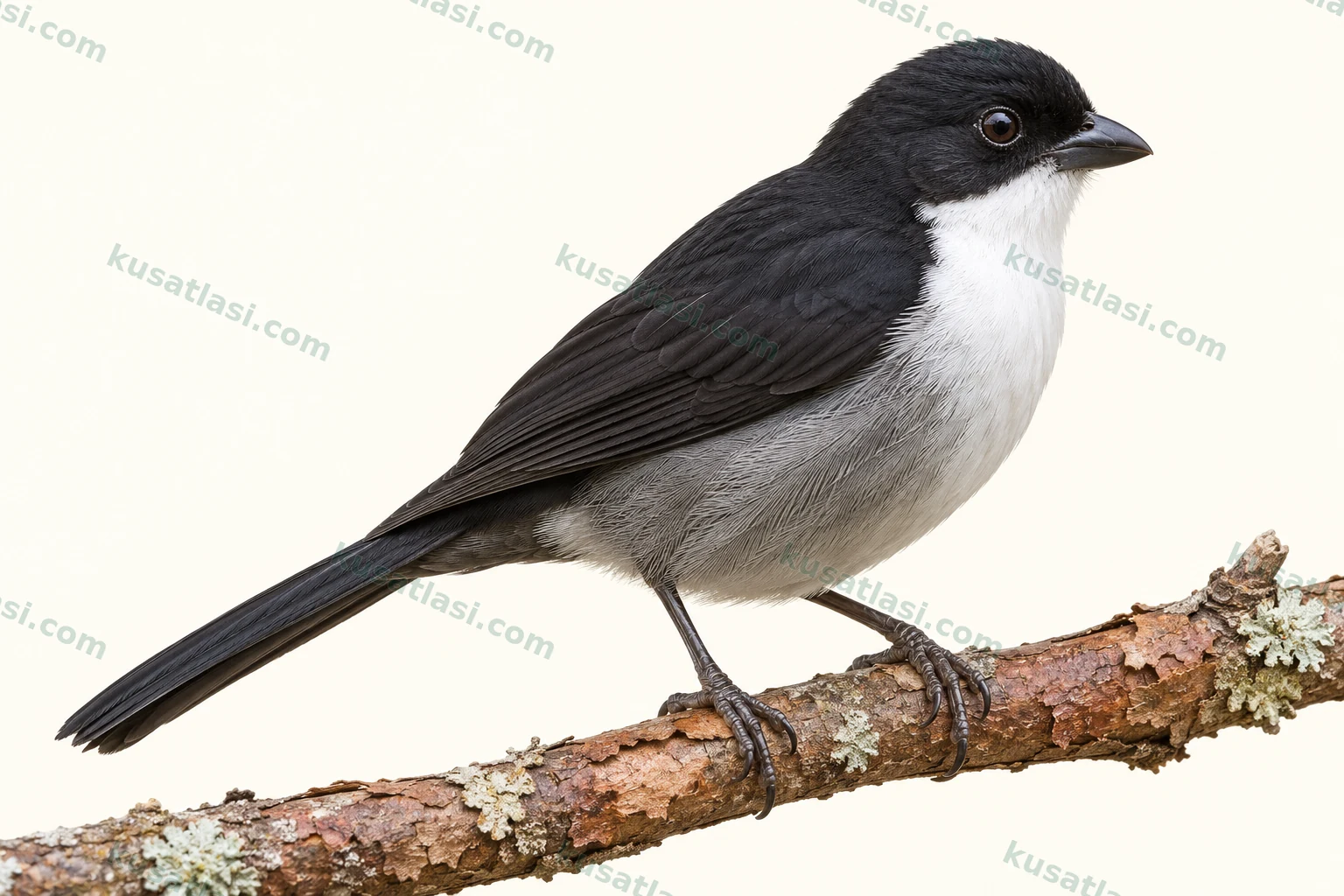 FemaleMale
Adults are similar; a detailed juvenile field key was not verified.
Where to look in its natural range?
Humid stunted forest and shrub margins in high mountains.
Resident high-mountain species. Monthly breeding period unverified.
All months: Data unavailable
January
February
March
April
May
June
July
August
September
October
November
December
Nest, egg and incubation
Nest structure, egg number, incubation and fledging period unverified.
No reliable detailed song description found.
Do not play recordings to attract birds; observe quietly, especially near nests.
Species information
Quick identification
Black-backed Bush Tanager Urothraupis stolzmanni is a small high-Andean tanager with a black back, white throat and breast, and grey belly. Small bill, strong contrast between pale front and dark upperparts, and high-mountain cover help identify it together. Black-backed Bush Tanager refers to this same taxon.
Males, females and young birds
Cornell describes similar adult males and females. The size of the white breast does not determine sex certainly. No reliable detailed juvenile field key was found in the sources examined.
Appearance in flight
No distinctive underwing pattern or flight criterion was verified. In brief views through cover, seeing dark upperparts and white front together is useful; identification from one wing spot is not recommended.
Voice and behaviour
It forages actively in small groups and may join mixed-species flocks. A detailed, source-verified song description was not found. A flock sound cannot reliably be assigned to this species without seeing its source.
Similar species
Against other dark high-Andean tanagers, the white throat extending to the breast and grey belly matter. Species such as Tephrophilus wetmorei (Buthraupis wetmorei in older sources) reported in the same mountain communities have differently coloured underparts; sharing a community does not mean similar appearance or the same species.
World distribution
The currently accepted range is the Andes of southeastern Colombia and eastern Ecuador. AviList recognises no subspecies. Entire countries are not habitat; occurrence is associated with high mountain belts.
Status within its natural range
The global category in the current checklist is Least Concern. Records around Galeras in Nariño contributed to documenting southwestern Colombian mountain birds. Local frequent encounters do not establish an increase in the entire species’ numbers.
Movements
The specialist compilation classifies it as resident. No regular long-distance migration route was verified; no seasonal route is drawn on the map.
Breeding habitat
Stunted woodland and dense shrubs near the forest limit are principal places to encounter it. The specialist account reports a 3,000–3,600 m belt, not a claim that every individual occurs only there. Humid high-mountain cover differs from bare exposed summits.
Nest site
Nest structure, typical egg number, incubation and young birds’ fledging period were not verified in reliable sources examined. Other Andean tanagers’ nesting information is not assigned to this species.
Daily use of space
Small groups forage in dense cover. Cornell’s mixed-flock account agrees with communities in which BirdLife’s high-mountain bird account also reports the species. Daily travel distance or area size was not verified.
What does it eat?
The specialist account and ecological compilation classify it as consuming both plant and animal foods. No reliable list of specific fruits or prey, or their dietary proportions, was found.
How does it forage?
It searches actively in shrub and stunted-tree cover at the forest limit and may join mixed flocks. The sources examined did not provide sufficient evidence for a particular prey-capture method or following prey flushed by another bird.
A member of the high-mountain community
Its habitat is the forest-limit strip of dense low plants. Records with mountain tanagers of southern Colombia and Ecuador encourage attention to the surrounding community when seeking one species. Such association does not prove consumption of identical food in identical proportions.
One genus, one current species
AviList recognises only this species in Urothraupis, with no separate subspecies within it. Old museum specimens and modern field accounts can be followed under the same scientific name. This classification shows that colour resemblance alone is insufficient for identifying a small bird’s close relatives.