

World Birds IUCN statusLC · Least ConcernGlobal IUCN. BirdLife v10 (2025); taxon matching AviList 2026 / IOC 15.2; checked: 29.10.2026. The list year is not the species’ assessment date. Source and method · BirdLife OrderPasseriformesPasserines FamilyThraupidaeThraupidae
Capped Conebill
Conirostrum albifrons
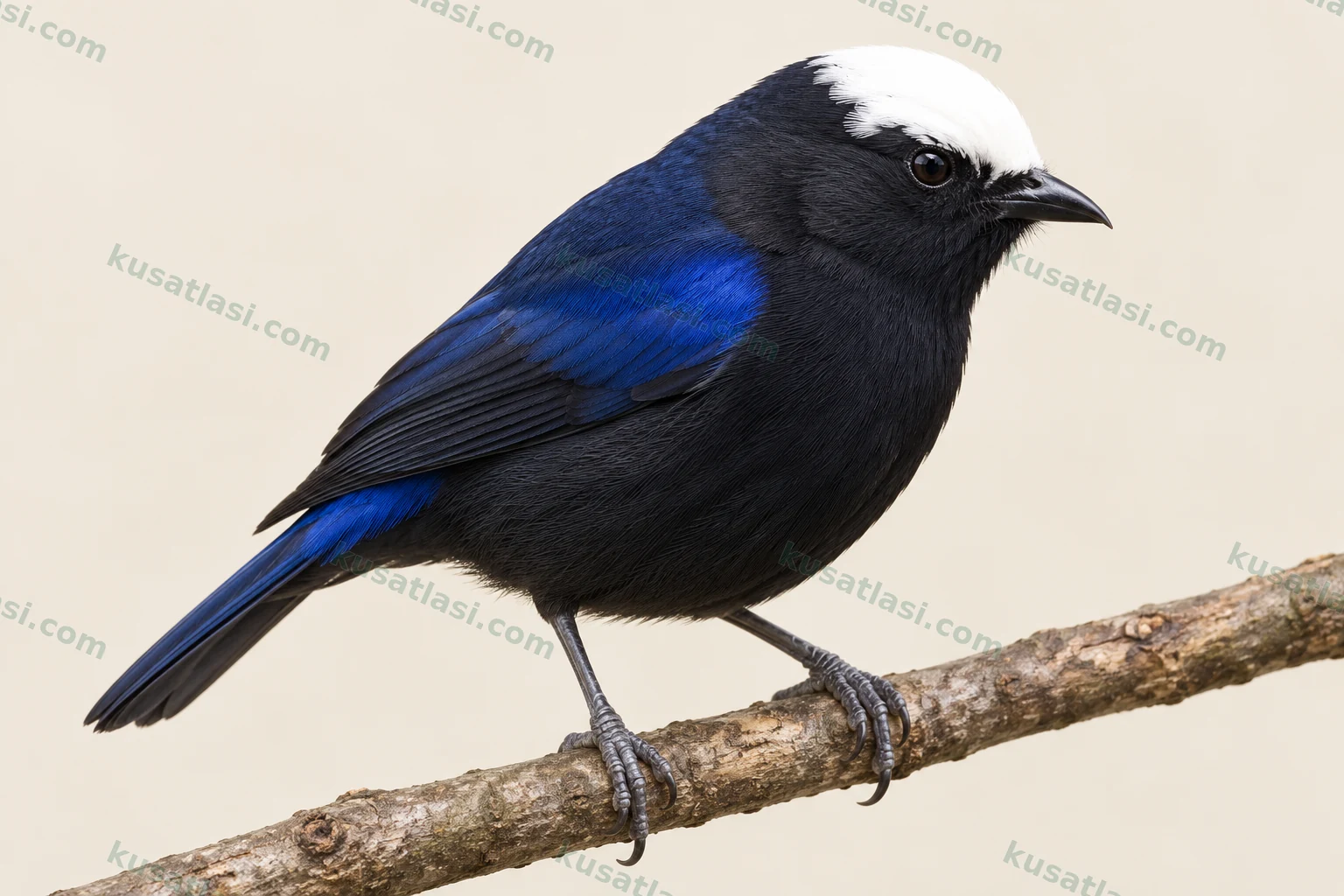
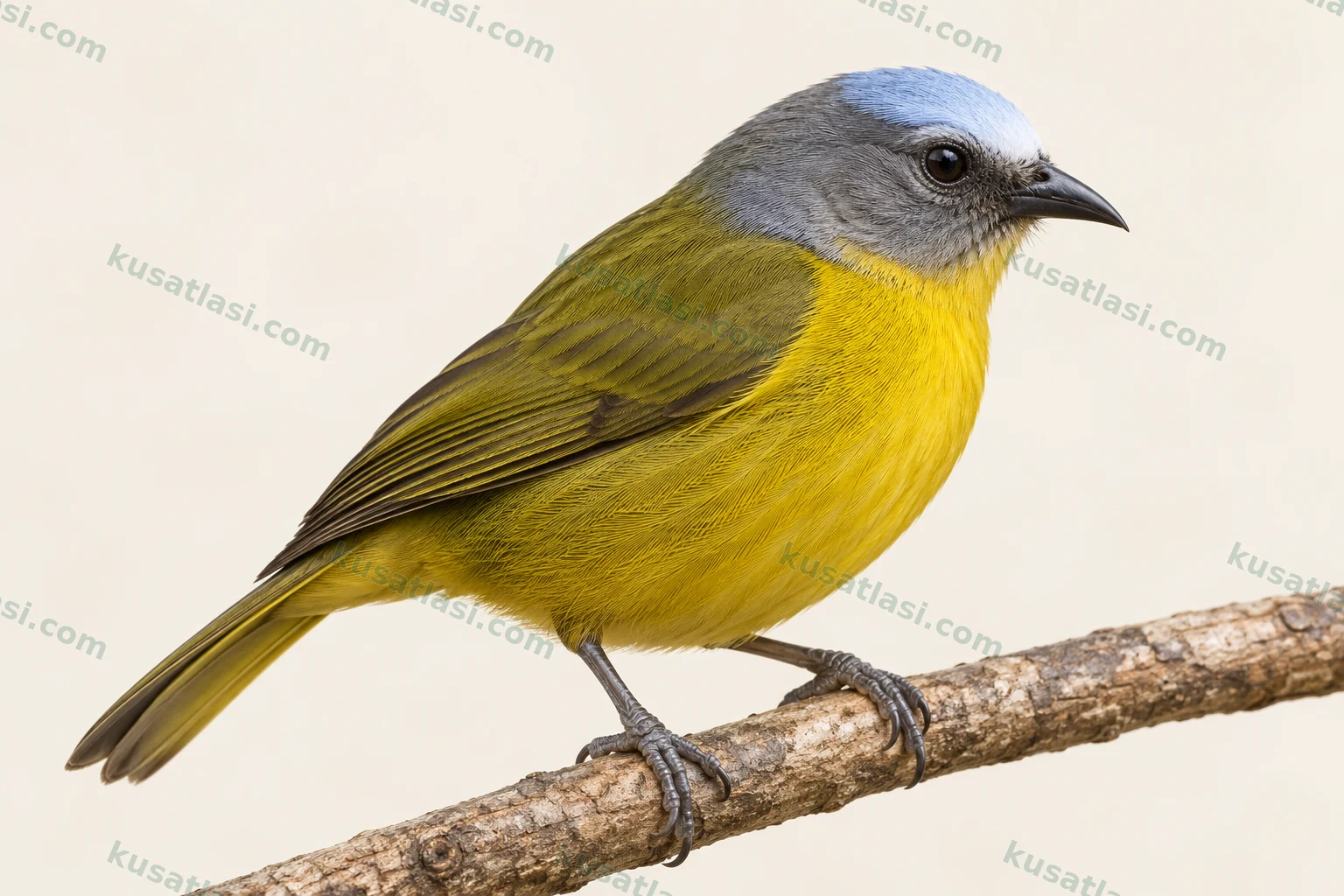
A small conebill of humid Andean mountain forests; the dark male has a white or blue crown by region, while the female is green-yellow with a grey-blue head.
Biometrics
Length
Male13–14 cm
Female13–14 cm
Shared species value
Wing length
Male7.1 cm
Female7.1 cm
Shared species value
Weight
MaleData unavailable
Female10 g
Capped Conebill
Mountain forests of Venezuela–Colombia–Ecuador–Peru–BoliviaObservation guide in its natural range
Look for three features together
Do not rely on a single featureDark body; white crown in the northern group, blue in southern forms.
Olive-green upperparts, greenish-yellow underparts and grey-blue head.
Rapid, active food searching on leaves and fine twig tips.
Compare male and female
 FemaleMale
The male is dark; the female is green-yellow with a grey-blue head. Whether the male’s crown is white or blue also depends on geography; juvenile moult could not be verified.
Where to look in its natural range?
Canopy branches and leafy edges of humid mountain forest; mixed feeding flocks.
Individuals in breeding condition are recorded in Colombia’s three Andean ranges from March to September; this is not an exact egg-laying calendar for the whole range.
January
The species is resident; a verified long-distance migration route was not found. No verified regional date specific to this month was provided; this does not mean local absence.
February
The species is resident; a verified long-distance migration route was not found. No verified regional date specific to this month was provided; this does not mean local absence.
March
The species is resident; a verified long-distance migration route was not found. Colombia’s three Andean ranges: records of individuals in breeding condition, not an exact egg-laying period.
April
The species is resident; a verified long-distance migration route was not found. Colombia’s three Andean ranges: records of individuals in breeding condition, not an exact egg-laying period.
May
The species is resident; a verified long-distance migration route was not found. Colombia’s three Andean ranges: records of individuals in breeding condition, not an exact egg-laying period.
June
The species is resident; a verified long-distance migration route was not found. Colombia’s three Andean ranges: records of individuals in breeding condition, not an exact egg-laying period.
July
The species is resident; a verified long-distance migration route was not found. Colombia’s three Andean ranges: records of individuals in breeding condition, not an exact egg-laying period.
August
The species is resident; a verified long-distance migration route was not found. Colombia’s three Andean ranges: records of individuals in breeding condition, not an exact egg-laying period.
September
The species is resident; a verified long-distance migration route was not found. Colombia’s three Andean ranges: records of individuals in breeding condition, not an exact egg-laying period.
October
The species is resident; a verified long-distance migration route was not found. No verified regional date specific to this month was provided; this does not mean local absence.
November
The species is resident; a verified long-distance migration route was not found. No verified regional date specific to this month was provided; this does not mean local absence.
December
The species is resident; a verified long-distance migration route was not found. No verified regional date specific to this month was provided; this does not mean local absence.
Nest, egg and incubation
Regional Colombian records concern individuals in breeding condition. Species-specific nest structure, typical clutch size, incubation duration and time to first flight could not be verified.
It gives short, thin contact calls and longer whistle-like sequences.
Do not play recordings to attract birds; observe quietly, especially near nests.
Species information
Quick identification
Capped Conebill Conirostrum albifrons is a small, very active bird of humid mountain forests in northern South America. Adult males are generally dark, whereas females look green and yellow. The male’s crown can be white or blue depending on geography. The whiteness mentioned in its Turkish name is therefore not expected in the same form on every male throughout the range.
Small body, pointed bill, active searching around leaves and head pattern are assessed together. A dark white-crowned male in the north and a dark blue-crowned male in the south can be different regional forms of the same species. Match location and plumage first; do not establish species boundaries from one head colour.
General appearance and posture
Blue on the dark male’s shoulder and at the base of the tail can show in good light. Much of the body looks black in shade; failure to see blue gloss does not establish a different species. The pale upper head of the northern white-crowned form may be noticed more quickly. In a blue-crowned bird, assess crown tone together with back and shoulder.
It explores leaves, twig tips and fine shoots on upper branches in humid forest. It may occasionally descend lower at forest edges. Its failure to stay on the same branch can make identification from a partial view difficult; several natural movements help connect head, shoulder and lower body. Tail-wagging is also reported in the original field observation.
Males, females and young birds
The northern group’s adult male has a white crown sharply contrasting with dark face and body. Blue or purplish gloss can occur on the shoulder and at the tail base. Males of southern forms encountered around Peru and Ecuador have blue crowns. This regional difference helps avoid treating every male without a white crown as another conebill.
The adult female has olive-green upperparts and greenish-yellow underparts. Head and crown have grey-blue tones; throat and upper breast can also look bluish mixed with grey. The female is not expected to show the male’s entirely dark body or the same white-crown contrast. A green back alone is insufficient; check the grey-blue head pattern and small pointed bill.
Although male and female appearances differ, light, leaf shadow and wear can affect colours. Not every small yellowish bird in the same feeding flock is a female of this species. Examine head, back, underparts and movements separately. Seeing a pair together is useful context, but the whole flock is not labelled as one pair or a family of the same species.
All juvenile moult stages and their distribution across months could not be verified in the reliable species-specific sources examined. A female-like appearance alone does not establish an adult female or a young male with certainty. Leave age unspecified if evidence is insufficient. Juvenile patterns of another Conirostrum species are not transferred here because of similar names.
Appearance in flight
Short movements between branches are part of activity within the feeding area. Blue areas may show very briefly when a dark male takes off, while a female’s green-yellow body can blend with leaves. One blurred flight frame may not reveal whether the crown is white or blue. Check head and body together when the bird lands again.
Short forest movements are not long-distance migration. Moving among humid mountain-forest branches does not show that the bird can fly continuously along the entire Andes. Assess only the feather surface actually shown in the available flight view; do not assign definite colours to hidden feather areas.
Voice and behaviour
It can give short, thin contact calls while foraging; the regional specialist guide also describes longer, whistle-like sequences. Voice helps locate an unseen bird in dense foliage, but several species may call in mixed groups. Where possible, link a sound recording to the identity of the visible individual and its location; one comparison with another sound is not certain identification in every situation.
It can occur alone, in pairs or in small groups and often joins feeding flocks of other birds. Rapid changes of direction among leaves are conspicuous. These are feeding communities; they do not establish that all birds breed together or use one nest. Natural searching movements can be watched without prolonged playback to call the birds.
Similar species
Conirostrum sitticolor is compared by its blue back and rufous underparts. The Capped Conebill’s dark male is not expected to have the same extensive rufous lower body. Look at head, back and belly together rather than just one blue area. Both species occurring in mountain forest does not mean identical plumage patterns.
Dark flowerpiercers such as Diglossa humeralis may resemble a male looking black from afar. Bill shape matters: a clear view allows separate assessment of the conebill’s small pointed bill and the flowerpiercer’s tip adapted for piercing flowers. Capped Conebill’s white or blue crown and blue shoulder area also support identification.
Other mountain-forest passerines with grey heads and green-yellow bodies can be compared with the female. In birds resembling a grey-headed bush tanager, for example, body proportions and bill can be more useful than colours alone. A bird without enough visible marks is not automatically assigned as this species’ female merely because a dark male is in the same flock.
World distribution
It occurs in humid mountains of Venezuela, Colombia, Ecuador, Peru and Bolivia. The main geographical area is Andean forest; a separate regional form is also recognised in northern Venezuela’s coastal mountains. This is not a range occupying every lowland forest of northern South America or the entire surface of those countries. Read altitude and forest structure alongside country names.
Status within its natural range
Its global category is Least Concern. This does not show equal abundance everywhere or immunity to forest loss. For Colombia’s three Andean ranges, the specialist guide gives an elevational belt of 1,500–3,000 metres, especially 2,100–2,600 metres. The Peru account also uses 1,500–3,000 metres. These are regional habitat descriptions, not two fixed elevation limits for the entire species.
The geographical areas of white-crowned males in the north and blue-crowned males farther south differ. Different regional plumages under the same scientific name prevent the assumption of one head pattern everywhere. A blue-crowned photograph should not be used as a model for all northern Colombian birds after reading only the species name.
Migration
The species is considered resident; no regular long-distance route to a separate continental wintering area was verified. Progressing from tree to tree with a feeding group may be daily movement. This does not establish presence in every gap between mountain forests. The map helps explain humid mountain geography; it does not prove breeding or monthly passage through an empty valley.
Breeding habitat
Humid, mossy mountain forests and their edges are the principal habitats. Feeding on upper branches illustrates the importance of canopy and leafy fine shoots. The Colombian specialist guide’s records of individuals in breeding condition from March to September concern three Andean ranges. They do not mean that the entire Venezuela–Bolivia belt nests in the same months.
Nest site
Nest location and structure, typical clutch size, full incubation duration and time to first flight could not be verified in the reliable sources examined. A record of an individual in breeding condition is not a nest record with counted eggs. Another species of the same genus cannot supply a cup nest or durations as certain facts here. If a bird on a branch appears to carry material, document the material and behaviour carefully; do not open a nest for inspection.
Daily habitat use
It searches for small invertebrates on canopy branches and can descend to lower branches at edges. Movement of a mixed flock helps show which trees are being used at the time. Failure to see the bird at one point does not show that it has left the entire mountain; it may remain behind leaves or in upper layers. An observation at a forest edge is not interpreted as dependence only on open ground.
What does it eat?
Insects and other small invertebrates are the principal food. Original observations at Finca Merenberg in Colombia record insects taken from leaves and twig tips, with occasional consumption of Cecropia fruit. The fruit record corrects the impression of an unchanging insect-only diet. Observations from this one region do not, however, give dietary percentages for the entire year.
How does it forage?
It actively searches among leaves, thin branches and shoot tips. Taking food from a surface and merely standing on it are different observations. The small bill and rapid movements may not always allow identification of the prey. If food cannot be recognised, record the surface and movement instead of naming a definite insect group.
Joining a mixed feeding flock allows it to search the same plants as other birds; not every flock member takes identical prey in the same way. The original regional study describes use of both upper forest layers and edges. Another flowerpiercer’s piercing flowers at the same site is not attributed to Capped Conebill. Fruit and invertebrate consumption are observed as separate events.
A white-forehead name does not describe every male
Males in the northern group have white crowns, whereas many males around Peru and Ecuador have blue crowns. Neither the Turkish name nor a single illustrative plate replaces this regional variation. A dark bird’s location is assessed with the pale area on its head. Differences between sexes and geographical differences between subspecies are not the same thing. The separate form in northern Venezuela’s coastal mountains also shows that a country name alone does not adequately explain plumage.
One feeding record adds detail to the general category
An ecological compilation classifies the species as an invertebrate-eater. The original Finca Merenberg observation also reports some Cecropia fruit taken while searching for insects. A broad food category and one directly observed feeding event can be considered together. The record does not establish that the fruit is a compulsory main food everywhere or forms any specific percentage of annual diet.
Breeding condition is not an egg-laying date
The Colombian guide records individuals in breeding condition between March and September. This does not mean that a new nest was found every month or that every bird laid throughout the period. Breeding condition, nest contents and a young bird’s first flight are different kinds of information. One regional record cannot become an exact shared calendar for five countries.
The canopy matters for this active small bird
Rapid changes of direction among leaves and participation in mixed flocks can cause an observer watching only the ground to miss the bird. Seeing it lower at an edge does not mean it spends all its time there. Observation method and the forest layer used help explain why records are more frequent at some places. A tree where the bird is not seen does not become a confirmed absence record.