

World Birds IUCN statusLC · Least ConcernGlobal IUCN category. BirdLife v10 (2025); taxon matching: AviList 2026 / IOC 15.2; checked: 29.10.2026. The list year is not the species assessment date. Source and method · BirdLife OrderPasseriformesPasserines FamilyThraupidaeThraupidae
White-throated Sierra Finch
Idiopsar erythronotus
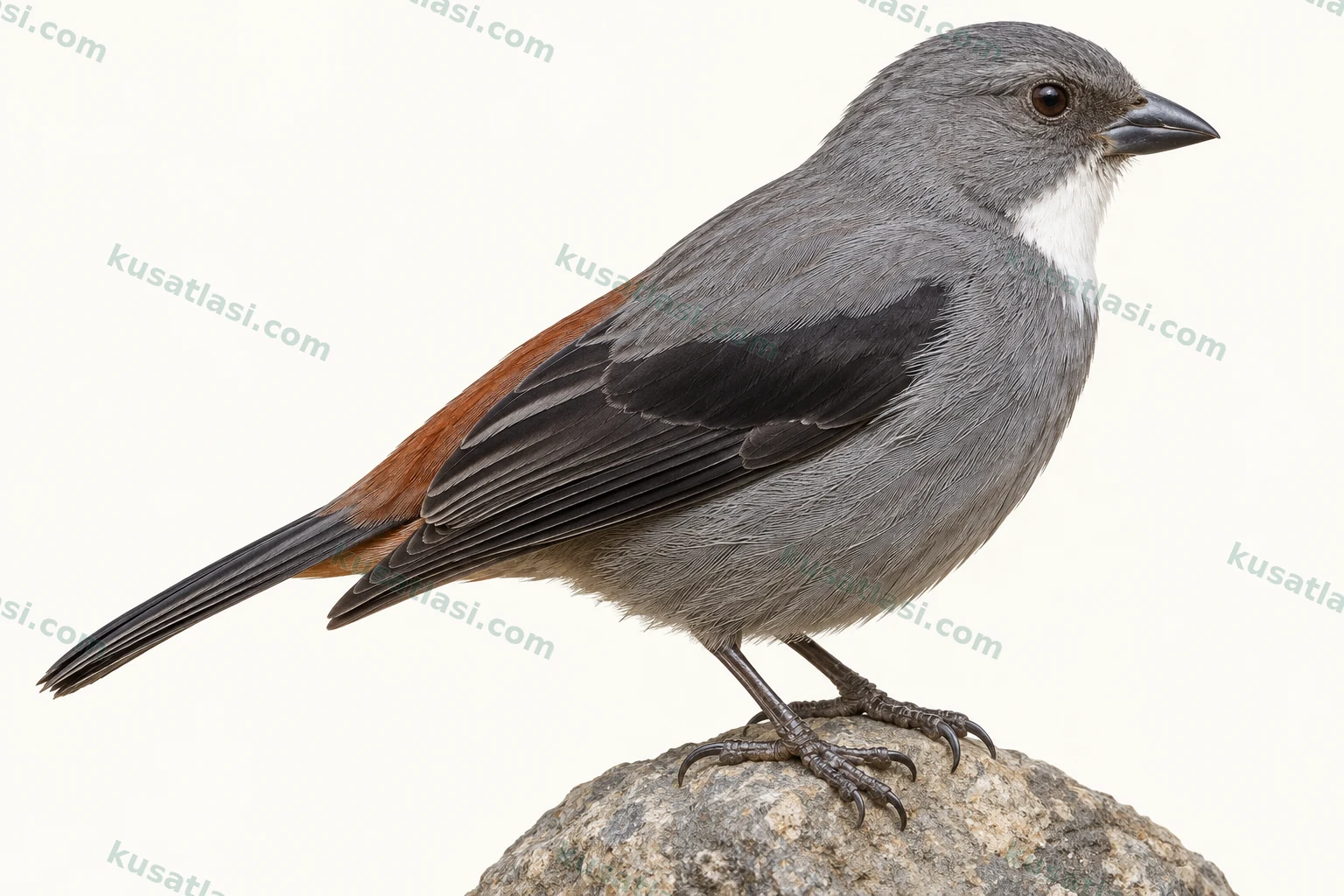
A grey body, plain grey head, pale throat and large black area on the folded wing in the high Andes. Adult males and females look alike. The back can be brownish in young birds.
Biometrics
Length
Male16 cm
Female16 cm
Shared species value
Wing length
Male10.19 cm
Female10.19 cm
Shared species value
Weight
Male30.5 g
Female30.5 g
Shared species value
White-throated Sierra Finch
High Andes of southwestern Peru, western Bolivia and northern ChileObservation guide in its natural range
Look for three features together
Do not rely on a single featureThe head is plain grey and the pale throat does not contrast sharply.
The folded wing has a large black area.
A brown back in a young bird is not treated as adult female colour.
Compare male and female
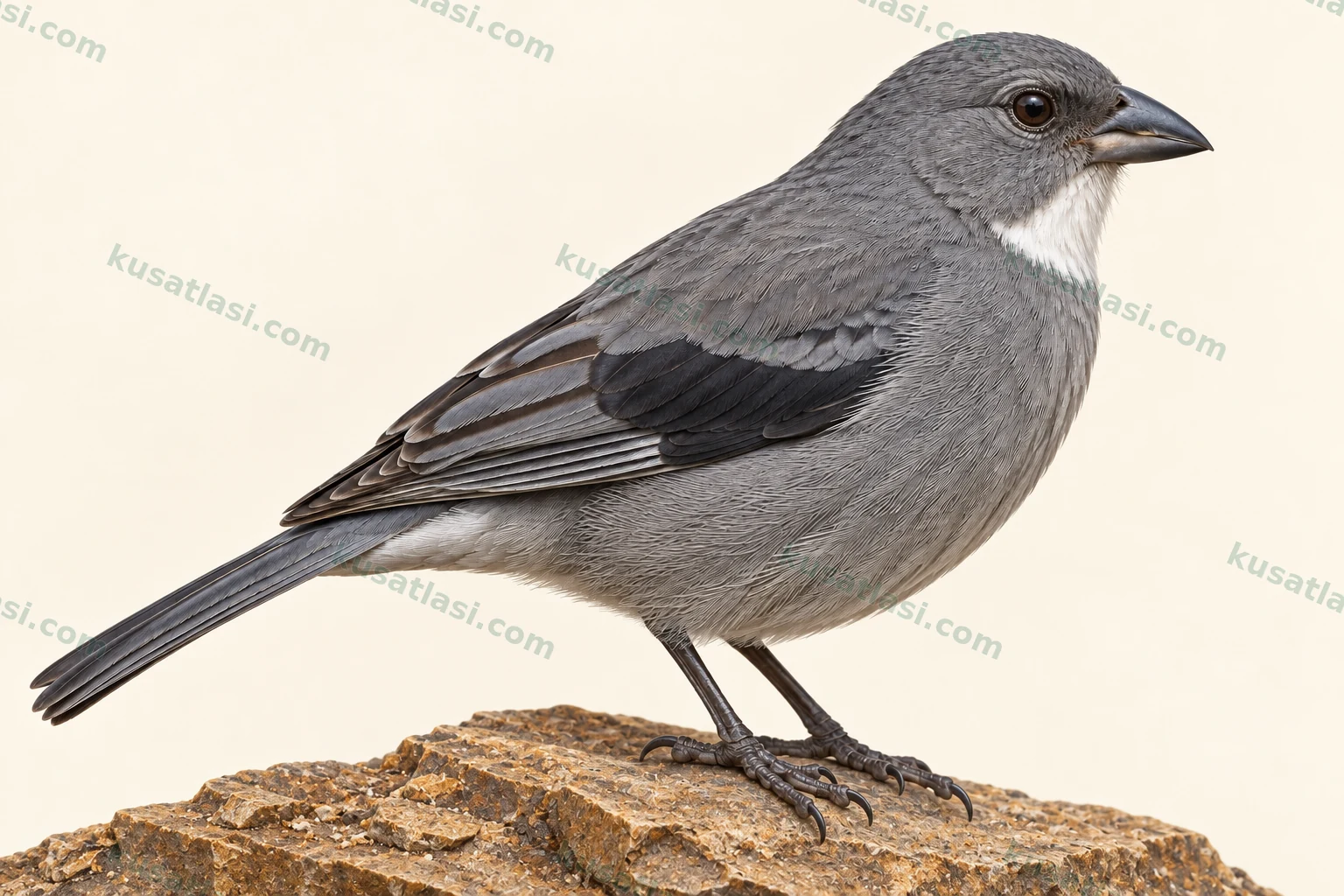 FemaleMale
Adult males and females look alike. Immature birds can have a brownish back. Apparent size in a photograph does not determine sex.
Where to look in its natural range?
Open rocky slopes, mountain pastures and areas of wet ground.
The Chilean atlas record for January is of adults feeding young. March–May is an estimate and is not shown as a confirmed egg-laying calendar.
January
Resident. No regular long-distance migration was verified. Northern Chile, atlas record. Adults were observed feeding young. This does not date egg laying.
February
Resident. No regular long-distance migration was verified. No verified regional date was given for this month. This does not imply local absence.
March
Resident. No regular long-distance migration was verified. No verified regional date was given for this month. This does not imply local absence.
April
Resident. No regular long-distance migration was verified. No verified regional date was given for this month. This does not imply local absence.
May
Resident. No regular long-distance migration was verified. No verified regional date was given for this month. This does not imply local absence.
June
Resident. No regular long-distance migration was verified. No verified regional date was given for this month. This does not imply local absence.
July
Resident. No regular long-distance migration was verified. No verified regional date was given for this month. This does not imply local absence.
August
Resident. No regular long-distance migration was verified. No verified regional date was given for this month. This does not imply local absence.
September
Resident. No regular long-distance migration was verified. No verified regional date was given for this month. This does not imply local absence.
October
Resident. No regular long-distance migration was verified. No verified regional date was given for this month. This does not imply local absence.
November
Resident. No regular long-distance migration was verified. No verified regional date was given for this month. This does not imply local absence.
December
Resident. No regular long-distance migration was verified. No verified regional date was given for this month. This does not imply local absence.
Nest, egg and incubation
Feeding young has been recorded. Nest structure, number of eggs, full incubation duration and time to first flight were not verified for this species.
No verified sequence of syllables is given as a definitive species key. Match the sound to the bird in view.
Do not play recordings to attract birds; observe quietly, especially near nests.
Species information
Quick identification
The White-throated Sierra Finch Idiopsar erythronotus is an inconspicuous grey bird of the high Andes. Look for a plain grey head, an extensive black area on the folded wing and a pale throat that does not contrast sharply. The adult has a grey back, despite the scientific name’s suggestion of a reddish back. Immature birds can have a browner back, an important distinction when comparing this species with the related Rufous-backed Sierra Finch.
Its English name is White-throated Sierra Finch. Current classifications place it in the tanager family. The everyday name “finch” does not determine its family. Phrygilus erythronotus is an earlier genus combination. Other genera have been proposed in scientific publications, but this page follows the accepted placement in Idiopsar. Habitat or nest information from other species listed alongside an old name is not transferred. Placing four similar mountain birds in one genus does not establish that they all behave alike.
General appearance and posture
Grey dominates the adult upperparts from the head to the tail coverts. Cold mountain light can make the grey look bluish in photographs, and shade can make it look brownish. The positions of the distinct feather areas are more reliable than one shade of colour. The folded wing forms a large black area. Seeing it alongside the paler grey back on the same bird helps correct the impression that the whole bird is black or streaked.
The throat is pale but does not make as sharp a white contrast as in the related Glacier Finch. Look for a plain grey head rather than a large colourful cap or strong eyebrow. The pale throat area can look narrower when the bird lowers its chin. When it raises its head, look again at the edge of the patch. A hidden part of the throat is not recorded as an absent feature.
The historical museum study notes differences in tone and fine feather edges between fresh and worn adult plumage. These details are not fixed colours for all birds. Movement can change the light falling on the upperparts and underparts. If a bird on another stone looks warmer in a photograph taken at the same time, consider the light in both images. A warm back tone by itself does not distinguish the sexes.
Males, females and young birds
Adult males and females look alike. Females are not assigned a separate brown back or streaked head. In the museum series, adult females resembled males in colour. Small differences in measurements do not provide a reliable way to sex every free-living bird at a distance. The smaller-looking bird in a pair is not identified as female on that basis alone. Leave sex uncertain if the source and image do not establish it.
Immature birds show a brown back. A modern systematic study and an older museum study distinguish this appearance from the adult’s grey back. Historical young specimens also had dark centres on the back feathers. Compare the brown appearance with the red back of the related species’ adult. A single warm-toned back in a photo is insufficient to establish species or sex. Record age information before making the comparison.
The sources do not give a complete field key for every transitional stage of youth. Record features that can be seen on the head, back and wing, without assigning colours to hidden feather areas. There is no need to catch the bird or probe beneath the stone where it is sitting to establish its age. Waiting for a clearer natural view protects its behaviour and makes it easier to compare feathers on the same individual.
Appearance in flight
The contrast between the grey body and dark wing can show in a brief flight. Watch where the bird lands for a better view of the head and throat. Looking for the Glacier Finch’s extensive white wing marking on this bird can mislead. The wing marking of the related species is not assigned to this one simply because the two occur in the same high valley. Instead of relying on one blurred image of the wing, look for the black folded wing, plain head and throat together.
Voice and behaviour
Pairs or small groups can be seen quietly feeding on the ground. Cornell’s field account notes that the species does not routinely join flocks of other seed eaters. That does not mean it is always encountered alone. In open mountain terrain, match the source of a sound to a visible bird. The sources examined did not establish a measured syllable key that works in all conditions, so no new song sequence is given here.
Similar species
The Glacier Finch Idiopsar speculifer has a more strongly contrasting white throat and a prominent white wing marking. In the White-throated Sierra Finch, look for the plain grey head, less contrasting throat and extensive black area on the folded wing. The related bird’s nests in ice do not belong to this species. Adult Rufous-backed Sierra Finches Idiopsar dorsalis have a warm rufous back. The brown back of an immature White-throated Sierra Finch does not establish that adult marking. Consider locality, age and several feather areas together.
World distribution
The species occurs locally in the high Andes of southwestern Peru, western and southwestern Bolivia and northern Chile. Its range follows mountain habitat more closely than national borders. It does not extend along all of Peru’s coast or all the way to southern Chile. Use records that match the current taxon and do not add Argentine localities of the related Rufous-backed Sierra Finch.
Status within its natural range
The specialist Chilean atlas reports records around Lauca National Park and Salar de Surire. The historical museum study includes Putre and Choquelimpie as well as Oruro and Potosí in Bolivia. Political place names in the old publication are not read as current national borders. Elevations recorded in the atlas describe its own sample. The lowest and highest observed points do not define the species’ exact global limits.
Migration
Referenced functional data classify the species as resident. No regular long-distance migration route has been confirmed. The Chilean atlas record of adults feeding young in January is regional evidence of breeding behaviour. It is not combined with the March–May breeding estimate in the same text to construct a definite extended laying period. Record months are not turned into monthly boundaries on the map. Licensed observation cells do not show a yearly route or establish a nest in every high valley.
Breeding habitat
Look on open rocky slopes, mountain pastures and wet ground in the high Andes. The specialist Chilean atlas reports records from the high mountain zone. A sighting in a wet meadow does not establish nesting throughout that meadow. Habitat combining rocks and vegetation is described separately from direct breeding behaviour.
Nest site
The Chilean atlas records adults feeding young. This does not establish verified nest structure, typical clutch size or full incubation duration for the species. Time to first flight from the nest was also not verified. The Glacier Finch’s nest in ice is not assigned to this bird simply because both belong to the same genus. Similar habitat is not evidence of a shared nest site.
Daily habitat use
Ground-feeding birds can be watched from an open path. Do not disturb gaps between rocks or remove or trample the cover of a wet meadow for an observation. If the bird vanishes behind a rock, wait briefly for its natural movements to bring it back into view. Feeding, roosting and nesting sites are distinct. A bird entering a hollow once does not establish that it holds a nest.
What does it eat?
Referenced dietary data classify this species among ground-foraging birds that eat seeds. The reviewed accounts do not give an annual list of seeds or dietary percentages, so no particular mountain plant is described as a fixed staple. Details of related species probing moss or taking insects do not substitute for measured diet data on this bird. Separate a general dietary category from directly observed food.
How does it forage?
As the bird quietly forages on the ground, record whether it is possible to see what it takes in its bill. A bill touching a piece of grass does not establish that the bird swallowed a seed from it. A few movements around a rock do not show the amount eaten in a whole day. Do not count the same bird’s movements as separate individuals. If you see a pair or small group, follow each individual’s activity separately. Scattering food can change natural choices and does not substitute for documented field observation. Keep the structure of mountain pasture and wet ground cover intact.
The reddish name does not describe the adult’s back
The colour suggested by the scientific name does not replace the adult’s grey back. The brown back of an immature bird helps explain historical confusion over names. Modern comparison also distinguishes the adult of this species from the related bird with a rufous back. The meaning of a name is weaker evidence than plumage described for the age observed. The bird’s actual appearance is the basis for identification.
Museum specimens clarify identity
Hellmayr compared specimens mixed under an older name with different museum series. Immature specimens from Putre are not the same as rufous-backed birds from another region. This history shows why the presence of the same name in an old publication does not automatically link every datum to the current species. A specimen’s age and locality are important clues alongside its name.
An estimate and a record of feeding young
Adults feeding young in January, as reported in the Chilean atlas, are direct evidence of breeding behaviour. The previously suggested March–May period remains an estimate. Combining the two does not yield a definite laying calendar. The month of laying is not calculated without knowing the day the young hatched. Keep the event type and region in the calendar, without adding colour to other months to hide uncertainty.
Similar appearance does not establish shared nesting sites
Grey birds of the high Andes may be related, but they do not all have to use the same support for their nests. The Glacier Finch’s well-known ice nests are not evidence about this species. The relative’s details help explain the limits of the comparison rather than filling a gap in this species’ records. When a new verified nest record for this bird is found, structure and timing can be reported in that observation’s own context.