

World Birds IUCN statusLC · Least ConcernGlobal IUCN. BirdLife v10 (2025); taxon matching AviList 2026 / IOC 15.2; checked: 29.10.2026. The list year is not the species’ assessment date. Source and method · BirdLife OrderApodiformesSwifts and hummingbirds FamilyTrochilidaeTrochilidae
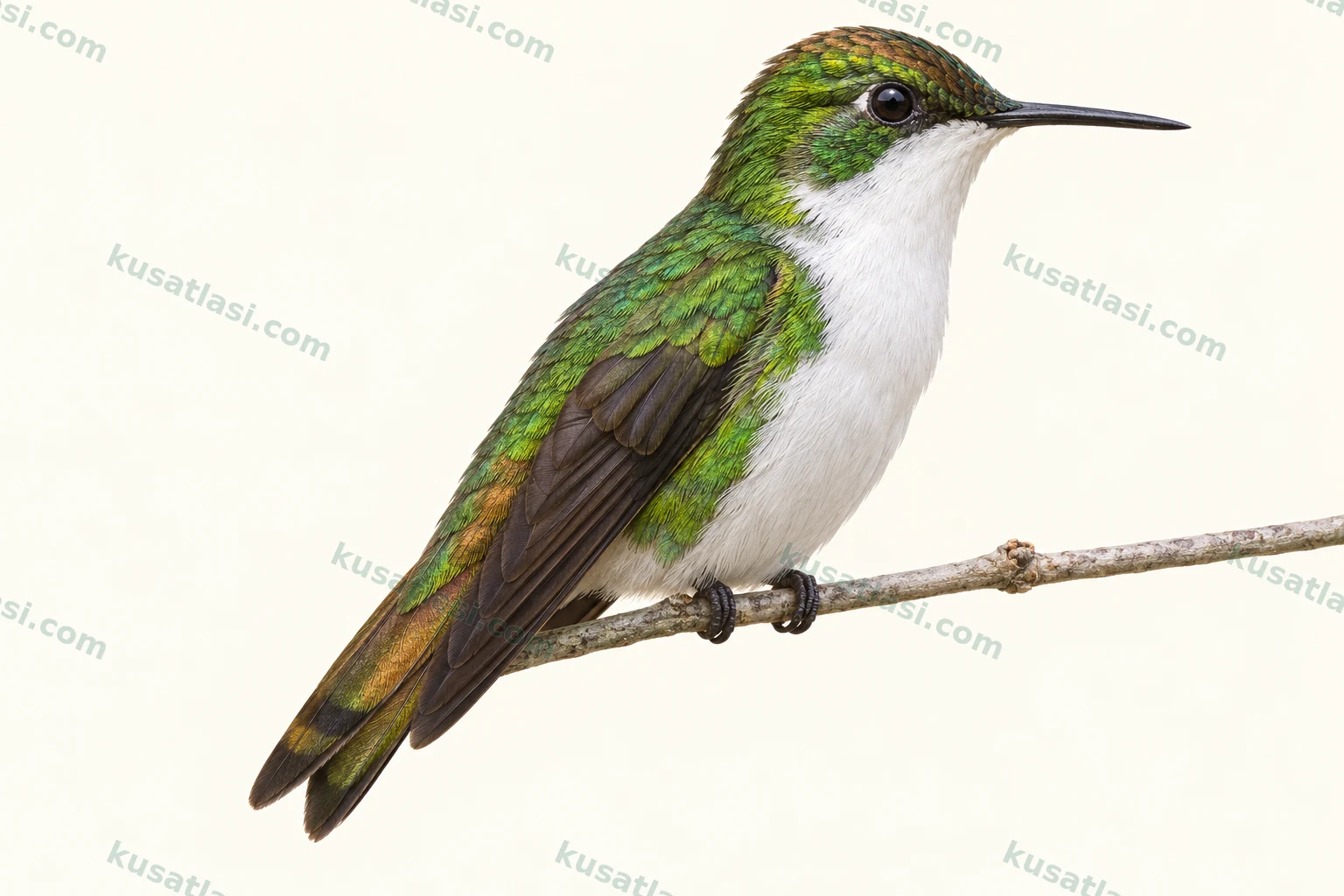
White-chested Emerald
Chrysuronia brevirostris
Small hummingbird of northern South America with white underparts and a short entirely black bill.
Biometrics
Length
Male9–10 cm
Female9–10 cm
Shared species value
Wing length
Male4.88 cm
Female4.88 cm
Shared species value
Weight
Male4.6 g
Female4.4 g
White-chested Emerald
Northern South America and TrinidadObservation guide in its natural range
Look for three features together
Do not rely on a single featureEntirely white.
Short and entirely black.
Male’s harsh rattling trill from an exposed perch.
Compare male and female
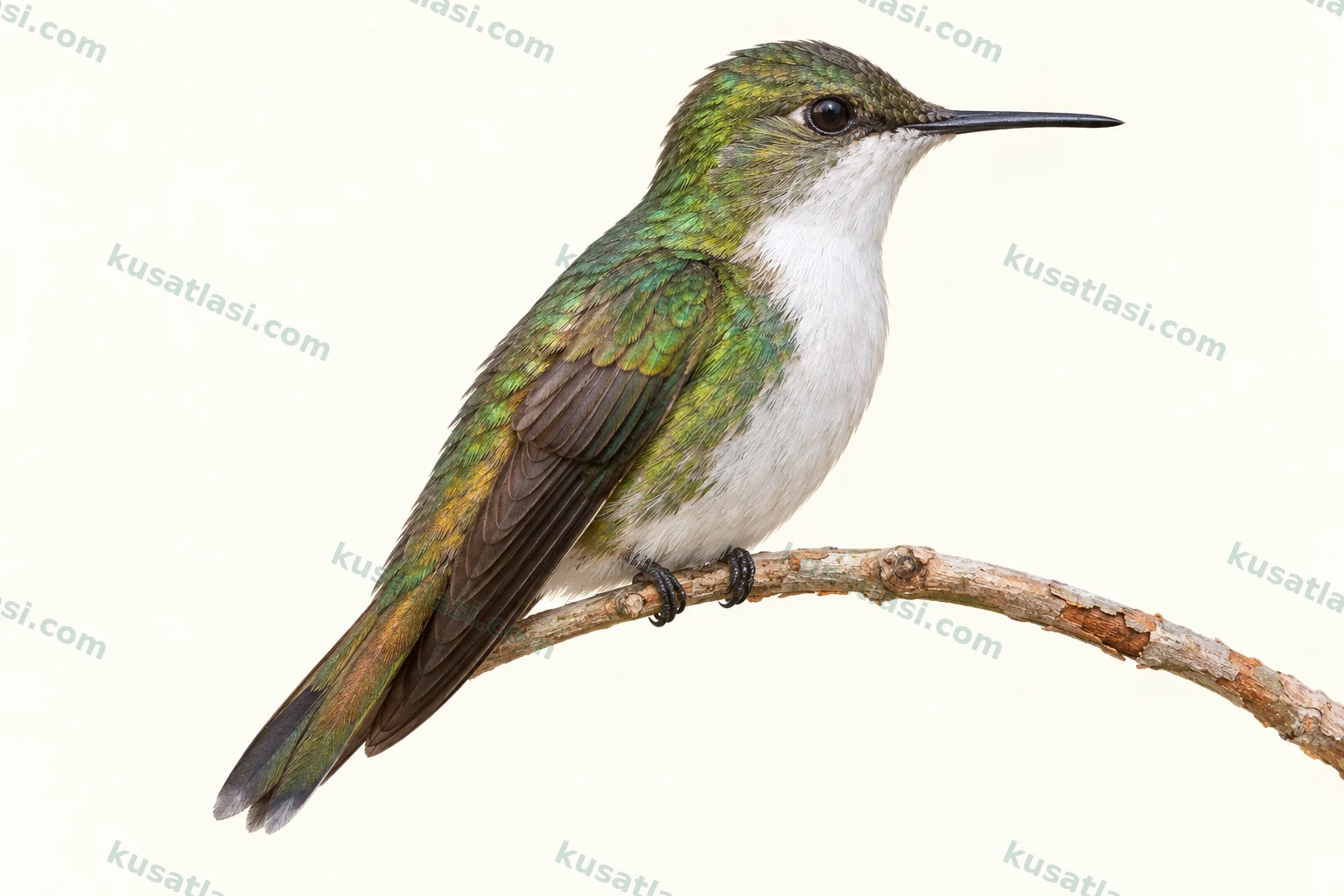 FemaleMale
Detailed field key for sex and young birds unverified.
Where to look in its natural range?
Flowering savanna, dry forest, open edges and altered areas.
Resident; island and mainland forms occur. Regional breeding months unverified.
All months: Data unavailable
January
February
March
April
May
June
July
August
September
October
November
December
Nest, egg and incubation
Specialist compilation reports two eggs; nest details, incubation and fledging periods unverified.
Male gives a harsh rattling trill from an exposed perch.
Do not play recordings to attract birds; observe quietly, especially near nests.
Species information
Quick identification
White-chested Emerald Chrysuronia brevirostris is a small hummingbird of northern South America and Trinidad with entirely pale underparts. Its short wholly black bill is important. White-chested Emerald denotes the same species; older sources also used Amazilia brevirostris.
General appearance and posture
The broad white underside contrasts with greenish upperparts. The short black bill helps comparison with other pale-bellied emeralds.
Males, females and young birds
Accessible sources provided no reliable detailed field key for sex or young birds. Cornell reports males singing from exposed perches; not every perched bird or flower visit determines sex.
Appearance in flight
It hovers at flowers. White underparts in flight help but do not separate similar emeralds alone. A brief flight view without a clear bill does not justify certain identification.
Voice and behaviour
Males sing harsh rattling trills from exposed perches below tree cover. Cornell distinguishes hovering feeding from perched singing. More detailed regional vocal variation was not verified.
Similar species
Plain-bellied Emerald Chrysuronia leucogaster and Versicolored Emerald Chrysuronia versicolor are the closest field comparisons. The shorter wholly black bill matters. Cornell explicitly states that poorly seen birds in the same area cannot be separated confidently; a white belly alone is insufficient.
World distribution
Current AviList accepts three subspecies: chionopectus in Trinidad; brevirostris from eastern Venezuela through Guyana and Suriname to far north-central Brazil; orienticola on coastal French Guiana. This is a northern South American range; the old original-description locality alone can mislead.
Status within its natural range
The global category is Least Concern. It may occur in open or altered habitat. Coastal, island and mainland forms do not all use identical habitats; the specialist compilation reports more open habitat use in Trinidad.
Movements
It is classified as resident. A wing-shape flight-capacity class does not substitute for an actual seasonal migration record. No regular long-distance migration route was verified.
Breeding habitat
Cornell lists savanna, dry forest and altered areas. The specialist ecological compilation also includes rainforest, seasonal deciduous forest, riverside woodland, secondary cover and partly farmed areas. Flowering open edges may offer different encounters from dense forest interiors.
Nest site
A specialist compilation with sources reports two eggs. Accessible original accounts did not sufficiently verify nest materials and placement, incubation or fledging period. Another hummingbird's nest form is not added as certain knowledge for this species.
Daily use of space
Flower feeding and song from exposed perches below cover are documented. Daily flower-visit counts, feeding-area size and regional breeding months were not verified.
What does it eat?
Nectar is the main verified food. Its ecological data field classifies it as nectar-feeding. Examined open sources did not supply enough data for proportions by flower species or detailed amounts of invertebrate food.
How does it forage?
It feeds hovering at flowers. This directly seen behaviour describes the visit, not measured successful pollination of every plant visited. Equal visit duration at all flowers or obligatory dependence on one plant was not verified.
A short bill is part of identification
Uniform underpart colour alone does not distinguish similar pale-bellied hummingbirds. The short entirely black bill strengthens a good-view comparison. It may go unseen when the bird leaves a flower quickly; wait for another view before certain identification.
A locality issue in the name's history
AviList notes the relationship between the Guiana record and corrected type locality in the original naming information. A geographic label attached to an old scientific name alone does not establish the current range. The page follows the three accepted subspecies' distribution and does not turn the bird into another similarly named emerald.
Flight ability is not migration evidence
Original ecological data and direct movement records are different evidence. The specialist sources' resident classification takes precedence over an automatic wing-shape label.